
Car Shipping To or From Kansas
Need to ship a car to or from Kansas? Direct Express Auto Transport has been the Sunflower State’s most trusted auto transport broker since 2004 — with a 4.6-star average across thousands of verified Google reviews, no upfront payment required, and a real-time quote available in 30 seconds.
★ 4.6/5 Google Reviews | BBB Accredited A+ | FMCSA Licensed (MC #479342) | USDOT #1240502 | No upfront payment required | 20+ years shipping vehicles


Kansas car shipping costs vary based on your route, the time of year, vehicle size, and the service tier you choose. Use our instant calculator above for a real-time quote — or see the route-by-route pricing tables below for a fast ballpark. Most standard sedan shipments to or from Kansas range from $375 for short-haul routes to neighboring states to $1,325 or more on long-haul routes to the West Coast. The Kansas City metro’s multi-corridor position and Wichita’s I-35 access both produce competitive rates, and the I-70 corridor through central Kansas benefits from transcontinental through-carrier traffic. Our Expedited and Rush pricing tiers hasten the process to create an even more satisfying experience.

What customers say about shipping a car to or from Kansas with Direct Express Auto Transport


The interstate corridors that move Kansas vehicles
I-70 (East-West backbone): The most important carrier route in Kansas and one of the most heavily traveled transcontinental freight corridors in the nation, I-70 runs approximately 420 miles from the Colorado border at Goodland east through Colby, Salina, Abilene, Junction City, Topeka, and into the Kansas City metro at the Missouri border. Every day, a large volume of national long-haul carrier trucks traverse I-70 across Kansas, moving vehicles between Denver and St. Louis, Los Angeles and Columbus, Salt Lake City and Washington D.C. Kansas I-70 corridor cities access this through-carrier traffic and benefit from pickup windows and rates that outperform the state’s modest population.
I-35 / Kansas Turnpike (North-South artery): The primary north-south carrier corridor through Kansas, I-35 (which overlaps with the Kansas Turnpike through most of the state) runs from the Oklahoma border south of Wichita north through Wichita, Emporia, Topeka, and into the Kansas City metro where it converges with I-70. I-35 is the carrier route connecting Oklahoma City and Dallas to Kansas City and Des Moines, and Wichita sits at the midpoint. The I-35 corridor gives Wichita direct carrier access to two of the central region’s most important auto transport markets — Dallas south and Kansas City north — which is the foundation of Wichita’s stronger-than-expected carrier availability.
I-135 (Wichita to Salina connector): Runs north from Wichita through McPherson and Salina to I-70, connecting Wichita directly to the primary east-west transcontinental corridor. The I-135/I-70 interchange at Salina is one of the most important carrier crossroads in Kansas — it is where through-carriers on I-70 can accept loads from the Wichita and south-central Kansas market. The 95-mile I-135 corridor between Wichita and Salina is the most carrier-active segment of road in south-central Kansas.
I-435 (Kansas City metro beltway): The beltway circling the Kansas City metro on both the Kansas and Missouri sides, I-435 gives carrier trucks access to Kansas City metro suburbs including Overland Park, Olathe, Lenexa, and Shawnee on the Kansas side without requiring routes through downtown Kansas City. The I-435/I-35 and I-435/I-70 interchanges are primary carrier staging points for Kansas City metro suburban pickups and deliveries.
US-400 / US-54 (Southwest Kansas east-west): The primary highway through southwest Kansas, US-400 and US-54 serve communities like Dodge City, Liberal, and Garden City with no interstate access. Southwest Kansas’s meatpacking industry generates some commercial vehicle traffic on these routes, but auto transport carriers must specifically position for southwest Kansas pickups. Communities in this corridor generally require Expedited tier for reasonable pickup windows.

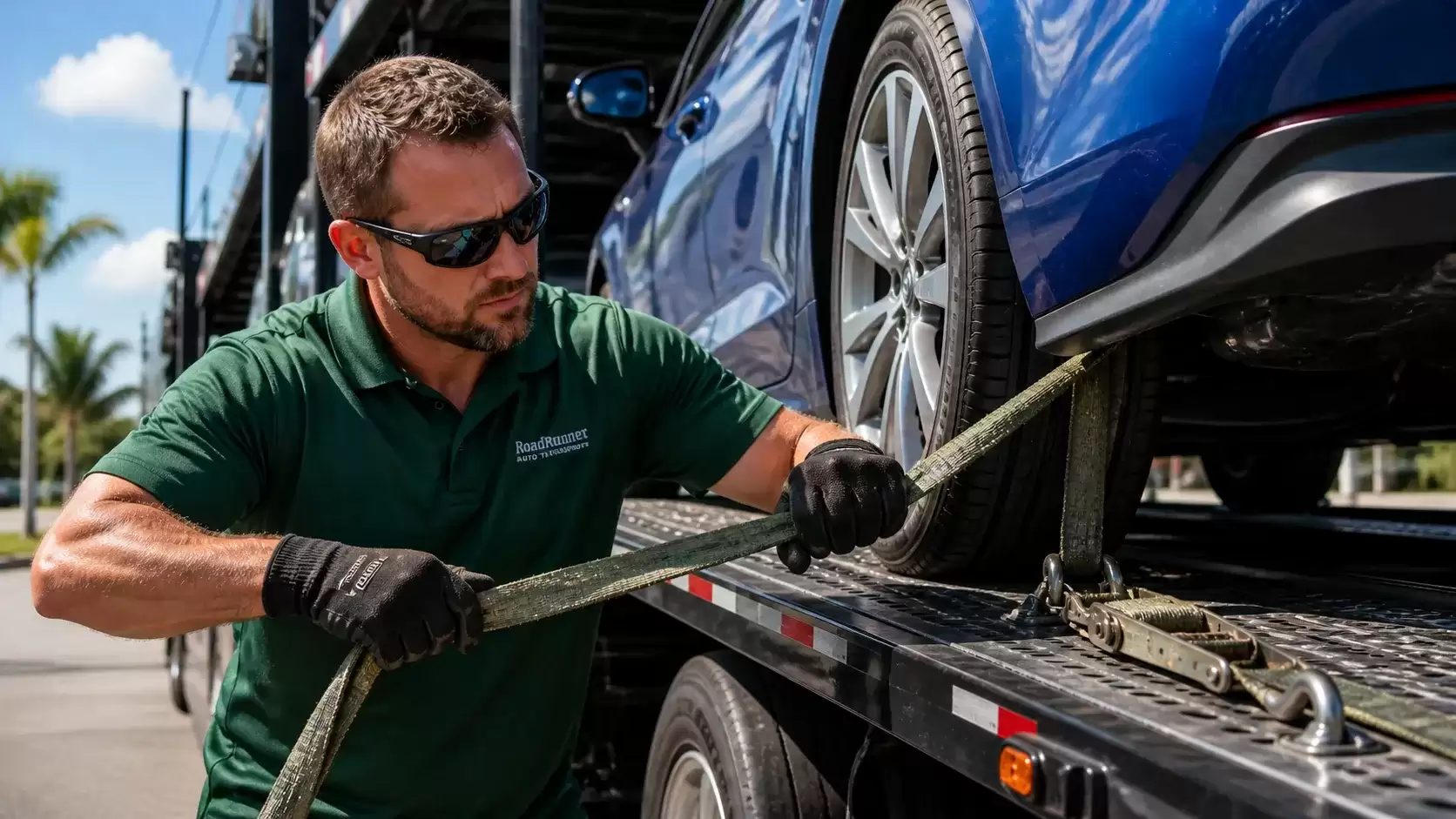
Kansas carrier dynamics: I-70 through-corridor and the Kansas City eastern gateway
Kansas carrier dynamics divide at the I-135 junction near Salina. East of Salina — Kansas City metro, Topeka, Lawrence, Manhattan, and the I-35/Wichita corridor — is a carrier-rich region where I-70 and I-35 through-traffic produces Standard tier availability year-round. West of Salina, population density drops sharply and carrier load density decreases accordingly.
Colby, Hays, and Goodland have interstate access but limited local demand. For these shippers, the question isn’t whether I-70 carriers exist — they do, in abundance — but whether any carrier has an open slot and will stop at a low-volume location. That is why Expedited tier is recommended for western Kansas even though I-70 itself is a major freight corridor.
The Kansas City metro carrier dynamic is the most straightforward in the state: it benefits from the full Kansas City carrier market, which is one of the five or six deepest auto transport markets in the central United States. The Missouri side of the metro — Kansas City proper, Independence, Blue Springs — and the Kansas side — Overland Park, Olathe, Lenexa, Shawnee — all access the same carrier pool. A shipper in Overland Park is competing for the same carriers as a shipper in Kansas City, Missouri. This shared market depth is why Johnson County Kansas shippers consistently see 2–4 business day Standard tier pickup windows that rival Kansas City Missouri rates exactly.
Wichita’s carrier dynamic is defined by I-35 north-south traffic and the I-135 connector to I-70. Carriers running the Dallas-to-Kansas City I-35 corridor regularly pick up Wichita loads en route. The aerospace industry adds a corporate relocation layer that produces consistent Expedited and Rush tier demand throughout the year, which in turn attracts carrier positioning to the market and improves Standard tier availability indirectly. The net result is that Wichita performs as a Tier 1 carrier hub despite being 200 miles south of I-70 and not directly on the transcontinental corridor.
Kansas vehicle shipping hub rankings
Kansas City Metro (Overland Park / Olathe / Lenexa / Shawnee / Leawood) / I-70 / I-35 / I-435 — Tier 1 hub: The Kansas side of the Kansas City metro is one of the strongest auto transport markets in the central United States. I-70 east-west through-carrier traffic, I-35 north-south from Dallas to Des Moines, and the I-435 beltway giving access to Johnson County suburbs all converge at the eastern edge of Kansas. Standard tier pickup windows average 2–4 business days year-round, matching the performance of much larger Midwest metros. The fastest-growing suburban county in Kansas (Johnson County) generates relentless residential relocation demand that keeps the carrier market consistently active.
Wichita / I-35 / Kansas Turnpike / I-135 / I-235 — Tier 1 hub: Kansas’s largest city and its most geographically central carrier hub. I-35 north-south carrier traffic from Oklahoma City to Kansas City and the I-135 connector to I-70 give Wichita carrier access to the transcontinental corridor despite being 200 miles south of I-70. Standard tier pickup windows average 2–4 business days. The Wichita aerospace industry — Spirit AeroSystems, Textron Aviation, Bombardier Learjet, and dozens of related firms — generates consistent corporate relocation demand that supplements residential volume and attracts carrier attention to the market year-round.
Topeka / I-70 / I-470 / US-75 — Tier 1 hub: The Kansas state capital sits on I-70 approximately 60 miles west of Kansas City, benefiting from direct transcontinental through-carrier access. Standard tier produces pickup windows of 2–4 business days. The state government presence generates year-round relocation demand. The I-470 south loop and US-75 north-south connections give carriers efficient access to all Topeka metro neighborhoods without requiring downtown routing.
Lawrence / I-70 / US-59 — Tier 1 hub: Home of the University of Kansas, Lawrence sits on I-70 between Topeka and Kansas City, benefiting from direct interstate access and one of the largest student vehicle shipping markets in the state. Standard tier produces pickup windows of 2–4 business days. KU’s 28,000-student enrollment generates August and May student shipping surges that are among the most predictable demand peaks in Kansas.
Manhattan / I-70 / US-24 — Tier 2 hub: Home of Kansas State University and adjacent to Fort Riley, Manhattan sits on I-70 approximately 120 miles west of Kansas City. Standard tier produces pickup windows of 2–4 business days due to direct I-70 access. The Fort Riley military population and KSU’s 22,000 students give Manhattan combined military-student demand that supports consistent carrier interest in the market. The Fort Riley main gate is approximately 7 miles west of Manhattan on US-24.
Salina / I-70 / I-135 — Tier 2 hub: The geographic crossroads of Kansas, Salina sits at the I-70/I-135 junction that connects the transcontinental corridor to Wichita. Standard tier produces pickup windows of 2–4 business days due to exceptional interstate access at the convergence of two major freight highways. Salina is a smaller market but benefits from carrier traffic in four directions: east and west on I-70, and north and south on I-135.
Hays / I-70 — Tier 2 hub: A regional center in western Kansas on I-70, Hays benefits from direct transcontinental through-carrier access but has limited local demand due to low regional population density. Standard tier produces pickup windows of 3–5 business days — better than nearby non-interstate western Kansas cities due to I-70 access, but slower than eastern Kansas markets. Expedited tier is recommended for time-sensitive Hays shipments. Fort Hays State University adds a small student shipping component.
Dodge City / US-400 / US-283 — Tier 3 hub: Southwest Kansas’s largest city, Dodge City has no direct interstate access and relies on US-400 east to connect to the I-35 corridor. Expedited tier is strongly recommended for Dodge City shipments, and Standard tier pickup windows can extend to 7–10 business days. The meatpacking industry and agricultural economy generate some commercial vehicle activity on US-400, but dedicated auto transport carrier positioning is required for Dodge City pickups and deliveries.
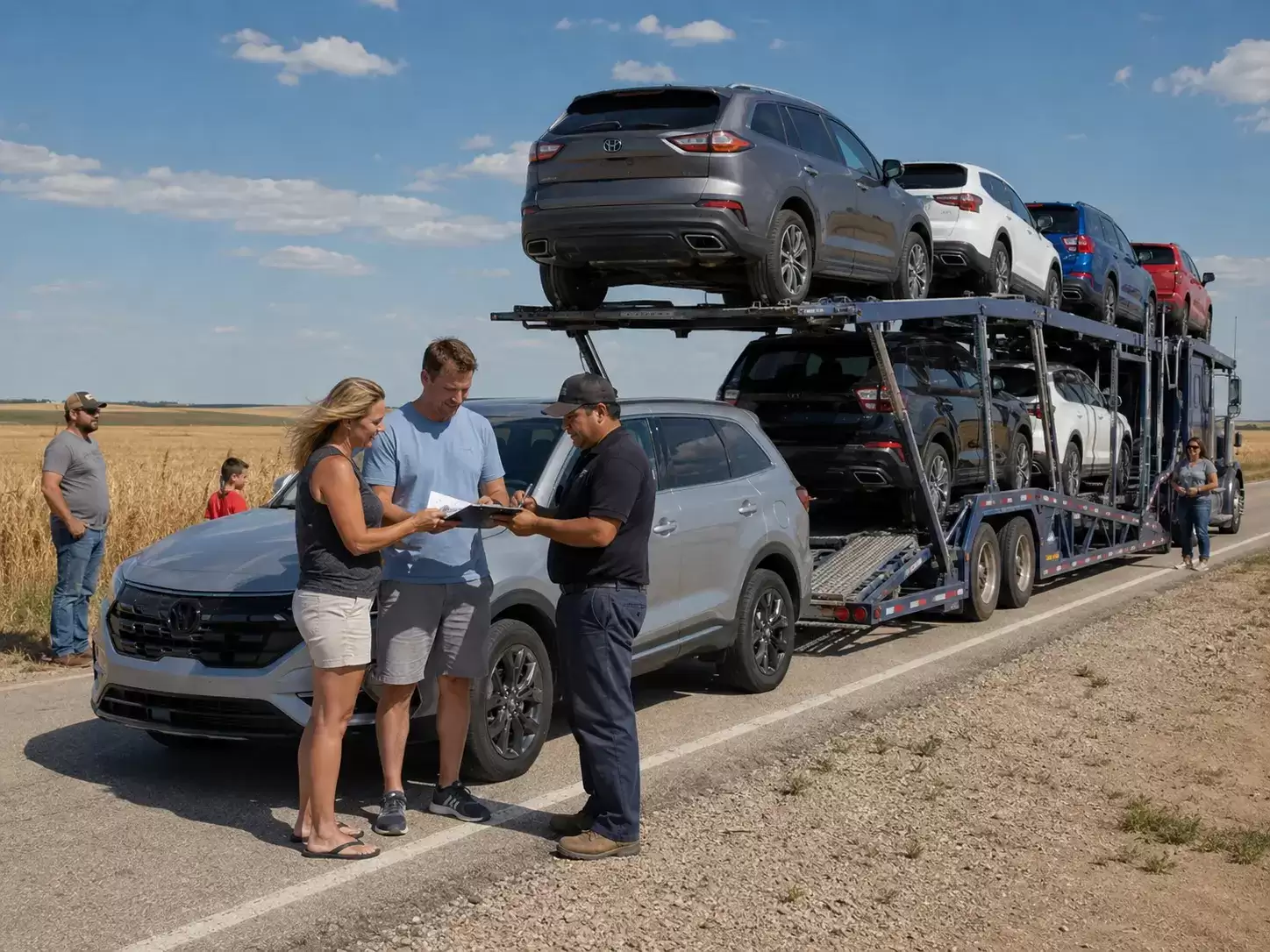
Kansas car shipping rates: popular routes and estimated costs
The tables below reflect current market averages for open-carrier transport of a standard sedan in good weather conditions. Prices vary based on fuel costs, carrier availability, season, and vehicle size. Use the calculator above for a real-time quote specific to your route and vehicle.
Popular car shipping routes from Kansas
| From | To | Distance (mi) | Estimated Days | Standard | Expedited | Rush |
|---|---|---|---|---|---|---|
| Kansas | Missouri | 250 | 1–2 | $375 | $450 | $525 |
| Kansas | Oklahoma | 250 | 1–2 | $375 | $450 | $525 |
| Kansas | Colorado | 400 | 2–3 | $475 | $570 | $665 |
| Kansas | Nebraska | 300 | 2–3 | $400 | $480 | $560 |
| Kansas | Texas | 550 | 2–4 | $575 | $690 | $805 |
| Kansas | Illinois | 550 | 2–4 | $600 | $720 | $840 |
| Kansas | Georgia | 1,100 | 4–6 | $925 | $1,110 | $1,295 |
| Kansas | Florida | 1,500 | 5–7 | $975 | $1,170 | $1,365 |
| Kansas | New York | 1,400 | 5–7 | $1,025 | $1,230 | $1,435 |
| Kansas | California | 1,800 | 6–8 | $1,325 | $1,590 | $1,855 |
Popular car shipping routes to Kansas
| From | To | Distance (mi) | Estimated Days | Standard | Expedited | Rush |
|---|---|---|---|---|---|---|
| California | Kansas | 1,800 | 6–8 | $1,325 | $1,590 | $1,855 |
| New York | Kansas | 1,400 | 5–7 | $1,025 | $1,230 | $1,435 |
| Florida | Kansas | 1,500 | 5–7 | $975 | $1,170 | $1,365 |
| Georgia | Kansas | 1,100 | 4–6 | $925 | $1,110 | $1,295 |
| Illinois | Kansas | 550 | 2–4 | $600 | $720 | $840 |
| Texas | Kansas | 550 | 2–4 | $575 | $690 | $805 |
| Colorado | Kansas | 400 | 2–3 | $475 | $570 | $665 |
| Nebraska | Kansas | 300 | 2–3 | $400 | $480 | $560 |
| Oklahoma | Kansas | 250 | 1–2 | $375 | $450 | $525 |
| Missouri | Kansas | 250 | 1–2 | $375 | $450 | $525 |
Why I-70 makes Kansas the most cost-effective cross-country auto transport corridor in America
When you ship a car cross-country through Kansas on I-70, you are sharing the cost of a carrier’s committed run that was crossing Kansas regardless of whether your vehicle was on it. A carrier running New York to Los Angeles covers all 420 Kansas miles at no marginal cost increase. Adding a Topeka or Salina vehicle is incremental revenue on a committed route, and the carrier prices it accordingly.
This through-carrier economics dynamic is the most important factor in Kansas cross-country pricing. I-70 corridor shippers routinely see coast-to-coast rates that rival — and often beat — shorter routes in regions without comparable through-corridor traffic.

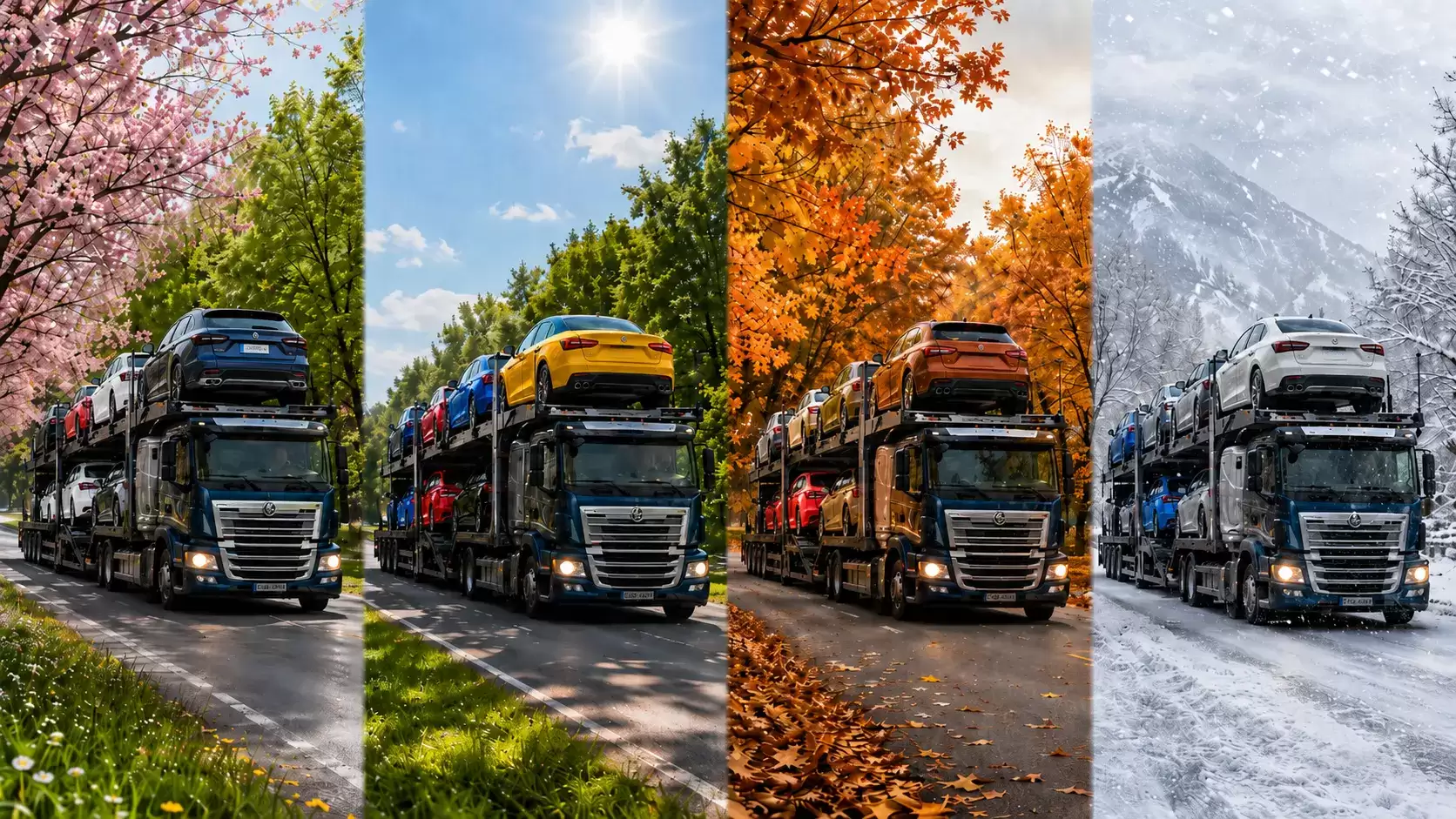
Kansas auto transport seasonal guide
Kansas car shipping service tiers
| Service Tier | Pickup Window | Best For | Price vs. Standard |
|---|---|---|---|
| Standard | 2–5 business days | Flexible schedules, I-70 and I-35 corridor cities, off-peak months (March–May, October–November) | Base rate |
| Expedited (most popular) |
1–3 business days | Fort Riley and McConnell PCS moves, western Kansas, winter months, fixed move dates, Wichita corporate relocations | Moderate |
| Rush | Next-day available | Hard military report dates, Wichita aerospace program relocation deadlines, last-minute moves | Premium |


How to ship a car to or from Kansas in 4 steps
Step 1: Get your instant quote. Use the calculator above or call us directly. Enter your pickup and delivery zip codes, vehicle type, and desired dates. You’ll have a real price in 30 seconds — no upfront payment required to reserve your spot.
Step 2: Book and confirm your pickup window. Once you book, we match your vehicle with a licensed, insured carrier on your specific route. For Kansas City metro and Wichita, Standard tier typically produces carrier assignment within 1–2 business days. For Fort Riley military moves during June–August, book 10–14 days in advance. For western Kansas and southwest Kansas communities off the interstate network, allow additional lead time or choose Expedited tier.
Step 3: Prepare your vehicle for pickup. Remove personal items over 100 lbs, leave the gas tank one-quarter full, document your vehicle with photos before the carrier arrives, and make sure someone is present for the inspection and Bill of Lading signing. For rural western Kansas and southwest Kansas addresses, confirm with your carrier whether they can reach your specific address or if a nearby commercial or I-70 exit meeting point is needed.
Step 4: Inspect at delivery and sign off. When your vehicle arrives, inspect every panel in daylight before signing the delivery Bill of Lading. Compare against your pre-pickup photos. Any damage that was not pre-existing should be noted on the Bill of Lading before you sign. Our team is available to assist with any delivery concerns at no additional charge.
Shipping a vehicle to or from a Kansas university
Kansas’s universities generate consistent auto transport demand in August and May, anchored by the University of Kansas in Lawrence and Kansas State University in Manhattan. Both campuses sit on I-70 with direct interstate access, making carrier logistics more straightforward than many peer universities in the region. The combined enrollment of KU and KSU exceeds 50,000 students, and August move-in creates one of the most concentrated student vehicle shipping surges in the central United States. Book 7–10 days in advance for university moves during late July and August.
| University | Location | Approx. Enrollment |
|---|---|---|
| University of Kansas | Lawrence | 28,000 |
| Kansas State University | Manhattan | 22,000 |
| Wichita State University | Wichita | 16,000 |
| Pittsburg State University | Pittsburg | 7,000 |
| Emporia State University | Emporia | 6,000 |
| Fort Hays State University | Hays | 15,000 |
| Washburn University | Topeka | 7,000 |
| Friends University | Wichita | 2,000 |
| MidAmerica Nazarene University | Olathe | 2,000 |
| Sterling College | Sterling | 700 |

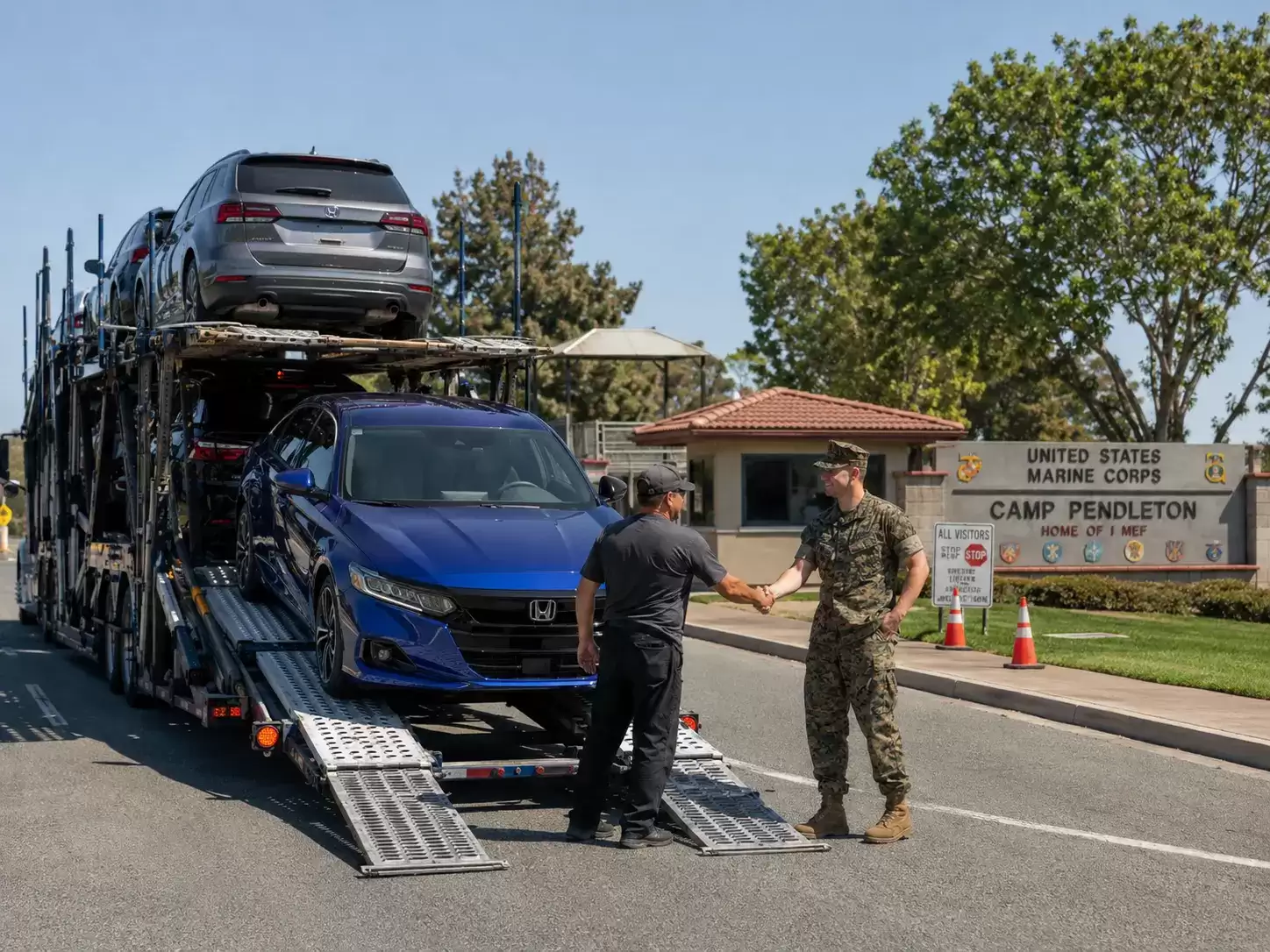
Military auto transport to and from Kansas
Kansas has two significant active-duty military installations that generate consistent auto transport demand. Fort Riley near Manhattan is home to the 1st Infantry Division and the Combat Aviation Brigade, with an active-duty and dependent population of approximately 25,000. Fort Riley is one of the Army’s largest installations and one of the busiest PCS installations in the central United States. PCS moves to and from Fort Riley peak sharply from June through August, with some activity in the September–October window as well. Expedited tier is strongly recommended for Fort Riley PCS moves with hard report dates. The base’s main gate is approximately 7 miles west of Manhattan on US-24, with I-70 access nearby. Book 10–14 days in advance for summer PCS window moves.
McConnell Air Force Base in Wichita is home to the 22nd Air Refueling Wing (KC-46 Pegasus), Air Force Reserve Command units, and the Air National Guard. McConnell generates PCS activity year-round with a June–August peak. Expedited tier is recommended for McConnell AFB PCS moves, particularly during summer. The base is located on the south side of Wichita with access via US-54/400 east and I-35 interchange logistics. The Wichita metro’s strong carrier market due to aerospace demand generally improves carrier availability for McConnell moves compared to Fort Riley, where the Manhattan market is more limited.
Service members at either installation should book vehicle transport as soon as they receive their PCS orders. During June–August, the simultaneous Fort Riley and McConnell PCS surges — combined with University of Kansas and Kansas State University student move-ins in August — create the most competitive carrier environment of the year in Kansas.
Kansas cities and communities we serve
Kansas City Metro (I-70 / I-35 / I-435)
Overland Park, Olathe, Kansas City (KS), Lenexa, Shawnee, Leawood, Prairie Village, Merriam, Mission, Roeland Park
Wichita Metro (I-35 / Kansas Turnpike / I-135)
Wichita, Derby, Andover, Haysville, Goddard, El Dorado, Newton, Augusta
I-70 Central Corridor
Topeka, Lawrence, Salina, Abilene, Manhattan, Junction City, Emporia
Western Kansas (I-70 West)
Hays, Colby, Goodland, Dodge City, Liberal, Garden City, Great Bend, Hutchinson
Northeast Kansas
Leavenworth, Fort Leavenworth, Lansing, Atchison, Ottawa, Paola
Kansas vehicle transport — official government resources
- Kansas Department of Revenue — Division of Vehicles — Title transfers, registration, and vehicle documentation for Kansas shipments.
- Kansas Highway Patrol — Commercial Vehicle Enforcement — Size and weight regulations, oversize permits, and carrier compliance requirements for I-70 and I-35 routes.
- Kansas Department of Transportation (KDOT) — Highway conditions, road closures, and I-70 winter blizzard updates and travel advisories.
- FMCSA Safety and Fitness Electronic Records (SAFER) — Verify your carrier’s USDOT number, insurance, and operating authority before booking.
- Better Business Bureau — Kansas — Check auto transport broker and carrier ratings and complaint histories for Kansas-based and national companies.

Popular long-distance auto transport routes from Kansas
Kansas to Texas Auto Transport
The Kansas-to-Texas corridor on I-35 south through Wichita and Oklahoma City to Dallas-Fort Worth is one of the most carrier-rich routes in the central United States. Dallas is 3–5 days from Wichita and 4–5 days from Kansas City. Houston and San Antonio are 1–2 days additional transit. The I-35 corridor produces consistent Standard tier pickup windows year-round, making this one of Kansas’s most reliable outbound routes.
Kansas to California Vehicle Shipping
The Kansas-to-California route follows I-70 west through Colorado to I-15 south for Las Vegas and Southern California, or continues on I-70 to I-15 to I-10 for Los Angeles. Transit times average 6–8 days for Los Angeles. The I-70 through-carrier advantage means Kansas-to-California loads are competitively priced and carriers are readily available on the I-70 corridor year-round.
Kansas to Florida Car Transport
Kansas-to-Florida routes typically follow I-35 south to Dallas, then I-10 east through Louisiana and the Gulf South to Florida, or I-70 east to I-75 south from Chattanooga to Florida. Transit times average 5–7 days. Florida is the most popular winter snowbird destination for Kansas retirees, and southbound October–November Kansas-to-Florida carrier availability is strong due to snowbird demand driving carrier positioning.
Kansas to Illinois Auto Shipping
The Kansas-to-Illinois route follows I-70 east through Missouri to St. Louis, or I-35 north to Des Moines and then east to Chicago. Chicago is 4–6 days from Kansas. The I-70 St. Louis corridor and the Chicago market provide consistent carrier availability for Kansas-to-Illinois loads, with through-carrier volume on I-70 giving Kansas City and Topeka shippers direct access to St. Louis-bound loads.
Kansas to Georgia Vehicle Transport
Kansas-to-Georgia routes typically follow I-70 east to I-75 south from Cincinnati to Atlanta, or I-35 south to I-40 east to Nashville then south to Atlanta. Atlanta is 4–6 days from Kansas City. The strong Atlanta carrier market makes this a reliable route with consistent carrier availability on both I-70 and I-35 corridor approaches.
Kansas to Colorado Car Shipping
The Kansas-to-Colorado route is one of the most direct in the state’s catalog, following I-70 west from the Kansas-Colorado border at Goodland directly to Denver in approximately 200 miles. Denver is 2–3 days from Kansas City and 1–2 days from western Kansas. The I-70 Denver corridor produces exceptional carrier availability and competitive rates due to through-carrier volume in both directions.
Kansas to Ohio Auto Transport
Kansas-to-Ohio routes follow I-70 east through Missouri and Illinois to Indianapolis, then I-70 east to Columbus and Cleveland. Columbus is 4–6 days from Kansas City. The I-70 corridor from Kansas City to Columbus is one of the most consistently carrier-active routes in the central United States, with through-carrier traffic that benefits Kansas shippers with competitive rates and reliable pickup windows.
Kansas to New York Vehicle Shipping
Kansas-to-New York routes follow I-70 east through Ohio and Pennsylvania to the I-78 northeast approach, or I-70 to I-76 (Pennsylvania Turnpike) to I-95 north. New York City is 5–7 days from Kansas City. The long distance and complex Mid-Atlantic routing make Expedited tier worth considering for time-sensitive New York moves.
Kansas to Oklahoma Car Transport
The Kansas-to-Oklahoma route is the shortest in the catalog, following I-35 south from Wichita directly to Oklahoma City. Oklahoma City is 2–3 days from Wichita and 3–4 days from Kansas City. Standard tier reliably produces 2–3 business day pickup windows for Oklahoma-bound loads due to the high frequency of I-35 north-south carrier traffic between the two states.
Kansas to Missouri Auto Shipping
Kansas-to-Missouri routes are among the shortest and most carrier-active in the state, with the Kansas City metro effectively sharing a carrier market with the Missouri side. St. Louis is 4–5 hours from Kansas City on I-70 and 1–2 days transit. Kansas City, Missouri is functionally the same carrier market as Kansas City, Kansas. The I-70 Kansas City-to-St. Louis corridor is one of the most active short-haul auto transport routes in the Midwest.
Kansas to Arizona Vehicle Transport
Kansas-to-Arizona routes follow I-70 west to I-25 south at Raton, New Mexico, then to Albuquerque and I-40 west to Flagstaff and Phoenix, or I-70 to I-15 south from Las Vegas. Phoenix is 4–6 days from Kansas City. The Sunbelt retirement migration from Kansas to Arizona produces strong southwestbound carrier demand from October through January, which can create favorable pickup windows and rates for Arizona-bound Kansas shippers in that window.
Kansas to Washington Car Shipping
Kansas-to-Washington routes follow I-70 west to I-15 north through Salt Lake City and the I-84 northwest corridor to Portland and Seattle. Seattle is 6–8 days from Kansas. The Pacific Northwest carrier corridor produces consistent westbound availability as carriers return loads from the Seattle and Portland markets, which are strong auto transport demand centers that generate balanced two-directional carrier traffic on the I-84/I-15 corridor.

Nearby state auto transport services
Missouri Auto Transport
Missouri borders Kansas on the east and shares the Kansas City carrier market. The I-70 corridor from Kansas City to St. Louis is one of the most active short-haul auto transport routes in the Midwest. St. Louis, Columbia, and the entire Missouri I-70 corridor are accessible to Kansas shippers with Standard tier pickup windows that match the Kansas City market depth.
Oklahoma Vehicle Shipping
Oklahoma borders Kansas on the south on I-35, making Wichita-to-Oklahoma City one of the state’s fastest outbound routes. The I-35 north-south corridor between Wichita and Oklahoma City carries consistent carrier traffic in both directions, and Standard tier pickup windows for Oklahoma-bound loads from Wichita average 2–3 business days year-round.
Colorado Car Transport
Colorado borders Kansas on the west on I-70, making Denver the most accessible major city from western Kansas. The I-70 Denver corridor is the highest-volume interstate in Colorado, and carriers running the full I-70 transcontinental route regularly pick up Kansas loads on their way west. Denver is 2–3 days from Kansas City at Standard tier.
Nebraska Auto Shipping
Nebraska borders Kansas on the north, with Omaha and Lincoln accessible from Kansas City via I-29 north and I-80. The Omaha-Council Bluffs metro is one of the Midwest’s stronger carrier markets, and Kansas City metro shippers can access Nebraska carrier traffic via I-29 north or I-70 to I-80 west from St. Louis.
Iowa Vehicle Transport
Iowa is accessible from Kansas City on I-35 north through Missouri to Des Moines, a 4–5 hour drive that produces consistent carrier traffic. Des Moines is 3–5 days from Wichita. The I-35 corridor between Kansas City and Des Moines is one of the most consistently carrier-active north-south segments in the central Midwest.
Arkansas Car Shipping
Arkansas is accessible from Kansas City via I-49 south through Joplin to Fayetteville and northwest Arkansas, or I-35 south to Oklahoma City and I-40 east to Little Rock. The northwest Arkansas Walmart corridor is a growing carrier market with increasing I-49 corridor traffic that benefits Kansas City–to–Arkansas routes.

Ready to ship your car to or from Kansas?
Join hundreds of thousands of customers — Snowbirds, military families, tech relocators, students, and families moving across the country — who have trusted Direct Express Auto Transport with their Kansas vehicle shipments since 2004. Get your instant, no-obligation quote now. It takes 30 seconds, requires no personal information, and there is no upfront payment required to hold your spot.
Instant quote — real-time pricing in under 5 seconds
No upfront payment — your card is charged only when a carrier is assigned
No risk to get a quote and book your order
BBB Accredited A+ since 2004
FMCSA licensed and fully bonded
4.6 stars across thousands of verified Google reviews