Colorado to Florida Car Shipping
The original instant car shipping calculator — trusted since 2004. Door-to-door Colorado to Florida transport with no surprises, no hidden fees, and three options to ship your vehicle on your schedule.
★ 4.6/5 Google Reviews | BBB Accredited A+ | FMCSA Licensed (MC #479342) | USDOT #1240502 | No upfront payment required | 20+ years shipping vehicles


Colorado to Florida Car Shipping Rates by City
Every Colorado to Florida vehicle shipment is available at three service levels:
Standard, Expedited, & Rush Options
Choose the one that fits your timeline and budget. All three include full door-to-door service and carrier insurance.

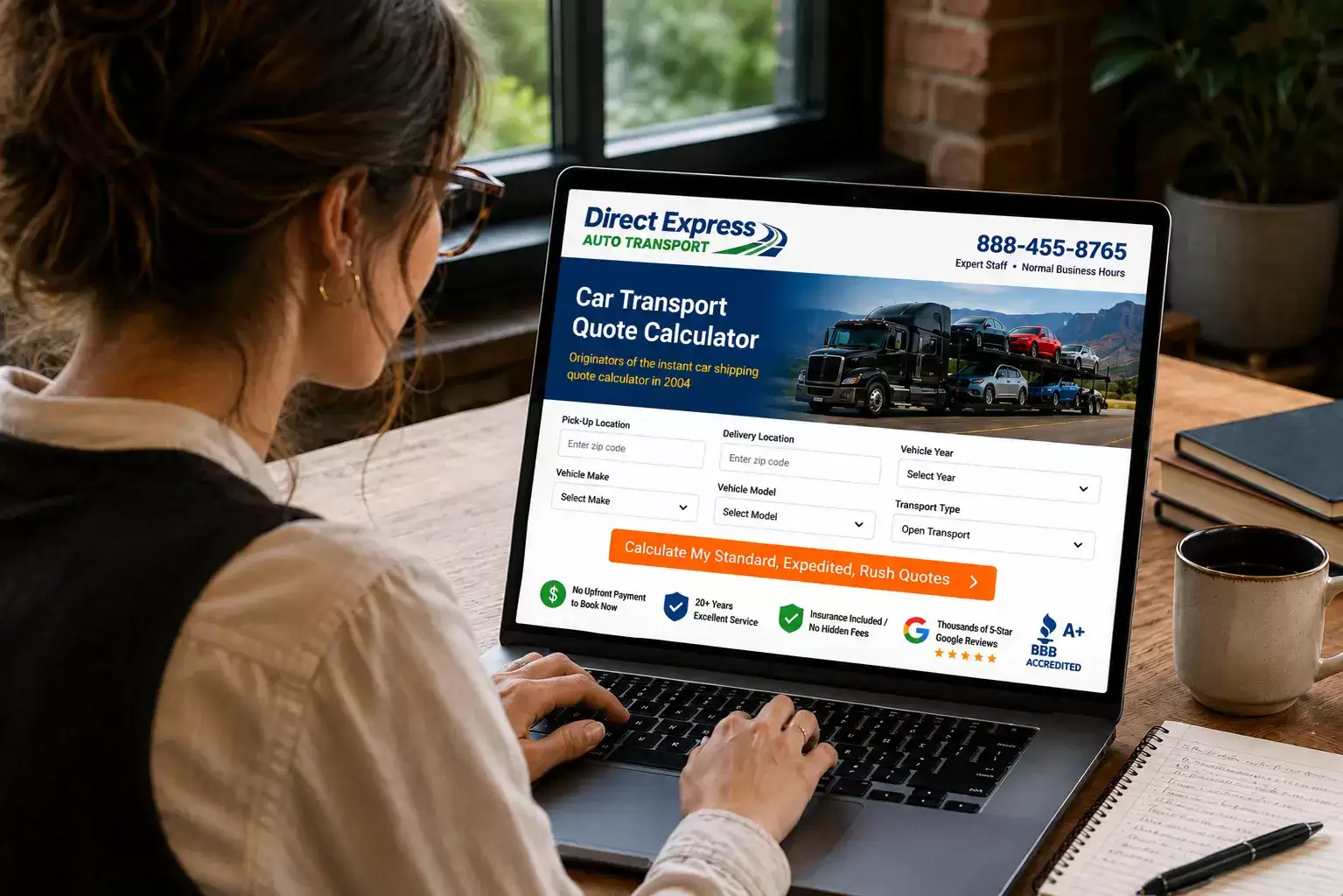
The Company That Invented Instant Auto Transport Pricing
Direct Express Auto Transport pioneered online instant pricing for the auto transport industry in 2004. Before we built the first car shipping cost calculator, getting a quote from a broker meant phone calls, callbacks, and waiting — sometimes days. We changed that. Today you know your exact cost in 30 seconds, before committing to anything. No phone tag, no hassle. Just a real number, instantly.
Three Service Tiers for Every Colorado to Florida Shipment
Every shipment on this Colorado to Florida route is available at three service tiers so you can match your budget to your timeline. Standard delivers at the best available rate — ideal when your schedule has a few days of flexibility. Expedited moves your vehicle to the front of the dispatch queue for faster pickup. Rush gets your car picked up as fast as humanly possible — for moves where every day counts. All three tiers include full door-to-door service and carrier insurance.
What customers say about shipping a car from Colorado to Florida with Direct Express Auto Transport


Seasonal Pricing Guide: Colorado to Florida
Colorado to Florida peaks in spring (March–May) as post-ski-season departures converge with PCS launch, and again in summer (June–July) with the military PCS cycle. August–September is the best value window.

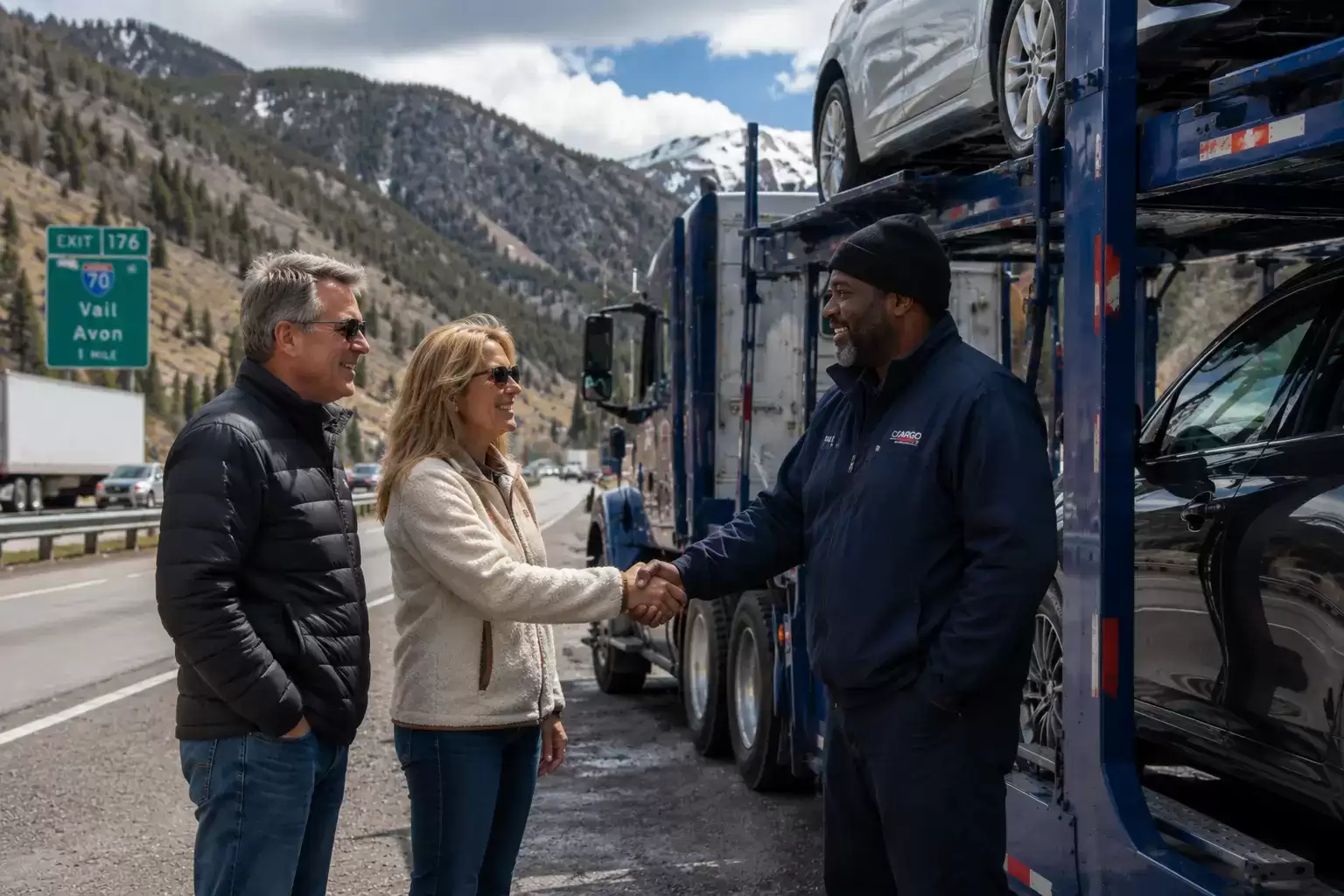
Who Ships a Car from Colorado to Florida — and Why
Colorado to Florida is a corridor defined by altitude, military rotation, and retirement — three of the most reliable demand drivers in the auto transport industry. The move represents an almost pure geographic inversion: from the nation’s highest-altitude state to its lowest-elevation one, from the Mountain West’s mountain winters to the Sunshine State’s subtropical warmth. The people making this move fall into identifiable segments, each with its own timing, urgency profile, and city-pair preferences.
Military PCS: Fort Carson, Peterson SFB, and the Colorado Springs Cluster → Florida
Military PCS outbound from Colorado’s installations is the corridor’s most time-critical and highest-volume single segment. Colorado Springs is one of the most military-dense cities in the United States — Fort Carson (Army, 4th Infantry Division, 10th Special Forces Group), Peterson Space Force Base (NORAD/NORTHCOM), Schriever Space Force Base (military satellite operations), Cheyenne Mountain Space Force Station, and the Air Force Academy all generate outbound PCS orders to Florida’s major installations.
Fort Carson, Peterson SFB, and Schriever SFB Florida PCS Routes
Fort Carson sends personnel to Eglin AFB, Hurlburt Field, MacDill AFB (Tampa — USSOCOM/USCENTCOM), and Fort Stewart. Peterson SFB and Schriever SFB generate Space Force and Air Force orders to Patrick Space Force Base in Melbourne and Tyndall AFB in Panama City. The Colorado Springs → Tampa lane is the highest-volume single military pairing on this corridor.
Post-Ski-Season Workers and Mountain Community Departures
Post-ski-season worker and mountain community departures are a distinctive CO→FL demand segment without a close parallel on other corridors. Colorado’s ski industry employs approximately 60,000–70,000 workers seasonally, and when ski season ends in late March and April, a significant portion return to their home states. Florida is consistently among the top states of origin for Colorado ski industry seasonal employees.
Mountain Community Departure Timing and Aspen Logistics
When ski season closes at Vail, Aspen, Breckenridge, and Steamboat Springs between late March and mid-April, outbound vehicle shipment demand spikes sharply. For Aspen origins, carrier pickup requires the CO-82 approach from Glenwood Springs — not accessible for 75-foot haulers regardless of season. Plan transload or specialized carrier logistics for Aspen; discuss with your coordinator before booking.
Colorado Retirees Moving to Florida
Colorado retirees relocating to Florida represent one of the corridor’s most significant permanent migration streams. Florida offers what Colorado cannot: ocean beaches, subtropical warmth, no state income tax (Florida’s major financial advantage over Colorado, which has a flat 4.4% individual income rate), and significantly lower housing costs in many markets.
Front Range Retirement Corridors to Gulf Coast and South Florida
Denver metro retirees target Florida’s Gulf Coast — Naples, Fort Myers, Sarasota, and Tampa Bay — for warm weather and affordable living. The Greeley → Sarasota, Longmont → Clearwater, and Loveland → Port St. Lucie pairings capture Northern Front Range to Gulf Coast retirement moves. Fort Collins → Naples and Denver → Sarasota round out the most active Front Range retirement corridors.
Denver Technology Sector and Corporate Transfers
Corporate transfers from Denver’s technology and federal contracting sector are the corridor’s fastest-growing segment. As companies right-size Colorado operations or transfer professionals between Denver headquarters and Tampa Bay or Miami satellite offices, auto transport demand grows. Key corridors: Denver tech sector to Tampa Bay’s emerging technology cluster; Boulder clean energy sector to Orlando’s space and defense corridor; Colorado Springs defense community to MacDill AFB’s USSOCOM contractor ecosystem in Tampa.
Key Corporate Corridors and Table City Pairs
The Fort Collins → Fort Lauderdale pairing at $1,425 Standard captures the Northern Front Range professional market moving to Broward County’s growing financial and technology sector. Westminster → West Palm Beach at $1,450 serves the Ball Aerospace and Lockheed Martin corridor into Palm Beach County’s aerospace supplier ecosystem.
University Graduates Moving to Florida
University of Colorado Boulder, Colorado State University, and University of Denver graduates moving to Florida for first jobs represent a predictable annual demand segment in May and June. CU Boulder’s engineering, computer science, and business programs generate graduate-placement demand for Florida employers in aerospace, financial services, and technology. CSU Fort Collins’ engineering and agriculture programs generate placements in Florida’s agriculture, food science, and environmental services sectors.
Colorado Graduate Market to Florida Employers: Key City Pairs
The Aurora → Orlando pairing at $1,300 Standard captures the Denver metro to Central Florida placement corridor. Denver → Tampa at $1,300 is the most direct pairing between the Denver metro and Florida’s largest Gulf Coast city for young professionals making first-job relocations. May and June are the primary booking months, and Standard is typically available for those with 3–4 weeks of flexibility.
What Makes the Colorado–Florida Auto Shipping Run Different
Two Corridors in Reverse: Southern I-25/I-10 and Central I-70/I-35/I-20
Colorado to Florida uses the same two primary routing corridors as Florida to Colorado, driven in the opposite direction. The southern route follows I-25 south from the Front Range through Pueblo, Trinidad, and Raton Pass at 7,834 feet into New Mexico, then I-25 south through Santa Fe and Albuquerque, then I-10 east through Texas and Louisiana toward Florida. This routing is optimal for Colorado Springs and Pueblo origins and for Panhandle Florida destinations (Tallahassee, Pensacola).
Central Corridor: I-70 East to I-35/I-20 for Denver Metro Origins
The central route follows I-70 east from Denver through the Kansas plains, then I-35 south through Oklahoma City and Dallas, then I-20 east into Georgia and north Florida, connecting to I-95 south for Northeast Florida and to the Florida Turnpike for South Florida. This routing is better for Denver metro origins and South Florida destinations (Miami, Fort Lauderdale, West Palm Beach, Cape Coral, Fort Myers). Boulder-area origins frequently use US-36 east to I-70; Fort Collins and Greeley origins access I-25 south to I-70 east at Denver. Carriers use the most efficient corridor given their current load cluster and destination zone.
Colorado Springs → Jacksonville: The Table’s Cheapest Pair
Colorado Springs to Jacksonville at 1,660 miles and $1,175 Standard ties for the cheapest pair on this table. Colorado Springs sits at the junction of I-25 and US-24, positioned to take the southern I-25 corridor directly south without the Denver metro mileage detour. Jacksonville is the first major Florida city on the I-10 eastern approach — it is the closest major Florida city to any Colorado origin on the southern routing corridor. The 1,660-mile run via I-25 through Raton Pass, across New Mexico and Texas on I-10, and east through Louisiana and Mississippi to Jacksonville is a streamlined, high-carrier-density route.
Military Significance: Fort Carson to NAS Jacksonville and Mayport
The military PCS significance of this pairing is substantial: Fort Carson generates outbound PCS orders to NAS Jacksonville and Naval Station Mayport, and Peterson SFB and Schriever SFB generate orders to related joint-force Florida commands. At $1,175 Standard, Colorado Springs to Jacksonville is one of the lowest per-mile rates on any CO→FL pair.
Thornton → Tallahassee: The Other Cheap End of the Table
Thornton to Tallahassee at 1,650 miles and $1,175 Standard ties Colorado Springs → Jacksonville as the table’s cheapest pair. Thornton is a northern Denver suburb on I-25, just north of the I-25/I-76 interchange — its direct I-25 southbound access eliminates the city-center Denver mileage detour. Tallahassee sits at the entry point to I-10 eastbound into Florida, meaning a carrier running south on I-25 and east on I-10 reaches Tallahassee before any other major Florida metro.
Geographic Efficiency and Military Note
The combination of a near-suburb northern Denver origin and a Panhandle Florida destination produces the same efficiency that makes Tallahassee → Pueblo cheap in the other direction. Military note: Tallahassee is within driving distance of Eglin AFB and Hurlburt Field — Fort Carson PCS orders with Eglin/Hurlburt report addresses can use this Thornton → Tallahassee routing as the backbone.
Pueblo → Cape Coral: Why It’s the Most Expensive
Pueblo to Cape Coral at 2,100 miles and $1,475 Standard is the table’s most expensive pair, and the geographic logic is straightforward. Pueblo is Colorado’s southernmost major city — when a carrier departs Pueblo southbound on I-25, it has already used Colorado’s full north-south distance before even leaving the state. Cape Coral sits on Florida’s Southwest Gulf Coast, reached via I-75 south from Tampa through Fort Myers. Pueblo to Cape Coral combines maximum Colorado approach mileage with maximum Florida penetration depth — the 2,100-mile run is approximately 450 miles longer than the Thornton → Tallahassee run.
Fort Carson Personnel Note on Pueblo Origins
The Fort Carson military complex sits 45 miles north of Pueblo — Fort Carson personnel receiving PCS orders to Southwest Florida installations may find that Fort Carson’s Aurora or Denver-area address produces lower pricing than the Pueblo civilian address, since the actual pickup can occur anywhere in the metro.
Winter Colorado Departure: I-70 Mountain Corridor and Raton Pass
For Front Range origins, Colorado’s winter weather does not significantly affect carrier pickup — carriers can access all Front Range addresses year-round without mountain corridor complications. However, two winter factors matter for timing planning. First: Raton Pass on I-25 at the New Mexico border (7,834 feet) is occasionally closed or restricted during major winter storms from November through April. Raton Pass closures typically last hours, not days, but plan a buffer day for January–March CO→FL shipments using the southern routing.
Mountain Community Winter Pickup: I-70 Corridor and Aspen Access
Second: for mountain community origins — Vail, Steamboat Springs, Aspen — carrier pickup from November through April requires I-70 mountain corridor access. The I-70 corridor is subject to chain requirements, intermittent closures, and multi-hour delays during major snowstorms. Aspen pickups require CO-82 from Glenwood Springs, which is not accessible for 75-foot haulers — requiring transload or a specialized carrier regardless of season. Discuss winter pickup logistics with your coordinator at booking time. Real-time I-70 mountain corridor alerts are at cotrip.org.
South Florida Destinations: The Long End of the Table
Lakewood to Hialeah, Westminster to West Palm Beach, Broomfield to Miami, and Centennial to Pembroke Pines all fall in the $1,425–$1,450 Standard range — and the reason is the Florida peninsula approach distance. Once a carrier reaches the I-75 or I-95 Florida entry point, South Florida destinations require an additional 250–350 miles of Florida Turnpike or I-75 driving past Central Florida. From Denver to Miami via the central corridor, that peninsula approach adds roughly two hours of driving and proportional fuel cost to what is already a 1,850-mile haul.
Why Pueblo to Cape Coral Is the Most Expensive Pair
At $1,450 Standard for a 2,060–2,080 mile run, the South Florida pricing reflects both the corridor length and the Florida Turnpike approach mileage. Pueblo → Cape Coral at $1,475 is the most expensive because it adds maximum Colorado departure mileage to this South/Southwest Florida destination logic — two geographic extremes working in the same direction.
Other Colorado to Florida Cities We Serve
Direct Express ships vehicles between hundreds of city pairs on this route. Below is a broader look at additional Colorado origins and Florida destinations we regularly serve.
Hub Cities Along the Colorado–Florida Car Shipping Corridor
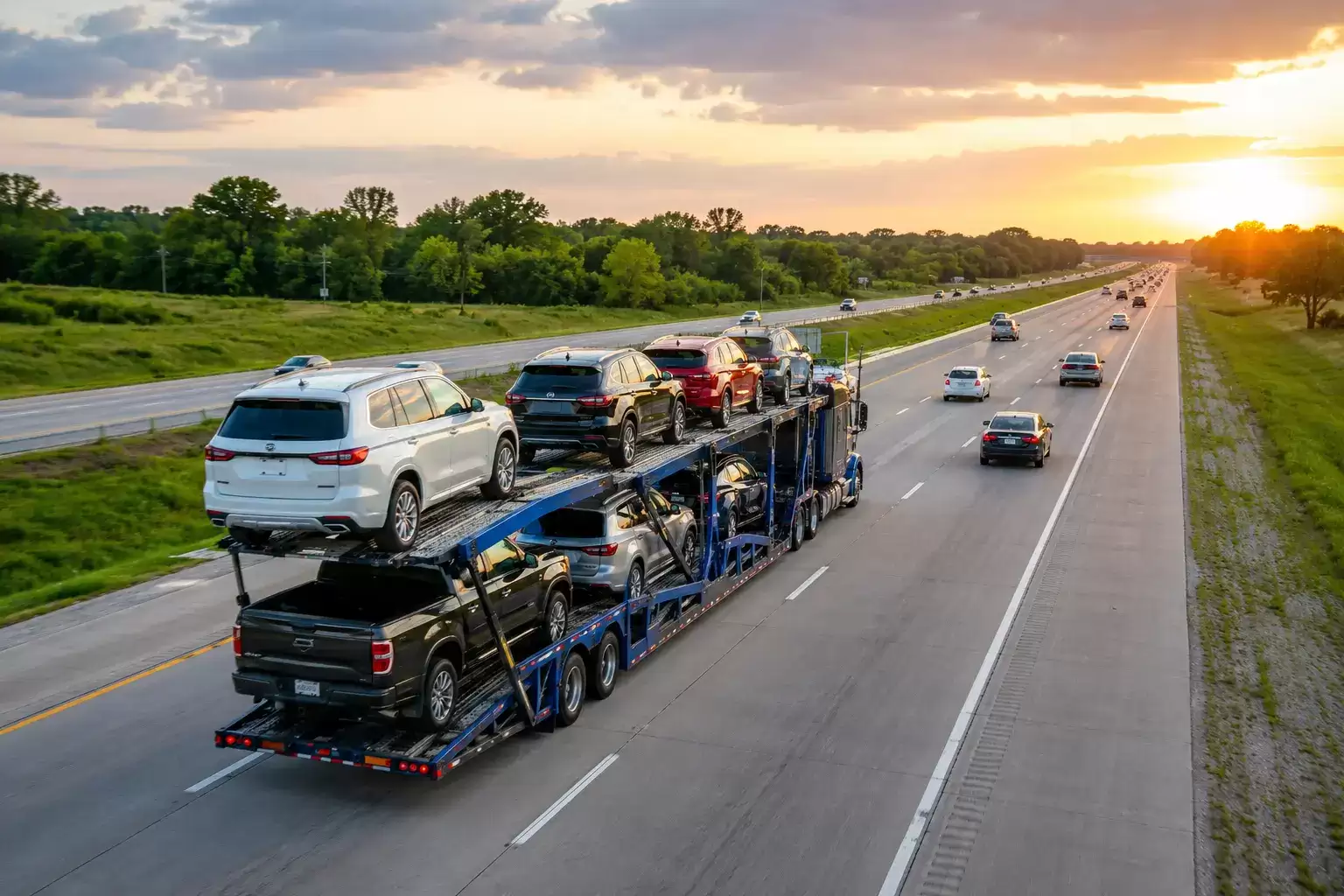
Colorado to Florida uses two primary routing approaches — the southern corridor via I-25 and I-10, and the central corridor via I-70 east and I-35/I-20 — depending on the origin and destination city pair. Most Colorado Springs and Pueblo departures use the I-25 southern approach; most Denver metro origins use whichever corridor the carrier finds most efficient given their load cluster and Florida destination zone.
Colorado Origin Zones
Mid-Corridor Relay Points
Florida Delivery Zones
Open vs. Enclosed Car Transport on the Colorado–Florida Route
Open transport is the correct choice for the overwhelming majority of CO→FL shipments — military PCS, corporate relocation, university placements, post-ski-season worker moves, and retiree relocations all ship open. Colorado is unique among states in that winter weather at the pickup end (rather than the delivery end) is the relevant weather concern, but this affects timing and routing rather than transport type. Enclosed transport has a specific and real niche on this corridor for certain vehicles and mountain community origins.
Open Transport Recommended for Most
- Standard open-air carrier — the correct choice for virtually all CO→FL shipments to any Florida destination
- Military PCS from Fort Carson, Buckley SFB, Peterson SFB, Schriever SFB, and the Air Force Academy: entirely open transport market; standard military PCS vehicle is a daily driver, not a collector vehicle
- Front Range Colorado pickup year-round: carriers access all Denver metro, Colorado Springs, Fort Collins, Aurora, and Greeley addresses without weather complications regardless of season
- Post-ski-season worker moves from Vail (I-70 accessible) and Steamboat Springs (US-40 accessible): open transport in spring conditions, typically April and May when mountain access is improving
- Retiree relocations and corporate transfers: open transport throughout the year
- Florida delivery is weather-favorable October through May; hurricane season monitoring June–November for South Florida arrivals
Enclosed Transport
- Vehicle travels in a fully enclosed, weatherproof trailer for the entire run
- Typically 40–60% more expensive than open transport
- Classic and collector cars departing Colorado mountain homes for South Florida winter storage: the primary enclosed CO→FL use case — Aspen and Vail homeowners shipping Ferrari, Porsche GT-series, or pre-war classics to South Florida for the winter social season
- Aspen origin specifically: CO-82 from Glenwood Springs is inaccessible for 75-foot multi-car haulers; Aspen pickup requires a specialized carrier for the mountain highway approach regardless of transport type. Enclosed carriers that can navigate CO-82 are often the practical choice for Aspen collector car pickups
- High-value exotics from Denver metro to Miami or Fort Lauderdale: the Broomfield → Miami and Westminster → West Palm Beach pairings occasionally serve this segment — Denver’s aerospace and technology wealth has generated a growing collector car community
- Colorado mountain community vehicles with significant sentimental or financial value being moved during active winter conditions (January–February): enclosed removes weather exposure concerns on the I-70 mountain corridor approach to the carrier and during the open-highway transit
Our honest recommendation: Open transport for all military PCS, worker moves, corporate relocation, and standard vehicle shipping from any Colorado origin. Enclosed for collector cars and high-value exotics departing Colorado mountain homes for South Florida winter storage, and for Aspen origins year-round due to the CO-82 approach logistics.


Door-to-Door Car Shipping: What to Expect in Colorado and Florida
Pickup in Colorado
Denver Metro and Front Range
Denver metro pickup — Aurora, Lakewood, Thornton, Westminster, Centennial, Highlands Ranch, Arvada, Commerce City, Broomfield, Northglenn — is operationally excellent year-round. Carriers access all Front Range addresses via I-25, I-70, and the Denver beltway network without seasonal restrictions. Some downtown Denver addresses or high-rise condominiums may require nearby commercial staging for 75-foot carriers — your coordinator manages this routinely.
Colorado Springs, Fort Collins, and Northern Front Range
Colorado Springs pickup is excellent via I-25 — Fort Carson, Peterson SFB, Schriever SFB, and the Air Force Academy all have established PCS carrier protocols. Fort Collins and Loveland access I-25 north with outstanding year-round coverage. Greeley, Windsor, and Evans use I-25 and CO-34/CO-119 with solid carrier coverage. Boulder accesses I-25 via US-36 with excellent year-round conditions.
Mountain Communities
Vail is directly accessible from I-70 — carriers exit at Vail exits with no complications in dry conditions. Steamboat Springs uses US-40 from I-70 at Silverthorne — manageable in good weather, but weather-contingency planning is required October through April. Grand Junction is on I-70 direct, accessible for all standard carriers. Durango uses US-160 from I-25, which is manageable with no extreme elevation complications.
Aspen: Specialized Carrier Required Year-Round
Aspen pickup requires CO-82 from Glenwood Springs, which is NOT accessible for 75-foot multi-car haulers regardless of season. Aspen always requires transload or a specialized carrier arrangement — discuss with your coordinator before booking.
Winter Considerations (November–April)
For Front Range origins, Colorado’s winter weather does not significantly affect carrier pickup. Raton Pass on I-25 at the New Mexico border (7,834 feet) is occasionally restricted during major winter storms — plan a buffer day for January–March shipments using the southern corridor. Monitor real-time I-70 mountain corridor alerts at cotrip.org for mountain community pickup timing.
Delivery in Florida
Northeast and North Florida
Jacksonville, Palm Coast, Daytona Beach, Ocala, Tallahassee, Gainesville, and Pensacola are the easiest Florida delivery zones — I-10 and I-95 direct access, no Florida peninsula approach mileage, excellent year-round conditions. Hurricane season risk for Northeast Florida is significantly lower than South and Southwest Florida.
Central Florida and Space Coast
Orlando, Kissimmee, Lakeland, Melbourne, and Deltona use I-4 and I-75 access — straightforward delivery year-round. Patrick Space Force Base in Melbourne has established protocols for military vehicle delivery from Colorado installations.
Tampa Bay and Gulf Coast
Tampa, St. Petersburg, Clearwater, Sarasota, Bradenton, Fort Myers, Cape Coral, and Naples use I-275 and I-75 access. MacDill AFB in Tampa has established carrier protocols for military deliveries. Cape Coral and Fort Myers via I-75 south from Tampa have standard access with no complications.
South Florida
Miami, Fort Lauderdale, Hialeah, Hollywood, Pembroke Pines, Coral Springs, Miramar, West Palm Beach, Boca Raton, and Port St. Lucie require Florida Turnpike or I-95 southbound — the deepest Florida peninsula penetration. Miami high-rise or beachfront delivery may require nearby commercial staging; your coordinator manages this routinely.
Hurricane Season Monitoring for South and Southwest Florida
Hurricane season is active June 1 through November 30. For all South and Southwest Florida destinations, monitor NOAA tropical forecasts in August and September. Carrier pickup in Colorado is unaffected by Florida weather, but Florida delivery may be delayed — Expedited helps ensure carrier dispatch completes before any approaching tropical system.
Florida Vehicle Registration for Colorado Arrivals
Florida requires vehicle registration within 10 days of bringing the vehicle into the state. Visit your county tax collector’s office — which handles registration in Florida, not a DMV — with your Colorado title, proof of Florida insurance, and proof of Florida address; no smog check or VIN inspection is required. Cancel your Colorado registration once your Florida plates arrive.
Preparing Your Vehicle
Before Colorado pickup: remove all personal items from the passenger compartment, disable car alarms, remove any mountain sports equipment stored in the vehicle (ski racks should be removed for transport unless your coordinator confirms carrier clearance), and leave no more than a quarter tank of fuel. Photograph your vehicle from all angles with date-stamped images. Mountain community pickup preparation: if your vehicle has sustained winter road salt and sand accumulation from Colorado mountain roads, note this on the condition report — Florida delivery will reveal any pre-existing undercarriage or exterior condition from Colorado winter driving. Florida delivery: your vehicle will arrive with the accumulated road film from the carrier’s haul — a wash after delivery is routine. Inspect carefully before signing the Bill of Lading.
Colorado & Florida Auto Transport Resources
Colorado Helpful Government Links
- Colorado Division of Motor Vehicles (Colorado DMV) — Colorado’s vehicle title and registration agency. Cancel your Colorado registration and obtain title release documentation when establishing Florida residency.
- Colorado DMV — Vehicle Registration — Colorado registration cancellation process and title transfer documentation for vehicles departing to Florida.
- Colorado DMV — Driver License — Surrender your Colorado driver’s license when obtaining a Florida license after establishing Florida residency.
- Colorado DMV — Military Provisions — Provisions for active duty military departing Colorado installations (Fort Carson, Buckley SFB, Peterson SFB, Schriever SFB, Air Force Academy) on PCS orders to Florida.
- CDOT COtrip — Colorado I-70 Mountain Corridor Alerts — Real-time road conditions, closures, and chain requirement alerts for the I-70 mountain corridor. Relevant for mountain community vehicle pickups November–April.
Florida Helpful Government Links
- Florida Department of Highway Safety and Motor Vehicles (FLHSMV) — Florida’s vehicle title and registration oversight agency. New Florida residents from Colorado must register their vehicle within 10 days of bringing it into the state.
- FLHSMV — Vehicle Title and Registration — Florida title transfer process, registration requirements, and fee schedule for Colorado vehicles establishing Florida registration.
- FLHSMV — Florida Driver License — New Florida residents must obtain a Florida driver’s license within 30 days of establishing residency. Your Colorado license must be surrendered.
- FLHSMV — Military Provisions — Provisions for active duty military arriving at Florida installations (MacDill AFB, Patrick SFB, NAS Jacksonville, NAS Pensacola, Eglin AFB, Hurlburt Field) on PCS orders from Colorado.
Federal Auto Transport Resources
- FMCSA — Verify a Carrier’s License (SAFER System) — Verify that any auto transport company is federally licensed and insured before booking.
- FMCSA — Protect Your Move — Federal consumer guidance on hiring vehicle shippers and your rights on a cross-country move.