Virginia to Texas Car Shipping
The original instant car shipping calculator — trusted since 2004. Door-to-door Virginia to Texas transport with no surprises, no hidden fees, and three options to ship your vehicle on your schedule.
★ 4.6/5 Google Reviews | BBB Accredited A+ | FMCSA Licensed (MC #479342) | USDOT #1240502 | No upfront payment required | 20+ years shipping vehicles


Virginia to Texas Car Shipping Rates by City
Every Virginia to Texas vehicle shipment is available at three service levels:
Standard, Expedited, & Rush Options
Choose the one that fits your timeline and budget. All three include full door-to-door service and carrier insurance.
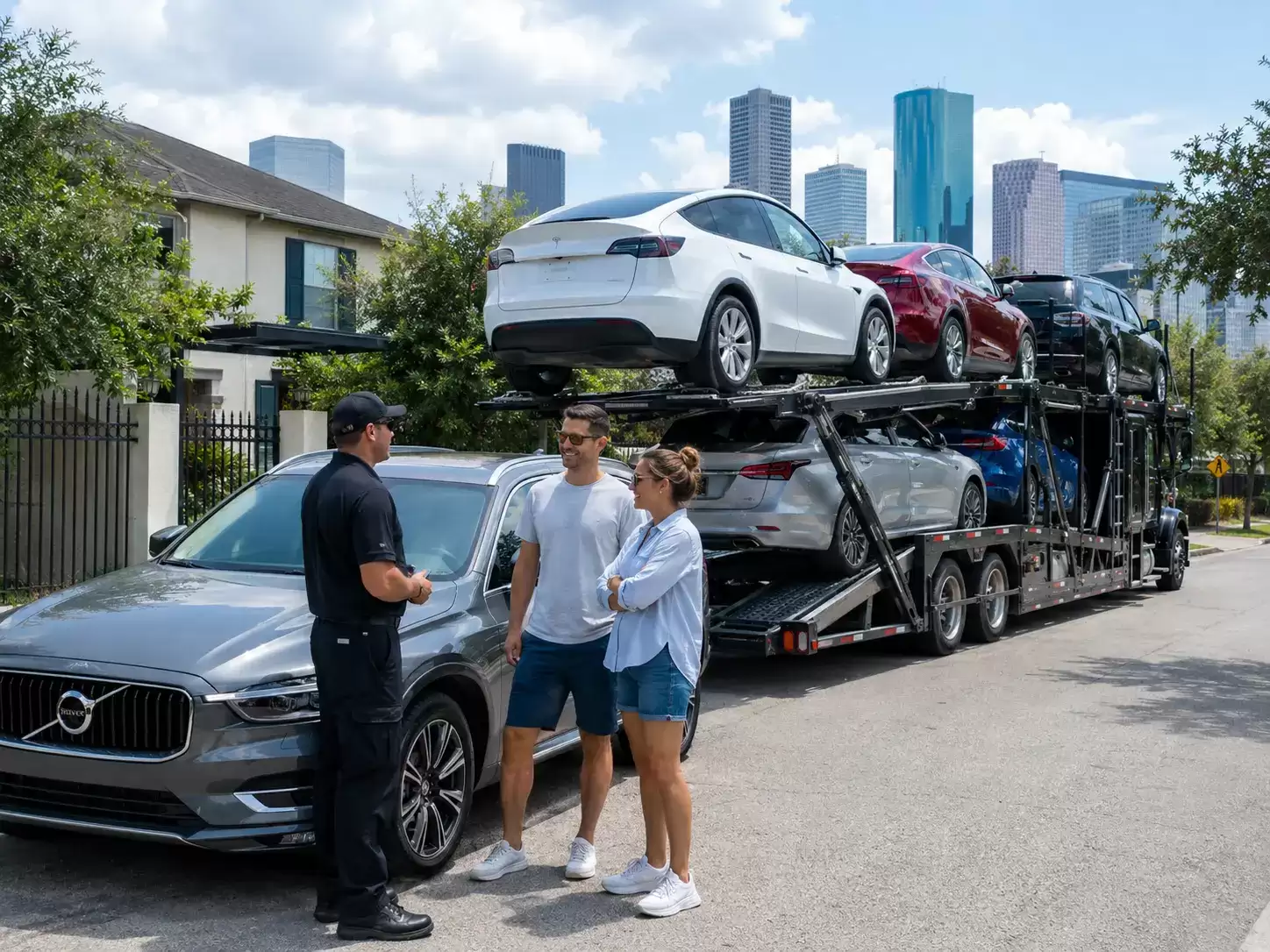
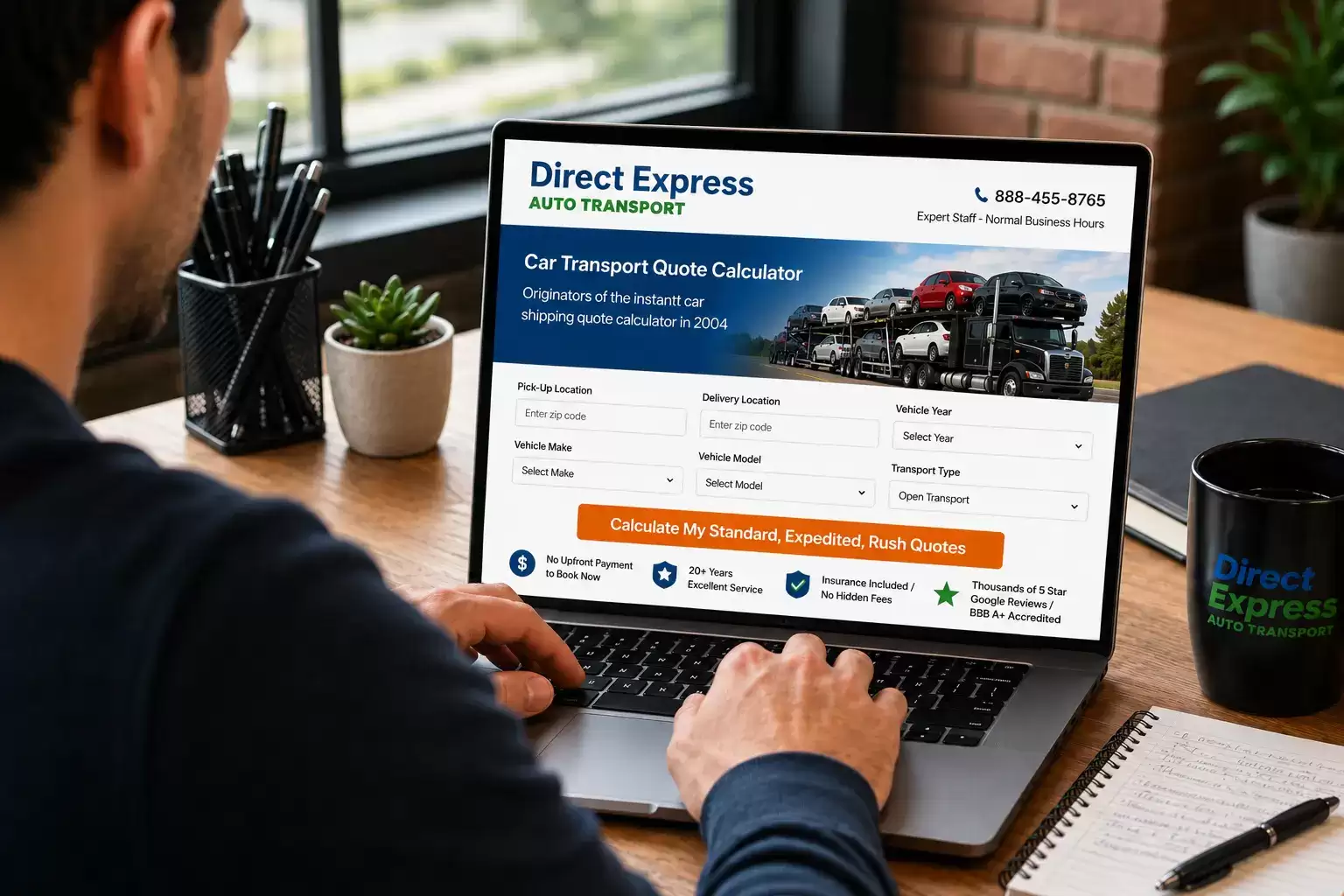
The Company That Invented Instant Auto Transport Pricing
Direct Express Auto Transport built the auto transport industry’s first instant online pricing calculator in 2004. Before that, getting a car shipping quote meant phone calls, callbacks, and days of waiting. We changed all of that. Today you know exactly what it costs to ship your vehicle before you commit to anything — in 30 seconds, online, any time of day.
Three Service Tiers for Every Virginia to Texas Shipment
Every shipment on this Virginia to Texas route is available at three service tiers so you can match your budget to your timeline. Standard delivers at the best available rate — ideal when your schedule has a few days of flexibility. Expedited puts your vehicle at the front of the dispatch queue for faster carrier assignment. Rush gets your car picked up as fast as possible — for moves where every day counts, including military PCS report dates and urgent government or corporate start dates.
All three tiers include full door-to-door service and carrier insurance. No callbacks, no pressure, no guesswork.
What customers say about shipping a car from Virginia to Texas with Direct Express Auto Transport


Seasonal Pricing Guide: Virginia to Texas
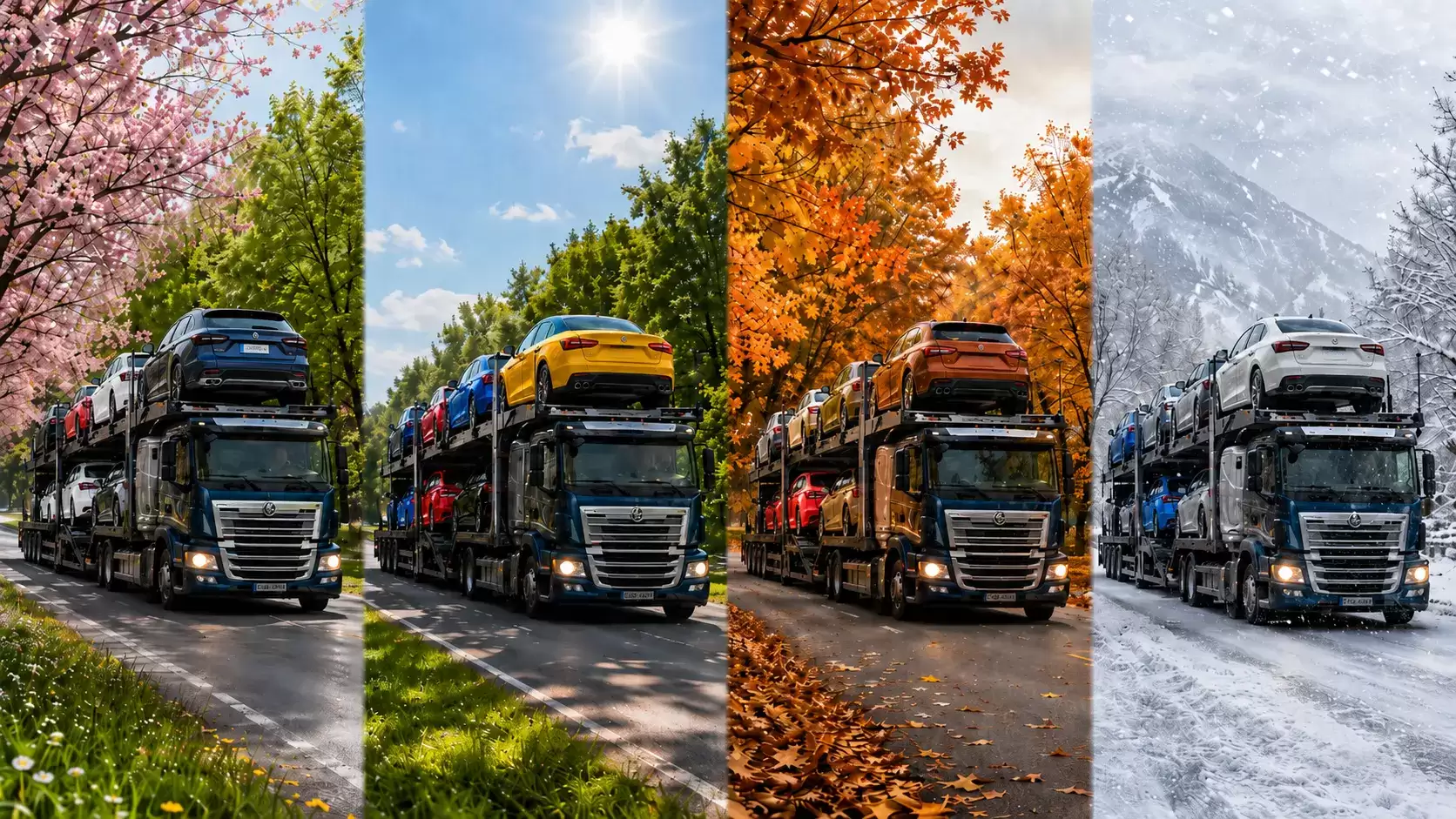
Virginia to Texas peaks twice: military PCS from Virginia’s base cluster in June–August, and the Northern Virginia government contractor outflow in September–October. January–February is best value.
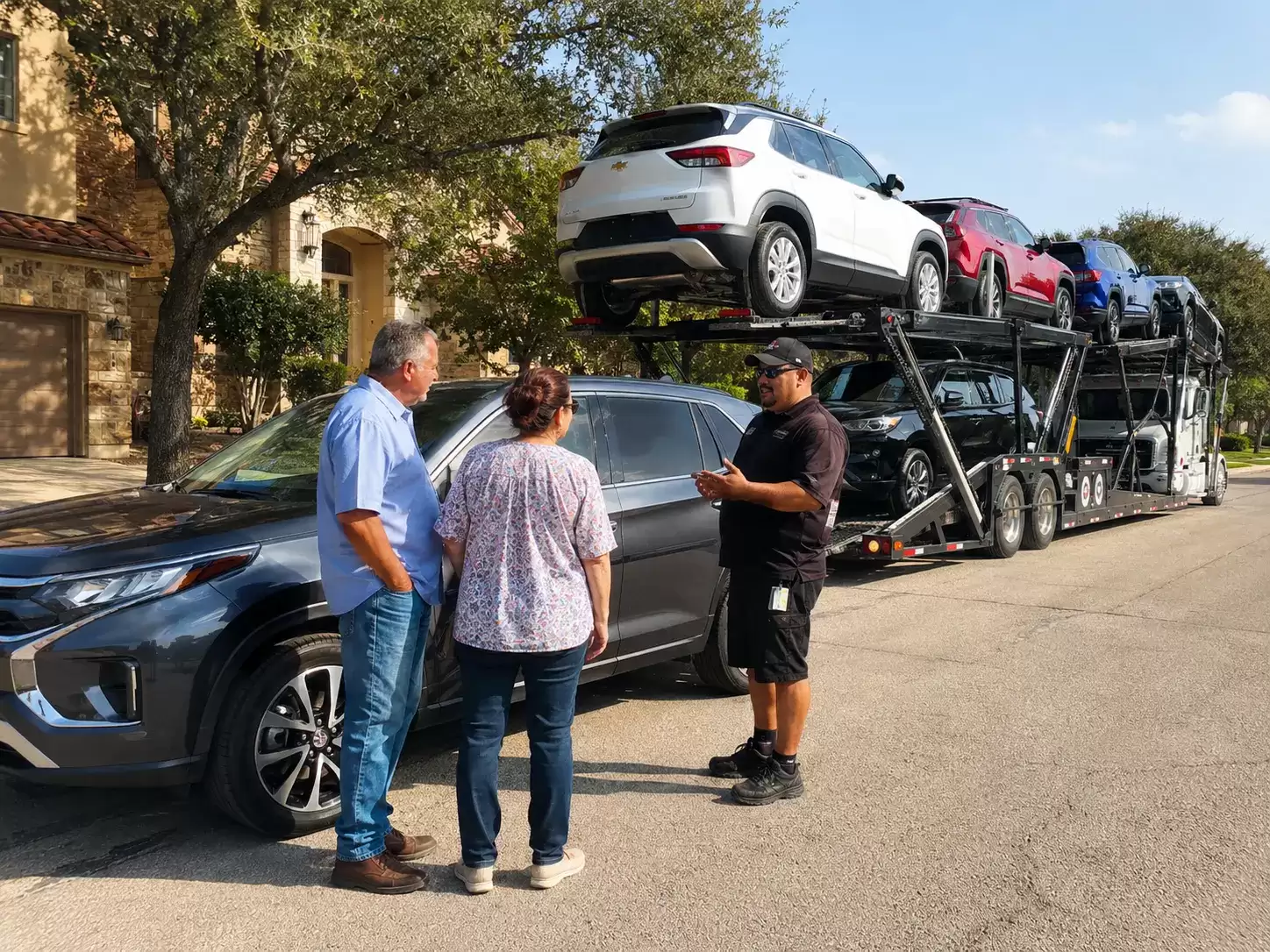
Who Ships a Car from Virginia to Texas — and Why
Military PCS: Virginia’s Installation Base to Fort Cavazos, JBSA, and Texas Air Force
Virginia’s military installations send significant PCS volume westward to Texas every cycle. Joint Base Langley-Eustis in Hampton — combining Langley Air Force Base (Air Combat Command headquarters) with Fort Eustis (Army Transportation Center) — is the largest installation on this corridor. JBLE Langley Air Force PCS moves flow to Dyess AFB, Laughlin AFB, Goodfellow AFB, and JBSA Randolph. Army PCS moves from Eustis flow to Fort Cavazos and JBSA.
Naval Station Norfolk, Fort Gregg-Adams, and Quantico: PCS Booking Guidance
Naval Station Norfolk and NAS Oceana generate the corridor’s largest Navy PCS volume — sailors receive orders to NAS Corpus Christi, NAS Kingsville, and Texas naval commands throughout the PCS cycle. Fort Gregg-Adams (Petersburg) generates steady Army PCS moves to Fort Cavazos and JBSA. Fort Belvoir generates Army intelligence PCS moves to Texas installations. Book immediately on receipt of PCS orders. Expedited is appropriate for any firm Texas report date; Rush for report dates within 10 days of booking.
Northern Virginia Defense and Government Contractors Moving to Texas Programs
Northern Virginia’s defense contractor ecosystem — the largest in the United States — sends vehicles westward when contractors accept positions at Lockheed Martin Fort Worth (F-35 production), JBSA-based Air Force life cycle management centers, NAS Corpus Christi, or Texas-based program offices. The Alexandria → Killeen pairing reflects the Pentagon corridor to Fort Cavazos pipeline. The Manassas → Houston pairing reflects NoVA defense and tech to Houston’s aerospace complex (NASA JSC, Boeing, Jacobs Engineering).
Fiscal Year Start Window and Arlington/Alexandria Staging Requirements
NoVA defense contractor relocations concentrate around the federal fiscal year start (October 1), when contracts are awarded and program assignments change. For any move tied to a fixed contract start date, Expedited is almost always the appropriate tier — program start dates don’t accommodate Standard’s scheduling flexibility. Arlington and Alexandria addresses require off-street commercial staging for large carriers; confirm this at booking.
Hampton Roads Navy and Defense Professionals Moving to Texas Aerospace and Energy
Hampton Roads — Naval Station Norfolk, NAS Oceana, NMCP Portsmouth, and JBLE Langley-Eustis — generates a defense and contractor workforce extending well beyond active duty. Hampton Roads professionals accepting positions at BAE Systems San Antonio, SAIC San Antonio, L3Harris, or NASA Johnson Space Center regularly ship vehicles west. The Hampton → Plano pairing reflects the Hampton Roads to DFW technology corridor.
Virginia Beach and Chesapeake Professionals to Houston Energy and Aerospace
Virginia Beach and Chesapeake professionals accepting positions in the Houston energy sector — ExxonMobil, Chevron, Shell, ConocoPhillips, BP Americas — make up a second segment of Hampton Roads departures. The Virginia Beach → Dallas pairing at $1,150 Standard and the Chesapeake → Tyler pairing at $1,150 Standard reflect this Hampton Roads energy professional corridor to East Texas and Dallas.
Virginia Tech and University of Virginia Graduates Moving to Texas’s Energy and Technology Sectors
Virginia Tech graduates petroleum engineers, electrical engineers, aerospace engineers, and computer scientists who enter Texas’s energy and technology economy directly. ExxonMobil, ConocoPhillips, Pioneer Natural Resources, and Diamondback Energy recruit Virginia Tech petroleum engineering graduates heavily. SpaceX at Boca Chica and Blue Origin in West Texas draw Virginia Tech aerospace graduates. The Blacksburg → Temple pairing reflects the Virginia Tech corridor to Central Texas, near Fort Cavazos and Waco.
University of Virginia Graduates Moving to Texas Finance and Technology
University of Virginia (Charlottesville) graduates entering Texas’s finance, consulting, and technology sectors make up a second university segment. McIntire School of Commerce graduates accepting positions at Goldman Sachs Houston, McKinsey Dallas, or Texas capital markets operations, and Darden School MBA graduates accepting Texas energy finance or private equity positions, ship vehicles westward after graduation in May through July. The Charlottesville → Waco pairing in the main table reflects the UVA-to-Central Texas corridor.
Northern Virginia and DC-Area Professionals Seeking Texas’s Tax and Cost Environment
Northern Virginia’s high cost of living — among the steepest home prices on the East Coast and a state income tax up to 5.75% — regularly motivates remote workers and position transfers to Texas, where Austin, DFW, and Houston homes appear dramatically discounted. Professionals who can work remotely or accept Texas-based employment increasingly ship vehicles west as part of a full relocation. The Manassas → Houston, Winchester → Frisco, and Woodbridge → College Station pairings reflect this NoVA-to-Texas cost-of-living migration.
What Makes the Virginia–Texas Auto Shipping Run Different
The Two Virginia Origin Corridors — Both Converge at Richmond
Virginia to Texas has two distinct origin corridors that converge before reaching the main I-20W westbound artery. Hampton Roads origins (Virginia Beach, Norfolk, Chesapeake, Hampton, Newport News, Suffolk, Poquoson) take I-64W from the Hampton Roads Bridge-Tunnel or the Downtown Tunnel to Richmond — approximately 95 miles. Northern Virginia and DC-area origins (Arlington, Alexandria, Fairfax, Reston, Herndon, Chantilly, Manassas, Woodbridge, Dale City, Leesburg) take I-95S from the I-495 Beltway to Richmond — approximately 107 miles from Arlington.
Atlanta as the Convergence Hub: I-85S from Richmond to I-20W West
Both corridors reach Richmond and then proceed I-85S through Petersburg, continuing south through North Carolina and Georgia to Atlanta (approximately 700 miles from Richmond to Atlanta via I-85S), then I-20W from Atlanta through Birmingham (150 miles), Meridian (160 miles), Jackson MS (160 miles), and Shreveport (155 miles) to Dallas (215 miles).
Shenandoah Valley Origins: The I-81S Mountain Corridor
Harrisonburg, Winchester, Staunton, and Waynesboro sit in the Shenandoah Valley on I-81 — not on the I-95/I-85 Hampton Roads and NoVA corridor. Carriers picking up in the Valley take I-81S through Roanoke and into Tennessee, reaching Knoxville where I-75S connects to Chattanooga and then Atlanta. From Winchester (northernmost Valley city), Atlanta is approximately 740 miles via I-81S/I-75S — comparable to the NoVA I-95S/I-85S Atlanta approach.
I-81S Mountain Corridor: Knoxville–Atlanta vs. Hampton Roads I-64W Direct
From Staunton, Atlanta is approximately 700 miles via the same I-81S route. The Valley’s I-81S corridor is the reason Harrisonburg → Garland prices at $1,175 Standard (~1,445 miles) rather than at a NoVA-competitive price — the Valley approach adds distance compared to Hampton Roads’ direct I-64W/I-85S line.
Arlington (VA) → Beaumont: The Table’s Cheapest Pair at $1,125 Standard
Arlington (VA) to Beaumont at approximately 1,380 miles and $1,125 Standard is the table’s cheapest pair. Arlington is the closest major Virginia origin to the I-95S/I-85S Atlanta approach — sitting just inside the Beltway with efficient access to I-395S to I-95S to Richmond. Beaumont is in Southeast Texas on I-10, approximately 90 miles east of Houston — the closest Texas destination to the Atlanta corridor terminus on the southern approach.
Beaumont’s I-10 Eastern Texas Position: Why It Skips the DFW Detour
Carriers completing the Atlanta → east-Texas run arrive at Beaumont without the northward DFW detour or the southward San Antonio approach that other Texas destinations require. The combination of Arlington’s efficient NoVA approach and Beaumont’s I-10 eastern Texas positioning produces the table’s most efficiently served origin/destination pairing at the lowest price.
Roanoke → Laredo: The Table’s Most Expensive Pair at $1,350 Standard
Roanoke to Laredo at approximately 1,680 miles and $1,350 Standard is the table’s most expensive pair. Roanoke is in Southwest Virginia — not on the main I-95/I-85 corridor — requiring carriers to either take I-81N to I-66E to I-95S (a longer northern loop) or I-81S through the Tennessee Valley to Atlanta (the primary carrier route). Either way, Roanoke’s Southwest Virginia position adds significant approach mileage compared to Richmond or Hampton Roads origins.
Southwest Virginia Pickup Approach: I-81S to Atlanta Adds Mileage Over Richmond
Laredo is the maximum delivery approach destination — 155 miles south of San Antonio on I-35, requiring carriers to travel I-20W to Dallas, then I-35S to San Antonio (275 miles), then I-35S to Laredo (150 miles). The compound effect of Roanoke’s Southwest Virginia pickup approach and Laredo’s maximum-south delivery approach produces the table’s longest effective run and highest Standard price.
Northern Virginia Dense Staging — Commercial Pickup in Arlington and Alexandria
Large auto transport carriers cannot navigate the dense residential streets of Arlington, Alexandria, and inner Fairfax County neighborhoods directly. These carriers require commercial staging at accessible loading points near the origin address — typically at a strip mall, office park, or commercial street within a short drive of the pickup address. At booking, provide the carrier coordinator with your specific Arlington or Alexandria address and confirm that you can drive the vehicle to a commercial staging area if needed.
Manassas, Woodbridge, and Herndon: Route 28 / I-66 Staging Alternatives
This is the same urban staging consideration that applies to dense urban delivery in those cities — it applies to pickup here. Manassas, Woodbridge, Dale City, Reston, Herndon, Chantilly, and Leesburg are more carrier-accessible due to larger commercial staging options in the Route 28, Route 66, and I-95 corridor zones.
Texas Delivery: Two Approaches from Dallas
From Atlanta via I-20W, all VA→TX carriers reach Dallas at approximately 785 miles from Atlanta. Dallas is the first Texas delivery point on the corridor and the distribution hub for all further Texas destinations. DFW deliveries (Dallas, Fort Worth, Arlington TX, Plano, Irving, Garland, Frisco) come first and are the most efficiently served. Waco and Killeen (Fort Cavazos) are 100 and 140 miles south on I-35 from Dallas, respectively. Austin is 195 miles south. San Antonio is 275 miles south.
South Texas Approach: San Antonio to Laredo, McAllen, and Corpus Christi via I-35S
Houston requires carriers to go I-20W to Dallas then I-45S to Houston (240 miles), or I-20W to Shreveport then I-10W to Beaumont and Houston. South Texas and Rio Grande Valley destinations (Corpus Christi, Laredo, McAllen, Harlingen, Brownsville) require maximum south approach from San Antonio and are the table’s most expensive delivery zone.
Other Virginia to Texas Cities We Serve
Direct Express ships vehicles between hundreds of city pairs on this route. Below is a broader look at additional Virginia origins and Texas destinations we regularly serve.
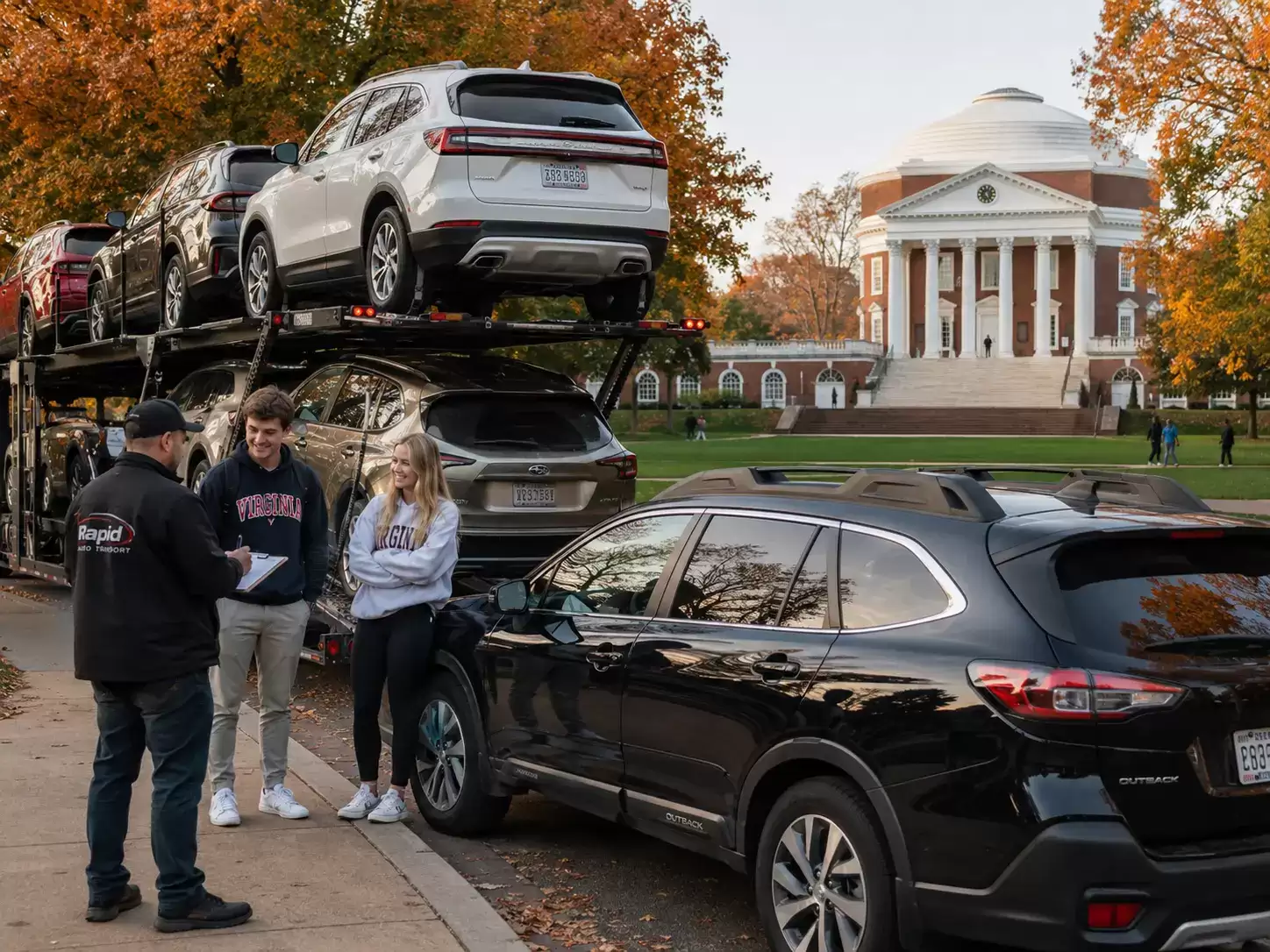
Virginia and Texas Auto Shipping Zones Along the I-95 / I-85 / I-20 Corridor
Virginia to Texas runs 1,100–2,000 miles depending on origin and destination. Hampton Roads and Northern Virginia origins converge at Richmond before proceeding I-85S to Atlanta, then I-20W to Dallas — one of the South’s highest-volume auto transport arteries. The Shenandoah Valley runs a parallel I-81S corridor through Tennessee to Atlanta. Atlanta is the relay pivot for all Virginia origins westbound to Texas, just as it is for the eastbound Texas-to-Virginia direction.
Virginia Origin Zones
Mid-Corridor Relay Points
Texas Delivery Zones
Open vs. Enclosed Car Transport on the Virginia–Texas Route
Open Transport: The Standard for All Military PCS, Government, and Routine Moves
Open transport is appropriate for virtually all Virginia-to-Texas vehicle shipments. Military PCS moves from JBLE Langley-Eustis, Naval Station Norfolk, NAS Oceana, Fort Gregg-Adams, Fort Belvoir, and Quantico all ship open. Northern Virginia defense contractor relocations, Hampton Roads energy and aerospace professional moves, Virginia Tech and UVA graduate moves, and retirement relocations all ship open. Open is the correct choice for every daily driver, SUV, pickup truck, and standard vehicle moving from any Virginia origin to any Texas destination regardless of season. The I-85S/I-20W corridor through Atlanta is among the most heavily traveled auto transport lanes on the East Coast with strong carrier availability in both directions year-round.
Texas Summer Delivery on Open Carriers
Texas summer (June through September) delivery on open carriers requires the standard heat protocol at the delivery end: no more than a quarter tank of fuel, remove all personal items and electronics before the carrier loads the vehicle in Virginia, and ensure the Texas delivery staging area is shaded or indoor if available. This applies to ALL Texas delivery addresses June through September regardless of Virginia origin. Virginia summer pickup on open carriers involves no equivalent heat protocol — Virginia summer temperatures are warm but do not create the extreme-heat staging concern that Texas summer generates for the vehicle during open carrier transit.
Open Transport Recommended for Most
- All military PCS from JBLE Langley-Eustis, Naval Station Norfolk, NAS Oceana, Fort Gregg-Adams, Fort Belvoir, or Quantico to any TX installation
- Northern Virginia defense contractor and government relocations to Texas programs
- Hampton Roads Navy and aerospace professional moves to Houston, DFW, or San Antonio
- Virginia Tech and UVA graduates entering Texas’s energy and technology sectors
- TX summer delivery (June–September): quarter tank, no personal items, no electronics
Enclosed Transport
- Collector vehicles and exotics relocating to Texas storage, auction, or private collection
- High-value vehicles consigned to Dallas or Houston dealership
- Northern Virginia concours-quality vehicles being transported to Pebble Beach-qualifier events in Texas
- Typically 40–60% more expensive than open transport
Our honest recommendation: Open for every PCS, government contractor, corporate, and standard vehicle move. Enclosed only for collector vehicles, exotics, or concours-quality vehicles where carrier deck exposure matters.
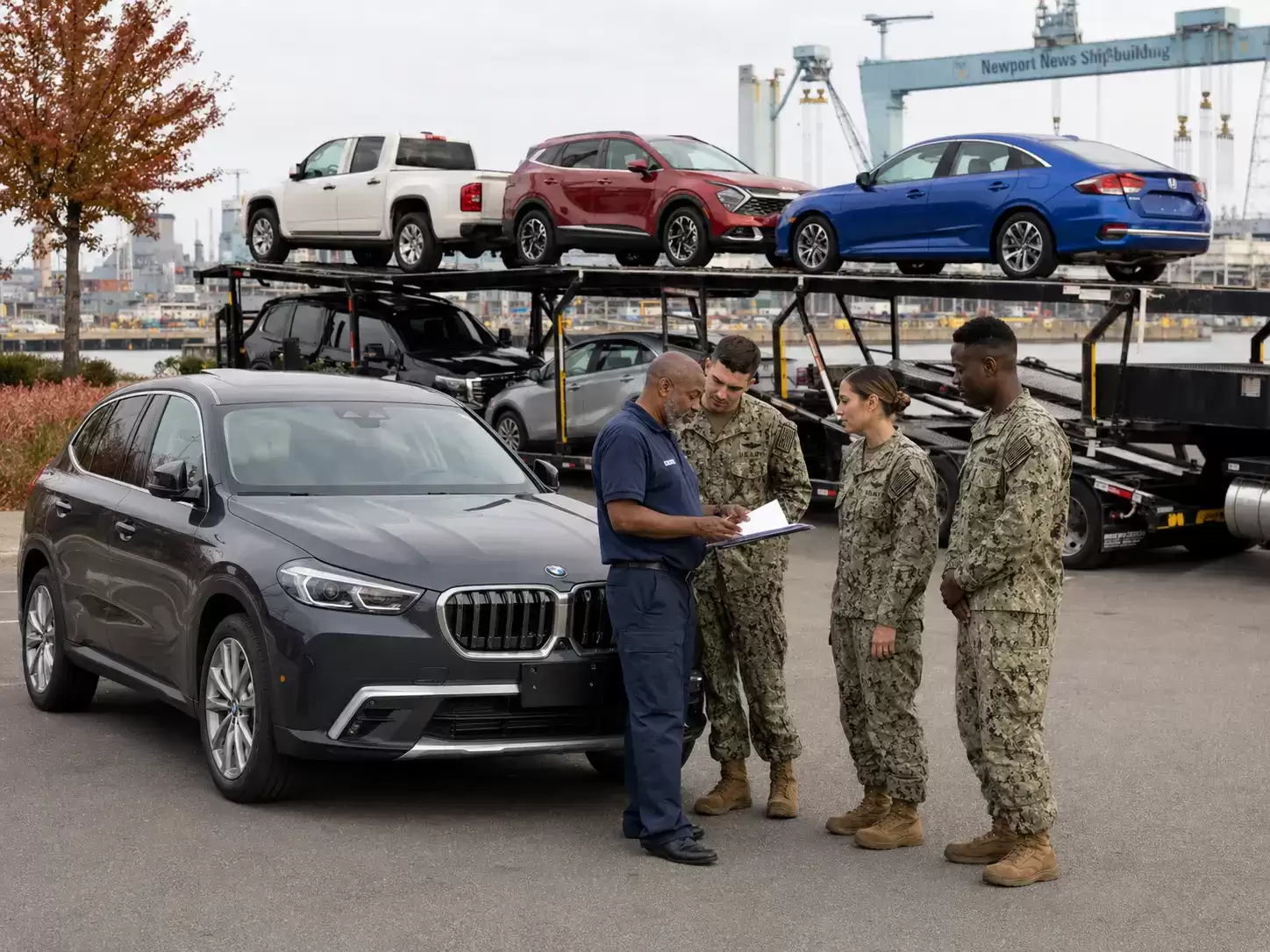
Door-to-Door Car Shipping: What to Expect in Virginia and Texas
Pickup in Virginia
Hampton Roads: Virginia Beach, Norfolk, Chesapeake, Hampton, Newport News, Poquoson, Suffolk
Standard door-to-door pickup throughout the Hampton Roads metro. JBLE Langley-Eustis on-post housing (Hampton): confirm on-post pickup protocol at booking, provide your housing address and base access authorization. Off-post civilian addresses in Hampton, Newport News, and the surrounding communities receive standard door-to-door. Naval Station Norfolk on-post housing: provide access credentials at booking. NAS Oceana (Virginia Beach) residential zones: off-base civilian addresses receive standard door-to-door. Virginia Beach resort-zone addresses near the oceanfront may require commercial staging for large carriers on peak summer weekends. Suffolk, Chesapeake, and Poquoson: standard door-to-door throughout, no commercial staging required for residential addresses.
Northern Virginia: Arlington, Alexandria, Fairfax, Reston, Herndon, Chantilly, Manassas, Woodbridge, Dale City, Leesburg
Large auto transport carriers cannot navigate dense Arlington and Alexandria streets — commercial staging is required at a nearby accessible address. Confirm staging at booking for any Arlington or Alexandria address. Fairfax, Reston, Herndon, and Chantilly have commercial loading options along Route 28 and Route 7. Manassas and Dale City along I-66 and I-95 have standard carrier access. Leesburg: standard door-to-door for most residential addresses. Fort Belvoir on-post: provide access information at booking. Quantico on-post: coordinate credentials at booking. Winter (November–March): cleared driveway required; allow 1–2 days for I-95 and I-66 ice events.
Richmond, Charlottesville, Fredericksburg, and Shenandoah Valley
Standard door-to-door pickup throughout Richmond (City of Richmond, Chesterfield, Henrico, Hanover). Fort Gregg-Adams (Petersburg) on-post housing: provide on-post access at booking. Off-post Petersburg and Colonial Heights: standard door-to-door. Charlottesville, including near the University of Virginia campus: confirm commercial staging availability if pickup is in the dense UVA Corner or Rugby Road zone. Fredericksburg: direct I-95 access makes it one of Virginia’s most carrier-accessible origins. Shenandoah Valley (Harrisonburg, Winchester, Staunton, Waynesboro): standard door-to-door. Winter (November–March): cleared driveway required; I-81 ice is frequent — provide a 1-day contingency at booking.
Delivery in Texas
DFW Metro, East Texas, and North Texas
Standard door-to-door delivery throughout DFW (Dallas, Fort Worth, Arlington TX, Plano, Irving, Garland, Frisco, Denton) and East Texas (Tyler, Longview, Nacogdoches, Lufkin, Texarkana). Texas summer delivery June through September: standard heat protocol applies (quarter tank, no personal items, no electronics; request shaded or indoor staging at delivery if possible). DFW high-rise addresses: coordinate staging with the carrier at booking. Fort Worth and Arlington TX western DFW addresses: standard door-to-door throughout.
Central Texas, Fort Cavazos, and JBSA
Standard door-to-door delivery throughout Central Texas (Austin, Waco, Killeen, Temple, College Station, San Antonio). Fort Cavazos (Killeen) on-post housing: confirm on-post delivery protocol at booking and provide housing address and access authorization. JBSA on-post delivery (Lackland, Randolph, Fort Sam Houston): provide access information at booking. Off-post civilian addresses in Killeen, Copperas Cove, and Harker Heights: standard door-to-door. Austin downtown and campus-adjacent addresses may require commercial staging — confirm at booking. Texas summer heat protocol applies June through September at all Central Texas delivery destinations.
Houston Metro, South Texas, and Rio Grande Valley
Standard door-to-door delivery throughout the Houston metro (Houston, Pasadena, Sugar Land, Conroe, League City), Greater Beaumont (Beaumont, Port Arthur), and accessible coastal Texas. South Texas and Rio Grande Valley delivery (Corpus Christi, Laredo, McAllen, Mission, Harlingen, Brownsville): extended delivery approach from San Antonio or Dallas; standard door-to-door throughout the Valley metro areas. Texas summer heat protocol applies June through September at all Texas delivery addresses. Valley destinations (McAllen, Mission, Harlingen, Brownsville) have the highest summer heat exposure in the state; Expedited recommended for firm delivery dates at Valley addresses, and summer heat protocol is non-negotiable at the delivery end.
Texas Vehicle Registration for Virginia Arrivals
Texas requires registration within 90 days of establishing residency. Visit your county tax assessor-collector office with your out-of-state title, proof of Texas insurance, and proof of Texas address; a vehicle safety inspection is also required. Cancel your Virginia registration once your Texas plates arrive.
Preparing Your Vehicle
Before Virginia pickup: remove all personal items from the passenger compartment, disable car alarms, remove Virginia E-ZPass transponders (the Virginia E-ZPass interoperability zone extends into Texas toll roads, but the transponder should not be in the vehicle during open carrier transport), and leave no more than a quarter tank of fuel. Photograph your vehicle from all angles with date-stamped images before the carrier arrives. NoVA and Shenandoah Valley winter pickup November–March: ensure cleared driveway access and do not leave the vehicle in an icy or inaccessible location the night before pickup — ice on NoVA residential streets and I-81 Valley driveways is the most common winter pickup complication. Texas summer delivery June–September: remind the carrier coordinator at booking that the Texas delivery address requires shaded or indoor staging if available — particularly critical for Killeen, San Antonio, and Rio Grande Valley addresses.
Virginia & Texas Auto Transport Resources
Virginia Helpful Government Links
- DMV Virginia (dmv.virginia.gov) — Virginia vehicle title and registration agency. Obtain your Virginia title before establishing Texas registration. Virginia assesses a 4.15% Motor Vehicle Sales and Use Tax; a credit applies when registering in Texas.
- DMV Virginia — Title and Registration — Virginia title release and transfer procedures for vehicles being re-registered in Texas on arrival. New Virginia residents must register within 30 days; confirm your title release is complete before shipping.
- DMV Virginia — Military Services — Military and veteran provisions for active duty personnel at JBLE Langley-Eustis (Hampton), Naval Station Norfolk, NAS Oceana (Virginia Beach), Fort Gregg-Adams (Petersburg), Fort Belvoir, and Quantico receiving PCS orders to Texas installations.
- DMV Virginia — Driver’s License — Virginia driver’s license surrender procedures when obtaining a Texas driver’s license within 90 days of establishing TX residency.
- DMV Virginia — Vehicle Inspections — Virginia requires an annual safety inspection. Emissions testing applies in the Northern Virginia Emissions Program area (Arlington, Alexandria, Fairfax, Loudoun, Prince William, Spotsylvania, Stafford, and others) and the Hampton Roads Emissions Program area (Virginia Beach, Norfolk, Chesapeake, Newport News, Hampton, Portsmouth, Suffolk, and Poquoson).
Texas Helpful Government Links
- Texas Department of Motor Vehicles (TxDMV) — Texas vehicle title and registration. New Virginia-to-Texas residents must register within 90 days. Visit your county tax-assessor-collector with your Virginia title, TX insurance, and payment for 6.25% state sales tax (Virginia credit applies for previously paid 4.15% Motor Vehicle Sales and Use Tax).
- TxDMV — Title and Registration — Out-of-state vehicle title transfer procedures for Virginia vehicles establishing Texas registration, including required documents and county office locations.
- TxDMV — Military Provisions — Active duty provisions for military arriving at Fort Cavazos, JBSA, and other Texas installations on PCS orders from JBLE Langley-Eustis, Naval Station Norfolk, Fort Gregg-Adams, and other Virginia installations.
- Texas DPS — Driver License — Texas driver’s license requirements. Virginia license surrendered within 90 days of establishing TX residency.
- TCEQ — Texas Emissions Testing Counties — Identify whether your Texas destination county requires vehicle emissions testing. Harris (Houston), Dallas, Tarrant (Fort Worth), Travis (Austin), and Bexar (San Antonio) all require OBD emissions testing.
Federal Auto Transport Resources
- FMCSA — Verify a Carrier’s License (SAFER System) — Verify that any auto transport company is federally licensed and insured before booking.
- FMCSA — Protect Your Move — Federal consumer guidance on hiring vehicle shippers and understanding your rights on a cross-country move.