Texas to Virginia Car Shipping
The original instant car shipping calculator — trusted since 2004. Door-to-door Texas to Virginia transport with no surprises, no hidden fees, and three options to ship your vehicle on your schedule.
★ 4.6/5 Google Reviews | BBB Accredited A+ | FMCSA Licensed (MC #479342) | USDOT #1240502 | No upfront payment required | 20+ years shipping vehicles


Texas to Virginia Car Shipping Rates by City
Every Texas to Virginia vehicle shipment is available at three service levels:
Standard, Expedited, & Rush Options
Choose the one that fits your timeline and budget. All three include full door-to-door service and carrier insurance.

The Company That Invented Instant Auto Transport Pricing
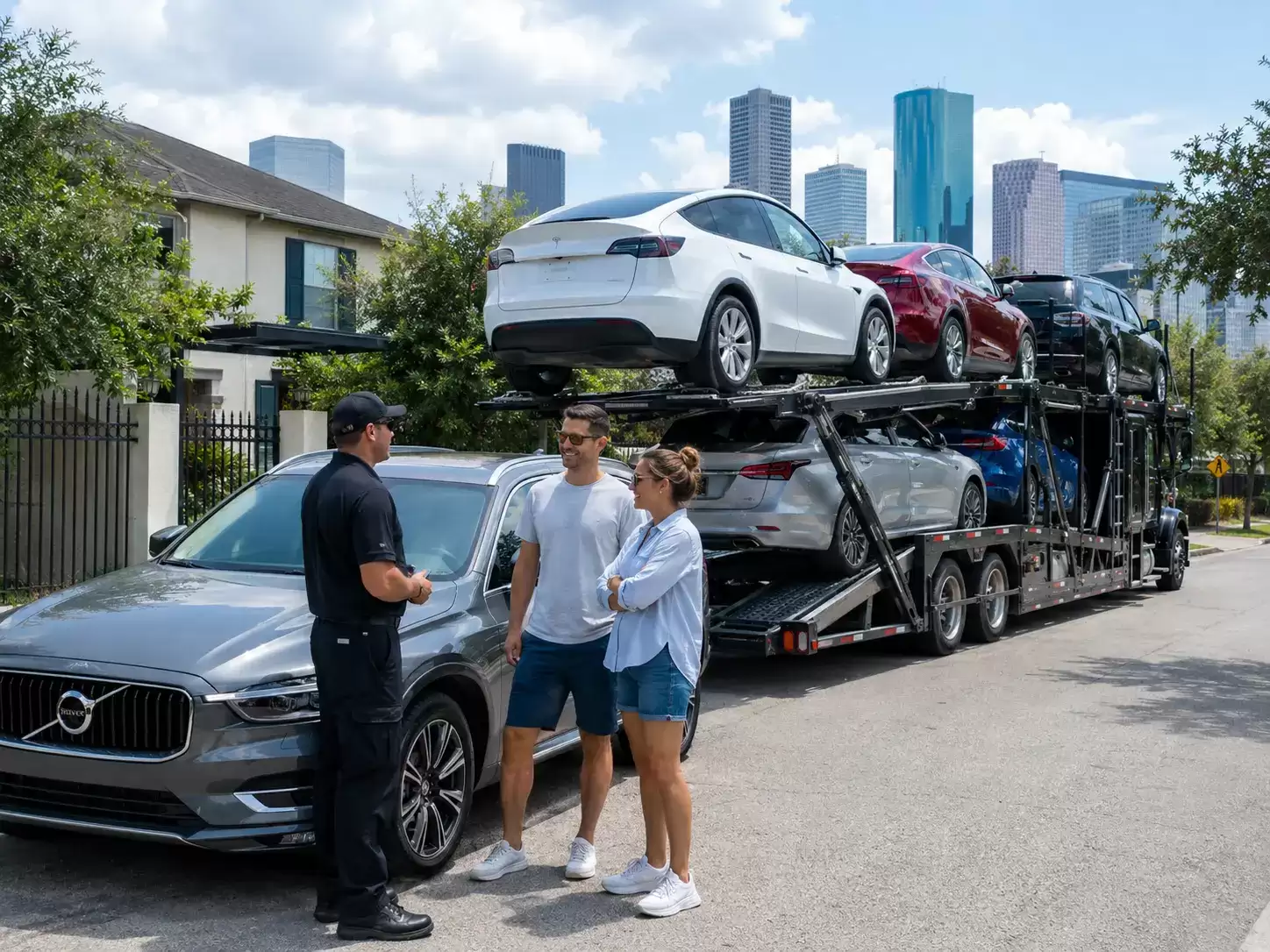
Direct Express Auto Transport built the car shipping industry’s first instant online pricing calculator in 2004. Getting a quote before we built that calculator meant phone calls, waiting for callbacks, and days of uncertainty. We changed that. Every customer has known their exact price in 30 seconds since the beginning — no sales pressure, no callbacks, no hidden fees.
Three Service Tiers for Every Texas to Virginia Shipment
Every shipment on this Texas to Virginia route is available at three service tiers so you can match your budget to your timeline. Standard delivers the best available rate when your schedule has a few days of flexibility. Expedited puts your vehicle at the front of the dispatch queue for faster carrier assignment. Rush gets your car picked up as fast as possible — critical for military PCS report dates at Virginia’s massive installation cluster and for government contractor start dates in Northern Virginia.
All three tiers include full door-to-door service and carrier insurance. The price you see is the price you pay.
What customers say about shipping a car from Texas to Virginia with Direct Express Auto Transport


Seasonal Pricing Guide: Texas to Virginia
Two seasonal forces drive this corridor: military PCS from Texas installations to Virginia’s base cluster in June–August, and the Northern Virginia government contractor outflow in September–October. January–February is best value.

Who Ships a Car from Texas to Virginia — and Why
Military PCS: Texas Installations to Virginia’s Massive Installation Cluster
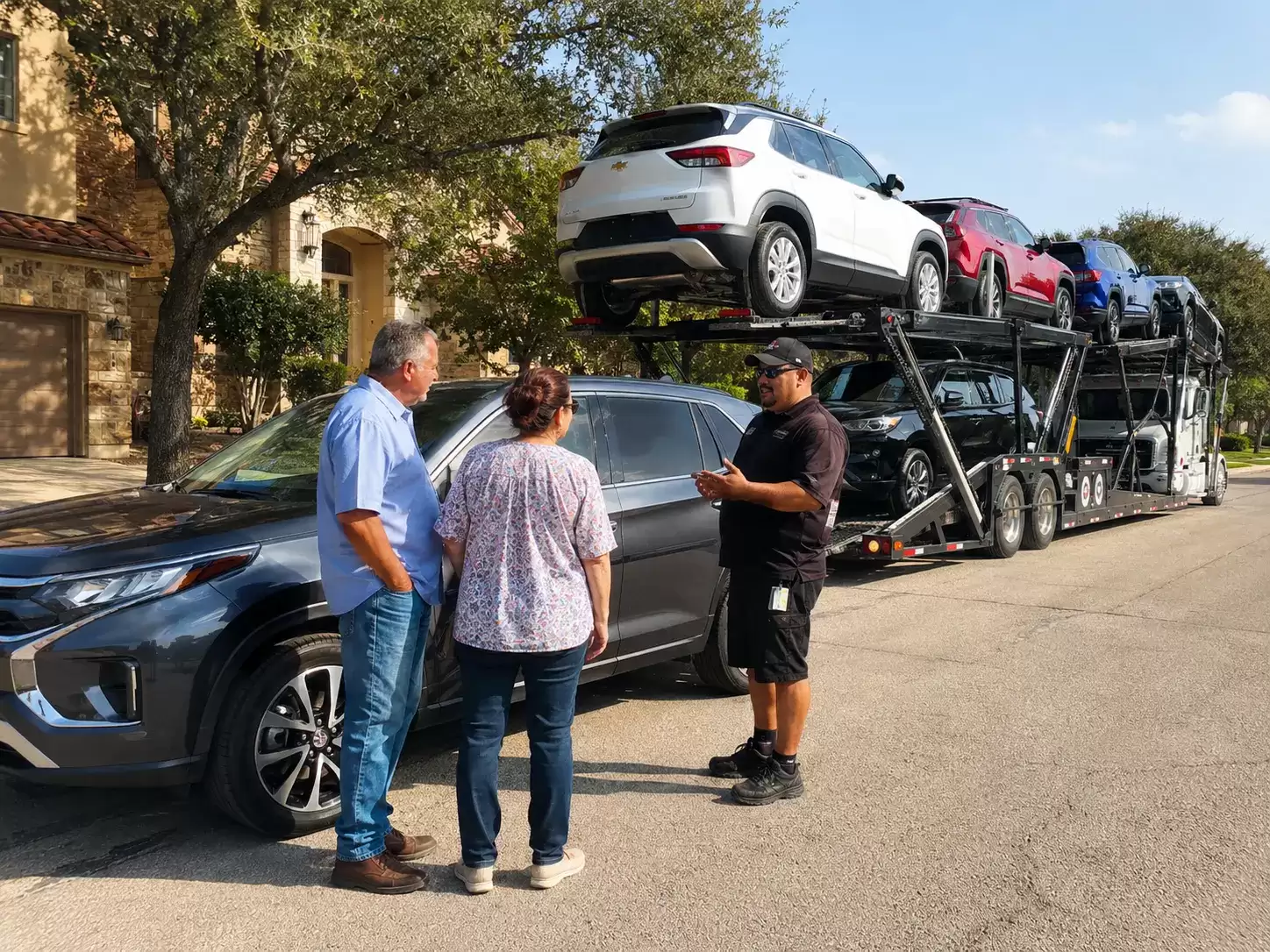
Virginia and Texas anchor one of the largest PCS corridors in the Direct Express network. Virginia’s receiving installations include JBLE Hampton/Newport News, Naval Station Norfolk, NAS Oceana, Quantico, Fort Belvoir, and Fort Gregg-Adams. Every major Texas installation generates Virginia PCS volume: Fort Cavazos to Fort Belvoir and Gregg-Adams; JBSA to JBLE and Norfolk; NAS Corpus Christi to NAS Oceana; Dyess AFB to JBLE Langley.
Fort Cavazos and JBSA: Texas-to-Virginia PCS Booking and Delivery Details
The Killeen → Hampton pairing ($1,225 Standard) is the direct Fort Cavazos-to-JBLE-Langley corridor. The Tyler → Petersburg pairing ($1,025 Standard) is the table’s best value and captures the East Texas advantage for Fort Gregg-Adams moves. Book immediately on receipt of orders. Expedited or Rush is appropriate for any firm Virginia report date. Confirm on-post delivery protocol and base access authorization at booking.
Texas Technology and Defense Professionals to Northern Virginia’s Tech Corridor
Northern Virginia is one of the country’s most active technology employment corridors — Amazon HQ2 in Arlington, AWS infrastructure, Microsoft in Reston and Herndon, Google Reston, and Loudoun County’s Data Center Alley. The defense technology sector adds Leidos, Booz Allen, SAIC, Northrop Grumman, General Dynamics IT, and ManTech. Texas professionals at Dell, Texas Instruments, AT&T, and in Houston regularly receive NoVA offers. The Fort Worth → Arlington (VA) and Frisco → Fredericksburg pairings reflect this DFW-to-NoVA flow.
NoVA Contractor Start-Date Pattern and DFW Technology Pairings
The government contractor September–October start-date pattern makes this one of the few corridors where fall demand rivals or exceeds post-spring corporate move activity. Texas defense and technology professionals accepting Leidos, Booz Allen, SAIC, or AWS NoVA positions with October 1 government contract start dates are a concentrated, time-sensitive segment — and the defining feature of what makes the TX→VA seasonal pricing calendar different from other corridors.
Texas Energy Professionals Accepting Government and Regulatory Positions in Northern Virginia
DOE, FERC, EPA, and the Office of the Secretary of Defense’s energy policy offices regularly draw senior Texas energy professionals into NoVA and DC positions. ExxonMobil, ConocoPhillips, and Chevron executives accepting government service roles ship vehicles east. The Waco → Alexandria pairing serves mid-career government transitions from Central Texas. The Dallas → Richmond pairing captures Texas energy finance to Virginia’s corporate hub — Richmond is home to Capital One, Dominion Energy, and Atlantic Union Bank headquarters.
Texas Retirees Moving to Virginia’s Military-Adjacent Communities and Shenandoah Valley
Virginia’s military-adjacent communities — Williamsburg, Yorktown, Poquoson, Virginia Beach’s Pungo district, and the Northern Neck — draw Texas military retirees who served at Fort Cavazos, JBSA, and NAS Corpus Christi. Virginia Beach has one of the country’s largest military retiree concentrations per capita. The Shenandoah Valley and Virginia Piedmont attract retirees seeking four-season climates. The Austin → Chesapeake and Corpus Christi → Roanoke pairings reflect this Texas-to-Virginia retirement corridor.
Texas Professionals Moving to Richmond and Charlottesville
Richmond is a full-service corporate hub: Capital One headquarters, Dominion Energy, CarMax, and a growing financial technology corridor. Texas financial services professionals at JPMorgan Chase, Goldman Sachs, and Bank of America periodically transfer east to Richmond. Charlottesville draws Texas professionals for UVA Law, Darden Business School, and UVA Medical Center positions. The Laredo → Charlottesville pairing at $1,400 Standard is the table’s most expensive — reflecting Laredo’s far-south origin and Charlottesville’s distance from I-95.
What Makes the Texas–Virginia Auto Shipping Run Different
The Main Corridor: I-20E to Atlanta, I-85NE to Charlotte, I-95N to Richmond and the Coast
Texas to Virginia runs on the I-20E corridor from Dallas east through Shreveport (215 miles), Birmingham (620 miles), and Atlanta (780 miles), then I-85NE to Charlotte (1,025 miles), then I-85N and I-95N north through Greensboro and the Virginia border to Richmond (1,305 miles). From Richmond, I-95 continues north to the Northern Virginia approaches, while I-64E heads southeast to Hampton Roads (Virginia Beach, Norfolk, Chesapeake, Newport News, Hampton). Atlanta is the pivotal relay point — every Texas-to-Virginia carrier load passes through or relays at Atlanta, where I-20, I-85, I-75, and I-285 converge at the South’s highest-density auto transport hub.
Tyler → Petersburg: Cheapest at $1,025 Standard
Tyler to Petersburg at 1,210 miles and $1,025 Standard is the table’s cheapest pair. Tyler sits on I-20E approximately 95 miles east of Dallas — already on the main corridor before DFW carriers have left the metroplex. From Tyler, I-20E runs directly to Atlanta, then I-85NE to Charlotte, then I-95N to Petersburg (just south of Richmond). Tyler’s I-20 approach advantage eliminates the 95-mile northbound feeder mileage that Dallas origins require, and Petersburg sits directly on I-95 without requiring a westward or eastward approach from the main corridor.
Laredo → Charlottesville: Most Expensive at $1,400 Standard
Laredo to Charlottesville at 1,760 miles and $1,400 Standard is the table’s most expensive pair. Laredo sits 155 miles south of San Antonio on I-35 — the farthest south-of-the-main-corridor Texas origin in this table. Carriers loading in Laredo must drive 155 miles north to San Antonio before reaching I-35N to Dallas or I-10E to Houston, then the I-20E/I-85NE/I-95N run to Virginia. Charlottesville sits on I-64 approximately 70 miles west of Richmond — carriers finishing the I-95N run to Richmond must exit west on I-64, adding delivery approach.
Corpus Christi to Roanoke: South Texas Approach and I-81 Shenandoah Valley Delivery as Second Most Expensive
The combination of Laredo’s maximum Texas approach and Charlottesville’s interior-Virginia delivery approach produces the table’s longest effective run. Corpus Christi → Roanoke at $1,300 is the second-most-expensive — Corpus Christi requires 147 miles north on I-37 to San Antonio, and Roanoke is reached via I-81S from I-77N off Charlotte, a different approach from the main I-95 corridor.
Two Distinct Virginia Delivery Corridors: Hampton Roads vs. Northern Virginia
From the I-95N entry into Virginia, carriers split into two distinct delivery zones with meaningfully different approach distances. Hampton Roads — Virginia Beach, Norfolk, Chesapeake, Newport News, Hampton, Portsmouth, Suffolk — is reached via I-64E from Richmond, approximately 70–105 miles east of Richmond depending on specific destination. Virginia Beach (70+ miles east of I-95 via I-64E) adds the most approach of any Hampton Roads destination. Northern Virginia — Arlington, Alexandria, Fairfax, Reston, Herndon, Manassas, Winchester, Fredericksburg — is reached via I-95N from Richmond, adding 60–130 miles north of Richmond.
Why Hampton Roads and NoVA Price Identically from Houston: Equivalent Approach Distance from I-95
This delivery zone geography is why Houston → Virginia Beach ($1,250) and Austin → Chesapeake ($1,250) price identically despite different Texas origins — both Hampton Roads destinations sit at comparable effective approach distances from the I-95 trunk. Waco → Alexandria ($1,150) is cheaper than Killeen → Hampton ($1,225) because Alexandria’s I-95N approach is more direct than Hampton’s I-64E approach.
Roanoke and the I-81 Shenandoah Valley Approach
Roanoke and the Shenandoah Valley cities (Harrisonburg, Winchester, Staunton) are reached via a different approach than Hampton Roads or NoVA — carriers coming from Charlotte on I-85N turn north on I-77 through the Virginia border and connect to I-81N, the Shenandoah Valley’s primary north-south artery. I-81 runs the entire length of Virginia’s western region from Bristol (Tennessee border) to Winchester (near the West Virginia/Maryland border). The Corpus Christi → Roanoke pairing at $1,300 Standard reflects both Corpus Christi’s long south-Texas approach and Roanoke’s I-81/I-77 delivery corridor rather than the main I-95 trunk.
Northern Virginia Traffic and Urban Delivery Considerations
Northern Virginia is the most congested delivery zone on the entire Texas-to-Virginia corridor — and one of the most congested in the country. The I-495 (Capital Beltway), I-66, I-95/395, and I-270 corridors approaching the Pentagon, Arlington, and Alexandria are among the nation’s most carrier-unfriendly urban arteries, with carrier-length restrictions, HOV requirements, and peak-hour gridlock that can add hours to final delivery approaches. Large open carriers frequently stage at commercial points in Springfield (I-95/I-495 junction), Dale City, or the Tysons Corner area and complete final delivery in smaller vehicles for dense NoVA addresses.
Amazon HQ2, Reston Tech Park, and McLean: Staging Protocols for Dense NoVA Corporate Addresses
Amazon HQ2 (Arlington), Reston Technology Park, and the McLean corporate corridor all have staging considerations for large carrier equipment. Confirm delivery approach for any NoVA address in Arlington, Alexandria, Reston, or McLean at booking — your carrier coordinator will identify the staging point and delivery approach.
Other Texas to Virginia Cities We Serve
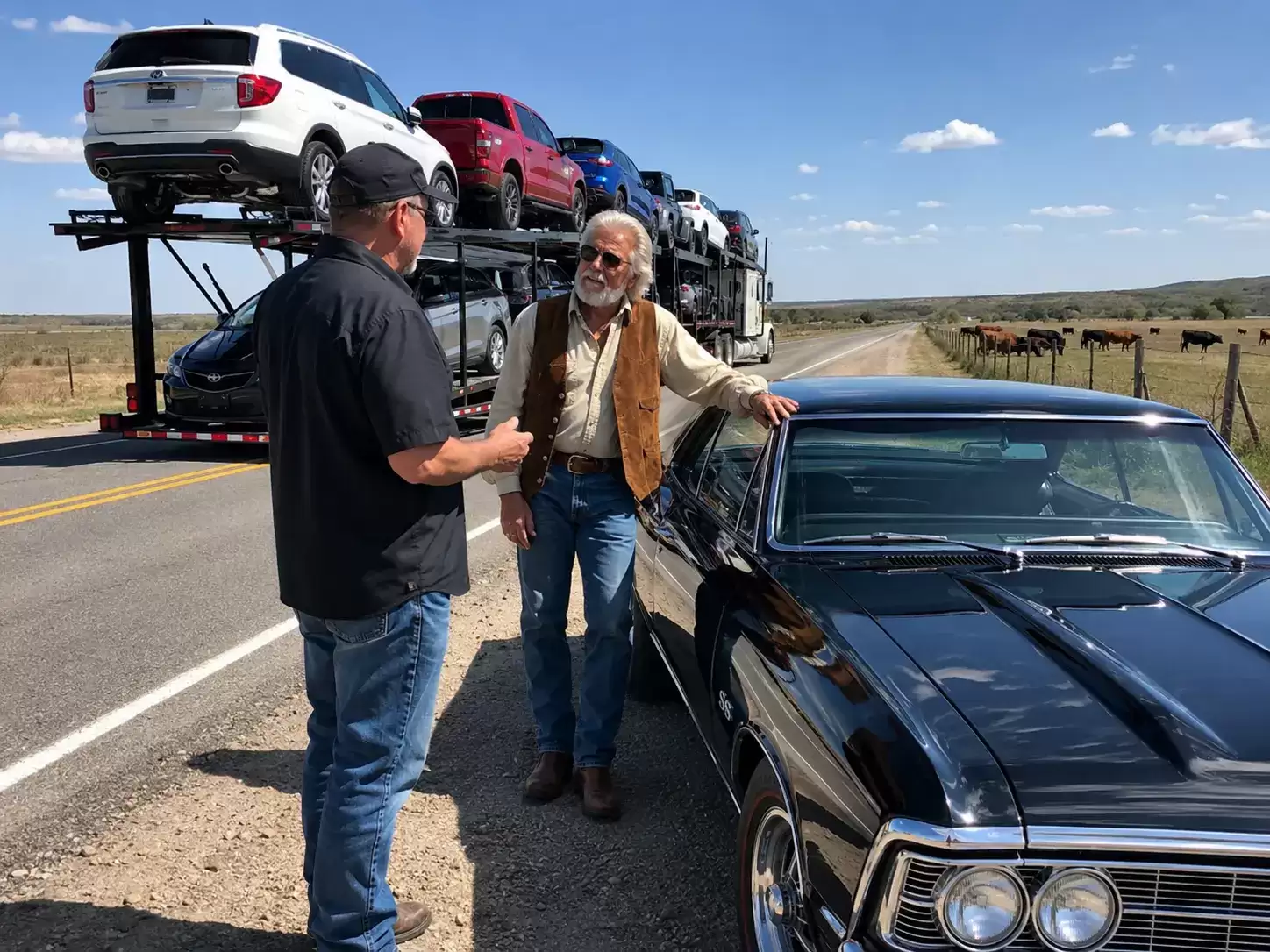
Direct Express ships vehicles between hundreds of city pairs on this route. Below is a broader sample of additional Texas origins and Virginia destinations we regularly serve.
Texas and Virginia Auto Shipping Zones Along the I-20 / I-95 Corridor
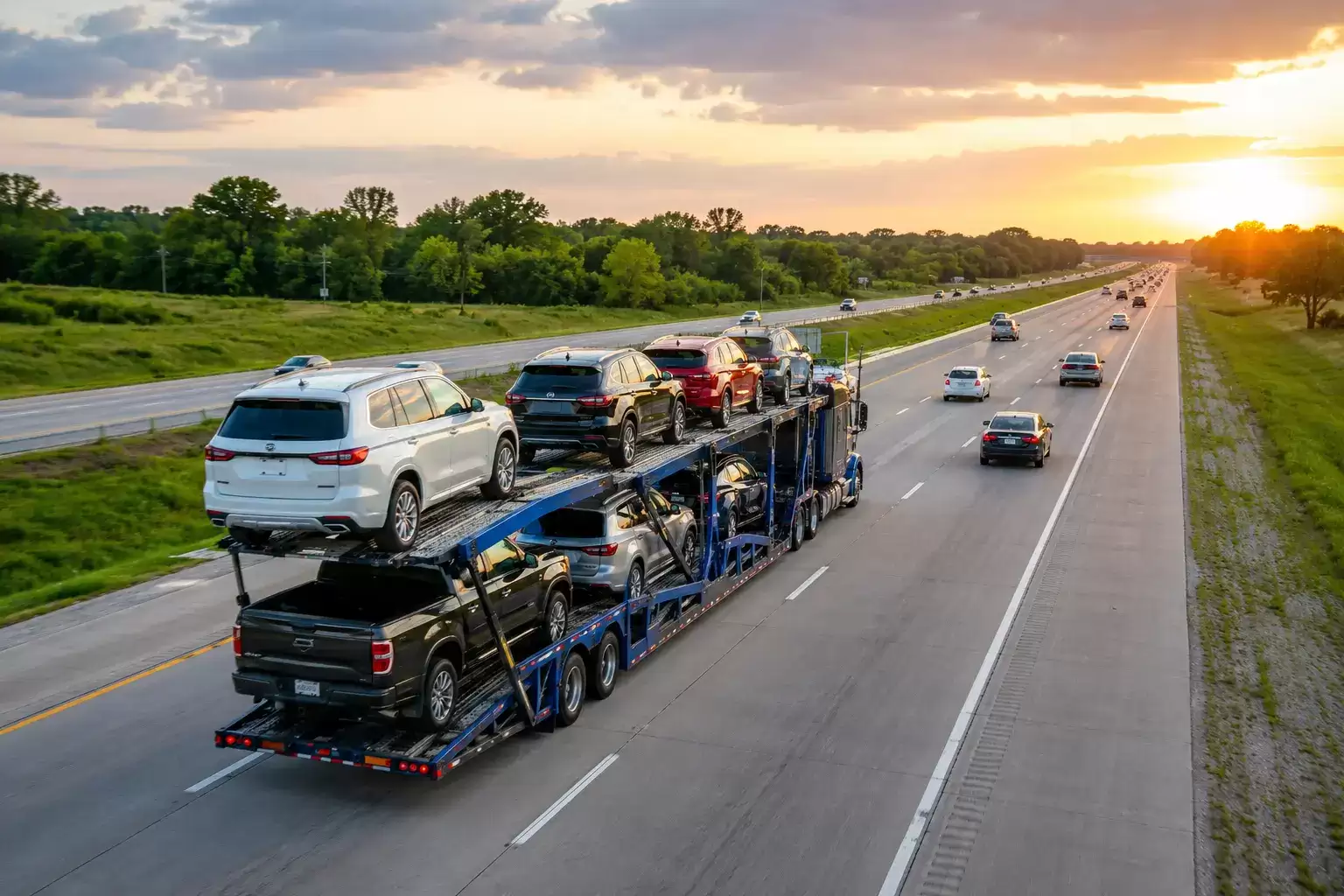
Texas to Virginia runs 1,210–1,760 miles on the I-20E / I-85NE / I-95N corridor through Atlanta, Charlotte, and Richmond — passing through five states with Atlanta and Richmond as the two major relay and distribution points. Virginia’s delivery zones are among the most distinct of any state pair in the Direct Express network: Hampton Roads, Northern Virginia, the Shenandoah Valley, and the Central Virginia Piedmont all require different carrier approaches from the I-95 trunk.
Texas Origin Zones
Mid-Corridor Relay Points
Virginia Delivery Zones
Open vs. Enclosed Car Transport on the Texas–Virginia Route
Open Transport: Standard for All Military, Corporate, and Routine Moves
Open transport is appropriate for all Texas-to-Virginia vehicle shipments — military PCS to JBLE, Naval Station Norfolk, NAS Oceana, Quantico, Fort Belvoir, and Fort Gregg-Adams; government contractor moves to NoVA; corporate moves to Richmond and Charlottesville; and all daily drivers, SUVs, and standard vehicles moving to any Virginia destination. The I-20E / I-95N corridor is among the most heavily traveled auto transport lanes on the East Coast with year-round strong carrier availability in both directions.
Texas Summer Pickup Protocol on Open Carriers
Texas summer pickup (June through September) requires the standard heat protocol regardless of Virginia destination: no more than a quarter tank of fuel, remove all personal items and electronics, and no extended outdoor staging in direct sun on Texas pickup day. Virginia summer delivery (June–August) involves warm and humid weather but does not generate the extreme vehicle-interior heat risk that Texas summer staging does — no equivalent delivery-end heat protocol applies at Virginia destinations.
Open Transport Recommended for Most
- All military PCS from Fort Cavazos / JBSA to JBLE, Norfolk, NAS Oceana, Quantico, Fort Belvoir, Fort Gregg-Adams
- Government contractor moves from any TX origin to NoVA (Reston, Herndon, Fairfax, Arlington)
- Corporate moves to Richmond, Charlottesville, and Hampton Roads
- TX summer pickup June–September: quarter tank, no personal items, no electronics
Enclosed Transport
- Collector vehicles and exotics relocating to Northern Virginia or DC-area private storage
- High-value vehicles consigned to Virginia auction or dealership
- Classic cars moving to Shenandoah Valley or Virginia Piedmont private estates
- Typically 40–60% more expensive than open transport
Our honest recommendation: Open for every military PCS, government contractor, corporate, and standard vehicle move. Enclosed only for collector vehicles, exotics, or high-value classics where carrier deck exposure is the primary concern.
Door-to-Door Car Shipping: What to Expect in Texas and Virginia
Pickup in Texas
DFW Metro and Central Texas
Standard door-to-door pickup throughout DFW (Dallas, Fort Worth, Arlington, Plano, Irving, Garland, Frisco, Denton) and Central Texas (Austin, Waco, Killeen, Temple, College Station, San Antonio). Texas summer pickup June through September: standard heat protocol applies — no more than a quarter tank, no personal items or electronics, no direct-sun outdoor staging on pickup day. Fort Cavazos / Killeen on-post housing: confirm on-post pickup protocol at booking and provide housing address and access authorization. JBSA installations (Lackland, Randolph, Fort Sam Houston): provide on-post access information at booking.
East Texas and Houston
Standard door-to-door pickup throughout East Texas (Tyler, Longview, Beaumont, Port Arthur, Texarkana, Nacogdoches, Lufkin) and the Houston metro (Houston, Pasadena, Sugar Land, Conroe, League City). Tyler and Longview pickups benefit from I-20 on-corridor positioning — carriers loading in East Texas are already on the main Dallas-to-Atlanta route. Beaumont and Port Arthur use the I-10E approach toward New Orleans and the southeastern alternate corridor. Texas summer heat protocol applies to all Texas origins June through September.
South Texas
Standard door-to-door pickup throughout South Texas (Corpus Christi, Laredo, McAllen, Mission, Harlingen, Brownsville). South Texas origins require extended northbound approach to San Antonio or Houston before reaching the I-20E eastern corridor — Expedited is recommended for all South Texas origins with firm Virginia delivery dates, as the additional approach complexity makes Standard’s scheduling window tighter from these origins.
Delivery in Virginia
Hampton Roads
Standard door-to-door delivery throughout Hampton Roads — Virginia Beach, Norfolk, Chesapeake, Newport News, Hampton, Portsmouth, Suffolk. JBLE Langley-Eustis on-post housing (Hampton and Newport News): confirm on-post delivery protocol at booking and provide housing area address and base access information. Naval Station Norfolk and NAS Oceana (Virginia Beach) on-post delivery: provide base access information at booking. Civilian addresses in Hampton, Newport News, Virginia Beach, Chesapeake, and Suffolk: standard door-to-door throughout.
Northern Virginia
Northern Virginia delivery requires staging awareness. Large carriers serving Arlington, Alexandria, Reston, Herndon, and McLean typically stage at commercial points in Springfield (I-95/I-495), Tysons Corner, Dale City, or Woodbridge for dense urban and gated addresses. Dense condominium and high-rise addresses in Arlington (Amazon HQ2 zone) and Alexandria (Old Town) require advance staging coordination — confirm at booking. Fort Belvoir on-post: provide access authorization and housing area at booking. Quantico on-post: confirm Marine Corps Base access protocol at booking. Suburban NoVA addresses (Fairfax, Reston, Herndon, Chantilly, Manassas, Sterling, Leesburg) receive standard door-to-door in most cases.
Richmond, Petersburg, and Central Virginia
Standard door-to-door delivery throughout the Richmond metro, Henrico, Chesterfield, and Petersburg. Fort Gregg-Adams (Army Sustainment Center) on-post delivery in Petersburg: provide on-post housing address and access authorization at booking. Off-post civilian addresses in Petersburg, Colonial Heights, and Hopewell: standard door-to-door. Charlottesville: standard door-to-door throughout; downtown UVA-adjacent addresses may require commercial staging for large carriers — confirm at booking.
Shenandoah Valley and Western Virginia
Standard door-to-door delivery throughout the Shenandoah Valley (Harrisonburg, Winchester, Staunton, Waynesboro) and New River Valley (Blacksburg, Radford, Christiansburg, Roanoke). I-81 winter weather: the Shenandoah Valley sees frequent winter weather events from November through March — I-81 is one of Virginia’s most weather-impacted interstates. Build a 1-day weather buffer for all Shenandoah Valley delivery addresses November through March. Virginia Tech (Blacksburg) and Radford University addresses: standard door-to-door throughout; campus-adjacent addresses may require off-campus staging for large carriers.
Virginia Vehicle Registration for Texas Arrivals
Virginia requires registration within 30 days of establishing residency. Visit a Virginia DMV office with your out-of-state title, proof of Virginia insurance, and proof of Virginia address; no emissions inspection is required for most recent-model vehicles. Cancel your Texas registration once your Virginia plates arrive.
Preparing Your Vehicle
Before Texas pickup: remove all personal items from the passenger compartment, disable car alarms, remove Texas TxTag or TollTag transponders, and leave no more than a quarter tank of fuel. Photograph your vehicle from all angles with date-stamped images before the carrier arrives. Texas summer pickup June–September: heat protocol in full effect — cleared staging, no electronics, no personal items, quarter tank. Virginia winter delivery November–March: Shenandoah Valley and NoVA addresses require cleared driveway; build a 1-day buffer for major ice or snow events. Hampton Roads winter delivery: generally mild, but occasional ice events are possible.
Texas & Virginia Auto Transport Resources
Texas Helpful Government Links
- Texas Department of Motor Vehicles (TxDMV) — Texas vehicle title and registration. Obtain your Texas title release before establishing Virginia registration.
- TxDMV — Title and Registration — TX title release and transfer procedures for vehicles being re-registered in Virginia.
- TxDMV — Military Provisions — Active duty provisions for military at Fort Cavazos, JBSA, and other TX installations receiving PCS orders to Virginia destinations.
- Texas DPS — Driver License — TX driver’s license surrender procedures when obtaining a Virginia driver’s license within 60 days of establishing VA residency.
- TCEQ — Texas Emissions Testing Counties — Identify whether your Texas origin county requires emissions testing before shipping.
Virginia Helpful Government Links
- DMV Virginia — Virginia vehicle title, registration, and driver’s license. New residents must register within 30 days. Motor Vehicle Sales and Use Tax: 4.15%. Annual safety inspection required statewide.
- DMV Virginia — New Resident Registration — Out-of-state vehicle registration procedures for Texas vehicles establishing Virginia registration, including required documents, fee schedule, and DMV customer service center locations.
- DMV Virginia — Driver’s License — Obtain your Virginia driver’s license within 60 days of establishing VA residency. Texas license is surrendered at the DMV office.
- DMV Virginia — Emissions Inspections — Northern Virginia Emissions Inspection Program (Arlington, Alexandria, Fairfax, Loudoun, Prince William, and others) and Hampton Roads Program area emissions testing requirements.
- DMV Virginia — Military Services — Military and veteran provisions for active duty personnel arriving at JBLE Langley-Eustis, Naval Station Norfolk, NAS Oceana, Quantico, Fort Belvoir, and Fort Gregg-Adams on PCS orders.
Federal Auto Transport Resources
- FMCSA — Verify a Carrier’s License (SAFER System) — Verify that any auto transport company is federally licensed and insured before booking.
- FMCSA — Protect Your Move — Federal consumer guidance on hiring vehicle shippers and your rights on a cross-country move.