
Car Shipping To or From New Mexico
Need to ship a car to or from New Mexico? Direct Express Auto Transport has been the Land of Enchantment’s most trusted auto transport broker since 2004 — with a 4.6-star average across thousands of verified Google reviews, no upfront payment required, and a real-time quote available in 30 seconds.
★ 4.6/5 Google Reviews | BBB Accredited A+ | FMCSA Licensed (MC #479342) | USDOT #1240502 | No upfront payment required | 20+ years shipping vehicles


New Mexico car shipping costs vary based on your route, the time of year, vehicle size, and the service tier you choose. Use our instant calculator above for a real-time quote — or see the route-by-route pricing tables below for a fast ballpark. Most standard sedan shipments to or from New Mexico range from $400 for short-haul routes to Texas and Colorado to $1,350 or more on long-haul routes to the East Coast. Albuquerque’s I-40/I-25 crossroads position produces the most competitive rates in the state — among the best in the Southwest for a city of its size. Our Expedited and Rush pricing tiers hasten the process to create an even more satisfying experience.

What customers say about shipping a car to or from New Mexico with Direct Express Auto Transport


The interstate corridors that move New Mexico vehicles
I-40 (East-West transcontinental backbone): The most important carrier route in New Mexico and one of the most heavily traveled transcontinental freight highways in the nation, I-40 runs across New Mexico from the Texas border at Adrian east to Tucumcari, then continues west through Santa Rosa, Albuquerque, Grants, Gallup, and into Arizona at the state line. Every day, a large volume of national long-haul carrier trucks traverse I-40 across New Mexico, moving vehicles between Los Angeles and Dallas, Phoenix and Oklahoma City, and San Diego and Nashville. New Mexico I-40 corridor cities access this through-carrier traffic and benefit from pickup windows that outperform the state’s sparse population.
I-25 (North-South Rocky Mountain corridor): The primary north-south carrier route through the Rocky Mountain region, I-25 runs from the Colorado border at Raton south through Springer, Las Vegas, Santa Fe, Albuquerque, Belen, Socorro, Truth or Consequences, Hatch, Las Cruces, and into Texas at El Paso. I-25 is the carrier route connecting Denver and Colorado Springs to El Paso and the Juarez/Mexico border corridor, and Albuquerque sits at the midpoint where it crosses I-40. The I-25/I-40 convergence at Albuquerque is the most important carrier interchange in New Mexico and one of the most important in the Southwest.
I-10 (Southern border corridor): Enters New Mexico at the Arizona border near Lordsburg and runs east through Deming and Las Cruces to El Paso, Texas. In New Mexico, I-10 runs only through the southern tip of the state for approximately 130 miles before entering Texas. The I-10/I-25 junction at Las Cruces is New Mexico’s second-most-important carrier interchange, giving Las Cruces east-west I-10 access to El Paso and Tucson in addition to the I-25 north-south corridor. Las Cruces shippers benefit from the combined carrier traffic of two interstates.
US-550 / US-64 (Northwest New Mexico to Colorado): The primary route connecting Farmington and the San Juan Basin to Albuquerque (US-550 south) and to Durango and Colorado (US-550/US-64 north). Farmington’s oil and gas industry generates some commercial vehicle traffic on US-550, but dedicated auto transport carriers must specifically position for Farmington pickups. Farmington is 180 miles north of Albuquerque on US-550 with no interstate access.
US-285 / US-70 (Southeast New Mexico): The primary routes through southeast New Mexico’s oil patch — Artesia, Carlsbad, Roswell, and Lovington. US-285 runs north-south from Roswell south to Carlsbad and the Texas border; US-70 runs east-west from Roswell to Alamogordo and El Paso. Southeast New Mexico has substantial oil and gas industry economic activity but no interstate access, and auto transport carriers must travel 200+ miles from I-25 or I-40 to reach Roswell or Carlsbad. Expedited tier is essentially mandatory for these communities.

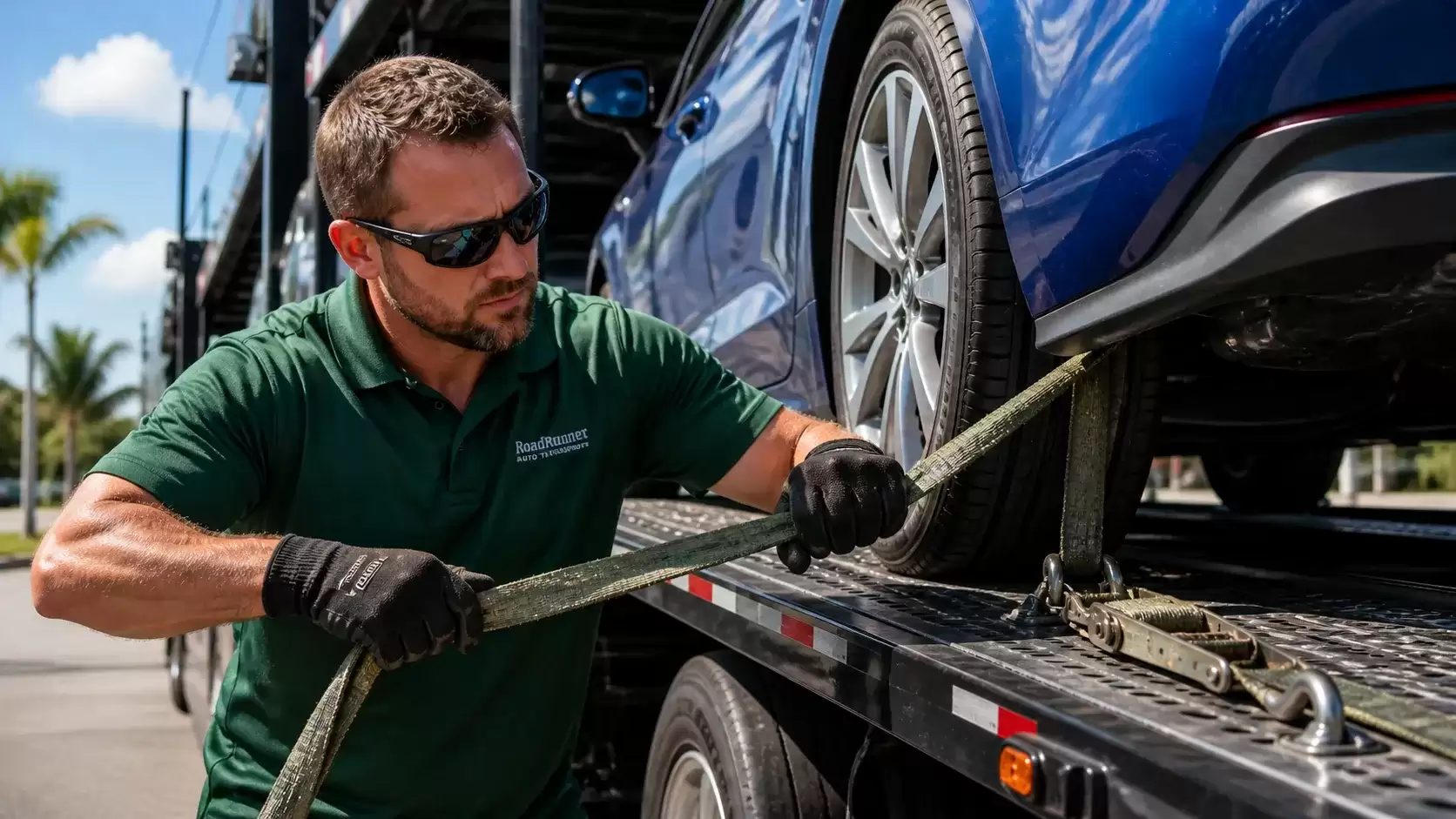
New Mexico carrier dynamics: the Albuquerque crossroads and the rural gap
New Mexico’s carrier market divides more sharply than almost any other state between its interstate corridor cities and its rural communities. In Albuquerque, the I-40/I-25 crossroads produces carrier depth comparable to cities two to three times its population — a Standard tier pickup window of 2–4 business days year-round that rivals Dallas, Salt Lake City, and Denver. Las Cruces on I-25/I-10 and Santa Fe on I-25 close to Albuquerque both benefit from interstate carrier traffic and produce competitive Standard tier availability. Gallup on I-40 at the Arizona border has interstate access and a steady Navajo Nation area commercial economy, but limited population and therefore limited carrier depth; Expedited tier is recommended there despite the I-40 access.
Beyond these interstate corridor cities, New Mexico has one of the largest carrier-accessibility gaps in the continental United States. Taos — one of the most famous resort communities in the American West — is 70 miles from the nearest I-25 exit and accessible only via US-64 and NM-68. Farmington is 180 miles from Albuquerque via US-550. Roswell is approximately 200 miles from Albuquerque on two-lane US-285 with no interstate access anywhere along the route. Alamogordo and White Sands are 85 miles from Las Cruces on US-70. For all of these communities, the question is not whether a carrier can reach them — carriers can and do reach any location in New Mexico — but what it costs for a carrier to make the round trip from the interstate and whether that premium makes Expedited tier economically necessary to ensure reasonable pickup windows.
The national laboratory and defense sector creates a counter-pressure: Sandia Labs and Kirtland AFB in Albuquerque, and Los Alamos National Laboratory north of Santa Fe, generate high-value, time-sensitive vehicle shipping demand from well-compensated federal employees who regularly select Expedited and Rush tiers. This demand pattern attracts carriers to the New Mexico market who might otherwise skip a state with such low population density, and it indirectly improves Standard tier availability in Albuquerque and Santa Fe above what the general residential market alone would support.
New Mexico vehicle shipping hub rankings
Albuquerque / I-40 / I-25 / I-40 Frontage Road corridors — Tier 1 hub: New Mexico’s largest city and its overwhelmingly dominant carrier hub at the I-40/I-25 convergence. Through-carrier traffic in four directions on two of the nation’s primary transcontinental and continental corridors keeps Standard tier pickup windows at 2–4 business days year-round. The I-40/I-25 beltway system gives carrier trucks efficient access to all Albuquerque metro neighborhoods including Rio Rancho, Bernalillo, Corrales, and the East and West Mesa communities. Sandia Labs, Kirtland AFB, and the University of New Mexico create year-round multi-sector demand. Albuquerque is by far the best-value city in New Mexico for Standard tier pricing.
Las Cruces / I-25 / I-10 — Tier 1 hub: Southern New Mexico’s largest city and the state’s second-strongest carrier market. The I-25/I-10 junction gives Las Cruces access to three carrier corridors: north on I-25 to Albuquerque and Colorado, east on I-10 to El Paso and Texas, and west on I-10 to Tucson and Arizona. New Mexico State University (14,000 students) and the El Paso-Jouárez metro proximity give Las Cruces consistent residential, student, and corporate vehicle shipping demand. Standard tier produces pickup windows of 2–4 business days.
Santa Fe / I-25 / US-285 — Tier 2 hub: New Mexico’s capital and cultural center, Santa Fe sits on I-25 approximately 60 miles north of Albuquerque. I-25 access and proximity to the Albuquerque carrier market give Santa Fe Standard tier pickup windows of 2–4 business days. The state government, arts community, and resort economy generate year-round residential and professional relocation demand. Carriers serving Albuquerque regularly cover Santa Fe as an extension of the same I-25 corridor. Note: Santa Fe’s historic downtown streets are narrow and may require staging at a commercial location for carrier truck pickup and delivery.
Rio Rancho / I-25 / NM-528 — Tier 1 hub: Albuquerque’s largest suburb, Rio Rancho sits northwest of Albuquerque on I-25 and NM-528, effectively sharing the Albuquerque carrier market. Intel’s manufacturing campus in Rio Rancho employs several thousand people and generates consistent technology-sector corporate relocation demand. Standard tier produces pickup windows of 2–4 business days matching Albuquerque rates.
Gallup / I-40 / US-491 — Tier 2 hub: Western New Mexico’s largest city, Gallup sits on I-40 approximately 145 miles west of Albuquerque and serves as the commercial center for the Navajo Nation. Direct I-40 access gives Gallup connection to through-carrier traffic, but the limited local population and the long distance from the dense carrier supply in Albuquerque mean Standard tier can produce pickup windows of 3–6 business days. Expedited tier is recommended for time-sensitive Gallup shipments.
Farmington / US-550 / US-64 — Tier 3 hub: Northwest New Mexico’s largest city, Farmington is 180 miles north of Albuquerque on US-550 with no interstate access. The San Juan Basin oil and gas industry generates commercial vehicle traffic, but dedicated auto transport carriers must position specifically for Farmington. Expedited tier is strongly recommended for Farmington shipments, and Standard tier pickup windows can extend to 7–12 business days. Carriers staging in Albuquerque must drive 180 miles north and 180 miles back to complete a Farmington pickup or delivery.
Roswell / US-285 / US-380 — Tier 3 hub: Southeast New Mexico’s largest city, Roswell is approximately 200 miles from Albuquerque on two-lane US-285 with no interstate access anywhere along the route. Expedited tier is mandatory for reliable Roswell shipments. Standard tier pickup windows can extend to 10–14 business days. The UFO tourism economy and Roswell’s regional commercial role generate residential and business shipping demand, but the geographic isolation from the interstate network makes carrier positioning expensive and scheduling unpredictable at Standard tier.
Taos / US-64 / NM-68 — Tier 3 hub: The famous mountain resort community north of Santa Fe, Taos sits at 6,969 feet elevation approximately 70 miles from I-25 via US-64 through the Taos Gorge. Expedited tier is strongly recommended for Taos shipments year-round, and Standard tier pickup windows can extend to 7–10 business days. The Taos Gorge on the Rio Grande is a dramatic narrow canyon with no alternate route — carriers must commit to the mountain approach. Ski season (November–March) adds road congestion and snow risk to the NM-68 approach to Taos from Española.

New Mexico car shipping rates: popular routes and estimated costs
The tables below reflect current market averages for open-carrier transport of a standard sedan in good weather conditions. Prices vary based on fuel costs, carrier availability, season, and vehicle size. Use the calculator above for a real-time quote specific to your route and vehicle.
Popular car shipping routes from New Mexico
| From | To | Distance (mi) | Estimated Days | Standard | Expedited | Rush |
|---|---|---|---|---|---|---|
| New Mexico | Texas | 400 | 2–3 | $450 | $540 | $630 |
| New Mexico | Arizona | 350 | 2–3 | $425 | $510 | $595 |
| New Mexico | Colorado | 450 | 2–3 | $475 | $570 | $665 |
| New Mexico | Utah | 650 | 2–4 | $575 | $690 | $805 |
| New Mexico | California | 900 | 3–5 | $825 | $990 | $1,155 |
| New Mexico | Oklahoma | 600 | 2–4 | $625 | $750 | $875 |
| New Mexico | Illinois | 1,350 | 4–6 | $975 | $1,170 | $1,365 |
| New Mexico | Georgia | 1,600 | 5–7 | $1,075 | $1,290 | $1,505 |
| New Mexico | Florida | 1,800 | 5–7 | $1,175 | $1,410 | $1,645 |
| New Mexico | New York | 2,100 | 6–8 | $1,350 | $1,620 | $1,890 |
Popular car shipping routes to New Mexico
| From | To | Distance (mi) | Estimated Days | Standard | Expedited | Rush |
|---|---|---|---|---|---|---|
| California | New Mexico | 900 | 3–5 | $825 | $990 | $1,155 |
| New York | New Mexico | 2,100 | 6–8 | $1,350 | $1,620 | $1,890 |
| Florida | New Mexico | 1,800 | 5–7 | $1,175 | $1,410 | $1,645 |
| Georgia | New Mexico | 1,600 | 5–7 | $1,075 | $1,290 | $1,505 |
| Illinois | New Mexico | 1,350 | 4–6 | $975 | $1,170 | $1,365 |
| Texas | New Mexico | 400 | 2–3 | $450 | $540 | $630 |
| Colorado | New Mexico | 450 | 2–3 | $475 | $570 | $665 |
| Arizona | New Mexico | 350 | 2–3 | $425 | $510 | $595 |
| Oklahoma | New Mexico | 600 | 2–4 | $625 | $750 | $875 |
| Utah | New Mexico | 650 | 2–4 | $575 | $690 | $805 |
Why Albuquerque’s I-40 position makes cross-country transport from New Mexico surprisingly competitive
The counterintuitive reality of New Mexico auto transport is that Albuquerque — a city of 560,000 in one of the least densely populated states — produces cross-country rates competitive with much larger cities. The reason is I-40. Carriers running coast-to-coast loads (Los Angeles to Nashville, Phoenix to Oklahoma City) cross Albuquerque at the midpoint. Accepting an Albuquerque vehicle adds zero miles to their route — it is pure incremental revenue. This is why Albuquerque-to-Florida, Albuquerque-to-Chicago, and Albuquerque-to-California pricing all outperform what raw distance and state population would predict. Sitting at the midpoint of I-40 is one of the most favorable cross-country auto transport positions in the nation.

New Mexico auto transport seasonal guide

New Mexico car shipping service tiers
| Service Tier | Pickup Window | Best For | Price vs. Standard |
|---|---|---|---|
| Standard | 2–5 business days | Albuquerque, Las Cruces, and Santa Fe on-corridor locations, flexible schedules, January–April (best value window) | Base rate |
| Expedited (most popular) |
1–3 business days | Taos, Farmington, Roswell, Gallup, Alamogordo and all non-interstate communities; national lab start dates; Kirtland AFB PCS moves; mountain area winter shipping | ~20% more |
| Rush | Next-day available | Hard Sandia Labs or Los Alamos start dates, Kirtland AFB report deadlines, last-minute moves | ~40% more |


How to ship a car to or from New Mexico in 4 steps
Step 1: Get your instant quote. Use the calculator above or call us directly. Enter your pickup and delivery zip codes, vehicle type, and desired dates. You’ll have a real price in 30 seconds — no upfront payment required to reserve your spot.
Step 2: Book and confirm your pickup window. Once you book, we match your vehicle with a licensed, insured carrier on your specific route. For Albuquerque and Las Cruces, Standard tier typically produces carrier assignment within 1–2 business days. For Taos, Farmington, Roswell, and other off-interstate communities, use Expedited tier. For national laboratory start dates during May–August, book 10–14 days in advance.
Step 3: Prepare your vehicle for pickup. Remove personal items over 100 lbs, leave the gas tank one-quarter full, document your vehicle with photos before the carrier arrives, and make sure someone is present for the inspection and Bill of Lading signing. For rural New Mexico addresses, confirm with your carrier whether they can reach your specific location or if a meeting point on a state highway or I-25/I-40 exit is needed. For Taos Gorge area addresses, the NM-68 canyon road approach may require coordination.
Step 4: Inspect at delivery and sign off. When your vehicle arrives, inspect every panel in daylight before signing the delivery Bill of Lading. Compare against your pre-pickup photos. Any damage that was not pre-existing should be noted on the Bill of Lading before you sign. Our team is available to assist with any delivery concerns at no additional charge.
Shipping a vehicle to or from a New Mexico university
New Mexico’s universities generate student auto transport demand primarily in August and May, with the University of New Mexico in Albuquerque and New Mexico State in Las Cruces producing the largest volumes. Both campuses have direct interstate access, making carrier logistics more straightforward than at peer universities in the region. Book 7–10 days in advance for university moves during the August move-in surge.
| University | Location | Approx. Enrollment |
|---|---|---|
| University of New Mexico | Albuquerque | 24,000 |
| New Mexico State University | Las Cruces | 14,000 |
| New Mexico Tech | Socorro | 2,000 |
| Eastern New Mexico University | Portales | 5,000 |
| Western New Mexico University | Silver City | 3,500 |
| New Mexico Highlands University | Las Vegas | 3,000 |
| University of New Mexico – Gallup | Gallup | 2,500 |
| University of New Mexico – Taos | Taos | 700 |
| San Juan College | Farmington | 8,000 |
| Santa Fe Community College | Santa Fe | 6,000 |

Military auto transport to and from New Mexico
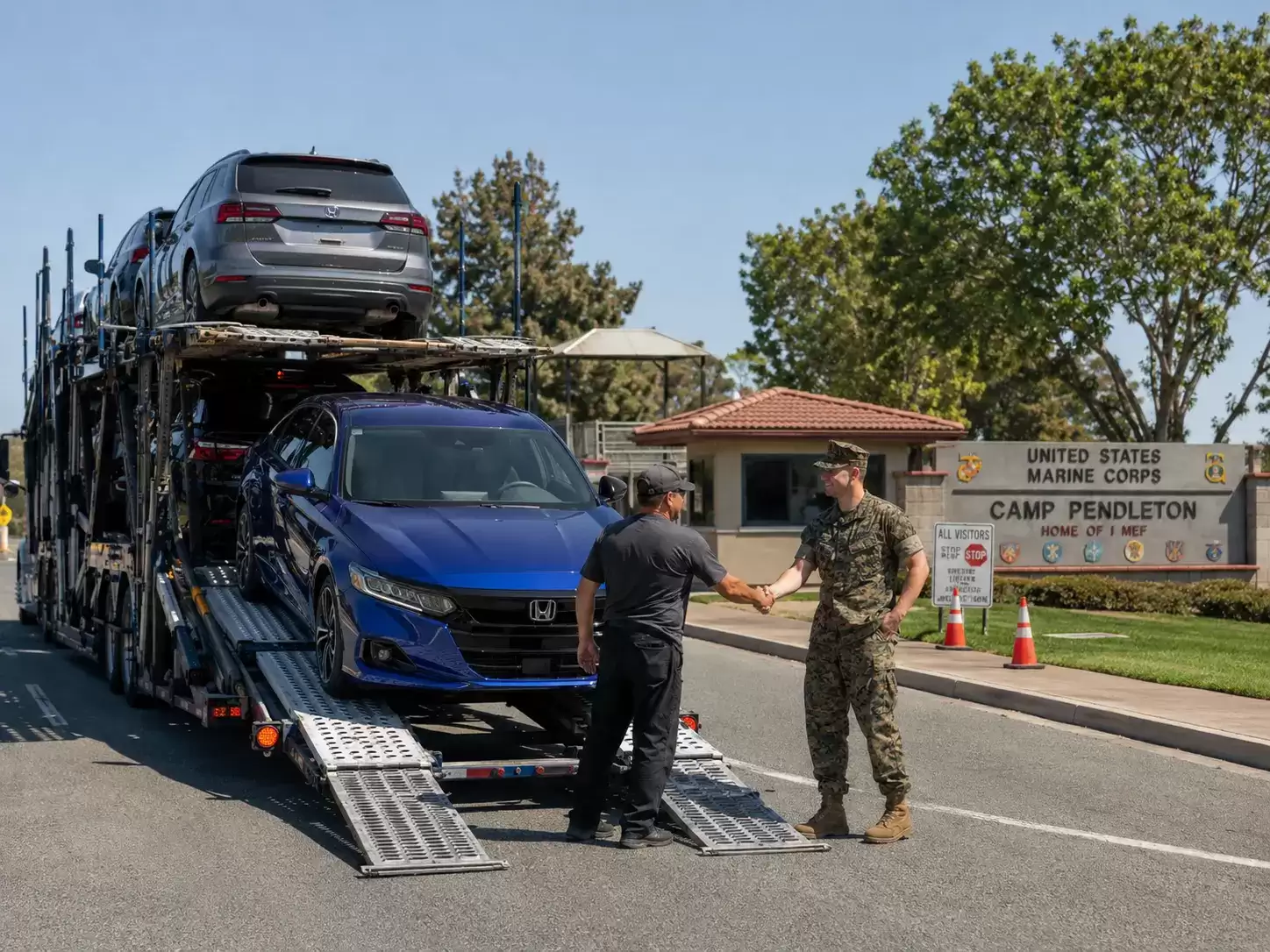
New Mexico has two significant active-duty military installations and one major defense research facility that together generate substantial auto transport demand. Kirtland Air Force Base in Albuquerque is one of the Air Force’s most strategically significant installations — home to the Air Force Nuclear Weapons Center, Air Force Space Command units, special operations aviation, and a tenant population that includes Sandia National Laboratories on the base property. With approximately 20,000 military, civilian, and contractor personnel, Kirtland AFB generates the largest military PCS auto transport volume in New Mexico. The base’s location in southeast Albuquerque gives it direct access to I-25 and I-40. Expedited tier is recommended for Kirtland AFB PCS moves with hard report dates, and book 10–14 days in advance during June–August.
White Sands Missile Range near Alamogordo is one of the Army’s largest test ranges and generates PCS activity on the US-70 corridor between Las Cruces and Alamogordo. White Sands is approximately 85 miles east of Las Cruces on US-70 with no interstate access. Expedited tier is required for White Sands PCS moves — carriers must position from Las Cruces and travel 85 miles east on US-70 for pickups and deliveries. The White Sands market benefits from the Las Cruces I-25/I-10 carrier supply, but the 85-mile off-interstate positioning trip means Standard tier pickup windows can extend 7–12 business days.
Holloman Air Force Base in Alamogordo (the F-16 and German Air Force partner training installation) also generates PCS activity on the US-70 corridor. Holloman is co-located near Alamogordo adjacent to White Sands Missile Range. The same Expedited tier guidance applies: Las Cruces carrier staging, 85-mile positioning run, and advance booking requirements for summer PCS season.
New Mexico cities and communities we serve
Albuquerque Metro (I-40 / I-25 Hub)
Albuquerque, Rio Rancho, Bernalillo, Corrales, Tijeras, Edgewood, Belen, Los Lunas
Santa Fe and North-Central New Mexico (I-25 North)
Santa Fe, Española, Los Alamos, Taos, Pojoaque, Pecos, Raton, Las Vegas
Las Cruces and South New Mexico (I-25 / I-10 South)
Las Cruces, Alamogordo, Deming, Lordsburg, Hatch, T or C (Truth or Consequences), Silver City
Eastern New Mexico (I-40 East / US-285)
Roswell, Carlsbad, Artesia, Hobbs, Lovington, Portales, Clovis, Tucumcari, Santa Rosa
Northwest New Mexico (I-40 West / US-550)
Gallup, Farmington, Aztec, Bloomfield, Grants, Zuni Pueblo
New Mexico vehicle transport — official government resources
- New Mexico Motor Vehicle Division (MVD) — Title transfers, registration, and vehicle documentation for New Mexico shipments.
- New Mexico Department of Transportation — Commercial Vehicle Enforcement — Size and weight regulations, oversize permits, and carrier compliance for I-40, I-25, and I-10 routes.
- New Mexico Department of Transportation (NMDOT) — Highway conditions, road closures, and I-25 Raton Pass and I-40 mountain pass winter weather advisories.
- FMCSA Safety and Fitness Electronic Records (SAFER) — Verify your carrier’s USDOT number, insurance, and operating authority before booking.
- Better Business Bureau — New Mexico — Check auto transport broker and carrier ratings and complaint histories for New Mexico-based and national companies.

Popular long-distance auto transport routes from New Mexico
New Mexico to California Auto Transport
The New Mexico-to-California route follows I-40 west through Arizona to Los Angeles, or I-40 to I-15 north for Las Vegas and then I-15 south to Los Angeles. Los Angeles is 3–5 days from Albuquerque. The I-40 through-carrier advantage makes this New Mexico’s most competitively priced long-haul route: carriers running the full I-40 coast-to-coast corridor pick up Albuquerque loads with no additional routing commitment.
New Mexico to Texas Vehicle Shipping
The New Mexico-to-Texas corridor follows I-40 east to Amarillo, or I-25 south to El Paso, or I-10 east from Las Cruces to El Paso and then further into Texas. Dallas and Houston are 2–4 days from Albuquerque. The Las Cruces-to-El Paso route is one of the most direct city-to-city connections in the state, with El Paso effectively functioning as a dual market with Las Cruces.
New Mexico to Colorado Car Transport
The New Mexico-to-Colorado route follows I-25 north through Santa Fe, Taos (via US-64), Raton, Trinidad, Pueblo, and Denver. Denver is 2–3 days from Albuquerque. The I-25 Denver corridor is one of the most carrier-active routes in the Rocky Mountain region. Raton Pass on I-25 at the Colorado border (elevation 7,834 feet) can close temporarily during winter storms; carriers monitor conditions and reroute when necessary.
New Mexico to Arizona Auto Shipping
The New Mexico-to-Arizona route follows I-40 west through Gallup to Flagstaff and Phoenix, or I-10 west from Las Cruces to Tucson and Phoenix. Phoenix is 2–3 days from Albuquerque on I-40. The I-40 corridor between New Mexico and Arizona is one of the most carrier-rich routes in the Southwest, with constant through-carrier traffic on the transcontinental I-40 corridor.
New Mexico to Florida Vehicle Transport
New Mexico-to-Florida routes follow I-40 east through Oklahoma City and Nashville to the Southeast corridor, or I-10 east from Las Cruces through San Antonio and Houston to Florida. Transit times average 5–7 days. The I-10 Las Cruces-to-Florida route is particularly direct for southern New Mexico shippers, following the Gulf South corridor the entire way.
New Mexico to Illinois Car Shipping
New Mexico-to-Illinois routes follow I-40 east through Oklahoma City to St. Louis, or I-40 to I-44 at Oklahoma City to St. Louis, or I-40 all the way to Nashville and I-24 to I-57 north to Chicago. Chicago is 4–6 days from Albuquerque. The I-40 Oklahoma City junction at Amarillo or Oklahoma City provides connections to both St. Louis and Chicago markets.
New Mexico to Georgia Auto Transport
New Mexico-to-Georgia routes follow I-40 east through Oklahoma City, Memphis, and Nashville to Atlanta, or I-10 east from Las Cruces through the Gulf South to Atlanta. Atlanta is 4–6 days from Albuquerque. The I-40 corridor from Albuquerque to Nashville to Atlanta is a single continuous interstate, making this one of the most routing-efficient long-haul routes from New Mexico.
New Mexico to New York Vehicle Shipping
New Mexico-to-New York routes follow I-40 east all the way to Greensboro, then I-85 north to I-95 northeast to New York, or I-40 to I-81 north through the Appalachians. New York City is 6–8 days from Albuquerque. The full I-40 transcontinental route from Albuquerque to the East Coast makes this a surprisingly well-served long-haul route despite the distance.
New Mexico to Washington Car Transport
New Mexico-to-Washington routes follow I-40 west to I-15 north through Las Vegas, Salt Lake City, and the I-84 northwest corridor to Portland and Seattle. Seattle is 5–7 days from Albuquerque. The I-15 Salt Lake City corridor produces consistent northbound carrier availability, as Pacific Northwest loads balance the southbound California traffic on I-15.
New Mexico to Oklahoma Auto Shipping
The New Mexico-to-Oklahoma route follows I-40 east from Albuquerque through Amarillo and into Oklahoma. Oklahoma City is 3–4 days from Albuquerque. The I-40 Albuquerque-to-Oklahoma City corridor carries consistent through-carrier traffic in both directions and is one of New Mexico’s most reliably served eastbound routes.
New Mexico to Utah Vehicle Transport
New Mexico-to-Utah routes follow I-25 north through Albuquerque to Colorado, then I-70 west to I-15 north to Salt Lake City, or US-550 north through Durango and Moab. Salt Lake City is 3–5 days from Albuquerque. The I-25/I-15 corridor through Colorado produces consistent carrier traffic between New Mexico and Utah, with Denver serving as the primary carrier relay point.
New Mexico to Nevada Car Shipping
New Mexico-to-Nevada routes follow I-40 west to I-15 north for Las Vegas, a 2–3 day run from Albuquerque. Las Vegas is one of the most carrier-active destinations from New Mexico due to the I-40 to I-15 junction at Barstow, California, which places New Mexico-to-Las Vegas loads on the same carriers running the Los Angeles-to-Las Vegas market. Reno is 4–5 days from Albuquerque via I-40 to I-15 to US-95 north.

Nearby New Mexico auto transport services
Texas Auto Transport
Texas borders New Mexico on the east and south, with the El Paso–Las Cruces market effectively functioning as a single cross-border metro. I-40 east from Albuquerque to Amarillo and Dallas, and I-10 east from Las Cruces to El Paso and Houston, are New Mexico’s two primary Texas connections. Dallas is 3–4 days from Albuquerque; Houston is 3–4 days from Las Cruces.
Colorado Vehicle Shipping
Colorado borders New Mexico on the north on I-25, with Denver accessible in 3–4 hours from Santa Fe. I-25 north through Raton Pass is the primary route, with carriers monitoring Raton Pass conditions during winter. Denver is 2–3 days from Albuquerque at Standard tier. The I-25 Denver corridor is one of the Rocky Mountain region’s most carrier-active north-south routes.
Arizona Car Transport
Arizona borders New Mexico on the west, with Flagstaff accessible on I-40 west in approximately 3 hours from Albuquerque and Phoenix accessible in 5 hours. The I-40 Albuquerque-to-Flagstaff corridor carries constant through-carrier traffic. Phoenix and Tucson are accessible via I-10 west from Las Cruces. Arizona is New Mexico’s most carrier-accessible neighboring state.
Utah Auto Shipping
Utah is accessible from New Mexico via I-25 north through Colorado and I-70 west to I-15 north to Salt Lake City. Salt Lake City is 6–7 hours from Albuquerque by road. US-550 north through Durango and Moab offers a scenic alternative but with no interstate carrier efficiency. Salt Lake City is New Mexico’s most distant major carrier hub neighbor.
Oklahoma Vehicle Transport
Oklahoma is New Mexico’s most accessible eastern neighbor via I-40 east through Amarillo to Oklahoma City. Oklahoma City is 5–6 hours from Albuquerque by road. The I-40 Albuquerque-to-Oklahoma City corridor is one of the most carrier-active segments of I-40 in the Southwest, with through-carrier traffic running continuously in both directions.
Nevada Car Shipping
Nevada is accessible from New Mexico via I-40 west to I-15 north at Barstow, California, then north to Las Vegas. Las Vegas is 7–8 hours from Albuquerque by road and 2–3 days transit. The Las Vegas market’s strong inbound carrier traffic (driven by the casino and resort economy) produces competitive westbound rates from New Mexico to Nevada year-round.

Ready to ship your car to or from New Mexico?
Join hundreds of thousands of customers — Snowbirds, military families, tech relocators, students, and families moving across the country — who have trusted Direct Express Auto Transport with their New Mexico vehicle shipments since 2004. Get your instant, no-obligation quote now. It takes 30 seconds, requires no personal information, and there is no upfront payment required to hold your spot.
Instant quote — real-time pricing in under 5 seconds
No upfront payment — your card is charged only when a carrier is assigned
No risk to get a quote and book your order
BBB Accredited A+ since 2004
FMCSA licensed and fully bonded
4.6 stars across thousands of verified Google reviews