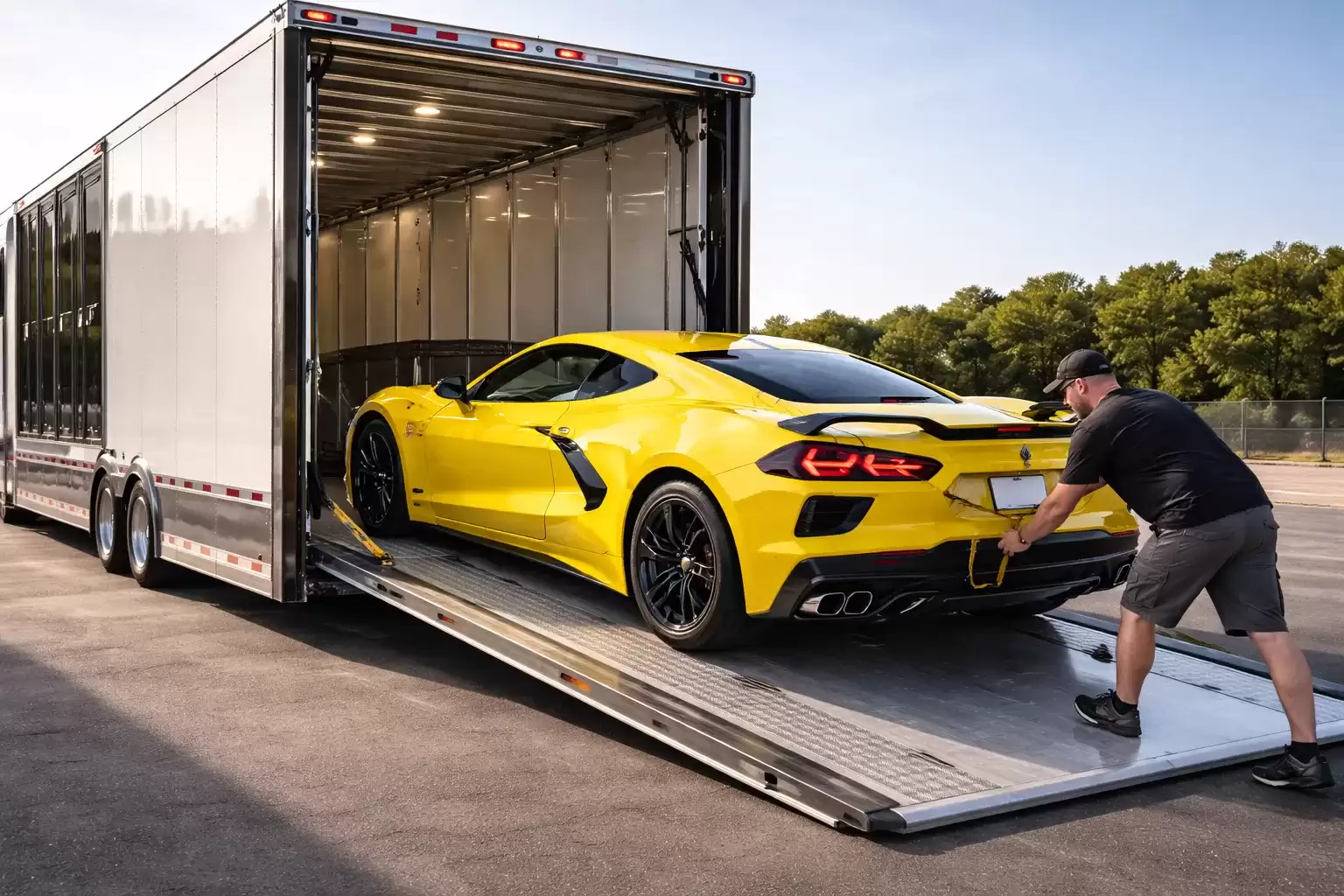
Ohio Car Shipping Services
Need to ship a car to or from Ohio? Get a real-time, transparent price in 30 seconds — no phone calls, no risk, no upfront payment. Direct Express Auto Transport has been the Buckeye State’s most trusted auto transport broker since 2004, with a 4.6-star average across thousands of verified Google reviews.
Ohio Car Shipping Services
Need to ship a car to or from Ohio? Get a real-time, transparent price in 30 seconds — no phone calls, no risk, no upfront payment. Direct Express Auto Transport has been the Buckeye State’s most trusted auto transport broker since 2004, with a 4.6-star average across thousands of verified Google reviews.
★ 4.6/5 Google Reviews | BBB Accredited A+ | FMCSA Licensed (MC #479342) | USDOT #1240502 | No upfront payment required | 20+ years shipping vehicles
New to Ohio car shipping? Watch this first!
Before you book, take six minutes to learn exactly how auto transport works — from getting your quote to handing over your keys and inspecting your vehicle at delivery. This video was created by our team and explains the full process in clear, simple language. It’s the same overview our customer service team provides to first-time car shippers every day.
Follow along to see how we manage Ohio auto transport from the Lake Erie shoreline to the Ohio River Valley.
[00:00] – Introduction to Ohio Auto Transport
We begin by explaining why Ohio is one of the busiest vehicle shipping states in the Midwest. Our carrier network is built to handle the constant flow of transport along I-71, I-75, I-70, and I-80 — four of the country’s most active auto transport corridors.
[00:58] – How To Arrange Auto Transport
Learn how easy it is to schedule your Ohio shipment. Whether you’re shipping a car from Cleveland to Florida for the winter or a family SUV from Columbus to a new home across the country, we explain how the booking process works and how carriers are assigned along Ohio’s major routes.
[01:29] – How Pricing Tiers Work
Ohio pricing can vary depending on season and demand, especially during the fall southbound push as Ohio Snowbirds head to Florida and the Gulf Coast. We explain how rates change throughout the year and how your pickup and delivery location within Ohio impacts pricing.
[02:48] – Where We Ship
We transport vehicles throughout the entire state of Ohio, from the Lake Erie port cities of the north to the Ohio River communities of the south, including every major metro, university town, and rural community statewide.
[03:06] – When To Expect Pickup
Pickup timing depends on route availability, traffic patterns, and scheduling logistics. We explain how pickup windows work and how carriers coordinate routes across Ohio’s dense Interstate and highway network.
[03:37] – How Long Shipping Takes
Get realistic transit time expectations for routes between Ohio and destinations across Florida, the Southeast, the West Coast, and the Northeast — including factors specific to Ohio routes such as winter weather conditions that may affect delivery timing.
[03:55] – Preparing Your Vehicle
Before pickup, we recommend cleaning your vehicle, removing personal items, and documenting its condition with photos. We also cover Ohio-specific considerations related to winter road salt, lake-effect snow conditions, and preparing older vehicles for cold-weather transport.
[04:25] – What To Expect At Pickup
We walk through the inspection and Bill of Lading process so you know exactly what happens when the carrier arrives at your Ohio pickup location — whether that’s a home driveway in the suburbs or a corporate campus in downtown Cincinnati.
[04:57] – What To Expect At Delivery
The final inspection and delivery process is explained step by step, including how deliveries are handled in areas with limited truck access — common in Ohio’s historic downtown neighborhoods and dense university districts.
How Much Does It Cost to Ship a Car to/from Ohio?
Ohio car shipping costs vary based on your route, the time of year, vehicle size, and the service tier you choose. Use our instant calculator above for a real-time quote — or see the route-by-route pricing tables below for a fast ballpark. Most standard sedan shipments to or from Ohio range from $280 on short regional hauls to $2,200+ on cross-country routes. Our Expedited and Rush pricing tiers hasten the process to create an even more satisfying experience.
What customers say about shipping a car to or from Ohio with Direct Express Auto Transport
And their carrier Speedstar did an exceptional job.. everyone was
Courteous and the driver was extremely competent. They transported or car in 30 hrs from TX to MA. I would definitely use them again.
Why Ohio is one of the most active auto transport markets in the country.
Ohio sits at the geographic heart of America’s most traveled auto transport corridors — and it shows. The Buckeye State is home to three of the Midwest’s largest cities, one of the country’s densest Interstate networks, the nation’s most heavily traveled Snowbird corridor (I-75 to Florida), and a massive university system that creates relentless student vehicle transport demand every August and May. Understanding how Ohio’s market works is the key to getting your vehicle picked up quickly and at the right price.
The interstate corridors that move Ohio vehicles
Four primary highway arteries define Ohio’s auto transport network:
I-71 (The Ohio Spine): The single most important intrastate corridor, connecting Cleveland in the northeast through Columbus in the center to Cincinnati in the southwest — three of Ohio’s four largest cities on a single 250-mile run. Carriers use I-71 to combine loads across all three markets, driving exceptional availability and competitive pricing year-round. This is the most carrier-efficient corridor in the state.
I-75 (The Florida Snowbird Corridor): The primary artery for Ohio’s most important long-distance shipping route — the annual Snowbird migration to Florida and the Gulf states. I-75 runs from Toledo in northwest Ohio south through Dayton and Cincinnati, then continues through Kentucky and Tennessee into Georgia and ultimately to Florida. This is one of the busiest car shipping corridors in the country from October through May, with carriers running southbound fully loaded virtually every day of the season.
I-70 (The East-West Backbone): The cross-state connector running from the Pennsylvania border east of Wheeling through Columbus west to Dayton and into Indiana. I-70 is a critical transcontinental artery — carriers moving between the East Coast and Colorado, Kansas City, or the West Coast use this corridor daily. Columbus sits at the exact intersection of I-70 and I-71, making it the most strategically positioned city in the state for auto transport.
I-80/90 (The Ohio Turnpike — Northern Route): Ohio’s northern east-west artery running along the Lake Erie corridor from the Indiana border through Toledo, Sandusky, Cleveland, and east to the Pennsylvania border near Youngstown. The Turnpike is a critical connector for vehicles moving between Chicago or Detroit and New York City, Boston, or the Mid-Atlantic. Carriers on transcontinental northern routes pass through Ohio on this corridor daily in both directions.
Vehicles shipping to or from Columbus, Cincinnati, or Cleveland benefit from the highest carrier frequency in the state — multiple daily departures in all directions. If you are shipping to a northeast Ohio destination (Akron, Canton, Youngstown) or a smaller western Ohio market (Lima, Findlay, Mansfield), expect slightly longer pickup windows due to the deviation from primary carrier trunk routes.

Ohio as a crossroads: what it means for your vehicle shipment
Ohio’s geography creates a carrier dynamic that is fundamentally different from peninsula states like Florida. While Florida sees carriers flowing in and out along a handful of limited corridors, Ohio sits at the true crossroads of the country — six major interstate arteries enter the state from different directions, giving carriers maximum flexibility in building efficient multi-stop routes. This has three important implications for your shipment:
Southbound from Ohio (Oct–Apr): Ohio’s large Snowbird population — residents of Cleveland, Columbus, Cincinnati, Dayton, and Toledo who winter in Florida and the Gulf states — creates enormous southbound carrier demand from October through February. Carriers filling trailers in Ohio to head south keep rates on Florida-bound routes highly competitive. This is the best time of year to ship your Ohio vehicle south: trailers are going that direction anyway, and carrier availability is strong.
Northbound into Ohio (Mar–May): As Snowbirds return from Florida in spring, carriers flood north along I-75. This creates strong inbound demand from the Southeast into Ohio — meaning vehicles shipping into Ohio from Georgia, Tennessee, and Florida during March through May benefit from consistent carrier availability but should use Expedited tier to stay ahead of the return-migration surge.
Year-round on I-70 (all seasons): Unlike Florida, which goes quiet in summer, Ohio sees consistent bidirectional demand all year because it serves as a crossroads for coast-to-coast moves. I-70 east-west traffic alone keeps carriers flowing through Columbus daily in both directions, and I-80/90 maintains steady transcontinental volume through Northern Ohio every month of the year.
Ohio’s major auto carrier hubs and what they mean for you
Not all Ohio cities are equal from a logistics standpoint. Here is how the major hubs rank in terms of carrier availability:
Columbus: Ohio’s most strategically positioned city and the state’s premier auto transport hub. Located at the precise intersection of I-70 and I-71, Columbus has carrier access to every quadrant of the country in a single routing step. The city’s combination of state government, Ohio State University, a growing tech sector, and its geographic centrality makes it the fastest-pickup market in the state year-round. If you are flexible on pickup location within Ohio, Columbus almost always delivers the best assignment times.
Cincinnati: Southwest Ohio’s major hub at the convergence of I-75 and I-71, with direct access to Kentucky and Tennessee southbound. Cincinnati is the primary gateway for Ohio’s Snowbird traffic heading to Florida on I-75. The combination of corporate relocation demand, University of Cincinnati student moves, and the Florida Snowbird corridor makes Cincinnati one of Ohio’s most carrier-dense markets. Fastest pickup windows in the state for Florida-bound shipments.
Cleveland: Northeast Ohio’s dominant hub at the convergence of I-90, I-71, and I-77. Strong carrier connections to the East Coast (I-90/I-80 east to New York and Boston), the Northeast corridor (I-77 south to Pittsburgh and Charlotte), and Chicago (I-90 west). Cleveland’s proximity to Lake Erie and its large industrial and professional services economy generate consistent bidirectional demand. Excellent availability year-round, with the strongest carrier density in Ohio for East Coast routes.
Toledo: Northwest Ohio’s hub at the junction of I-75 and I-80/90 — arguably the most strategically important intersection in the Ohio carrier network. Toledo sits between Detroit (45 miles north) and Cincinnati (200 miles south), meaning vehicles originating in Michigan can be combined with Ohio loads on southbound I-75 runs. The Jeep assembly plant and glass industry generate additional consistent vehicle transport demand.
Dayton: West-central Ohio at the intersection of I-75 and I-70. Wright-Patterson Air Force Base — one of the largest Air Force installations in the country — generates reliable military PCS vehicle shipping demand year-round. Dayton’s position on both the Florida Snowbird corridor (I-75) and the transcontinental east-west route (I-70) gives it strong bidirectional availability.
Akron / Canton: Northeast Ohio’s industrial corridor on I-77 and I-76. Strong carrier connections to Pittsburgh (90 miles east) and the Mid-Atlantic via I-77 south. Carrier frequency is solid but slightly below Cleveland due to the deviation from I-71’s primary flow. Expedited tier is recommended for Akron and Canton shipments to ensure consistent pickup timing.
Youngstown: Located at the I-80/Ohio Turnpike and I-680 junction near the Pennsylvania border. Benefits from Turnpike transcontinental traffic and proximity to Pittsburgh’s carrier network. Carrier frequency is lower than the major western Ohio hubs; Expedited tier recommended year-round.

Ohio car shipping cost estimates: major routes
The tables below show estimated pricing for the most commonly requested Ohio auto transport routes, based on our real-time market data for a standard operable sedan via open carrier. All prices reflect current market conditions for Standard, Expedited, and Rush tiers. Your actual quote may vary based on vehicle size, exact pickup/delivery zip codes, and seasonal demand. Use our instant calculator for a real-time rate.
Swipe to view full table →
Popular Routes To Ohio
| From | To | Distance (mi) | Estimated Days | Standard | Expedited | Rush |
|---|---|---|---|---|---|---|
| Michigan | Ohio | 130 | 1 day | $280 | $335 | $390 |
| Indiana | Ohio | 175 | 1 day | $375 | $450 | $525 |
| Kentucky | Ohio | 195 | 1 day | $420 | $505 | $590 |
| West Virginia | Ohio | 200 | 1 day | $430 | $515 | $600 |
| Pennsylvania | Ohio | 310 | 1–2 days | $485 | $580 | $680 |
| Tennessee | Ohio | 485 | 2–3 days | $655 | $785 | $915 |
| Virginia | Ohio | 470 | 2–3 days | $635 | $760 | $890 |
| Georgia | Ohio | 650 | 2–3 days | $755 | $905 | $1,055 |
| Florida | Ohio | 1,100 | 3–5 days | $900 | $1,080 | $1,260 |
| Texas | Ohio | 1,280 | 3–5 days | $895 | $1,075 | $1,255 |
Swipe to view full table →
Popular Routes From Ohio
| From | To | Distance (mi) | Estimated Days | Standard | Expedited | Rush |
|---|---|---|---|---|---|---|
| Ohio | Michigan | 130 | 1 day | $280 | $335 | $390 |
| Ohio | Indiana | 175 | 1 day | $375 | $450 | $525 |
| Ohio | Illinois | 365 | 1–3 days | $520 | $625 | $730 |
| Ohio | Tennessee | 485 | 2–3 days | $655 | $785 | $915 |
| Ohio | North Carolina | 595 | 2–3 days | $720 | $865 | $1,010 |
| Ohio | Georgia | 650 | 2–3 days | $755 | $905 | $1,055 |
| Ohio | Florida | 1,100 | 3–5 days | $900 | $1,080 | $1,260 |
| Ohio | Texas | 1,280 | 3–5 days | $895 | $1,075 | $1,255 |
| Ohio | Arizona | 1,990 | 4–6 days | $1,315 | $1,580 | $1,840 |
| Ohio | California | 2,400 | 5–7 days | $1,465 | $1,760 | $2,050 |
Why cross-country routes from Ohio have a lower cost per mile
On a 2,400-mile Ohio to California car shipment, carriers are running an efficient transcontinental route and can combine multiple vehicles heading the same direction. On shorter regional routes like Ohio to Michigan or Ohio to Indiana, the per-mile rate is higher because the carrier has fewer stops to spread fixed costs across the run.

Best time to ship a car to or from Ohio — the complete seasonal guide
Ohio’s auto transport market is shaped by two powerful seasonal forces: the annual Snowbird migration to Florida and the Gulf states in fall and winter, and the general peak moving season of summer. Timing your shipment correctly can mean the difference between same-week pickup and a two-week wait — and significant rate differences on popular corridors. Here is what you need to know for every season:
| Period | Southbound (Ohio to FL / Southeast) | Northbound (FL / Southeast to Ohio) |
|---|---|---|
| Oct – Nov | BUILDING demand. Ohio Snowbird season begins. I-75 southbound carriers loading up. Book Expedited for reliability. Rates rising on Florida corridor. | LOW demand. Carriers heading south have plentiful return capacity. Good rates if shipping into Ohio from the South or Southeast. |
| Dec – Feb | PEAK southbound demand. Ohio-to-Florida corridors at maximum volume. Carrier competition keeps rates surprisingly competitive. Winter weather may extend pickup windows 1–2 days. | MODERATE. Some return capacity as carriers turn around in Florida, but demand for Florida-to-Ohio rises through February. |
| Mar – May | MODERATE. Post-peak southbound. Rates softening. Standard tier viable again for flexible Ohio shippers heading south. | HIGH demand. Snowbirds returning to Ohio. Northbound I-75 corridors competitive. Book Expedited for reliable assignment. |
| Jun – Aug | SUMMER PEAK — general relocation season. High demand all directions. Best rates for Florida-bound routes since Snowbird season has ended. | HIGH. Peak moving season into Ohio. Corporate relocations, student moves, and residential demand. Book 2–3 weeks ahead on major corridors. |
The Ohio Snowbird booking window — the most important timing rule in Ohio car shipping
If you are an Ohio resident shipping your vehicle south to Florida, Arizona, or the Gulf states between October and February, the single most important thing you can do is book smart. Unlike Florida, where carriers racing south create high demand and high prices, Ohio’s southbound Snowbird advantage is different: carriers want your load because they are already heading that direction. Here is the booking timeline we recommend:
October departures: Book 7–10 days in advance. Carrier demand for southbound Ohio loads starts building in late September. Standard tier is still viable in early October; switch to Expedited by mid-month.
November–December departures: Book 7–10 days in advance and select Expedited tier. This is when the I-75 southbound corridor becomes highly competitive. Carriers are filling trailers daily but shipper demand is also at its peak.
January–February departures: Book 7–10 days in advance. Winter weather — including lake-effect snow in northern Ohio and ice events on I-75 between Toledo and Dayton — can add 1–2 days to pickup windows. Rush tier is recommended for hard departure dates.
Spring return March–May: Book 7–10 days in advance for northbound shipments back to Ohio. Carrier demand for Florida-to-Ohio loads spikes sharply in March and April as Snowbirds return. Expedited or Rush tier is strongly recommended during this window.
Winter weather and Ohio car shipping
Ohio’s winters — particularly in the lake-effect snow belt stretching from Toledo east through Cleveland and into Youngstown along Lake Erie — can create temporary delays for auto transport carriers. Heavy snow events, ice storms, and ODOT weather-related closures on I-80/90, I-71, and I-75 can extend pickup or delivery windows by 24–48 hours in severe conditions. Here is how to manage that risk:
Carriers monitor weather continuously and will proactively reschedule if conditions make pickup or delivery unsafe. Your vehicle is never left in a dangerous situation, and no cancellation fees apply for weather-related delays.
Expedited tier during winter months reduces weather exposure by getting your vehicle on a carrier faster — the sooner it’s loaded, the shorter the window during which weather can affect your shipment.
Enclosed transport is worth considering for high-value, classic, or low-clearance vehicles being shipped in winter. Ohio road salt, slush spray from passing trucks, and temperature swings between the heated cab and the open trailer environment can affect vehicle exteriors and undercarriages during winter transport on open carriers.
Winter: the overlooked window for Ohio-to-Florida vehicle shipping
If you’re an Ohio Snowbird planning to ship your vehicle south, late October through November is a frequently overlooked sweet spot. Carrier demand for southbound Florida routes reaches its absolute peak in January and February — but in October and November, carriers are already heading south with lighter loads, and competition for trailers is lower. Booking your Ohio-to-Florida shipment in late October often delivers faster assignment and more competitive rates than waiting for the January peak. If your Florida arrival date is flexible, this pre-peak window is your best opportunity to combine fast service with the lowest seasonal pricing on the corridor.
Standard, Expedited, or Rush — which tier is right for your Ohio shipment?
Direct Express Auto Transport pioneered the three-tiered pricing model that is still for the most part unique to us. Each tier represents a different level of carrier incentive — the higher the tier, the more attractive your shipment is to carriers on the dispatch board, and the faster your vehicle gets assigned. Here is how each tier performs specifically on Ohio routes:
Swipe to view full table →
| Tier | Best for Ohio when… | What to expect |
|---|---|---|
| Standard | Off-peak season, flexible 7–14 day timeline | Assignment in 3–7 days on major corridors. Best value when you are not in a rush. |
| Expedited (most popular) | Snowbird season, any time you need certainty | Assignment in 1–4 days. Strongly recommended Oct–May on all Ohio-to-Florida and return routes. |
| Rush | Hard deadline, last-minute move, peak season | Priority dispatch, often assigned within 24–48 hours. Best for urgent departures or fixed arrival dates. |
The Ohio-specific tier recommendation
On most Ohio routes — particularly the high-volume I-75 Ohio-to-Florida corridor and the transcontinental I-70 lanes — Expedited is the tier we recommend most often. Ohio’s position as a crossroads state means carrier competition is active year-round, and the difference between Standard and Expedited is typically $100–$175 on major corridors. That modest premium significantly accelerates how quickly your shipment is matched to a carrier over others waiting on the same route. Most of our repeat Ohio customers — Snowbirds who ship annually in both directions between Ohio and Florida — default to Expedited after their first experience.
Standard tier works well for: off-peak moves on major corridors (I-71, I-75, I-70), vehicles with 7–14 day flexible pickup windows, and budget-conscious shippers on shorter regional routes like Ohio to Michigan, Ohio to Indiana, or Ohio to Pennsylvania.
Rush tier is the right call for: anyone with a specific move-in date during peak Snowbird season (November–February southbound or March–May northbound), last-minute corporate relocations, or vehicles that need to be at a dealership, auction, or job site by a fixed date.
How to ship a car to or from Ohio: 4 steps
Step 1: Get your instant Ohio car shipping quote
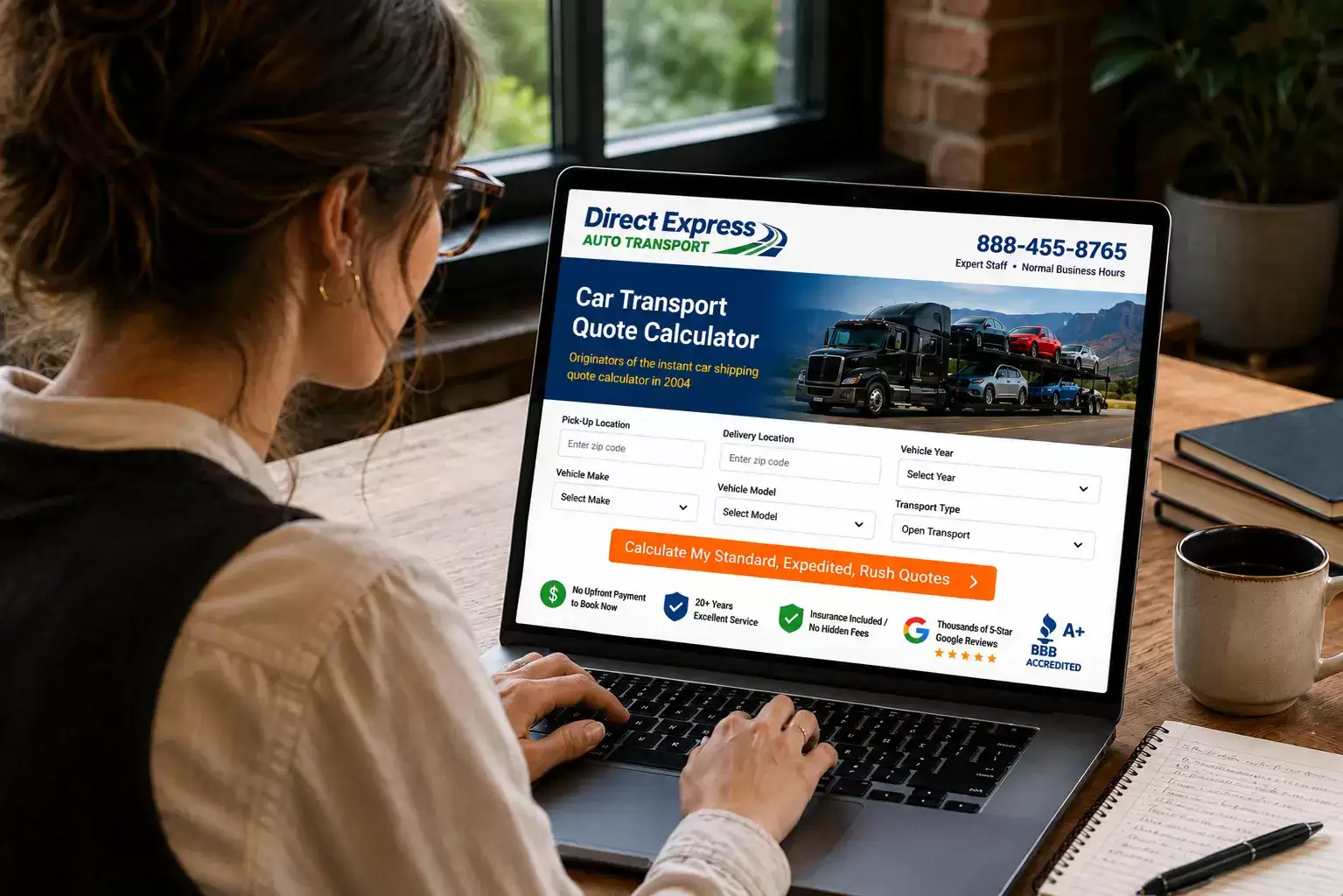
Enter your pickup and delivery zip codes, your vehicle year, make, and model, whether it runs, and your preferred transport type (open or enclosed). Our calculator returns a real-time market rate in under 5 seconds. No name, phone number, or email required — you get the price first, every time.
Step 2: Choose your tier and confirm your dates
Select Standard, Expedited, or Rush based on your timeline and the seasonal guidance above. Enter your first available pickup date — you don’t need a firm date, just the earliest day the vehicle can be ready. Our dispatch team starts working immediately.
Step 3: Secure your spot — no upfront payment
Complete your booking online or by phone. Your credit card is on file but not charged until a carrier is assigned to your shipment. There is no deposit, no cancellation fee, and no obligation until assignment. Once matched, you receive the carrier’s name, phone number, and estimated pickup date by email.
Step 4: Door-to-door pickup and delivery
Your carrier calls your pickup contact 12–24 hours before arrival to confirm timing and meeting location. For dense Ohio metro areas — downtown Columbus, Cleveland’s near west side, downtown Cincinnati — the driver will coordinate a safe nearby meeting point if residential streets cannot accommodate a 75-foot trailer. At delivery, inspect your vehicle, note any issues on the Bill of Lading, and pay the carrier the balance due by cash or money order.
Shipping a Car to or From an Ohio College or University
Ohio is home to some of the largest universities in the country, and college move-ins and move-outs are one of the most common reasons families use auto transport in the state. Whether your student is heading to Ohio State for the first time or coming home after graduation, shipping a car is often far more practical than a cross-country drive — especially for families relocating from the East Coast, Mid-Atlantic, or Southeast.
The universities below each have a student population large enough to make them significant demand centers for car shipping throughout the year, especially in August, December, and May.
Swipe to view full table →
| University | Location | Approx. Enrollment |
|---|---|---|
| Ohio State University | Columbus | ~61,000 |
| University of Cincinnati | Cincinnati | ~47,000 |
| Kent State University | Kent | ~37,000 |
| Ohio University | Athens | ~23,000 |
| University of Toledo | Toledo | ~18,000 |
| Bowling Green State University | Bowling Green | ~17,000 |
| Miami University | Oxford | ~16,000 |
| University of Akron | Akron | ~16,000 |
| Cleveland State University | Cleveland | ~14,000 |
| Wright State University | Dayton | ~13,000 |
| Youngstown State University | Youngstown | ~12,000 |
Tips for college car shipping in Ohio: Book 2 to 3 weeks ahead of August move-in dates, as carrier availability tightens quickly on Northeast and Mid-Atlantic routes into Columbus and Cincinnati in late July. Door-to-door delivery is available to most campus areas, though a nearby large parking area may be required in dense neighborhoods surrounding Ohio State and the University of Cincinnati. Athens and Oxford are smaller markets — allow extra time on Expedited tier for deliveries to Ohio University and Miami University campuses.

Military Car Shipping to and From Ohio Bases
Ohio has a significant military and defense presence, anchored by one of the largest Air Force installations in the world. For service members receiving PCS (Permanent Change of Station) orders to or from an Ohio installation, auto transport is often one of the most cost-effective and stress-free ways to move a vehicle — especially when coordinating a household move at the same time.
We ship vehicles to and from all major Ohio military installations, including:
Wright-Patterson Air Force Base — Dayton
One of the largest and most important Air Force installations in the United States, Wright-Patterson is home to Air Force Materiel Command, the Air Force Research Laboratory, and the National Air and Space Intelligence Center. With over 27,000 military and civilian employees, it is the largest single-site employer in Ohio and generates consistent, high-volume PCS vehicle shipping demand from bases across the country. Dayton’s location at the I-75 and I-70 intersection makes it one of the easier Ohio cities for carrier pickup and delivery.
Rickenbacker Air National Guard Base — Columbus
Located on the southeast side of Columbus adjacent to Rickenbacker International Airport, this joint-use installation houses the 121st Air Refueling Wing of the Ohio Air National Guard and supports cargo and military airlift operations. Columbus’s central I-71/I-70 position gives Rickenbacker exceptional carrier access in all directions. Military families PCS’ing to or from Rickenbacker benefit from the same carrier network that serves Ohio State University and the broader Columbus metro.
Defense Supply Center Columbus — Columbus
Now operating as part of the Defense Logistics Agency, this major defense supply facility employs thousands of civilian and military personnel on the south side of Columbus. It generates significant vehicle relocation demand from government contractors and civilian DoD employees relocating from installations across the Mid-Atlantic and Southeast. I-71 south provides direct carrier access toward the Kentucky and Tennessee markets most commonly associated with this installation’s workforce.
Camp Lejeune — Ohio Reserve and National Guard Centers
Ohio supports dozens of Army Reserve and Ohio Army National Guard facilities throughout the state, including major training centers in Columbus, Cleveland, Cincinnati, Akron, and Toledo. Guard and Reserve activations — particularly for overseas deployments — generate vehicle storage and transport demand. We handle vehicle shipping for National Guard members deploying or returning from active duty assignments nationwide.
Camp Perry — Port Clinton
Ohio’s primary Army National Guard training base, Camp Perry sits on Lake Erie between Toledo and Cleveland in Port Clinton. It hosts the National Matches, one of the country’s premier marksmanship competitions, and serves as a training hub for Guard units across the Midwest. PCS and training-related vehicle transport to Port Clinton is served via US-6 from I-80/90, with carriers combining loads from both the Toledo and Cleveland carrier hubs.
A note for military members: Always verify whether your branch covers POV (Privately Owned Vehicle) shipment costs under your PCS orders before booking. If your move qualifies, government shipping may be arranged through your transportation office, but many service members choose to use a private carrier for speed, flexibility, or to ship a second vehicle not covered under orders.
Ohio cities we serve
Direct Express Auto Transport provides car shipping services to and from every city in Ohio. Our highest-volume Ohio markets include:
Columbus — Ohio’s capital and largest city. I-70 and I-71 crossroads. The state’s premier auto transport hub with the fastest pickup windows year-round. Strong connections in all four directions.
Cleveland — Northeast Ohio’s dominant hub. I-90, I-71, and I-77 all converge here, providing daily carrier departures to the East Coast, Midwest, and Southeast. Strongest East Coast carrier connections in the state.
Cincinnati — Southwest Ohio at the I-75/I-71 junction. The gateway for Ohio’s Snowbird corridor to Florida. Strong connections to Kentucky, Tennessee, and the Southeast.
Toledo — Northwest Ohio at I-75/I-80/I-90. Critical hub between Ohio and Michigan. Daily carrier connections to Detroit and to Florida via I-75 south.
Dayton — West-central Ohio at I-75/I-70. Wright-Patterson AFB generates consistent military demand. Strong Florida-corridor connections southbound on I-75.
Akron — Summit County hub on I-77/I-76. Solid connections to Pittsburgh and the Mid-Atlantic. Well-served year-round, with Expedited tier recommended for best assignment times.
Youngstown — Northeast Ohio near the Pennsylvania border on I-80. Benefits from Turnpike transcontinental traffic and proximity to Pittsburgh’s carrier network.
Canton — Stark County on I-77. Routinely bundled with Akron and Youngstown loads for efficient Northeast Ohio routing.
Lorain / Elyria — Lake Erie industrial corridor west of Cleveland on I-90. Grouped with Cleveland-area carrier routes for efficient assignment.
Parma — Cuyahoga County’s largest suburb. Integrated into Cleveland’s carrier network for fast dispatch times.
Hamilton / Middletown / Fairfield — The I-75 corridor north of Cincinnati. Carrier-rich zone with daily southbound Florida and northbound Ohio loads passing through continuously.
Springfield / Kettering — Dayton-area markets well-served by the I-70/I-75 Dayton carrier hub. Both cities benefit from Wright-Patterson’s carrier demand.
Mentor — Lake County east of Cleveland on I-90. Part of Cleveland’s expanding northeast carrier corridor.
Newark / Lancaster — Central Ohio east of Columbus via US-40. Carriers access these cities as Columbus metro extensions. Expedited tier recommended for best assignment windows.
Mansfield — North-central Ohio on I-71 between Columbus and Cleveland. Carrier pass-through on Ohio’s spine corridor. Good availability year-round.
Findlay / Lima — Northwest Ohio on I-75. Both cities benefit from the heavy carrier flow of the Florida Snowbird corridor running through their backyards daily.
Wooster / Ashland — Wayne and Ashland counties. Expedited tier recommended; slightly off primary carrier trunk routes but well-served with proper lead time.
Zanesville / Cambridge — East-central Ohio on I-70. Carrier access via the transcontinental I-70 corridor running between Columbus and Pittsburgh.
Sandusky / Port Clinton — Lake Erie shoreline and Cedar Point corridor. Seasonal demand peaks during summer. Carrier access via US-6 and I-80/90.

Ohio Helpful Government Links
1. Ohio Bureau of Motor Vehicles (BMV)
https://www.bmv.ohio.gov
The primary resource for registering and titling a vehicle after it arrives in Ohio. New Ohio residents must register their vehicle within 30 days of establishing residency in the state.
2. Ohio BMV — Vehicle Registration & Titles
https://www.bmv.ohio.gov/vehicle-registration.aspx
Covers what new Ohio residents need to do within 30 days of establishing residency, including transferring an out-of-state vehicle title and obtaining Ohio plates.
3. FMCSA — Verify a Carrier’s License (SAFER System)
https://safer.fmcsa.dot.gov
The Federal Motor Carrier Safety Administration’s carrier lookup tool. Allows consumers to verify that an auto transport company is federally licensed and insured before booking.
4. FMCSA — Protect Your Move
https://www.fmcsa.dot.gov/protect-your-move
Federal consumer guidance about hiring movers and vehicle shippers, including scam warnings and shipper rights.
5. Ohio Department of Transportation (ODOT)
https://www.transportation.ohio.gov
Provides information about Ohio road conditions, winter weather closures, construction zones, and transportation infrastructure relevant to vehicle shipments statewide.

Popular Long Distance Routes From or To Ohio
Ohio to Florida Car Shipping
The Ohio-to-Florida corridor on I-75 is the single most important long-distance vehicle shipping route in the Midwest — and one of the busiest in the country. Carriers run southbound from Toledo, Dayton, and Cincinnati through Kentucky, Tennessee, and Georgia to Tampa, Orlando, and Miami virtually every day from October through April. At approximately 1,100 miles, this route offers some of the best value per mile in the Ohio carrier network because southbound trailers fill quickly and carriers compete aggressively for Ohio Snowbird loads. If you are shipping to the Gulf Coast (Naples, Fort Myers, Sarasota), expect the same strong carrier availability — I-75 runs all the way through.
Ohio to California Auto Transport
The coast-to-coast route between Ohio and California is one of the country’s most important long-distance transport corridors at approximately 2,400 miles via I-70 west. Carriers operate year-round on this transcontinental route, combining Ohio loads with Illinois and Missouri pickups before heading west through Kansas, Colorado, and into the Los Angeles basin or San Francisco Bay Area. Military relocations, corporate moves to tech hubs, and retirees seeking West Coast retirement destinations all generate consistent demand. Enclosed transport is frequently requested on this corridor for vehicles destined for the collector and luxury markets common to Southern California.
Ohio to Texas Vehicle Shipping
Houston, Dallas, and San Antonio represent Ohio’s largest non-Florida shipping markets at approximately 1,280 miles via I-71 south to I-24 and I-20. The Texas Sun Belt relocation wave — which drew thousands of Ohio corporate relocations over the past decade — continues to drive strong bidirectional carrier volume on this corridor. The I-75 southbound Snowbird flow also feeds into Texas routes as carriers diverge at Nashville or Atlanta. Expedited tier is recommended on Ohio-to-Texas routes during peak Snowbird season to ensure assignment amid the southbound carrier competition.
Ohio to New York Car Transport
New York City, Buffalo, Syracuse, and Albany connect to Ohio at approximately 500–600 miles via I-90 east across the Northern Ohio Turnpike and into New York State. This is one of Ohio’s most efficient long-distance corridors — the I-80/90 Turnpike is a primary transcontinental artery, and carriers heading to New York City, the Hudson Valley, or New England run it daily. Cleveland’s proximity to the Turnpike gives it especially strong carrier access for East Coast destinations. Standard tier often assigns within 3–5 days on the Cleveland-to-New York run year-round.
Ohio to Arizona Auto Shipping
Phoenix, Scottsdale, and Tucson connect to Ohio at approximately 1,990 miles via I-70 west to I-40 or via I-75 south to I-10. Arizona is Ohio’s second-largest Snowbird destination after Florida, drawing tens of thousands of Ohio residents to the Phoenix metro and Sun City retirement communities each winter. Carriers running the Ohio-to-Arizona corridor follow the southern transcontinental route, combining Ohio loads with other Midwest pickups for efficient cross-country delivery. As with Florida, the Ohio-to-Arizona southbound window in October and November is an ideal booking period: trailers are heading that direction and competition for space is lower than in peak January.
Ohio to Georgia Vehicle Shipping
Atlanta is Ohio’s most active mid-distance Southeast destination at approximately 650 miles via I-75 south — the same Florida Snowbird corridor, with Atlanta sitting roughly at the midpoint. Carriers running from Ohio to Florida pass through Atlanta daily, creating strong carrier availability and competitive pricing on the Ohio-to-Georgia route. Standard tier often assigns within 2–4 days because carriers heading to Florida are already going through Atlanta. Columbus, Savannah, and Augusta are also served on this corridor with modest additional routing.
Ohio to Illinois Car Transport
Chicago is Ohio’s largest Midwest neighbor market at approximately 365 miles via I-80/90 west across the Turnpike or I-70 west through Indianapolis. As one of the country’s largest transportation hubs, Chicago consistently generates return traffic in both directions, helping keep pricing stable and transit times predictable. Downstate Illinois cities — Springfield, Peoria, and Rockford — are also served via the I-74 and I-80 corridors. Standard tier typically assigns within 2–4 days on the Ohio-to-Chicago corridor year-round.
Ohio to Virginia Auto Shipping
Northern Virginia, Richmond, and the Hampton Roads area connect to Ohio at 450–550 miles via I-77 south through West Virginia and into Virginia, or via I-70 east through Maryland. The Northern Virginia/D.C. corridor sees strong military and government-related vehicle shipping demand in both directions year-round. Military families PCS’ing between Wright-Patterson AFB and D.C.-area installations (Fort Belvoir, Quantico, the Pentagon) generate consistent bidirectional volume on this corridor. Expedited tier is recommended for Virginia shipments during peak PCS season in June and July.
Ohio to Tennessee Car Shipping
Nashville’s explosive growth has made it one of Ohio’s fastest-rising vehicle shipping destinations, with I-75 from Cincinnati to Knoxville and I-65 from Louisville to Nashville both providing efficient routing at approximately 485 miles. Carriers use Tennessee as a natural staging hub for broader Southeast routes, keeping carrier availability strong year-round on Ohio-to-Nashville and Ohio-to-Knoxville shipments. The retirement and relocation wave driving Ohio residents to Middle Tennessee creates consistent southbound demand. Standard tier often assigns within 3–5 days on Ohio-to-Tennessee routes outside of peak Snowbird season.
Ohio to North Carolina Vehicle Transport
Charlotte, Raleigh, and the Research Triangle connect to Ohio at approximately 595–650 miles via I-77 south through West Virginia and into North Carolina. Charlotte’s position as a financial services hub drives strong corporate relocation demand, and the Fort Liberty (formerly Fort Bragg) military corridor in Fayetteville generates consistent PCS vehicle transport volume. North Carolina’s growing retiree market — particularly the Asheville area and the Crystal Coast — also draws Ohio residents relocating south. Enclosed transport is frequently requested for vehicles destined for Charlotte’s luxury residential market.
Ohio to Colorado Car Shipping
Denver, Colorado Springs, and the Front Range connect to Ohio at approximately 1,260 miles via I-70 west — one of the country’s great transcontinental routes. I-70 runs directly from Columbus west through Indianapolis, St. Louis, Kansas City, and across the Great Plains before climbing through the Rocky Mountains into Denver. Carriers on the I-70 corridor run it continuously, making Ohio-to-Colorado one of the more carrier-rich cross-country routes in the network despite the distance. Colorado ski season creates additional westbound demand October through March. Expedited tier is recommended when shipping in winter, as I-70 through the Rockies can experience mountain weather delays.
Ohio to Maryland Auto Transport
Baltimore, Annapolis, and the suburban Maryland corridor near Washington D.C. connect to Ohio at approximately 420 miles via I-70 east — a short and highly efficient run through West Virginia and Maryland. This corridor sees strong government, military, and contractor relocation demand year-round, particularly for families moving between Wright-Patterson, Rickenbacker, and the massive cluster of D.C.-area installations (Fort Meade, Andrews AFB, Bolling). Standard tier typically assigns within 2–4 days on the Columbus-to-Baltimore route, making this one of Ohio’s most accessible East Coast corridors.
Ohio to Minnesota Vehicle Shipping
Minneapolis and Saint Paul connect to Ohio at approximately 750 miles via I-80 west to I-35W north or via I-90 west through Wisconsin. Minnesota is one of Ohio’s most active bidirectional Snowbird partners — both states send significant winter migration to Florida and Arizona, and both see strong spring return-migration traffic from March through May. Carriers on Ohio-to-Minnesota routes frequently combine loads with Chicago stops to improve route efficiency. Expedited tier is strongly recommended during both the October southbound push and the March–May northbound return window.
Nearby States
Ohio to Pennsylvania Car Shipping
Pennsylvania is Ohio’s busiest regional auto transport partner — Pittsburgh to Cleveland covers under 130 miles, and I-76/I-80 and I-70 provide constant carrier flow for vehicle shipping between the two states. Standard tier car transport between Ohio and Pittsburgh often assigns within 1–2 days, making this the best choice for last-minute regional vehicle relocations. Philadelphia and the Delaware Valley are served at approximately 450 miles via I-76 east, with carriers combining Pittsburgh and Philadelphia stops on the same Pennsylvania Turnpike run. Ohio and Pennsylvania share the country’s most active manufacturing-belt carrier corridor, keeping rates competitive and availability strong year-round.
Ohio to West Virginia Vehicle Shipping
Most Ohio-to-West Virginia auto transport follows I-77 south from Cleveland and Canton toward Charleston, or I-70 east from Columbus toward Wheeling. The approximately 165–200 mile distance makes West Virginia one of Ohio’s shortest and most affordable regional routes. Military families relocating between Wright-Patterson and the regional National Guard installations in Charleston generate consistent car shipping volume. Transit for open automobile transport typically runs 1 day, and Standard tier usually assigns within 2–4 days on this efficient regional corridor.
Ohio to Kentucky Auto Transport
Louisville, Lexington, and the Kentucky Bluegrass region connect to Ohio via I-75 south from Cincinnati and I-71 south from Columbus, covering approximately 95–195 miles. The Cincinnati-to-Louisville corridor is one of the most active short-haul vehicle shipping lanes in the Midwest, driven by the close economic and cultural ties between the two cities. Fort Knox in Elizabethtown and Fort Campbell on the Kentucky-Tennessee border generate strong military PCS car transport demand bidirectionally with Ohio installations. Short transit times of 1 day and competitive Standard tier pricing make this one of Ohio’s best-value regional routes.
Ohio to Indiana Car Transport
Indianapolis is the top destination on this approximately 175-mile route via I-70 west from Columbus or I-75 west from Dayton. The I-70 Columbus-to-Indianapolis corridor is extraordinarily well-served — this is a cross-state transcontinental link, and carriers heading west toward St. Louis, Kansas City, or the I-80 corridor run it daily in both directions. Fort Wayne, Evansville, and Bloomington are also served on this corridor. Consistent bidirectional carrier traffic keeps Standard tier prices competitive and assignment times among the fastest for any Ohio border state route.
Ohio to Michigan Vehicle Shipping
Detroit and Grand Rapids are the top destinations on this approximately 60–175 mile route via I-75 north from Toledo. The Toledo-to-Detroit corridor is the shortest major interstate vehicle shipping route in the Midwest and one of the most active, driven by deep automotive industry connections between the two cities. Michigan’s massive Snowbird population — residents of Detroit, Grand Rapids, Flint, and Lansing who winter in Florida — creates strong southbound fall demand that Ohio carriers capture heading down I-75. Ann Arbor, Lansing, and Kalamazoo are also well-served on Michigan routes via I-94 and I-96 from the I-75 corridor.
Major Cities From Ohio
I-71 Spine Corridor
Columbus Car Shipping
Ohio’s most strategically positioned auto transport market, with daily carrier departures at the exact intersection of I-70 and I-71 to every major U.S. destination. Columbus provides the fastest pickup windows in the state year-round for both short regional hauls and cross-country vehicle shipping.
Delaware Auto Transport
Delaware County sits just north of Columbus on I-71 and is routinely bundled with Columbus area pickups, giving it the same strong carrier availability as the state capital with minimal additional routing cost.
Mansfield Vehicle Shipping
Richland County’s main city on I-71 at the midpoint between Columbus and Cleveland. Carriers on the Ohio spine corridor pass through Mansfield daily in both directions, providing reliable pickup windows year-round.
Medina Car Transport
Positioned between Cleveland and Akron with strong I-71 access, Medina is often combined with Brunswick and Strongsville on carrier routes serving the southwest Cleveland suburbs.
Strongsville Auto Shipping
Southwest Cuyahoga County’s largest suburb benefits from strong I-71 carrier flow connecting Cleveland to Columbus, with efficient access to both metro carrier networks.
Cleveland Car Shipping
Northeast Ohio’s premier auto transport hub at the convergence of I-90, I-71, and I-77, with daily carrier departures to the East Coast, the Southeast, and the Midwest. Strongest East Coast vehicle shipping connections in the state.
I-75 Western Ohio Corridor
Toledo Auto Transport
Northwest Ohio’s gateway hub at the I-75 and I-80/90 junction. The Florida Snowbird corridor runs directly through Toledo southbound, giving it exceptional carrier availability for Florida-bound and Southeast-bound shipments October through April.
Findlay Vehicle Shipping
Hancock County on I-75, positioned between Toledo and Dayton. Carriers on the Florida corridor pass through Findlay continuously, and standard pickup windows are among the shortest on any Ohio I-75 corridor stop.
Lima Car Transport
Allen County on I-75 in west-central Ohio. Lima’s location on the Florida Snowbird corridor provides strong southbound carrier availability October through May, with consistent northbound return flow March through June.
Dayton Auto Shipping
West-central Ohio at the I-75 and I-70 junction. Wright-Patterson AFB drives year-round military PCS vehicle transport demand. Daily carrier departures south to Florida and west on I-70 to Indiana and beyond.
Kettering Vehicle Relocation
Dayton’s largest suburb integrates seamlessly into the Dayton carrier network, with I-75 access supporting both the Florida corridor and the I-675 connector linking to Columbus routes.
Middletown Car Shipping
The I-75 pass-through between Dayton and Cincinnati. Carriers combine Middletown and Hamilton pickups with the Cincinnati metro, making this corridor one of the most efficiently routed in Ohio.
Cincinnati Auto Transport
Southwest Ohio’s premier hub at the I-75/I-71 junction. The state’s gateway city for Ohio-to-Florida Snowbird shipping. Daily carrier departures south toward Lexington, Knoxville, Atlanta, and Tampa on the country’s most active Snowbird corridor.
I-77 Northeast Ohio Corridor
Cuyahoga Falls Car Shipping
Summit County suburb of Akron on I-77. Carriers servicing the Akron-Canton metro combine Cuyahoga Falls pickups with neighboring communities for efficient Northeast Ohio routing.
Akron Auto Transport
Summit County hub on I-77 and I-76. Strong carrier connections to Pittsburgh (90 miles east) and the Mid-Atlantic. Year-round availability, with Expedited tier recommended for fastest assignment.
Canton Vehicle Shipping
Stark County’s anchor city on I-77 south of Akron. Carriers on the Northeast Ohio corridor combine Canton with Akron and Massillon loads for efficient multi-stop routing.
Massillon Car Transport
Western Stark County, grouped with Canton on I-77 corridor routes. Consistent carrier availability via the Cleveland-to-Charleston carrier flow running daily on I-77.
New Philadelphia Auto Shipping
Tuscarawas County on I-77 south of Canton. Carriers heading toward West Virginia and the Mid-Atlantic pass through New Philadelphia, supporting reliable southbound pickup availability.
I-80/90 Northern Ohio Turnpike
Sandusky Car Shipping
Erie County on the Lake Erie shoreline via US-6 and I-80/90. Sandusky’s Cedar Point tourism economy creates seasonal vehicle shipping demand peaks in May and September as seasonal workers and homeowners move vehicles in and out of the region.
Lorain Auto Transport
Lorain County’s Lake Erie industrial city west of Cleveland on I-90. Routinely grouped with Elyria on carrier routes originating from Cleveland’s west side, maintaining strong availability via the Northern Ohio carrier hub.
Elyria Vehicle Shipping
Lorain County seat on I-90. Positioned between Cleveland and Toledo on the Northern Ohio Turnpike, Elyria benefits from the same transcontinental carrier flow that serves both hubs in both directions.
Mentor Car Transport
Lake County’s largest city east of Cleveland on I-90. Growing northeast suburban market benefiting from Cleveland’s carrier density and the Lake Erie shoreline route carrying east-west transcontinental traffic.
Youngstown Auto Shipping
Mahoning County at the Ohio–Pennsylvania border near I-80 and I-76. Benefits from Turnpike transcontinental traffic and the Pittsburgh carrier network just 75 miles east, providing consistent bidirectional availability on both east-west and north-south routes.
Warren Vehicle Relocation
Trumbull County between Youngstown and Cleveland. Grouped with Youngstown on I-80 corridor routes, with access to both the Northern Turnpike eastbound and I-76 toward Pittsburgh.
Central Ohio / Columbus Metro
Westerville Car Shipping
Northeast Columbus suburb with quick access to I-71 north and I-270 beltway. Carriers serving Columbus’s northeast quadrant combine Westerville with Gahanna and New Albany pickups on the same dispatch run.
Dublin Auto Transport
Northwest Columbus suburb on I-270. Intel’s massive Ohio chip fab investment has dramatically increased professional corporate relocation demand into Dublin and the adjacent northwest Columbus corridor.
Hilliard Vehicle Shipping
Western Columbus suburb on I-270. Benefits from Columbus’s central carrier network and the I-70 westbound ramp connecting directly to Indiana, Illinois, and beyond.
Grove City Car Transport
Southwest Columbus suburb at the junction of I-71 south and I-270. Carriers heading south from Columbus toward Cincinnati and Florida pass directly through Grove City, giving it strong southbound availability from October through April.
Newark Auto Shipping
Licking County east of Columbus via US-40. Carriers access Newark as a Columbus metro extension. Well-served year-round with proper lead time on Expedited tier.
Southwest Ohio / Greater Cincinnati
Fairfield Car Shipping
Butler County north of Cincinnati on I-75. Part of the Cincinnati metro carrier grid, with direct southbound access to the Florida corridor and northbound connections to Dayton and Columbus.
Hamilton Auto Transport
Butler County on I-75 and OH-4. Carriers serving the greater Cincinnati metro combine Hamilton with Middletown and Fairfield on the same I-75 corridor runs, keeping assignment times efficient.
Mason Vehicle Shipping
Warren County northeast of Cincinnati on I-71. Growing corporate and residential market benefiting from Cincinnati’s carrier density and direct I-71 north access to Columbus.
Springfield Car Transport
Clark County on I-70 between Dayton and Columbus. Positioned on the transcontinental I-70 corridor, Springfield benefits from constant east-west carrier flow and proximity to both Dayton and Columbus carrier hubs.
Oxford Auto Shipping
Home of Miami University in Butler County. Consistent student vehicle shipping demand in August and May. Served via I-74 and OH-73 from Cincinnati; carriers access Oxford through the Cincinnati metro network.
Ohio Car Shipping — Frequently Asked Questions
How early should I book car shipping from Ohio to Florida for winter?
For Snowbird-season departures from Ohio (October through February), we recommend booking 7–14 days before your desired pickup date and selecting Expedited tier. The peak window is November through January, when I-75 southbound from Toledo, Dayton, and Cincinnati sees maximum carrier competition. The good news for Ohio Snowbirds is that carriers are already heading south — your load is going in the right direction. Book early in October or November to capture the pre-peak sweet spot where carrier availability is strong and rates haven’t yet reached their January high. If you have a hard arrival date in December or January, Rush tier gives you the most reliable assignment timeline.
What is the cheapest time to ship a car to or from Ohio?
For long-distance routes, late September and early October — just before the Snowbird southbound rush begins — typically offer the best combination of competitive pricing and fast carrier assignment on Ohio-to-Florida and Ohio-to-Arizona routes. For shorter regional hauls (Ohio to Michigan, Ohio to Indiana, Ohio to Pennsylvania), pricing is relatively stable year-round due to consistent carrier traffic in all directions. June through August is the peak general moving season in Ohio, which can tighten availability on major corridors — book 2–3 weeks ahead for summer moves.
How long does it take to ship a car from Ohio to Florida?
A vehicle shipping from Ohio to Florida typically takes 3–5 days in transit once it has been assigned to a carrier and picked up. The approximately 1,100-mile I-75 corridor from Cincinnati to Tampa is one of the most efficient carrier routes in the country. Most of the variation comes from assignment time, which depends on your chosen tier. Expedited tier typically assigns within 1–4 days; Standard tier within 3–7 days. Total time from booking to delivery is typically 5–12 days depending on tier and seasonal demand.
Does winter weather affect auto transport pickup times in Ohio?
It can, particularly in northern Ohio. The lake-effect snow belt stretching from Toledo east through Cleveland and into Youngstown receives some of the heaviest seasonal snowfall in the continental United States. Severe snow events or ice storms on I-80/90, I-71, and I-75 can add 24–48 hours to pickup windows. Carriers monitor weather continuously and will communicate proactively if weather affects your scheduled pickup. Expedited tier significantly reduces this risk by getting your vehicle on a carrier faster, shortening the exposure window to potential weather delays. Interior and southern Ohio cities — Columbus, Cincinnati, Dayton — are far less affected by lake-effect snow and see fewer weather-related delays.
Is open transport safe for Ohio winters?
Yes for most vehicles, with some considerations. Open transport is used for approximately 95% of Ohio shipments year-round. Standard everyday vehicles — sedans, SUVs, trucks, and minivans — ship safely on open carriers through Ohio winters. However, road salt and winter slush spray from passing vehicles can coat the exterior and undercarriage of a transported vehicle, especially on open northern routes through the snow belt. For luxury vehicles, classic cars, exotics, or any vehicle you plan to keep in immaculate condition, enclosed transport is worth the premium during Ohio’s November through March winter period. The added protection from salt spray and temperature fluctuations can be meaningful for high-value vehicles.
Is it cheaper to ship from Columbus, Cleveland, or Cincinnati?
On most long-distance routes, the three cities are comparably priced — the difference is typically under $50–$75 on similar routes because all three sit on primary carrier corridors that are active daily. Columbus can sometimes price slightly lower for cross-country routes because its central position on I-70 reduces carrier detour time. Cincinnati may price lower for Florida-bound shipments because it sits on the I-75 Florida corridor with the least distance to travel. Cleveland may price lower for East Coast routes via I-90. Use our instant calculator to compare your exact route from each city — the difference is rarely large enough to change your decision, but it is worth checking on longer routes.
Can you ship a car to rural Ohio communities?
Yes. While major carriers prioritize the dense Interstate corridors, we arrange service to all Ohio communities including Athens, Chillicothe, Portsmouth, Ironton, Ashtabula, Wooster, Cambridge, Zanesville, and all smaller communities statewide. For rural locations, pickup and delivery may require meeting the carrier at a nearby large parking area (a truck stop or shopping center) if narrow roads or low-clearance bridges prevent a large transport truck from accessing your specific address. Your assigned carrier will coordinate the exact logistics with you directly.
Do I need to be present for pickup and delivery in Ohio?
You or an authorized representative must be present at both pickup and delivery to inspect the vehicle and sign the Bill of Lading. Many Ohio customers — especially Snowbirds who fly to Florida separately from their vehicle — designate a trusted neighbor, family member, or property manager to handle pickup or delivery on their behalf. This works perfectly well. Just make sure your designated contact is reachable by phone, since the carrier will call 12–24 hours before arrival to confirm timing. For deliveries in gated communities or HOA neighborhoods, coordinate gate access codes in advance.
Is Direct Express Auto Transport a licensed Ohio car shipping company?
Yes. Direct Express Auto Transport is a federally licensed auto transport broker registered with the Federal Motor Carrier Safety Administration (FMCSA, MC #479342) and the U.S. Department of Transportation (USDOT #1240502). We have maintained an A+ rating with the Better Business Bureau since 2004 and a 4.6-star average across thousands of Google reviews. Every carrier in our Ohio network is independently verified for active insurance and FMCSA operating authority before we dispatch your vehicle. Ohio routes — particularly the I-75 Florida corridor — represent some of our highest-volume annual shipments, and our carrier relationships on this corridor are among the strongest in our nationwide network.
Some Ohio car delivery carrier drivers will accept a tip ($50–$300) for hauling extra items, but some won’t, or simply can’t, due to overall weight regulations. Rule of thumb: don’t take advantage. The driver is there to ship your car, not move your personal belongings.
Ready to ship your car to or from Ohio?
Join hundreds of thousands of customers — Snowbirds, retirees, students, military families, and relocating professionals — who have trusted Direct Express Auto Transport with their Ohio vehicle shipments since 2004. Get your instant, no-obligation quote now. It takes 30 seconds, requires no personal information, and there is no upfront payment required to hold your spot.
- Instant quote — real-time pricing in under 5 seconds
- No upfront payment — your card is charged only when a carrier is assigned
- No risk to get a quote and book your order
- BBB Accredited A+ since 2004
- FMCSA licensed and fully bonded
- 4.6 stars across thousands of verified Google reviews