
West Virginia Car Shipping Company
Need to ship a car to or from West Virginia? Direct Express Auto Transport has been the Mountain State’s most trusted auto transport broker since 2004 — with a 4.6-star average across thousands of verified Google reviews, no upfront payment required, and a real-time quote available in 30 seconds.
★ 4.6/5 Google Reviews | BBB Accredited A+ | FMCSA Licensed (MC #479342) | USDOT #1240502 | No upfront payment required | 20+ years shipping vehicles


West Virginia auto transport costs range from approximately $600 for regional hauls to neighboring Ohio to $1,450 or more for long-haul routes to the West Coast. The most common West Virginia shipment — Charleston to the Washington, D.C. metro on I-64 East — runs $650–$750 at Standard tier with a 3–5 business day pickup window. Expedited tier adds roughly 20% for priority scheduling; Rush adds approximately 40% for 24–48 hour pickup. West Virginia’s mountainous terrain means even short in-state moves between Charleston and Morgantown can carry higher rates than equivalent flat-state distances, due to limited carrier availability and mountain routing requirements.

What customers say about shipping a car to or from West Virginia with Direct Express Auto Transport


The interstate corridors that move West Virginia vehicles
I-64 (East-West, 187 miles): Runs from the Kentucky border at Huntington through Charleston and east to White Sulphur Springs and the Virginia border at Lewisburg. The primary east-west artery and the key connection linking West Virginia to the Virginia/Richmond carrier market and the Kentucky/Louisville market. Most cross-country shipments involving West Virginia use I-64.
I-79 (North-South, 159 miles): Runs from Charleston north through Sutton, Weston, Clarksburg, and Fairmont to Morgantown, then continues to the Pennsylvania border. This is the main north-south carrier spine connecting Charleston to Pittsburgh’s deep carrier market. Morgantown, anchored by West Virginia University, receives the majority of its carrier access via I-79.
I-77 (North-South, 187 miles): Runs from Charleston south through Beckley and Bluefield to the Virginia border, and north from Charleston through Parkersburg to the Ohio border. The I-77 corridor is particularly important for Parkersburg shippers connecting to Columbus and Cleveland. Southern I-77 through Beckley is thinly served and often requires Expedited tier.
I-68 (Eastern Panhandle, 32 miles): A short segment through Morgantown connecting to Maryland and the I-270 corridor toward Washington, D.C. Important for eastern panhandle shippers in Martinsburg and Hagerstown proximity markets who often use Maryland terminals.
I-70 (Northern Panhandle, 14 miles): Clips the northern tip of West Virginia through Wheeling, connecting Ohio and Pennsylvania. Wheeling receives carrier access primarily from Pittsburgh and the I-70 Ohio corridor rather than from Charleston, effectively placing it in the Pittsburgh carrier market despite being a West Virginia city.
West Virginia carrier dynamics: Charleston’s monopoly and mountain terrain pricing
West Virginia’s carrier market is stark in its concentration. Charleston handles an estimated 55–65% of the state’s total auto transport volume despite housing only about 12% of the state’s population. This is a direct consequence of the I-64/I-77/I-79 convergence: every carrier moving through the state on any of the three major interstates passes through Charleston. Standard tier pickup windows of 3–5 business days are realistic for Charleston, Dunbar, South Charleston, and St. Albans.
Huntington, the state’s second-largest city at the I-64 Kentucky border, functions as a secondary hub drawing from both West Virginia and the Ashland, Kentucky carrier market. Morgantown benefits from I-79 access to Pittsburgh but is too far from Charleston to share its carrier depth. Parkersburg draws from Columbus via I-77 north. Wheeling draws from Pittsburgh via I-70. Every one of these secondary cities operates at Expedited-tier reliability rather than Standard, with pickup windows of 4–7 business days at Standard tier being common.
West Virginia auto transport hub rankings
Tier 1 — Primary Hub: Charleston (I-64/I-77/I-79 convergence, state capital, largest city)
Tier 2 — Secondary Hubs: Huntington (I-64, Kentucky border market), Morgantown (I-79, Pittsburgh proximity, WVU), Parkersburg (I-77, Columbus proximity)
Tier 3 — Tertiary Markets: Wheeling (I-70, Pittsburgh proximity), Beckley (I-77 south, coal country), Clarksburg/Bridgeport (I-79 north of Charleston)
Expedited-Mandatory: Lewisburg/White Sulphur Springs, Elkins, Weston, Summersville, Logan, Williamson, Hinton, Marlinton, Petersburg, Davis/Thomas. Any community not on I-64, I-77, or I-79 should be treated as Expedited-required regardless of listed city size.
West Virginia car shipping rates — from Charleston
| Route from Charleston, WV | Miles | Standard (Open) | Expedited (Open) | Rush (Open) |
|---|---|---|---|---|
| Charleston, WV to Columbus, OH | 155 | $600 | $720 | $840 |
| Charleston, WV to Pittsburgh, PA | 215 | $650 | $780 | $910 |
| Charleston, WV to Washington, DC | 345 | $650 | $780 | $910 |
| Charleston, WV to Charlotte, NC | 370 | $700 | $840 | $980 |
| Charleston, WV to New York, NY | 520 | $800 | $960 | $1,120 |
| Charleston, WV to Atlanta, GA | 440 | $750 | $900 | $1,050 |
| Charleston, WV to Chicago, IL | 490 | $750 | $900 | $1,050 |
| Charleston, WV to Orlando, FL | 830 | $900 | $1,080 | $1,260 |
| Charleston, WV to Dallas, TX | 1,100 | $1,050 | $1,260 | $1,470 |
| Charleston, WV to Los Angeles, CA | 2,340 | $1,450 | $1,740 | $2,030 |
West Virginia car shipping rates — to Charleston
| Route to Charleston, WV | Miles | Standard (Open) | Expedited (Open) | Rush (Open) |
|---|---|---|---|---|
| Columbus, OH to Charleston, WV | 155 | $600 | $720 | $840 |
| Pittsburgh, PA to Charleston, WV | 215 | $650 | $780 | $910 |
| Washington, DC to Charleston, WV | 345 | $650 | $780 | $910 |
| Charlotte, NC to Charleston, WV | 370 | $700 | $840 | $980 |
| New York, NY to Charleston, WV | 520 | $800 | $960 | $1,120 |
| Atlanta, GA to Charleston, WV | 440 | $750 | $900 | $1,050 |
| Chicago, IL to Charleston, WV | 490 | $750 | $900 | $1,050 |
| Orlando, FL to Charleston, WV | 830 | $900 | $1,080 | $1,260 |
| Dallas, TX to Charleston, WV | 1,100 | $1,050 | $1,260 | $1,470 |
| Los Angeles, CA to Charleston, WV | 2,340 | $1,450 | $1,740 | $2,030 |
What makes cross-country shipping through West Virginia different
West Virginia sits in a geographic pocket between major carrier corridors. The state is sandwiched between the I-70 corridor to the north (which carriers prefer through Pennsylvania and Ohio) and the I-81 corridor to the east (which runs through Virginia without touching West Virginia at all). This means very few carriers are routing cross-country loads that naturally pass through West Virginia — instead, they detour around it on corridors with better fuel economics and fewer mountain grades.
The practical result is that West Virginia shippers often pay a terrain surcharge that isn’t reflected in raw mileage. A Charleston-to-Charlotte shipment of 370 miles may cost more than a comparable flatland haul because the carrier must negotiate I-64/I-77 mountain grades rather than cruise flat interstate. Budget for a 10–20% premium above what a mileage-based calculator might suggest, and treat pickup window estimates conservatively by adding two business days to any quote you receive for communities off the main interstate corridors.

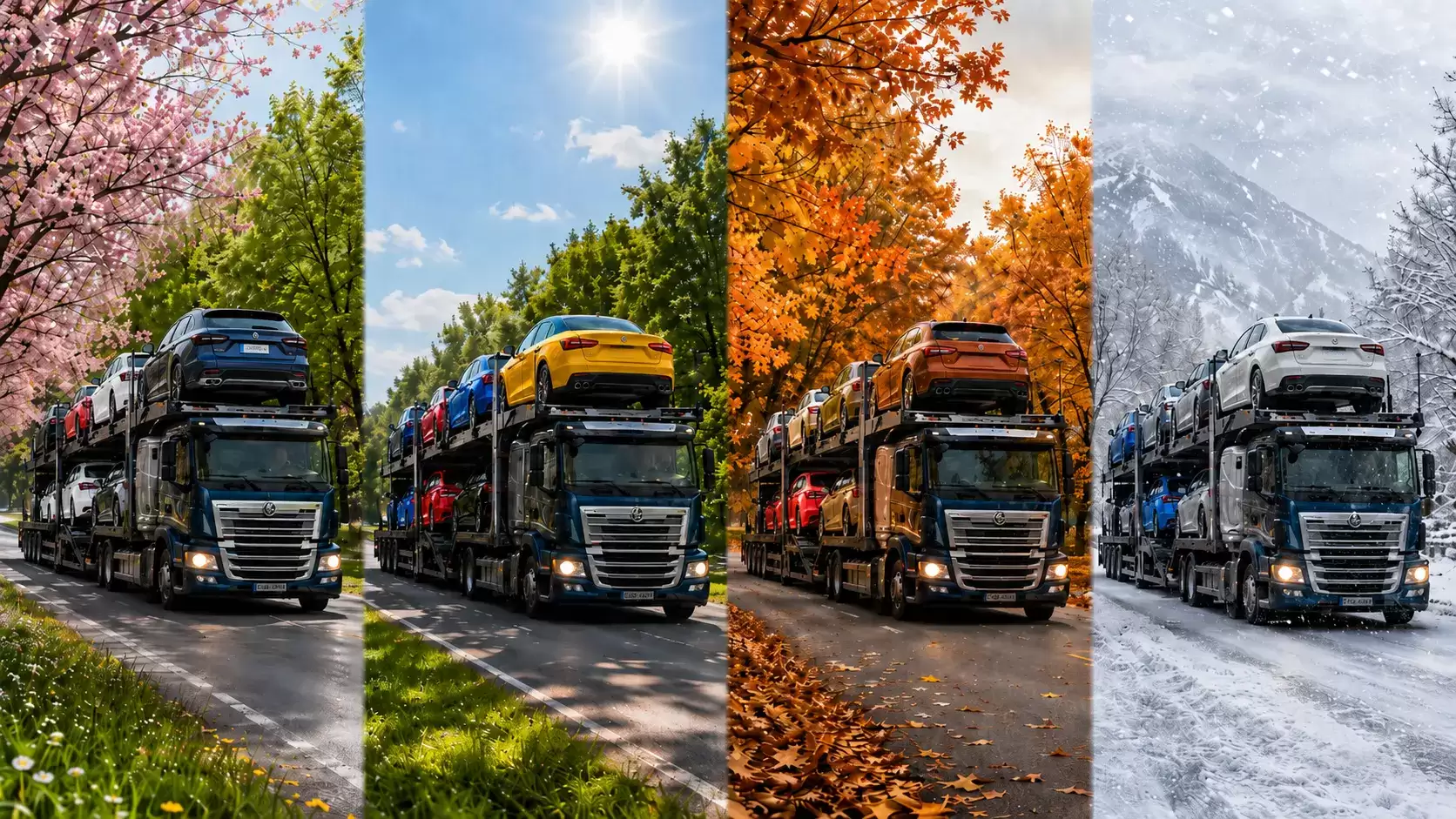
Best time to ship a car to or from West Virginia — the complete seasonal guide
West Virginia auto transport service tiers
| Service Tier | Pickup Window | Price vs. Standard | Best For |
|---|---|---|---|
| Standard Open | 3–5 business days | Base rate | Charleston, Huntington; flexible timelines |
| Expedited Open | 1–2 business days | +20% | Morgantown, Parkersburg, Wheeling; firm dates |
| Rush Open | 24–48 hours | +40% | Time-critical moves; military PCS |
| Standard Enclosed | 5–7 business days | +35% | Collector cars; luxury vehicles; classics |
| Expedited Enclosed | 2–3 business days | +55% | High-value vehicles with firm delivery date |


How to ship your car to or from West Virginia in 4 steps
Step 1: Get your quote. Use our 30-second online calculator or call our team to receive an instant West Virginia auto transport quote. No upfront payment is required to reserve your spot.
Step 2: Book your pickup window. Choose Standard (3–5 business days) for Charleston and Huntington, or Expedited (1–2 days) for secondary markets and any location off the primary interstate corridors. Military PCS shippers should discuss Rush tier with our team.
Step 3: Prepare your vehicle. Remove personal items, document any pre-existing damage with photos, leave a quarter tank of fuel, and disable any aftermarket alarms. Ensure your vehicle is accessible from the nearest cleared interstate exit.
Step 4: Complete delivery inspection. When your carrier arrives, inspect every exterior panel before signing the Bill of Lading. Note any new damage in writing on the inspection report before the carrier departs.
Shipping a car to West Virginia universities
| University | Location | Approx. Enrollment |
|---|---|---|
| West Virginia University | Morgantown | 28,000 |
| Marshall University | Huntington | 12,000 |
| West Virginia State University | Institute (near Charleston) | 3,100 |
| Fairmont State University | Fairmont | 3,500 |
| Shepherd University | Shepherdstown | 3,800 |
| West Liberty University | West Liberty | 2,500 |
| Concord University | Athens | 2,200 |
| Glenville State University | Glenville | 1,600 |
| Alderson Broaddus University | Philippi | 1,000 |
| University of Charleston | Charleston | 2,800 |

Military vehicle shipping in West Virginia
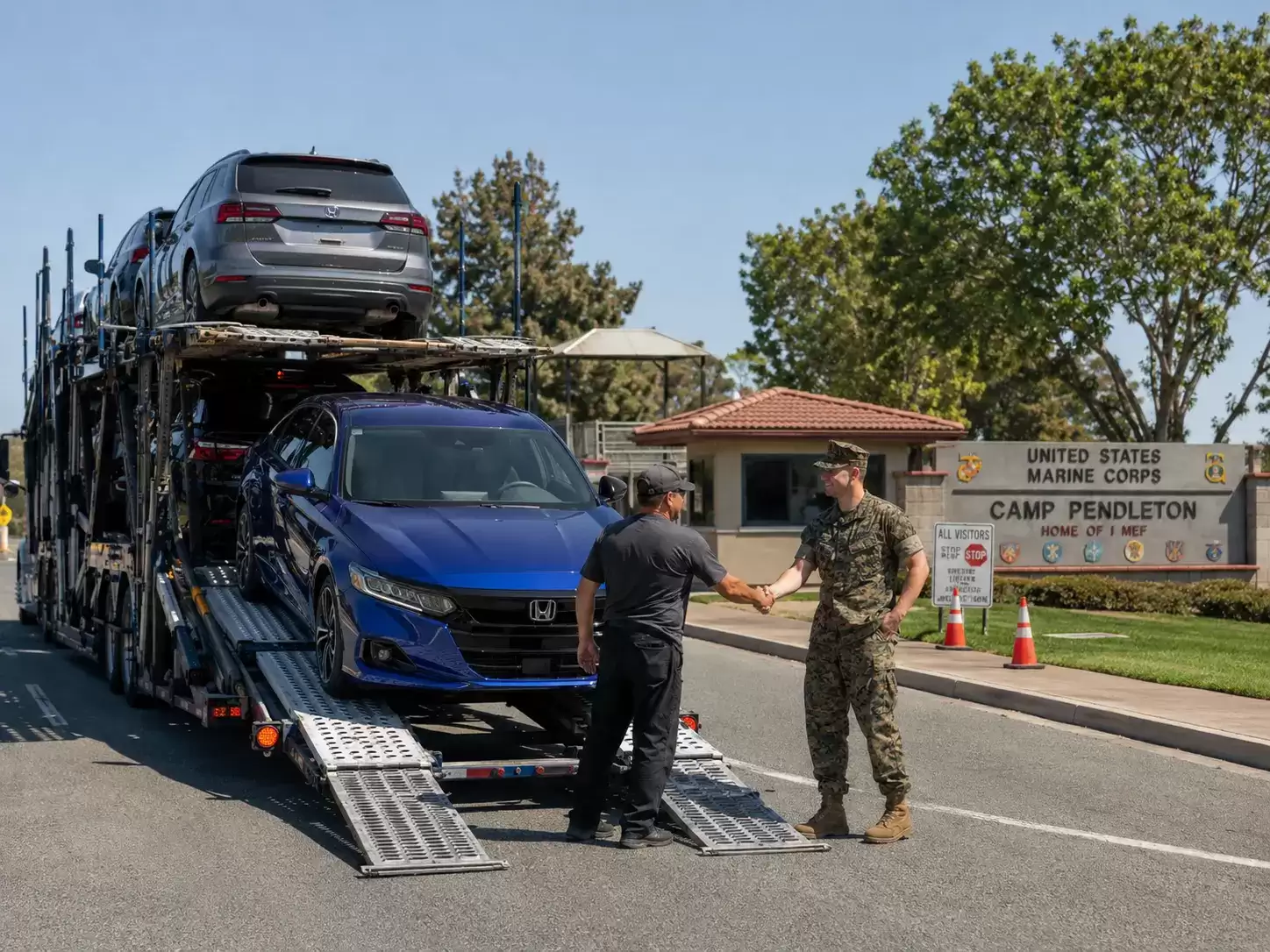
West Virginia does not host a major active-duty military installation, but Camp Dawson — the West Virginia Army National Guard’s primary training facility in Kingwood, Preston County — generates modest vehicle shipping volume during mobilization and training cycles. More significant is West Virginia’s large veteran population relative to its size: the state consistently ranks among the highest in the nation for veterans per capita. Many West Virginia veterans ship vehicles when transitioning between duty stations at nearby installations in Virginia, Pennsylvania, Ohio, and Kentucky.
West Virginia shippers with military ID or active PCS orders are eligible for our military discount. Camp Dawson is in Preston County near I-68, which connects to Morgantown and the I-79 corridor. Shippers at or near Camp Dawson should use Morgantown as their nearest Tier 2 hub for Standard tier service, or book Expedited for direct Preston County pickup.
West Virginia cities we serve
Charleston: The state capital and I-64/I-77/I-79 convergence point. West Virginia’s only Tier 1 hub. Standard tier pickup windows of 3–5 business days are reliable year-round for the Charleston metro including Dunbar, South Charleston, St. Albans, and Nitro.
Huntington: The state’s second-largest city at the Kentucky border on I-64. Draws carrier supply from both the Charleston market and the Ashland, Kentucky corridor. Marshall University generates consistent student shipping demand each August and May.
Morgantown: Home to West Virginia University and positioned on I-79 with access to the Pittsburgh carrier market via I-79 north. Expedited tier recommended for reliable 1–2 day pickup windows. The largest carrier-accessible city in the northern part of the state.
Parkersburg: Located on I-77 at the Ohio border, drawing carrier supply from Columbus and Marietta, Ohio. Standard tier may work with extended pickup windows; Expedited is generally recommended for firm dates.
Wheeling: In the northern panhandle on I-70 at the Ohio/Pennsylvania border. Effectively part of the Pittsburgh carrier market. Standard tier with 4–6 business day windows, or Expedited for 1–2 day service.
Beckley: On I-64/I-77 south of Charleston in coal country. Carrier access is thinner than Charleston but the I-77 interchange makes it reachable. Expedited recommended for firm pickup dates.
Clarksburg / Bridgeport: On I-79 between Charleston and Morgantown. Reasonable access via the I-79 corridor. Expedited recommended; Standard tier may result in 5–7 business day waits.
Martinsburg: Eastern panhandle city near the Virginia and Maryland borders. Not on a West Virginia interstate but close to I-81 in Virginia and I-70 in Maryland. Expedited-mandatory; many eastern panhandle shippers use Hagerstown, Maryland as a terminal meet point.
West Virginia government and transportation resources
West Virginia Department of Transportation — Road conditions, project updates, and transportation planning for West Virginia interstates and state routes.
West Virginia Division of Motor Vehicles — Vehicle titling, registration, driver licensing, and fee schedules for West Virginia residents.
FMCSA Carrier Lookup — Verify the operating authority and safety record of any auto transport carrier before booking.

Popular car shipping routes from West Virginia
West Virginia to Virginia Auto Transport
The West Virginia–Virginia corridor on I-64 East is the state’s busiest interstate shipping lane. Charleston to Richmond runs approximately 345 miles on I-64 through the Allegheny Highlands, with Standard tier rates of $650–$750 and pickup windows of 3–5 business days from the Charleston hub. Virginia’s deep carrier market at Richmond and Northern Virginia greatly improves load-matching for this route.
West Virginia to Ohio Vehicle Shipping
West Virginia–Ohio moves are among the state’s most reliable, with Parkersburg-to-Columbus on I-77 and Wheeling-to-Columbus on I-70 serving as the primary corridors. Columbus is one of the Midwest’s largest carrier hubs, ensuring competitive rates and fast pickup windows. Charleston to Columbus runs approximately 155 miles at $600–$700 Standard tier.
West Virginia to Florida Car Transport
The Charleston-to-Florida snowbird route is the state’s longest-running seasonal shipping corridor, primarily operated on I-64 to I-77 south to I-26 through the Carolinas. Charleston to Orlando runs approximately 830 miles with Standard tier rates of $850–$950. October through November and April through May are the peak snowbird booking periods for this route.
West Virginia to Texas Auto Shipping
West Virginia to Texas is a long-haul move typically routed on I-64 West to I-65 through Louisville, then connecting to I-24 or I-40 west to Dallas and Houston. Charleston to Dallas runs approximately 1,100 miles with Standard tier rates of $1,000–$1,100. Texas’s enormous carrier market ensures reliable load-matching even for Mountain State origin points.
West Virginia to North Carolina Vehicle Transport
The Charleston-to-Charlotte corridor on I-77 south is one of the most direct interstate connections from West Virginia to a major southeastern carrier hub. Charlotte runs approximately 370 miles from Charleston with Standard tier rates of $700–$800. Charlotte’s I-77/I-85/I-485 carrier concentration makes it an excellent load-matching destination for West Virginia shippers.
West Virginia to Georgia Car Shipping
Charleston to Atlanta via I-77 south and I-85 runs approximately 440 miles and is a well-served carrier corridor through the Carolinas. Standard tier rates of $750–$850, with 3–5 business day pickup windows from Charleston. Atlanta’s position as the Southeast’s largest carrier hub means return loads are readily available, which helps keep rates competitive.
West Virginia to Pennsylvania Auto Transport
The Charleston-to-Pittsburgh run on I-79 north is approximately 215 miles and benefits directly from Pittsburgh’s robust carrier market. Standard tier rates of $600–$700, with some of the best pickup windows available for West Virginia shippers. Pittsburgh is also the primary gateway for West Virginia shippers accessing northeastern markets including Philadelphia and New York.
West Virginia to California Vehicle Shipping
West Virginia to California is the state’s longest common shipping route, typically routed on I-64 to I-70 through Columbus and Kansas City, then I-70 or I-80 to California. Charleston to Los Angeles runs approximately 2,340 miles with Standard tier rates of $1,400–$1,500. Budget for 7–10 business days for this cross-country haul.
West Virginia to Tennessee Car Transport
Charleston to Knoxville via I-64 West and I-75 south runs approximately 290 miles and connects two Appalachian corridor cities. Nashville from Charleston runs approximately 390 miles via US-19 and I-40. Standard tier rates of $700–$800 for Knoxville; $750–$850 for Nashville. Tennessee’s carrier depth at both Knoxville and Nashville aids load-matching for this route.
West Virginia to Maryland Auto Shipping
The West Virginia–Maryland connection is geographically close but operationally nuanced. Morgantown to Hagerstown via I-68 runs approximately 80 miles, making it one of the state’s shortest cross-state routes. Baltimore from Charleston via I-68 and I-70 runs approximately 330 miles with Standard tier rates of $650–$750. Eastern panhandle shippers in Martinsburg often find Hagerstown, Maryland a more convenient terminal point.
West Virginia to New York Vehicle Transport
Charleston to New York City via I-79 north to Pittsburgh and then I-76 east runs approximately 520 miles. Standard tier rates of $800–$900, with pickup windows of 3–5 business days from Charleston. New York’s enormous carrier market ensures consistent load availability for West Virginia-origin vehicles, particularly through the Pittsburgh carrier corridor.
West Virginia to Illinois Car Shipping
Charleston to Chicago via I-64 West to I-65 north runs approximately 490 miles and connects West Virginia to the Midwest’s largest carrier hub. Standard tier rates of $750–$850, with 3–5 business day pickup windows from Charleston. Chicago’s massive carrier concentration at the I-55/I-90/I-94 convergence ensures strong load-matching for this route.

Nearby states for West Virginia car shipping
Virginia Auto Transport
Virginia is West Virginia’s primary eastern neighbor on I-64, offering access to Richmond, Northern Virginia, and the deep Hampton Roads carrier market. Virginia’s I-95 and I-81 corridors make it West Virginia’s most carrier-rich adjacent state.
Kentucky Vehicle Shipping
Kentucky borders West Virginia on the southwest via I-64 through Huntington. The Louisville carrier hub on I-65 is approximately 200 miles from Charleston and provides access to the Midwest carrier network for West Virginia shippers routing west.
Ohio Car Transport
Ohio shares West Virginia’s western border at both Parkersburg (I-77) and Wheeling (I-70). Columbus, Ohio’s largest city and a major carrier hub, is the most accessible large market for West Virginia auto transport shippers.
Pennsylvania Auto Shipping
Pennsylvania borders West Virginia to the north via I-79 through the northern panhandle. Pittsburgh’s carrier market is the most important external carrier resource for northern West Virginia shippers, serving Morgantown, Clarksburg, and Wheeling.
Maryland Vehicle Transport
Maryland borders West Virginia to the northeast via I-68 through the eastern panhandle. Hagerstown serves as a practical terminal hub for eastern panhandle shippers, and Baltimore’s port and carrier market adds long-haul route options for West Virginia vehicles.
Tennessee Car Shipping
Tennessee does not directly border West Virginia but is the primary southern destination state for Mountain State shippers heading toward Nashville, Knoxville, and the broader Southeast. The I-77/I-26 routing through the Carolinas is the typical path for West Virginia-to-Tennessee moves.
Ready to ship your car to or from West Virginia?
Join hundreds of thousands of customers — Snowbirds, military families, tech relocators, students, and families moving across the country — who have trusted Direct Express Auto Transport with their West Virginia vehicle shipments since 2004. Get your instant, no-obligation quote now. It takes 30 seconds, requires no personal information, and there is no upfront payment required to hold your spot.
Instant quote — real-time pricing in under 5 seconds
No upfront payment — your card is charged only when a carrier is assigned
No risk to get a quote and book your order
BBB Accredited A+ since 2004
FMCSA licensed and fully bonded
4.6 stars across thousands of verified Google reviews