Virginia to Florida Car Shipping
The original instant car shipping calculator — trusted since 2004. Door-to-door Virginia to Florida transport with no surprises, no hidden fees, and three options to ship your vehicle on your schedule.
★ 4.6/5 Google Reviews | BBB Accredited A+ | FMCSA Licensed (MC #479342) | USDOT #1240502 | No upfront payment required | 20+ years shipping vehicles


Virginia to Florida Car Shipping Rates by City
Every Virginia to Florida vehicle shipment is available at three service levels:
Standard, Expedited, & Rush Options
Choose the one that fits your timeline and budget. All three include full door-to-door service and carrier insurance.
The Company That Invented Instant Auto Transport Pricing
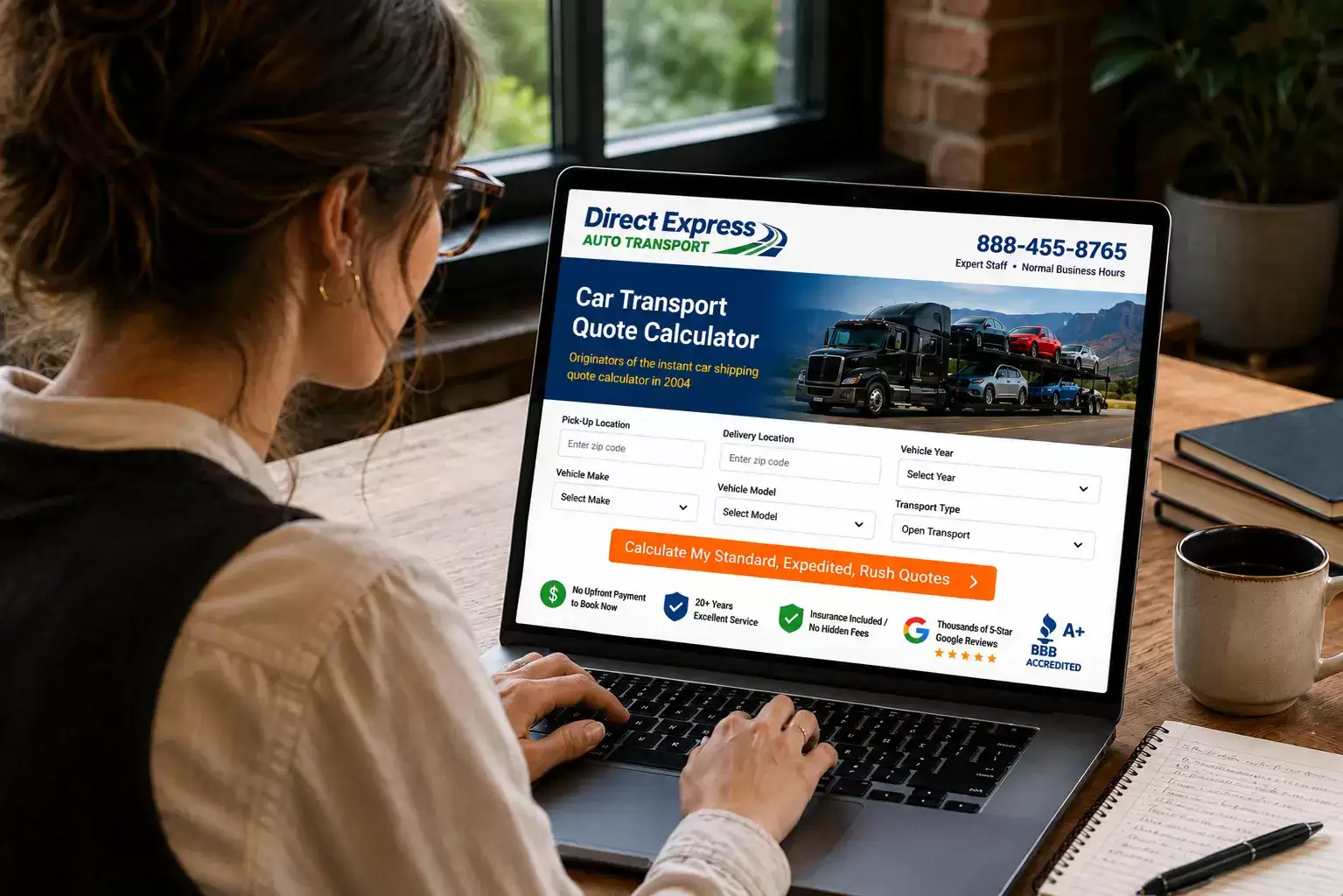
Direct Express Auto Transport pioneered online instant pricing for the auto transport industry in 2004. Before we built the first car shipping cost calculator, getting a quote from a broker meant phone calls, callbacks, and waiting — sometimes days. We changed that. Today you know your exact cost in 30 seconds, before committing to anything. No phone tag, no hassle. Just a real number, instantly.
Three Service Tiers for Every Virginia to Florida Shipment
Every shipment on this Virginia to Florida route is available at three service tiers so you can match your budget to your timeline. Standard delivers at the best available rate — ideal when your schedule has a few days of flexibility. Expedited moves your vehicle to the front of the dispatch queue for faster pickup. Rush gets your car picked up as fast as humanly possible — for moves where every day counts. All three tiers include full door-to-door service and carrier insurance.
What customers say about shipping a car from Virginia to Florida with Direct Express Auto Transport


Seasonal Pricing Guide: Virginia to Florida
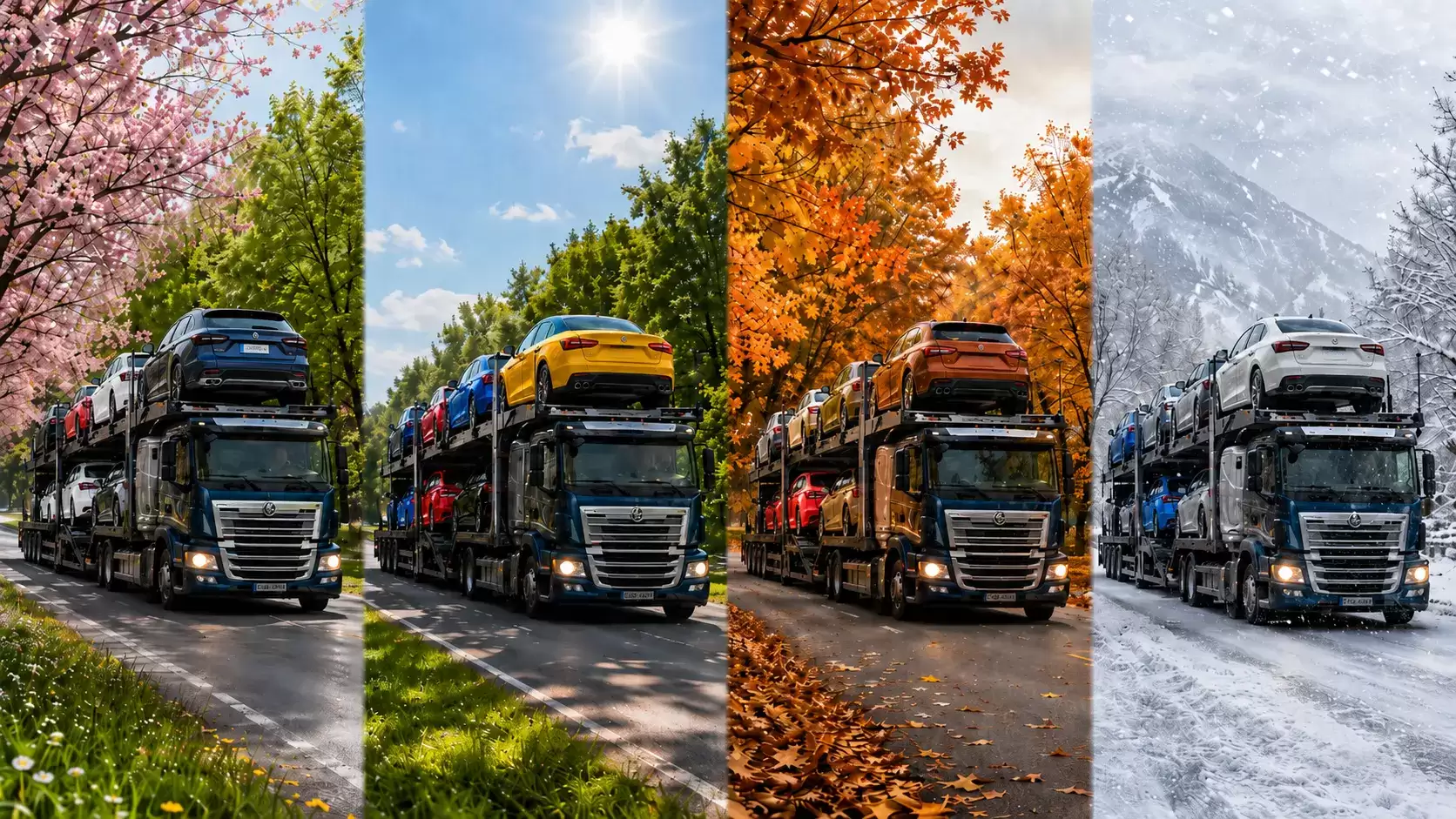
Virginia to Florida peaks twice: the October–November snowbird southbound wave and the June–July military PCS surge from Virginia’s massive base network. January–February and August are the best value windows.
Who Ships a Car from Virginia to Florida — and Why
The VA→FL corridor is the East Coast’s defining snowbird route. Virginia’s retiree population — dispersed across suburban Richmond, Hampton Roads, and Northern Virginia — contributes thousands of annual snowbird departures, with the Shenandoah Valley, Lynchburg, and Southwest Virginia adding significant additional volume. Layered onto a year-round military PCS market and a growing NoVA-to-Florida professional relocation stream, VA→FL is one of the Atlantic seaboard’s most consistent auto transport corridors.
Virginia Snowbirds Heading to Gulf Coast and Central Florida for Winter
Virginia snowbirds are the corridor’s defining customer group. Richmond’s suburban counties — Henrico, Chesterfield, Hanover, and Powhatan — have large retiree populations wintering in Florida, particularly along the Gulf Coast and in Central Florida retirement communities. Hampton Roads retirees from Virginia Beach, Norfolk, Chesapeake, and Suffolk show a strong preference for South Florida destinations: Palm Beach County, Broward County, and Miami-Dade.
Northern Virginia Retirees: Southwest Florida Gulf Coast and Space Coast Routes
Northern Virginia retirees from Fairfax, Loudoun, and Arlington/Alexandria tend toward Southwest Florida’s Gulf Coast and the Space Coast. The Hampton → West Palm Beach pairing at $950 and the Chesapeake → Miami pairing at $975 reflect the dominant Hampton Roads-to-South-Florida snowbird flow. Seasonality is sharp: October through mid-November is peak, with the bulk of annual snowbird shipments concentrated in this six-week window. Book early or use Expedited for October moves.
Military PCS: Naval Station Norfolk / Pentagon / Quantico → MacDill AFB and Florida
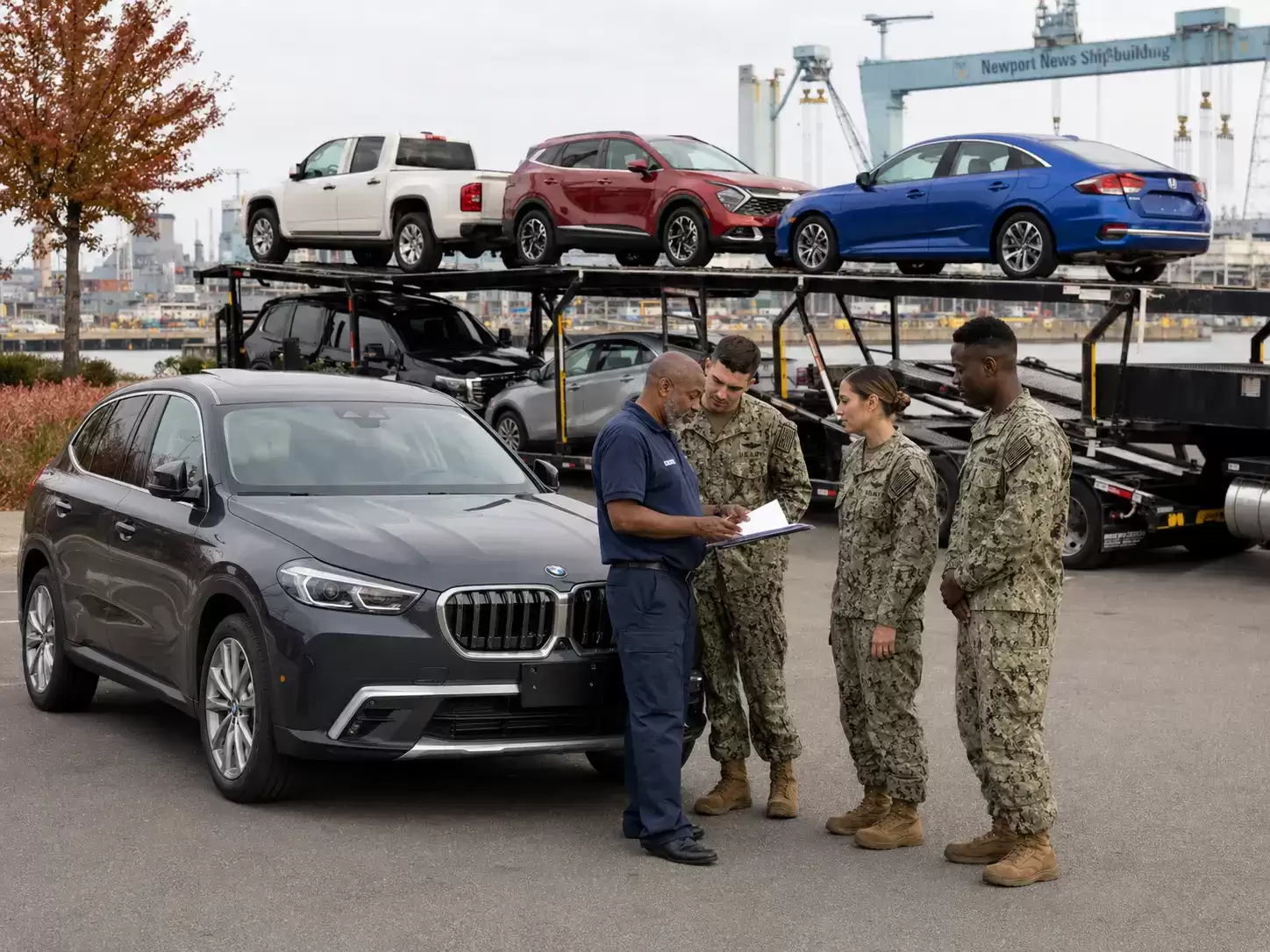
Military PCS families anchor year-round volume on this corridor. Naval Station Norfolk — the world’s largest naval base — generates more southbound VA→FL PCS moves than any other Virginia installation. Families with orders to NS Mayport or MacDill AFB ship vehicles within days. JBLE Langley-Eustis rotating to MacDill or Patrick SFB, Fort Belvoir to NAS Jacksonville or NS Mayport, and Quantico to MacDill or Patrick are the corridor’s primary institutional PCS flows.
Pentagon and Fort Gregg-Adams: Senior Relocations and PCS Booking Guidance
The Pentagon generates a steady flow of flag-officer and senior civilian relocations to Florida commands. Military PCS customers should use Expedited or Rush for June and July moves and book 14–21 days in advance — report dates are non-negotiable and carrier competition is intense at peak. Fort Gregg-Adams to any Florida destination benefits from Petersburg’s direct I-85/I-95 connection, making it one of the corridor’s best-served military origin points.
Northern Virginia Defense Contractors and Technology Professionals Moving to Florida
Northern Virginia’s federal contractor community — Booz Allen Hamilton, Leidos, SAIC, CACI, General Dynamics IT, and ManTech — is the corridor’s third major driver. When these professionals relocate to Tampa Bay’s defense corridor (USCENTCOM, USSOCOM, MacDill), Orlando’s defense/simulation cluster (Lockheed, Boeing, L3Harris), or Miami’s fintech sector, they ship vehicles southbound. Alexandria → Hollywood at $975 and Arlington → St. Petersburg at $950 are the primary NoVA-to-Florida pairings for this professional relocation market.
Virginia Tech and UVA Graduates Moving to Florida After University
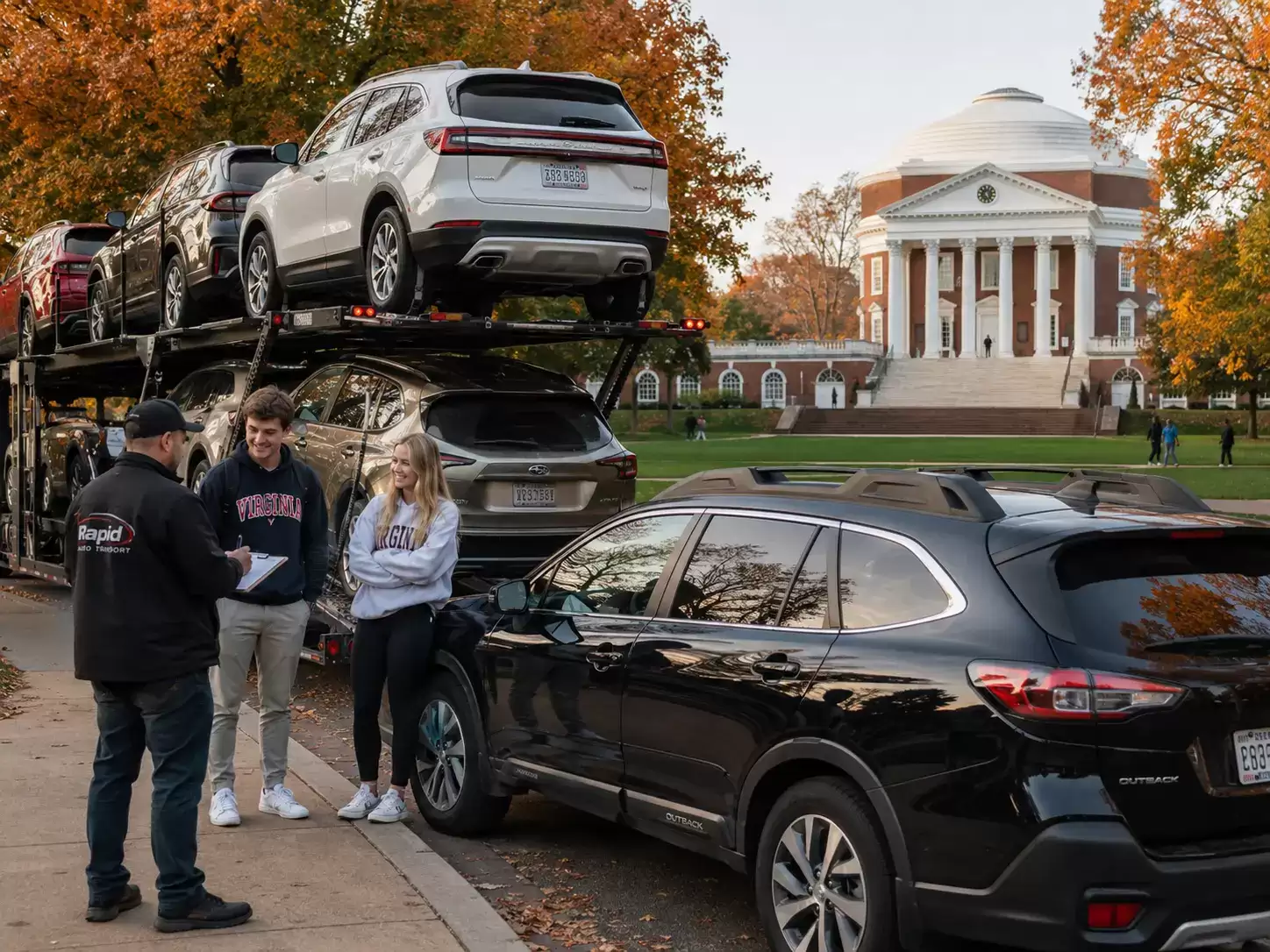
College students and young professionals complete the picture. Virginia Tech, UVA, James Madison University, and William & Mary send graduates to Florida for first jobs — particularly Tampa Bay’s technology sector, Miami’s finance and real estate markets, and Orlando’s hospitality and technology industries. Charlottesville → Cape Coral at $950 serves the UVA-associated flow, while Harrisonburg → Tallahassee at $875 serves the JMU-to-Florida Panhandle and state government market.
What Makes the Virginia–Florida Auto Shipping Run Different
Richmond to Jacksonville: The Table’s Cheapest Pair and Why
Richmond, VA to Jacksonville, FL at 600 miles and $700 Standard is the table’s cheapest pair. Richmond’s position on I-95 is the key: Richmond is the primary I-95 junction for southbound Virginia traffic, sitting directly on the highway with excellent commercial carrier staging on the city’s south side (Chesterfield County) and west side (Henrico/Short Pump). From Richmond’s I-95 on-ramp, the route runs south through Petersburg (I-85 junction), north Carolina (Roanoke Rapids, Rocky Mount, Fayetteville, Lumberton), South Carolina (Florence, Dillon, the Georgia state line), and into Jacksonville, FL.
I-95 Direct Access: Why Richmond and Jacksonville Are Corridor Cities
This is the most direct I-95 pair on the table — both Richmond and Jacksonville are direct I-95 corridor cities with no inland routing detour. The 600-mile distance reflects genuine geographic proximity: Richmond is significantly further south than most people expect, sitting at approximately the same latitude as the middle of North Carolina. The $700 Standard price is the table’s lowest and reflects both the shorter distance and the exceptional carrier coverage at both endpoints.
Roanoke to Pembroke Pines: Why It’s the Most Expensive
Roanoke to Pembroke Pines at 1,200 miles and $1,000 Standard is the table’s most expensive pair for two compounding reasons. First, Roanoke is in the western Blue Ridge Mountain area of Virginia on I-81 — it is approximately 180 miles inland from I-95 at Richmond, requiring a carrier to route east via US-460 or I-64 before reaching the main southbound I-95 spine. Second, Pembroke Pines is in South Florida (Broward County, between Miami and Fort Lauderdale) — the southernmost major city in the table.
Roanoke Winter Risk: Blue Ridge Foothills Pickup at 1,175 ft Elevation
The combination of Roanoke’s western VA inland origin plus the extreme South Florida destination creates the table’s maximum mileage and price. Additionally, Roanoke sits at roughly 1,175 feet of elevation in the Blue Ridge foothills — autumn and winter pickup in Roanoke requires planning for mountain weather events that don’t affect coastal VA cities. The $1,000 price reflects both the extended mileage and the carrier premium for a western VA origin zone.
The Hampton Roads Origin Cluster: Seven Cities, One Zone
Virginia Beach, Chesapeake, Norfolk, Hampton, Newport News, Portsmouth, and Suffolk — the seven Hampton Roads cities in this table — are all within a 35-mile radius centered roughly on the Norfolk Naval Station. From a carrier pickup perspective, they constitute a single origin market. I-64 west to I-95 south at Petersburg (about 80 miles from Virginia Beach, 70 miles from Norfolk) is the standard routing all Hampton Roads VA→FL carriers use. Within Hampton Roads, the James River tunnel (I-664, Big Bridge approach) and the Hampton Roads Bridge-Tunnel (I-64) are the key cross-harbor connections for Hampton and Newport News origins.
Military Significance: Naval Station Norfolk to Florida Carrier Routes
All seven Hampton Roads cities have commercial staging zones routinely used by multi-car haulers — the military installation density ensures outstanding carrier familiarity with the area. Despite being in the same metro area, the southbound destinations differ across the table: Virginia Beach → Tampa (940 mi, $900), Hampton → West Palm Beach (1,085 mi, $950), Norfolk → Fort Myers (1,120 mi, $950), Newport News → Hialeah (1,150 mi, $975), Chesapeake
Northern Virginia via I-95: The Fast Southern Lane
Arlington, Alexandria, Falls Church, and Fredericksburg all have direct I-95 southbound access — the same highway that runs all the way to Miami. Arlington and Alexandria are approximately 1,140–1,165 miles from their table destinations (Hollywood and St. Petersburg respectively) via I-95, reflecting the NoVA-to-South-Florida run. Fredericksburg (50 miles south of DC) picks up I-95 at Quantico and runs 1,110 miles to Fort Lauderdale. The outer Northern VA suburbs in the Other Cities table — Woodbridge, Manassas, McLean, Herndon, Sterling, Leesburg, and Falls Church — all funnel to I-95 via the Beltway or I-66/I-267.
Arlington and Alexandria Dense Staging: Commercial Pickup Zone Protocol
For high-rise addresses in downtown Arlington and Alexandria, multi-car haulers stage in commercial zones in adjacent suburbs — Fairfax City, Herndon, and Chantilly — and arrange final-mile pickup coordination at booking. Suburban Northern Virginia addresses in Woodbridge, Manassas, and Reston have direct door-to-door access for large haulers.
Shenandoah Valley and Southwest VA: The I-81 Funnel
Harrisonburg, Staunton, Waynesboro, and Winchester in the Shenandoah Valley, and Roanoke, Lynchburg, Blacksburg, Christiansburg, and Bristol in Southwest Virginia, all sit on or near I-81 — a major carrier highway in its own right but less southbound-FL-volume-saturated than I-95. Carriers from these western VA origins typically route to I-95 via I-64 east from Staunton/Charlottesville to Richmond, or via I-77 south from Wytheville/Radford to I-26 east in South Carolina.
Harrisonburg vs. Richmond: Inland Routing Premium on I-81 vs. I-95
The inland routing adds 100–200 miles to total distance compared to a coastal VA origin at the same latitude, which is why Harrisonburg → Tallahassee prices at $875 (900 miles) — significantly more than the Richmond → Jacksonville $700 (600 miles).
Harrisonburg to Tallahassee: The Shortest Shenandoah Run
Harrisonburg to Tallahassee at 900 miles and $875 is the table’s only sub-$900 pricing for a Shenandoah Valley origin. Tallahassee’s position in Florida’s Panhandle — accessible via I-10 west from I-75 or directly via US-19/US-27 from northern Florida — means it is the closest major Florida city to the mid-Atlantic South. The routing: Harrisonburg → I-64 east → Richmond (80 miles) → I-95 south → Savannah GA (380 miles) → I-16 west → I-75 south → Tallahassee (connecting via I-10 or US-19).
Panhandle Shortcut: Why Harrisonburg–Tallahassee Beats the Coastal Premium
The Panhandle shortcut means that despite Harrisonburg being an inland Shenandoah Valley city, its run to Tallahassee is competitive with what a coastal NC city would pay to reach Central or North Florida. This makes the Harrisonburg–Tallahassee pairing particularly attractive for James Madison University-area shippers, state government employees, or Florida State University/FAMU-bound academic movers.
Other Virginia to Florida Cities We Serve
Direct Express ships vehicles between hundreds of city pairs on this route. Below is a broader look at additional Virginia origins and Florida destinations we regularly serve.
Hub Cities Along the Virginia–Florida Car Shipping Corridor
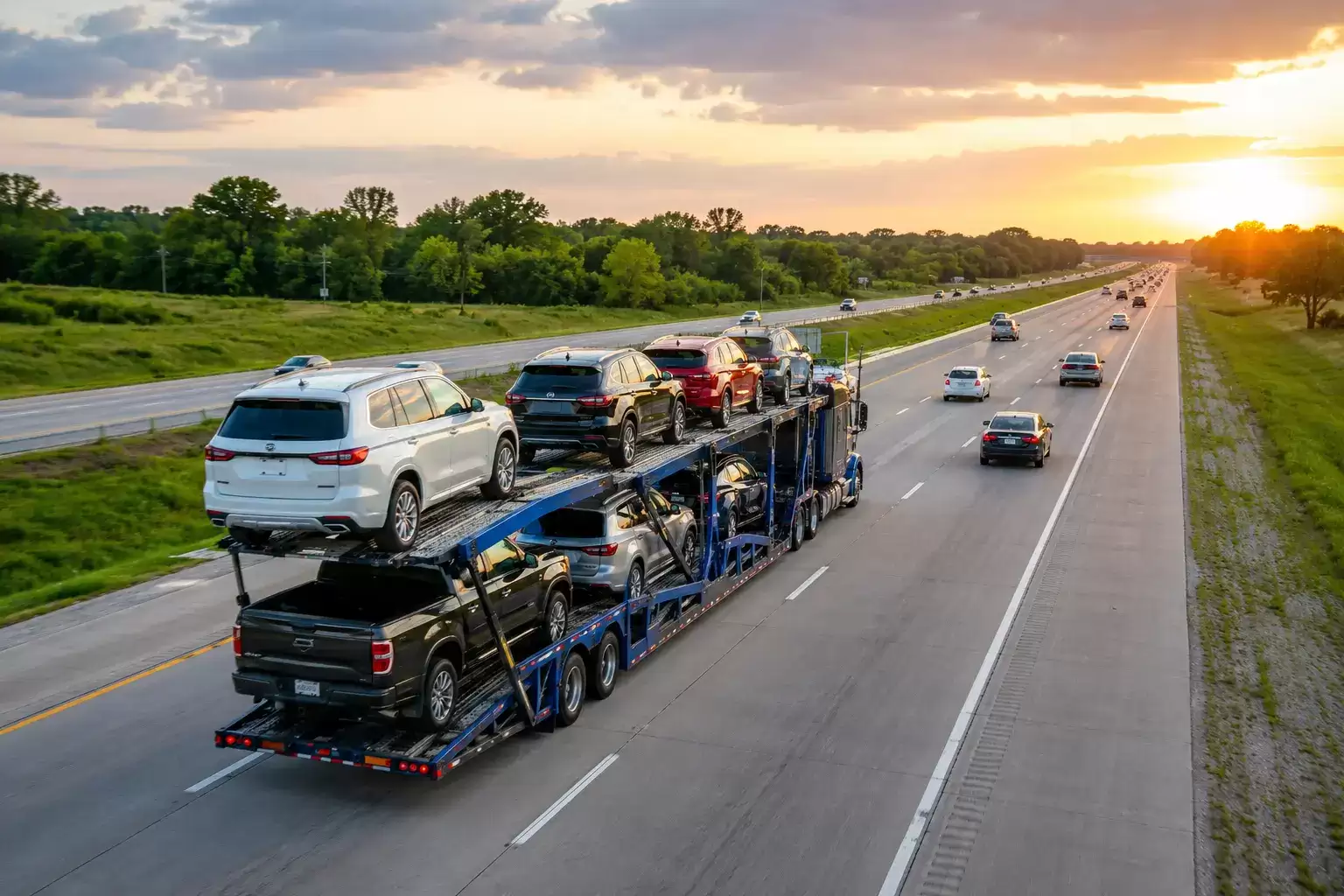
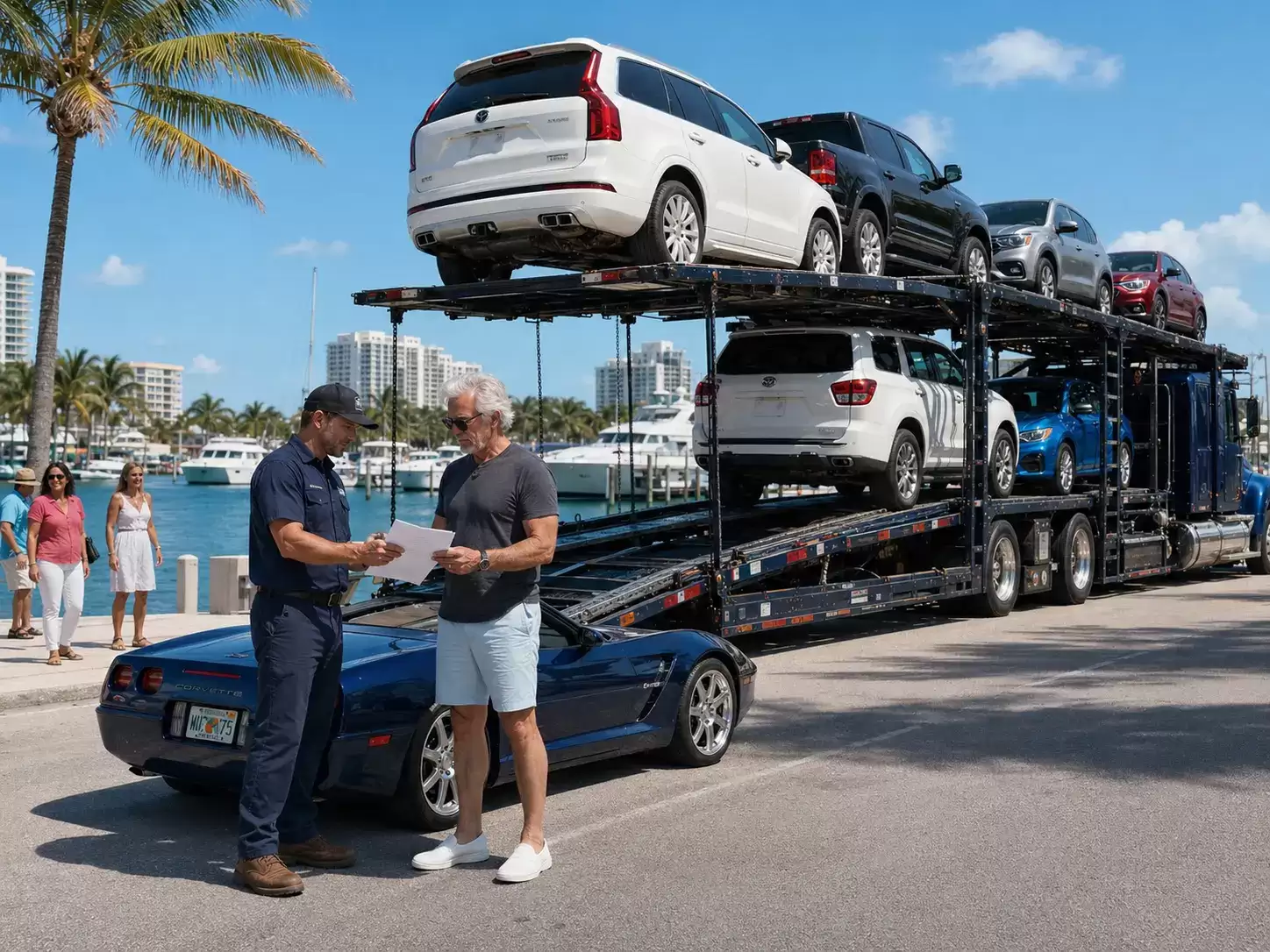
The VA→FL corridor is almost entirely I-95 southbound — the East Coast’s primary carrier lane running from the DC metro through the Carolinas, Georgia, and into Florida. Western Virginia origins (Shenandoah Valley, Southwest VA, Roanoke) funnel to I-95 via I-64 east or I-81 south to I-77 south, before merging into the main I-95 southbound flow in North Carolina or South Carolina.
Virginia Origin Zones
I-95 Southbound Relay Points
Florida Delivery Zones
Open vs. Enclosed Car Transport on the Virginia–Florida Route
The VA→FL corridor is overwhelmingly open transport. I-95 southbound is the country’s most carrier-saturated highway — open transport availability from Virginia to Florida is consistently among the best of any East Coast state pair, year-round. Transit times of 2–4 days minimize road exposure. Enclosed transport on this corridor is a premium option suited to specific vehicles and circumstances, not the standard choice.
Open Transport Recommended for Most
- Standard open-air trailer — correct for the overwhelming majority of VA→FL shipments
- I-95 southbound is the country’s most carrier-dense southbound lane — VA→FL open carrier availability is outstanding across all seasons, including during the October–November snowbird peak
- Virginia pickup weather is excellent April through October. Winter pickup (November–March) varies by zone: Hampton Roads is mild; Northern VA, Shenandoah Valley, and Southwest VA can see winter weather events that require pickup coordination but not enclosed transport
- Military PCS customers ship exclusively on open transport by default — the VA military installation market is a 100% open-transport segment
- Appropriate for all standard vehicles, crossovers, SUVs, and trucks heading to any Florida destination
Enclosed Transport
- Vehicle travels in a fully enclosed, weatherproof trailer from Virginia to Florida
- Typically 40–60% more expensive than open transport
- Northern Virginia luxury market: McLean, Great Falls, Vienna, and Potomac (MD) generate enclosed transport demand for high-value vehicles heading to Naples, Marco Island, Palm Beach, and Fisher Island/Miami Beach — the highest-net-worth VA origin to FL destination flow
- Alexandria and Arlington high-rise executive addresses shipping collector or exotic vehicles to South Florida estates or auction venues (Barrett-Jackson Kissimmee event generates January enclosed transport demand)
- Winter pickup for mountain VA origins (Roanoke, Blacksburg, Christiansburg): enclosed transport provides protection during staging in cold weather conditions for vehicles with low ground clearance or weather-sensitive finishes
- Virginia Beach luxury waterfront vehicles heading to Palm Beach, Boca Raton, or Fisher Island year-round
Our honest recommendation: Open for virtually all VA→FL shipments. The I-95 carrier density, outstanding year-round availability, and 2–4 day transit times make open the practical and economical choice. Enclosed for exotic, collector, and ultra-high-value vehicles moving between Northern VA’s luxury corridor and South Florida’s estate market; for winter pickup in mountain and Shenandoah Valley VA with weather-sensitive vehicles; and for the January Barrett-Jackson Kissimmee auction market.
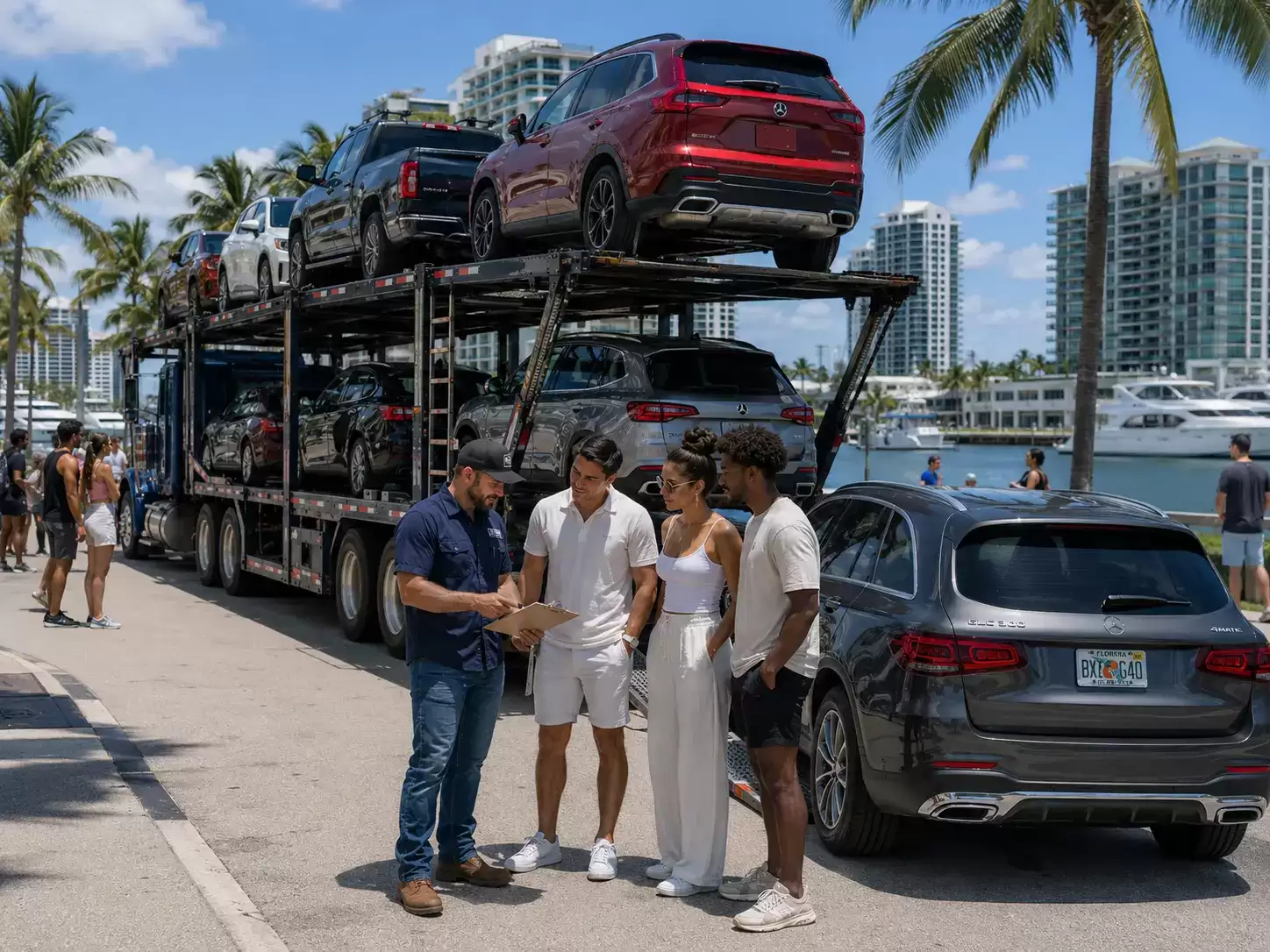
Door-to-Door Car Shipping: What to Expect in Virginia and Florida
Pickup in Virginia
Northern Virginia and Richmond
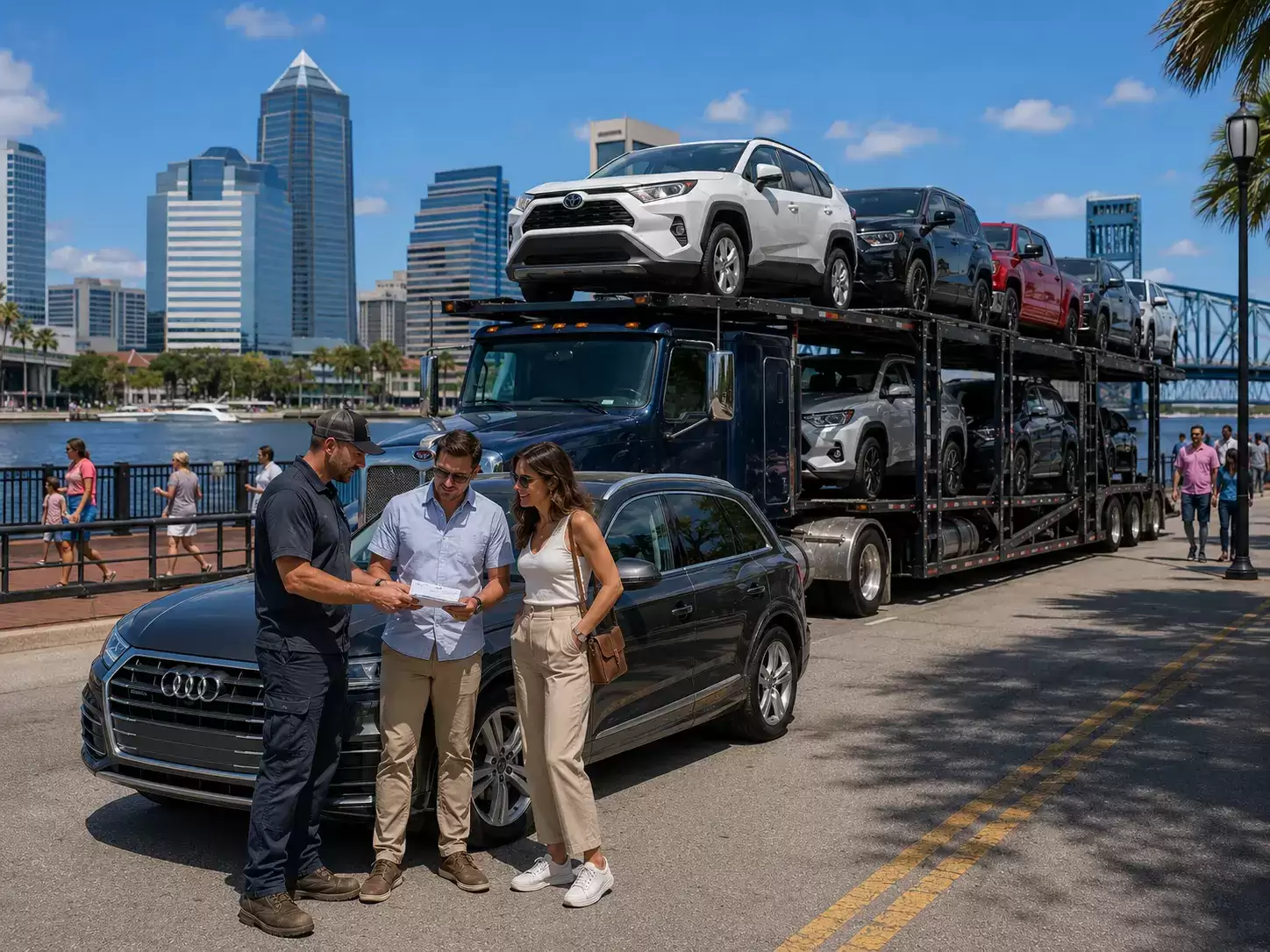
Virginia pickup logistics differ by origin zone. Hampton Roads (Virginia Beach, Norfolk, Chesapeake, Hampton, Newport News, Portsmouth, Suffolk) is the corridor’s highest-volume VA origin — carrier availability is consistently strong, military pickup protocols at Naval Station Norfolk and JB Langley-Eustis are routine, and I-64 west to I-95 southbound at Petersburg is the standard carrier exit. Northern Virginia (Arlington, Alexandria, Falls Church, McLean, Herndon, Sterling, Leesburg, Woodbridge, Fredericksburg): Downtown Arlington and Alexandria high-rise addresses require commercial staging — your coordinator handles this routinely. Suburban NoVA (Herndon, Sterling, Woodbridge, Manassas, Fredericksburg) has standard door-to-door access.
Hampton Roads and Western Virginia
Richmond and Petersburg: both on I-95 with commercial staging on the south and west sides of both cities. Charlottesville and the Shenandoah Valley: carriers stage in the Richmond area with final-mile pickup from Charlottesville, Harrisonburg, Staunton, or Waynesboro via I-64. Southwest Virginia and the Blue Ridge (Roanoke, Lynchburg, Blacksburg, Danville, Bristol): use I-81 or US-460 to connect to I-95 — expect a 4–6 hour transit from pickup to the southbound spine. Winter weather (October–March) in mountain and Shenandoah Valley VA requires scheduling coordination, especially during active weather events.
Delivery in Florida
South Florida and the Gold Coast
Florida delivery varies by zone. Jacksonville and North Florida (Jacksonville, Palm Coast, Gainesville, Ocala) are on or near I-95 with straightforward carrier access. Central Florida (Orlando, Kissimmee, Lakeland, Deltona, Melbourne): served via I-4 from I-95 at Daytona Beach or via I-10 to I-75 south. Tampa Bay (Tampa, St. Petersburg, Clearwater) and the Gulf Coast (Sarasota, Bradenton, Fort Myers, Cape Coral, Naples): carriers approach via I-4 west to I-75 or I-10 to I-75 — Gulf Coast delivery adds transit time and routing complexity versus I-95-direct Florida destinations.
Tampa Bay, Orlando, and North Florida
South Florida (West Palm Beach, Boca Raton, Fort Lauderdale, Hollywood, Coral Springs, Pompano Beach, Miramar, Hialeah, Miami) is on I-95 direct — the most straightforward delivery zone for VA→FL shipments originating from I-95 corridor VA cities. Dense urban South Florida neighborhoods may require nearby commercial staging for multi-car haulers. Tallahassee and the Panhandle (Pensacola, Panama City): accessible via I-10 west from Jacksonville — an efficient carrier route that adds minimal time versus mainland Florida delivery. Hurricane season (June 1–November 30): monitor NOAA tropical forecasts for South and Southwest Florida delivery scheduling in August through October.
Florida Vehicle Registration for Virginia Arrivals
Florida requires registration within 90 days of establishing residency. Visit a Florida DHSMV office with your out-of-state title, proof of Florida insurance, and proof of Florida address; no smog check is required. Cancel your Virginia registration once your Florida plates arrive.
Preparing Your Vehicle
Before Virginia pickup: remove all personal items from the passenger compartment, remove E-ZPass transponders, disable car alarms, and leave no more than a quarter tank of fuel. Photograph your vehicle from all angles with date-stamped images before the carrier arrives. For winter pickup in Northern VA or mountain VA: ensure your vehicle starts reliably in cold weather and clear any snow or ice from the vehicle before carrier arrival. At Florida delivery: inspect carefully before signing the Bill of Lading. Note any new damage before signing — your signature without noted exceptions constitutes acceptance of the delivered condition.
Virginia & Florida Auto Transport Resources
Virginia Helpful Government Links
- Virginia Department of Motor Vehicles (Virginia DMV) — Virginia’s vehicle title, registration, and driver’s license agency. Cancel your VA registration when establishing Florida residency, or confirm military exemption status for active duty PCS moves.
- Virginia DMV — Title and Registration — Registration cancellation and title transfer process for VA-titled vehicles moving to Florida.
- Virginia DMV — Military and Veterans — Provisions for active duty military personnel on PCS orders departing Virginia for Florida installations, including exemptions and title transfer procedures.
Florida Helpful Government Links
- Florida Department of Highway Safety and Motor Vehicles (FLHSMV) — Florida’s vehicle title, registration, and driver’s license agency. New FL residents must register VA-titled vehicles within 30 days of establishing residency.
- FLHSMV — Vehicle Title and Registration — Title transfer and registration process for Virginia-titled vehicles arriving in Florida, including required documents and fee schedule.
- FLHSMV — Florida Driver License — Convert your Virginia driver’s license to a Florida license within 30 days of establishing FL residency.
- FLHSMV — Military Registration Provisions — Active duty military personnel on PCS orders to Florida installations (MacDill AFB, NAS Jacksonville, Patrick SFB, Naval Station Mayport) — Florida military registration provisions and exemptions.
Federal Auto Transport Resources
- FMCSA — Verify a Carrier’s License (SAFER System) — Verify that any auto transport company you consider is federally licensed and insured before booking.
- FMCSA — Protect Your Move — Federal consumer guidance on hiring vehicle shippers and your rights as a shipper.