Texas to Arizona Car Shipping
The original instant car shipping calculator — trusted since 2004. Door-to-door Texas to Arizona transport with no surprises, no hidden fees, and three options to ship your vehicle on your schedule.
★ 4.6/5 Google Reviews | BBB Accredited A+ | FMCSA Licensed (MC #479342) | USDOT #1240502 | No upfront payment required | 20+ years shipping vehicles


Texas to Arizona Car Shipping Rates by City
Every Texas to Arizona vehicle shipment is available at three service levels:
Standard, Expedited, & Rush Options
Choose the one that fits your timeline and budget. All three include full door-to-door service and carrier insurance.

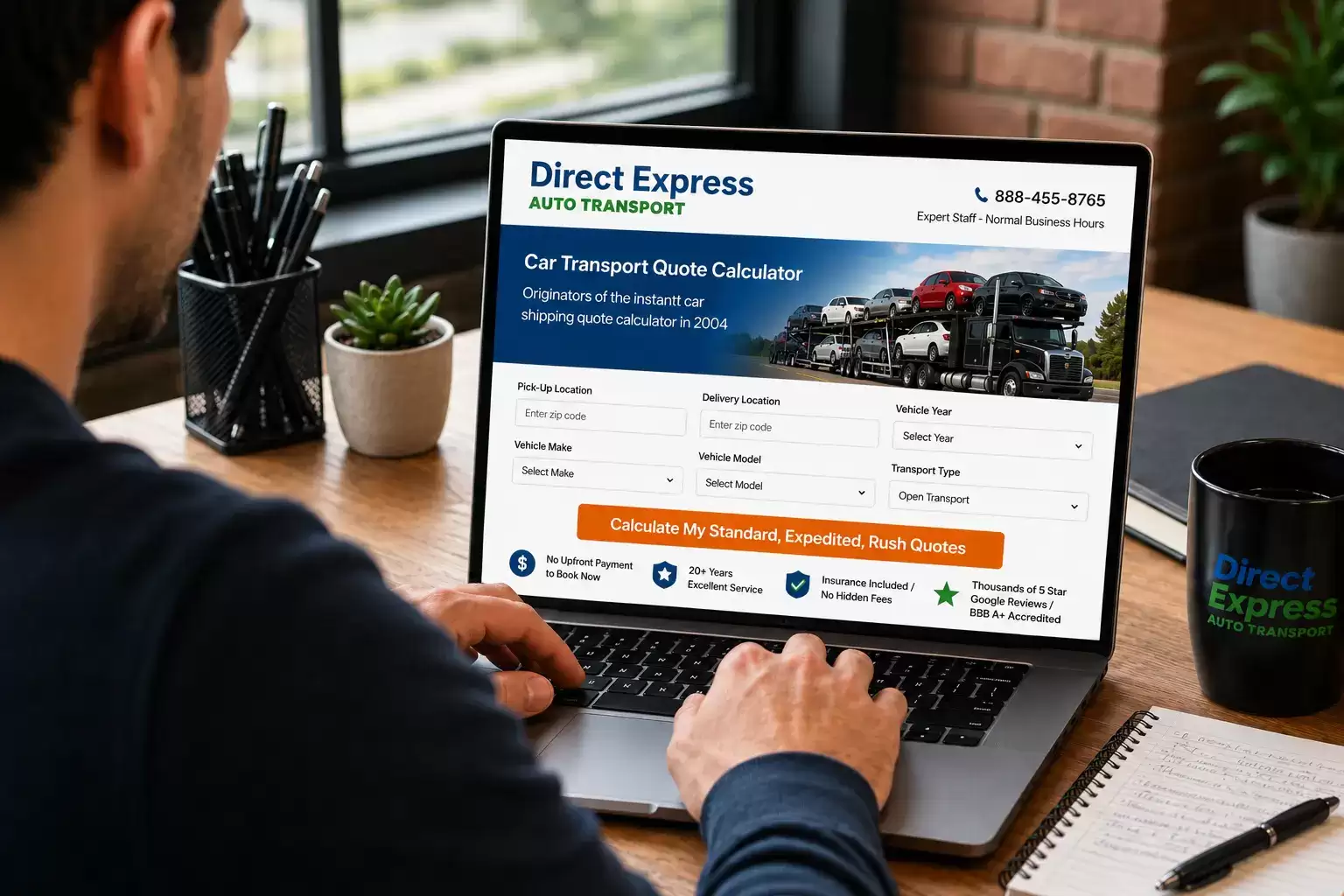
The Company That Invented Instant Auto Transport Pricing
Direct Express Auto Transport built the auto transport industry’s first instant online pricing calculator in 2004. Before that, getting a car shipping quote meant phone calls, callbacks, and days of waiting. We changed all of that. Today you know exactly what it costs to ship your vehicle before you commit to anything — in 30 seconds, online, any time of day.
Three Service Tiers for Every Texas to Arizona Shipment
Every shipment on this Texas to Arizona route is available at three service tiers so you can match your budget to your timeline. Standard delivers at the best available rate — ideal when your schedule has a few days of flexibility. Expedited puts your vehicle at the front of the dispatch queue for faster carrier assignment. Rush gets your car picked up as fast as possible — for moves where every day counts, including military PCS report dates and urgent employment start dates.
All three tiers include full door-to-door service and carrier insurance. No callbacks, no pressure, no guesswork.
What customers say about shipping a car from Texas to Arizona with Direct Express Auto Transport


Seasonal Pricing Guide: Texas to Arizona
Texas to Arizona runs I-10W year-round with consistent Sun Belt demand in both directions. Summer heat protocol applies June–September at both ends; October–November is the best value window.

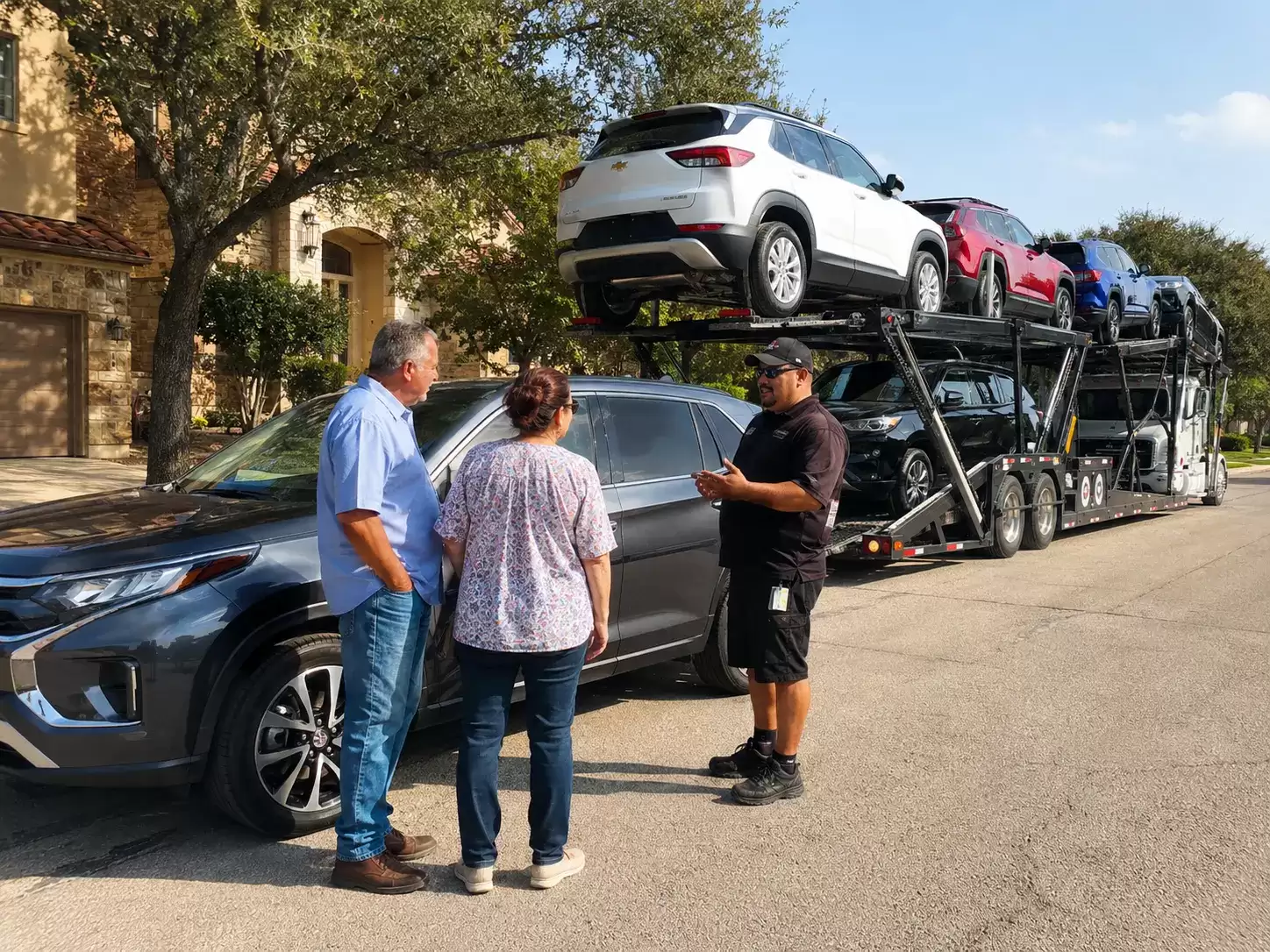
Who Ships a Car from Texas to Arizona — and Why
Texas Retirees Moving to Arizona’s Sun Belt Retirement Communities
Sun City, Sun City West, Goodyear, Surprise, Peoria, Scottsdale’s McCormick Ranch, Tucson’s Green Valley, and the Prescott area are among the most active Texas retirement destinations. Houston, San Antonio, and DFW retirees ship vehicles to Arizona at high volume, particularly in October through December as snowbirds establish winter residency.
Military PCS: Fort Cavazos and JBSA to Luke AFB, Davis-Monthan AFB, and Fort Huachuca
Fort Cavazos in Killeen — home of the III Corps and the 1st Cavalry Division — sends consistent PCS moves to Fort Huachuca, where the Army Intelligence Center and Army Network Enterprise Technology Command are headquartered. The Killeen → Sierra Vista corridor is one of the most reliable Army PCS pairings on this route.
Joint Base San Antonio: Air Force and Army PCS to Luke AFB, Davis-Monthan AFB, Fort Huachuca
Lackland, Randolph, Fort Sam Houston, and Camp Bullis — sends Air Force and Army PCS movers to Luke AFB, Davis-Monthan AFB, and Fort Huachuca. The San Antonio → Scottsdale pairing is the primary table proxy for JBSA to Luke AFB. Confirm your delivery address as base housing or off-post civilian address at booking — on-post delivery requires base access coordination.
Austin and DFW Technology Professionals Moving to TSMC Phoenix and Arizona’s Semiconductor Cluster
Texas Instruments, Samsung Semiconductor, NXP Semiconductors, and Microchip Technology all have Texas operations with engineering staff eligible for Arizona transfers. DFW professionals accepting roles at Chandler or Gilbert campuses regularly ship vehicles on this corridor.
Austin and DFW Tech Professionals: TSMC and Intel Semiconductor Relocations to Phoenix
Austin and DFW semiconductor professionals relocating for TSMC or Intel Phoenix-area positions should confirm vehicle shipment at least three to four weeks before their employment start date. TSMC and Intel campus onboarding schedules are fixed, and delayed vehicle arrivals are a common friction point on this corridor.
Texas Energy and Oil-and-Gas Professionals Accepting Arizona Utility and Infrastructure Positions
Arizona’s utility and infrastructure sector — driven by data center electricity demand from Microsoft, Google, Apple, and Meta — is drawing Texas power engineers, grid operations professionals, and electrical infrastructure project managers. Phoenix and Tucson utilities are actively recruiting from Texas’s energy sector for grid expansion and renewable integration roles.
Texas Professionals Choosing Arizona’s Lower Real Estate and Operating Costs
Austin’s tech-driven real estate appreciation has made Phoenix and Chandler economically attractive for remote-work professionals whose employers allow geographic flexibility. Phoenix metro median home prices are substantially lower than Austin’s 2021–2024 peak pricing, and both states have no state income tax, making the Arizona cost advantage primarily a housing arbitrage for Texas technology workers.
What Makes the Texas–Arizona Auto Shipping Run Different
Two Distinct Corridors: I-10W South and I-40W North
Most Texas-to-Arizona shipments use one of two distinct interstate corridors. The southern I-10W route serves all South Texas, Central Texas, and Houston-area origins: I-10W through San Antonio, continuing west through the Del Rio and Fort Stockton approach zones, through El Paso (the corridor’s mid-point relay hub at approximately the 600-mile mark from Houston), into New Mexico via Las Cruces and Deming, crossing into Arizona at Lordsburg, and reaching Tucson (~265 miles past El Paso) and Phoenix (~430 miles past El Paso).
I-40W North for DFW: Amarillo to Flagstaff, Bullhead City, and Kingman
The northern I-40W route serves DFW-area origins shipping to Flagstaff, Bullhead City, Lake Havasu City, Kingman, and Sedona: I-20W from Dallas to Abilene, US-287 or I-40 northwest through Amarillo, then I-40W through Albuquerque (New Mexico) and into Arizona at Holbrook, reaching Flagstaff approximately 850 miles from Frisco and 975 miles from Dallas.
The El Paso Relay Zone
El Paso is the critical mid-point relay for the I-10W corridor. Approximately 550 miles from San Antonio and 617 miles from Dallas via I-20W, El Paso functions as the auto transport industry’s major western Texas relay hub — carriers loading in Houston or San Antonio often stage a driver relay at El Paso before continuing into New Mexico and Arizona. This relay dynamic is why Houston → Phoenix (1,175 miles) may take 4–5 days while San Antonio → Scottsdale (975 miles) runs 3–4 days: the shorter run avoids the need for a full relay stage at El Paso.
Corpus Christi → Sierra Vista: The Table’s Cheapest Pair at $725 Standard
Corpus Christi to Sierra Vista at approximately 825 miles and $725 Standard is the table’s most affordable pairing. Corpus Christi is on the Gulf Coast approximately 200 miles south of San Antonio on I-37N, and the I-10W departure from San Antonio begins the direct run west. Sierra Vista, Arizona is home to Fort Huachuca and the Army Intelligence Center — it sits approximately 75 miles east of Tucson at an elevation of 4,600 feet near the Arizona-Mexico border.
Fort Huachuca and Army Intelligence Center: Sierra Vista’s Military Profile
The El Paso to Sierra Vista run is short (approximately 75 miles via US-80 or I-10 to Tucson approach and then south on AZ-90), meaning Corpus Christi loads heading to Sierra Vista have one of the shortest total carrier runs on the corridor.
Frisco → Flagstaff: The I-40W Shortcut
Frisco to Flagstaff via the I-40W corridor (through Amarillo and Albuquerque) runs approximately 850 miles — significantly shorter than the southern I-10W route (1,150+ miles via El Paso and Tucson). The I-40W corridor is Route 66’s successor and one of the country’s most consistently carrier-served western interstate lanes, with steady bidirectional traffic between Texas, New Mexico, and Arizona.
Garland → Prescott at $950: Why the Prescott Approach Adds to the DFW Baseline
Carriers loading in Frisco or nearby DFW suburbs for Flagstaff deliveries use I-20W to I-40 through Amarillo as their primary routing, making this one of the corridor’s more efficient city pairs at $750 Standard. The I-40W corridor’s consistent bidirectional carrier flow keeps dispatch times competitive for all DFW-to-Flagstaff bookings.
Arizona Summer Delivery: The Corridor’s Most Critical Heat Protocol
Phoenix Valley summer temperatures regularly exceed 110°F from June through August, with recorded highs above 118°F. This is not comparable to Texas summer — it is more extreme. An open carrier vehicle staged in a Phoenix or Chandler lot in July can reach interior temperatures of 180–190°F.
Arizona Summer Heat Protocol: Fuel Levels, Personal Items, and What Must Be Removed
The heat protocol for Arizona summer delivery (June–September) is the corridor’s most important operational consideration: no more than a quarter tank of fuel (fuel expansion at extreme temps can become a safety risk), remove all personal items including anything that could melt, warp, or explode in extreme heat (electronics, medications, aerosol cans, sunscreen, food, candles, plastic water bottles), remove any valuables.
Other Texas to Arizona Cities We Serve
Direct Express ships vehicles between hundreds of city pairs on this route. Below is a broader look at additional Texas origins and Arizona destinations we regularly serve.

Texas and Arizona Auto Shipping Zones Along the I-10 and I-40 Corridors
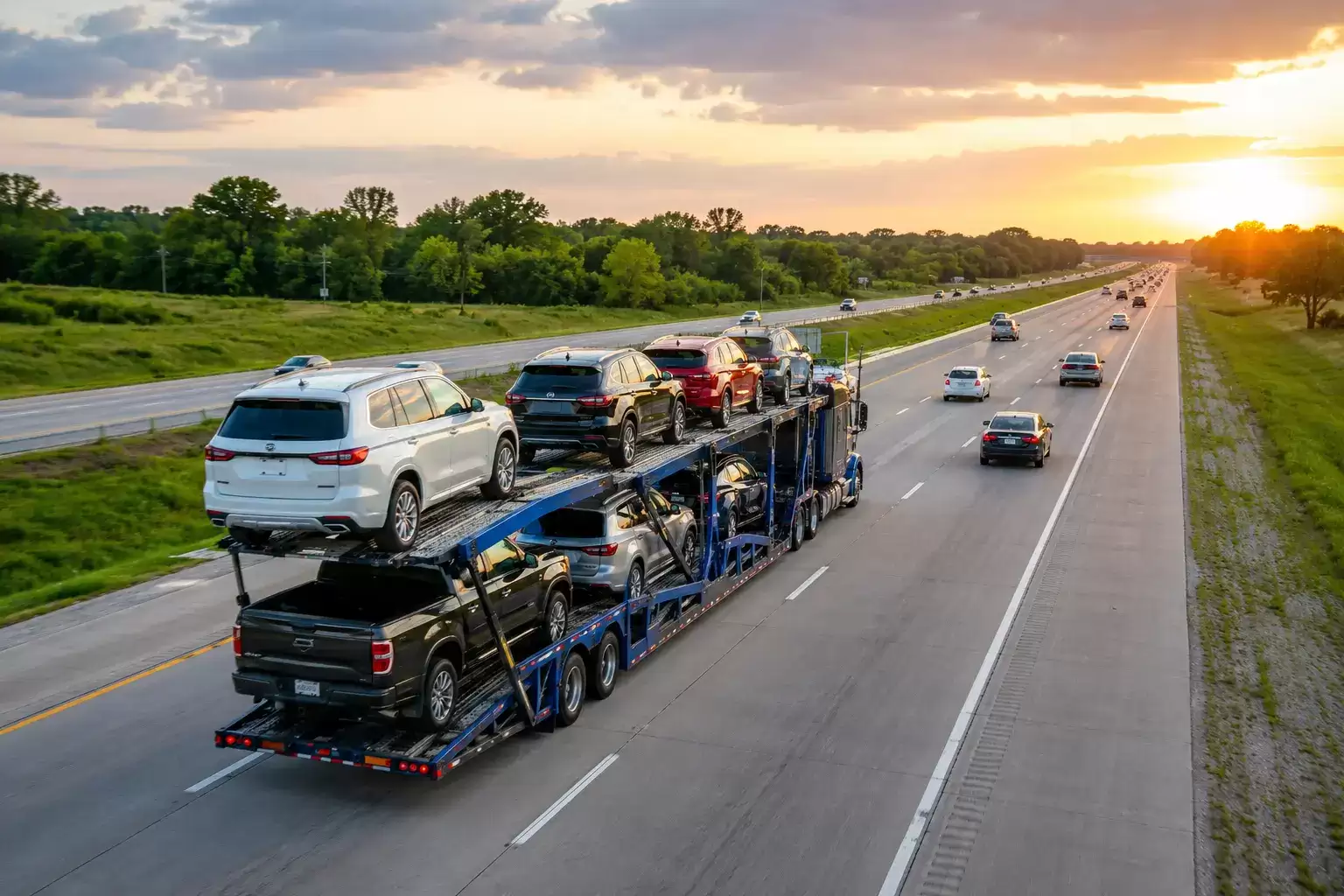
Texas to Arizona spans 825–1,310 miles depending on your origin and destination. Origins in Central and South Texas benefit from the direct I-10W approach; DFW origins have two routing options (I-20W/I-10W south or I-40W north to Flagstaff); Southeast Texas origins (Beaumont, Port Arthur) add significant eastward approach mileage to the DFW or Houston baseline. Arizona delivery zones range from Sierra Vista and Tucson (closest to Texas origins) through Phoenix metro to Yuma, Flagstaff, and northwest Arizona destinations.
Texas Origin Zones
Arizona Delivery Zones
Open vs. Enclosed Car Transport on the Texas–Arizona Route
Open Transport and the Arizona Summer Heat Protocol
Open transport is appropriate for virtually all Texas-to-Arizona shipments — military PCS from Fort Cavazos and JBSA, Texas retirement moves to Sun City and Goodyear, Austin technology professionals relocating to Chandler, and routine vehicle moves all ship open. The I-10W corridor is one of the most carrier-dense western interstate lanes in the country with consistent year-round traffic. Open is the correct choice for every standard vehicle on this route regardless of season.
Arizona summer delivery (June–September) on open carriers is the most heat-critical protocol in auto transport. Phoenix Valley temperatures of 110°F+ mean the heat protocol is non-negotiable: no more than a quarter tank of fuel, remove all personal items, remove medications (heat destroys medications), remove all electronics (phones, laptops, dashcams), remove aerosol cans, remove plastic water bottles and any food items, remove sunscreen and cosmetics. These rules are more stringent than Texas summer protocol and must be followed without exception for June–September Phoenix and Tucson delivery. Flagstaff delivery is exempt from the heat protocol year-round due to its 7,000-foot elevation.
Open Transport Recommended for Most
- All military PCS from Fort Cavazos (Killeen) or JBSA (San Antonio) to Luke AFB (Glendale), Davis-Monthan AFB (Tucson), or Fort Huachuca (Sierra Vista)
- Texas retirement moves to Sun City, Surprise, Goodyear, Scottsdale, Peoria, or Prescott
- Austin and DFW technology professionals relocating to TSMC Phoenix, Intel Chandler, or Microchip Technology
- Texas Gulf Coast energy professionals moving to Phoenix utility or data center positions
- Phoenix/Tucson delivery June–September: quarter tank, no personal items, no medications, no electronics — non-negotiable
Enclosed Transport
- High-value collector vehicles relocating to Scottsdale’s collector car community (Barrett-Jackson auction market)
- Exotics and classic vehicles traveling to Phoenix-area storage or auction consignment
- Vehicles where open-deck exposure during Arizona transit is a concern
- Typically 40–60% more expensive than open transport
Note on Scottsdale and Barrett-Jackson: Scottsdale hosts Barrett-Jackson’s flagship collector car auction each January, one of the largest in the world. Enclosed transport is commonly used for high-value consignment vehicles shipping to Scottsdale in December–January for auction. Standard daily-driver and routine vehicle moves to Scottsdale use open transport.
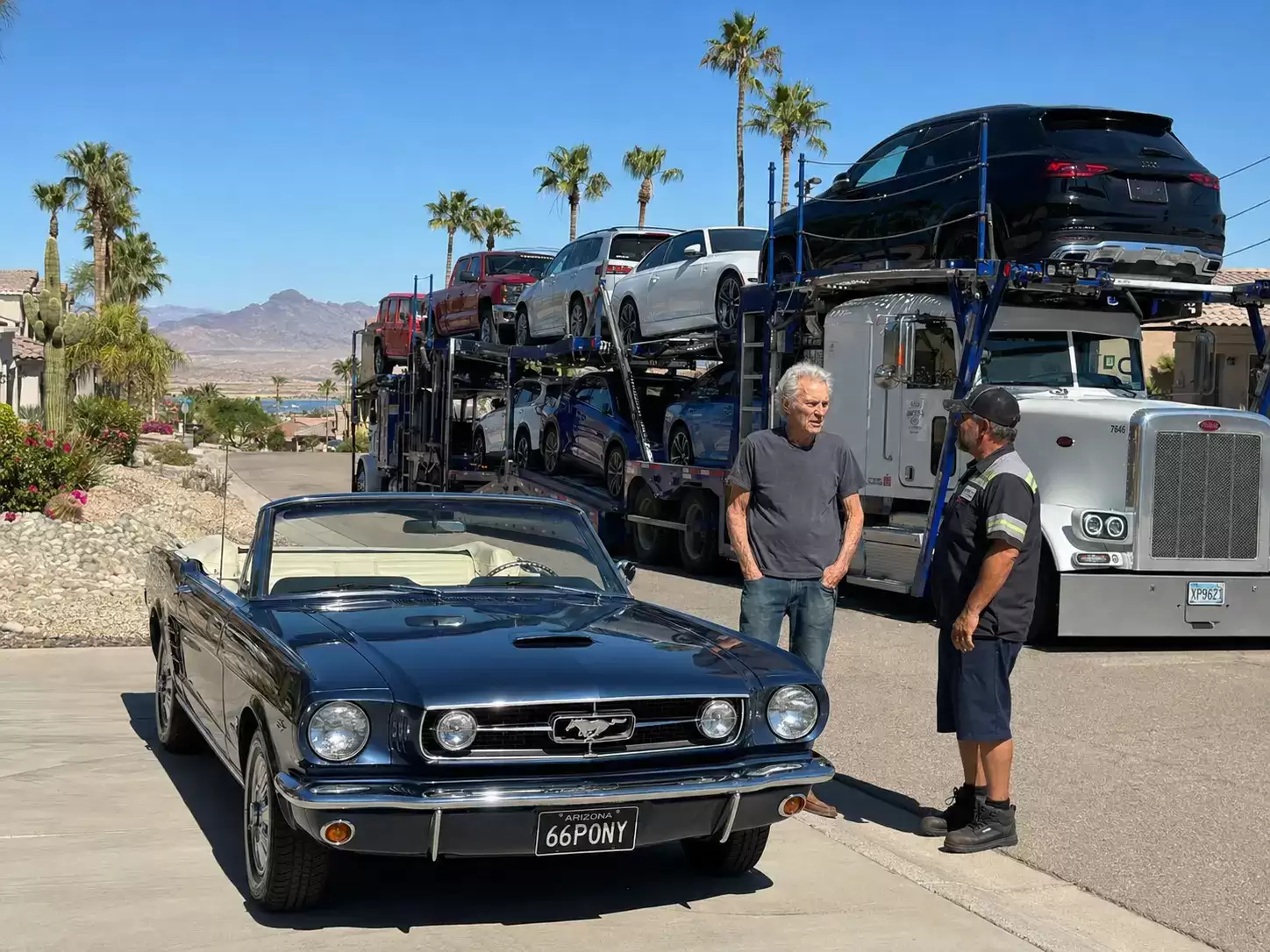

Door-to-Door Car Shipping: What to Expect in Texas and Arizona
Pickup in Texas
Central Texas: San Antonio, Austin, Waco, Killeen, Temple, and College Station
Standard door-to-door pickup throughout Central Texas. San Antonio is the corridor’s primary I-10W departure hub — door-to-door pickup throughout the metro, including JBSA on-post housing (confirm on-post access at booking for Lackland, Randolph, Fort Sam Houston, and Camp Bullis addresses). Austin dense urban addresses (SoCo, East Austin, UT campus adjacent) may require commercial staging — confirm at booking for high-density areas. Fort Cavazos (Killeen) on-post housing: provide on-post access credentials at booking. Off-post Killeen, Harker Heights, and Copperas Cove addresses: standard door-to-door throughout.
Greater Houston and Southeast Texas
Standard door-to-door pickup throughout the Houston metro (Houston, Conroe, Pasadena, Sugar Land, League City, Conroe) and Southeast Texas (Beaumont, Port Arthur). Houston downtown and Medical Center addresses: confirm commercial staging for large carrier access. Port Arthur and Beaumont industrial areas: standard door-to-door at residential addresses; commercial and refinery-adjacent addresses may need staging coordination. Texas summer heat protocol applies at all Southeast Texas pickup addresses June–September: quarter tank, no personal items, no electronics before carrier loads.
DFW Metro and East Texas
Standard door-to-door pickup throughout DFW (Dallas, Fort Worth, Plano, Irving, Garland, Frisco, Arlington, Denton) and East Texas (Tyler, Longview, Lufkin, Nacogdoches, Texarkana). Dense downtown Dallas and Fort Worth addresses: confirm carrier staging at booking. DFW January–February: brief freeze events possible — 1-day buffer for ice. DFW April–May severe weather: minor staging delays during tornado watch periods. East Texas pickup (Tyler, Longview, Nacogdoches, Lufkin, Texarkana) is standard door-to-door with no special complications year-round.
South Texas and Rio Grande Valley
Standard door-to-door pickup throughout South Texas (Corpus Christi, Laredo) and the Rio Grande Valley (McAllen, Mission, Harlingen, Brownsville). Corpus Christi pickup is excellent year-round. Laredo: confirm residential vs. commercial address at booking. Valley cities (McAllen, Mission, Harlingen, Brownsville): standard door-to-door at residential addresses; Texas summer heat protocol applies June–September. Valley destinations to Arizona represent some of the longest South Texas runs on the corridor, with Harlingen → Sun City and Mission → Fountain Hills among the table’s longest Other Cities pairs.
Delivery in Arizona
Southern Arizona: Tucson and Sierra Vista
Standard door-to-door delivery throughout Tucson and Sierra Vista. University of Arizona campus-adjacent Tucson neighborhoods: confirm staging for large carrier access at booking. Davis-Monthan AFB on-post housing (Tucson): provide base access credentials at booking. Fort Huachuca (Sierra Vista) on-post housing: provide on-post access at booking. Off-post Tucson and Sierra Vista civilian addresses: standard door-to-door. Arizona summer heat protocol applies at Tucson June–September. Sierra Vista’s 4,600-foot elevation moderates temperatures but protocol still applies in peak summer.
Phoenix Metro: Chandler, Mesa, Scottsdale, Glendale, Tempe, and Surrounding Cities
Standard door-to-door delivery throughout Phoenix metro. Luke AFB (Glendale) on-post housing: provide base access credentials at booking. Dense Scottsdale resort and Old Town areas: confirm commercial staging for large carrier at booking. Phoenix metro gated communities in Goodyear, Surprise, Peoria, and Sun City: confirm gate code or security access at booking. Arizona summer heat protocol June–September is most critical for Phoenix Valley delivery — 110°F+ is normal; no-personal-items, quarter-tank rules apply to ALL Phoenix metro summer deliveries without exception.
Northern and Western Arizona: Flagstaff, Prescott, Yuma, and Lake Havasu City
Standard door-to-door delivery at Flagstaff, Prescott, Yuma, Lake Havasu City, and northwest Arizona destinations. Flagstaff mountain addresses: winter weather possible December–March; 1-day buffer for I-40 or I-17 winter weather at the Flagstaff delivery end. No heat protocol required for Flagstaff year-round. Prescott: no special complications; deliver via AZ-69 from I-17 exit at Cordes Junction. Yuma: excellent year-round delivery except summer heat protocol June–September. Lake Havasu City and Bullhead City: extreme summer heat (105–115°F) — heat protocol applies June–September same as Phoenix.
Arizona Vehicle Registration for Texas Arrivals
Arizona requires registration within 15 days of establishing residency. Visit an Arizona MVD office with your out-of-state title, proof of Arizona insurance, and proof of Arizona address; an emissions inspection is required in Maricopa and Pima counties. Cancel your Texas registration once your Arizona plates arrive.
Preparing Your Vehicle
Before Texas pickup: remove all personal items, disable car alarms, remove Texas TxTag or SunPass transponders, and leave no more than a quarter tank of fuel. Photograph your vehicle from all angles with date-stamped images. Texas summer pickup June–September: quarter tank, no personal items, no electronics, no medications. Arizona summer delivery June–September (especially Phoenix and Tucson): confirm with the carrier coordinator at booking that the delivery staging area will be shaded or indoor if available. For Fort Huachuca, Luke AFB, or Davis-Monthan on-post deliveries: provide access information at booking and confirm on-post protocol with your gaining unit well in advance.
Texas & Arizona Auto Transport Resources
Texas Helpful Government Links
- Texas Department of Motor Vehicles (TxDMV) — Obtain your Texas title before shipping. Confirm your title is clear and transferable before the carrier loads your vehicle.
- TxDMV — Title Transfer — Texas title transfer procedures for out-of-state destination registration.
- TxDMV — Military Provisions — Active duty exemptions and provisions for PCS departures from Fort Cavazos, JBSA, and other Texas installations.
- Texas DPS — Driver License — Texas license surrendered at Arizona MVD within 30 days of establishing Arizona residency.
- TCEQ — Texas Emissions Testing Counties — Emissions testing required in Harris (Houston), Dallas, Tarrant, Travis, Bexar, and other counties. Verify your origin county’s status before title transfer.
Arizona Helpful Government Links
- ServiceArizona — Arizona MVD Online Services — Arizona’s online motor vehicle portal. New Arizona residents register their vehicle within 15 days of establishing residency. Authorized third-party MVD providers also available statewide.
- ADOT — Out-of-State Title and Registration — Required documents, fees, and procedures for registering a Texas vehicle in Arizona, including Vehicle License Tax (VLT) information and use tax assessment.
- ADOT — Arizona Emissions Testing — Emissions testing required in Maricopa County (Phoenix metro) and Pima County (Tucson). OBD-based testing at licensed stations; vehicles under 5 model years may be exempt.
- ADOT — Arizona Driver License — Arizona driver’s license required within 30 days of establishing Arizona residency. Texas license surrendered at MVD.
- ADOT — Military Members and Veterans — Active duty provisions for service members arriving at Luke AFB, Davis-Monthan AFB, Fort Huachuca, and other Arizona installations on PCS orders.
Federal Auto Transport Resources
- FMCSA — Verify a Carrier’s License (SAFER System) — Verify that any auto transport company is federally licensed and insured before booking.
- FMCSA — Protect Your Move — Federal consumer guidance on hiring vehicle shippers and understanding your rights.