New York to California Car Shipping
The original instant car shipping calculator — trusted since 2004. Door-to-door New York to California transport with no surprises, no hidden fees, and three options to ship your vehicle on your schedule.
★ 4.6/5 Google Reviews | BBB Accredited A+ | FMCSA Licensed (MC #479342) | USDOT #1240502 | No upfront payment required | 20+ years shipping vehicles


New York to California Car Shipping Rates by City
Every New York to California vehicle shipment is available at three service levels:
Standard, Expedited, & Rush Options
Choose the one that fits your timeline and budget. All three include full door-to-door service and carrier insurance.
The Company That Invented Instant Auto Transport Pricing
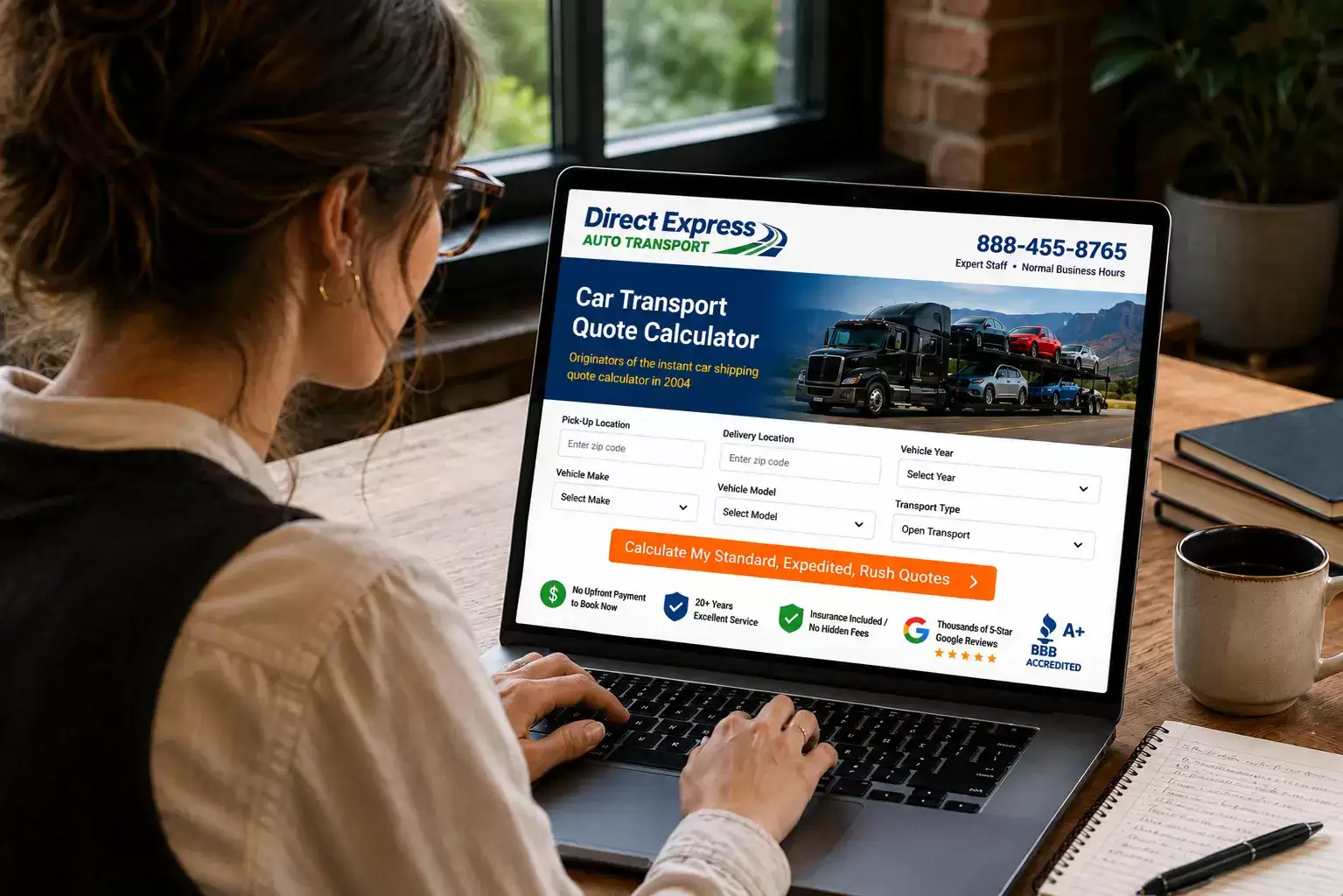
Direct Express Auto Transport pioneered online instant pricing for the auto transport industry in 2004. Before we built the first car shipping cost calculator, getting a quote from a broker meant phone calls, callbacks, and waiting — sometimes days. We changed that. Today you know your exact cost in 30 seconds, before committing to anything. No phone tag, no hassle. Just a real number, instantly.
Three Service Tiers for Every New York to California Shipment
Every shipment on this New York to California route is available at three service tiers so you can match your budget to your timeline. Standard delivers at the best available rate — ideal when your schedule has a few days of flexibility. Expedited moves your vehicle to the front of the dispatch queue for faster pickup. Rush gets your car picked up as fast as humanly possible — for moves where every day counts. All three tiers include full door-to-door service and carrier insurance.
What customers say about shipping a car from New York to California with Direct Express Auto Transport


Seasonal Pricing Guide: New York to California
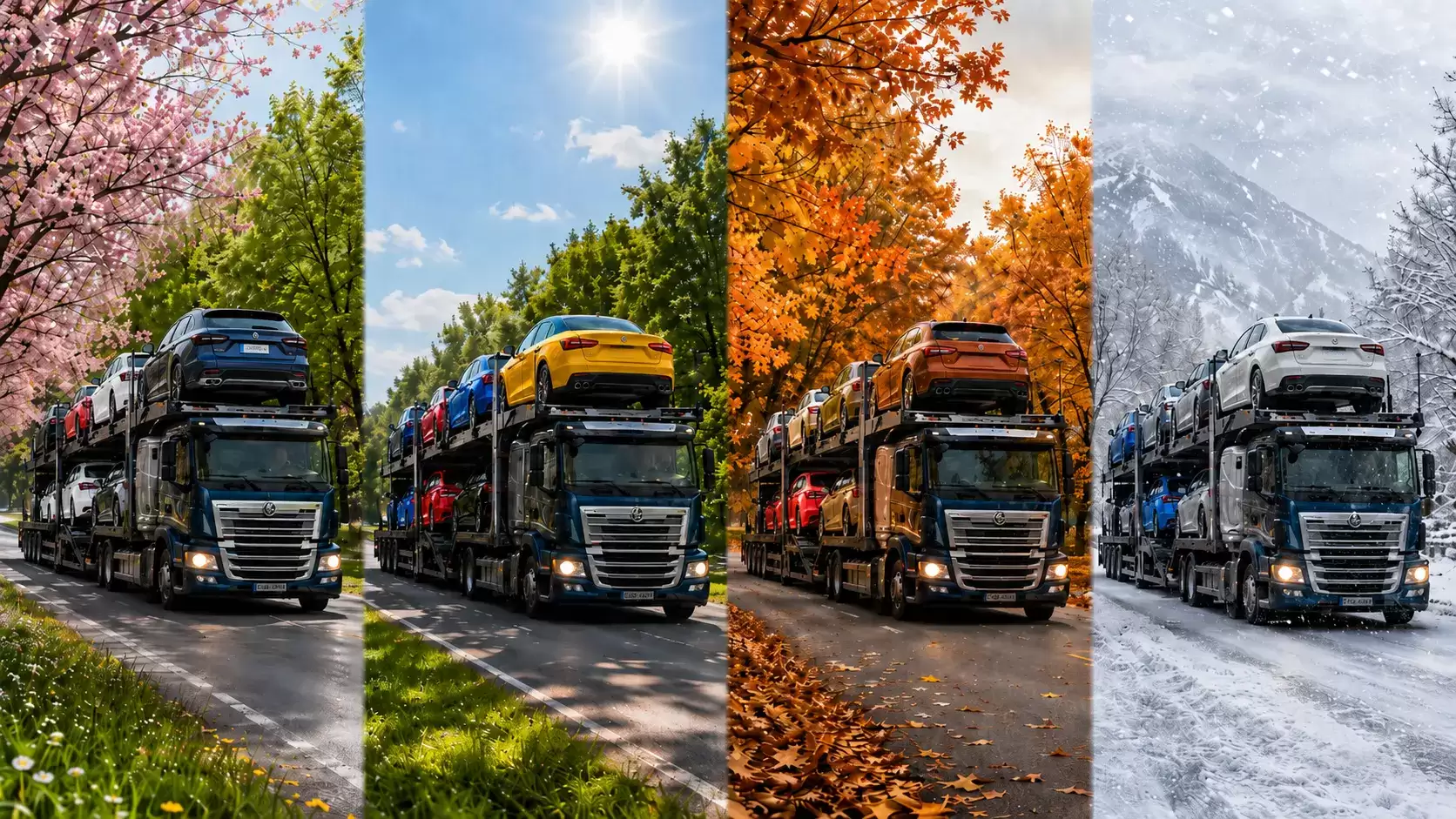
The New York–California corridor runs both directions with strong, consistent demand throughout the year. Timing your shipment correctly can meaningfully affect what you pay — and how quickly your vehicle is picked up.
Who Ships a Car from New York to California — and Why
The New York–California westbound run carries a consistent and substantial volume of vehicles year-round, driven by some of the most distinct and predictable migration and career patterns in the country.
New York Technology Professionals Moving to Silicon Valley and California
Technology careers pull a significant portion of New York talent toward California. Bay Area companies — in software, venture capital, semiconductors, and artificial intelligence — regularly recruit from New York’s finance, media, and academic circles. A banker making the move to a fintech startup in San Francisco, or a Columbia graduate heading to a Mountain View engineering role, needs their vehicle at the other end. Bay Area destinations (San Francisco, San Jose, Oakland, Fremont, Sunnyvale) represent a notable fraction of westbound traffic from New York.
New York Entertainment and Media Industry Moving to Los Angeles
Entertainment and media migration is a defining force on this corridor. New York has a robust film and television industry of its own, but Los Angeles is where film and television production is ultimately centered. Writers, directors, actors, producers, agents, and below-the-line crew who build early careers in New York often make the move west when their work demands it. The transition from Brooklyn to Silver Lake or from Astoria to Burbank is common enough to be a cultural shorthand — and it generates a steady stream of westbound vehicle shipments.
New York Cost-of-Living Refugees Moving West for Affordability
Cost of living pressure is a growing driver. New York City ranks among the most expensive places to live in the country, and California’s major metros — while expensive themselves — offer a different value calculation when combined with career opportunity, weather, and quality of life. Families and young professionals who have built equity in New York are increasingly executing westbound moves that would have been less common a generation ago.
Seasonal Migration: New York Retirees and Snowbirds with California Connections
Seasonal migration adds volume at specific points in the year. Retirees who wintered in Florida and summered in New York are one pattern; a more contemporary version involves professionals who spend part of the year in each location and may need a vehicle at both ends. Classic and collector car purchases also generate shipments — New York buyers who purchase California rust-free classics at auction and ship them east are a consistent segment, as are the reverse transactions.
What Makes the New York–California Auto Shipping Run Different
Westbound on I-40 and I-80: The Two Paths Across America
The New York–California run departs the Northeast via New Jersey on I-78 or I-95, then joins the cross-country highway network heading west. Carriers primarily use two routes: the I-40 southern path through Tennessee, Arkansas, Oklahoma, Texas, New Mexico, and Arizona — all-weather and the primary winter route — and the I-80 northern path through Pennsylvania, Ohio, Indiana, Illinois, Iowa, Nebraska, Wyoming, and Utah. Both routes converge on California, with I-80 arriving in Sacramento and the Bay Area, and I-40 terminating in the Los Angeles basin before carriers extend north to NorCal if needed. Your vehicle may travel either path — carriers assign routes based on their current load manifest, weather conditions, and backhaul availability.
The NorCal Delivery Premium
Southern California — the Los Angeles basin, San Diego, and the Inland Empire — is the natural western terminus for carriers on both major cross-country routes. Delivering to Northern California (San Francisco, Oakland, San Jose, Sacramento, Modesto, Fresno) requires the carrier to push north from the LA basin on I-5 or I-580, adding 400+ miles and typically one to two additional travel days. This carrier extension is accurately reflected in pricing: NorCal delivery from any New York origin runs $150–$250 more than equivalent SoCal delivery. If you have flexibility on your delivery address, SoCal is the most cost-efficient endpoint on this corridor.
Buffalo: A Different Carrier Zone Than NYC
Buffalo sits on the western edge of New York State, roughly 370 miles from Manhattan and much closer to the Cleveland and Pittsburgh carrier hubs than to the NYC metro carrier pool. Pickup logistics in Buffalo are completely independent from the NYC metro — carriers serving Buffalo approach via I-90 from the west, not from New Jersey. Buffalo-to-California distance runs about 2,510 miles, meaningfully shorter than the 2,800+ miles from the NYC metro. Standard pricing from Buffalo to California runs approximately $1,275 for SoCal delivery — around $120 less than from NYC. If you’re in Western New York, don’t assume your pricing mirrors New York City.
NYC Pickup: The Most Complex Origin in Auto Transport
New York City is one of the most operationally demanding pickup environments for large car haulers. Manhattan in particular presents challenges — narrow streets, overhead restrictions, and persistent traffic congestion make staging a 75-foot car hauler at a specific address impractical in many neighborhoods. Carriers typically coordinate a pickup at a nearby accessible street or a designated staging area close to your address. Your transport coordinator handles this logistics conversation before dispatch. Brooklyn, Queens, The Bronx, and Staten Island are generally more accessible, and most residential street addresses in those boroughs can be serviced door-to-door. Long Island pickups (Hempstead, Huntington, Islip, Babylon, etc.) proceed via the Long Island Expressway and are straightforward for large carriers.
Other New York to California Cities We Serve
Direct Express ships vehicles between hundreds of city pairs on this route. Below is a broader look at additional New York origins and California destinations we regularly serve.
Hub Cities Along the New York–California Car Shipping Corridor
The New York–California run is one of the longest domestic auto transport routes in the country. Carriers depart the Northeast, push across the full width of the continent, and deliver in California after a journey through some of the most varied geography on the planet. Understanding the route helps set accurate transit expectations for a 2,800–2,900 mile haul.
Major Origin Hubs in New York
Cross-Country Corridor Cities
Major California Delivery Points
Routing Insight: NYC-metro vehicles depart via I-78 or I-95 through New Jersey and join the I-40 or I-80 westbound corridor. The I-40 southern route — through Nashville, Oklahoma City, Albuquerque, and Phoenix — is the all-weather primary path and is used year-round. The I-80 northern route through Chicago and Salt Lake City is efficient for summer and fall loads. Both routes terminate in Southern California, where the LA basin is the natural delivery zone. NorCal deliveries (San Francisco, Oakland, San Jose, Sacramento) require the carrier to push north from LA on I-5 or I-580, adding 1–2 days and a pricing premium.
Open vs. Enclosed Car Transport on the New York–California Route
At nearly 3,000 miles, this is one of the longest domestic vehicle shipments you can make. The route traverses Northeast highways, Appalachian foothills, Southern plains, Southwest desert, and finally California — a wide range of road conditions and environments. Choose your transport type based on the vehicle, not just the distance.
Open Transport Recommended for Most
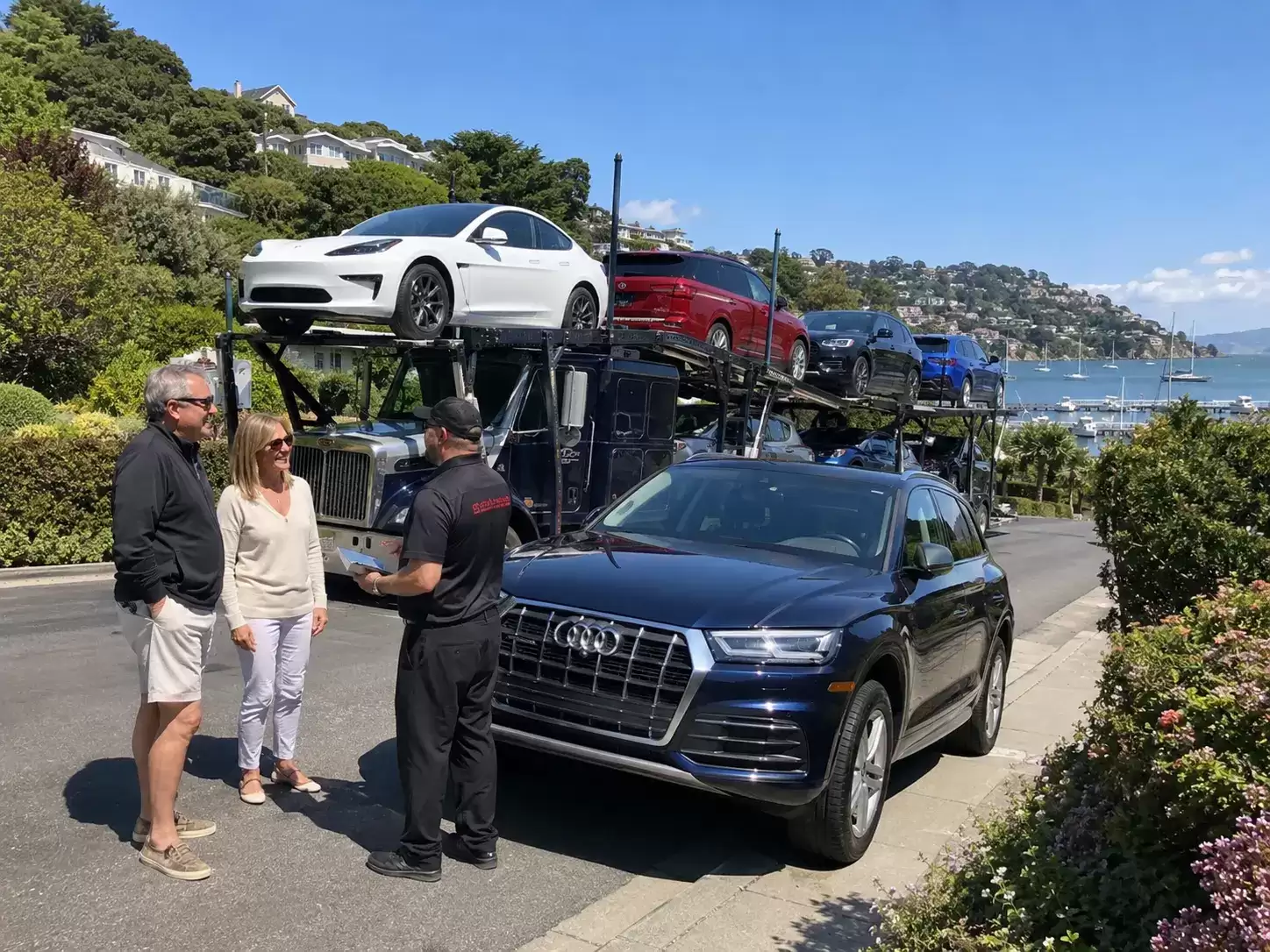
- Carries 7–10 vehicles on an open-air trailer — the industry standard for virtually all everyday vehicles
- Most cost-effective option by a significant margin
- Well-suited for daily drivers, sedans, SUVs, trucks, and minivans of any make or value under approximately $60,000
- The NY–CA corridor is one of the most carrier-active lanes in the country in both directions; open carrier availability is excellent year-round
- Your vehicle will accumulate road dust and light road film over 2,800+ miles — normal, expected, and easily washed off at delivery
Enclosed Transport
- Vehicle travels in a fully enclosed, weather-protected trailer from New York to California
- Typically 40–60% more expensive than open transport
- Recommended for luxury vehicles, high-value exotics, classics and collector cars, show-quality finishes, and vehicles with custom paint or wraps
- The Southwest desert crossing is the primary reason to consider enclosed — desert road debris and grit are hard on fresh paint over hundreds of miles
- Fewer enclosed carriers operate this specific lane; book 2–3 weeks ahead to lock in availability
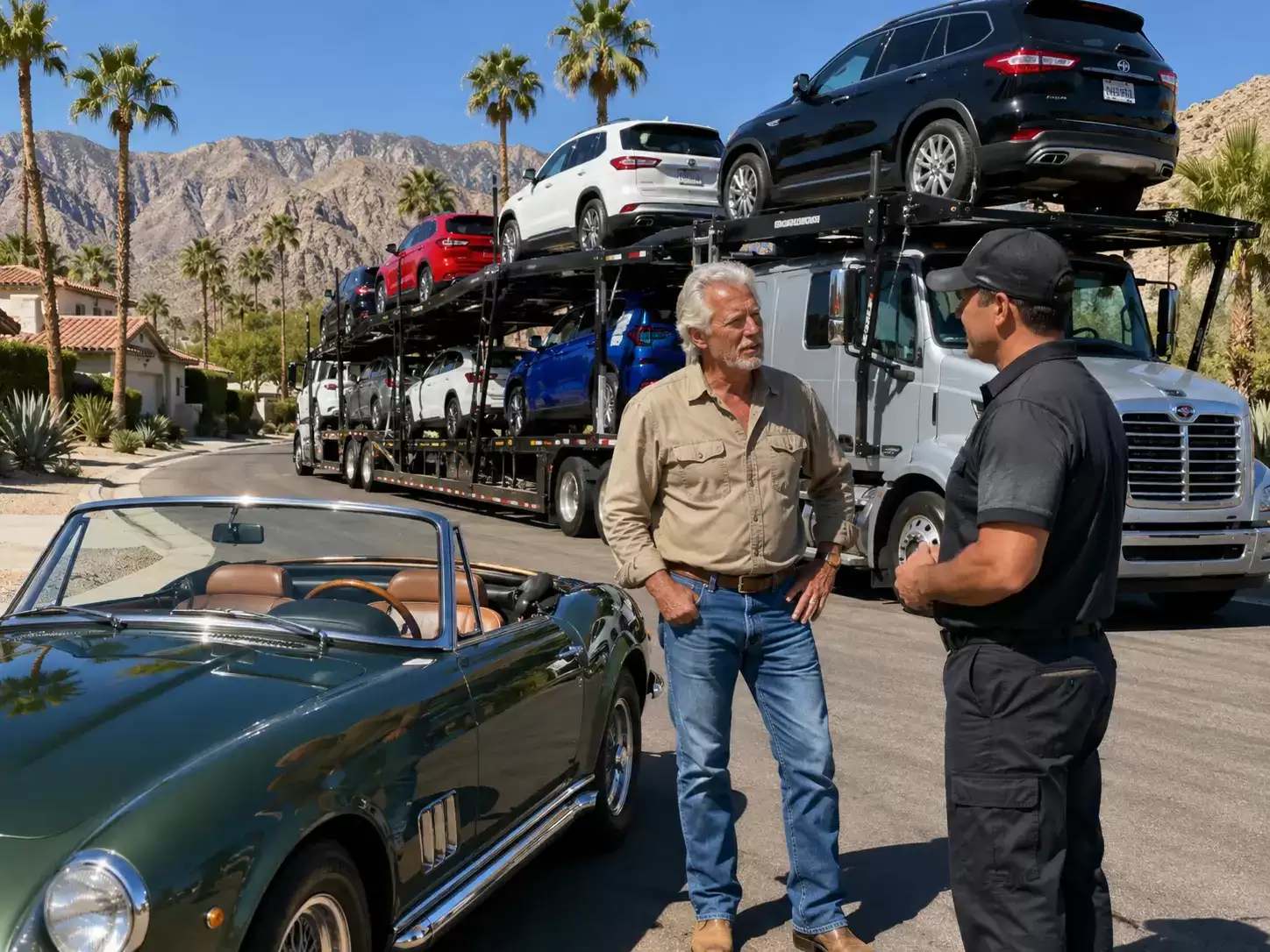
Our honest recommendation: Daily driver or standard vehicle — open transport is correct, full stop. The NY–CA corridor is heavily traveled and open carriers run it constantly. For a Porsche, a ’67 Mustang, a freshly restored classic, or anything with a finish you’d rather not have sandblasted by 2,900 miles of desert — enclosed is worth the premium.
Door-to-Door Car Shipping: What to Expect in New York and California
Pickup in New York
New York City Metro and Long Island
Manhattan pickup is the most operationally complex origin in domestic auto transport. Large car haulers — typically 75 feet long — cannot always position at a specific Manhattan address due to street width, overhead obstructions, and traffic. Carriers coordinate a nearby accessible pickup location, typically within a few blocks of your building. Your transport coordinator handles this logistics conversation before dispatch. For customers in Brooklyn, Queens, The Bronx, and Staten Island, door-to-door pickup is generally feasible — those boroughs have more carrier-accessible streets than Manhattan.
Upstate New York
Long Island pickups (Hempstead, Huntington, Islip, Babylon, Oyster Bay, Brookhaven, Smithtown) proceed via the Long Island Expressway and are efficiently serviced. Yonkers and Westchester County are accessible from I-87. Buffalo is serviced by carriers operating the I-90 western corridor, completely independent from the NYC metro carrier pool — pickup logistics for Buffalo mirror any mid-sized city and are generally straightforward.
Delivery in California
Southern California and the Inland Empire
Southern California delivery is the most efficient destination zone in the country. Los Angeles, San Diego, the Inland Empire (Riverside, San Bernardino, Fontana), Orange County (Anaheim, Irvine, Santa Ana, Glendale, Long Beach), and surrounding metro areas are in constant carrier rotation from the East. Most residential and commercial addresses in SoCal can be reached door-to-door. Dense urban neighborhoods in downtown LA can occasionally require a short coordination on nearby accessible streets, but this is the exception. Your carrier will contact you 24–48 hours before delivery to confirm a delivery window.
Bay Area and Northern California
Northern California delivery (San Francisco, Oakland, San Jose, Sacramento, Modesto, Fresno) requires the carrier to push north from the LA basin after arriving from the East. Expect 1–2 additional transit days and a pricing premium of $150–$250 compared to equivalent SoCal delivery. San Francisco streets can present challenges similar to Manhattan in some dense neighborhoods — your coordinator addresses this before departure.
Preparing Your Vehicle
Before pickup: clear all personal items from the interior, leave no more than a quarter tank of fuel, disable your alarm, and remove any exterior accessories or aftermarket attachments. Photograph your vehicle from all angles with timestamps before the carrier arrives. At delivery in California, inspect your vehicle thoroughly before signing the Bill of Lading — document any concerns directly on the form before signing. Your signature without notation constitutes acceptance of the vehicle’s condition.
New York & California Auto Transport Resources
New York Helpful Government Links
- New York State Department of Motor Vehicles (NY DMV) — Primary agency for New York vehicle titles and registration. If your vehicle will remain NY-registered after your California move, or if you’re releasing a NY title before re-registering in California, start here.
- NY DMV — Out-of-State Vehicle Reference — Background on NY registration requirements, useful for understanding your title-release documentation before registering in California.
- NY DMV — Vehicle Registration Overview — Registration fee structure and plate surrender process when moving a NY-registered vehicle out of state permanently.
California Helpful Government Links
- California Department of Motor Vehicles (CA DMV) — The primary California agency for vehicle titling and registration. New California residents must register their vehicle within 20 days of establishing California residency.
- CA DMV — Registering an Out-of-State Vehicle — Step-by-step guidance for transferring a New York title and obtaining California registration and plates. Note that California requires a smog inspection before registration for most vehicles.
- CA DMV — Vehicle Registration Fees — California registration fees are calculated on vehicle value and are typically higher than New York fees. Use this calculator to estimate your cost before your vehicle arrives.
Federal Auto Transport Resources
- FMCSA — Verify a Carrier’s License (SAFER System) — Verify that any auto transport company you consider is federally licensed and insured before booking.
- FMCSA — Protect Your Move — Federal consumer guidance about hiring vehicle shippers, including red flags for broker scams and your rights as a shipper.