
Car Shipping To or From Louisiana
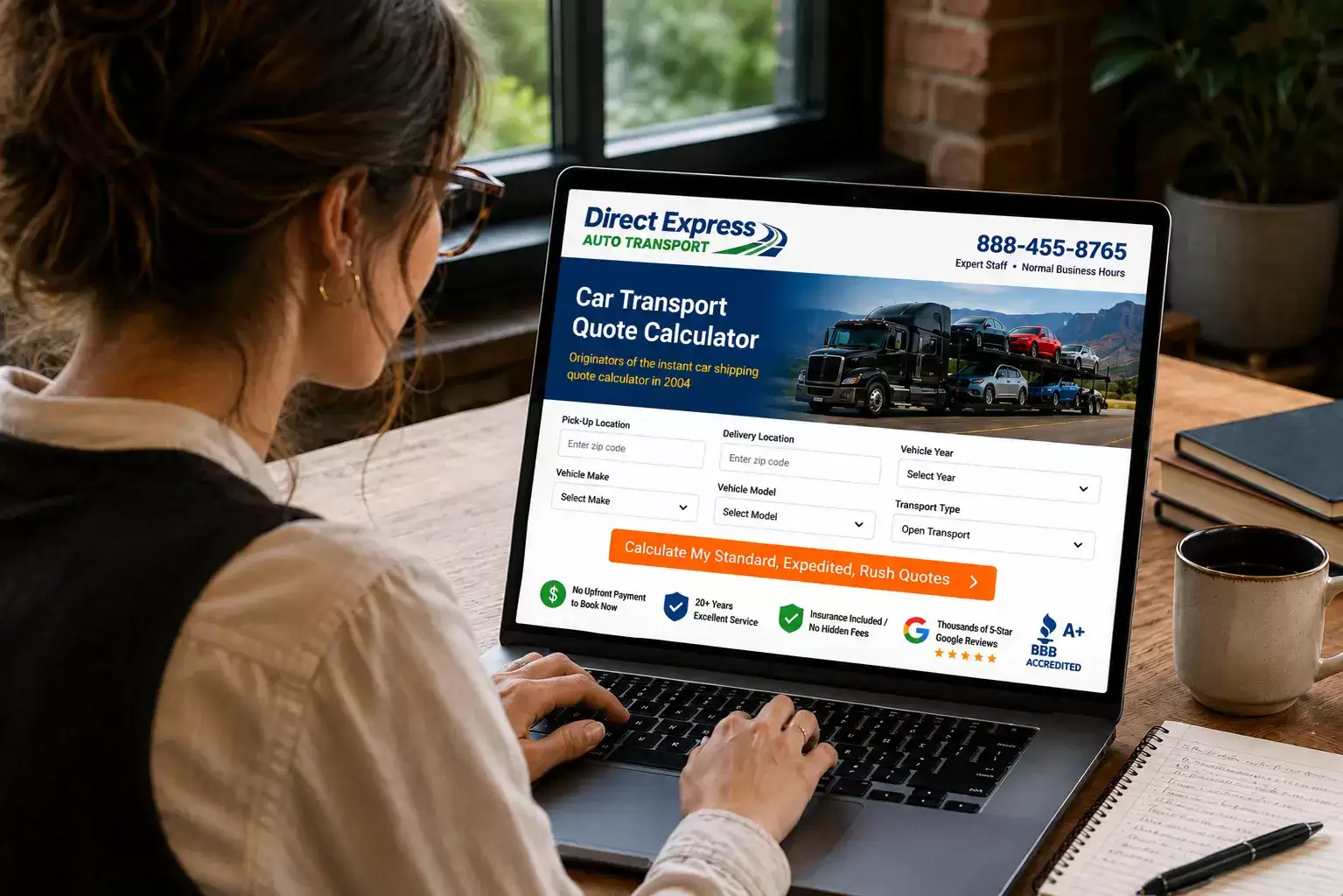
Need to ship a car to or from Louisiana? Direct Express Auto Transport has been the Pelican State’s most trusted auto transport broker since 2004 — with a 4.6-star average across thousands of verified Google reviews, no upfront payment required, and a real-time quote available in 30 seconds.
★ 4.6/5 Google Reviews | BBB Accredited A+ | FMCSA Licensed (MC #479342) | USDOT #1240502 | No upfront payment required | 20+ years shipping vehicles


Louisiana car shipping costs vary based on your route, the time of year, vehicle size, and the service tier you choose. Use our instant calculator above for a real-time quote — or see the route-by-route pricing tables below for a fast ballpark. Most standard sedan shipments to or from Louisiana range from $375 for short-haul routes to Mississippi to $1,250 or more on transcontinental routes to California. Our Expedited and Rush pricing tiers hasten the process to create an even more satisfying experience.
What customers say about shipping a car to or from Louisiana with Direct Express Auto Transport


The interstate corridors that move Louisiana vehicles
I-10 (East-West backbone): Louisiana’s most important carrier artery and one of the busiest freight corridors in the United States, running from the Texas state line at Orange through Lake Charles, Lafayette, Baton Rouge, and New Orleans before crossing into Mississippi. I-10 is Louisiana’s primary carrier route for all east-west vehicle shipping and is the reason the New Orleans, Metairie, Baton Rouge, and Lafayette markets have carrier access comparable to cities twice their size. Through-carrier traffic between Houston and Miami passes continuously on I-10 through Louisiana, creating a constant carrier supply that Louisiana shippers can access in both directions.
I-12 (Baton Rouge to Mississippi border): Runs east from I-10 near Baton Rouge north of Lake Pontchartrain through Hammond and Slidell to the Mississippi state line, where it connects to I-10 east of New Orleans. I-12 is an important secondary corridor that allows carriers to bypass the New Orleans metro when routing from Baton Rouge toward Mississippi and Alabama. The I-12 corridor serves Baton Rouge’s north and east suburbs, Hammond (home of Southeastern Louisiana University), and Slidell, all of which benefit from the corridor’s strong connection to I-10 east.
I-20 (Northwest, Shreveport corridor): Runs from the Texas state line west of Shreveport east through Bossier City and Shreveport into northern Louisiana, continuing toward Monroe and the Mississippi state line. I-20 is the primary carrier route for north Louisiana, connecting Shreveport and Bossier City to Dallas (190 miles west) and Atlanta (600 miles east). Barksdale AFB sits adjacent to I-20 in Bossier City, and the Dallas-to-Atlanta carrier traffic on I-20 gives Shreveport carrier access that is exceptional for a mid-size north Louisiana city.
I-49 (North-South spine): Runs from I-10 at Lafayette north through Opelousas, Alexandria, and Natchitoches to Shreveport, where it connects to I-20. I-49 is Louisiana’s primary north-south carrier corridor and the link between the busy I-10 market and Shreveport. Lafayette sits at the I-10/I-49 junction and benefits from both east-west I-10 traffic and the north-south I-49 corridor. Alexandria sits at roughly the midpoint on I-49 and is the most carrier-accessible city in central Louisiana.
I-55 (New Orleans north toward Mississippi and Chicago): Runs from I-10 west of New Orleans north through Hammond, Kentwood, and the Louisiana–Mississippi state line, continuing to Jackson and Chicago. I-55 is Louisiana’s primary north-south corridor for moves between New Orleans and the Midwest, and carriers running Chicago-to-New Orleans loads on I-55 give Hammond and the I-55 corridor cities above-average carrier access for their size. New Orleans’ position at the I-10/I-55 convergence makes it one of the most carrier-accessible cities in the South.
I-59 (New Orleans northeast toward Alabama): Runs from I-10 east of New Orleans northeast through Slidell to the Mississippi and Alabama state lines, connecting Louisiana to Hattiesburg, Birmingham, and I-20. I-59 is an important corridor for Louisiana-to-Alabama and Louisiana-to-Georgia moves, and the Slidell market benefits from both I-12 and I-59 access on the northeastern edge of the New Orleans metro.
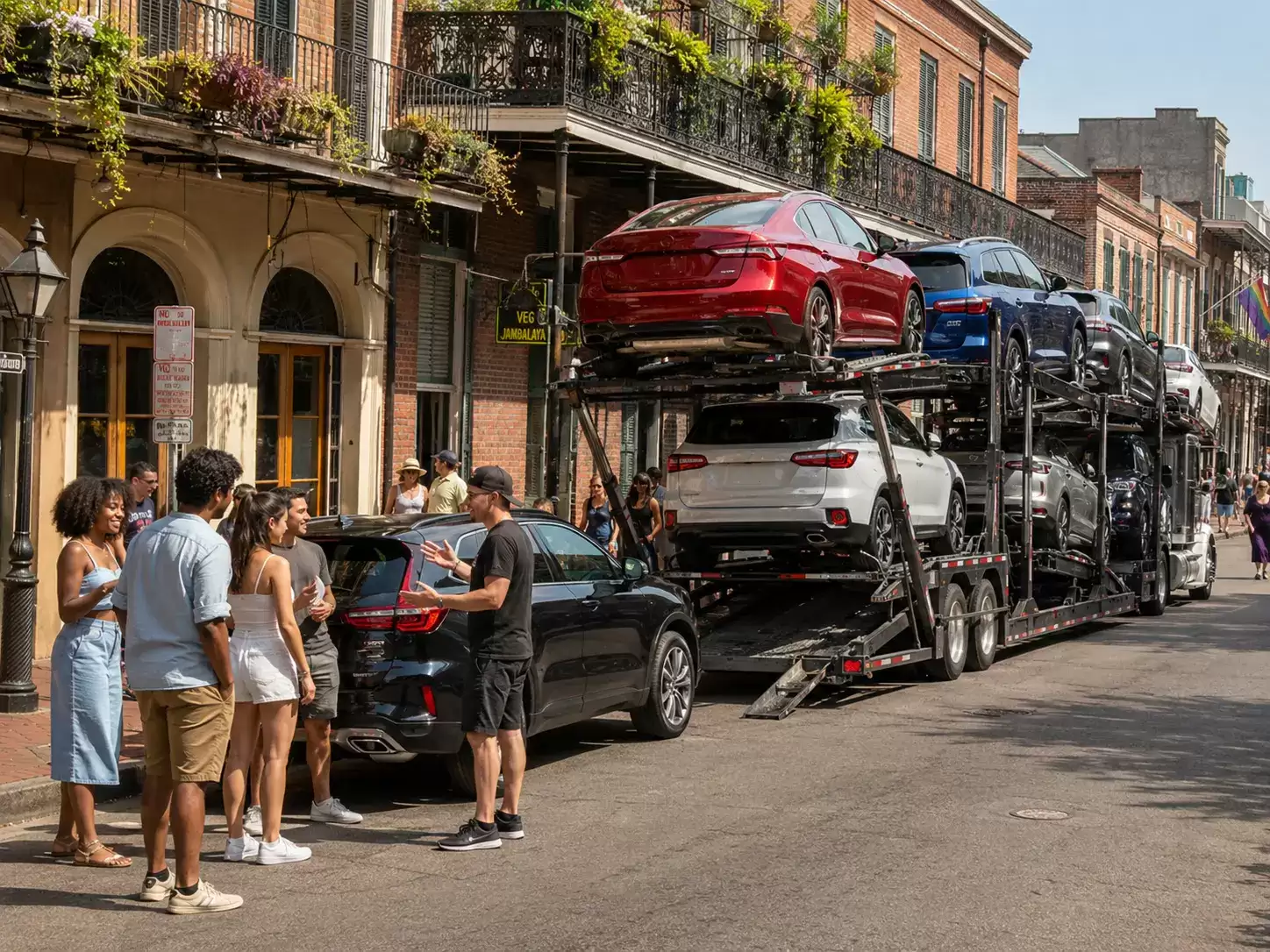

Louisiana carrier dynamics: the Gulf Coast through-carrier advantage
How through-carrier traffic works
Louisiana’s most important carrier dynamic is one that most shippers never think about: through-carrier traffic. Every day, dozens of carrier trucks move vehicles between Houston and Florida on I-10, passing through Lake Charles, Lafayette, Baton Rouge, and New Orleans regardless of whether any specific Louisiana loads are booked on that run. These carriers have open slots available for Louisiana origin and destination loads that fit their direction of travel — and that surplus is the reason I-10 corridor cities consistently produce faster pickup windows and more competitive rates than their populations alone would suggest.
Where the advantage is strongest — and where it ends
A shipper in Baton Rouge or Lafayette moving a vehicle to Houston will typically see a carrier assigned within 1–2 business days on Standard tier — faster than comparable-sized markets that don’t sit on a through-carrier corridor. The through-carrier advantage is strongest in New Orleans, Metairie, Baton Rouge, and Lafayette. It diminishes sharply off the I-10 spine: Houma on US-90, Morgan City on US-90, and the coastal parishes south of I-10 require deliberate carrier detours and are not served by through-carrier traffic.
The oil and gas secondary corridor
The energy industry creates a secondary dynamic in Acadiana and the Houma-Thibodaux area. Carriers assigned to energy-company relocation contracts move through Lafayette, New Iberia, and Houma on an industry-driven rotation schedule and occasionally have open slots for residential shippers in those corridors. This commercial overlap can produce faster-than-expected pickup in otherwise secondary markets — but it is not reliable enough to reduce Expedited tier recommendations for Houma, Morgan City, or the coastal parishes.
Louisiana vehicle shipping hub rankings
New Orleans / I-10 / I-55 / I-59 — Tier 1 hub: Louisiana’s largest city and the state’s dominant carrier hub. New Orleans sits at the convergence of I-10, I-55, and I-59 and benefits from through-carrier traffic between Texas and Florida, Midwest-to-Gulf loads on I-55, and the commercial vehicle infrastructure surrounding the Port of New Orleans. Standard tier is appropriate for virtually all New Orleans zip codes; pickup windows average 1–3 business days. The I-10/I-610 elevated expressway system gives carrier trucks excellent access to all Orleans Parish neighborhoods, though narrow French Quarter streets and historic district neighborhoods may require carriers to use the elevated expressway drop points near the CBD.
Metairie / Jefferson Parish / I-10 / I-610 — Tier 1 hub: Jefferson Parish’s largest city and the New Orleans metro’s primary western suburb, Metairie sits directly on the I-10/I-610 corridor with exceptional carrier access. Standard tier works well for Metairie with pickup windows of 1–3 business days. The Veterans Memorial Boulevard and Clearview Parkway commercial corridors are carrier-accessible, and I-610 gives trucks a direct bypass from I-10 east into the New Orleans CBD without navigating the Causeway or Lake Pontchartrain Causeway approaches.
Baton Rouge / I-10 / I-12 / I-110 — Tier 1 hub: Louisiana’s state capital and second-largest city, Baton Rouge sits at the I-10/I-12 convergence with excellent access to both the east-west Gulf Coast corridor and the north-south I-49 connector via I-10 west. LSU’s 37,000-student enrollment generates a predictable and large student vehicle shipping market each August and May. Standard tier is appropriate for Baton Rouge; pickup windows average 2–4 business days.
Lafayette / I-10 / I-49 — Tier 1 hub: The heart of Acadiana and Louisiana’s third-largest metro, Lafayette sits at the I-10/I-49 junction — the best carrier intersection in the state after New Orleans. Lafayette is the center of Louisiana’s oil and gas relocation market and generates a year-round vehicle shipping demand driven by energy industry worker relocations. Standard tier works well; pickup windows average 2–4 business days. The I-49 corridor north toward Alexandria and Shreveport runs from Lafayette, and carriers staging in Lafayette can serve Acadiana and the I-49 corridor north.
Shreveport / Bossier City / I-20 / I-49 — Tier 1 hub: North Louisiana’s largest metro, Shreveport-Bossier City sits at the I-20/I-49 convergence. Barksdale AFB in Bossier City and the Dallas-to-Atlanta I-20 through-carrier traffic give Shreveport carrier access that is strong for a north Louisiana city. Standard tier works well; pickup windows average 2–4 business days. Carriers running Dallas-to-Atlanta loads on I-20 pass directly through Shreveport, creating a through-carrier advantage similar to the I-10 corridor markets to the south.
Lake Charles / I-10 — Tier 1 hub: Southwest Louisiana’s largest city, Lake Charles sits on I-10 near the Texas state line. The I-10 through-carrier corridor gives Lake Charles strong westbound carrier access toward Houston and eastbound access toward Lafayette and New Orleans. Standard tier is appropriate; pickup windows average 2–4 business days.
Alexandria / I-49 / US-71 — Tier 2 hub: Central Louisiana’s largest city, Alexandria sits at the midpoint of the I-49 corridor between Lafayette and Shreveport. Carrier access via I-49 is reasonable; Standard tier usually produces pickup within 3–5 business days. Expedited is recommended for time-sensitive moves from Alexandria.
Houma / Thibodaux / US-90 — Tier 3 hub: The center of Louisiana’s offshore oil and gas support industry, Houma sits on US-90 approximately 55 miles southwest of New Orleans and has no direct interstate access. Expedited tier is strongly recommended for all Houma and Thibodaux shipments. Carriers must deliberately detour from I-10 or I-310 to reach US-90 south, and Standard pickup windows in Houma routinely extend to 7–14 business days.

Louisiana car shipping rates: popular routes and estimated costs
The tables below reflect current market averages for open-carrier transport of a standard sedan in good weather conditions. Prices vary based on fuel costs, carrier availability, season, and vehicle size. Use the calculator above for a real-time quote specific to your route and vehicle.
Popular routes from Louisiana
| From | To | Distance (mi) | Estimated Days | Standard | Expedited | Rush |
|---|---|---|---|---|---|---|
| Louisiana | Mississippi | 225 | 1–2 | $375 | $450 | $525 |
| Louisiana | Texas | 500 | 2–4 | $575 | $690 | $805 |
| Louisiana | Alabama | 500 | 2–4 | $575 | $690 | $805 |
| Louisiana | Florida | 600 | 3–4 | $700 | $840 | $980 |
| Louisiana | Georgia | 700 | 3–5 | $775 | $930 | $1,085 |
| Louisiana | Tennessee | 650 | 3–5 | $725 | $870 | $1,015 |
| Louisiana | Illinois | 900 | 4–6 | $900 | $1,080 | $1,260 |
| Louisiana | North Carolina | 950 | 4–6 | $925 | $1,110 | $1,295 |
| Louisiana | New York | 1,450 | 5–7 | $1,100 | $1,320 | $1,540 |
| Louisiana | California | 1,900 | 6–9 | $1,250 | $1,500 | $1,750 |
Popular routes to Louisiana
| From | To | Distance (mi) | Estimated Days | Standard | Expedited | Rush |
|---|---|---|---|---|---|---|
| California | Louisiana | 1,900 | 6–9 | $1,250 | $1,500 | $1,750 |
| New York | Louisiana | 1,450 | 5–7 | $1,100 | $1,320 | $1,540 |
| Illinois | Louisiana | 900 | 4–6 | $900 | $1,080 | $1,260 |
| Texas | Louisiana | 500 | 2–4 | $575 | $690 | $805 |
| Florida | Louisiana | 600 | 3–4 | $700 | $840 | $980 |
| Georgia | Louisiana | 700 | 3–5 | $775 | $930 | $1,085 |
| Tennessee | Louisiana | 650 | 3–5 | $725 | $870 | $1,015 |
| Alabama | Louisiana | 500 | 2–4 | $575 | $690 | $805 |
| Mississippi | Louisiana | 225 | 1–2 | $375 | $450 | $525 |
| North Carolina | Louisiana | 950 | 4–6 | $925 | $1,110 | $1,295 |
Why cross-country car transport to or from Louisiana costs what it does
Louisiana’s position at the western edge of the southeastern United States produces a predictable pricing structure. Short-haul routes to Texas, Mississippi, and Alabama benefit from the I-10 through-carrier corridor and are among the most competitively priced routes in the Gulf Coast market. Mid-range routes to Florida, Georgia, and Tennessee run $700–$775 on standard open-carrier transport. Long-haul routes to New York and California reflect Louisiana’s distance from the northeastern carrier network — New Orleans to New York is approximately 1,450 miles, and New Orleans to Los Angeles is approximately 1,900 miles via I-10 west through Texas and I-10 or I-20. All rates reflect open-carrier transport averages and vary based on fuel costs, carrier market conditions, and vehicle size at the time of booking.

Louisiana Seasonal Shipping Guide

Which service tier is right for your Louisiana shipment?
| Feature | Standard | Expedited (most popular) |
Rush |
|---|---|---|---|
| Pickup window | 3–7 business days | 1–3 business days | Within 24–48 hours |
| Best for | Flexible schedules on I-10 / I-20 / I-49 corridors | Most Louisiana moves; military PCS; off-corridor cities; hurricane-season bookings | Last-minute moves; hurricane evacuations; closings with firm dates |
| Secondary market use | Not recommended for Houma, Morgan City, coastal parishes | Mandatory for Houma, Morgan City, and all off-interstate communities | Guaranteed fastest available carrier |
For most Louisiana shipments on the I-10, I-20, or I-49 corridors — New Orleans, Metairie, Baton Rouge, Lafayette, Shreveport, Lake Charles — Standard tier delivers reliably. Expedited is the correct default for Houma, Morgan City, Alexandria, and any community south of I-10 in the coastal parishes. During hurricane season (June–November), Expedited is strongly recommended for any shipment with a firm date, since carrier holds during named storm approaches can delay Standard tier loads by several days without notice. Rush tier is available for hurricane evacuations and any move with less than 48 hours of lead time.


How Louisiana car shipping works: 4 steps
Step 1: Get your instant quote. Use the calculator above to enter your origin zip code, destination zip code, vehicle year/make/model, and transport type. You’ll receive a real-time price based on current Louisiana carrier market conditions. No personal information required to see your quote.
Step 2: Book your shipment. Select your service tier — Standard, Expedited, or Rush — and provide your contact details and pickup/delivery addresses. No upfront payment is required to book. You pay the carrier directly at or after delivery, not before.
Step 3: Carrier assignment and pickup. We broadcast your load to our vetted Louisiana carrier network. Once a carrier accepts your load, you receive their name, DOT number, and contact information. Your carrier will call you 24 hours before pickup to confirm the appointment window. Photograph your vehicle before the carrier arrives and note any pre-existing condition on the Bill of Lading.
Step 4: Delivery and inspection. Your carrier delivers your vehicle to the destination address. Inspect your vehicle before signing the delivery receipt. Note any new damage on the Bill of Lading before the carrier departs. All carriers in our network carry full cargo insurance; if damage occurs in transit, the carrier’s insurance covers it, and your documentation is your evidence.
University and college auto transport in Louisiana
Louisiana’s universities generate a significant and predictable vehicle shipping market each August and May. LSU’s enrollment of approximately 37,000 students makes it the state’s single largest driver of student vehicle transport, and the concentration of major universities in the New Orleans and Baton Rouge metros keeps I-10 corridor carrier demand elevated during the beginning and end of each academic year. The LSU–Tulane football rivalry and the energy of New Orleans bring a disproportionate number of out-of-state students to Louisiana, increasing the inbound student vehicle market every August.
| University | Location | Approx. Enrollment |
|---|---|---|
| Louisiana State University (LSU) | Baton Rouge | 37,000 |
| University of Louisiana at Lafayette | Lafayette | 19,000 |
| Southeastern Louisiana University | Hammond | 14,000 |
| Tulane University | New Orleans | 14,000 |
| Louisiana Tech University | Ruston | 12,000 |
| University of New Orleans | New Orleans | 8,000 |
| Southern University and A&M College | Baton Rouge | 6,000 |
| McNeese State University | Lake Charles | 6,000 |
| Grambling State University | Grambling | 4,000 |
| Xavier University of Louisiana | New Orleans | 3,500 |
Baton Rouge has the highest concentration of university vehicle shipping demand in the state. LSU and Southern University together enroll more than 43,000 students in a city with excellent I-10 carrier access, and the August move-in week is among the busiest single weeks of the year on the Baton Rouge carrier market. Book Expedited and give two weeks of lead time for any Baton Rouge move in August. Hammond, home of Southeastern Louisiana University, sits at the I-12/I-55 interchange and has solid carrier access above-average for its size. Tulane and UNO students in New Orleans benefit from the city’s exceptional carrier coverage year-round.


Military auto transport in Louisiana
Barksdale Air Force Base (Bossier City): Home of the 2nd Bomb Wing operating B-52 Stratofortresses and the headquarters of Air Force Global Strike Command, Barksdale is the largest military installation in Louisiana and one of the most significant strategic bomber bases in the United States. Located directly adjacent to I-20 in Bossier City, Barksdale has excellent carrier access on the Dallas-to-Atlanta I-20 corridor. Standard tier is appropriate for most Barksdale PCS moves with 5–7 days of lead time; Expedited is recommended for PCS orders with firm reporting dates or fewer than five days of lead time. The Shreveport-Bossier City market produces competitive rates on westbound I-20 toward Dallas and on I-49 south toward Lafayette.
Naval Air Station Joint Reserve Base New Orleans (Belle Chasse): Located in Belle Chasse across the Mississippi River from New Orleans in Plaquemines Parish, NAS JRB New Orleans is a joint reserve base serving the Navy, Marine Corps Reserve, and Air Force Reserve. The base is accessible from the New Orleans metro via the Crescent City Connection bridge and Belle Chasse Highway (LA-23). While the base is in the New Orleans carrier market and benefits from the city’s strong carrier coverage, the Belle Chasse location south of the river adds a logistical step for carrier access. Expedited tier is recommended for NAS JRB New Orleans PCS moves; the bridge crossing and south-of-river location can add pickup time compared to standard New Orleans metro addresses. PCS families moving to or from NAS JRB New Orleans should budget Expedited and provide at least 5–7 days of lead time.
Camp Beauregard (Pineville): A Louisiana National Guard installation located in Pineville, directly across the Red River from Alexandria on I-49. Camp Beauregard is accessible from the Alexandria carrier market; Expedited tier is recommended for Camp Beauregard assignments. Central Louisiana does not have the carrier density of the I-10 corridor, and Standard pickup windows in Pineville can extend to 7–10 business days.
New Orleans Metro / I-10 / I-55 / I-59 / Port Corridor
New Orleans is Louisiana’s largest city and the state’s dominant auto transport hub. The convergence of I-10, I-55, and I-59 in the New Orleans metro, combined with the Port of New Orleans commercial vehicle infrastructure, produces carrier access that is exceptional for a city of this size. Standard tier is the right choice for virtually all New Orleans zip codes; pickup windows average 1–3 business days. The I-10/I-610 elevated expressway system gives carrier trucks efficient access to most New Orleans neighborhoods, though the French Quarter, Tremainé, and Bywater historic districts involve narrow streets that carriers prefer to avoid — most drivers use the elevated expressway access points near the CBD for French Quarter deliveries.
Kenner is a Jefferson Parish city on the I-10 corridor between New Orleans and Metairie, home to Louis Armstrong New Orleans International Airport. Direct I-10 access; Standard tier appropriate with the same 1–3 business day pickup windows as the New Orleans metro.
Chalmette and Arabi are St. Bernard Parish communities east of New Orleans accessible via I-510 and LA-46. While near the city, these communities are slightly off the main I-10 carrier staging zone; Standard tier works but allow 3–4 business days. Expedited is recommended for time-sensitive moves.
Slidell sits at the I-10/I-12/I-59 convergence on the northeastern edge of the New Orleans metro and benefits from three-interstate access. Standard tier works well; pickup windows average 2–4 business days. Slidell is an efficient staging point for moves routing northeast toward Alabama and Georgia via I-59.
Metairie / Jefferson Parish / I-10 / I-610 Corridor
Metairie is Jefferson Parish’s largest city and the New Orleans metro’s primary western residential community, sitting directly on the I-10/I-610 interchange. Carrier access is excellent — essentially identical to New Orleans proper — with Standard tier producing 1–3 business day pickup windows for all Metairie zip codes. The Veterans Memorial Boulevard and Causeway Boulevard commercial corridors are carrier-accessible, and the I-10 through-carrier stream passes through Metairie in both directions continuously.
Gretna and Westwego are West Bank Jefferson Parish communities across the Mississippi River from New Orleans and Metairie, accessible via the Crescent City Connection on US-90. These West Bank communities are in the New Orleans carrier market but require crossing the bridge; Expedited is recommended for most West Bank Jefferson Parish moves, particularly for time-sensitive shipments, as bridge logistics add a step to carrier coordination.
Harahan and River Ridge are residential communities between Metairie and Kenner on the I-10 corridor and are within the Metairie carrier zone. Standard tier appropriate.
Baton Rouge / I-10 / I-12 / LSU Petroleum Corridor
Baton Rouge is Louisiana’s state capital and second-largest city, sitting at the I-10/I-12/I-110 convergence and benefiting from strong bidirectional I-10 carrier traffic plus I-12 access to the north shore and Mississippi. LSU’s large enrollment and the ExxonMobil refinery complex — one of the largest in the United States — generate year-round relocation demand that keeps the Baton Rouge carrier market active through shoulder seasons. Standard tier is appropriate; pickup windows average 2–4 business days. The University Lakes and Garden District neighborhoods near LSU are carrier-accessible.
Zachary, Denham Springs, and Central are Baton Rouge suburbs on the I-12 corridor east of the city. These communities benefit from I-12 carrier access and are within the Baton Rouge carrier zone. Standard tier appropriate; allow 3–5 business days.
Gonzales sits on I-10 between Baton Rouge and New Orleans and is one of the fastest-growing suburban communities in the state. Direct I-10 access makes Gonzales well-served; Standard tier appropriate.
Lafayette / I-10 / I-49 / Acadiana Oil and Gas Hub
Lafayette is the heart of Acadiana and Louisiana’s most dynamic mid-size carrier market. The I-10/I-49 junction gives Lafayette access to both the east-west Gulf Coast corridor and the north-south corridor toward Shreveport, and the energy industry relocation market generates year-round vehicle shipping demand that keeps carrier availability strong even in months when other mid-size markets slow down. Standard tier works well for Lafayette; pickup windows average 2–4 business days. I-49 carriers staging in Lafayette serve communities north through Opelousas and on toward Alexandria.
Youngsville, Broussard, and Carencro are Lafayette metro suburbs experiencing rapid growth driven by energy industry workers. These communities are within the Lafayette carrier zone and benefit from I-49 and I-10 access. Standard tier appropriate.
New Iberia sits on US-90 southeast of Lafayette and is a secondary market for the oil and gas corridor. Expedited is recommended for New Iberia; while it is served by energy-company carrier contracts, residential pickup windows on US-90 can be unpredictable without Expedited booking.
Shreveport–Bossier City / I-20 / I-49 / Barksdale Corridor
Shreveport is north Louisiana’s largest city and the state’s primary carrier hub north of the I-10 corridor. I-20 connects Shreveport to Dallas (190 miles west) and Atlanta (600 miles east), and through-carrier traffic on I-20 gives Shreveport carrier access that is strong relative to its location. Standard tier works for most Shreveport shipments; pickup windows average 2–4 business days.
Bossier City is Shreveport’s sister city across the Red River, home to Barksdale AFB. I-20 runs directly through Bossier City, and military and civilian carrier activity around Barksdale keeps Bossier City well-served. Standard tier appropriate; same pickup windows as Shreveport.
Minden and Mansfield are smaller north Louisiana communities east and south of Shreveport on I-20 and US-84, respectively. Expedited is recommended; these communities require carrier detours from the primary I-20 network.
Lake Charles / I-10 / Southwest Louisiana / Texas Border
Lake Charles is southwest Louisiana’s largest city and sits directly on I-10 near the Texas state line. The I-10 through-carrier corridor — including heavy Houston-to-New Orleans freight traffic — passes through Lake Charles continuously, giving it exceptional carrier access for its size. Standard tier is appropriate; pickup windows average 2–4 business days. The massive LNG export terminal construction projects in the Lake Charles area have driven significant recent growth and an above-average relocation vehicle shipping market.
Sulphur is Lake Charles’s western suburb on I-10 and is within the Lake Charles carrier zone. Standard tier appropriate.
Houma and Thibodaux are Terrebonne and Lafourche Parish cities south of I-10 on US-90, serving as the onshore base for much of Louisiana’s offshore drilling industry. Expedited tier is mandatory for Houma and Thibodaux. These cities are 45–60 miles south of I-10 on a US highway without through-carrier traffic. Standard tier pickup windows routinely exceed 10 business days; Expedited is the minimum for a predictable shipping experience in this corridor.

Louisiana government resources for auto transport consumers
- Louisiana Office of Motor Vehicles (OMV) — Vehicle title transfers, registration, and license plate information for vehicles shipped to Louisiana.
- Louisiana Attorney General — Consumer Protection Section — File a complaint or check the status of an auto transport company operating in Louisiana.
- FMCSA SAFER System — Verify any auto transport carrier’s USDOT number, operating authority, and safety rating before booking.
- FMCSA Protect Your Move — Federal consumer protection resources and guidance for vehicle shipping, including how to identify and avoid broker fraud.
- Louisiana 511 — DOTD Traffic and Road Conditions — Real-time traffic, road conditions, and incident information for I-10, I-12, I-20, I-49, and all major Louisiana carrier routes.

Popular long-distance car shipping routes from Louisiana
Louisiana to California auto transport
The Louisiana-to-California corridor covers approximately 1,900 miles from New Orleans to Los Angeles via I-10 west through Texas, New Mexico, and Arizona. The I-10 west routing from Louisiana is one of the more efficient transcontinental routes in the southern United States, benefiting from the enormous Houston-to-California carrier market that originates just one corridor west of Louisiana. Carriers running loads from Houston to Los Angeles commonly pick up Louisiana-origin vehicles as additional loads on the same I-10 west run. Transit time is 6–9 days. Expedited tier is recommended for this distance.
Louisiana to Florida vehicle shipping
The Louisiana-to-Florida corridor runs approximately 600 miles on I-10 east from New Orleans through Biloxi, Mobile, Pensacola, and onward to Tampa, Orlando, or Miami. This is one of the most carrier-active routes in Louisiana, driven by the continuous I-10 through-carrier stream and the Gulf Coast snowbird corridor. Transit time is 3–4 days for most Florida destinations. Standard tier works well with adequate lead time; fall and spring are the most competitive seasons for this route due to snowbird carrier volume.
Louisiana to Texas car hauling
The Louisiana-to-Texas corridor runs approximately 500 miles on I-10 west from New Orleans to Houston and continues on I-10 or I-20 to Dallas and San Antonio. This is Louisiana’s most active carrier route in the westbound direction, driven by the Houston freight market and the continuous bidirectional I-10 carrier traffic between the two states. Houston is one of the largest single-city carrier markets in the United States, and the demand it generates for westbound I-10 loads benefits Louisiana shippers with vehicles heading to Texas. Transit time is 2–4 days; Standard tier works for most Louisiana-to-Texas moves.
Louisiana to Georgia auto shipping
The Louisiana-to-Georgia corridor covers approximately 700 miles via I-10 east to Mobile, then I-65 north to Birmingham and I-20 east to Atlanta, or via I-10 east and I-75 north through Valdosta to Atlanta. Atlanta is the largest carrier hub in the southeastern United States, and the Atlanta-bound carrier traffic that passes through Alabama and Mississippi generates accessible slots for Louisiana-origin vehicles. Transit time is 3–5 days; Standard or Expedited depending on your timeline.
Louisiana to Tennessee vehicle transport
The Louisiana-to-Tennessee corridor covers approximately 650 miles via I-55 north from New Orleans through Jackson, Mississippi and on to Memphis, or via I-10/I-65 north through Mobile and Birmingham to Nashville. Nashville is a major carrier hub on the I-65 north corridor, and both I-55 and I-65 provide well-traveled routing options. Transit time is 3–5 days. Standard tier works for Tennessee moves with adequate lead time; Memphis-routed moves benefit from the I-55 corridor’s strong Midwest carrier network.
Louisiana to Alabama car carrier
The Louisiana-to-Alabama corridor runs approximately 500 miles via I-10 east through Mobile, with connections to I-65 north for Birmingham and Huntsville. Mobile sits at the I-10/I-65 junction and provides an efficient transfer point for Alabama-bound loads. Transit time is 2–4 days; Standard tier works well for Alabama moves from Louisiana I-10 corridor cities. The through-carrier traffic between Houston and Alabama on I-10 makes this one of Louisiana’s faster short-to-mid-range routes.
Louisiana to Illinois vehicle relocation
The Louisiana-to-Illinois corridor covers approximately 900 miles via I-55 north from New Orleans through Jackson, Memphis, and on to St. Louis and Chicago. I-55 is one of the most carrier-traveled north-south highways in the central United States, connecting the Gulf Coast to Chicago, and the Louisiana end of this corridor benefits from New Orleans’ I-55 access. Transit time is 4–6 days; Expedited is recommended for Chicago and northern Illinois destinations given the length of the route.
Louisiana to Mississippi auto carrier
The Louisiana-to-Mississippi corridor is Louisiana’s shortest interstate route, covering approximately 225 miles via I-10 east to Biloxi and Gulfport, or via I-55 north to Jackson. Mississippi carrier density is lower than neighboring Georgia and Tennessee, but I-10 east provides good access to the Gulf Coast Mississippi market and I-55 north connects to Jackson, Hattiesburg, and the Mississippi interior. Transit time is 1–2 days; Standard tier works for I-10 and I-55 corridor Mississippi destinations.
Louisiana to North Carolina car transport
The Louisiana-to-North Carolina corridor covers approximately 950 miles via I-10 east to Mobile, I-65 north to Birmingham, and I-85 northeast to Charlotte and the Triangle. North Carolina is home to Charlotte, Raleigh-Durham, and the Greensboro-Winston-Salem corridor — all significant carrier destinations with strong availability. Transit time is 4–6 days; Expedited is recommended for North Carolina moves from Louisiana given the multi-corridor routing.
Louisiana to Ohio vehicle hauling
The Louisiana-to-Ohio corridor covers approximately 1,100 miles via I-55 north through Memphis and Nashville, then I-65 north to Louisville and I-71 to Cincinnati and Columbus. Ohio is a major carrier destination with multiple large metro areas, and the I-65 corridor from Nashville to Louisville is well-traveled. Transit time is 4–6 days; Expedited is recommended for Ohio moves.
Louisiana to New York auto transport
The Louisiana-to-New York corridor covers approximately 1,450 miles via I-10 east and I-95 north through Georgia, South Carolina, North Carolina, and Virginia to New York City. New York is the largest carrier destination in the northeastern United States and generates consistent southbound return-freight loads that benefit northbound Louisiana shippers. Transit time is 5–7 days; Expedited is recommended for New York moves.
Louisiana to Virginia vehicle shipping
The Louisiana-to-Virginia corridor covers approximately 1,200 miles via I-10/I-65 north to Birmingham, then I-20 east to Atlanta and I-85/I-95 north through the Carolinas to Richmond and Northern Virginia. Northern Virginia and the Washington DC metro area have high year-round carrier demand and competitive rates on the East Coast corridor. Transit time is 5–7 days; Expedited is recommended for Virginia moves from Louisiana.

Nearby states for Louisiana auto transport
Texas auto transport
Texas borders Louisiana to the west and is Louisiana’s most active carrier partner by volume. The I-10 corridor between New Orleans and Houston is one of the most carrier-dense routes in the Gulf South, driven by the Houston freight market’s enormous scale and the continuous bidirectional I-10 through-carrier traffic. Louisiana-to-Texas moves on I-10 are among the fastest and most competitively priced routes in the state; Standard tier typically produces pickup within 2–3 business days. Dallas is accessible via I-20 west from Shreveport. Texas-bound moves from south Louisiana are particularly competitive given the through-carrier stream heading west on I-10 continuously.
Mississippi car shipping
Mississippi borders Louisiana to the east and northeast, with the primary carrier corridors running on I-10 east toward Biloxi and Gulfport and on I-55 north toward Jackson. Mississippi is a secondary carrier market compared to Texas and Florida, but I-10 east carrier traffic passing through Mississippi is sufficient for competitive rates on Gulf Coast Mississippi routes. Jackson on I-55 benefits from the Chicago-to-New Orleans carrier corridor. Standard tier works for most Louisiana-to-Mississippi moves on the interstate corridors; Expedited for interior Mississippi destinations.
Arkansas vehicle shipping
Arkansas borders Louisiana to the north, accessible via I-55 north through Mississippi and on to Memphis and Little Rock, or via I-20/I-49 north from Shreveport. Arkansas is a secondary carrier market, and Louisiana-to-Arkansas moves typically route through Memphis or Shreveport as staging points. Expedited is recommended for Arkansas moves from Louisiana; Standard pickup windows can be 5–8 business days given Arkansas’s position off the primary carrier corridors. Little Rock on I-40 is the most carrier-accessible Arkansas city from Louisiana.
Alabama car hauling
Alabama is accessible from Louisiana via I-10 east through Mobile, with connections to I-65 north for Birmingham and Huntsville. The I-10 east carrier stream that connects Louisiana to Florida passes through Mobile and provides efficient access to the Alabama carrier market. Standard tier works well for Alabama moves from Louisiana I-10 corridor cities; transit time is 2–4 days. Birmingham benefits from strong I-65 and I-20 carrier coverage, and the Alabama automotive manufacturing corridor (Mercedes, Honda, Hyundai, Mazda Toyota) adds commercial carrier volume to the state that benefits residential shippers.
Florida auto carrier
Florida is accessible from Louisiana via I-10 east through Mobile and Pensacola, with the primary carrier routes continuing to Tampa, Orlando, and Miami via I-75 and I-95. The I-10 east corridor is the most carrier-active route in Louisiana, driven by the Gulf Coast snowbird circuit and the continuous Houston-to-Florida through-carrier traffic. Louisiana-to-Florida moves are among the state’s most competitive routes; fall snowbird season (October–December) produces the fastest southbound carrier pickup windows of the year. Transit time is 3–4 days for Gulf Coast Florida destinations.
Tennessee vehicle transport
Tennessee is accessible from Louisiana via I-55 north through Jackson to Memphis, or via I-10/I-65 north through Mobile and Birmingham to Nashville. Both Memphis and Nashville are major carrier hubs with excellent connections throughout the state. Tennessee-to-Louisiana moves benefit from the strong I-55 and I-65 southbound carrier flow heading toward New Orleans and the Gulf Coast. Expedited is recommended for Louisiana-to-Tennessee moves; Standard works with 5–7 days of lead time. Transit time is 3–5 days depending on your Tennessee destination.

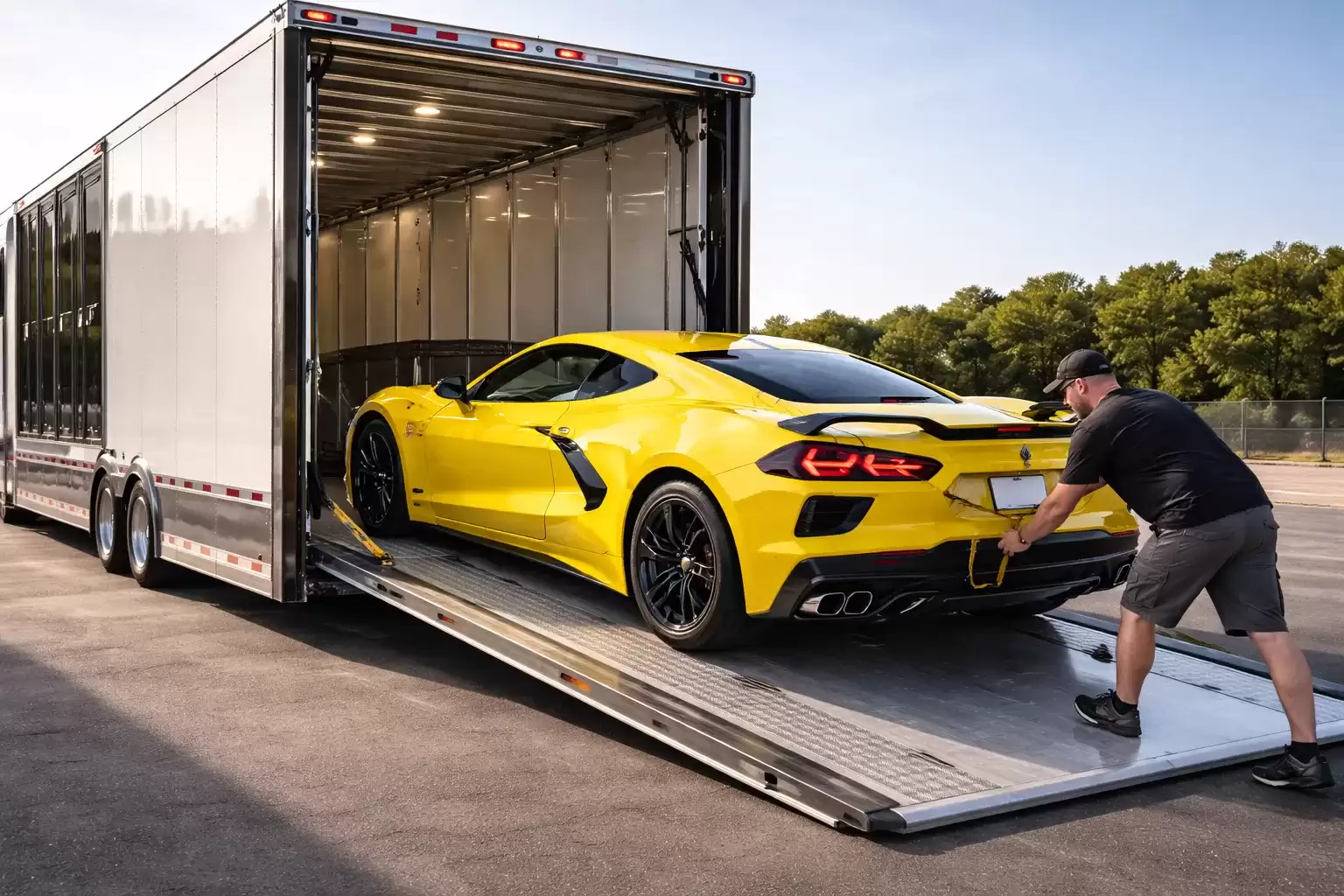
Ready to ship your car to or from Louisiana?
Join hundreds of thousands of customers — Snowbirds, military families, tech relocators, students, and families moving across the country — who have trusted Direct Express Auto Transport with their Louisiana vehicle shipments since 2004. Get your instant, no-obligation quote now. It takes 30 seconds, and there is no upfront payment required to hold your spot.
Instant quote — real-time pricing in under 5 seconds
No upfront payment — your card is charged only when a carrier is assigned
No risk to get a quote and book your order
BBB Accredited A+ since 2004
FMCSA licensed and fully bonded
4.6 stars across thousands of verified Google reviews