
Hawaii Vehicle Shipping Services
Shipping a car to or from Hawaii requires two separate legs, and understanding that distinction upfront saves time and money.
Direct Express Auto Transport handles the continental United States leg: we pick up your vehicle anywhere in the lower 48 states and deliver it to your chosen mainland departure port — Los Angeles/Long Beach, Oxnard, Oakland, or Seattle.
★ 4.6/5 Google Reviews | BBB Accredited A+ | FMCSA Licensed (MC #479342) | USDOT #1240502 | No upfront payment required | 20+ years shipping vehicles


Total Hawaii car shipping cost has two independent components. The continental US land leg (our service) runs $150–$1,400 depending on your mainland origin and chosen port. Phoenix to LA/Long Beach runs $300–$400. Chicago to LA runs $900–$1,100. New York to LA runs $1,200–$1,500. The ocean freight leg (Matson or Pasha, booked separately) runs approximately $1,100–$1,500 for a standard sedan from LA to Honolulu as of recent published rates — verify current pricing directly with the carrier. Inter-island delivery after Hawaii port clearance adds another $150–$400 if you need the vehicle moved from Honolulu to Maui, the Big Island, or Kauai via Young Brothers or a local carrier.
⚠ Book Expedited or Rush for Every Hawaii Port Delivery — Here Is Why It Matters
The 5-day free storage clock. Once your vehicle arrives at the mainland port terminal, the clock starts. Most port terminals — Los Angeles, Long Beach, Oakland, Seattle — grant a free storage window of approximately five days. After that grace period expires, daily vehicle storage fees begin, typically $25–$75 per day depending on the terminal operator. A vehicle sitting at the port on day six or seven has already generated storage charges that erase whatever you saved by choosing Standard over Expedited. Storage fees on top of ocean freight, port handling, and inter-island costs add up quickly.
Port gate wait times punish carriers on Standard rates. Commercial port terminals are notoriously slow for auto carriers. Gate security checks, appointment scheduling, yard coordination, and sheer volume routinely hold carriers waiting at the gate for three to eight hours per pickup — sometimes an entire day. A carrier dispatched to a port gate on a Standard-rate assignment is absorbing that multi-hour wait with no additional compensation. Carriers know this, which is why Standard-rate port pickups frequently fail to find a willing taker, get deprioritized, or fall through entirely. Expedited and Rush rates include the premium necessary to compensate carriers fairly for port gate time and to make your pickup competitive enough that drivers prioritize it.
The math is simple. The rate difference between Standard and Expedited is typically $75–$200 on most mainland routes. A single day of port storage plus a missed vessel sailing costs far more than that. We strongly recommend Expedited or Rush service for all Hawaii-bound and Hawaii-returning port deliveries without exception. It is the one service level decision in the entire two-leg process where the premium reliably pays for itself.
What customers say about shipping a car to or from Hawaii with Direct Express Auto Transport


The two-leg Hawaii car shipping process explained
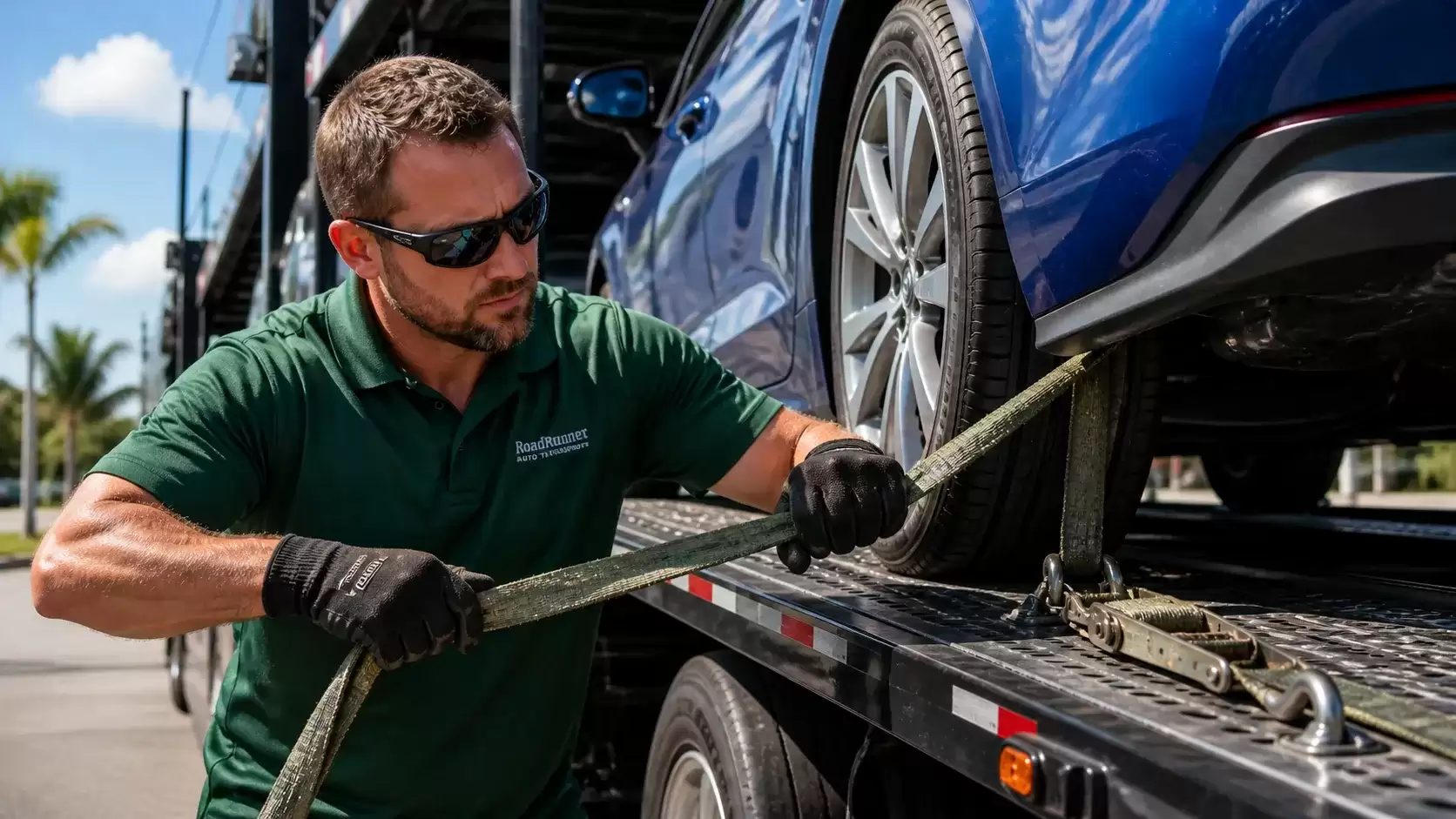
Leg 1 (Direct Express Auto Transport — use Expedited or Rush): We pick up your vehicle at your mainland origin address and deliver it to the RoRo terminal at your chosen departure port. Because port terminals charge storage fees after approximately five free days — and because carriers waiting at port gates routinely absorb three to eight hours of unpaid delay on Standard-rate assignments — we strongly recommend Expedited or Rush for the land leg on every Hawaii shipment. You receive a condition report at pickup and a delivery confirmation when your vehicle arrives at the port terminal.
Leg 2 (Ocean Freight — you book): Matson Navigation and Pasha Hawaii both operate weekly roll-on/roll-off sailings from the Los Angeles Basin. Matson also operates from Oakland and Seattle. You book directly with the carrier, provide your vehicle’s dimensions and VIN, and receive a vessel cutoff date — the deadline by which your car must arrive at the terminal before the ship sails. Coordinate with us so your mainland delivery lands at least 2–3 business days before the vessel cutoff.
Leg 3 (Hawaii local — you arrange): After ocean transit, your vehicle clears at the Hawaii port. A local Hawaii auto transporter can move it from the Honolulu terminal to your residence or to inter-island shipping if your destination is Maui, the Big Island, Kauai, or Molokai.
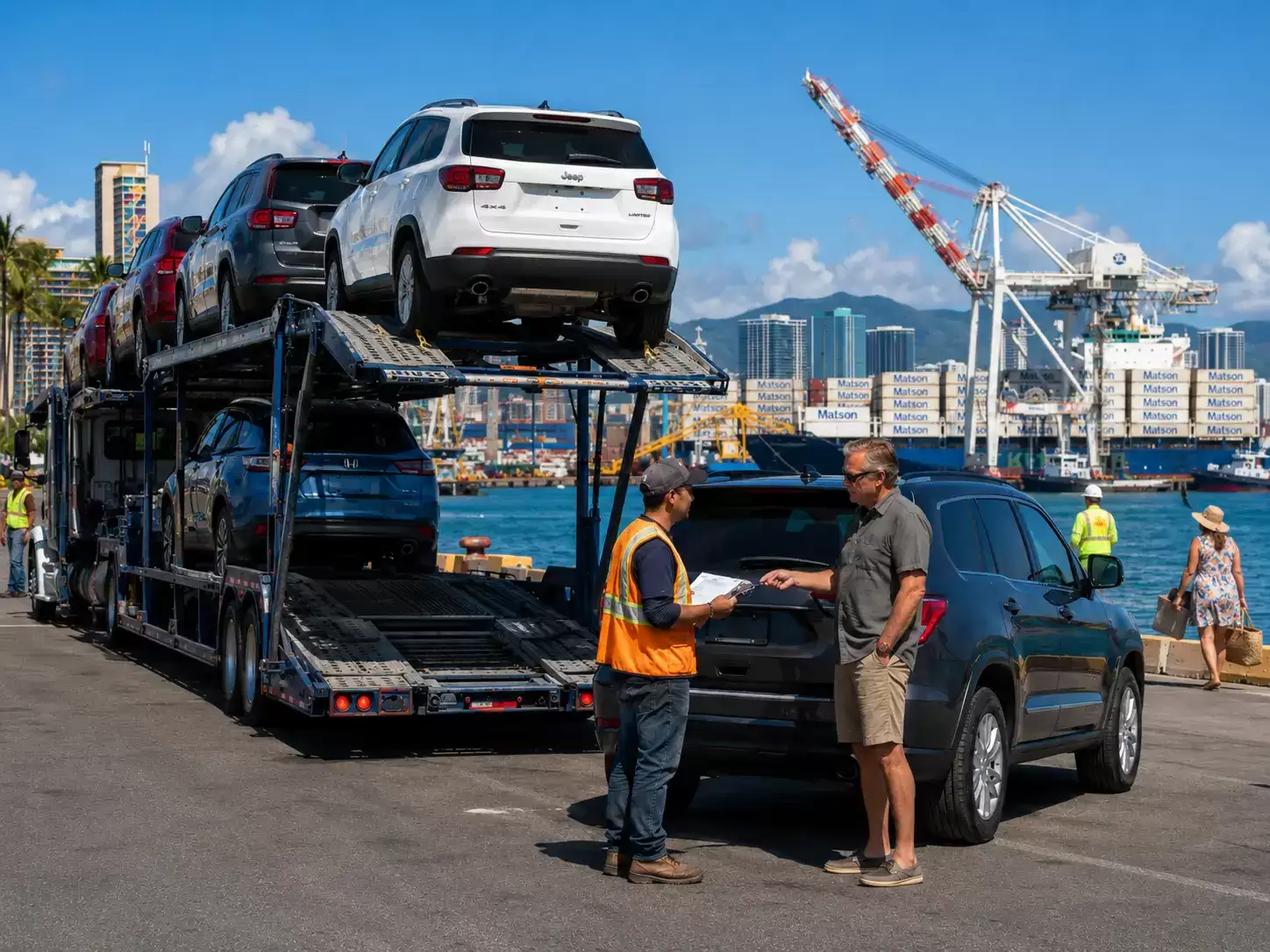
Which mainland departure port should you use for Hawaii?
Los Angeles / Long Beach (most popular). The Port of Los Angeles and Port of Long Beach together handle the majority of Hawaii-bound vehicle shipments. Both Matson and Pasha Hawaii operate from this basin. Weekly sailings from multiple terminals provide the most scheduling flexibility of any mainland port. If your origin is anywhere from the Rockies eastward, LA/Long Beach is typically the best choice despite the longer overland haul, because ocean freight frequency and pricing are most competitive here.
Oakland. Matson operates a weekly RoRo sailing from the Port of Oakland to Honolulu. Oakland is the logical choice for Northern California, Oregon, Nevada, and Pacific Northwest origins when the land haul to LA would cost more than the land haul to Oakland. Oakland sailings to Honolulu take approximately the same ocean transit time as LA sailings (5–6 days).
Seattle. Matson operates a weekly sailing from Seattle’s Terminal 46 to Honolulu with an intermediate stop in Oakland. Seattle is the right port for Washington State, Montana, Idaho, and Alaska-connecting origins. The Seattle-Honolulu ocean leg takes approximately 7–8 days due to the Oakland stop.
Port Hueneme (Pasha Hawaii only). Pasha Hawaii operates from Port Hueneme (Oxnard area, 60 miles northwest of LA) on a weekly schedule. Pasha is an alternative to Matson for Southern California origins. Confirm current Pasha schedules directly as sailings operate on specific days of the week.
Hawaii ocean freight carriers: Matson vs. Pasha Hawaii
Matson Navigation (matson.com) is the dominant Hawaii RoRo carrier, operating since 1882. Matson runs weekly sailings from Los Angeles, Oakland, and Seattle to Honolulu, with connecting service to Kahului (Maui), Kawaihae and Hilo (Big Island), Nawiliwili (Kauai), and Kaunakakai (Molokai). Matson’s vehicle booking requires a reservation in advance; walk-up availability is not guaranteed. Contact Matson vehicle shipping directly to verify current rates and schedules.
Pasha Hawaii (pashagroup.com) is Matson’s primary competitor, operating from Port Hueneme and serving Honolulu. Pasha offers competitive RoRo pricing and is worth getting a parallel quote from before booking your ocean freight.
Important vehicle prep for ocean freight: Both carriers require your vehicle to have no more than a quarter tank of fuel, all personal items removed from the interior, no aftermarket alarm systems that could drain the battery, and proof of ownership/registration. Verify the full prep checklist with your ocean carrier at booking — non-compliant vehicles may be refused at the terminal.
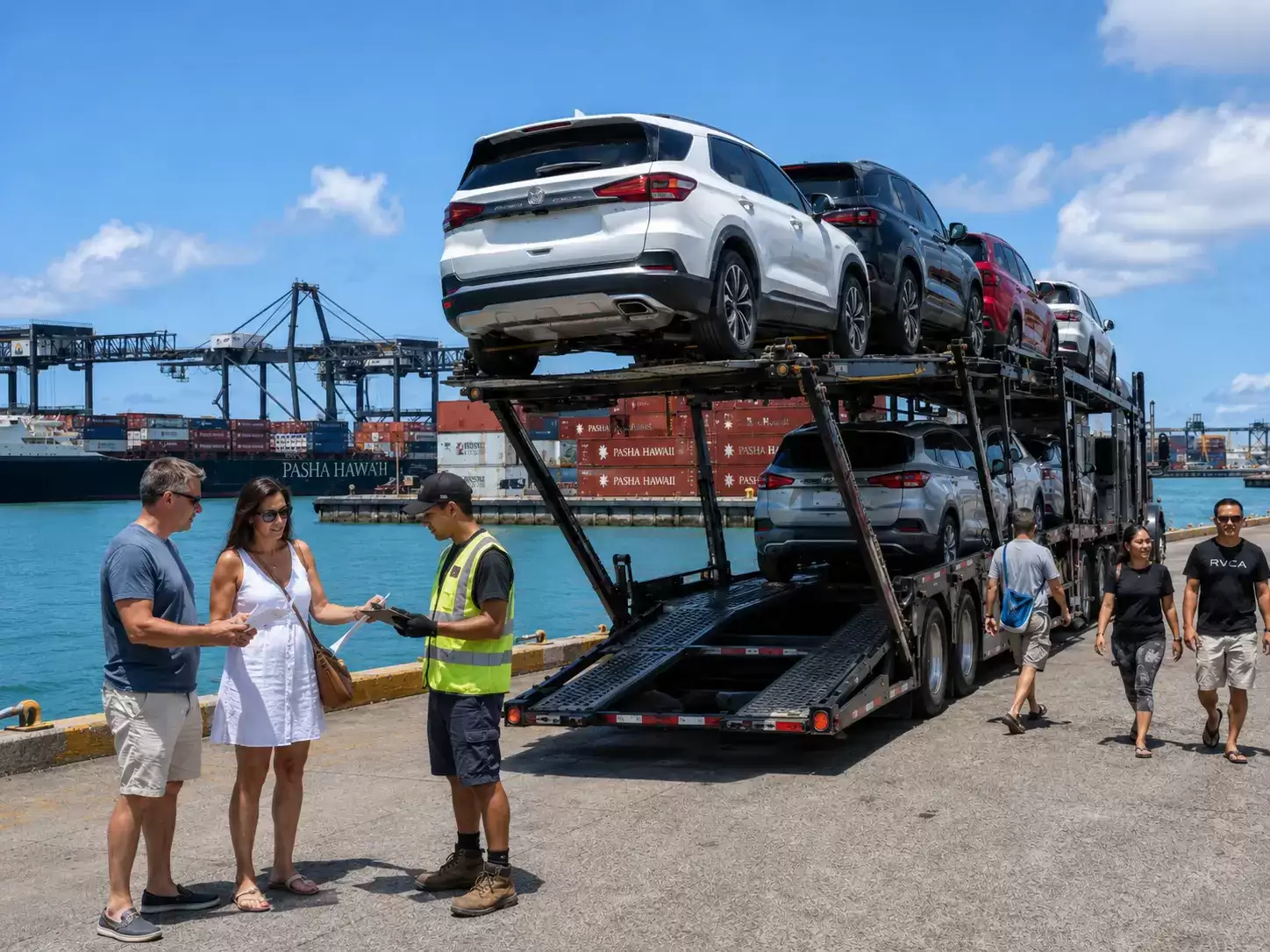
Continental US land leg pricing: your origin to Los Angeles/Long Beach port
Prices reflect the Direct Express Auto Transport continental US leg only. Ocean freight, port fees, and Hawaii-side delivery are booked and paid separately. Pacific Northwest customers should request an Oakland or Seattle port quote for comparison.
| Route (To LA/Long Beach Port) | Standard Open | Expedited Open | Rush Open |
|---|---|---|---|
| Las Vegas, NV to LA Port | $300 | $360 | $420 |
| Phoenix, AZ to LA Port | $350 | $420 | $490 |
| Seattle, WA to LA Port | $550 | $660 | $770 |
| Denver, CO to LA Port | $700 | $840 | $980 |
| Dallas, TX to LA Port | $800 | $960 | $1,120 |
| Chicago, IL to LA Port | $950 | $1,140 | $1,330 |
| Atlanta, GA to LA Port | $1,050 | $1,260 | $1,470 |
| Miami, FL to LA Port | $1,100 | $1,320 | $1,540 |
| New York, NY to LA Port | $1,300 | $1,560 | $1,820 |
| Boston, MA to LA Port | $1,350 | $1,620 | $1,890 |
Continental US land leg pricing: Los Angeles/Long Beach port to your destination
For vehicles arriving from Hawaii at the mainland port, we handle delivery from the port to any continental US destination. Prices are the same in both directions for equivalent routes.
| Route (From LA/Long Beach Port) | Standard Open | Expedited Open | Rush Open |
|---|---|---|---|
| LA Port to Las Vegas, NV | $300 | $360 | $420 |
| LA Port to Phoenix, AZ | $350 | $420 | $490 |
| LA Port to Seattle, WA | $550 | $660 | $770 |
| LA Port to Denver, CO | $700 | $840 | $980 |
| LA Port to Dallas, TX | $800 | $960 | $1,120 |
| LA Port to Chicago, IL | $950 | $1,140 | $1,330 |
| LA Port to Atlanta, GA | $1,050 | $1,260 | $1,470 |
| LA Port to Miami, FL | $1,100 | $1,320 | $1,540 |
| LA Port to New York, NY | $1,300 | $1,560 | $1,820 |
| LA Port to Boston, MA | $1,350 | $1,620 | $1,890 |
Understanding total Hawaii car shipping cost end-to-end
The most common planning mistake for Hawaii car shipping is budgeting only for the ocean freight while underestimating the land leg — or vice versa. A realistic total cost example for a New York resident shipping a standard sedan to Honolulu: $1,300 (our continental US land leg, New York to LA port) + approximately $1,200–$1,500 (Matson or Pasha ocean freight, LA to Honolulu) + $0 if they pick up at Honolulu port themselves, or $150–$300 for a Hawaii-side local delivery = approximately $2,500–$3,100 total. For a Phoenix resident shipping the same vehicle: $350 (land leg) + $1,200–$1,500 (ocean) = approximately $1,550–$1,850 total. Mainland origin dramatically affects total cost — West Coast shippers have a significant cost advantage. Get all three quotes before committing to the move date.

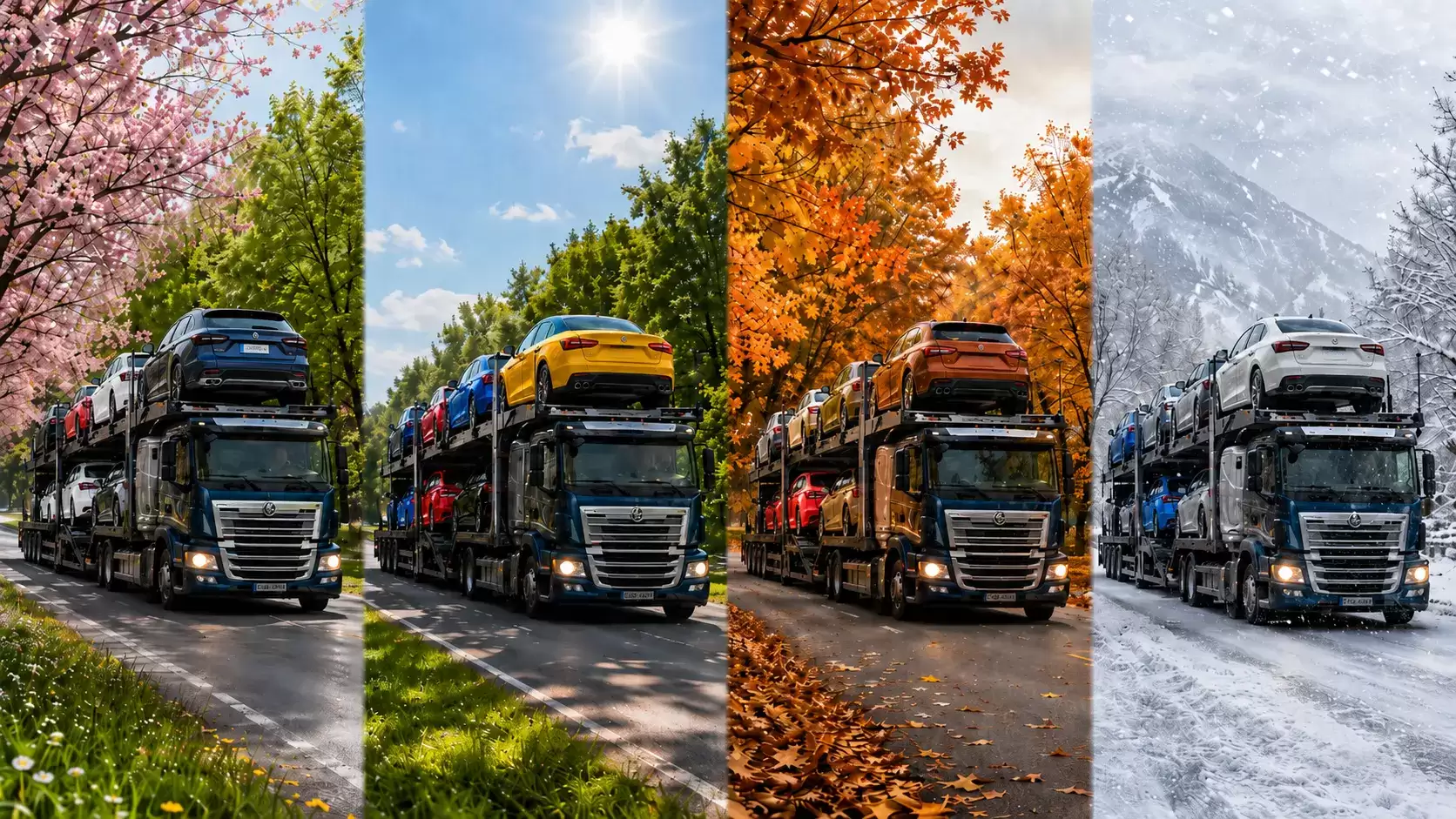
Hawaii car shipping seasonal guide
Hawaii shipping: mainland port selection guide
| Departure Port | Carrier(s) | Best For | Ocean Transit to Honolulu |
|---|---|---|---|
| Los Angeles / Long Beach | Matson, Pasha Hawaii | All mainland US origins east of the Sierras; most frequent sailings | 5–6 days |
| Oakland | Matson | Northern California, Nevada, Oregon, Pacific Northwest | 5–6 days |
| Seattle | Matson | Washington, Idaho, Montana; stops in Oakland en route | 7–8 days |
| Port Hueneme | Pasha Hawaii | Southern California; Pasha alternative to Matson LA terminals | 5–6 days |

How to ship your car to Hawaii in 4 steps
Step 1: Book your ocean freight first. Contact Matson (matson.com) or Pasha Hawaii (pashagroup.com) to get ocean freight pricing and confirm vessel sailing dates and terminal cutoff requirements. Securing your vessel sailing date first gives you the port delivery target date to pass to us.
Step 2: Book the continental US land leg — choose Expedited or Rush. Enter your mainland origin, your chosen departure port, vehicle type, and service level. Select Expedited or Rush, not Standard. Port terminals begin charging storage fees after approximately five free days, and carriers dispatched on Standard-rate port assignments routinely wait three to eight hours at the gate with no extra compensation — making Standard-tier port pickups unreliable. Tell us your vessel cutoff date and we will schedule your port delivery to arrive 3–4 days ahead of it.
Step 3: Mainland pickup and port delivery. Your driver meets you at your mainland location, completes a condition report, and delivers your vehicle to the designated RoRo terminal at the departure port. We provide you with a port delivery confirmation. Present that to your ocean carrier as proof of vehicle arrival.
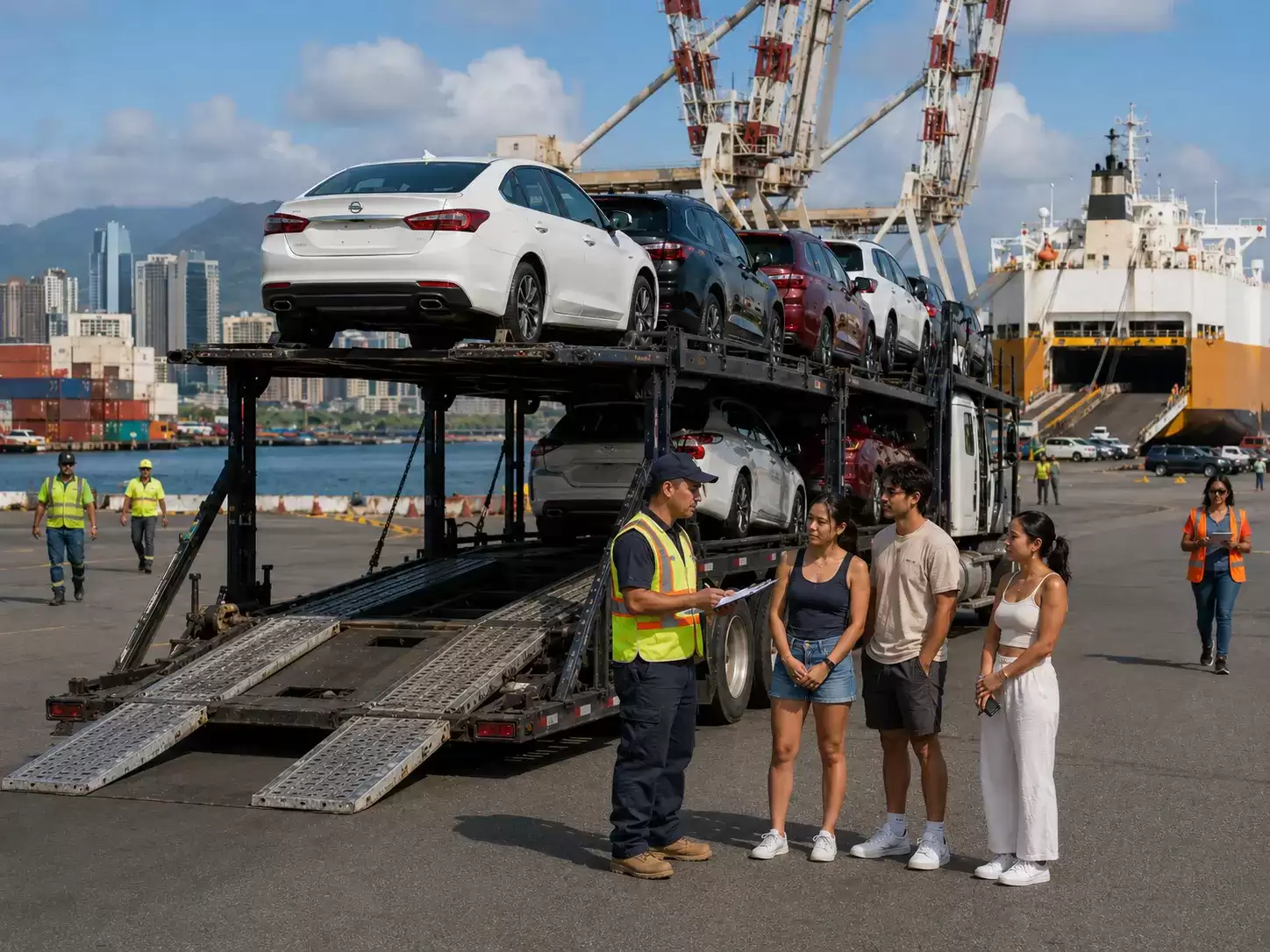
Step 4: Ocean transit and Hawaii arrival. Your vehicle sails to Honolulu (or your inter-island destination). After port clearance (typically 1–3 business days), you or your Hawaii-side local transporter picks up the vehicle. Inspect against the condition report from mainland pickup. Contact us immediately if you notice any new damage to initiate the carrier insurance process.
Hawaii universities and college auto transport
Hawaii university shipping is driven by mainland students and faculty relocating to the islands. The late-July through mid-August window is the peak for mainland-to-Hawaii university vehicle shipments. Book the full two-leg process 6–8 weeks ahead for fall semester arrivals to ensure your vehicle clears Honolulu port before move-in week.
| University | Location | Approx. Enrollment |
|---|---|---|
| University of Hawaii at Manoa | Honolulu, Oahu | 17,500 |
| University of Hawaii at Hilo | Hilo, Big Island | 3,500 |
| Hawaii Pacific University | Honolulu, Oahu | 4,000 |
| Chaminade University of Honolulu | Honolulu, Oahu | 2,600 |
| University of Hawaii West Oahu | Kapolei, Oahu | 3,200 |
| Brigham Young University Hawaii | Laie, Oahu | 3,100 |
| Kapiolani Community College | Honolulu, Oahu | 8,000 |
| Leeward Community College | Pearl City, Oahu | 7,500 |
| Maui College (UH) | Kahului, Maui | 4,200 |
| Hawaii Community College | Hilo, Big Island | 3,000 |

Hawaii military auto transport
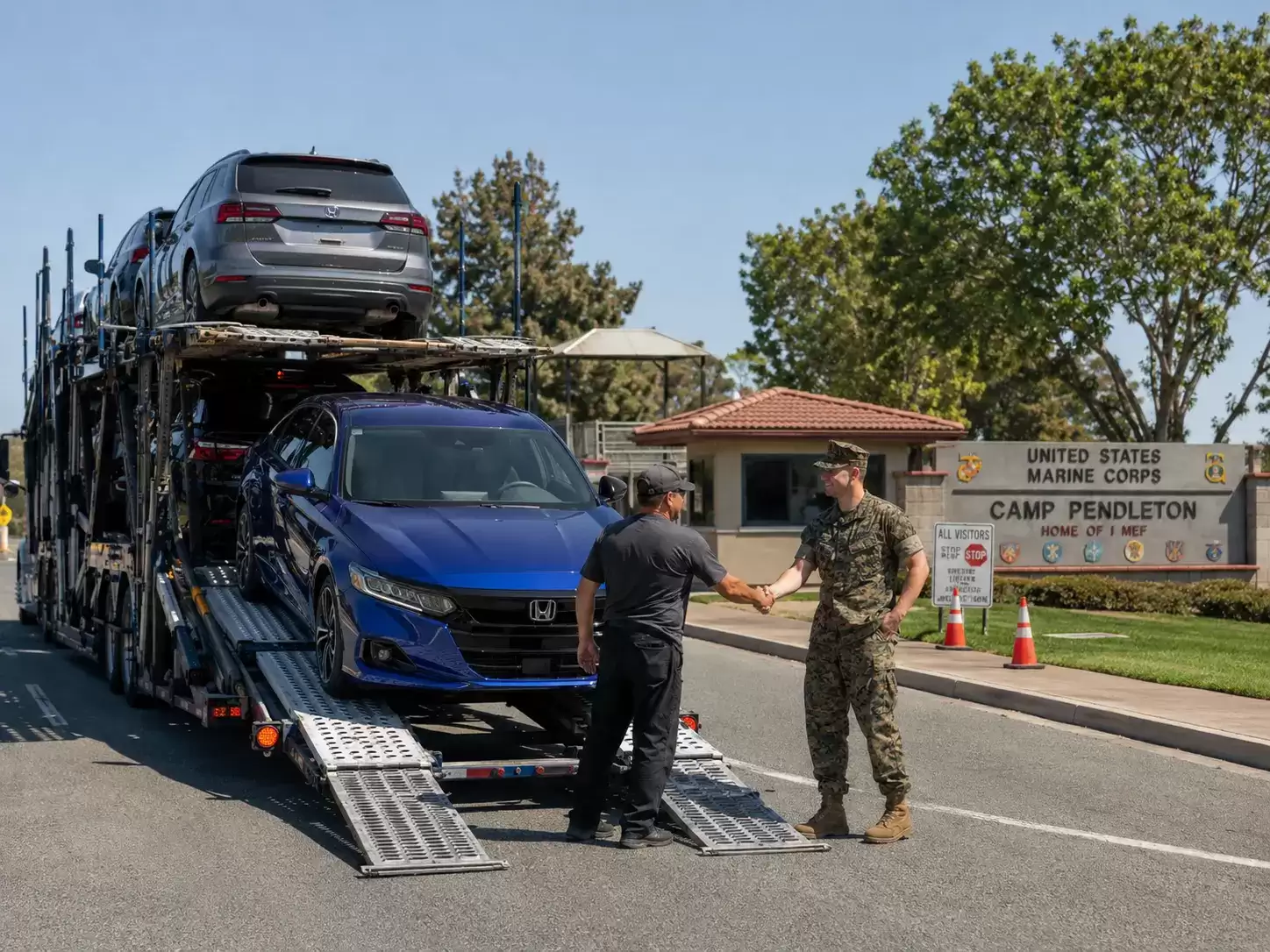
Hawaii hosts one of the densest concentrations of military installations in the US, making it one of the highest-volume military PCS auto transport markets in the country. Joint Base Pearl Harbor-Hickam (Navy and Air Force, Oahu) is the island’s largest installation. Schofield Barracks (Army, central Oahu) hosts the 25th Infantry Division. Marine Corps Base Hawaii at Kaneohe Bay (northeast Oahu) is the primary Marine installation. Tripler Army Medical Center and Fort Shafter serve administrative and medical military functions in the Honolulu area. Pohakuloa Training Area on the Big Island handles large-scale training rotations.
Combined active-duty populations across all Hawaii installations generate thousands of PCS vehicle shipments annually. Military shippers should note: the Hawaii PCS shipping allowance covers one vehicle per authorized member — confirm your Personally Procured Move (PPM) or Government Bill of Lading (GBL) entitlement with your transportation office before booking. Book the full two-leg process 6–8 weeks before your report date to ensure port delivery timing aligns with vessel sailing schedules. Active-duty personnel with PCS orders are eligible for our military discount — contact our team to apply it before booking.
Hawaii car shipping: who we serve
Direct Express Auto Transport picks up and delivers vehicles at any continental US address for Hawaii-bound shipments. Common mainland origins include Los Angeles, San Diego, Phoenix, Las Vegas, Denver, Seattle, Portland, San Francisco, Chicago, Dallas, Houston, Atlanta, Miami, New York, Washington DC, Boston, and hundreds of smaller cities and towns across all 48 lower states. We deliver your vehicle to your chosen mainland departure port. We do not currently provide in-state Hawaii transport — vehicles are delivered to the port terminal, where you or your designated representative takes custody after ocean transit. For Hawaii-side port-to-door delivery, ask us for a referral to vetted Oahu-based local transporters we have worked with.
Hawaii government resources for vehicle transport
Honolulu Division of Motor Vehicles — Handles City and County of Honolulu vehicle registration and title transfers for imported vehicles.
Hawaii Department of Transportation — Oversees port operations and can direct questions about vehicle inspection requirements on arrival.
Hawaii Department of Agriculture — Conducts mandatory agricultural inspections on all vehicles arriving in Hawaii; vehicles must be clean and free of soil, seeds, and plant material before ocean loading.
FMCSA Carrier Lookup — Verifies carrier licensing for the continental US land leg.

Popular long distance routes for Hawaii car shipping
California to Hawaii Auto Transport
California is the most common mainland origin for Hawaii car shipping. Southern California shippers (Los Angeles, San Diego, Riverside) use LA/Long Beach or Port Hueneme terminals. Northern California shippers (San Francisco, Sacramento, San Jose) use Oakland. The short overland haul makes California origins the most cost-effective starting point — LA to port is essentially a local move. Book Matson or Pasha 3–4 weeks ahead from California origins during summer PCS season.
Washington State to Hawaii Vehicle Shipping
Washington State shippers use Matson’s Seattle Terminal 46. The Seattle-to-Honolulu sailing stops at Oakland, adding approximately 1–2 days to the ocean transit. Seattle-area shippers (Seattle, Tacoma, Bellevue, Spokane) avoid the overland haul to LA entirely, making the total cost competitive despite the slightly longer ocean leg. Matson sails from Seattle weekly — confirm the specific sailing day and cutoff schedule when booking ocean freight.
Arizona to Hawaii Car Transport
Arizona is one of the most cost-effective non-California mainland origins for Hawaii shipping. Phoenix to the LA/Long Beach port runs $300–$500 on Standard open carrier — the short land leg keeps total Hawaii shipping costs significantly below East Coast or Midwest origins. Arizona has one of the largest concentrations of Hawaii-bound snowbird shippers on the mainland due to the large part-time Hawaii resident population in the Scottsdale and Paradise Valley luxury market.
Nevada to Hawaii Auto Shipping
Las Vegas to the LA/Long Beach port runs $250–$400 — among the lowest land-leg costs of any mainland origin. Reno shippers can choose between Oakland and LA ports depending on which has the better near-term sailing availability. Nevada’s proximity to the LA Basin makes it one of the most economical mainland origins for total Hawaii shipping cost.
Texas to Hawaii Vehicle Transport
Texas is a high-volume Hawaii shipping origin given the large military population at Joint Base San Antonio, Fort Hood (Killeen), and Fort Bliss (El Paso) receiving PCS orders to Hawaii installations. Dallas to LA port runs $750–$1,000. Houston to LA port runs $800–$1,050. Texas military shippers should book 8–10 weeks ahead for summer PCS season.
Florida to Hawaii Car Shipping
Florida to Hawaii is one of the longer continental US land legs, with Miami to LA port running $1,050–$1,350 and Orlando to LA running $1,000–$1,300. Despite the longer land haul, Florida generates consistent Hawaii shipping volume from retirees splitting time between the two states and from military families cycling between Florida bases and Hawaii installations. Book the land leg on Expedited service for Florida origins to ensure port arrival ahead of the vessel cutoff.
New York to Hawaii Auto Transport
New York to LA port is one of the longest and most expensive mainland land legs at $1,250–$1,600 on Standard open carrier. Despite the cost, the New York–Hawaii corridor is active year-round due to Wall Street and finance-sector executives maintaining Hawaii luxury properties and military families from Fort Hamilton and West Point receiving Hawaii PCS orders.
Midwest to Hawaii Vehicle Shipping
Chicago, Minneapolis, Detroit, and Cleveland are the primary Midwest origins for Hawaii shipping. Chicago to LA port runs $900–$1,150 with 2–3 day transit. Minneapolis to LA port runs $950–$1,200. Midwest shippers have the option of routing via Seattle if Matson’s Seattle sailing schedule aligns better with their timing — request quotes to both ports when booking from Midwest origins.
Colorado to Hawaii Car Transport
Colorado is a growing Hawaii shipping origin as Denver’s tech sector and remote-work flexibility enable more professionals to maintain Hawaii residences. Denver to LA port runs $650–$850 on Standard open carrier. I-70 west and I-15 south form the primary routing from Colorado to the LA port. Colorado shippers have a moderate land-leg cost advantage over Midwest and East Coast origins.
Georgia to Hawaii Auto Shipping
Atlanta to LA port runs $1,000–$1,250 on Standard open carrier with 3–4 day transit. Fort Stewart (Hinesville) and Fort Moore (Columbus) generate significant military Hawaii PCS volume from Georgia. Atlanta’s position on I-20 west and I-10 west makes it a straightforward routing to the LA port.
Virginia to Hawaii Vehicle Transport
Northern Virginia (Washington DC area), Norfolk, and Hampton Roads generate consistent Hawaii shipping volume from defense and government workers receiving Hawaii assignments. Norfolk Naval Station PCS orders to Pearl Harbor are among the most common military auto transport routes in the country. Northern Virginia to LA port runs $1,150–$1,400. Book 8–10 weeks ahead for summer PCS season from Virginia.
Pacific Northwest to Hawaii Car Shipping
Oregon and Washington shippers have a strategic port choice: use Matson’s Seattle terminal (shortest land haul, 7–8 day ocean transit via Oakland stop) or haul to LA/Long Beach for the most frequent sailings and 5–6 day direct ocean transit. Portland to Seattle port runs $200–$350. Portland to LA port runs $550–$750. For Pacific Northwest shippers where total transit time matters most, Seattle is often the right choice.
Nearest mainland states for Hawaii auto transport
California Auto Transport
California is the mainland gateway to Hawaii shipping. Los Angeles, Oakland, and Port Hueneme are all California ports offering weekly Hawaii-bound RoRo sailings. California shippers have the shortest land leg of any mainland origin, the most departure port options, and the most frequent ocean sailings. The California land leg is often under $300 for Southern California origins, making ocean freight the dominant cost for California-based Hawaii shippers.
Washington Vehicle Shipping
Washington State hosts Matson’s Seattle terminal at Terminal 46, making it the Pacific Northwest gateway to Hawaii shipping. Matson sails weekly from Seattle with an Oakland stop. Washington shippers avoid the southern overland haul entirely. Seattle-area customers should request a Seattle-port quote separately from an LA-port quote to determine which combination best fits their timeline.
Oregon Car Transport
Oregon shippers choose between Seattle and Oakland ports based on proximity. Portland is roughly equidistant to both. Eugene, Medford, and southern Oregon shippers typically route to Oakland. The Portland to Seattle land leg runs $200–$350; Portland to Oakland runs $350–$500. Oregon has no Hawaii-departure port of its own.
Nevada Auto Shipping
Nevada’s proximity to the Los Angeles port complex makes it one of the most cost-effective non-California mainland origins for Hawaii shipping. Las Vegas to LA/Long Beach port is a 270-mile run, generating some of the lowest land-leg pricing of any mainland origin. Reno shippers split between Oakland and LA depending on Matson sailing dates.
Arizona Vehicle Transport
Arizona is the largest non-California origin for Hawaii shipping based on volume. Phoenix and Tucson are both within 400 miles of the LA/Long Beach port, keeping land-leg costs among the lowest outside California. Arizona’s large retiree and snowbird population with Hawaii real estate connections generates consistent October–April outbound Hawaii shipments.
Colorado Car Shipping
Colorado is the nearest inland Rocky Mountain origin for Hawaii shipping. Denver sits 1,000 miles from the LA port on I-70 west — a manageable overland haul that keeps Colorado land-leg pricing in the mid-range. Colorado’s growing Hawaii shipping volume is driven by Denver tech workers with Hawaii property, Colorado ski town resort owners, and military families at Peterson SFB and Buckley SFB receiving Hawaii PCS orders.
Ready to ship your vehicle to or from Hawaii?
Get your instant Hawaii car shipping quote in 30 seconds — no upfront payment, no phone call required. Direct Express Auto Transport handles the continental US land leg to your departure port with a 4.6-star average across thousands of verified reviews. Remember to book Expedited or Rush for all Hawaii port deliveries to protect your vessel sailing schedule.
Instant quote — real-time pricing in under 5 seconds
No upfront payment — your card is charged only when a carrier is assigned
No risk to get a quote and book your order
BBB Accredited A+ since 2004
FMCSA licensed and fully bonded
4.6 stars across thousands of verified Google reviews