Colorado to Texas Car Shipping
The original instant car shipping calculator — trusted since 2004. Door-to-door Colorado to Texas transport with no surprises, no hidden fees, and three options to ship your vehicle on your schedule.
★ 4.6/5 Google Reviews | BBB Accredited A+ | FMCSA Licensed (MC #479342) | USDOT #1240502 | No upfront payment required | 20+ years shipping vehicles


Colorado to Texas Car Shipping Rates by City
Every Colorado to Texas vehicle shipment is available at three service levels:
Standard, Expedited, & Rush Options
Choose the one that fits your timeline and budget. All three include full door-to-door service and carrier insurance.
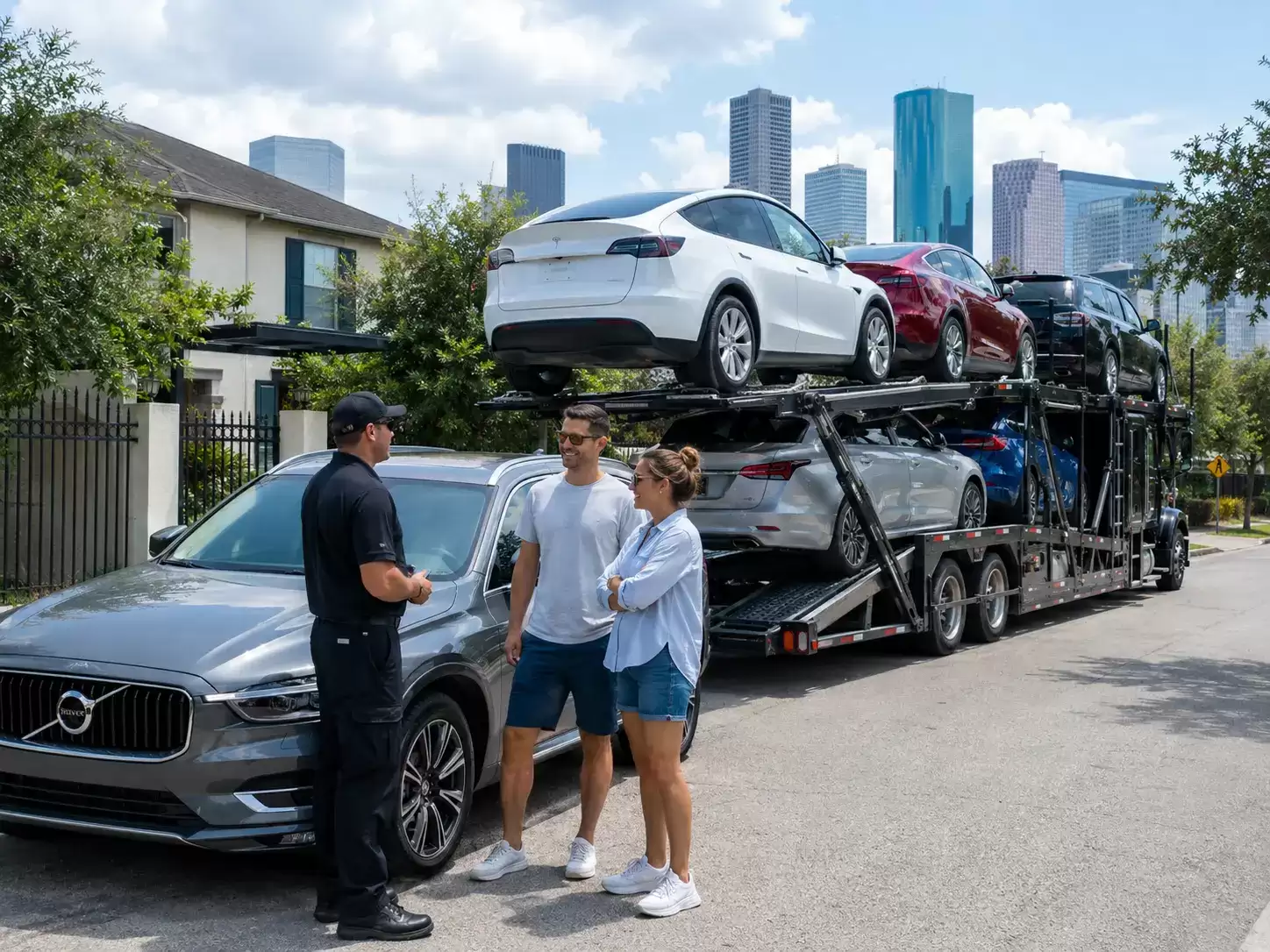
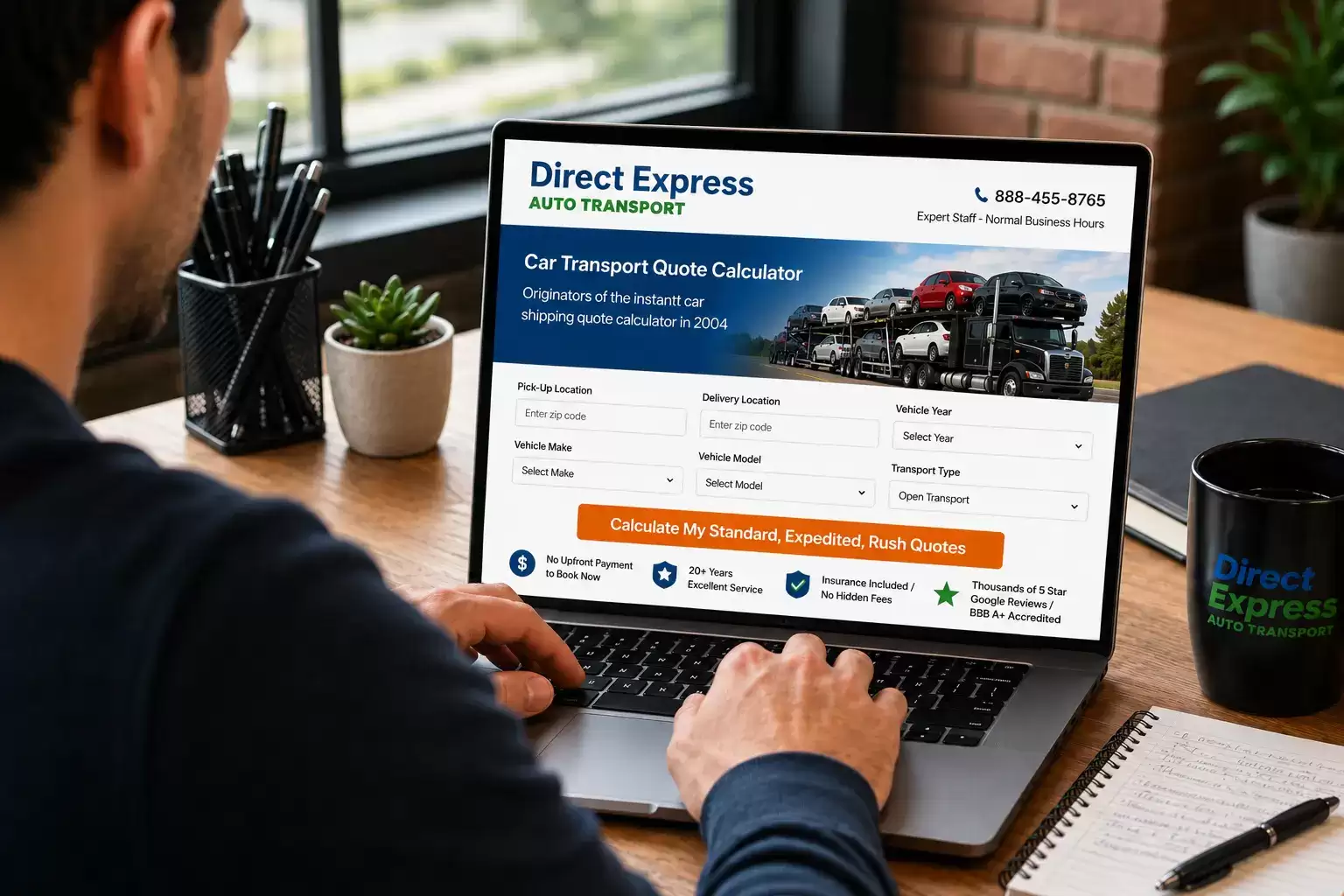
The Company That Invented Instant Auto Transport Pricing
Direct Express Auto Transport built the auto transport industry’s first instant online pricing calculator in 2004. Before that, getting a car shipping quote meant phone calls, callbacks, and days of waiting. We changed all of that. Today you know exactly what it costs to ship your vehicle before you commit to anything — in 30 seconds, online, any time of day.
Three Service Tiers for Every Colorado to Texas Shipment
Every shipment on this Colorado to Texas route is available at three service tiers so you can match your budget to your timeline. Standard delivers at the best available rate — ideal when your schedule has a few days of flexibility. Expedited puts your vehicle at the front of the dispatch queue for faster carrier assignment. Rush gets your car picked up as fast as possible — for moves where every day counts, including military PCS return orders from Fort Carson and Peterson Space Force Base to Fort Cavazos and JBSA, and firm Texas employment start dates.
All three tiers include full door-to-door service and carrier insurance. No callbacks, no pressure, no guesswork.
What customers say about shipping a car from Colorado to Texas with Direct Express Auto Transport


Seasonal Pricing Guide: Colorado to Texas
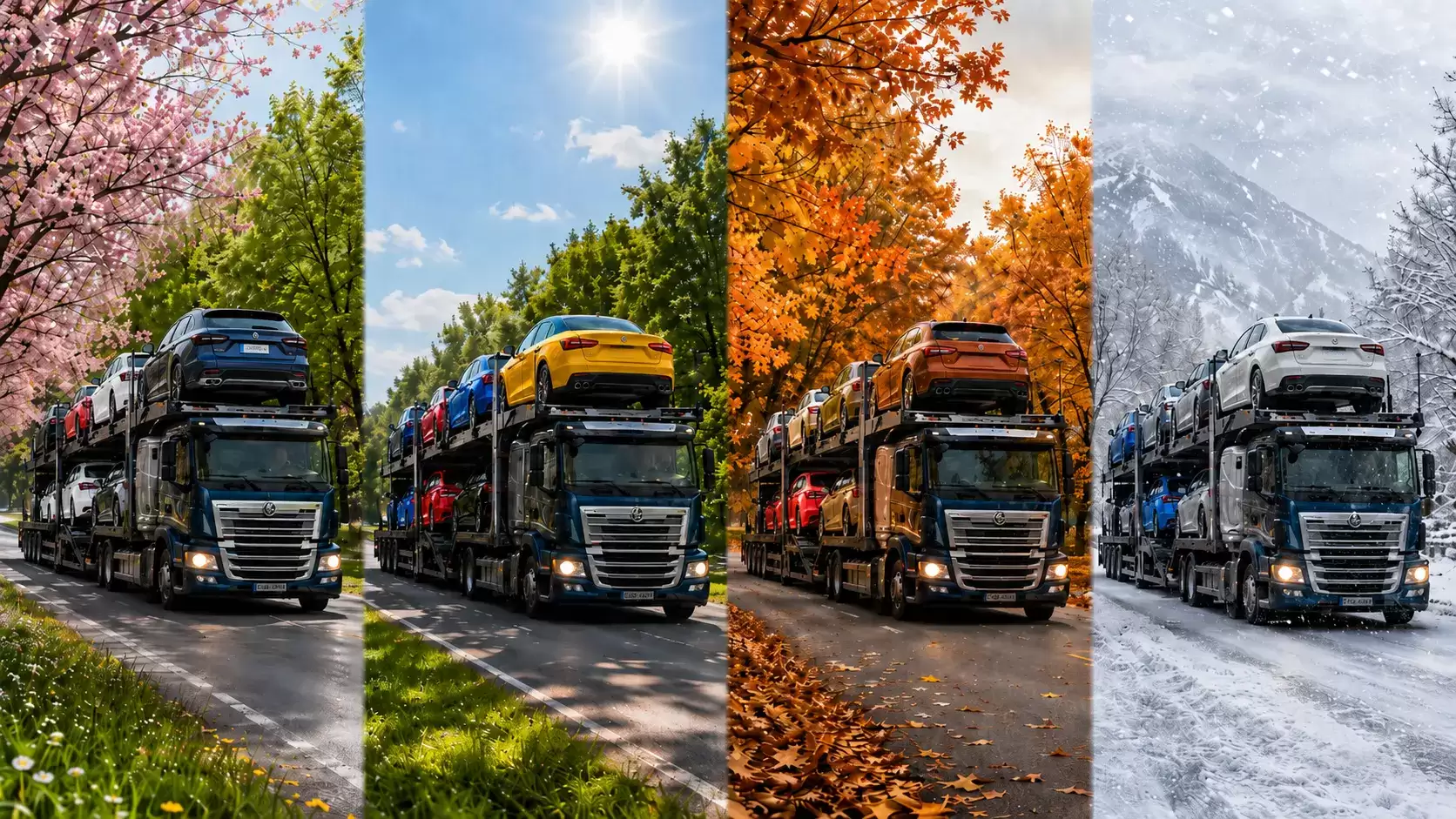
Colorado to Texas runs southbound year-round with a spring resort-departure surge and a summer PCS peak. October–November is the best value window; mountain pass weather can affect transit November–April.
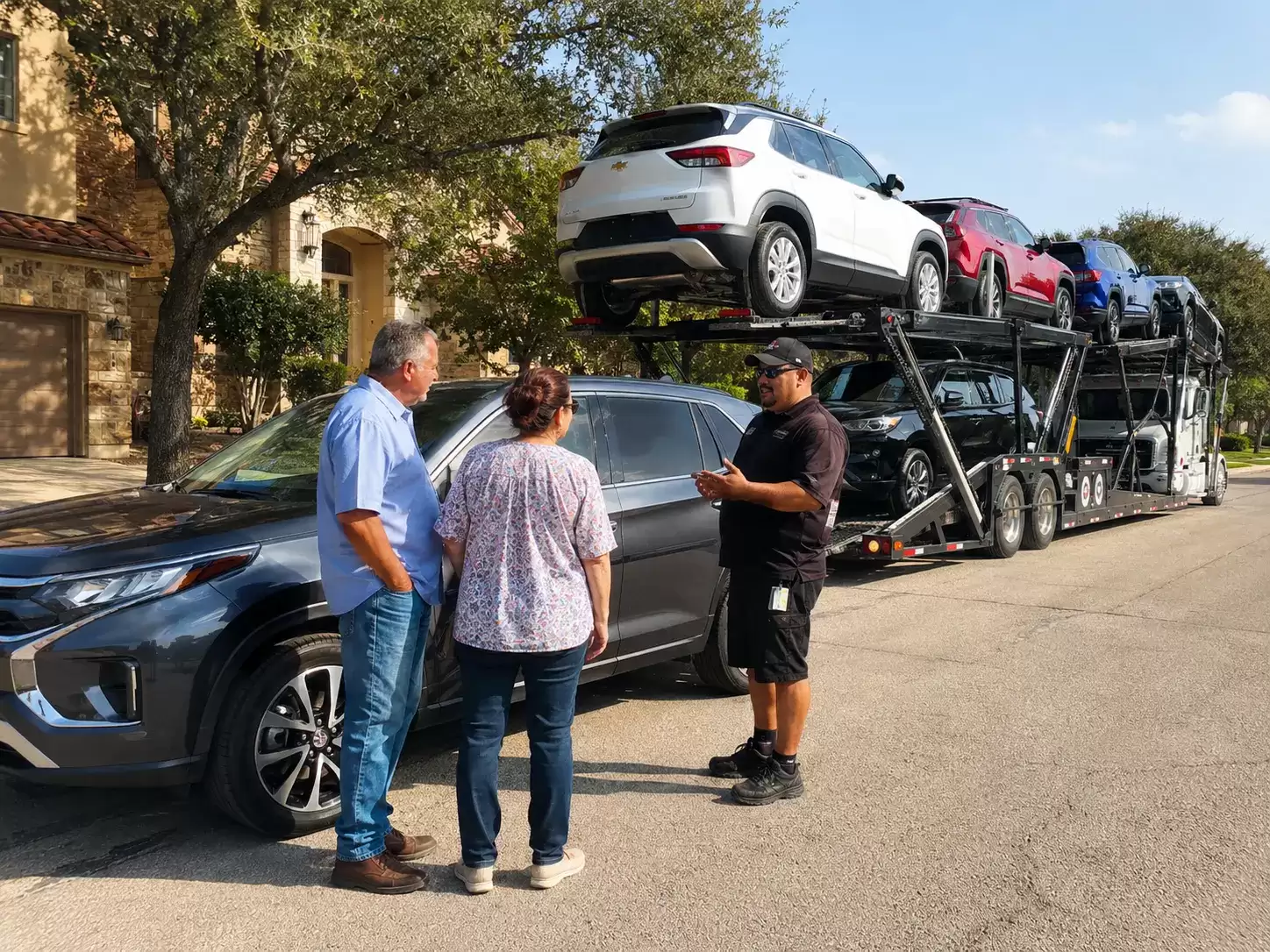
Who Ships a Car from Colorado to Texas — and Why
Military PCS: Fort Carson, Peterson SFB, and Schriever SFB to Texas Installations
The Colorado-to-Texas military PCS corridor is the return flow of one of the Army’s busiest north-south routes. Fort Carson (Colorado Springs) — home of the 4th Infantry Division and 10th Special Forces Group — sends personnel to Fort Cavazos (Killeen), JBSA (San Antonio), and Fort Bliss. Peterson SFB generates Space Force orders to Goodfellow AFB and Dyess AFB. The Colorado Springs → Fort Cavazos lane is the single highest-volume pairing.
USAFA First Assignments: JBSA, Goodfellow AFB, and Dyess AFB Routes
The Air Force Academy (north Colorado Springs) sends career officers to JBSA, Goodfellow AFB (San Angelo), Dyess AFB (Abilene), and Sheppard AFB (Wichita Falls) on first assignments. USAFA origins typically ship from Colorado Springs rather than Pueblo, the nearest southern city. Academy PCS shipments concentrate in June–August following graduation and initial assignment notification.
Colorado Residents Accepting Texas Career Opportunities
Colorado professionals in technology, aerospace, and defense occasionally accept Texas offers in energy, finance, or corporate headquarters roles. Denver-based engineers moving to Dallas for aerospace or defense contractors, and Boulder technology professionals relocating to Austin’s startup ecosystem, represent the primary corporate transfer profiles. The reverse flow of Texans moving to Colorado exceeds the CO→TX volume, but Colorado-origin corporate moves generate consistent demand.
Denver–Dallas and Boulder–Austin Corporate Corridor Pricing and Logistics
The Denver → Dallas pair at $850 Standard and Boulder → Austin at $875 Standard are the primary reference pairs for the CO-to-TX corporate relocation corridor. Fort Collins → Plano at $875 and Fort Collins → Garland at $875 serve the northern Front Range to DFW corridor for technology professionals accepting North Dallas suburb positions with Toyota, Liberty Mutual, JPMorgan Chase, and other DFW corporate employers.
Colorado Retirees Moving to Texas for Year-Round Warm Weather
Colorado winters motivate many retirees to move to Texas for year-round warmth, lower elevation, and proximity to Texas medical centers. Front Range retirees target the Texas Hill Country (Kerrville, Fredericksburg), San Antonio, the DFW suburbs, and East Texas lake communities. The Denver → San Antonio and Colorado Springs → Austin pairings are the primary retirement corridors, with vehicle shipping preferred over the long interstate drive.
Mountain Resort Residents Departing at End of Ski Season
Colorado’s mountain resort communities attract seasonal Texas residents who arrive in November for ski season and depart in April. Steamboat Springs, Vail, Aspen, Telluride, and Breckenridge all generate strong April–May outbound shipping to Texas destinations. Many residents own or lease vehicles left in Colorado for ski season and ship them home rather than drive. The Aspen → Dallas and Vail → Houston pairings carry the highest resort-to-Texas volume.
What Makes the Colorado–Texas Auto Shipping Run Different
Colorado Springs → Waco: The Table’s Cheapest Pair at $700 Standard
Colorado Springs to Waco at approximately 830 miles and $700 Standard is the table’s cheapest pair. Colorado Springs’ I-25S position puts it 70 miles south of Denver, reducing the I-25 approach distance before any southbound progress toward Texas. Waco’s I-35 position at the midpoint of Central Texas puts it 170 miles north of Austin and 97 miles south of Dallas — eliminating significant southward approach miles compared to Houston or San Antonio. The Colorado Springs → Waco run uses I-25S through Raton Pass into New Mexico, then connects to I-40E or I-25S toward Texas, and on to the I-35N/35S corridor.
Grand Junction → Port Arthur: The Table’s Most Expensive at $1,075 Standard
Grand Junction to Port Arthur at approximately 1,305 miles and $1,075 Standard is the table’s most expensive pairing for two compounding reasons. Grand Junction sits on Colorado’s Western Slope, 245 miles west of Denver via I-70 through the Rocky Mountains — meaning any carrier picking up in Grand Junction must cross Vail Pass (10,662 ft) and Glenwood Canyon before reaching the Denver-area I-25/I-35 departure corridor.
Geographic Efficiency: Western Slope Approach and Port Arthur Terminus
This mountain crossing adds approximately 245 miles of approach driving before the southbound run even begins. Port Arthur, on the other hand, is Southeast Texas’s easternmost major city — 270 miles east of Dallas on the Louisiana border, requiring a full I-20E/I-10E eastern approach after reaching Dallas.
Denver → Laredo: Shorter Than You’d Expect at $850 Standard
Denver to Laredo at approximately 1,010 miles and $850 Standard surprises shippers who expect South Texas to command premium pricing from Colorado. The explanation is routing: Denver to Laredo via the I-25S corridor (Denver → Pueblo → Trinidad → Raton → Albuquerque → El Paso → US-90/US-83 to Laredo) runs approximately 1,010 miles — notably shorter than Denver to Houston (~1,125 miles) or Denver to San Antonio (~975 miles via OKC). Laredo’s position directly south of Denver along the I-25 spine means the carrier barely deviates from a straight southbound run.
I-25 Southern Corridor: Denver to Laredo Direct Routing
Denver to Houston, by contrast, requires the I-70E/I-35S routing through Kansas and Oklahoma — a longer and more eastward routing that adds mileage. This explains the counterintuitive result that Denver → Laredo prices at $850 Standard while Denver → Houston prices at $925.
Raton Pass and the Front Range Carrier Routing Decision
Raton Pass (7,834 ft, New Mexico–Colorado border on I-25) is the corridor’s primary weather variable for southbound loads from the Front Range. When Raton Pass is clear, carriers take I-25S directly from Pueblo through Trinidad to New Mexico — the most efficient southbound routing for Colorado Springs, Pueblo, and Denver loads headed to San Antonio, Laredo, and Corpus Christi. When Raton Pass closes, carriers reroute via I-70E to Kansas then I-35S through Oklahoma — adding approximately 200 miles to the routing. This rerouting adds 1–2 days to transit time.
Other Colorado to Texas Cities We Serve
Direct Express ships vehicles between hundreds of city pairs on this route. Below is a broader look at additional Colorado origins and Texas destinations we regularly serve.

Colorado and Texas Auto Shipping Zones Along the I-25 and I-35 Corridors
Colorado-to-Texas auto transport runs 830–1,305 miles. The cheapest runs come from the Southern Front Range (Colorado Springs, Pueblo) to Central Texas (Waco, Temple, Killeen). The most expensive runs come from Western Slope origins (Grand Junction, Steamboat Springs) to far East Texas (Port Arthur, Beaumont). Colorado delivery zones break into Front Range (most carriers), mountain corridor (pickup coordination required in winter), and Western Slope (Vail Pass mountain crossing required).
Colorado Origin Zones
Texas Delivery Zones
Open vs. Enclosed Car Transport on the Colorado–Texas Route
Open Transport and Colorado Winter Pickup
Open transport is appropriate for virtually all Colorado-to-Texas shipments. Front Range military PCS movers from Fort Carson and Peterson SFB, Colorado professionals relocating to Texas for career opportunities, and Front Range retirees completing Texas moves all ship open. The I-25S/I-35S corridor is a high-frequency southbound carrier route with strong availability. Colorado pickup in summer requires no heat protocol — Colorado summer temperatures at the pickup end are never a staging concern for any origin in the state. Texas delivery June–September requires the standard heat protocol at all Texas delivery addresses: quarter tank, no personal items, no medications, no electronics.
Open Transport Recommended for Most
- Military PCS from Fort Carson, Peterson SFB, or Schriever SFB to Fort Cavazos (Killeen) or JBSA (San Antonio)
- Colorado professionals relocating to Dallas, Austin, Houston, or San Antonio
- Standard daily-driver vehicles, SUVs, crossovers, and pickups
- All Front Range origins: Denver, Colorado Springs, Fort Collins, Boulder, Pueblo
- Texas delivery June–September: full heat protocol at all TX destinations — non-negotiable
Enclosed Transport
- High-value ski-country vehicles departing Steamboat Springs, Vail, or Aspen after ski season — road salt and brine exposure during the mountain I-70 descent can be a concern for fresh paint
- Collector and exotic vehicles from Colorado’s Front Range collector community
- Vehicles with very low clearance being staged through mountain approach roads
- Typically 40–60% more expensive than open transport
Door-to-Door Car Shipping: What to Expect in Colorado and Texas
Pickup in Colorado
Front Range: Denver Metro and Colorado Springs
Standard door-to-door pickup throughout Denver metro (Denver, Aurora, Lakewood, Westminster, Thornton, Englewood, Centennial, Broomfield) and Colorado Springs area (Fountain, Security-Widefield, Manitou Springs, Woodland Park). Fort Carson on-post housing: confirm base access credentials, sponsor address, and housing location at booking. Peterson Space Force Base and Schriever SFB: confirm on-base access protocol at booking. United States Air Force Academy: confirm access and on-base pickup protocol. All off-post and off-base Colorado Springs addresses are standard door-to-door. No heat protocol required at any Colorado origin in any season.
Northern Front Range: Boulder and Fort Collins
Standard door-to-door pickup throughout Boulder (including University of Colorado area), Fort Collins (including Colorado State University area), Loveland, Greeley, Windsor, and Longmont. University campus-adjacent addresses in Boulder and Fort Collins: confirm commercial carrier staging for large carrier access. Fort Collins is 65 miles north of Denver via I-25 — carriers pick up at address and drive south to the I-25 departure corridor. No heat protocol or seasonal restrictions at any Northern Front Range origin.
Mountain Resort Origins and Western Slope
Steamboat Springs, Vail, Aspen, Glenwood Springs, Telluride, and Breckenridge: confirm carrier staging protocol at booking. Narrow resort town roads and limited staging areas may require delivery to a staging location (base village, commercial lot) rather than a private driveway. Winter pickup November–April: Vail Pass (I-70) descent conditions affect all I-70 mountain origins — confirm carrier route status for Vail, Aspen, and Glenwood Springs. Steamboat Springs uses US-40 to I-70 or US-40 to I-25 via Granby. Grand Junction: standard door-to-door; Glenwood Canyon closure risk applies eastbound year-round.
Delivery in Texas
Central Texas: Killeen, Waco, Temple, Austin, San Antonio
Standard door-to-door delivery throughout Central Texas. Fort Cavazos (Killeen) on-post housing: confirm base access credentials, sponsor information, and housing address at booking. JBSA (Lackland, Randolph, Fort Sam Houston, Camp Bullis): confirm on-post delivery access at booking. Off-post Killeen, Harker Heights, and Copperas Cove: standard door-to-door. Texas heat protocol applies June–September at all Central Texas delivery addresses: confirm quarter tank, no personal items, no medications, no electronics before carrier loads at Colorado pickup — these items should not be in the vehicle when it arrives in Texas in summer.
DFW Metro and East Texas
Standard door-to-door delivery throughout DFW (Dallas, Fort Worth, Plano, Irving, Garland, Frisco, Arlington, Denton) and East Texas (Tyler, Longview, Nacogdoches, Lufkin, Texarkana, Beaumont, Port Arthur). Texas heat protocol June–September applies. DFW January–February: ice events occasionally possible — 1-day delivery buffer. Port Arthur and Beaumont: Southeast Texas delivery at the eastern extreme of the corridor; confirm address at booking as final approach from Dallas via I-20E adds 270 miles.
Houston and South Texas
Standard door-to-door delivery throughout Houston metro (including Conroe, Sugar Land, Pasadena, League City) and South Texas (Laredo, Corpus Christi, McAllen, Harlingen, Brownsville, Mission). Texas heat protocol June–September applies at all South Texas delivery addresses. Valley cities (McAllen, Harlingen, Brownsville, Mission) are the Other Cities table’s longest CO→TX runs — Denver to McAllen (~1,250 miles) is among the corridor’s longest pairs. Expedited is recommended for any firm Valley delivery date.
Texas Vehicle Registration for Colorado Arrivals
Texas requires registration within 90 days of establishing residency. Visit your county tax assessor-collector office with your out-of-state title, proof of Texas insurance, and proof of Texas address; a vehicle safety inspection is also required. Cancel your Colorado registration once your Texas plates arrive.
Preparing Your Vehicle
Before Colorado pickup: remove all personal items, disable car alarms, photograph from all angles with date-stamped images. Mountain resort origins November–April: confirm with the carrier that the staging area access is clear before dispatch date. Colorado pickup requires no heat protocol in any season — no quarter-tank or electronics removal required at the Colorado departure end. Texas delivery June–September: the heat protocol applies at the Texas delivery end — ensure the vehicle is configured (quarter tank, no personal items) before the Colorado carrier loads it for Texas summer delivery. Items you leave in the vehicle at Colorado pickup will be in the vehicle when it arrives in Texas in summer heat.
Colorado & Texas Auto Transport Resources
Colorado Helpful Government Links
- Colorado DMV — DRIVES Portal — Confirm Colorado title is clear and transferable before shipping. Colorado title must be in hand before carrier loads your vehicle.
- Colorado DMV — Military Members — Active duty provisions for service members departing Fort Carson, Peterson SFB, Schriever SFB, Buckley SFB, and the Air Force Academy on PCS orders to Texas installations.
- Colorado DMV — Driver License — Colorado license surrendered at Texas DPS when establishing Texas residency within 90 days.
- CDOT COtrip — Road Conditions and Pass Status — Check Raton Pass (I-25 NM border) and Vail Pass (I-70) status before dispatch for mountain-zone and winter Front Range shipments.
- CDPHE — Colorado Emissions Testing — Confirm your Colorado county emissions status before title transfer if selling or transferring title before shipping.
Texas Helpful Government Links
- Texas Department of Motor Vehicles (TxDMV) — Register Colorado vehicle within 90 days of establishing Texas residency at your county tax-assessor-collector office.
- TxDMV — Out-of-State Title Transfer — Required documents and 6.25% state sales tax for registering a Colorado vehicle in Texas. Colorado use tax credit may apply.
- TxDMV — Military Provisions — Active duty exemptions for service members arriving at Fort Cavazos, JBSA, and other Texas installations from Colorado assignments.
- Texas DPS — Driver License — Texas driver’s license required within 90 days. Colorado license surrendered at DPS office.
- TCEQ — Texas Emissions Testing Counties — Emissions testing required in Harris, Dallas, Tarrant, Travis, Bexar, and other non-attainment counties. Colorado DRIVES certificate does not transfer.
Federal Auto Transport Resources
- FMCSA — Verify a Carrier’s License (SAFER System) — Verify any auto transport company is federally licensed and insured before booking.
- FMCSA — Protect Your Move — Federal consumer guidance on hiring vehicle shippers and understanding your rights.