California to Ohio Car Shipping
The original instant car shipping calculator — trusted since 2004. Door-to-door California to Ohio transport with no surprises, no hidden fees, and three options to ship your vehicle on your schedule.
★ 4.6/5 Google Reviews | BBB Accredited A+ | FMCSA Licensed (MC #479342) | USDOT #1240502 | No upfront payment required | 20+ years shipping vehicles


California to Ohio Car Shipping Rates by City
Every California to Ohio vehicle shipment is available at three service levels:
Standard, Expedited, & Rush Options
Choose the one that fits your timeline and budget. All three include full door-to-door service and carrier insurance.
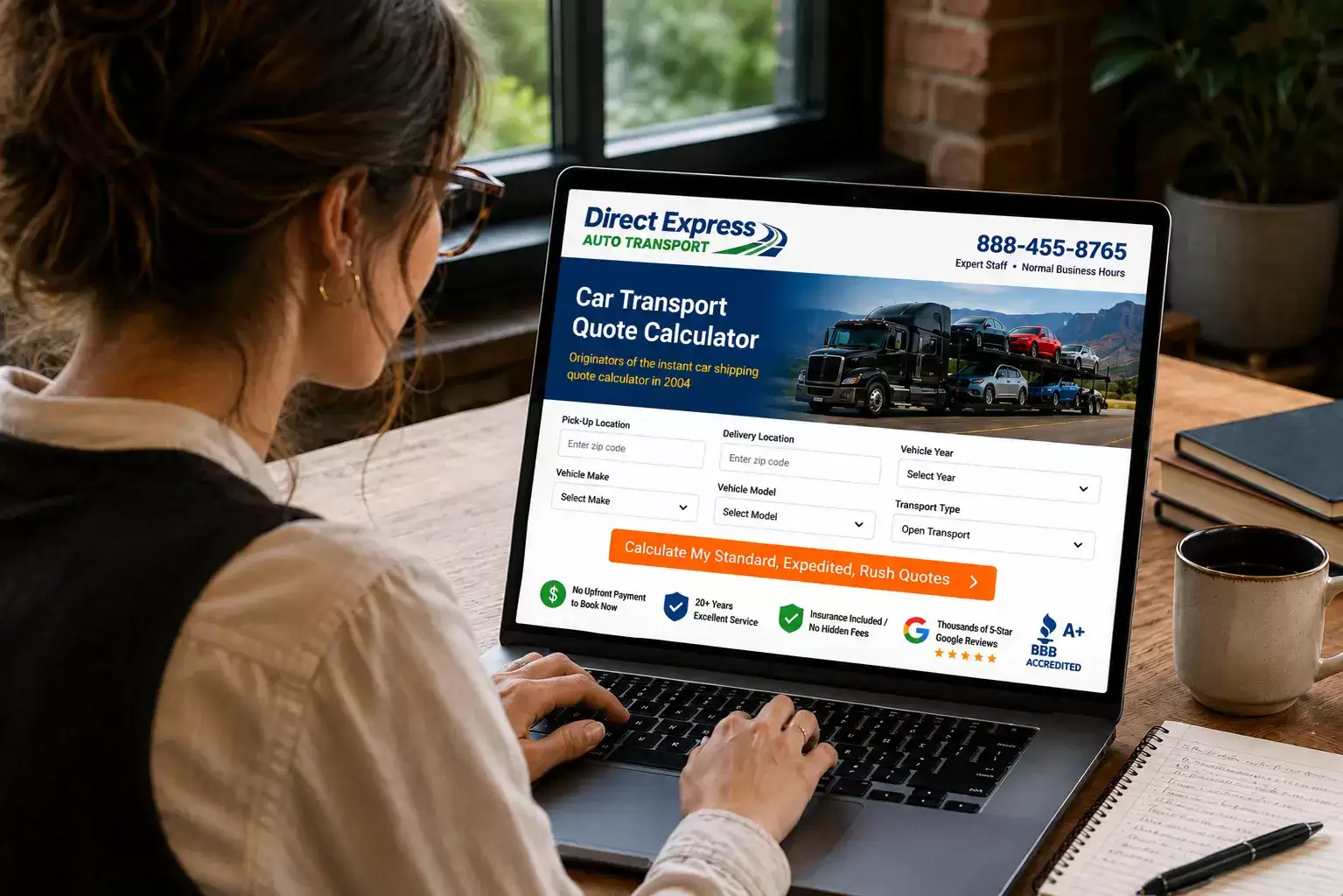
The Company That Invented Instant Auto Transport Pricing
Direct Express Auto Transport pioneered online instant pricing for the auto transport industry in 2004. Before we built the first car shipping cost calculator, getting a quote from a broker meant phone calls, callbacks, and waiting — sometimes days. We changed that. Today you know your exact cost in 30 seconds, before committing to anything. No phone tag, no hassle. Just a real number, instantly.
Three Service Tiers for Every California to Ohio Shipment
Every shipment on this California to Ohio route is available at three service tiers so you can match your budget to your timeline. Standard delivers at the best available rate — ideal when your schedule has a few days of flexibility. Expedited moves your vehicle to the front of the dispatch queue for faster pickup. Rush gets your car picked up as fast as humanly possible — for moves where every day counts. All three tiers include full door-to-door service and carrier insurance.
What customers say about shipping a car from California to Ohio with Direct Express Auto Transport


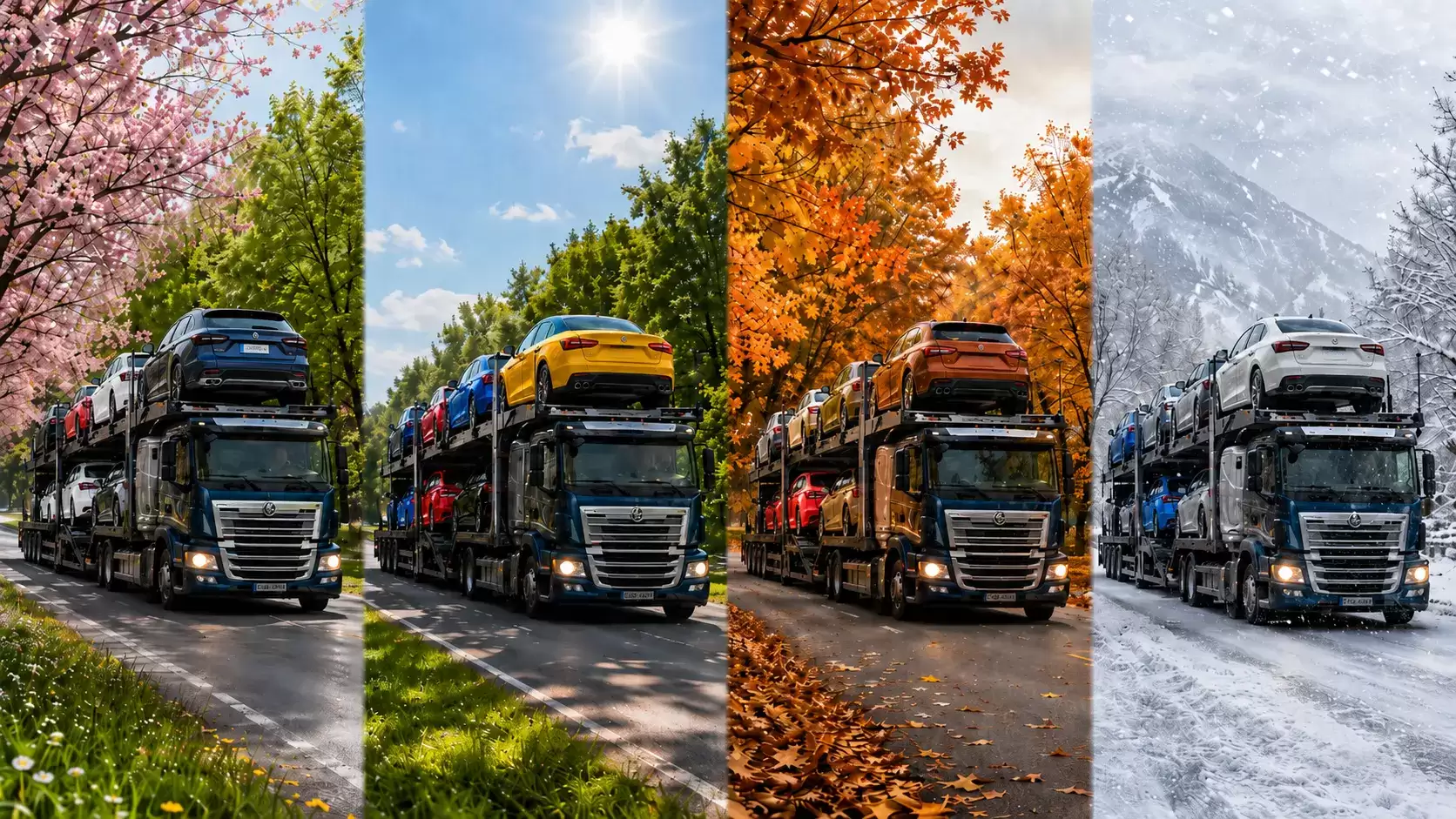
Seasonal Pricing Guide: California to Ohio
Ohio’s climate runs the full four seasons — including Great Lakes winters that rival Chicago’s for severity in the northern half of the state. Timing your California-to-Ohio shipment around Ohio’s delivery conditions and the national demand calendar can make a meaningful difference in both price and ease of delivery coordination.
Who Ships a Car from California to Ohio — and Why
The California-to-Ohio run carries a distinct and recognizable profile of shippers — people making major life transitions in both directions. The demographic telling the story of this corridor is primarily one of return: Ohio-born residents who spent years in California and are heading home, and cost-driven Californians discovering Ohio’s affordability for the first time.
California Families Moving to Ohio for Dramatically Lower Cost of Living
Ohio’s cost of living relative to California is among the most dramatic comparisons in the country. A home that costs $800,000 in a modest California suburb can be purchased for $250,000 in Columbus, Cleveland, or Cincinnati. This gap has driven a consistent flow of California residents to Ohio’s major metros — particularly Columbus, which has emerged as one of the country’s fastest-growing cities and a magnet for people pricing out of California’s coastal markets. The tech and startup ecosystem in Columbus and Cincinnati has also made this move increasingly viable for technology professionals who previously felt anchored to California.
Ohio Buyers Shipping California Rust-Free Vehicles Home
The “California classic” vehicle is a separate but active driver of this route. Ohio’s winters mean road salt, rust, and accelerated undercarriage deterioration — conditions California simply doesn’t have. Knowledgeable Ohio car buyers regularly purchase vehicles in California specifically because a California-titled vehicle is far less likely to have rust damage than an equivalent Ohio vehicle. A truck, collector car, or daily driver purchased at a California auction or dealership ships east via auto transport rather than driving cross-country solo through desert heat and mountain passes.
California Technology Professionals Relocating to Ohio’s Growing Sectors
Corporate relocations from California’s technology sector to Ohio’s growing healthcare, logistics, and manufacturing employers generate year-round professional transfers. Ohio Health, Nationwide, Procter & Gamble, and major logistics companies headquartered in Ohio attract talent from California’s professional class. Military transfers from California installations — Edwards AFB, Camp Pendleton, Naval Base San Diego — to Wright-Patterson AFB near Dayton are another firm-date demand driver. PCS orders don’t move around summer peaks; they have hard reporting dates, which makes Expedited and Rush the right tiers for this cohort.
What Makes the California–Ohio Auto Shipping Run Different
The I-40 to I-70 Route: 2,200 Miles of All-Weather Highway
The dominant California-to-Ohio corridor departs the Los Angeles basin east on I-10 or I-15 to I-40, crosses through Arizona, New Mexico, Oklahoma City, and the Missouri Ozarks on I-44, then transitions to I-70 east through Indianapolis and Columbus. The I-40-to-I-70 routing is well-maintained and all-weather capable through its western and central segments.
I-40 to I-70: Oklahoma Junction and the Ohio Delivery Approach
Dayton, Columbus, and Cincinnati are the primary delivery cluster from this corridor, all on or near I-70 and I-75. The route avoids the Rocky Mountain passes and Wyoming elevation of the I-80 northern alternative, making it the year-round preferred corridor for California-to-Ohio loads.
NorCal Pickup: Still a Premium Route
Carriers are denser in the Southern California basin — the I-40 eastern gateway is more natural for SoCal loads than the I-80 northern gateway. Northern California and Bay Area origins (San Francisco, Oakland, San Jose, Sacramento) sit off the primary I-40 corridor and require a southern detour to I-40 or a longer I-80/I-70 routing through Wyoming and Denver.
NorCal Pickup Premium: Bay Area Dispatch and I-80/I-70 Routing Distance
The NorCal premium reflects both the higher Bay Area carrier dispatch cost and the additional mileage required before the eastbound corridor begins. For Bay Area origins, the Expedited tier is especially valuable — it attracts carriers faster in a competitive pickup environment.
Eastern Ohio vs. Western Ohio — Why the Distance Gap Matters
Ohio is a wide state — Cincinnati sits at the western edge while Cleveland and Youngstown push toward the Pennsylvania border. The driving distance from Los Angeles to Cincinnati is approximately 2,175 miles; from Los Angeles to Cleveland it’s approximately 2,440 miles — a 265-mile gap. That’s an entire additional driving day for the carrier. Deliveries to Cleveland, Youngstown, Parma, Lorain, and the northeast Ohio cluster reflect this in both pricing and transit time. Western Ohio destinations (Cincinnati, Dayton, Columbus, Toledo) are naturally served by I-70 and I-75, making them among the most efficient Ohio delivery points from California.
Wright-Patterson and Ohio Military Bases
Wright-Patterson Air Force Base near Dayton is one of the largest Air Force installations in the country and a major generator of PCS vehicle shipments on the California-to-Ohio run. California has more active-duty military personnel than almost any other state — Camp Pendleton, Edwards AFB, Naval Base San Diego, and Vandenberg SFB all generate Midwest-bound transfers. If you’re shipping on military PCS orders, book Expedited or Rush: your reporting date is fixed and carrier dispatch needs to be firm.
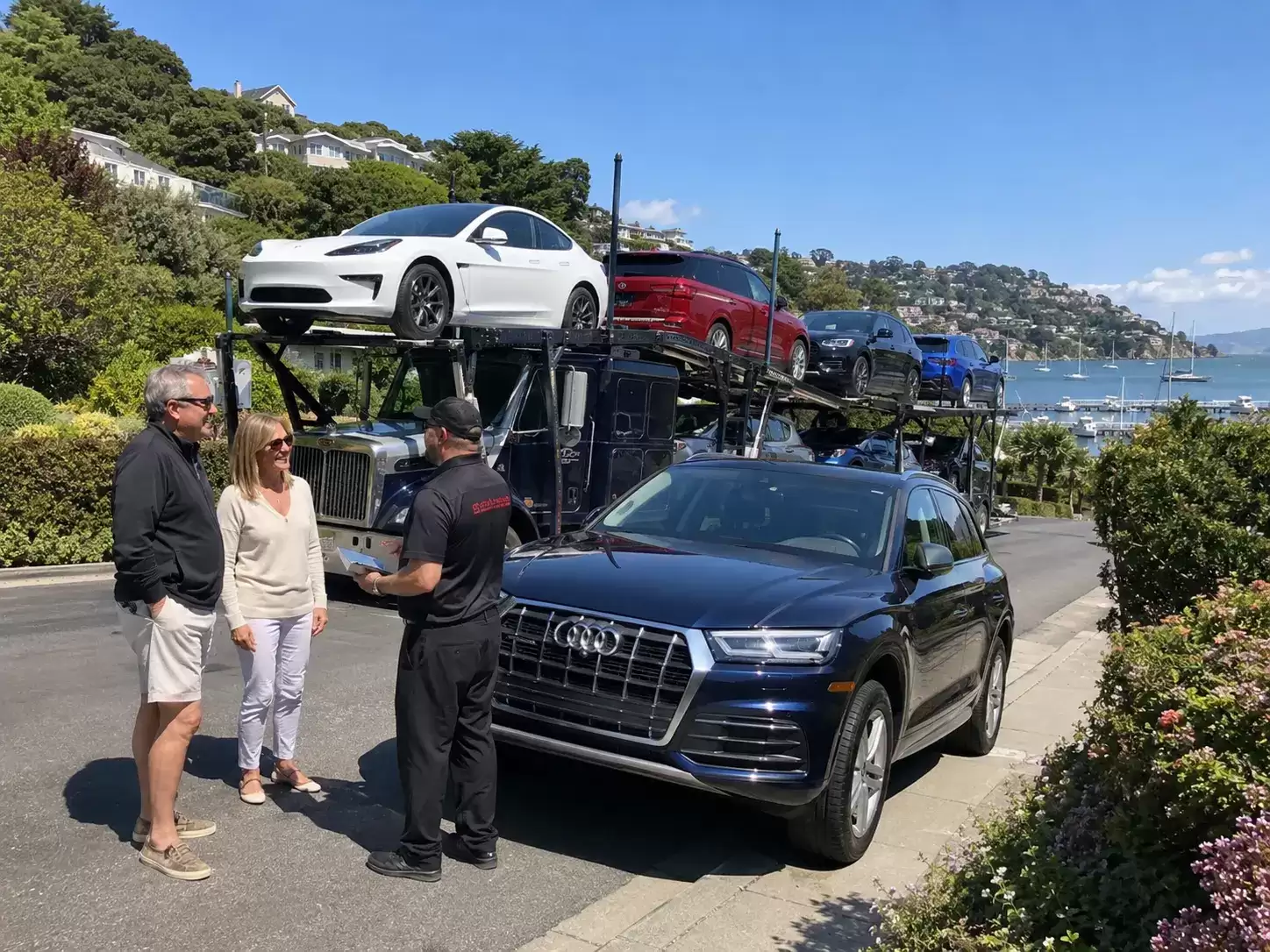
Other California to Ohio Cities We Serve
Direct Express ships vehicles between hundreds of city pairs on this route. Below is a broader look at additional California origins and Ohio destinations we regularly serve.
Hub Cities Along the California–Ohio Car Shipping Corridor
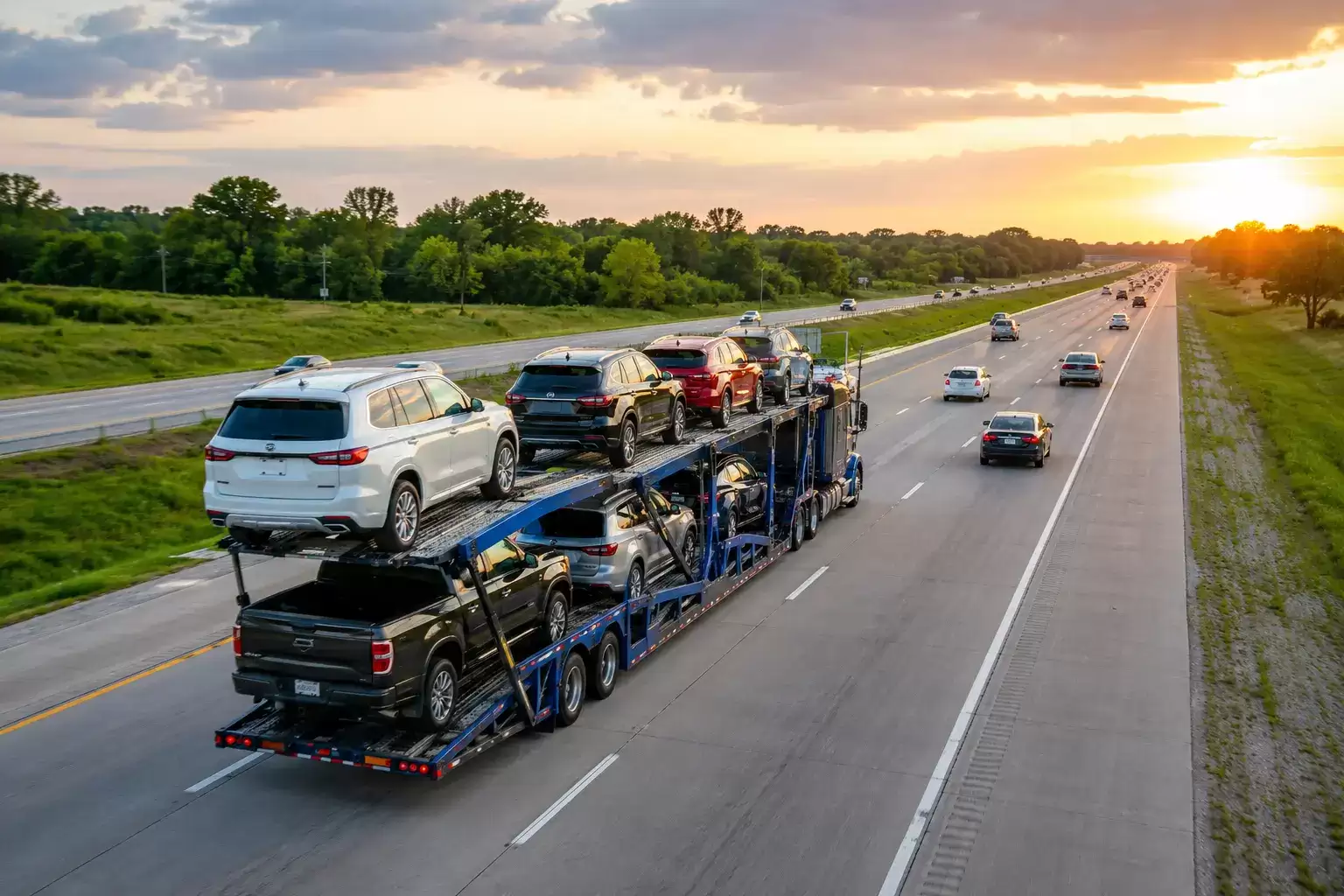
The California-to-Ohio run tracks east along two primary highway corridors before converging on Ohio’s I-70/I-75 hub network. The I-40 route through the Southwest is the dominant eastbound path, connecting the LA basin to the Midwest through the desert and plains. Ohio’s interstate grid — where I-70, I-71, I-75, and I-77 all intersect — makes it one of the most well-served delivery states in the country once the carrier arrives from the west.
Major Origin Hubs in California
Cross-Country Corridor Cities
Major Ohio Delivery Points
Routing Insight: I-70 is the key Ohio artery — it enters the state at the Indiana border and passes through Dayton, Columbus, and the eastern edge of the state. Cincinnati is reached via I-75 south from Dayton. Cleveland is reached via I-71 north from Columbus. Toledo via I-75 north from Dayton. The I-70/I-75 interchange near Dayton is one of the most important carrier routing junctions in the Midwest — nearly every California-to-Ohio shipment flows through or near it.
Open vs. Enclosed Car Transport on the California–Ohio Route
The California-to-Ohio haul covers 2,200–2,500 miles through desert heat, plains wind, and Midwest weather — including the possibility of winter road salt on Ohio delivery roads. The choice between open and enclosed transport matters more on this route than on shorter hauls.
Open Transport Recommended for Most
- Open-air trailer carrying 7–10 vehicles — the industry standard for virtually all everyday vehicle shipments
- Most cost-effective option by a significant margin
- Well-suited for daily drivers, commuter vehicles, SUVs, trucks, minivans, and any vehicle under approximately $60,000
- The California-to-Ohio I-40 route through the desert Southwest is well-traveled and carrier availability from SoCal eastbound is consistently strong
- Road film from 2,200+ miles of highway is normal and expected — a wash on arrival cleans it up
Enclosed Transport
- Vehicle travels in a fully enclosed, weatherproof trailer from California to Ohio
- Typically 40–60% more expensive than open transport
- Recommended for luxury vehicles, exotics, collector cars, show-quality finishes, and low-clearance vehicles
- Particularly relevant for Ohio deliveries in winter: Ohio road salt is among the most aggressive in the country for undercarriage and brake component corrosion — an enclosed vehicle arrives clean and avoids the salt exposure that open delivery involves in winter months
- Also worth considering for California classics being shipped east: vehicles with no rust history benefit from arriving without road film and contaminants that can accelerate early rust initiation
- Book 2–3 weeks ahead — fewer enclosed carriers service this lane
Our honest recommendation: For the everyday vehicle — open transport. For a California classic, collector car, or anything valuable you’re sending into Ohio winters — enclosed earns its premium. Winter deliveries to northern Ohio (Cleveland, Toledo, Lorain) are the strongest case for enclosed on this corridor.
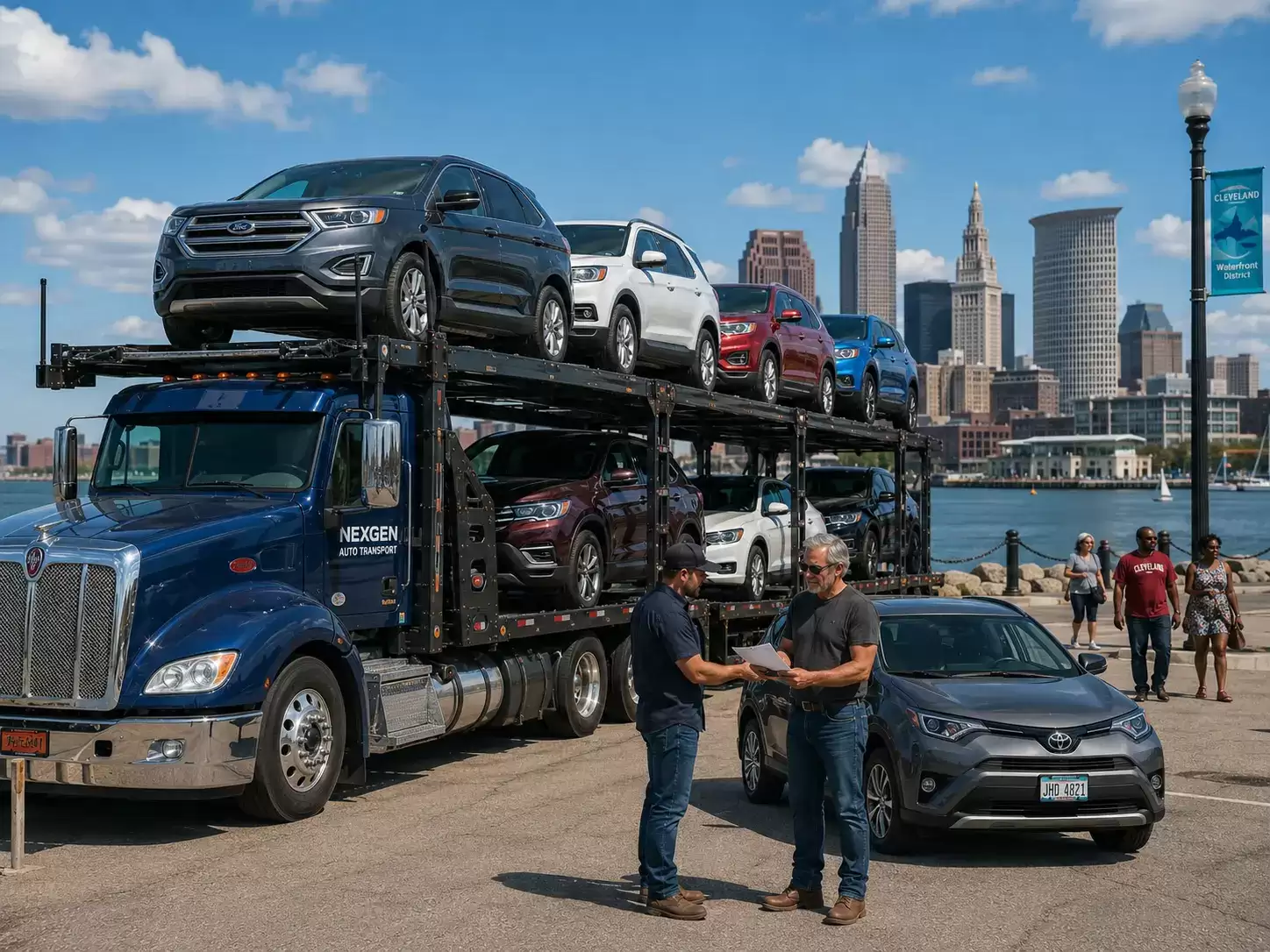
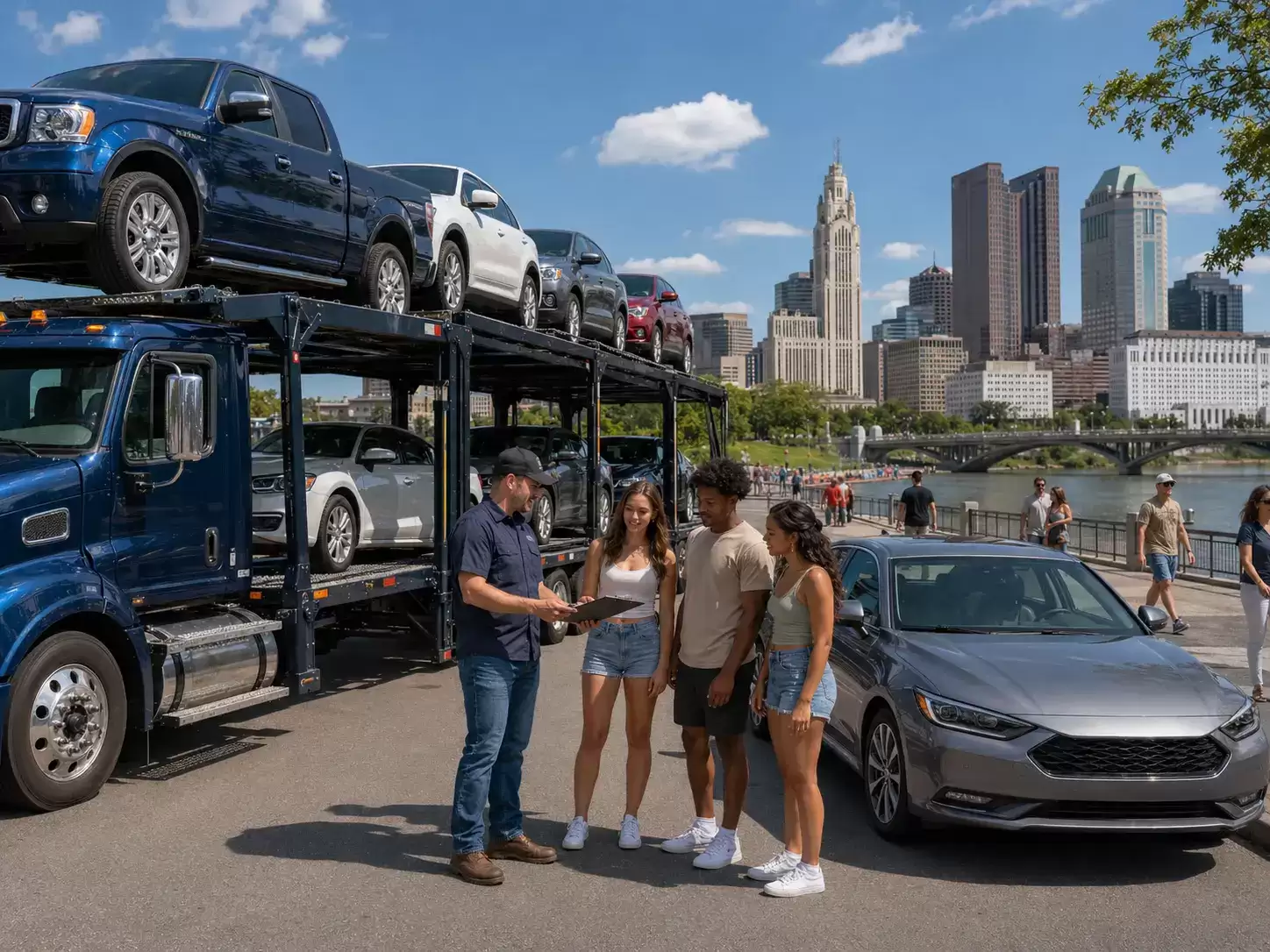
Door-to-Door Car Shipping: What to Expect in California and Ohio
Pickup in California
Southern California and the Inland Empire
Southern California — the Los Angeles basin, San Diego, Orange County, and the Inland Empire — is the most carrier-dense pickup zone in the country. Carriers departing eastbound from SoCal are in constant rotation, and pickup assignment from this region is among the fastest available anywhere. Most residential and commercial addresses in SoCal are accessible to large car haulers. Some areas of downtown Los Angeles and dense city neighborhoods may require a short logistics coordination for large trailer access, but this is the exception. Your carrier will contact you to confirm a pickup window 24–48 hours in advance.
Bay Area and Northern California
Northern California pickups (San Francisco, Oakland, San Jose, Sacramento) require carriers to head south to the SoCal hub or take the I-80 northern route east. Bay Area pickups operate efficiently but at a meaningful pricing and timeline premium relative to SoCal. Dense urban neighborhoods in San Francisco may require meeting-point coordination for large haulers — your coordinator handles this before pickup.
Delivery in Ohio
Major Ohio Metros: Columbus, Cleveland, and Cincinnati
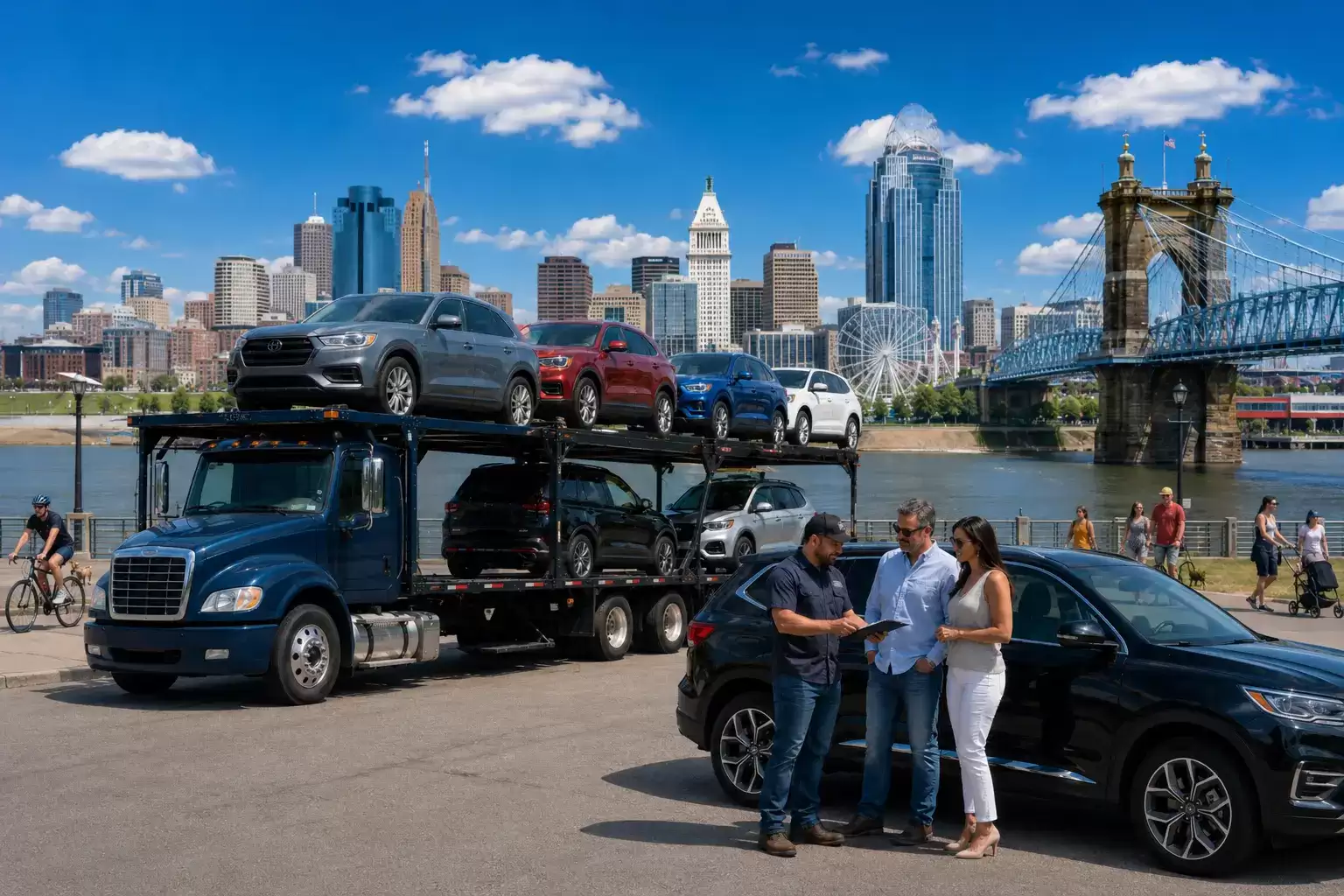
Ohio’s interstate network makes it one of the most accessible delivery states in the country. Columbus, the geographic center of Ohio’s highway system, receives deliveries at the I-70/I-71/I-270 interchange — among the most efficient Midwest delivery points from California. Cincinnati sits at the I-75/I-71 convergence in the southwest corner and is also a highly efficient delivery city. Dayton, between Columbus and Cincinnati on I-70/I-75, is equally straightforward. Most residential addresses across Ohio’s major metros are accessible to large car haulers without issue.
Dayton, Akron, Toledo, and Northeast Ohio
Standard door-to-door delivery throughout Dayton, Akron, Toledo, and Northeast Ohio. Dayton: standard residential, I-75 and I-70 access. Wright-Patterson AFB (Fairborn, near Dayton): confirm on-base vehicle access and gate authorization at booking for military PCS deliveries. Akron and Canton: standard residential, I-76 and I-77 access; carriers approach from Columbus before heading east into Northeast Ohio — add 1–2 transit days relative to Columbus and Cincinnati for these deliveries. Youngstown: standard residential, I-80 access. Toledo: standard residential, I-80/I-90 and I-75 access. Winter protocol: Northeast Ohio and the Cleveland suburbs fall in the Lake Erie snow belt — add 1–2 day delivery buffer for heavy lake-effect events from January through March.
Preparing Your Vehicle
Before pickup: remove all personal items from the interior, leave no more than a quarter tank of fuel, disable your car alarm, and remove any exterior accessories. Document your vehicle thoroughly with dated photographs from all angles before the carrier arrives. At delivery in Ohio, inspect your vehicle carefully before signing the Bill of Lading — note any concerns on the form before signing. Your signature without notation constitutes acceptance of the vehicle’s condition.
California & Ohio Auto Transport Resources
California Helpful Government Links
- California Department of Motor Vehicles (CA DMV) — Primary agency for California vehicle titles and registration. When you move out of California permanently, contact the DMV to initiate the title release process before re-registering in Ohio.
- CA DMV — Title Transfer and Out-of-State Registration — Guidance on releasing your California title when relocating your vehicle to another state. Ohio will require your California title for the re-registration process.
- CA DMV — Vehicle Registration Fees — Use this to estimate any outstanding California fees before your vehicle is transferred to Ohio registration.
Ohio Helpful Government Links
- Ohio Bureau of Motor Vehicles (Ohio BMV) — Primary agency for Ohio vehicle titles and registration. New Ohio residents must register their out-of-state vehicle within 30 days of establishing residency.
- Ohio BMV — Moving to Ohio / New Resident Vehicle Registration — Step-by-step guidance for transferring your California title and obtaining Ohio registration and plates. Ohio requires a VIN inspection for out-of-state vehicles at time of registration.
- Ohio EPA — E-Check Emissions Testing — Several Ohio counties require emissions testing (E-Check) at registration. Confirm whether your delivery county requires E-Check before your vehicle arrives — California emissions equipment is generally well-calibrated but the county list changes periodically.
Federal Auto Transport Resources
- FMCSA — Verify a Carrier’s License (SAFER System) — Verify that any auto transport company you consider is federally licensed and insured before booking.
- FMCSA — Protect Your Move — Federal consumer guidance about hiring vehicle shippers, including red flags for broker scams and your rights as a shipper.