California to North Carolina Car Shipping
The original instant car shipping calculator — trusted since 2004. Door-to-door California to North Carolina transport with no surprises, no hidden fees, and three options to ship your vehicle on your schedule.
★ 4.6/5 Google Reviews | BBB Accredited A+ | FMCSA Licensed (MC #479342) | USDOT #1240502 | No upfront payment required | 20+ years shipping vehicles


California to North Carolina Car Shipping Rates by City
Every California to North Carolina vehicle shipment is available at three service levels:
Standard, Expedited, & Rush Options
Choose the one that fits your timeline and budget. All three include full door-to-door service and carrier insurance.
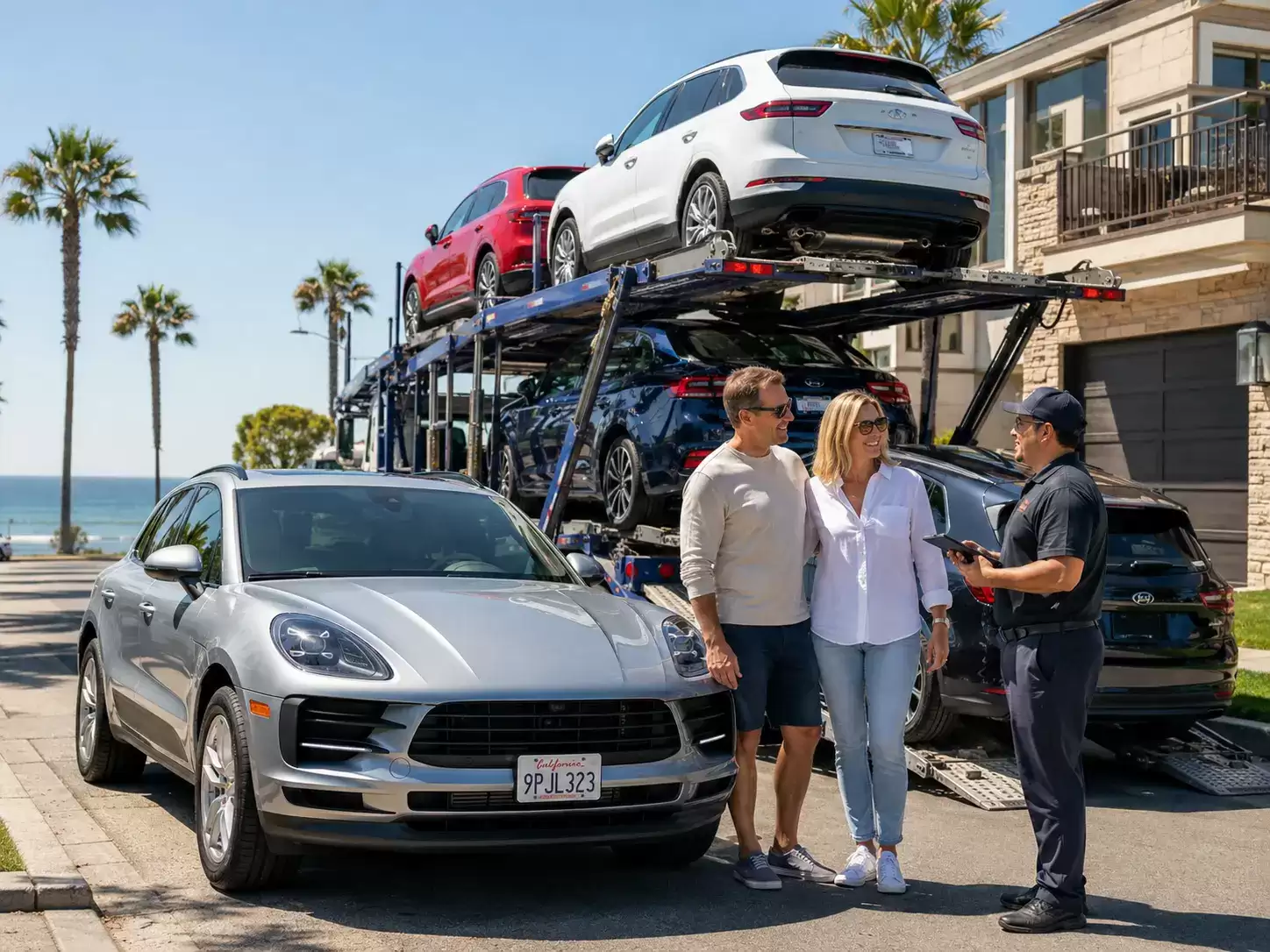
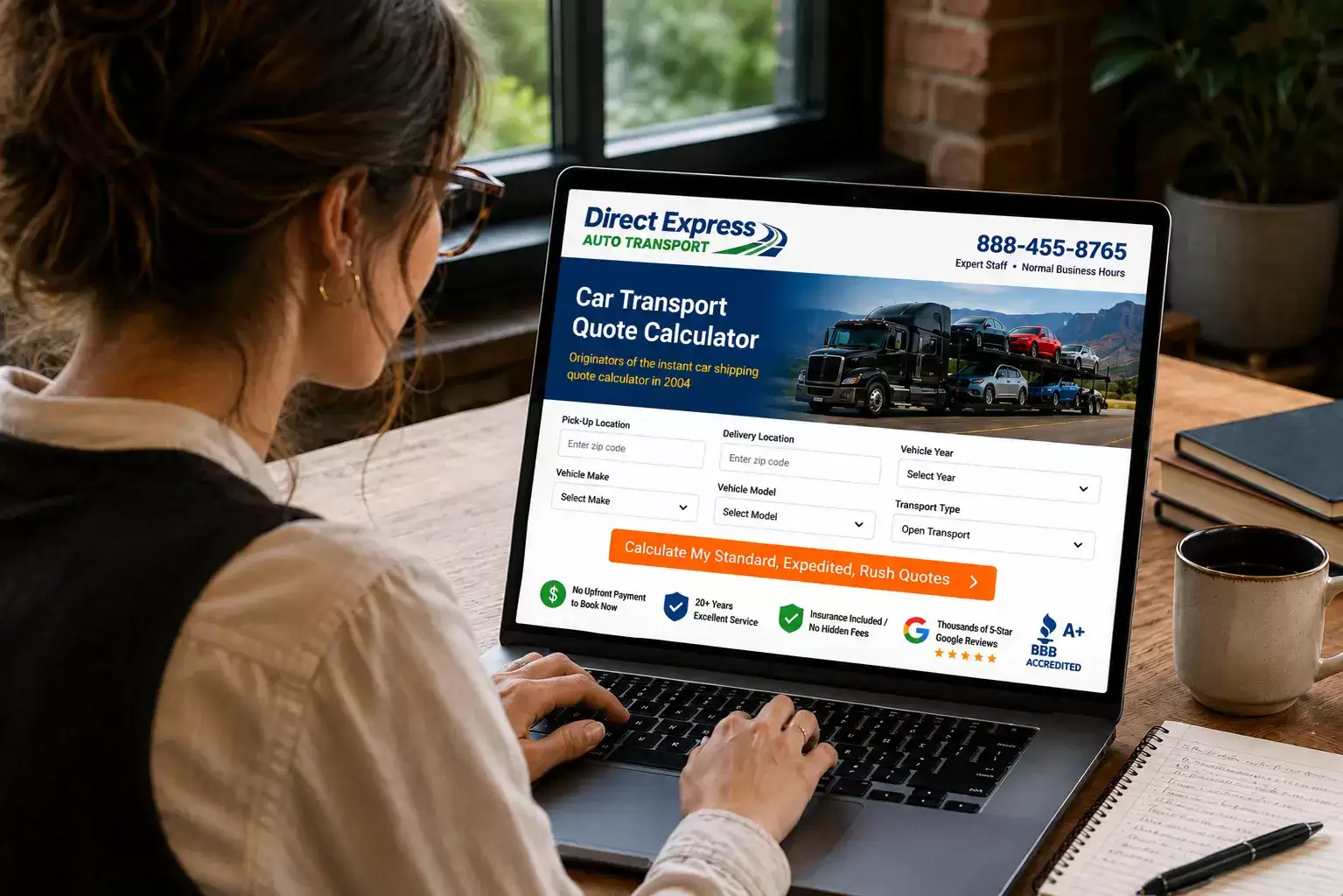
The Company That Invented Instant Auto Transport Pricing
Direct Express Auto Transport pioneered online instant pricing for the auto transport industry in 2004. Before we built the first car shipping cost calculator, getting a quote from a broker meant phone calls, callbacks, and waiting — sometimes days. We changed that. Today you know your exact cost in 30 seconds, before committing to anything. No phone tag, no hassle. Just a real number, instantly.
Three Service Tiers for Every California to North Carolina Shipment
Every shipment on this California to North Carolina route is available at three service tiers so you can match your budget to your timeline. Standard delivers at the best available rate — ideal when your schedule has a few days of flexibility. Expedited moves your vehicle to the front of the dispatch queue for faster pickup. Rush gets your car picked up as fast as humanly possible — for moves where every day counts. All three tiers include full door-to-door service and carrier insurance.
What customers say about shipping a car from California to North Carolina with Direct Express Auto Transport


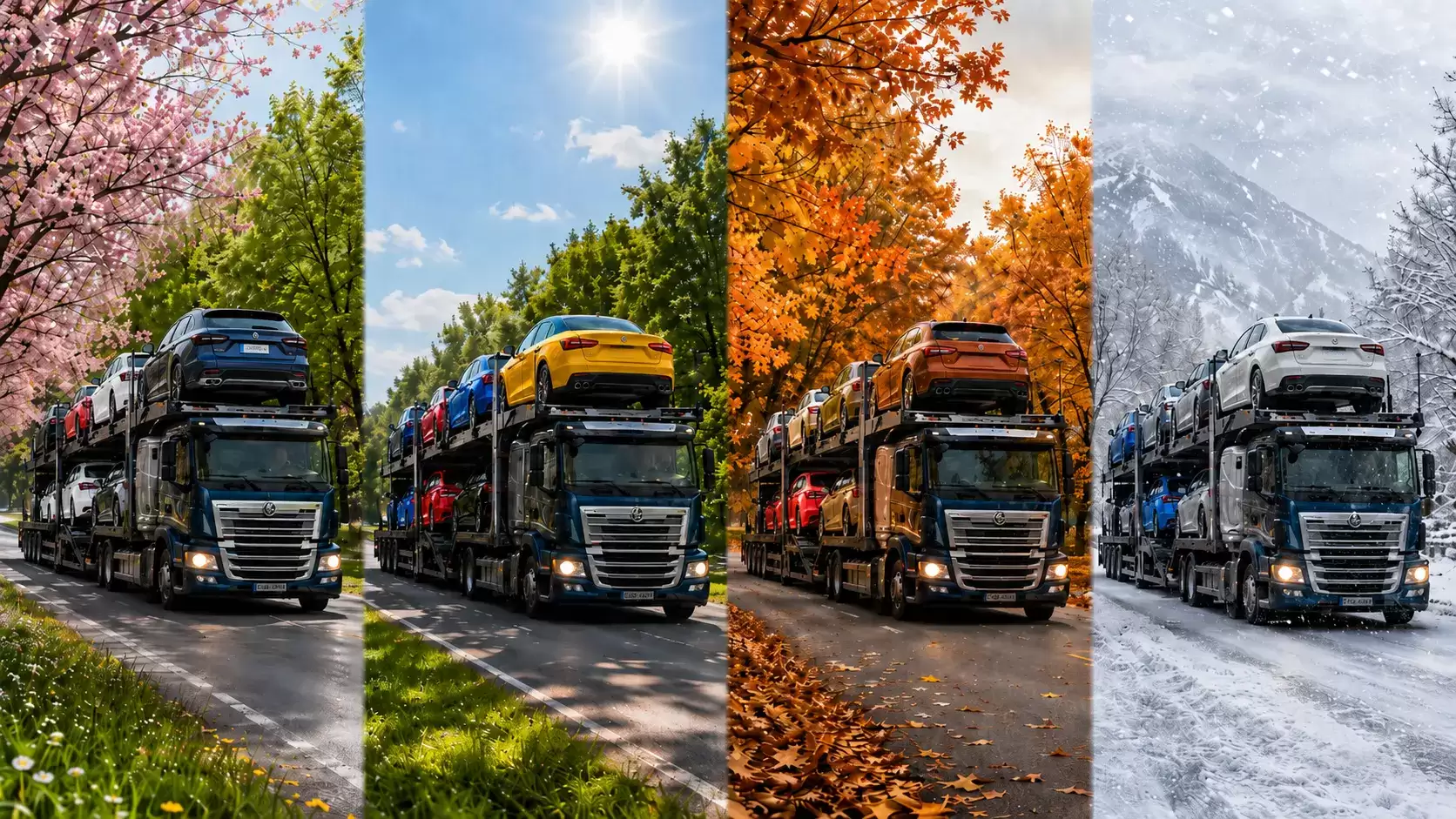
Seasonal Pricing Guide: California to North Carolina
California to North Carolina is one of the country’s fastest-growing relocation corridors of the past decade. North Carolina’s combination of lower cost of living, expanding technology and research sectors, major military installations, and mild four-season climate has drawn a steady westbound-to-eastbound flow from California that intensifies every year. The seasonal demand calendar here follows the national pattern, but with some distinct drivers — military PCS cycles, Research Triangle hiring cycles, and the Charlotte banking sector’s transfer schedule — that reward knowing when to book.

Who Ships a Car from California to North Carolina — and Why
California to North Carolina is one of the defining domestic relocation corridors of the 2020s. The combination of North Carolina’s economic expansion, affordable housing relative to California’s coastal metros, and quality of life in cities like Raleigh, Charlotte, and Asheville has made this one of the highest-volume westbound-to-eastbound auto shipping lanes in the country.
Military PCS: Camp Pendleton / Fort Irwin / Marine Bases → Fort Liberty and North Carolina
The military drives the most structurally consistent volume on this lane. Fort Liberty — formerly Fort Bragg — in Fayetteville is one of the Army’s largest installations, home to the 82nd Airborne Division and Special Operations Command. Thousands of service members receive PCS orders to Fort Liberty from California bases every year, and their vehicles follow them east on carrier loads out of Fort Irwin, Fort Hunter Liggett, Camp Pendleton, and other western installations. Camp Lejeune and Marine Corps Air Station Cherry Point, both in eastern North Carolina, generate additional military volume from California Marines relocating to their next duty station. This military-driven flow peaks June through August with the PCS season but runs year-round.
Research Triangle Park: California Technology Professionals Relocating to RTP
Research Triangle Park is the second major driver. The RTP cluster — spanning Durham, Raleigh, and Chapel Hill — is home to pharmaceutical giants, biotech startups, and technology companies including major operations from IBM, Cisco, and SAS. California’s Bay Area and San Diego biotech corridor regularly feeds researchers, engineers, and product managers into RTP companies at a hiring pace that has accelerated significantly since 2020. A data scientist accepting a position at a Durham pharmaceutical firm, or a software engineer joining a Cary technology company — each ships their California-plated vehicle east, often with a NorCal pickup premium that reflects their San Francisco or San Jose origin.
Charlotte Banking and Finance Recruiting California Professionals
Charlotte’s status as the nation’s second-largest banking center — home to Bank of America’s headquarters and a major Wells Fargo presence — generates consistent corporate transfer volume from California. Finance professionals rotating from California offices to Charlotte headquarters ship vehicles regularly. Charlotte’s growth has also drawn California remote workers and entrepreneurs who want a lower cost of living while remaining in a major metro with a strong airport, an NBA franchise, and a growing restaurant and arts scene that was unthinkable in Charlotte even fifteen years ago.
Asheville Lifestyle Migration: Californians Seeking Mountain Living in Western NC
The Asheville market represents a smaller but passionate cohort: Californians who have tired of California’s cost and intensity and want a mountain town with a genuine arts scene, serious food culture, and a climate that gives them four seasons without the Great Lakes winter. Asheville has been drawing California transplants for two decades, and the vehicles that carry their possessions arrive on I-40 from the west every month of the year.
What Makes the California–North Carolina Auto Shipping Run Different
I-40: The Only Interstate That Runs From California to North Carolina
The California-to-North Carolina shipping lane has a routing distinction shared by no other state pair: Interstate 40 originates in Barstow, California, and terminates 2,554 miles later in Wilmington, North Carolina. No other single interstate runs directly between a California origin and a North Carolina endpoint. Carriers loading in the Los Angeles basin pick up I-40 at Barstow and follow it continuously east through the Mojave, across the Arizona plateau past Flagstaff, through Albuquerque and Amarillo, across Oklahoma City, into Little Rock, through Nashville and Knoxville, and up through the Smoky Mountains into the North Carolina Piedmont.
I-40 Continuous Run: Barstow to Wilmington Without Highway Change
The route is direct, well-maintained, and weather-reliable through its Southwest and Midwest segments. The I-40 mountain crossing through the Pigeon River Gorge between Tennessee and Asheville is the one segment where winter weather can cause brief delays — manageable and well-monitored by carriers year-round.
Charlotte vs. the Triangle: Two Very Different Delivery Zones
North Carolina’s two largest metro areas serve different industries and sit 170 miles apart on I-85/I-40. Charlotte — in the southwestern part of the state — is the closer destination from California: Los Angeles to Charlotte is approximately 2,510 miles. Charlotte is a straightforward carrier delivery city with wide suburban streets and strong carrier availability driven by the freight volume of one of the South’s largest metros. The Research Triangle (Raleigh, Durham, Cary, Chapel Hill) sits 170 miles further east, adding distance and transit time but remaining well within the I-40 corridor.
NorCal Pickup Premium — Applies from Bay Area and Sacramento Origins
Southern California is the natural I-40 on-ramp for this route — carriers load in the LA basin and drive directly onto I-40 east. Northern California pickup (San Francisco, Oakland, San Jose, Sacramento) requires the carrier to run south from the Bay Area to reach the I-40 corridor, adding 380–450 miles before the cross-country haul begins. The $200–$250 NorCal pickup premium from Bay Area and Sacramento origins reflects this added carrier cost and is included in the pricing table above.
Western NC Mountain Delivery: Asheville and the Blue Ridge
Asheville and the western North Carolina mountain region add a routing nuance specific to this corridor. I-40 enters North Carolina from Tennessee through the Pigeon River Gorge — a dramatic mountain highway that climbs to approximately 3,000 feet elevation near the Tennessee border. Large car haulers navigate this section without issue in typical conditions. In winter, the gorge area can see ice and snow that briefly close I-40 or require chain controls. Carriers monitor conditions and hold loads at Knoxville staging points during significant weather events rather than risk the mountain crossing.
Pigeon River Gorge Winter Protocol: Knoxville Staging and Chain Controls
Asheville deliveries in January and February benefit from a 2-day flexible delivery window that accounts for this possibility. The mountain weather variability is part of what makes Asheville so appealing to Californians — four genuine seasons — and it is the one operational variable unique to deliveries in western NC.
Other California to North Carolina Cities We Serve
Direct Express ships vehicles between hundreds of city pairs on this route. Below is a broader look at additional California origins and North Carolina destinations we regularly serve.
Hub Cities Along the California–North Carolina Car Shipping Corridor
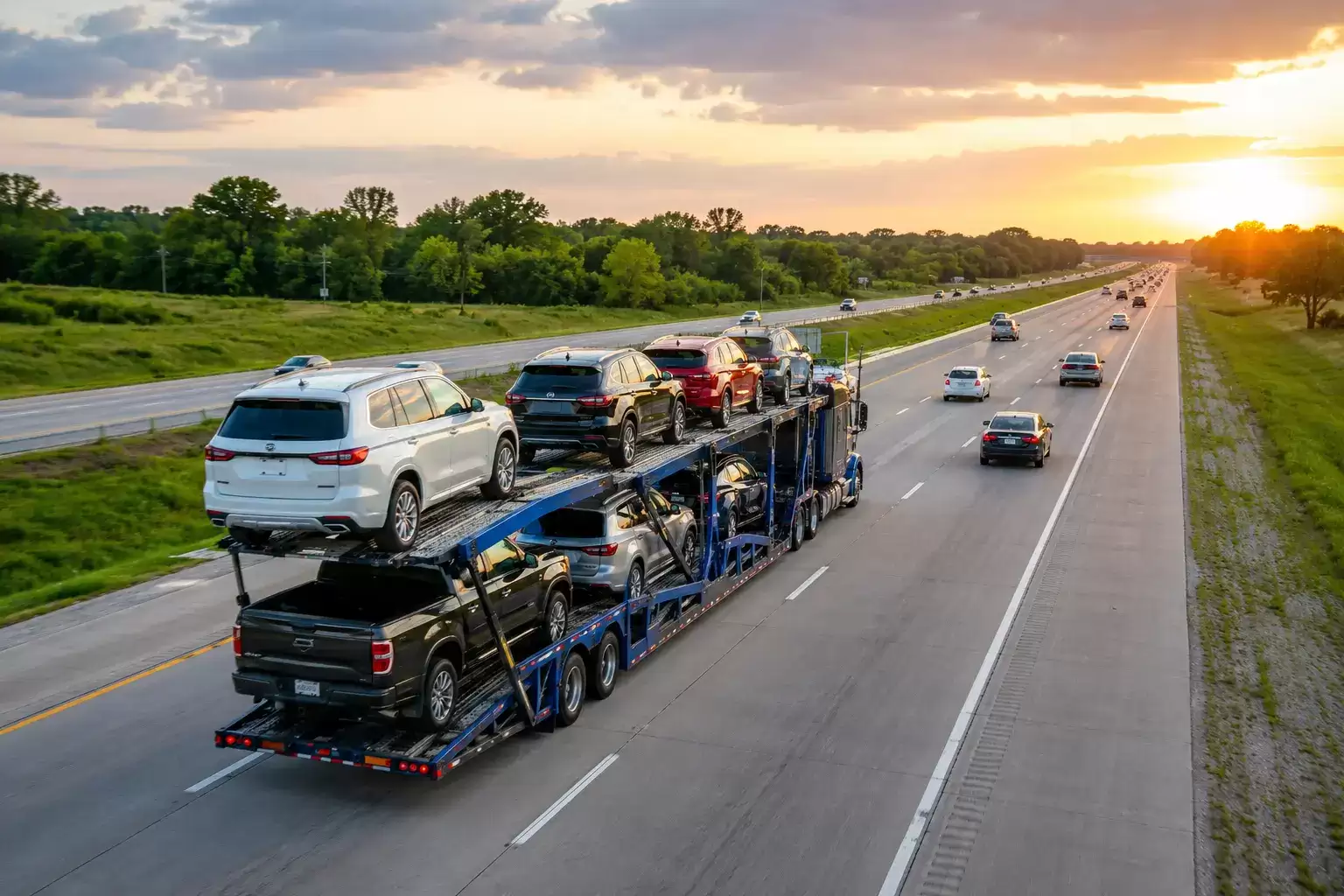
The California-to-North Carolina run follows Interstate 40 from its western origin near Los Angeles all the way to its eastern terminus in Wilmington, NC — the only single interstate that connects a California city to a North Carolina city. Los Angeles anchors the western origin zone; Charlotte, Raleigh, and the Triangle anchor the major delivery zones in the Tar Heel State.
Major Origin Hubs in California
I-40 Corridor Cities
Major North Carolina Delivery Points
Asheville: The Mountain Gateway: Asheville sits at mile marker 46 on I-40 inside North Carolina — the first major city after the interstate descends from the Great Smoky Mountains entering the state from Tennessee. Every vehicle bound for Charlotte (another 120 miles east on I-40/I-85), Greensboro, Winston-Salem, Raleigh, or the coast passes through Asheville’s doorstep. Carriers frequently pause in Asheville to refuel and coordinate final delivery runs into the Piedmont and Triangle. It is both a popular final destination in its own right and the operational gateway through which the entire western-approach delivery zone is served.
Open vs. Enclosed Car Transport on the California–North Carolina Route
The California-to-North Carolina haul spans 2,500–2,900 miles depending on origin and destination. Both the California pickup end and most North Carolina delivery points are benign for vehicle transport. The one variable unique to this corridor is the mountain crossing near Asheville — winter weather at elevation — but it is a logistical consideration, not a surface protection issue. Here is how to think about the open vs. enclosed choice on this route.
Open Transport Recommended for Most
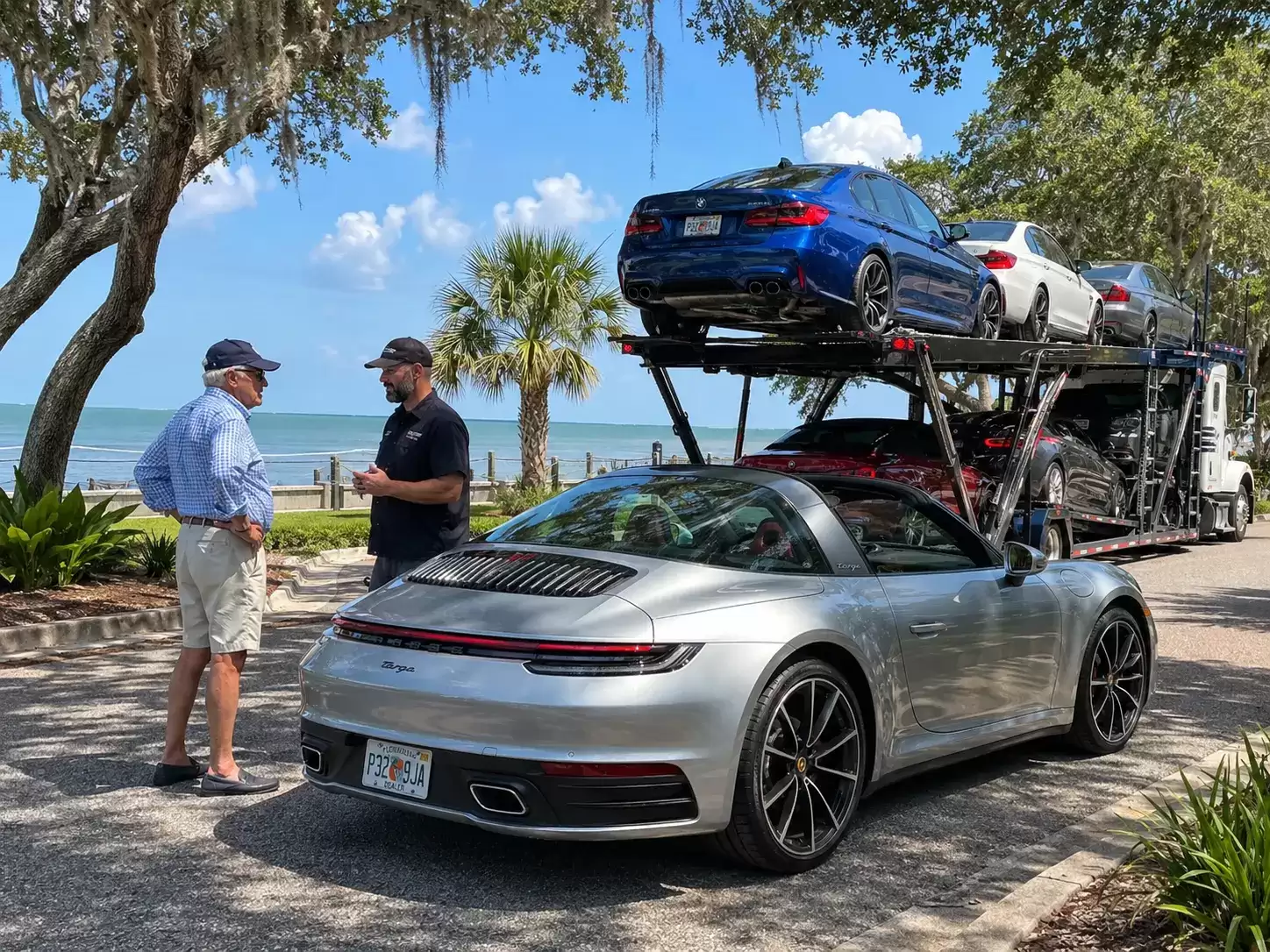
- Open-air trailer carrying 7–10 vehicles — the industry standard for virtually all everyday vehicle shipments on this lane
- Most cost-effective option, well-suited for everyday vehicles, SUVs, trucks, and any vehicle under approximately $60,000
- The I-40 corridor from Los Angeles to Charlotte and Raleigh is one of the most consistently carrier-traveled routes in the country — open carrier availability is strong year-round from SoCal origins
- California pickup is uncomplicated year-round; North Carolina delivery is clean year-round except in the western mountain region during winter
- Road film after 2,500+ miles is normal — a wash on NC delivery takes care of it
Enclosed Transport
- Vehicle travels in a fully enclosed, weatherproof trailer from California to North Carolina
- Typically 40–60% more expensive than open transport
- Recommended for luxury vehicles, exotics, classics, show-quality finishes, and any vehicle over approximately $75,000
- If delivering to Asheville in winter, enclosed provides weather protection during the mountain approach — not just a surface cleanliness benefit, but actual protection from the elements during the Pigeon River Gorge crossing
- Charlotte and the Piedmont region: no special enclosed transport need from a surface or weather standpoint — the choice is purely about vehicle value and preference
- Book 2–3 weeks ahead — fewer enclosed carriers on this lane than open
Our honest recommendation: Open transport for the everyday vehicle — this is a well-served I-40 corridor and open carrier runs efficiently from any California origin. Enclosed for collector cars, luxury vehicles, or any winter Asheville delivery where weather protection matters.
California–North Carolina Open or Enclosed Transport Estimate

Door-to-Door Car Shipping: What to Expect in California and North Carolina
Pickup in California
Southern California: Los Angeles, San Diego, and Orange County
Standard door-to-door pickup throughout Southern California. Los Angeles basin: standard residential throughout; very dense downtown LA, Koreatown, Hollywood, and Westlake high-rise addresses require carrier staging on a nearby wide commercial street — confirm your address at booking. San Diego and Chula Vista: excellent carrier access, standard residential throughout. Orange County (Anaheim, Irvine, Santa Ana, Fullerton): standard residential, no staging concerns. Southern California is the highest carrier-density pickup zone in the country — strong dispatch availability in all service tiers. No heat protocol at coastal SoCal origins in any season.
Inland Empire and Central Valley
Standard door-to-door pickup throughout the Inland Empire and Central Valley. Riverside, San Bernardino, Fontana, and Ontario: excellent suburban carrier access via I-10 and I-15; the Inland Empire is one of the densest carrier staging zones in the country. Summer heat protocol: Inland Empire origins (June–September) reach 105–115°F — enclosed transport recommended for exotic and luxury vehicles staged at IE pickup locations during peak summer. Fresno, Bakersfield, Modesto, and Stockton: standard residential throughout; same summer heat protocol applies for exotics June through September.
Bay Area and Sacramento
Standard door-to-door pickup throughout the Bay Area and Sacramento. San Jose, Oakland, Fremont, Vallejo, and Concord: standard residential access. San Francisco: carrier staging required for steep-grade neighborhood pickups (Pacific Heights, Russian Hill, Nob Hill, Bernal Heights) — confirm your specific address at booking. Sacramento: standard residential throughout. No heat protocol at coastal Bay Area origins in any season. Bay Area origins carry a pricing premium due to departure distance and carrier positioning relative to Southern California staging hubs.
Delivery in North Carolina
Charlotte Metro and the Piedmont
Standard door-to-door delivery throughout Charlotte and the Piedmont. Charlotte: standard residential throughout; very dense uptown Charlotte and South End addresses require carrier staging on a nearby wide street — confirm your delivery address at booking. Charlotte suburbs (Concord, Kannapolis, Gastonia, Huntersville, Mooresville, Matthews, Monroe): standard residential, no staging concerns. Piedmont Triad (Greensboro, Winston-Salem, High Point): standard residential throughout. Charlotte is North Carolina’s primary carrier delivery hub — strong inbound availability across all tiers.
Research Triangle and Central North Carolina
Standard door-to-door delivery throughout the Research Triangle and Central NC. Raleigh: standard residential throughout; dense downtown Raleigh addresses require nearby staging — confirm at booking. Durham and Chapel Hill (Duke/UNC corridor): standard residential, no staging concerns. Cary, Apex, Morrisville, and Research Triangle Park: standard residential. Fayetteville and Fort Liberty (Army, formerly Fort Bragg): standard residential; confirm on-base vehicle access and gate authorization at booking for military PCS deliveries. Fort Liberty PCS moves are a major segment of the North Carolina auto transport market.
Eastern NC, Coastal Markets, and Western Mountains
Standard door-to-door delivery throughout Eastern NC, coastal markets, and Western NC. Jacksonville and Camp Lejeune (Marine Corps): standard residential; confirm on-base vehicle access at booking for military PCS deliveries. Wilmington: standard residential, I-40 and US-17 access. Asheville and Western NC mountains: standard residential; some mountain addresses require staging nearby — confirm at booking. Rocky Mount, Goldsboro, Greenville, and New Bern: standard residential. Outer Banks: confirm accessibility at booking due to narrow coastal roads. Allow additional transit lead time for Eastern NC markets relative to Charlotte and the Triangle.
Preparing Your Vehicle
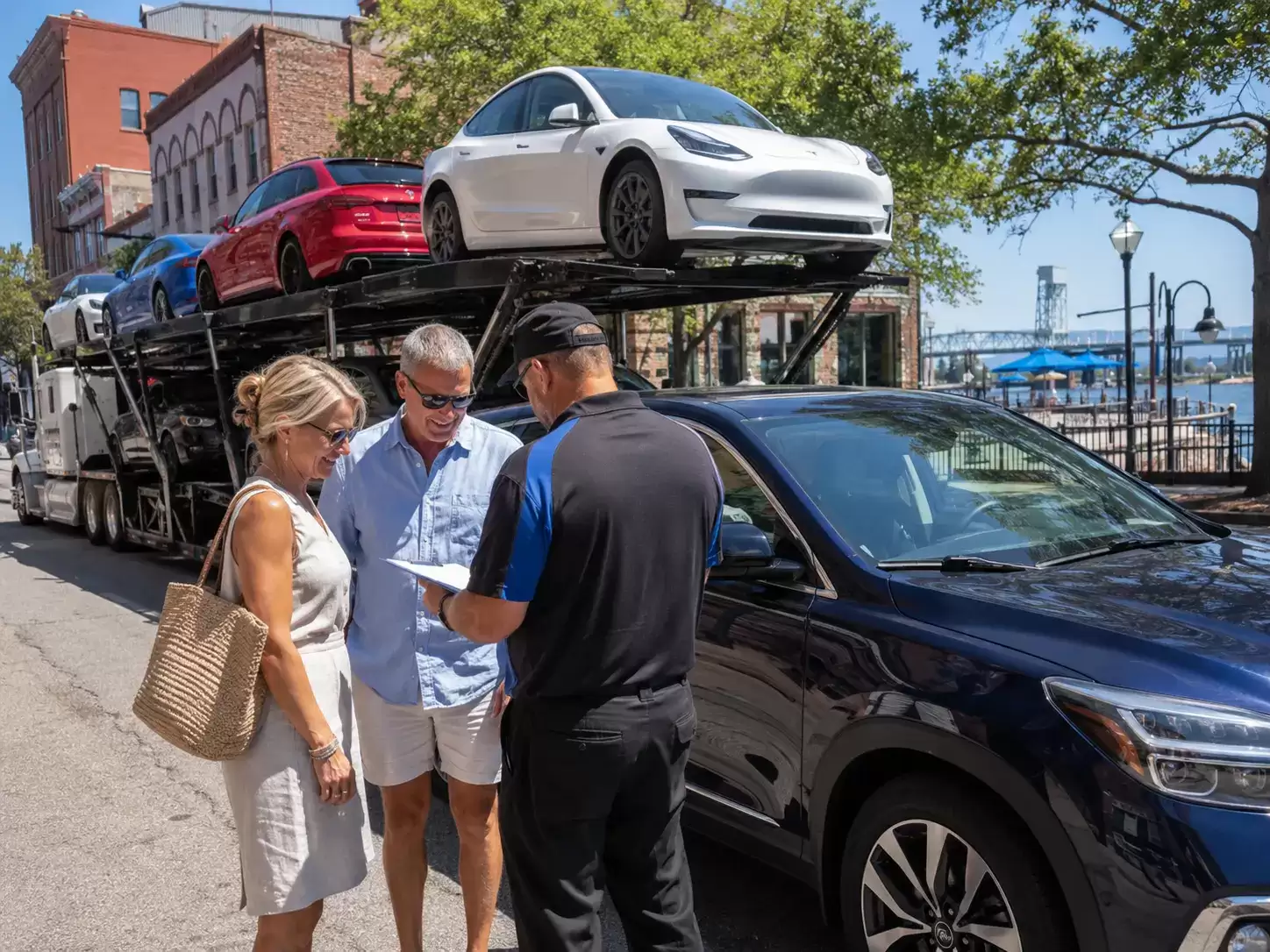
Before pickup: remove all personal items from the interior, leave no more than a quarter tank of fuel, disable your car alarm, and remove any exterior accessories. Photograph your vehicle thoroughly from all angles with date-stamped images before the carrier arrives. At delivery in North Carolina, inspect your vehicle carefully before signing the Bill of Lading — note any concerns before signing. Your signature without notation constitutes acceptance of the vehicle’s condition.
California & North Carolina Auto Transport Resources
California Helpful Government Links
- California Department of Motor Vehicles (CA DMV) — Primary agency for California vehicle titles and registration. When moving permanently to North Carolina, obtain your California title before shipping — NC requires it to complete registration at the destination end.
- CA DMV — Transferring Your Vehicle Out of State — Guidance on releasing your California title for out-of-state transfer. Complete this before your vehicle is picked up.
- CA DMV — Vehicle Registration Fees — If maintaining California residency, use this resource for registration renewal and address updates.
North Carolina Helpful Government Links
- North Carolina Division of Motor Vehicles (NC DMV) — Primary agency for NC vehicle titles and registration. New NC residents must register their out-of-state vehicle within 30 days of establishing residency.
- NC DMV — Vehicle Title Transfers — Requirements and process for transferring your California title to a North Carolina title. You will need your CA title, proof of NC insurance, and proof of NC residency.
- NC DMV — Vehicle Inspections — North Carolina requires an annual vehicle safety inspection. Emissions testing is required in select metro counties including Mecklenburg (Charlotte), Wake (Raleigh), Guilford (Greensboro), Forsyth (Winston-Salem), and Durham. New residents must complete inspection before registering an out-of-state vehicle.
Federal Auto Transport Resources
- FMCSA — Verify a Carrier’s License (SAFER System) — Verify that any auto transport company you consider is federally licensed and insured before booking.
- FMCSA — Protect Your Move — Federal consumer guidance about hiring vehicle shippers, including red flags for broker scams and your rights as a shipper.