California to Illinois Car Shipping
The original instant car shipping calculator — trusted since 2004. Door-to-door California to Illinois transport with no surprises, no hidden fees, and three options to ship your vehicle on your schedule.
★ 4.6/5 Google Reviews | BBB Accredited A+ | FMCSA Licensed (MC #479342) | USDOT #1240502 | No upfront payment required | 20+ years shipping vehicles


California to Illinois Car Shipping Rates by City
Every California to Illinois vehicle shipment is available at three service levels:
Standard, Expedited, & Rush Options
Choose the one that fits your timeline and budget. All three include full door-to-door service and carrier insurance.
The Company That Invented Instant Auto Transport Pricing
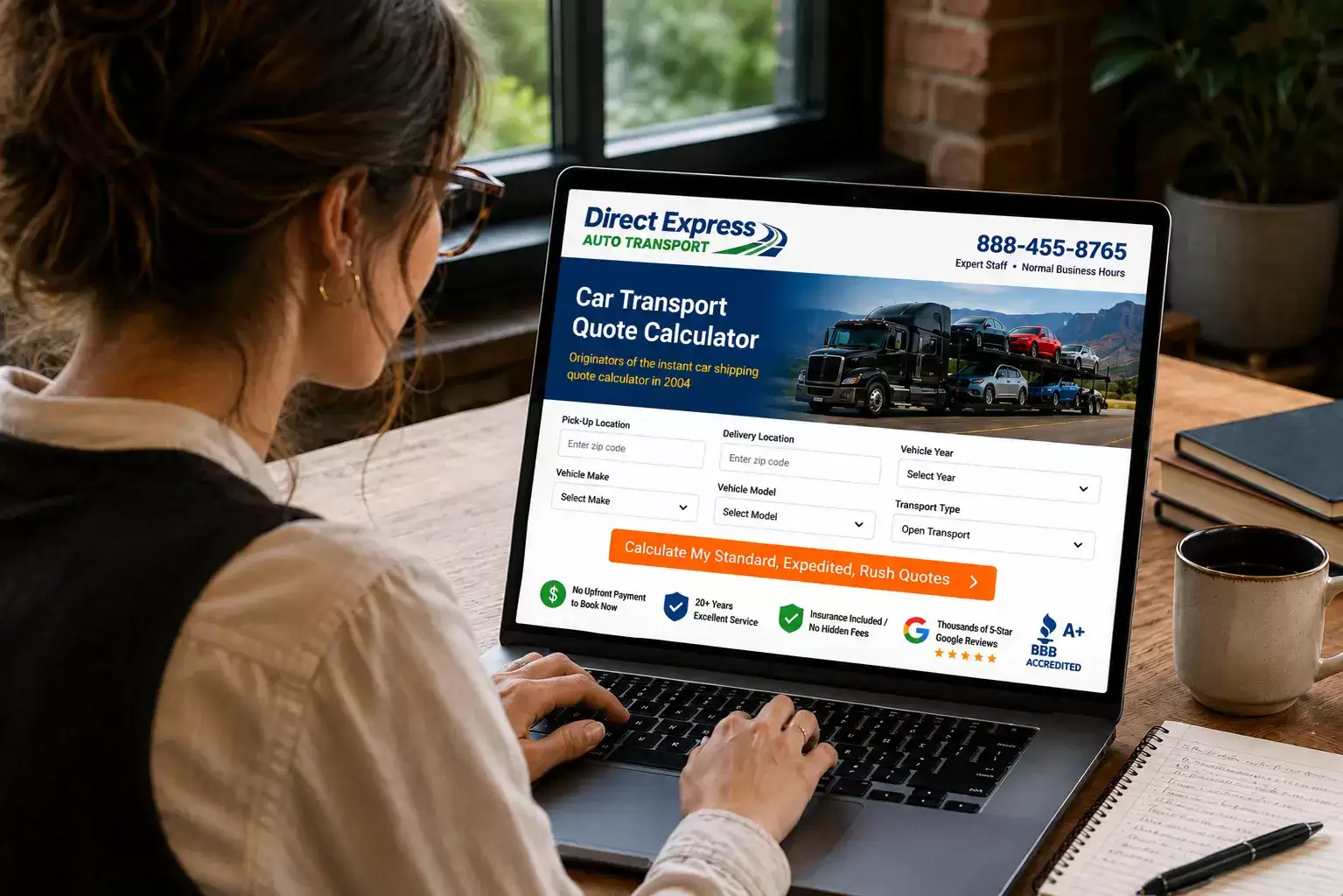
Direct Express Auto Transport pioneered online instant pricing for the auto transport industry in 2004. Before we built the first car shipping cost calculator, getting a quote from a broker meant phone calls, callbacks, and waiting — sometimes days. We changed that. Today you know your exact cost in 30 seconds, before committing to anything. No phone tag, no hassle. Just a real number, instantly.
Three Service Tiers for Every California to Illinois Shipment
Every shipment on this California to Illinois route is available at three service tiers so you can match your budget to your timeline. Standard delivers at the best available rate — ideal when your schedule has a few days of flexibility. Expedited moves your vehicle to the front of the dispatch queue for faster pickup. Rush gets your car picked up as fast as humanly possible — for moves where every day counts. All three tiers include full door-to-door service and carrier insurance.
What customers say about shipping a car from California to Illinois with Direct Express Auto Transport


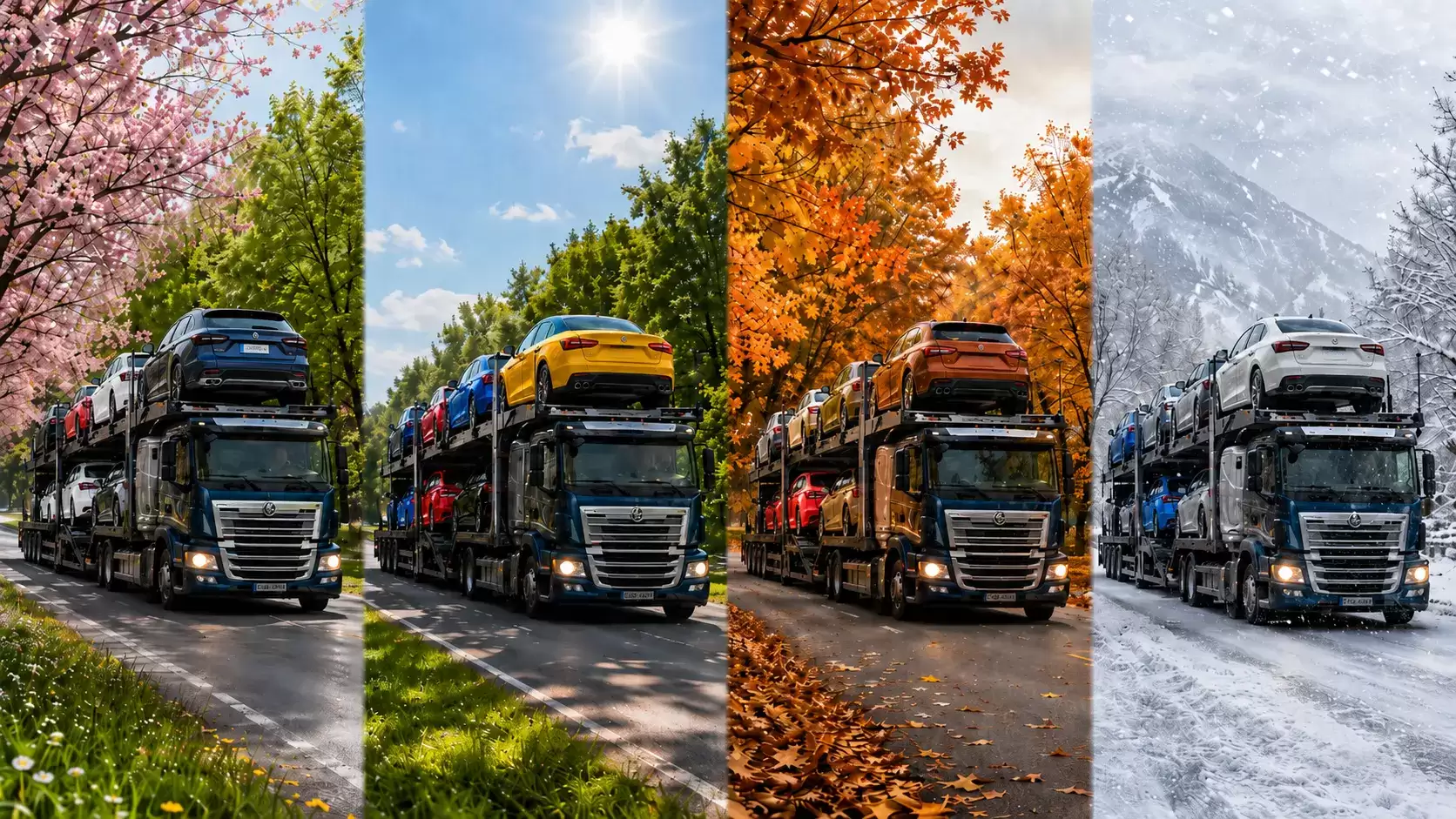
Seasonal Pricing Guide: California to Illinois
The California–Illinois corridor connects two of the three largest states by population, with Chicago anchoring one of the most active carrier hubs in North America. Demand on this route is consistent year-round, but timing matters — particularly around Chicago winters and the summer moving surge.
Who Ships a Car from California to Illinois — and Why
The California-to-Illinois run is one of the most predictable migration corridors in the country — and understanding who uses it explains why it stays busy through every season.
Midwest Natives Returning Home After California Career Stints
Midwest natives returning home from California make up the largest single category. The pattern is well-established: a young person from the Chicago area or downstate Illinois moves to Los Angeles or the Bay Area for career opportunity, stays for several years, and eventually returns — for family, for cost of living, for a change of pace, or for a career opportunity that pulls them back to the country’s third-largest metro. These returners often have a California vehicle that wouldn’t survive Chicago winters without proper preparation, and they need it shipped rather than driven through multiple states.
Chicago Finance and Professional Services Recruiting from California
Chicago’s finance and professional services sector generates consistent inbound relocation from California. The Chicago Board Options Exchange, CME Group, major law firms, consulting firms, and a growing technology sector all recruit nationally. A Goldman Sachs analyst moving from San Francisco, a McKinsey consultant transferring from Los Angeles, or a software engineer joining a Chicago fintech startup — all of them need their vehicle. These corporate relocations are distributed fairly evenly across the year, unlike the seasonal military and academic spikes.
California Students Admitted to University of Chicago, Northwestern, and DePaul
University admissions drive a meaningful June and September wave. The University of Chicago, Northwestern, DePaul, Loyola, UIC, and Illinois Institute of Technology collectively draw hundreds of California students each year. Graduate and professional school starts in particular — law, medicine, business — generate late-August and September demand as California residents relocate for multi-year programs. These students are often shipping their vehicle from the Bay Area or Los Angeles rather than selling it and repurchasing in Chicago.
Military PCS: Camp Pendleton / Travis AFB → Scott AFB and Illinois Installations
Military transfers account for a steady year-round segment. Scott Air Force Base in southwestern Illinois, Rock Island Arsenal, and Great Lakes Naval Station all receive inbound personnel from California installations regularly. Military PCS orders generate disciplined, date-specific shipping demand — and these shippers frequently use Expedited to meet hard arrival dates.
What Makes the California–Illinois Auto Shipping Run Different
Two Routes, One Dominant Path: I-40 to St. Louis to Chicago
The California–Illinois corridor has two primary highway routes. The southern path follows I-40 east from Los Angeles through Flagstaff, Albuquerque, Oklahoma City, and St. Louis — then transitions onto I-55 north for the final 300 miles into Chicago. This is the dominant year-round route because I-40 through the Southwest avoids the mountain snow that periodically closes I-80 through Wyoming and Nebraska in winter.
Northern Route via I-80: Bay Area Origins and Summer Preference
The northern path runs I-80 east from the Bay Area through Reno, Salt Lake City, Cheyenne, and Iowa before entering Chicago from the west — favored in summer for NorCal origins. Your vehicle may travel either route; carriers assign based on load manifests, weather, and backhaul efficiency.
Chicago: The Largest Carrier Hub Between the Coasts
Chicago is the single most important carrier staging city in the continental United States outside of Los Angeles and New York. Every major trucking lane in the country intersects the Chicago metro. Carriers heading between the coasts load and unload in Chicago constantly, which means delivery availability and dispatch frequency on this corridor are excellent. For most California shippers, Chicago and its suburbs represent the easiest and most efficient Midwest delivery zone in the country. Expect prompt pickup assignment, reliable transit, and well-coordinated delivery logistics.
Chicago Delivery Zones: North Shore, South Side, and Suburban Cook County
Chicago metro deliveries vary by neighborhood. North Shore suburbs like Evanston and Skokie offer standard door-to-door access. South Side neighborhoods and downtown Chicago high-rises may require carrier pre-coordination for street parking and building staging — confirm delivery logistics at booking.
Northern California: Direct on I-80, Priced Accordingly
San Francisco, Oakland, San Jose, and Sacramento sit directly on the I-80 eastbound corridor — the northern route terminates in Chicago after crossing the Mountain West and Great Plains. Despite this geographic directness, NorCal pickups still carry a $200–$230 premium over equivalent SoCal shipments, because carrier density and load volume is higher at the Southern California end of the corridor. Carriers are more abundant in the LA basin and need additional compensation to stage in NorCal. This premium is consistent and reflected accurately in the pricing table above.
Downstate Illinois: A Different Delivery Zone
Springfield and Peoria sit well south and southwest of Chicago — connected via I-55 rather than the Chicago metro carrier network. Carriers delivering to downstate Illinois often split off the main Chicago run and continue south, which can add a day to transit. Springfield is the state capital and the second-largest city in Illinois; Peoria is the largest city in the central part of the state. Both are fully serviced but shippers delivering to either city should expect the additional routing time and a modest pricing difference versus Chicago suburban delivery.
Springfield and Peoria: I-55 South and I-74 Access from Chicago
Springfield sits 200 miles south of Chicago on I-55; Peoria is 165 miles southwest via I-74. Carriers completing Chicago-area deliveries can continue to downstate Illinois on the same load, though transit times extend by one day compared to Chicago metro deliveries.
Other California to Illinois Cities We Serve
Direct Express ships vehicles between hundreds of city pairs on this route. Below is a broader look at additional California origins and Illinois destinations we regularly serve.
Hub Cities Along the California–Illinois Car Shipping Corridor
The California–Illinois run crosses the full breadth of the American Southwest, Great Plains, and Midwest before terminating in the country’s most important inland carrier hub. Understanding the corridor explains the transit timeline and why delivery to Chicago and its suburbs is among the most efficient in auto transport.
Major Origin Hubs in California
Cross-Country Corridor Cities
Major Illinois Delivery Points
Routing Insight: The I-40 southern route from Los Angeles through Albuquerque, Oklahoma City, and St. Louis is the primary California-to-Illinois path year-round. At St. Louis, carriers transition north on I-55 for the 300-mile final leg to Chicago — making St. Louis the key junction city on this corridor. The I-80 northern route from the Bay Area through Salt Lake City and Iowa enters Chicago from the west and is favored in summer. Downstate Illinois destinations (Springfield, Peoria, Bloomington, Champaign, Decatur) split from the Chicago delivery network on I-55, adding routing time but fully serviced by carriers returning south after Chicago drops.
Open vs. Enclosed Car Transport on the California–Illinois Route
At 2,000–2,200 miles, the California-to-Illinois haul crosses the Southwest desert and the Great Plains before entering the Chicago metro. The conditions your vehicle encounters depend on the season and route — and they should inform your transport choice.
Open Transport Recommended for Most
- Open-air trailer carrying 7–10 vehicles — the industry standard for virtually all everyday vehicle shipments
- Most cost-effective option by a wide margin
- Well-suited for daily drivers, commuter cars, SUVs, trucks, minivans, and any vehicle under approximately $60,000
- Chicago is the largest carrier hub in the interior of the country — California-to-Illinois loads fill efficiently and open carrier availability is consistently strong
- Your vehicle will collect road dust and film from the Southwest desert crossing; normal, expected, and easily washed off on arrival
Enclosed Transport
- Vehicle travels in a fully enclosed, weatherproof trailer for the entire California-to-Illinois run
- Typically 40–60% more expensive than open transport
- Recommended for luxury vehicles, exotics, classics and collector cars, show-quality finishes, and vehicles with custom wraps or low ground clearance
- Worth considering in winter: road salt and brine applied to Illinois highways during winter storms can accumulate on vehicles delivered in January or February
- Fewer enclosed carriers on this specific lane; book 2–3 weeks ahead to lock in availability
Our honest recommendation: Daily driver or standard vehicle — open transport is the right call. The CA–IL corridor is well-traveled and carriers run it constantly. For a high-value exotic, a freshly restored classic, or a vehicle you’re delivering through a Chicago winter and want protected from road salt — enclosed is worth the premium.
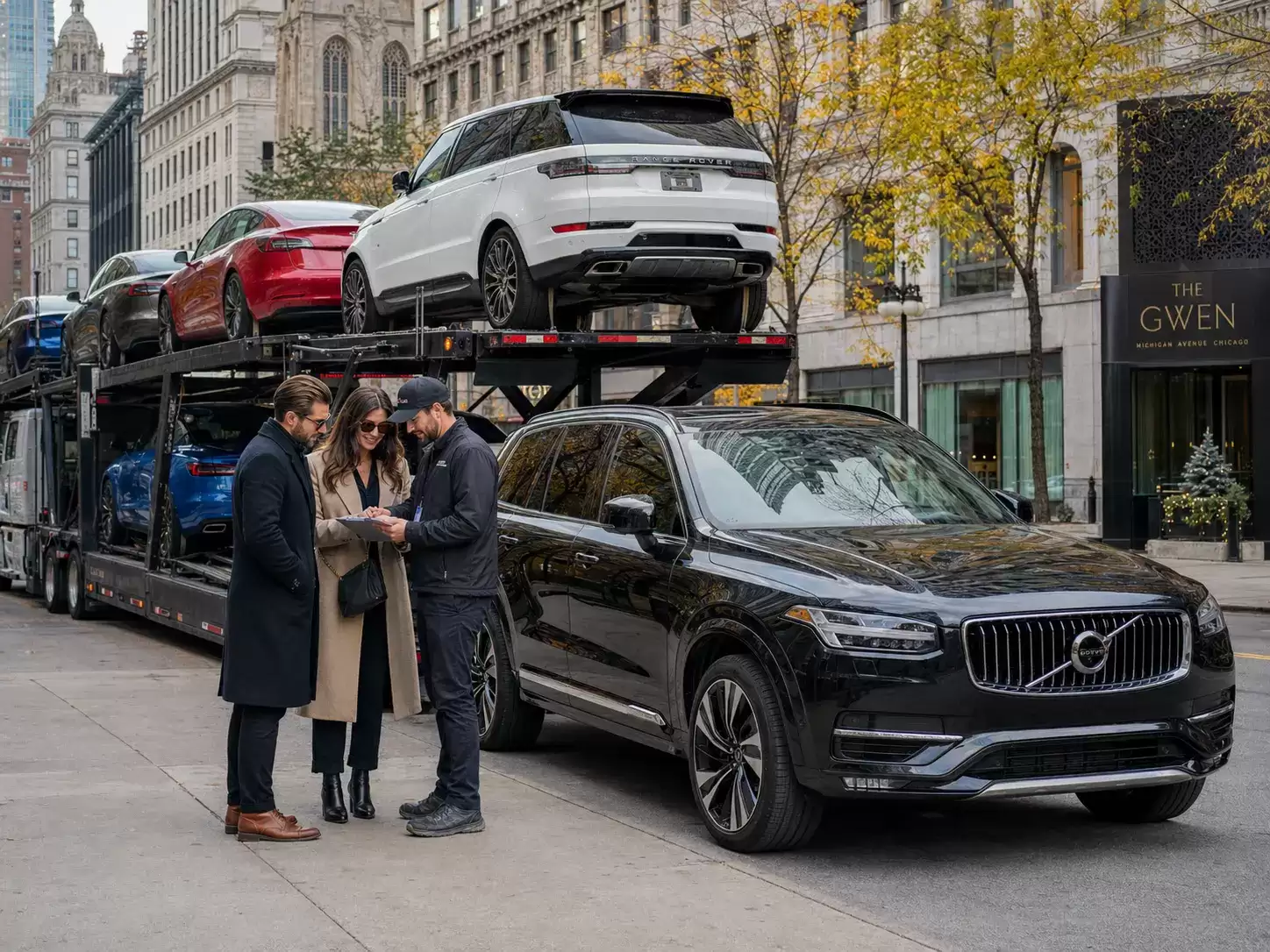
Door-to-Door Car Shipping: What to Expect in California and Illinois
Pickup in California
Southern California and the Inland Empire
Southern California — Los Angeles, San Diego, the Inland Empire, and Orange County — is the highest-volume carrier origin zone in the country. Pickup dispatch from these cities is exceptionally efficient, and Standard assignment is typically fast. Most Southern California residential and commercial addresses are accessible for large car haulers. Dense urban neighborhoods in downtown LA can occasionally require a short coordination on nearby accessible streets, but the vast majority of SoCal addresses are serviced door-to-door without issue.
Bay Area and Northern California
Northern California pickup — San Francisco, Oakland, San Jose, Sacramento — is fully available and connects directly to the I-80 eastbound corridor toward Chicago. Dispatch from NorCal runs 1–2 days longer than from SoCal given the difference in carrier density, but reliability is strong. Bay Area shippers should confirm a street-accessible pickup location in advance if their address is in a dense urban neighborhood.
Delivery in Illinois
Chicago City and Northern Suburbs
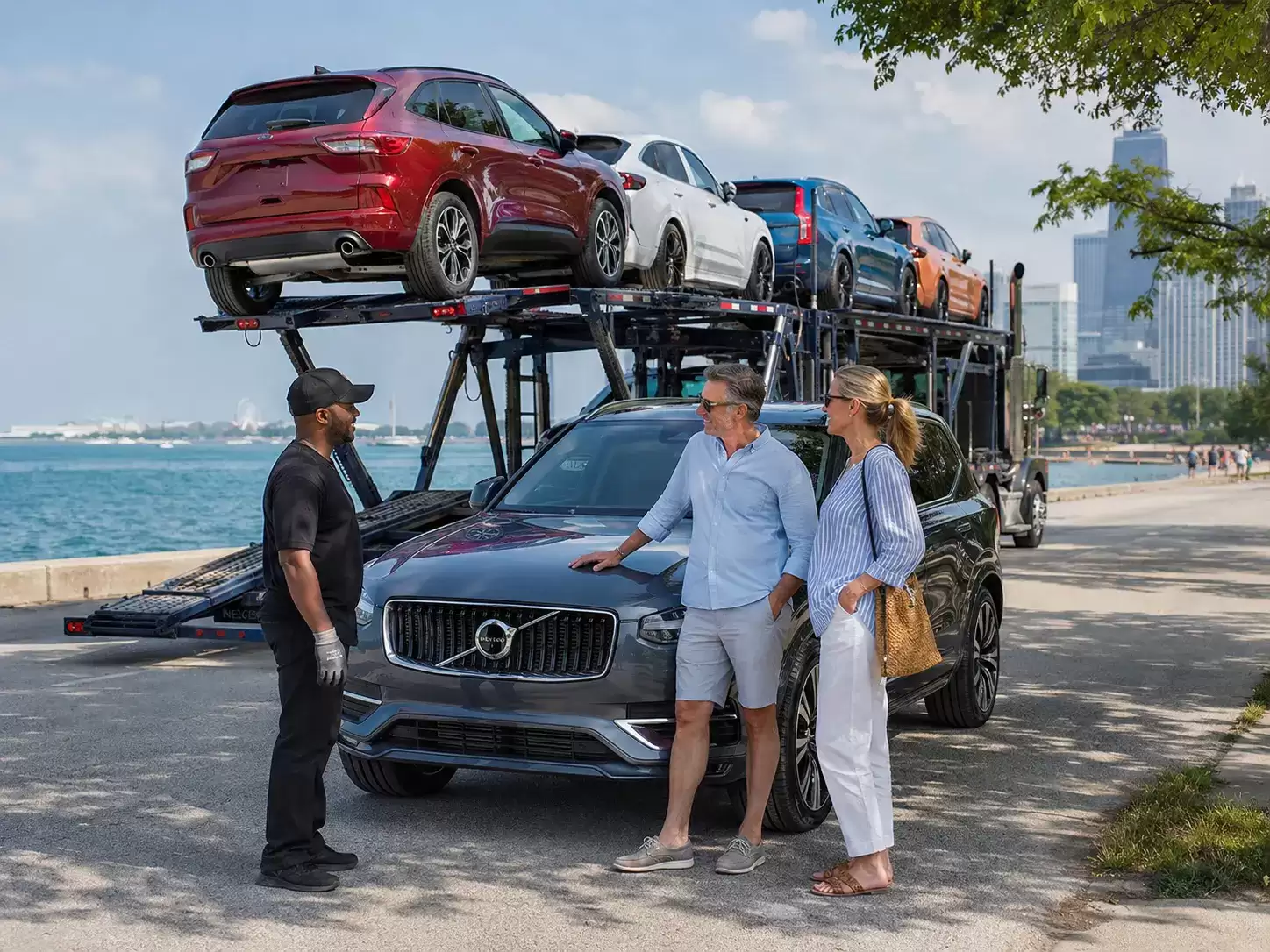
Chicago and the immediate suburbs (Naperville, Joliet, Aurora, Downers Grove, Wheeling, Worth, Thornton) are among the most carrier-efficient delivery destinations in the country. Carriers constantly cycle through the Chicago metro on loads from California, the Northeast, Texas, and Florida — availability is excellent and delivery coordination is routine. Most Chicago residential and suburban addresses are accessible for large car haulers. Street parking and tight city blocks in certain dense Chicago neighborhoods (downtown, Lincoln Park, Wicker Park) can occasionally require a short logistics coordination, similar to other major urban delivery environments.
Central and Downstate Illinois
Rockford, 90 miles northwest of Chicago, is serviced via I-90 and handles efficiently as a secondary delivery stop for carriers returning from the Chicago drop. Downstate destinations — Springfield, Peoria, Bloomington, Champaign, Decatur — require carriers to push south from Chicago on I-55 or split off the main Chicago run. Plan for 1–2 additional transit days for downstate delivery and confirm availability at booking.
Preparing Your Vehicle
Before pickup: remove all personal items from the interior, leave no more than a quarter tank of fuel, disable your alarm, and remove any exterior accessories. Photograph your vehicle thoroughly with timestamps from all angles before the carrier arrives. At delivery in Illinois, inspect your vehicle carefully before signing the Bill of Lading — note any concerns directly on the form before you sign. Your signature without notation constitutes acceptance of the vehicle’s condition.
California & Illinois Auto Transport Resources
California Helpful Government Links
- California Department of Motor Vehicles (CA DMV) — Primary agency for California vehicle titles and registration. If your vehicle will remain California-registered before re-titling in Illinois, start here for the release-of-title process.
- CA DMV — Transferring a Vehicle Title — Guidance on completing the California title release when relocating your vehicle permanently to another state.
- CA DMV — Registration Fees and Refunds — Reference for prorated refund eligibility when surrendering California registration upon establishing Illinois residency.
Illinois Helpful Government Links
- Illinois Secretary of State — Vehicle Services — Illinois vehicle titling and registration is administered by the Secretary of State, not a separate DMV. New residents must register their vehicle and obtain an Illinois driver’s license within 90 days of establishing residency.
- Illinois SOS — New Resident Vehicle Registration — Step-by-step guidance for transferring your California title and obtaining Illinois plates. Includes required documentation and emissions testing requirements for the Chicago metro area.
- Illinois SOS — Title and Registration — Overview of Illinois registration fees, title transfer requirements, and the process for vehicles arriving from out of state.
Federal Auto Transport Resources
- FMCSA — Verify a Carrier’s License (SAFER System) — Verify that any auto transport company you consider is federally licensed and insured before booking.
- FMCSA — Protect Your Move — Federal consumer guidance about hiring vehicle shippers, including red flags for broker scams and your rights as a shipper.