Washington to Texas Car Shipping
The original instant car shipping calculator — trusted since 2004. Door-to-door Washington to Texas transport with no surprises, no hidden fees, and three options to ship your vehicle on your schedule.
Car Shipping from Washington to Texas — See How It Works
Washington to Texas Car Shipping Rates by City
Every Washington to Texas vehicle shipment is available at three service levels:
Standard, Expedited, & Rush Options
Choose the one that fits your timeline and budget. All three include full door-to-door service and carrier insurance.
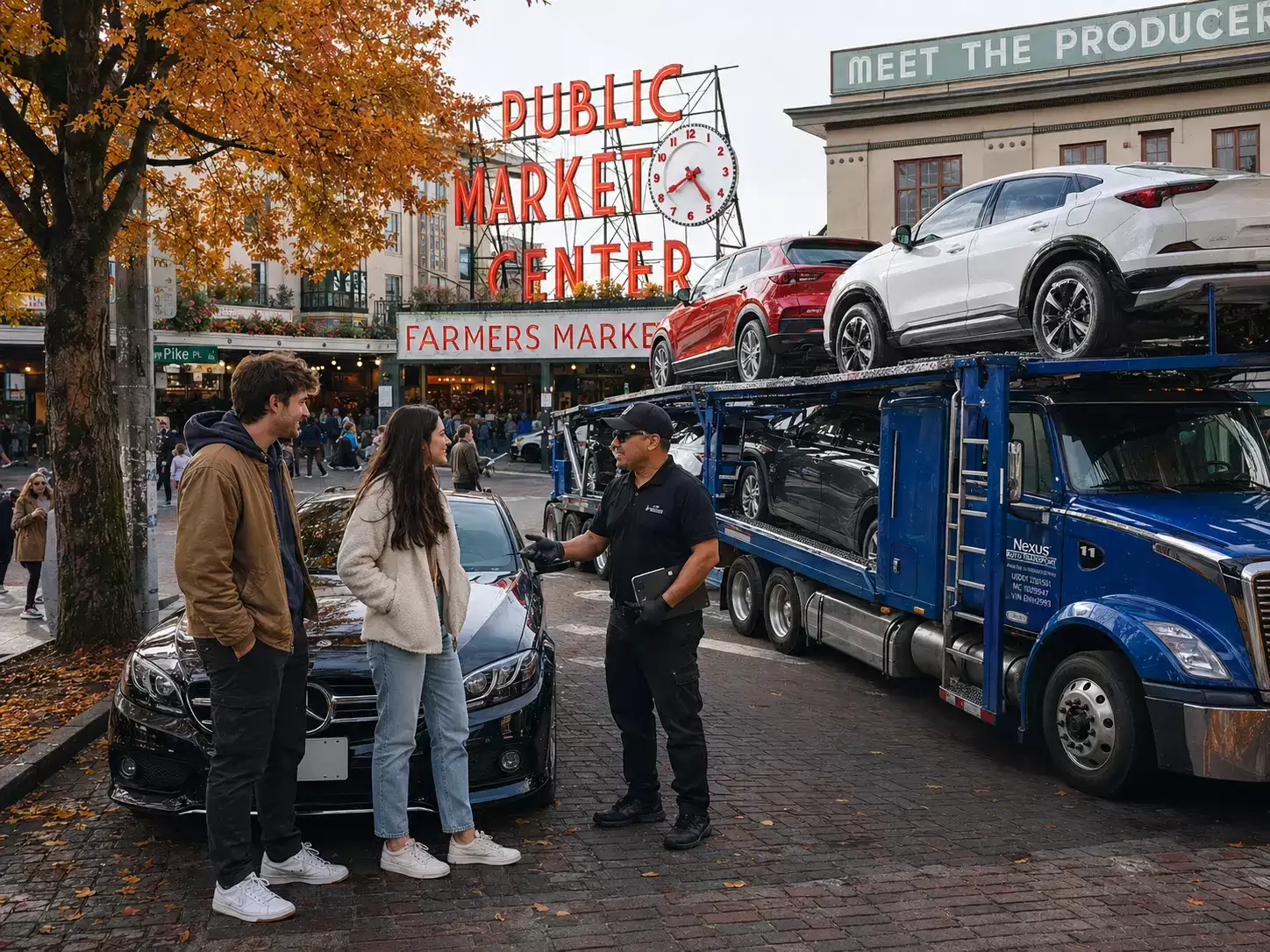
Prices below are for a standard sedan via open carrier. Calculating your particular instant quote will reflect your exact vehicle, zip codes, and dates, which is even more precise.
| From (Washington) | To (Texas) | Distance | Standard | Expedited | Rush | Transit |
|---|---|---|---|---|---|---|
| Seattle | Houston | 2,350 mi | $1,900 | $2,280 | $2,660 | 7–9 days |
| Spokane | Dallas | 1,770 mi | $1,500 | $1,800 | $2,100 | 5–7 days |
| Tacoma | San Antonio | 2,300 mi | $1,875 | $2,250 | $2,625 | 7–9 days |
| Vancouver | Austin | 2,120 mi | $1,750 | $2,100 | $2,450 | 6–8 days |
| Bellevue | Fort Worth | 2,090 mi | $1,725 | $2,070 | $2,415 | 6–8 days |
| Kent | Arlington | 2,090 mi | $1,725 | $2,070 | $2,415 | 6–8 days |
| Renton | Plano | 2,110 mi | $1,750 | $2,100 | $2,450 | 6–8 days |
| Everett | Corpus Christi | 2,410 mi | $1,950 | $2,340 | $2,730 | 7–9 days |
| Spokane Valley | Garland | 1,790 mi | $1,500 | $1,800 | $2,100 | 5–7 days |
| Federal Way | Irving | 2,110 mi | $1,750 | $2,100 | $2,450 | 6–8 days |
| Yakima | Frisco | 1,970 mi | $1,650 | $1,980 | $2,310 | 6–8 days |
| Kirkland | McKinney | 2,130 mi | $1,750 | $2,100 | $2,450 | 6–8 days |
| Bellingham | Grand Prairie | 2,200 mi | $1,800 | $2,160 | $2,520 | 7–9 days |
| Kennewick | Killeen | 1,910 mi | $1,600 | $1,920 | $2,240 | 6–8 days |
| Auburn | Pasadena | 2,330 mi | $1,900 | $2,280 | $2,660 | 7–9 days |
| Redmond | Sugar Land | 2,370 mi | $1,925 | $2,310 | $2,695 | 7–9 days |
* Prices shown for a standard sedan via open carrier. Trucks, SUVs, and vans are priced higher. Enclosed transport available at an additional premium. Use the instant quote calculator above for your exact vehicle, dates, and zip codes.
The Company That Invented Instant Auto Transport Pricing
Direct Express Auto Transport pioneered online instant pricing for the auto transport industry in 2004. Before we built the first car shipping cost calculator, getting a quote from a broker meant phone calls, callbacks, and waiting — sometimes days. We changed that. Today you know your exact cost in 30 seconds, before committing to anything.
Three Service Tiers for Every Washington to Texas Shipment
Every shipment on this Washington to Texas route is available at three service tiers so you can match your budget to your timeline. Standard delivers at the best available rate — ideal when your schedule has a few days of flexibility. Expedited moves your vehicle to the front of the dispatch queue for faster pickup. Rush gets your car picked up as fast as humanly possible — for firm Texas start dates, military report dates, and any Washington departure where every day of the inland haul counts.
All three tiers include full door-to-door service and carrier insurance. No phone tag, no hassle. Just a real number, instantly.
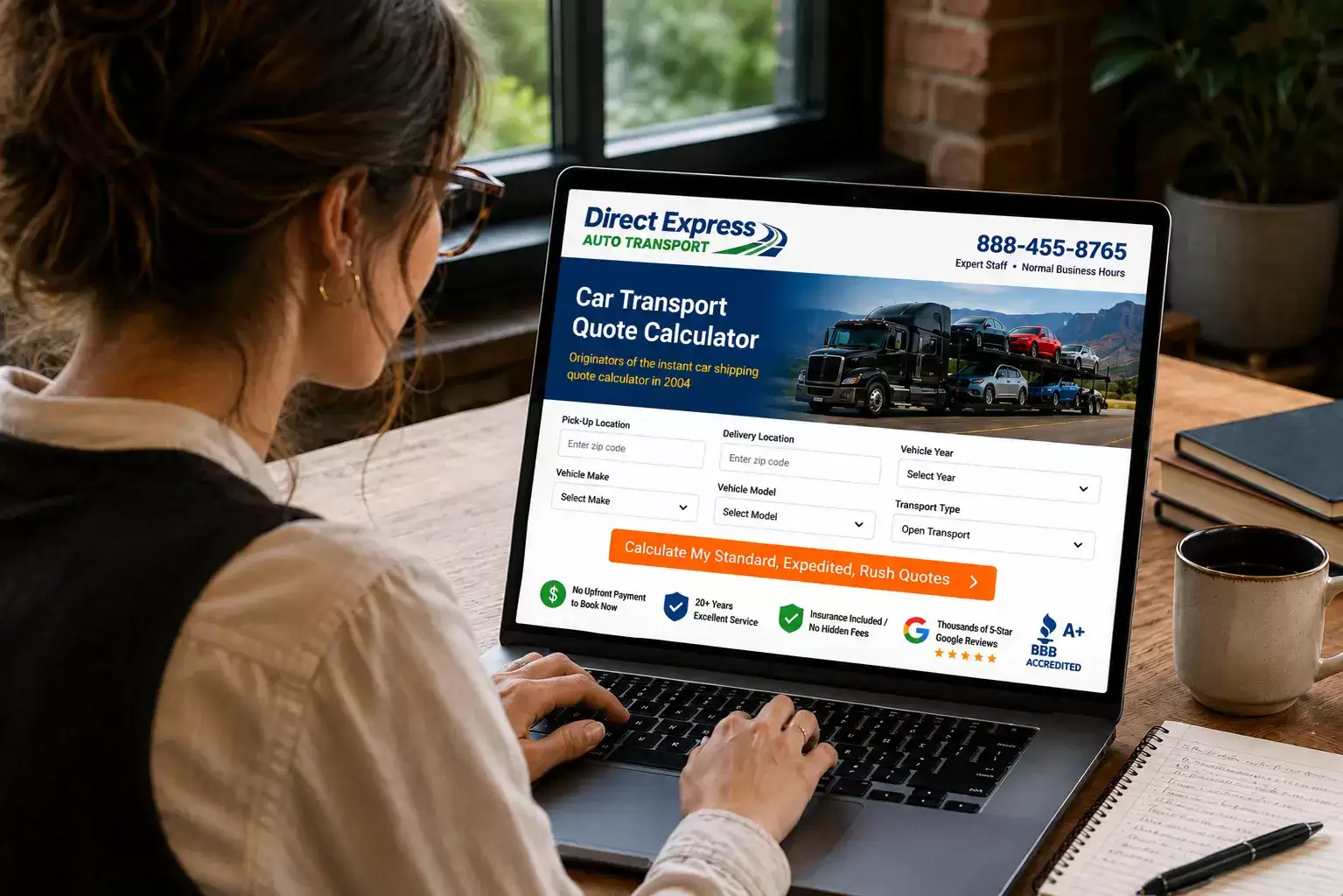
What customers say about shipping a car from Washington to Texas with Direct Express Auto Transport
Seasonal Pricing Guide: Washington to Texas
The Washington–Texas corridor is a long inland haul that peaks in summer with military PCS orders, corporate transfers, and university moves. Overall demand is lowest in the winter months, when November through February offers the best value — though Cascade and Rocky Mountain passes can add a day during storms.

| Period | Season | What to Expect | Booking Notes |
|---|---|---|---|
| Jan – Feb | Best Value / Deep Winter | January and February are the corridor’s lowest-demand months and its best value window. Puget Sound winters are mild and rarely disrupt pickup, but the inland route crosses Snoqualmie Pass on I-90 and the Rocky Mountain passes, where winter storms can briefly slow carriers. Texas delivery in January and February is operationally clean at both the DFW and Gulf Coast ends. |
Best value. Book 5–7 days ahead. Standard appropriate for flexible moves. Mountain-pass weather (Snoqualmie, the Rockies) can add a 1-day buffer for fixed Texas arrival dates during major storms. Military PCS customers with firm Texas report dates: Expedited regardless of season. |
| Mar – May | Spring Ramp / Corporate and University Launch | March through May marks the corridor’s spring demand ramp. Puget Sound tech and Boeing professionals accepting Texas roles begin executing Q2 relocations, and Washington university students shipping vehicles to Texas for summer internships book in April and May. Mountain passes clear through spring, and both ends of the corridor enter their most operationally pleasant window for open transport. |
Rising demand, moderate rates. Book 7–10 days ahead. Corporate movers with May–June Texas start dates: Expedited recommended. Puget Sound and Spokane pickup March–May: excellent conditions once passes clear. Texas delivery: ideal weather before summer heat arrives. |
| Jun – Aug | Peak Demand / Military PCS and Summer Migration | June through August is peak demand, driven by the military PCS summer cycle and the broader Washington-to-Texas migration wave. Joint Base Lewis-McChord near Tacoma sends soldiers and families south to Fort Cavazos and Joint Base San Antonio every summer. Tech and no-income-tax relocations from the Seattle metro to Austin, Dallas, and Houston amplify the peak, and Texas summer heat is in full force at delivery. |
Peak demand. Book 10–14 days ahead. Military PCS from JBLM with June–August Texas report dates: book immediately on receipt of orders, Expedited or Rush. Corporate movers with firm summer Texas start dates: Expedited strongly recommended. Texas summer delivery: leave a quarter tank, remove heat-sensitive items, and inspect promptly on arrival. |
| Sep – Oct | Fall Migration Wave / Active Shoulder | September and October are the corridor’s fall migration wave. Washington residents planning a Texas move often execute in the fall — ahead of the wet Pacific Northwest winter and timed to establish Texas residency before year-end. Tax-motivated movers wanting to claim Texas residency for the tax year accelerate moves in this window. Both ends of the corridor enjoy excellent early-fall weather, and mountain passes remain clear. |
Active demand, moderate rates. Book 7–10 days ahead. Tax-motivated movers establishing Texas residency before year-end: book September–October to complete the move before November. Puget Sound and Eastern WA pickup: excellent conditions before winter. Texas delivery September–October: ideal weather at both ends. |
| Nov – Dec | Best Value / Holiday Carrier Gap | November and December offer some of the year’s best pricing. Voluntary permanent moves slow as Pacific Northwest winter sets in, and carriers compete for loads. Snoqualmie Pass and the Rocky Mountain passes enter winter mode, so a 1-day transit buffer is appropriate for fixed arrival dates during storms. December introduces the industry-wide holiday carrier gap from December 15 through January 5, when driver availability drops modestly. |
Best value. Book 5–7 days ahead in November. Mountain-pass winter weather: 1-day buffer for fixed November–December Texas delivery. Holiday carrier gap December 15–January 5: Expedited recommended for any firm December Texas arrival target. Texas delivery November–December: operationally excellent; rare North Texas ice events are brief. |
Who Ships a Car from Washington to Texas — and Why
The Washington to Texas corridor runs year-round, driven by a few consistent groups of shippers.
What Makes the Washington–Texas Auto Shipping Run Different
A few geographic quirks shape pricing and timing on the Washington to Texas corridor.

Texas Delivery: Metro Density vs. Approach Mileage
The Dallas–Fort Worth Metroplex and Greater Houston are two of the highest-carrier-density delivery markets in the country, so DFW and Houston deliveries are efficient and predictable. Central Texas destinations like Austin, Killeen, and Waco sit on I-35 south of DFW; South Texas destinations like San Antonio and Corpus Christi add approach mileage beyond the main corridor.
Why Gulf Coast and South Texas Deliveries Price Higher
A delivery to Houston, Corpus Christi, or the coast means running well south and east of the I-35 mainline, adding real approach mileage after the carrier enters Texas. That extra distance — combined with the long Pacific Northwest origin — is what pushes Gulf Coast and South Texas pairings to the top of the rate table.
Other Washington to Texas Cities We Serve
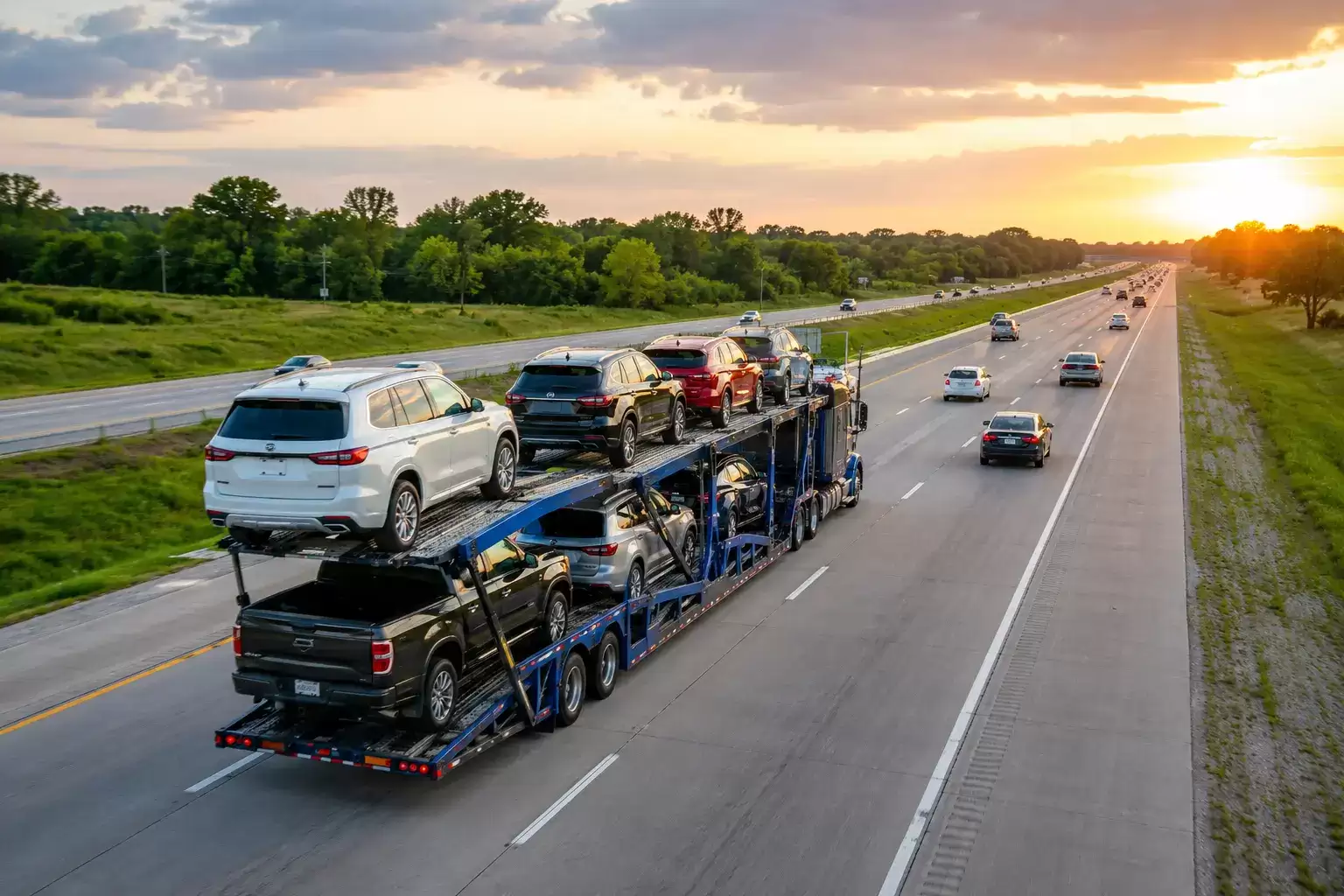
Direct Express ships vehicles between hundreds of city pairs on this route. Below is a broader look at additional Washington origins and Texas destinations we regularly serve.
| From (Washington) | To (Texas) | Distance | Transit |
|---|---|---|---|
| Sammamish | Denton | 2,150 mi | 6–8 days |
| Lakewood | Mesquite | 2,150 mi | 6–8 days |
| Richland | Carrollton | 1,960 mi | 6–8 days |
| Shoreline | Round Rock | 2,270 mi | 7–9 days |
| Olympia | Pearland | 2,400 mi | 7–9 days |
| Burien | Richardson | 2,120 mi | 6–8 days |
| Bremerton | College Station | 2,380 mi | 7–9 days |
| Puyallup | Waco | 2,180 mi | 6–8 days |
| Lacey | Tyler | 2,240 mi | 7–9 days |
| Edmonds | Longview | 2,340 mi | 7–9 days |
| Bothell | Beaumont | 2,470 mi | 7–9 days |
| Wenatchee | Temple | 2,080 mi | 6–8 days |
| Marysville | Lewisville | 2,180 mi | 6–8 days |
| Mount Vernon | Conroe | 2,420 mi | 7–9 days |
| Pasco | New Braunfels | 2,120 mi | 6–8 days |
| Lynnwood | Georgetown | 2,220 mi | 7–9 days |
Washington and Texas Auto Shipping Zones Along the Inland Corridor
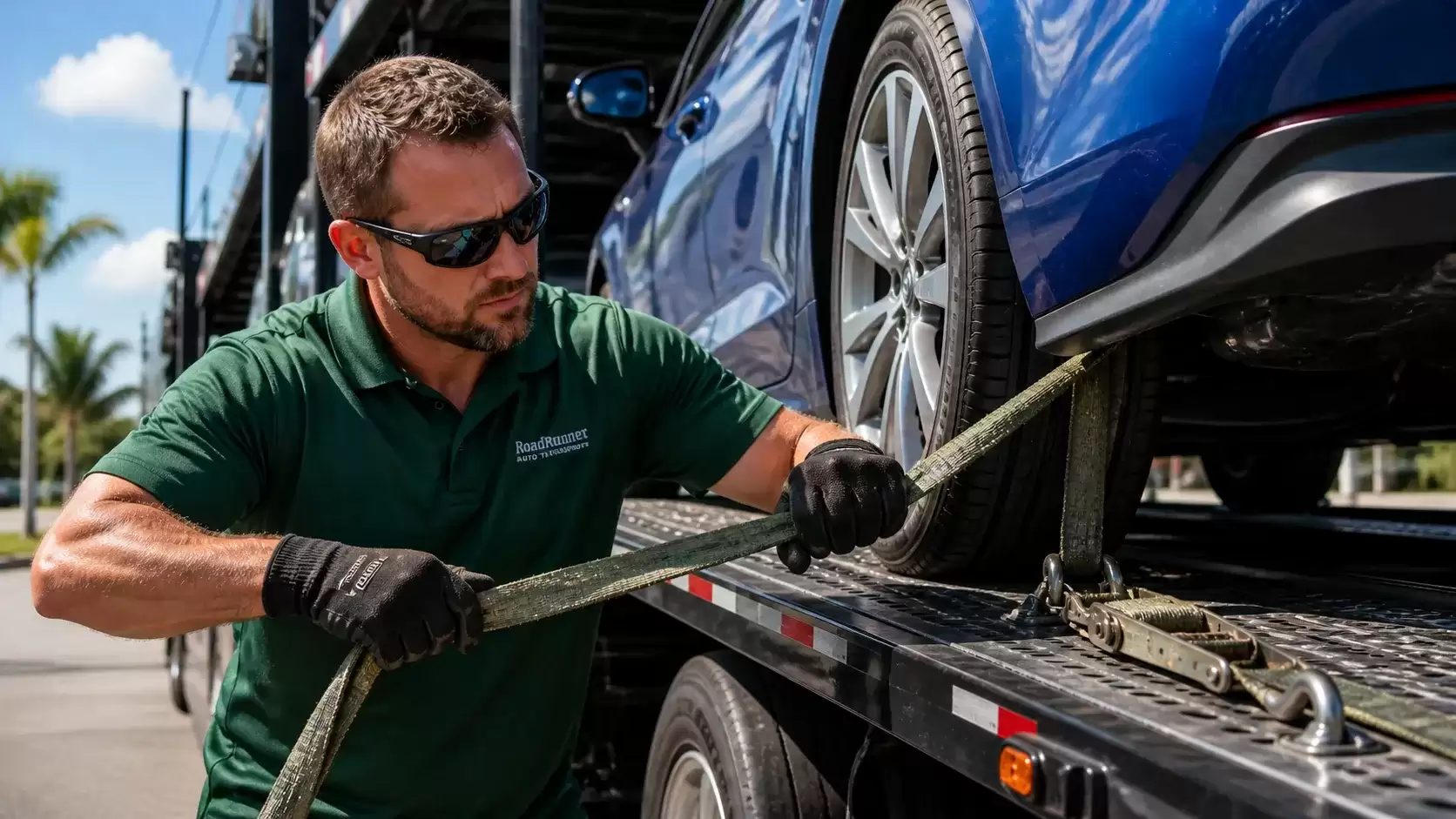
Washington-to-Texas auto transport runs roughly 1,770 to 2,470 miles. The shortest runs come from Eastern Washington (Spokane, the Tri-Cities) to the Dallas–Fort Worth Metroplex; the longest come from the North Puget Sound (Everett, Bellingham, Mount Vernon) to the Gulf Coast and South Texas. Carriers thread the inland route through Portland, Boise, Salt Lake City, and Denver before dropping onto I-35 into Texas.
Washington Origin Zones
Mid-Corridor Relay Points
Texas Delivery Zones
Washington to Texas Auto Transport Video Guide
Jump to the chapter most relevant to your Washington to Texas shipment
9 Chapters — Under 6 Minutes
Each chapter covers a specific part of the Washington to Texas shipping process. Click any card to open that chapter directly in YouTube.
We begin with why the Washington to Texas corridor is a busy long-haul auto transport route — driven by military PCS, tech and aerospace transfers, students, and retirees. Our nationwide carrier network is built to handle the inland run between the Pacific Northwest and the Texas Triangle year-round.
Learn how easy it is to schedule your Washington to Texas shipment. Whether you’re shipping from Seattle or Spokane, we explain how the booking process works and how carriers are assigned along the inland corridor.
Washington to Texas pricing varies with direction of travel, time of year, and whether your origin or destination is a major hub or a smaller market. We explain how rates shift through the year and which of our three service tiers — Standard, Expedited, or Rush — matches your timeline and budget.
We move vehicles between every Washington origin and every Texas destination — from the Puget Sound and the North Sound to Eastern Washington — delivering across the DFW Metroplex, Greater Houston, Austin, San Antonio, and East Texas.
Pickup timing depends on route availability, carrier scheduling, and your chosen tier. We explain how pickup windows work — from dense Seattle-metro staging at a nearby meet point to standard door-to-door pickup across the South Sound, Eastern Washington, and the Tri-Cities.
Get realistic transit expectations for Washington to Texas — typically 5–9 days — including how the inland route and winter mountain-pass weather at Snoqualmie and the Rockies can affect timing on a cross-country haul.
Before pickup, we recommend cleaning your vehicle, removing personal items, and photographing every panel. If you are shipping a vehicle to Texas, document its pre-existing condition carefully ahead of your Texas registration and annual state safety inspection.
We walk through the inspection and Bill of Lading process so you know exactly what happens when the carrier arrives. We also cover how carriers handle tight urban access in downtown Seattle and Bellevue, where large haulers stage at a nearby meet point.
The final inspection and delivery process is explained step by step, including how deliveries are handled in gated communities, suburban neighborhoods, and dense metro cores across the DFW Metroplex and Greater Houston.
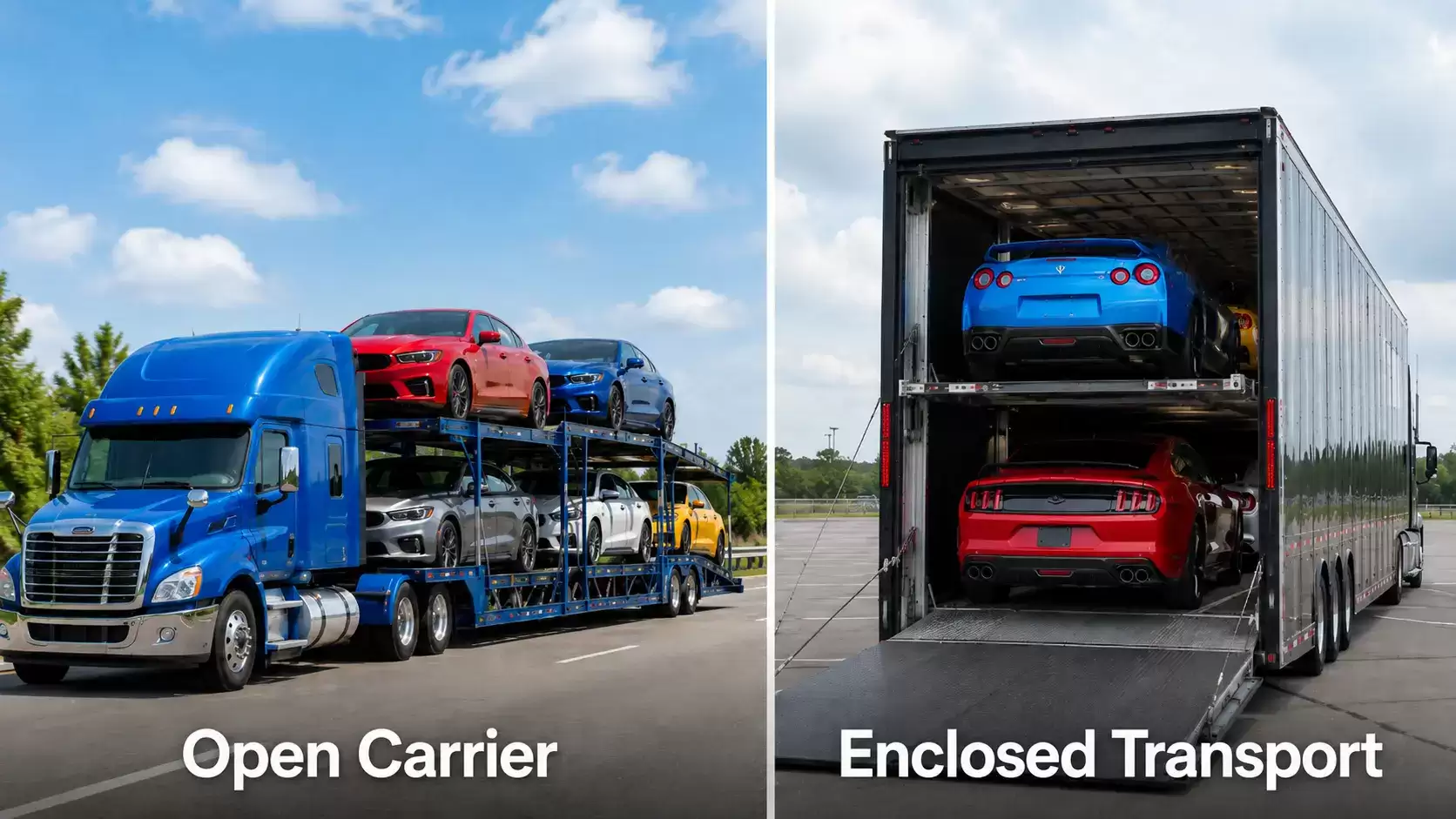
Open vs. Enclosed Car Transport on the Washington–Texas Route
Both methods are available on virtually every Washington to Texas lane. The right choice comes down to your vehicle’s value and the season.
Our honest recommendation: for a daily driver or a vehicle worth under $60,000, open transport is the right call on virtually every Washington to Texas move. For a winter shipment, a classic, an exotic, or a sentimental vehicle, the enclosed premium is worth the protection.
Door-to-Door Car Shipping: What to Expect in Washington and Texas
Every Washington to Texas shipment is full door-to-door — we pick up at your Washington address and deliver to your Texas door, with commercial staging only where dense city streets require it.
Pickup in Washington
Seattle Metro
Pickup from downtown Seattle, Capitol Hill, and dense Bellevue blocks follows a commercial staging process. Large multi-car haulers cannot access most tight urban streets, so your carrier establishes a staging point at the nearest accessible I-5, I-405, or I-90 interchange. Confirm your Seattle-metro pickup staging protocol at booking. Kent, Renton, Auburn, Federal Way, Redmond, Kirkland, and most Eastside and South King County addresses receive standard door-to-door pickup.
South Sound and Joint Base Lewis-McChord
Tacoma, Lakewood, Puyallup, Olympia, Lacey, and Bremerton all have standard door-to-door pickup access via I-5. For active-duty service members at Joint Base Lewis-McChord, confirm on-base pickup protocols at booking; JBLM is one of the busiest PCS origins on the West Coast, and experienced carriers coordinate installation access routinely.
North Sound, Central, and Eastern Washington
Everett, Marysville, Bellingham, Mount Vernon, Edmonds, and Bothell in the North Sound have standard door-to-door pickup via I-5. Yakima and Wenatchee in Central Washington and Spokane, Spokane Valley, Kennewick, Richland, and Pasco in the east are operationally clean pickup zones with excellent highway access. November through March, Cascade and inland pass weather can add a scheduling buffer — have a cleared staging area accessible to the carrier during storms.
Delivery in Texas
Dallas–Fort Worth and Houston Metros
DFW and Houston metro delivery is standard door-to-door for virtually all addresses. Both metros have excellent interstate access for large carriers — I-20, I-30, I-35, and I-45 in the DFW area; I-10, I-45, and I-69 in the Houston area. Gated community and high-rise deliveries use nearby commercial staging — your coordinator handles this routinely. Texas summer heat is extreme: ensure your vehicle does not sit in direct sun at a staging location before delivery if temperatures exceed 100°F.
Central Texas (Austin, San Antonio, Killeen, Round Rock, Waco, College Station)
Austin and San Antonio deliveries are standard door-to-door via I-35. Killeen and Temple deliveries serve the Fort Cavazos corridor — confirm on-base delivery protocols at booking for active-duty recipients. Round Rock, Georgetown, and College Station are standard suburban door-to-door. San Antonio adds approach mileage south of Austin on I-35, which is reflected in the rate table.
East Texas and the Gulf Coast (Tyler, Longview, Beaumont, Port Arthur, Corpus Christi)
East Texas delivery is standard and efficient — Tyler and Longview access I-20 directly, and deliveries route through the Metroplex before heading east. Beaumont and Port Arthur on I-10 add the most eastbound approach mileage on the table. Corpus Christi and the South Texas coast require I-37 south from San Antonio, which is why Gulf Coast and South Texas destinations price at the top of the table.
Texas Vehicle Registration for Washington Arrivals
Texas requires new residents to register their vehicle within 30 days of moving; visit your county tax assessor-collector office with your out-of-state title, proof of Texas insurance, and proof of a Texas address, and note that Texas requires an annual state safety inspection (plus emissions testing in certain metro counties such as Harris, Dallas, Tarrant, and Travis), then cancel your Washington registration once your Texas plates arrive.
Preparing Your Vehicle
Before Washington pickup: remove all personal items from the passenger compartment, disable car alarms, remove any Good To Go! toll transponders, and leave no more than a quarter tank of fuel. Photograph your vehicle from all angles with date-stamped images before the carrier arrives. For winter pickups: confirm your vehicle starts reliably in cold weather and that the battery is in good condition before shipping day.
Texas delivery: inspect your vehicle carefully before signing the Bill of Lading. Wash on arrival — all open transport vehicles pick up highway film over the 1,800–2,400 mile inland run. For summer Texas arrivals: remove any remaining personal items and electronics from the vehicle promptly after delivery.
Washington & Texas Auto Transport Resources
Washington Helpful Government Links
- Washington State Department of Licensing (DOL) — Washington’s vehicle title and registration agency. Confirm your Washington title is clear and in your possession before shipping, and cancel Washington registration when establishing Texas residency.
- Washington DOL — Vehicle Registration — Title transfer and registration procedures for vehicles leaving Washington for Texas.
- Washington DOL — Driver Licenses — Surrender your Washington driver’s license when obtaining a Texas license after establishing Texas residency.
Texas Helpful Government Links
- Texas Department of Motor Vehicles (TxDMV) — Texas vehicle title and registration agency. New residents from Washington must register within 30 days of establishing Texas residency.
- TxDMV — Title Transfer and Registration — Vehicle title and registration procedures for out-of-state vehicles arriving from Washington.
- TxDMV — Military Provisions — Provisions for active-duty military arriving at Fort Cavazos, Joint Base San Antonio, and other Texas installations on PCS orders from Joint Base Lewis-McChord.
- Texas DPS — Driver License — Obtain your Texas driver’s license within 90 days of establishing residency. Your Washington license must be surrendered.
- TCEQ — Vehicle Emissions Testing Counties — Which Texas counties require emissions testing (includes Harris/Houston, Dallas, Tarrant, Travis/Austin, and others).
Federal Auto Transport Resources
- FMCSA — Verify a Carrier’s License (SAFER System) — Verify that any auto transport company is federally licensed and insured before booking.
- FMCSA — Protect Your Move — Federal consumer guidance on hiring vehicle shippers and your rights on a cross-country move.

Washington to Texas Car Shipping — FAQ
How much does it cost to ship a car from Washington to Texas?
For a standard sedan on open transport, Washington to Texas generally runs roughly $1,500–$1,950 depending on the exact cities, vehicle, and season — shorter Eastern Washington to DFW runs sit at the lower end, while longer Puget Sound to Gulf Coast and South Texas runs sit at the higher end. Pricing tracks the live market and shifts week to week, so use the instant calculator for your exact zip codes and dates.
How long does it take to ship a car from Washington to Texas?
Most pairs run 6–8 days, with the shortest Eastern Washington to DFW runs (Spokane, the Tri-Cities) at 5–7 days and the longest Puget Sound to Gulf Coast and South Texas runs at 7–9 days. Plan 7–10 days of lead time from booking to your target Texas delivery date. Winter storms at Snoqualmie Pass or the Rocky Mountain passes can add a day for any fixed arrival date.
Will winter weather in the mountains delay my Washington to Texas shipment?
The inland route stays open year-round for commercial carriers, but it crosses Snoqualmie Pass on I-90, the Blue Mountains on I-84, and the high Rocky Mountain passes on I-70 and I-15. Major winter storms can add about a day to transit. For any Texas delivery with a firm arrival date from November through March, build in a one-day buffer or book Expedited. Puget Sound pickup itself is rarely affected — the passes are the variable, not the coast.
Can you pick up my car in downtown Seattle or Bellevue?
Yes, but pickup from dense Seattle and Bellevue addresses uses a commercial staging process. Large multi-car haulers cannot access most tight downtown streets, so your carrier establishes a staging point at the nearest accessible I-5, I-405, or I-90 interchange. You drive or transport your vehicle to the staging point, or authorize a local agent. Confirm your pickup staging protocol at booking. Kent, Renton, Redmond, Auburn, and most suburban Puget Sound addresses receive standard door-to-door pickup.
Can I ship my car from Joint Base Lewis-McChord to a Texas installation?
Yes. We regularly serve PCS moves from Joint Base Lewis-McChord (JBLM) near Tacoma and Lakewood to Fort Cavazos in Killeen and Joint Base San Antonio. Book immediately on receipt of orders. Expedited or Rush is strongly recommended for any firm Texas report date. Confirm on-base pickup access at booking, and back-calculate your booking date from your Texas arrival window to allow for the 6–9 day inland transit.
When is the best time to ship from Washington to Texas?
November through February offers the best value — demand drops as the Pacific Northwest winter sets in and carriers compete for loads. Mountain-pass weather is the only caveat, so allow a one-day buffer for fixed winter arrival dates. Avoid June through August if possible; that’s peak demand from military PCS and summer migration. September and October are an active fall shoulder at moderate rates with excellent weather at both ends.
How do I register my Washington car in Texas?
Texas requires vehicle registration within 30 days of establishing residency. Visit your county tax assessor-collector office with your Washington title, proof of Texas automobile insurance, and Form 130-U (Application for Texas Title and/or Registration). Texas requires an annual vehicle safety inspection, and certain counties (Harris/Houston, Dallas, Tarrant, Travis/Austin) require OBD emissions testing. Obtain your Texas driver’s license within 90 days; your Washington license must be surrendered. See txdmv.gov for office locations and the military provisions page if you’re arriving on PCS orders.
Shipping from Texas to Washington instead?
We cover both directions on this corridor. See city-by-city rates, transit times, and seasonal pricing for the reverse direction. View Texas to Washington rates →
More Helpful Information
Other popular routes we serve.
How Auto Transport Works
How our car shipping cost calculator works its magic.