Minnesota to California Car Shipping

The original instant car shipping calculator — trusted since 2004. Door-to-door Minnesota to California transport with no surprises, no hidden fees, and three options to ship your vehicle on your schedule.
Car Shipping Service Fast & Reputable

Minnesota to California Car Shipping

The original instant car shipping calculator — trusted since 2004. Door-to-door Minnesota to California transport with no surprises, no hidden fees, and three options to ship your vehicle on your schedule.

★ 4.6/5 Google Reviews  |  BBB Accredited A+  |  FMCSA Licensed (MC #479342)  |  USDOT #1240502  |  No upfront payment required  |  20+ years shipping vehicles
Geo City BBB Accredited Business Car Transport Services
Google Reviews for Car Shipping Services Nationwide

Car Shipping from Minnesota to California — See How It Works

Average Distance
1,880–2,080
Miles
Transit Time
5–7
Days
Best Time To Ship
Sept–Oct
Best Value Season

Minnesota to California Car Shipping Rates by City

Every Minnesota to California vehicle shipment is available at three service levels:

Standard, Expedited, & Rush Options


Choose the one that fits your timeline and budget. All three include full door-to-door service and carrier insurance.
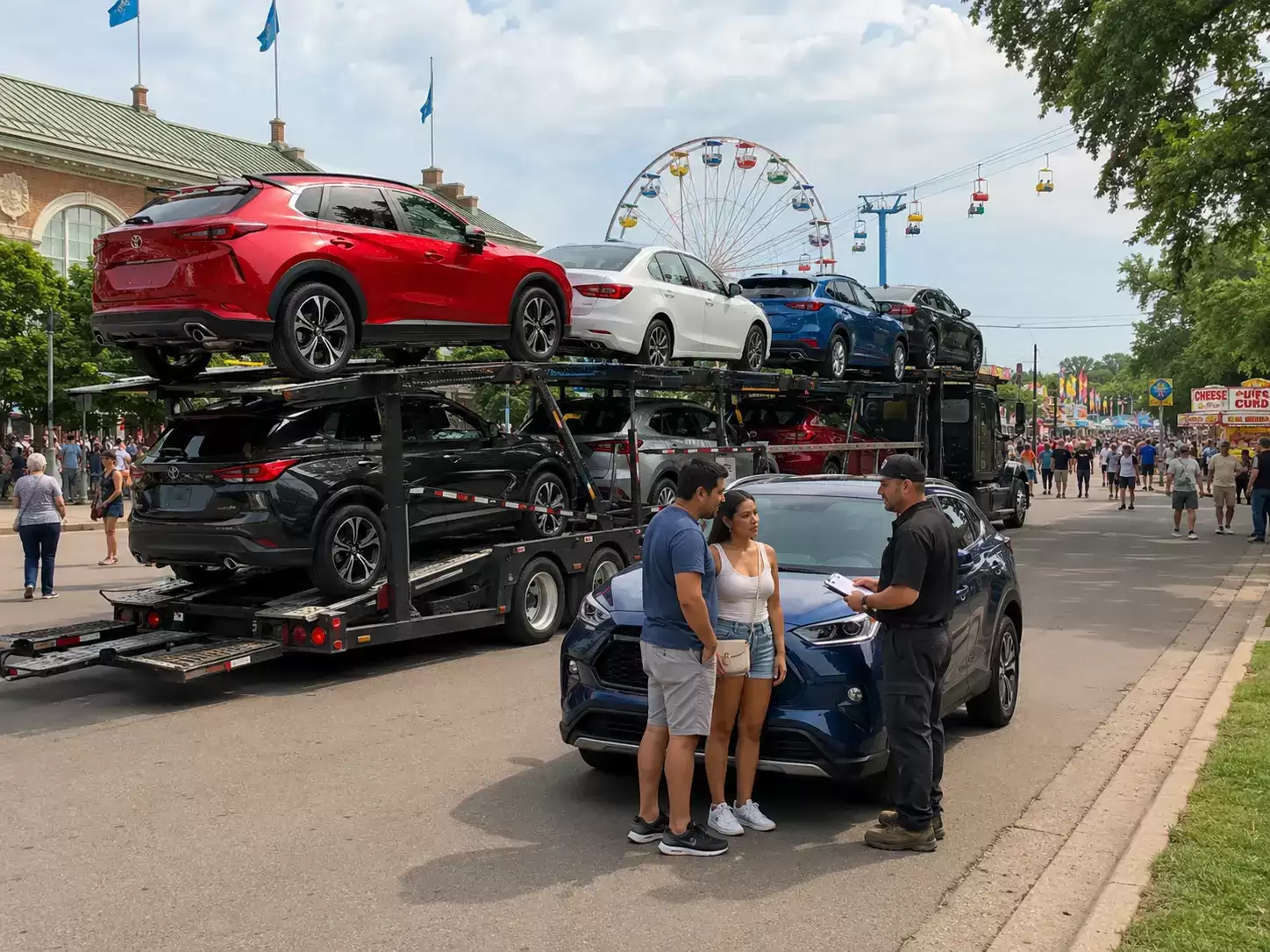
Minnesota Car Transporter delivering to 30 something couple
Best Value
Standard
Best available rate. Your vehicle ships on the next carrier heading your way when there is less competition for truck space. Ideal when your schedule has a few extra days of flexibility.
MOST POPULAR
Faster Pickup
Expedited
Moves your vehicle close to the front of the dispatch queue. Faster pickup assignment because it beats baseline prices. Improved carrier availability when your timeline matters.
Maximum Priority
Rush
Maximum priority dispatch. Your shipment is assigned as quickly as possible for urgent relocations and time-sensitive vehicle moves. Can get a carrier to jump.

Prices below are for a standard sedan via open carrier. Calculating your particular instant quote will reflect your exact vehicle, zip codes, and dates, which is even more precise.

From (Minnesota) To (California) Distance Standard Expedited Rush Transit
Minneapolis Los Angeles 1,930 mi$1,600$1,920$2,2405–7 days
St. Paul San Diego 1,950 mi$1,625$1,950$2,2755–7 days
Rochester San Jose 1,980 mi$1,650$1,980$2,3105–7 days
Bloomington San Francisco 1,975 mi$1,650$1,980$2,3105–7 days
Duluth Fresno 2,080 mi$1,725$2,070$2,4156–8 days
Brooklyn Park Sacramento 1,915 mi$1,600$1,920$2,2405–7 days
Plymouth Long Beach 1,950 mi$1,625$1,950$2,2755–7 days
Woodbury Oakland 1,960 mi$1,625$1,950$2,2755–7 days
Maple Grove Bakersfield 1,885 mi$1,575$1,890$2,2055–7 days
St. Cloud Anaheim 1,970 mi$1,650$1,980$2,3105–7 days
Eagan Santa Ana 1,945 mi$1,625$1,950$2,2755–7 days
Eden Prairie Riverside 1,895 mi$1,575$1,890$2,2055–7 days
Coon Rapids Stockton 1,950 mi$1,625$1,950$2,2755–7 days
Burnsville Irvine 1,950 mi$1,625$1,950$2,2755–7 days
Blaine Chula Vista 1,980 mi$1,650$1,980$2,3105–7 days
Lakeville Fremont 1,975 mi$1,650$1,980$2,3105–7 days

* Prices shown for a standard sedan via open carrier. Trucks, SUVs, and vans are priced higher. Enclosed transport available at an additional premium. Use the instant quote calculator above for your exact vehicle, dates, and zip codes.

Calculate My Minnesota–California Car Shipping Rates

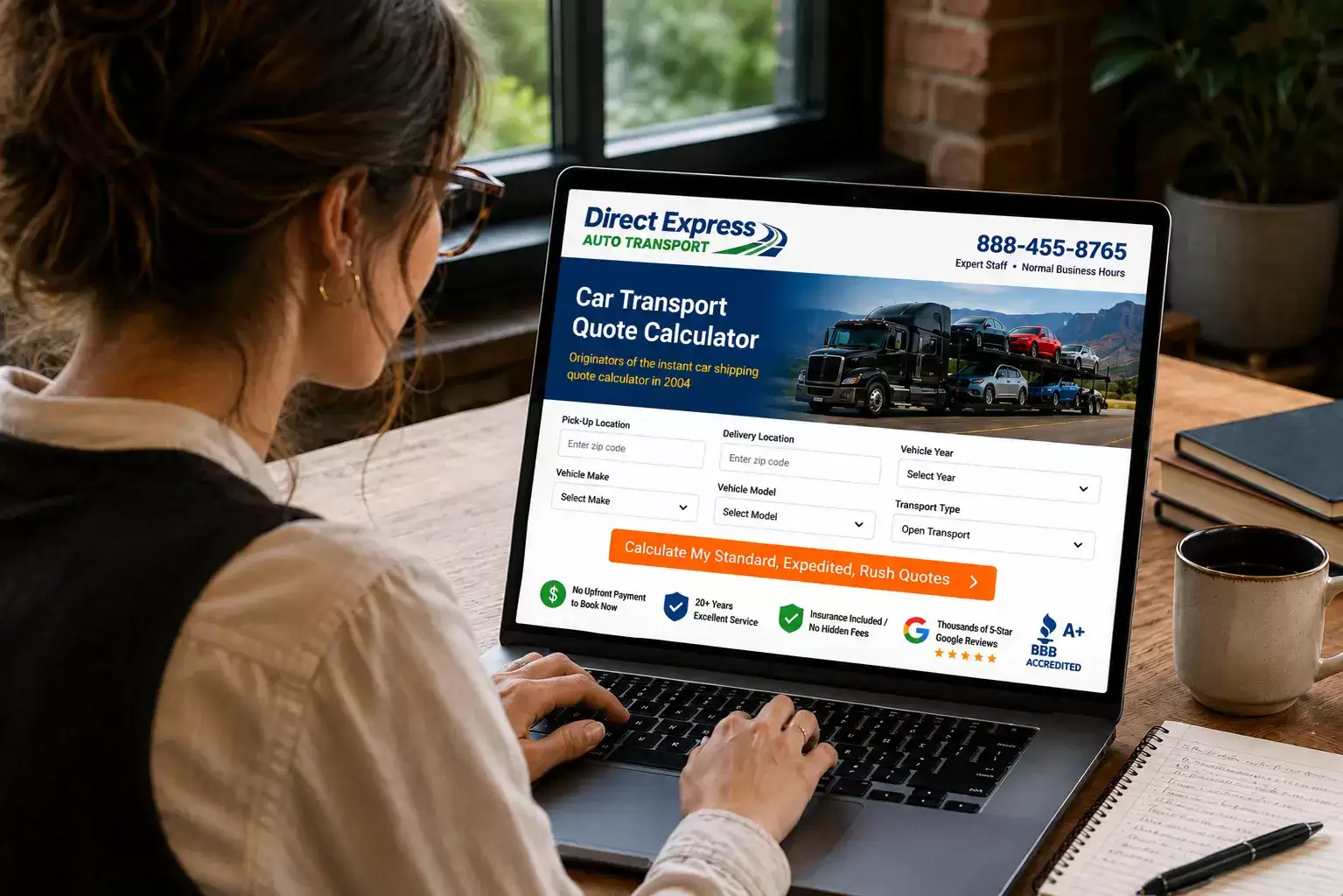
Minnesota Woman in office calculating online car shipping quote

The Company That Invented Instant Auto Transport Pricing

Direct Express Auto Transport pioneered online instant pricing for the auto transport industry in 2004. Before we built the first car shipping cost calculator, getting a quote from a broker meant phone calls, callbacks, and waiting — sometimes days. We changed that. Today you know your exact cost in 30 seconds, before committing to anything. No phone tag, no hassle. Just a real number, instantly.

Three Service Tiers for Every Minnesota to California Shipment

Every shipment on this Minnesota to California route is available at three service tiers so you can match your budget to your timeline. Standard delivers at the best available rate — ideal when your schedule has a few days of flexibility. Expedited moves your vehicle to the front of the dispatch queue for faster pickup. Rush gets your car picked up as fast as humanly possible — for moves where every day counts. All three tiers include full door-to-door service and carrier insurance.

Get My Minnesota to California Auto Transport Price


What customers say about shipping a car from Minnesota to California with Direct Express Auto Transport

Ward C.
2 days ago
Office was extremely polite and helpful. The transport driver was very helpful and polite along with his knowledge of the route to deliver our vehicle.
Sameer S.
2 days ago
Shipped from San Deigo to Bay Area. They offered one of the best rates while also having a good reputation, which held up -- I had a very smooth experience!
Robert K.
4 days ago
I've used Direct Express several times. This latest trip was the best experience yet. The driver made extra effort to get close to my location, was courteous, and his truck didn't break down like the last guy (who had my car stranded for three weeks....). I will continue to use DirectExpress Auto Transport.
Kiranmayi V.
2 weeks ago
Have used their services twice now, very reliable
JD M.
4 months ago
Top-notch service. Scheduling was easy, pricing was fair, and the entire process was handled with professionalism. Pickup and delivery were seamless, and I appreciated the consistent updates along the way. My vehicle arrived exactly as expected—no issues at all. You can tell this company takes pride in what they do.
Char P.
4 months ago
Is worried about shipping my car w/ them but they talked me through it and they awesome my car was pick up no problem and delivered no problem everyone was professional i will definitely be using there services again

Seasonal Pricing Guide: Minnesota to California

The Minnesota–California corridor is a well-supplied Upper Midwest to West Coast lane with strong bidirectional carrier availability. Timing your shipment correctly can meaningfully affect what you pay — and how quickly your vehicle is picked up on the westbound run out of a state with real winter.
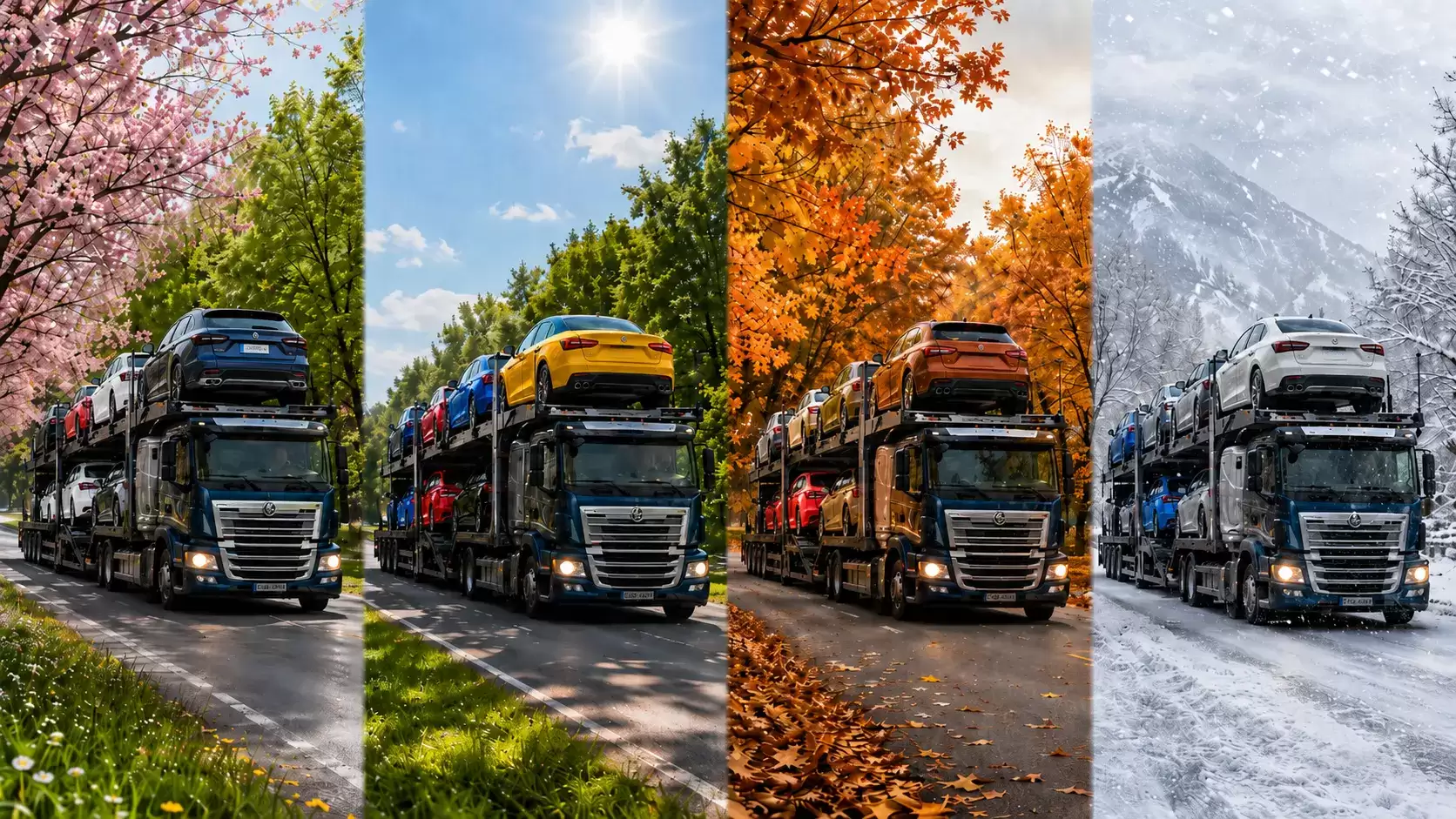
Minnesota to California car transport truck with a full load depicted in a montage in all four seasons

Period Season What to Expect Booking Notes
Jan – Feb Slower Period / Winter Weather Buffer This is the quietest window on the corridor and the deepest part of Minnesota winter. Demand drops after the January post-holiday lull and westbound carrier availability is strong. The I-35/I-80 and I-90/I-15 routes stay open year-round, but deep snow and extreme cold across Minnesota can complicate loading, and a storm over the Rocky Mountain passes can add a day. Neither of these stops carrier operations. Rates are near their annual low and carriers have flexibility on your pickup window. January–February pickups in Minnesota need a weather buffer — allow 1 extra day for deep snow or an extreme cold snap at loading and another for the Rocky Mountain passes during a storm. Once your vehicle is accessible, dispatch is fast.
Mar – May Spring Ramp / Demand Building Corporate relocation activity increases as Twin Cities employers activate fiscal-year transfers. Academic moves pick up in April and May as the University of Minnesota spring semester winds down. Westbound demand builds as Minneapolis and St. Paul corporate, medical, and technology professionals preparing for summer starts in California begin to book. Snow can linger into March; April and May are clean at both ends. Book 10–12 days ahead. Good availability and reasonable rates. A 3–5 day flexible pickup window accelerates dispatch, particularly as May volume starts to compete with early summer demand. March pickups: keep a 1-day snow buffer.
Jun – Aug Peak Season / Highest Demand Summer is the most competitive period on this route. University of Minnesota graduates heading to California for work — particularly to Bay Area technology companies and Los Angeles corporate and creative roles — generate a wave of westbound demand in June and July. Corporate relocations out of the Twin Cities Fortune 500 base and moves timed to the school calendar add further volume. Pricing peaks and Standard pickup windows stretch during the busiest weeks. Book 2–3 weeks ahead. Expedited is the right call if your pickup date is fixed. Summer Standard transit can queue longer as carriers weigh competing loads. Your quote in September will be noticeably less expensive for the same route.
Sep – Oct Best Value Window Summer demand clears sharply after Labor Day. Westbound carrier availability improves, pricing retreats toward its annual floor, and weather at both ends is excellent. Minnesota autumn is at its best, the Rocky Mountain passes are still clear of winter weather, and California summer heat is fading. This is the most cost-efficient window to ship a vehicle from Minnesota to California. Ideal for shippers with any calendar flexibility. Standard pricing is typically sufficient for prompt dispatch. Book 7–10 days ahead. October in particular is a strong value window as the market quiets heading into the pre-holiday stretch.
Nov – Dec Moderate, Then Holiday Slowdown November is steady and manageable — the main watch is Thanksgiving week, when carriers reduce loads around the holiday. December slows further, with the week between Christmas and New Year’s being the industry’s slowest dispatch window every year. Minnesota sees its first heavy snow in November, and a winter storm across the Upper Midwest or the Rocky Mountain passes can add a day to a westbound run. November bookings are straightforward with a 1-day snow buffer. If your target pickup date falls after December 10th, use Expedited to avoid sitting over the holiday gap. Starting a California job in January? Book before December 1st to ensure your vehicle arrives in time.

Pro Tip: Offering a 5-day flexible pickup window instead of a specific pickup date typically results in faster dispatch and lower pricing. On a corridor this long, carrier route optimization matters — flexibility allows us to slot your vehicle efficiently and get it moving faster.

Get My Minnesota–California Seasonal Rates


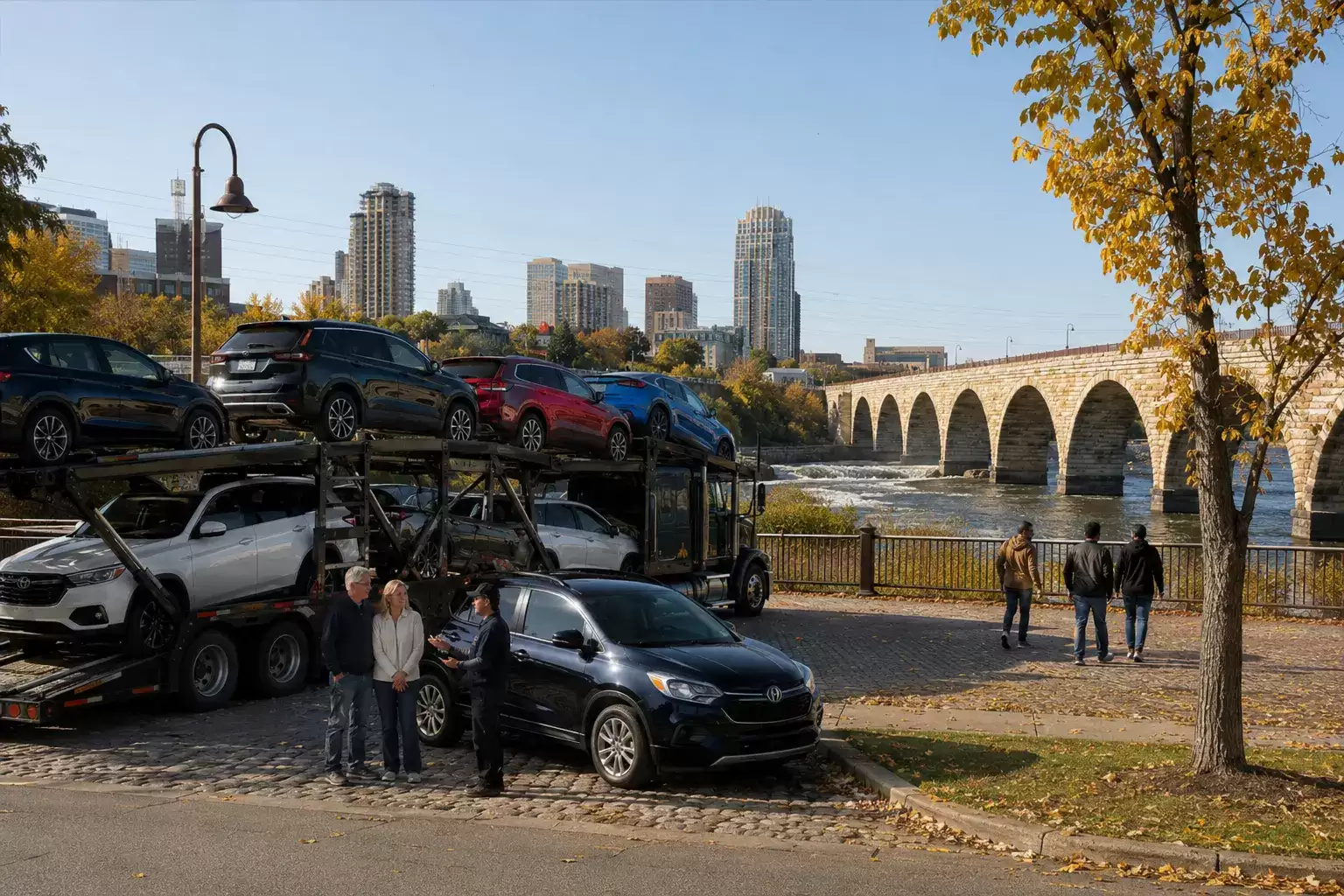
Minnesota Car Transporter delivering to 50 something couple

Who Ships a Car from Minnesota to California — and Why

The Minnesota to California corridor runs year-round, driven by a few consistent groups of shippers.

Twin Cities Corporate Transfers: Minneapolis–St. Paul to California
The Twin Cities carry one of the densest Fortune 500 corporate bases in the country — Target, Best Buy, 3M, UnitedHealth, General Mills, Medtronic, and U.S. Bancorp all headquarter here. Professionals leaving these employers for Bay Area technology, Southern California corporate, and West Coast healthcare roles routinely ship their vehicle rather than sell and rebuy at the other end. Firm start dates make many of these Expedited moves.
Medical Professionals & Patients: The Mayo Clinic Corridor
Rochester is home to the Mayo Clinic, and the flow of physicians, residents, fellows, researchers, and long-stay patients between it and California’s academic medical centers is steady all year. Residency and fellowship match dates are fixed, which makes these some of the most schedule-sensitive shipments on the corridor.
University of Minnesota Students Heading to California Schools
Graduates of the University of Minnesota, along with students from Carleton, Macalester, St. Olaf, and St. Thomas, accept positions and graduate placements at Berkeley, Stanford, UCLA, and USC. Students finishing degrees in Minnesota and moving west for work or advanced programs make late spring and August some of the busiest weeks on the corridor.
Climate Movers, Retirees & Cost-of-Living Relocations
Minnesota winters send a consistent stream of retirees and remote workers west for the climate, while Californians who spent time in the Upper Midwest head back for family and work. Many time these moves for the fall value window, when westbound pricing and carrier availability are at their best and before the first heavy snow.

Instant Minnesota–California Car Shipping Quote


What Makes the Minnesota–California Auto Shipping Run Different

A few geographic quirks shape pricing and timing on the Minnesota to California corridor.
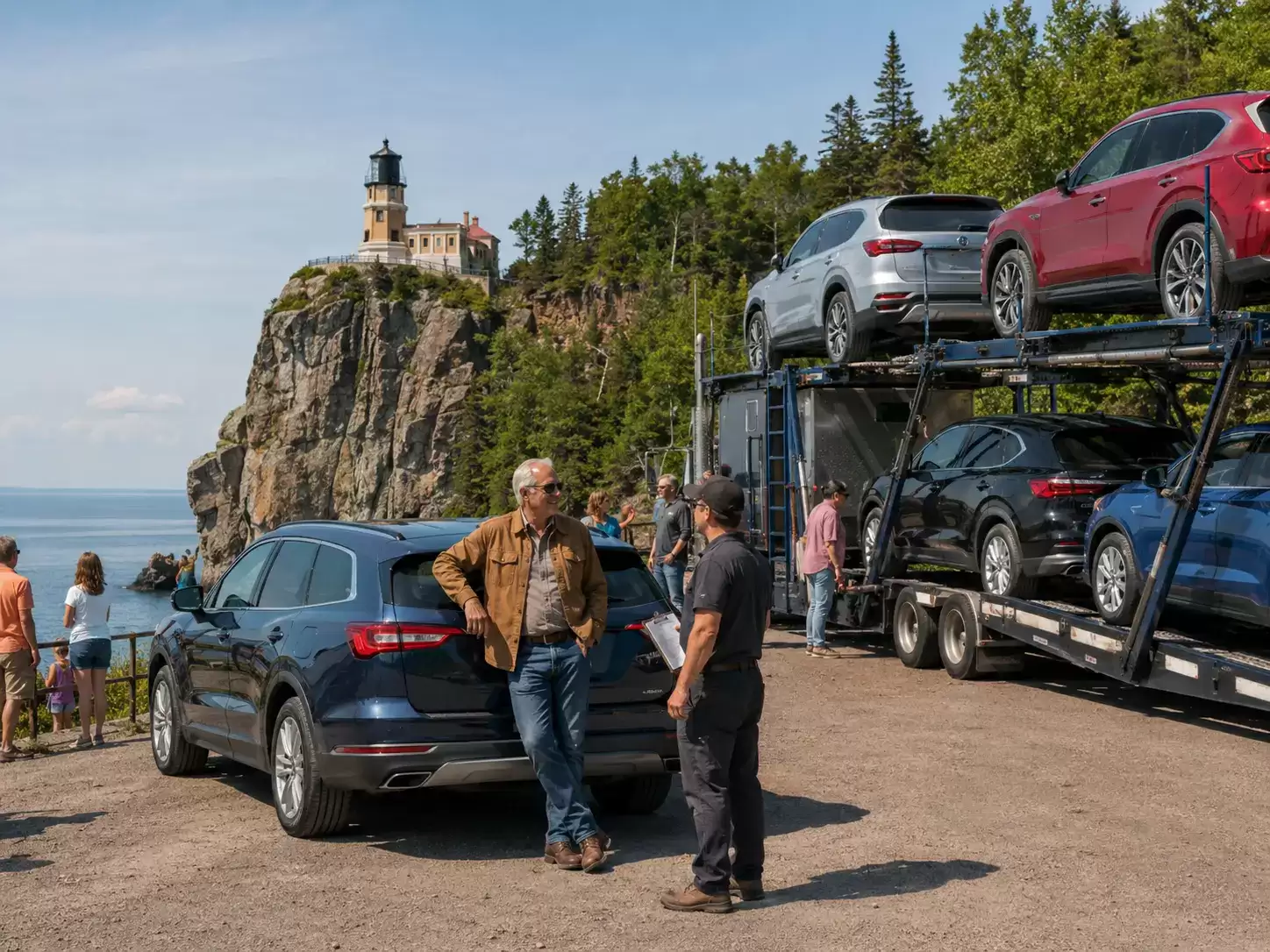
Minnesota Vehicle Transporter delivering to 70 something guy
Two Corridors West: I-35 to I-80 for NorCal, I-90 to I-15 for SoCal
Minnesota sits at the top of the map, so carriers must first work south or west before the real westbound run begins. Twin Cities loads drop south on I-35 to Des Moines and pick up I-80 west across Nebraska, Wyoming, and Utah into Northern California. Southern California loads run I-90 west across South Dakota and Wyoming, then cut south on I-15 through Utah and Nevada into the Los Angeles basin. Both cross high plains and Rocky Mountain passes that stay open year-round.
Northern California and Southern California Sit at Nearly the Same Distance
This is the corridor’s most useful quirk. From an origin farther southeast, Northern California is a clear detour off the natural western terminus. From Minnesota, the I-80 line to the Bay Area and the I-15 line to the Los Angeles basin come out within about 50 miles of each other. That means Bay Area and Sacramento delivery does not carry the geographic penalty it does from states farther southeast.
The Shortest Run: Southern Minnesota to Southern California
Origins south of the Twin Cities — Rochester, Mankato, Owatonna, Northfield, and the southern suburbs — start with fewer approach miles before the carrier is pointed west on I-90. Pair one of those with an Inland Empire, Los Angeles, or San Diego destination and you get the corridor’s shortest, most direct run.
The Longest Haul: Duluth and the North Shore to California
Duluth sits about 150 miles northeast of the Twin Cities at the head of Lake Superior, well off every westbound interstate. A carrier must run back down I-35 before the westbound leg even starts, which puts Duluth and the Arrowhead at the maximum-distance end of the corridor for any California destination.
Minnesota Winter: Deep Snow and Extreme Cold vs. the Mountain Passes
Minnesota winter is the real thing — deep snow and extreme cold can make loading a vehicle out of an unplowed driveway impractical for a day, and January and February pickups need a weather buffer. Add the Rocky Mountain passes on the I-80 and I-15 legs, where a heavy storm can slow a westbound run. Carriers reroute and wait out the worst of it, so major delays are rare, but a 1-day buffer is appropriate for any fixed winter arrival date in California.


Other Minnesota to California Cities We Serve

Direct Express ships vehicles between hundreds of city pairs on this route. Below is a broader look at additional Minnesota origins and California destinations we regularly serve.
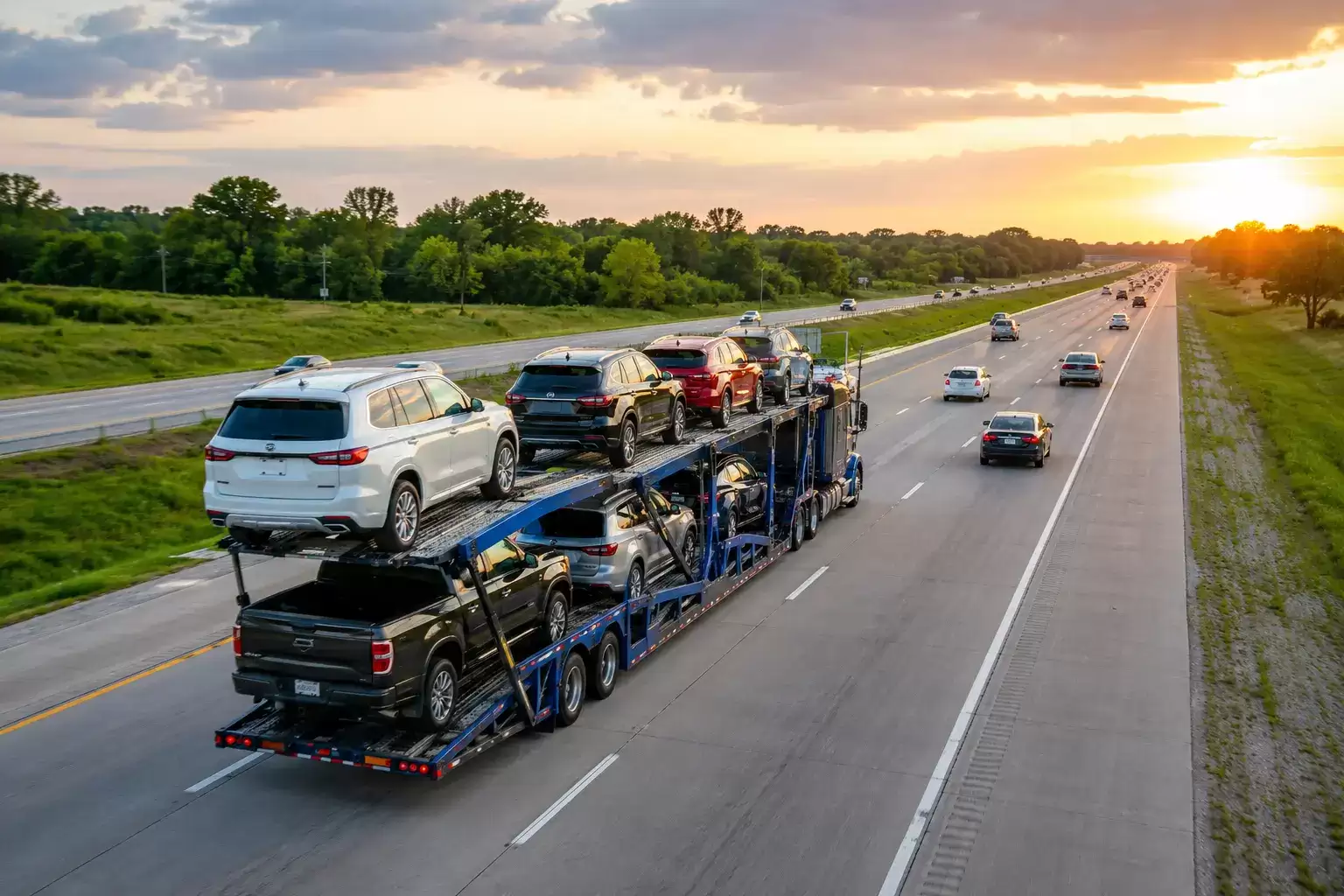
Minnesota to California Car Transporter with a full load rolling down the highway at sunset
From (Minnesota) To (California) Distance Transit
Edina Santa Rosa (NorCal) 2,040 mi 6–8 days
St. Louis Park Sunnyvale (NorCal) 1,995 mi 5–7 days
Minnetonka Modesto (NorCal) 1,945 mi 5–7 days
Apple Valley Elk Grove (NorCal) 1,900 mi 5–7 days
Shakopee Roseville (NorCal) 1,905 mi 5–7 days
Mankato Concord (NorCal) 1,970 mi 5–7 days
Moorhead Escondido (SoCal) 1,995 mi 5–7 days
Winona Torrance (SoCal) 1,935 mi 5–7 days
Owatonna Orange (SoCal) 1,905 mi 5–7 days
Northfield San Bernardino (SoCal) 1,875 mi 5–7 days
Cottage Grove Fontana (SoCal) 1,890 mi 5–7 days
Inver Grove Heights Moreno Valley (SoCal) 1,900 mi 5–7 days
Andover Santa Clarita (SoCal) 1,935 mi 5–7 days
Elk River Glendale (SoCal) 1,945 mi 5–7 days
Stillwater Huntington Beach (SoCal) 1,960 mi 5–7 days
Chanhassen Oceanside (SoCal) 1,955 mi 5–7 days

Get a Quote for Your Minnesota–California Route


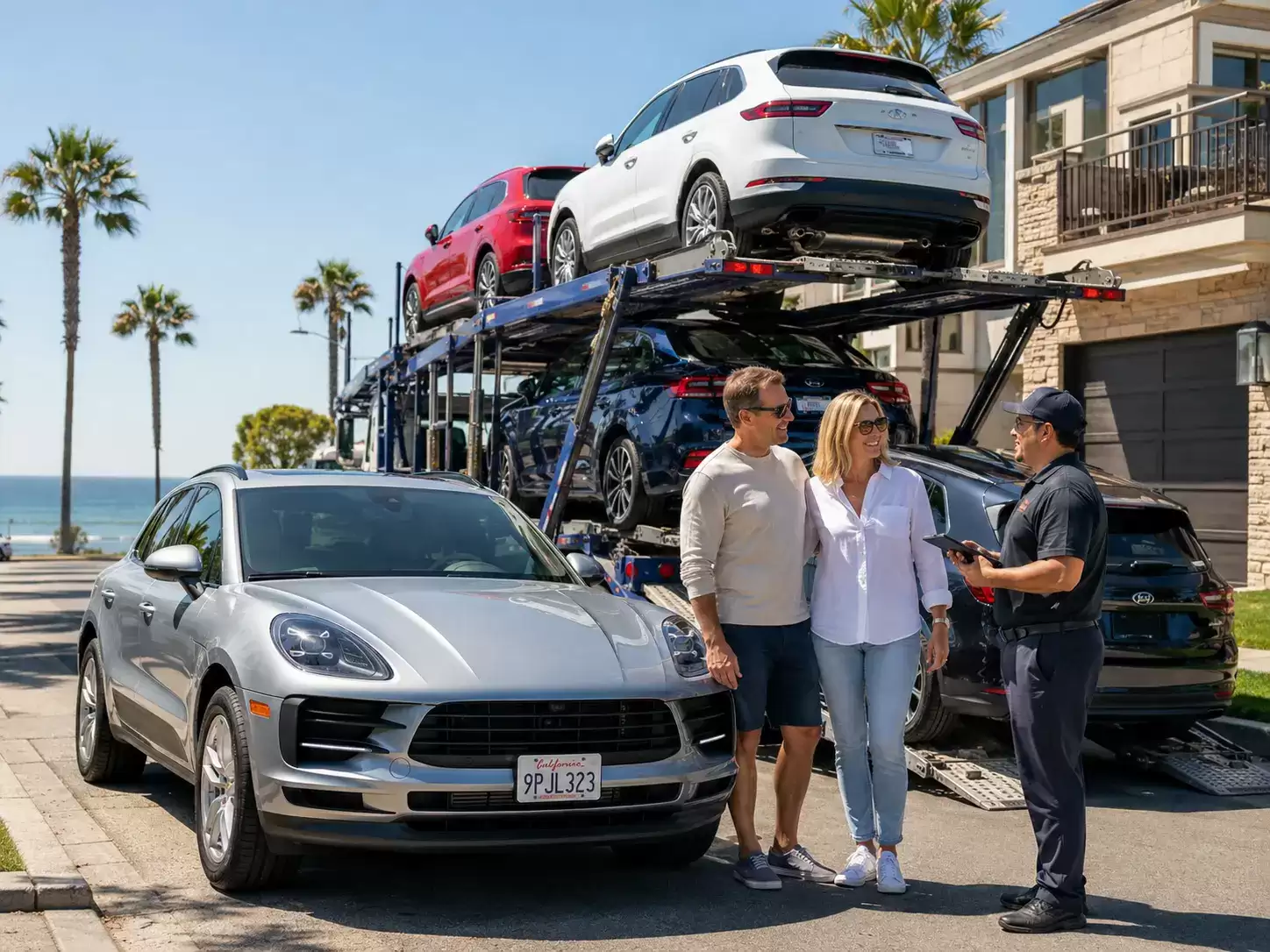
California Vehicle Transporter delivering to 40 something couple

Minnesota and California Auto Shipping Zones Along the I-80 and I-15 Corridors

Minnesota–to–California auto transport runs roughly 1,875–2,080 miles. The most direct runs come from the southern part of the state on the I-90/I-15 flow to Southern California; the longest come from Duluth and the Arrowhead, which sit well northeast of every westbound interstate. Because the Twin Cities sit at the top of the map, Northern California and Southern California land at nearly the same distance — unlike corridors farther southeast, the Bay Area is not a detour from Minnesota.
Minnesota Origin Zones

Minneapolis and the West Metro (Minneapolis / Bloomington / Edina / St. Louis Park / Minnetonka / Eden Prairie / Plymouth / Chanhassen)
I-35 south to the I-80 line or I-90 west to I-15; highest-volume Minnesota origin zone; dense downtown Minneapolis blocks may require a nearby accessible meeting point; suburban addresses standard door-to-door; deep snow and extreme cold buffer December–March
St. Paul and the East Metro (St. Paul / Woodbury / Cottage Grove / Inver Grove Heights / Stillwater)
I-94 and I-35E to the westbound flow; state capital and corporate base; standard door-to-door for most addresses; older St. Paul residential streets may need a short coordination; snow buffer December–March
South Metro (Eagan / Burnsville / Apple Valley / Lakeville / Shakopee / Savage)
already pointed down I-35 toward the westbound corridor; among the most efficient Twin Cities origins; standard door-to-door throughout; snow buffer December–March
North Metro (Brooklyn Park / Maple Grove / Coon Rapids / Blaine / Andover / Elk River)
I-94 and I-694 to I-35 or I-90; carrier works south before the westbound leg; standard door-to-door; adds a short approach vs. the south metro; snow buffer December–March
Southern Minnesota (Rochester / Owatonna / Northfield / Faribault / Mankato / Winona)
loads straight onto I-90 west; Mayo Clinic medical traffic; shortest Minnesota origins to Southern California; standard door-to-door; no state safety inspection and no emissions testing requirement
Greater Minnesota (Duluth / St. Cloud / Moorhead / the Arrowhead)
carrier runs back to I-35 or I-94 before heading west; Duluth adds roughly 150 approach miles and sits at the corridor’s long end; standard door-to-door; heaviest snow and coldest loading conditions in the state November–March

California Delivery Zones

Los Angeles Basin (Los Angeles / Long Beach / Glendale / Santa Clarita / Torrance)
western terminus of the I-90/I-15 flow; fast, efficient delivery zone; dense downtown LA blocks may need a short nearby-street coordination; mostly standard door-to-door
Orange County (Anaheim / Santa Ana / Irvine / Orange / Huntington Beach)
standard door-to-door; excellent carrier access off I-5 and I-405; suburban residential access throughout; no staging concerns
Inland Empire (Riverside / San Bernardino / Fontana / Moreno Valley)
standard door-to-door; first SoCal delivery zone reached off I-15 and I-10; high-volume; no staging concerns
San Diego and the Coast (San Diego / Chula Vista / Oceanside / Escondido)
standard door-to-door via I-15 and I-5; southernmost SoCal delivery zone; excellent carrier access; no staging concerns
Bay Area and Central Valley (San Francisco / Oakland / San Jose / Fremont / Sunnyvale / Sacramento / Stockton / Modesto / Fresno)
arrives directly on the I-80 line — from Minnesota this is a comparable run to the LA basin, not a detour; dense San Francisco neighborhoods may need a nearby staging point; otherwise standard door-to-door

Calculate My Minnesota–California Auto Transport Cost


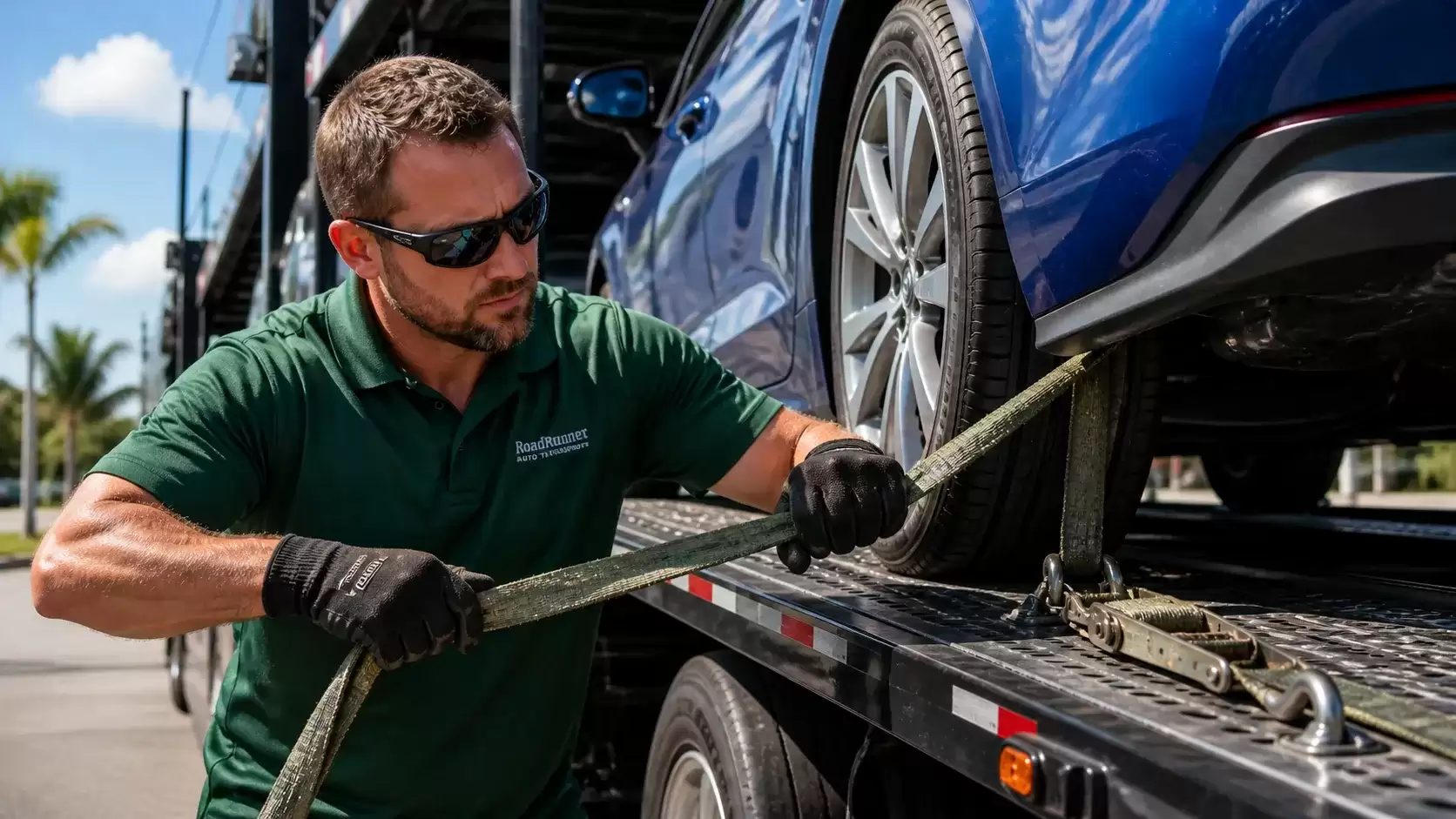
car-transport-driver-strapping-down-a-blue-car-on-th-trailer

Minnesota to California Auto Transport Video Guide

Jump to the chapter most relevant to your Minnesota to California shipment

9 Chapters — Under 6 Minutes


Each chapter covers a specific part of the Minnesota to California shipping process. Click any card to open that chapter directly in YouTube.

[00:00] – Introduction to Minnesota to California Auto Transport

We begin with why the Minnesota to California corridor is a busy long-haul auto transport route — driven by job relocations, military moves, students, and snowbirds. Our nationwide carrier network is built to handle vehicle shipping between Minnesota and California year-round.

[00:58] – How To Arrange Auto Transport

Learn how easy it is to schedule your Minnesota to California shipment. Whether you’re shipping from Minneapolis or St. Paul, we explain how the booking process works and how carriers are assigned along the route.

[01:29] – How Pricing Tiers Work

Minnesota to California pricing varies with direction of travel, time of year, and whether your origin or destination is a major hub or a smaller market. We explain how rates shift through the year and which of our three service tiers — Standard, Expedited, or Rush — matches your timeline and budget.

[02:48] – Where We Ship

We move vehicles between every Minnesota origin and every California destination — from the largest metros to smaller cities, college towns, and military communities across both states.

[03:06] – When To Expect Pickup

Pickup timing depends on route availability, carrier scheduling, and your chosen tier. We explain how pickup windows work and how carriers coordinate routes between Minnesota and California.

[03:37] – How Long Shipping Takes

Get realistic transit-time expectations for the Minnesota to California route, including the seasonal and weather factors that can affect timing on a cross-country haul.

[03:55] – Preparing Your Vehicle

Before pickup, we recommend cleaning your vehicle, removing personal items, and photographing every panel. If you are shipping a vehicle to California, document its pre-existing condition carefully ahead of your California registration and smog inspection.

[04:25] – What To Expect At Pickup

We walk through the inspection and Bill of Lading process so you know exactly what happens when the carrier arrives, including how carriers handle tight access in dense urban neighborhoods where staging at a nearby meet point may be required.

[04:57] – What To Expect At Delivery

The final inspection and delivery process is explained step by step, including how deliveries are handled in gated communities, dense urban cores, and rural addresses across California.

See My Minnesota–California Shipping Price in 30 Seconds


Open vs. Enclosed Car Transport on the Minnesota–California Route

Both methods are available on virtually every Minnesota to California lane. The right choice comes down to your vehicle’s value and the season.

Open Transport — Recommended for Most
Carries 7–10 vehicles on an open-air trailer — the same method used to deliver new cars to dealerships. Most cost-effective, with strong year-round availability in both directions on this corridor. Well suited to standard sedans, trucks, SUVs and minivans. Your vehicle is exposed to road dust and light road film over 1,900-plus miles, which is normal and easily washed off at delivery.
Enclosed Transport
Your vehicle travels inside a fully covered trailer, protected from debris, winter road spray, and mountain grit. Typically costs 40–60% more than open. Ideal for luxury, classic/collector, sports and custom-paint vehicles — Minnesota road salt runs heavy November through March, and the high plains and mountain crossings can be hard on fresh paint, which makes enclosed worth considering for show-quality finishes. Fewer enclosed carriers run this lane, so book 2–3 weeks earlier.

Our honest recommendation: open transport for daily drivers and vehicles worth under $60,000 — the MN–CA corridor has strong bidirectional carrier availability and open carriers run it constantly. For a winter shipment out of Minnesota road salt, a classic, an exotic or a sentimental vehicle, the enclosed premium is worth the protection over 1,900-plus miles of highway and mountain passes.
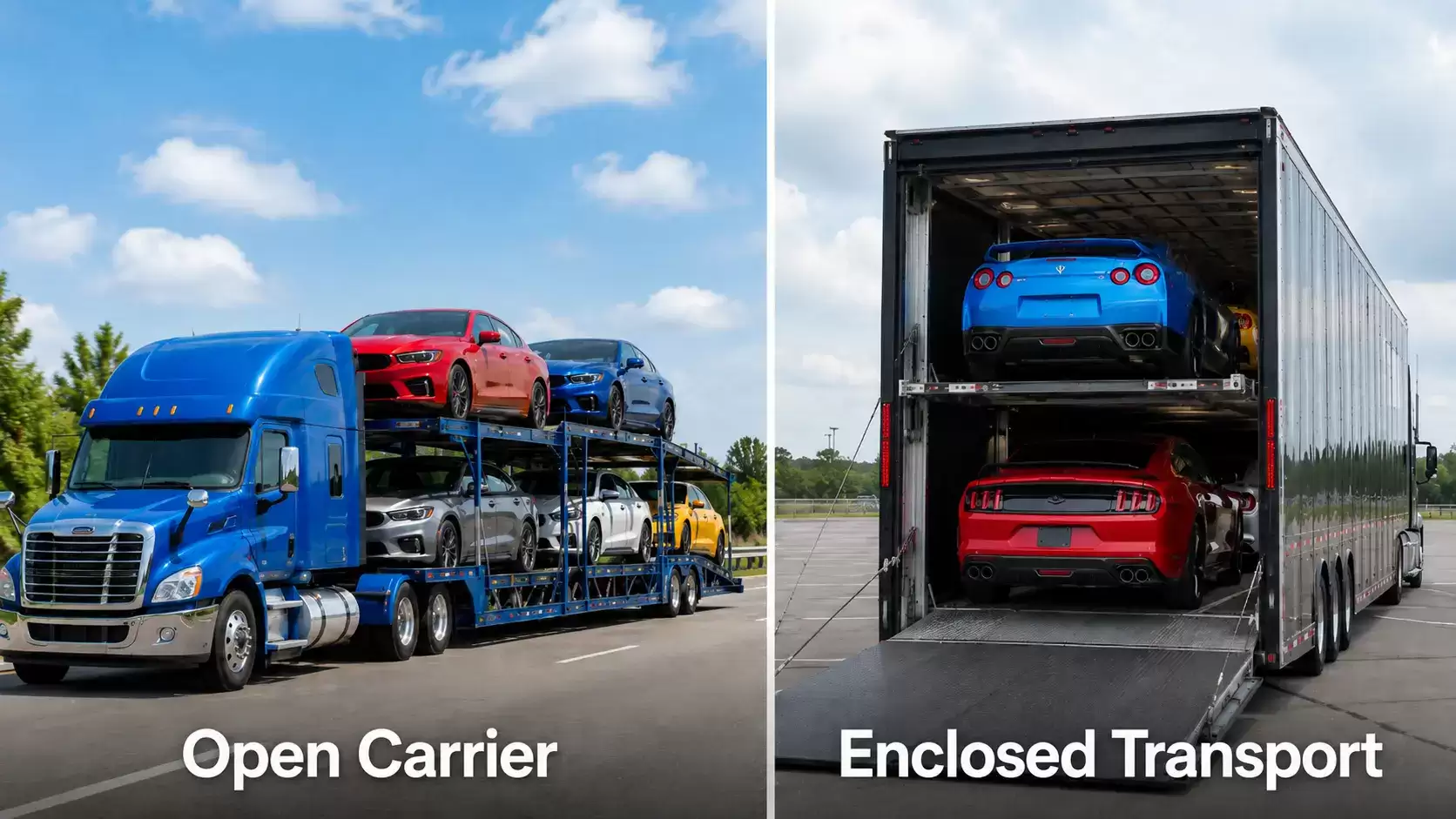
Minnesota–California Open or Enclosed Transport Estimate

Types of transport - open carrier and enclosed transport trucks

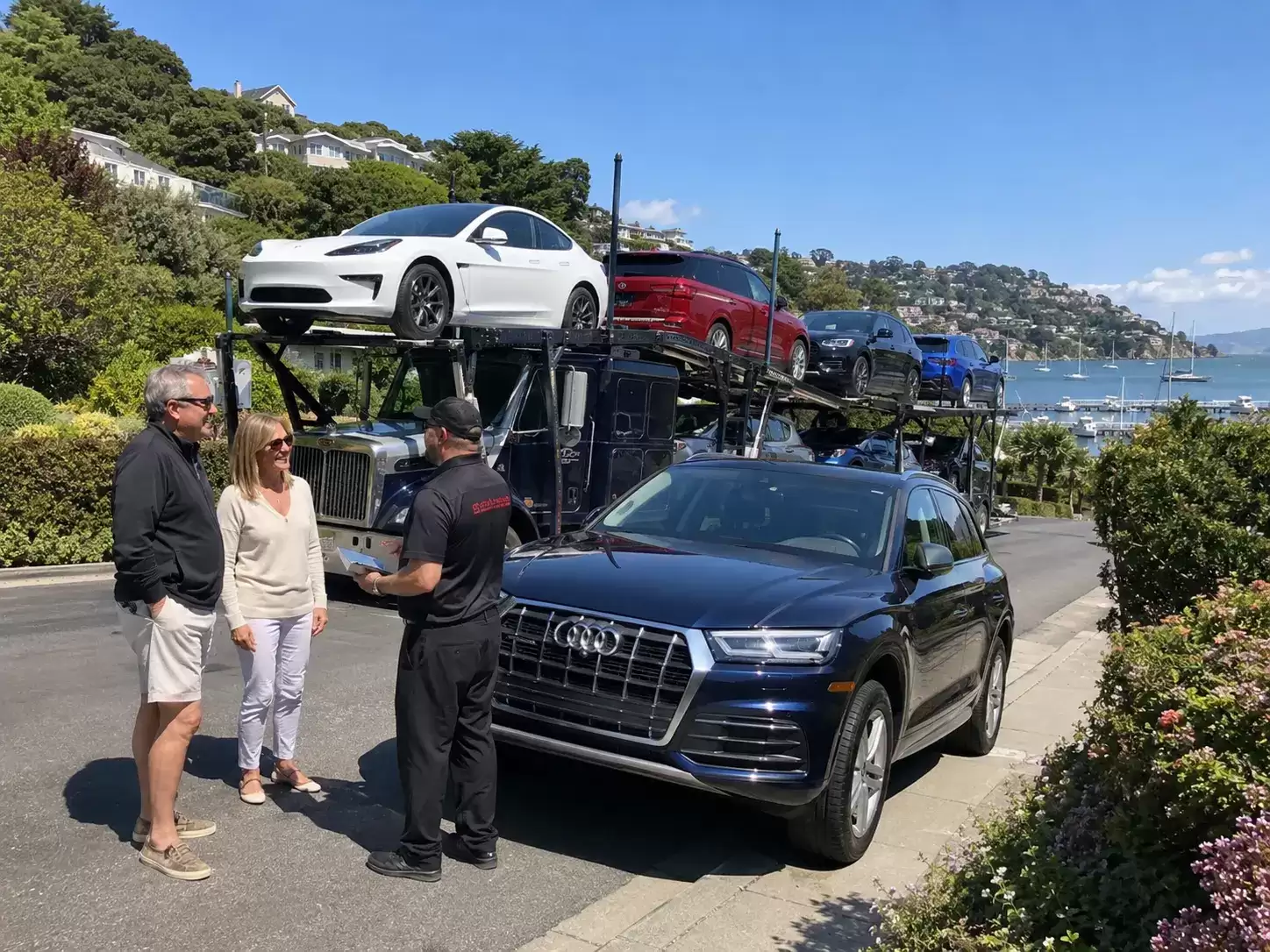
California Auto Transporter delivering to 50 something couple

Door-to-Door Car Shipping: What to Expect in Minnesota and California

Every Minnesota to California shipment is full door-to-door — we pick up at your Minnesota address and deliver to your California door, with commercial staging only where dense city streets require it.

Pickup in Minnesota
Door-to-door pickup across the Minneapolis west metro, St. Paul and the east metro, the north and south suburbs, southern Minnesota, and Greater Minnesota. Dense downtown Minneapolis and older St. Paul streets use a nearby accessible meeting point; suburban and small-city addresses are standard. In winter, allow a buffer for deep snow or extreme cold at pickup.
Delivery in California
Southern California — Los Angeles, San Diego, the Inland Empire, and Orange County — is the most efficient delivery zone in the country, mostly standard door-to-door. The Bay Area and Central Valley arrive on the I-80 line, which from Minnesota is a comparable run rather than a detour, though dense San Francisco neighborhoods may need a nearby staging point.

Pickup in Minnesota

Twin Cities Metro: Minneapolis, St. Paul, and the Suburbs

Twin Cities pickup is straightforward in the suburbs and slightly more involved in the two urban cores. Large car haulers — typically 75 feet long — cannot always position on the tight streets of downtown Minneapolis, the North Loop, Uptown, or the older residential grids of St. Paul’s Summit-University and Cathedral Hill. Carriers coordinate a nearby accessible pickup location, typically within a few blocks.

The suburbs are efficiently serviced door-to-door off the I-494/I-694 beltway. Bloomington, Edina, St. Louis Park, Minnetonka, Eden Prairie, Plymouth, and Chanhassen in the west metro; Woodbury, Cottage Grove, Inver Grove Heights, and Stillwater in the east; Eagan, Burnsville, Apple Valley, Lakeville, and Shakopee in the south; Brooklyn Park, Maple Grove, Coon Rapids, Blaine, and Andover in the north. South metro addresses sit closest to the I-35 southbound approach and tend to come together fastest.

Southern Minnesota and Greater Minnesota

Rochester, Owatonna, Northfield, Faribault, Mankato, and Winona load straight onto I-90 west and are standard door-to-door — these are the shortest Minnesota origins to Southern California. Rochester in particular runs heavy Mayo Clinic traffic, and campus-adjacent addresses may need a short access confirmation.

St. Cloud, Elk River, Moorhead, and Duluth are serviced off I-94 and I-35. Duluth sits roughly 150 miles northeast of the metro at the head of Lake Superior, so the carrier runs back down I-35 before the westbound leg begins. Greater Minnesota sees the deepest snow and coldest loading conditions in the state, so a 1-day pickup buffer is appropriate November through March, and January–February pickups statewide should carry a weather buffer.

Delivery in California

Southern California and the Inland Empire

Southern California delivery is the most efficient destination zone in the country. Los Angeles, San Diego, the Inland Empire (Riverside, San Bernardino, Fontana), Orange County (Anaheim, Irvine, Santa Ana, Glendale, Long Beach), and surrounding metro areas are in constant carrier rotation from the I-15 corridor. Most residential and commercial addresses in SoCal can be reached door-to-door.

Dense urban neighborhoods in downtown LA can occasionally require a short coordination on nearby accessible streets, but this is the exception. Your carrier will contact you 24–48 hours before delivery to confirm a delivery window.

Bay Area, Central Valley, and Northern California

Northern California delivery (San Francisco, Oakland, San Jose, Fremont, Sunnyvale, Sacramento, Stockton, Modesto, Fresno) arrives directly on the I-80 line, which the carrier picks up after dropping south out of Minnesota on I-35. From a Minnesota origin this is a comparable run to the LA basin rather than a northward extension, so NorCal delivery does not carry the same geographic penalty it does from states farther southeast.

San Francisco streets can present challenges similar to dense city cores in some neighborhoods — your coordinator addresses this before departure. Sacramento, Stockton, Modesto, Fresno, Fremont, and Sunnyvale are standard door-to-door with excellent access.

California Vehicle Registration for Minnesota Arrivals

California requires you to register your vehicle within 20 days of establishing residency at the California DMV, and a California smog (emissions) inspection is required before first registration for most vehicles; there is no separate statewide safety inspection. Bring your Minnesota title, proof of insurance, and the smog certificate, then cancel your Minnesota registration once your California plates arrive.

Preparing Your Vehicle

Before pickup: clear all personal items from the interior, leave no more than a quarter tank of fuel, disable your alarm, and remove any exterior accessories or aftermarket attachments. Photograph your vehicle from all angles with timestamps before the carrier arrives. In a Minnesota winter, clear snow and ice off the vehicle and make sure the driveway or lot is plowed so the carrier can load without delay.

At delivery in California, inspect your vehicle thoroughly before signing the Bill of Lading — document any concerns directly on the form before signing. Your signature without notation constitutes acceptance of the vehicle’s condition.

Door-to-Door Minnesota–California Car Shipping Rates


Minnesota & California Auto Transport Resources

Minnesota Helpful Government Links

California Helpful Government Links

Federal Auto Transport Resources

Direct Express Customer Service Staff Representative at her desk


Minnesota to California Car Shipping — FAQ

How much does it cost to ship a car from Minnesota to California?

For a standard sedan on open transport, Minnesota to California generally runs roughly $1,575–$1,725 depending on the exact cities, vehicle, and season — shorter southern Minnesota to Southern California runs sit at the lower end, longer Duluth and Arrowhead origins at the higher end. Pricing tracks the live market and shifts week to week, so use the instant calculator for your exact zip codes and dates.

How long does it take to ship a car from Minnesota to California?

Transit from the Twin Cities and southern Minnesota to California typically runs 5–7 days once picked up. Duluth and far-northern origins add a day. Plan for 7–10 days total from booking to delivery, accounting for 1–3 days of dispatch time before carrier pickup. Expedited tier compresses the dispatch window significantly.

Can a car hauler pick up directly at my Minneapolis address?

Often yes, with a short coordination. Downtown Minneapolis, the North Loop, Uptown, and the older residential grids of St. Paul prevent large car haulers from staging at every address, but carriers typically coordinate a pickup at an accessible location within a few blocks of your building. Your transport coordinator handles this logistics conversation before dispatch. The suburbs — Bloomington, Edina, Eden Prairie, Woodbury, and Maple Grove — are generally more accessible for direct pickup.

What is the best time of year to ship from Minnesota to California?

September and October offer the best combination of pricing and availability, with clean weather at both ends and the mountain passes still clear. Summer (June through August) is the most competitive period — university graduates, corporate relocations, and school-calendar moves drive peak demand. January and February are strong value windows if your schedule allows, with a weather buffer for deep snow and extreme cold at pickup and for the Rocky Mountain passes.

Is Bay Area delivery farther from Minnesota than Los Angeles?

Barely. This is the corridor’s most useful quirk. Because Minnesota sits at the top of the map, the I-80 line to Northern California and the I-15 line to the Los Angeles basin come out within about 50 miles of each other. From states farther southeast, the Bay Area is a real detour off the natural western terminus — from Minnesota it is a comparable run, so NorCal delivery does not carry the same geographic penalty.

Will a Minnesota winter delay my pickup?

It can, by about a day. Deep snow and extreme cold can make loading a vehicle out of an unplowed driveway impractical, and January and February pickups need a weather buffer. A storm over the Rocky Mountain passes on the I-80 or I-15 leg can add another day. Neither closes the corridor — carriers reroute and wait out the worst of it — but a 1-day buffer is appropriate for any fixed winter arrival date in California.

Do I need to be present at pickup and delivery?

Yes — or a designated adult you trust. Someone must be present at both the Minnesota pickup and California delivery to inspect the vehicle and sign the Bill of Lading. Provide their name and contact information to your coordinator at booking if you won’t be there personally.

California Car Transporter delivering to 70 something snowbird

Shipping from California to Minnesota instead?

We cover both directions on this corridor. See city-by-city rates, transit times, and seasonal pricing for the reverse direction. View California to Minnesota rates →

More Helpful Information

Other popular routes we serve.

How Auto Transport Works

How our car shipping cost calculator works its magic.

Get My Minnesota to California Car Shipping Quote