Florida to Washington Car Shipping
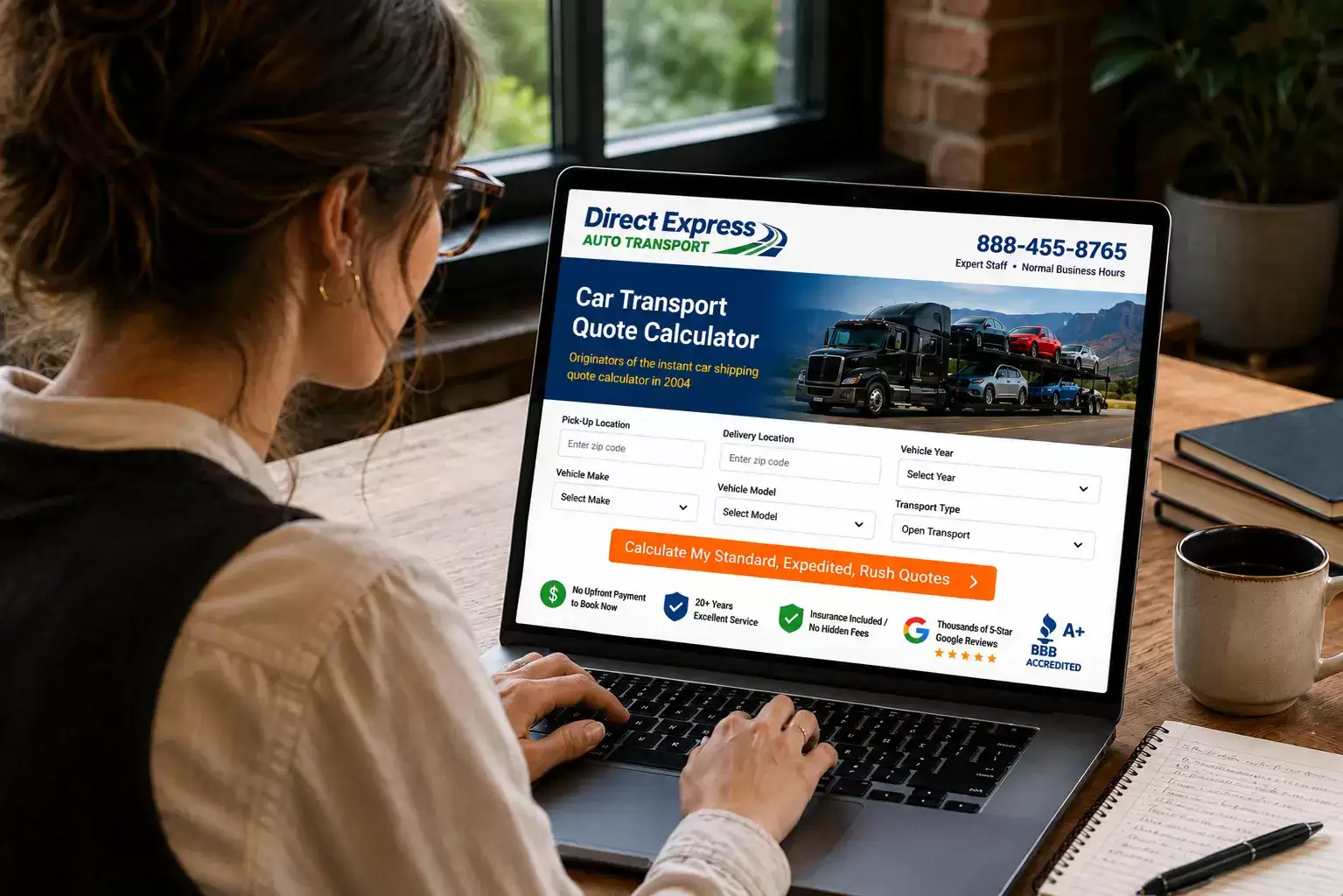
The original instant car shipping calculator — trusted since 2004. Door-to-door Florida to Washington transport with no surprises, no hidden fees, and three options to ship your vehicle on your schedule.
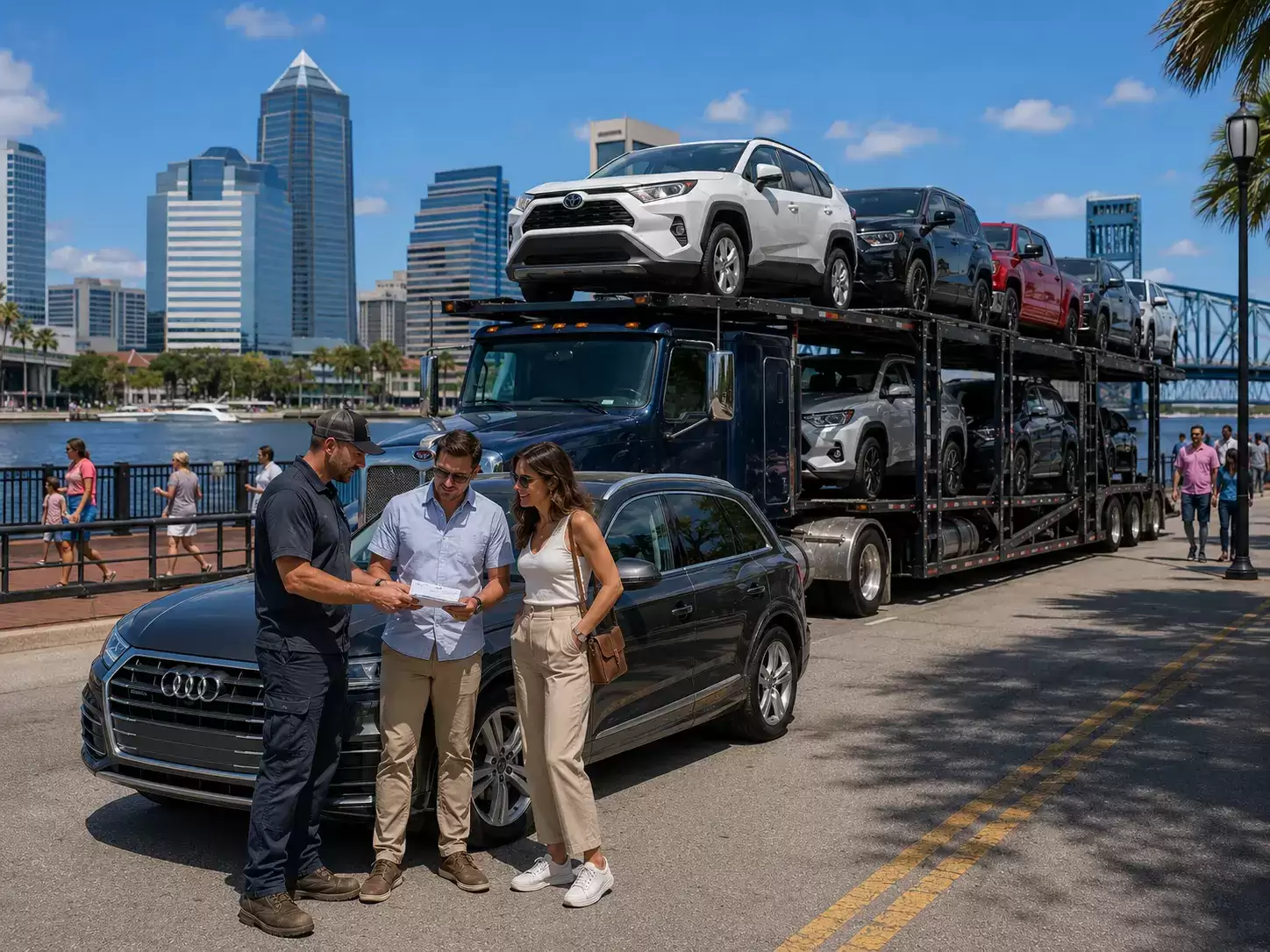
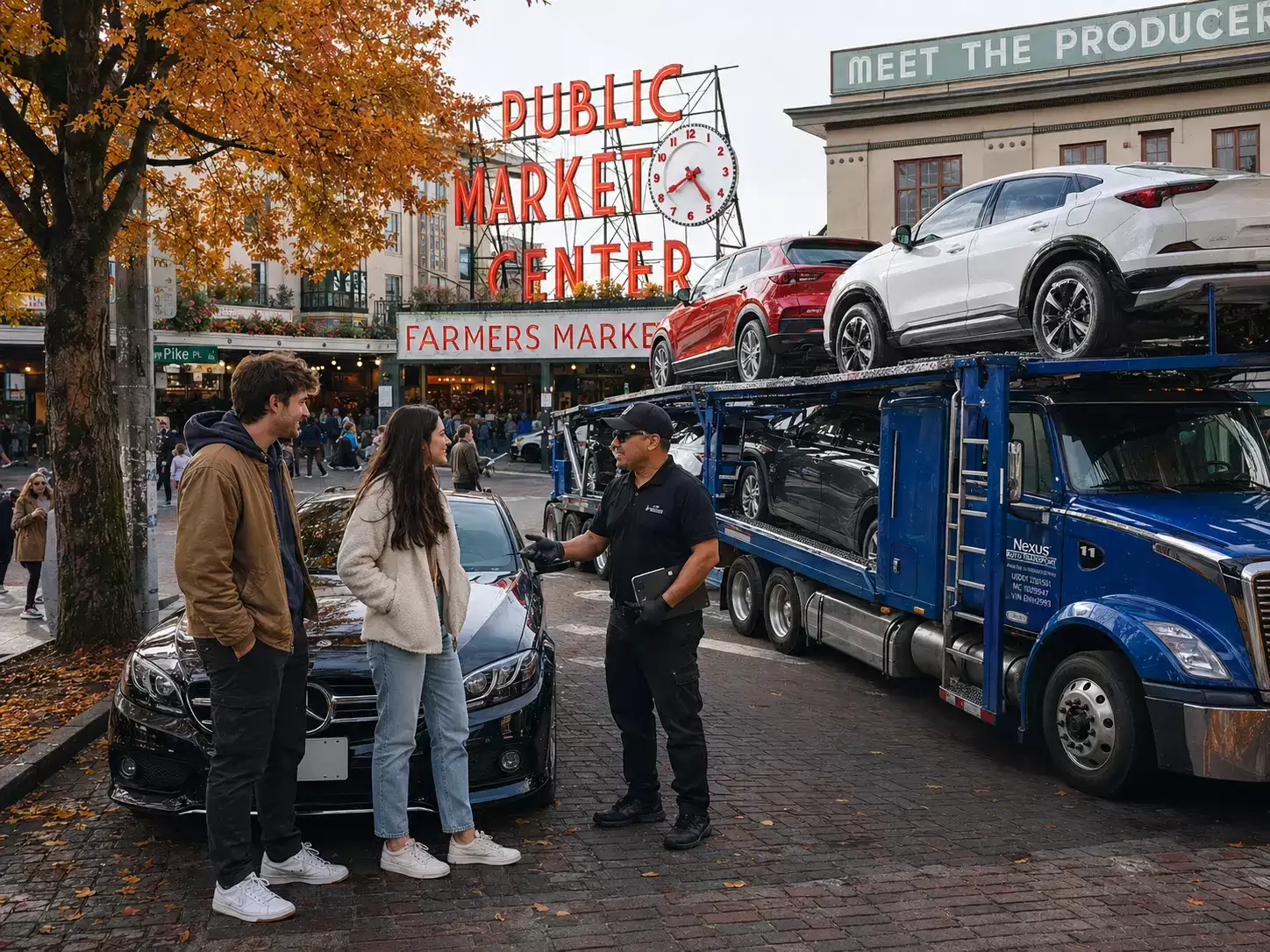
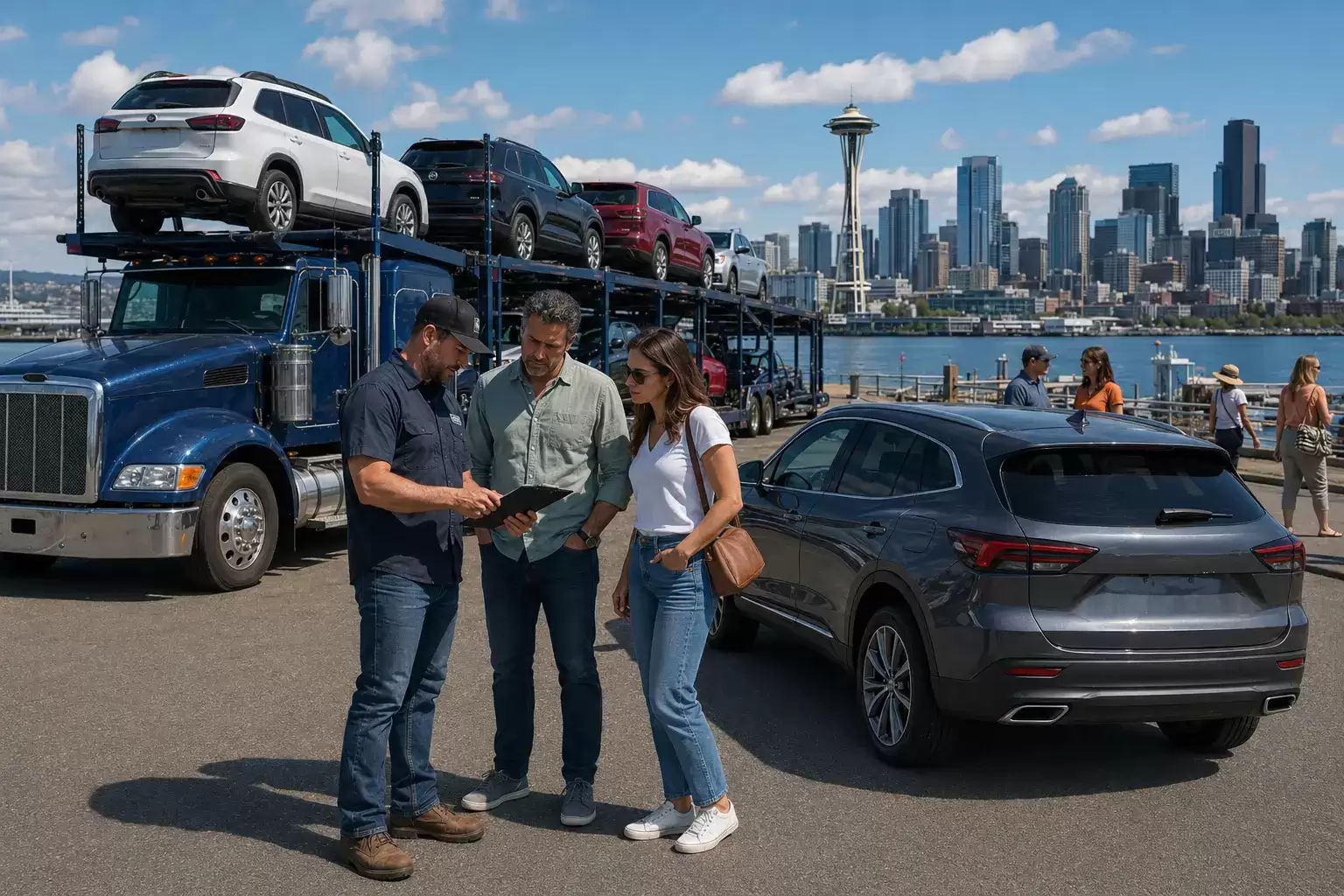
Car Shipping from Florida to Washington — See How It Works
Florida to Washington Car Shipping Rates by City
Every Florida to Washington vehicle shipment is available at three service levels:
Standard, Expedited, & Rush Options
Choose the one that fits your timeline and budget. All three include full door-to-door service and carrier insurance.
Prices below are for a standard sedan via open carrier. Calculating your particular instant quote will reflect your exact vehicle, zip codes, and dates, which is even more precise.
| From (Florida) | To (Washington) | Distance | Standard | Expedited | Rush | Transit |
|---|---|---|---|---|---|---|
| Jacksonville | Seattle | ~2,830 mi | $2,250 | $2,700 | $3,150 | 6–8 days |
| Miami | Spokane | ~3,050 mi | $2,425 | $2,910 | $3,395 | 7–9 days |
| Orlando | Tacoma | ~3,080 mi | $2,450 | $2,940 | $3,430 | 7–9 days |
| Tampa | Vancouver | ~3,140 mi | $2,475 | $2,970 | $3,465 | 7–9 days |
| Miami | Bellevue | ~3,300 mi | $2,600 | $3,120 | $3,640 | 8–9 days |
| Fort Lauderdale | Kent | ~3,280 mi | $2,575 | $3,090 | $3,605 | 8–9 days |
| Tallahassee | Renton | ~2,760 mi | $2,200 | $2,640 | $3,080 | 6–8 days |
| St. Petersburg | Everett | ~3,160 mi | $2,500 | $3,000 | $3,500 | 7–9 days |
| Hialeah | Spokane | ~3,040 mi | $2,400 | $2,880 | $3,360 | 7–9 days |
| Cape Coral | Federal Way | ~3,230 mi | $2,550 | $3,060 | $3,570 | 7–9 days |
| Port St. Lucie | Yakima | ~2,980 mi | $2,375 | $2,850 | $3,325 | 7–9 days |
| Pembroke Pines | Bellingham | ~3,350 mi | $2,625 | $3,150 | $3,675 | 8–9 days |
| Hollywood | Kennewick | ~3,010 mi | $2,375 | $2,850 | $3,325 | 7–9 days |
| Sarasota | Auburn | ~3,180 mi | $2,500 | $3,000 | $3,500 | 7–9 days |
| Jacksonville | Pasco | ~2,600 mi | $2,100 | $2,520 | $2,940 | 6–8 days |
| Tampa | Marysville | ~3,190 mi | $2,525 | $3,030 | $3,535 | 7–9 days |
* Prices shown for a standard sedan via open carrier. Trucks, SUVs, and vans are priced higher. Enclosed transport available at an additional premium. Use the instant quote calculator above for your exact vehicle, dates, and zip codes.
The Company That Invented Instant Auto Transport Pricing
Direct Express Auto Transport pioneered online instant pricing for the auto transport industry in 2004. Before we built the first car shipping cost calculator, getting a quote from a broker meant phone calls, callbacks, and waiting — sometimes days. We changed that. Today you know your exact cost in 30 seconds, before committing to anything. No phone tag, no hassle. Just a real number, instantly.
Three Service Tiers for Every Florida to Washington Shipment
Every shipment on this Florida to Washington route is available at three service tiers so you can match your budget to your timeline. Standard delivers at the best available rate — ideal when your schedule has a few days of flexibility, which is common on a coast-to-coast move like this. Expedited moves your vehicle to the front of the dispatch queue for faster pickup. Rush gets your car picked up as fast as humanly possible — for firm Washington start dates, military report dates, and any Florida departure where every day counts. All three tiers include full door-to-door service and carrier insurance.
What customers say about shipping a car from Florida to Washington with Direct Express Auto Transport
Seasonal Pricing Guide: Florida to Washington
Florida to Washington is one of the longest domestic corridors in the country, so timing works differently than on a short regional lane. Summer is the national peak for relocations and student moves; the Pacific Northwest winter brings mountain-pass weather at the Washington delivery end; and the Florida pickup end carries Atlantic hurricane season through the fall. The best value falls in the spring and fall shoulder windows, when passes are clear and national demand eases.

| Period | Season | What to Expect | Booking Notes |
|---|---|---|---|
| Jan – Feb | Winter Value / Mountain-Pass Season | January and February are among the lowest-demand months of the year on this corridor — strong value for a shipment with flexible timing. Florida pickup is easy: mild winter weather and no heat concern. The main weather factor is at the Washington delivery end, where Snoqualmie Pass on I-90 and the Cascade and Rocky Mountain crossings can close briefly or slow carriers during heavy snow. | Good value. Book 10–14 days ahead. Add a 1–2 day buffer for Washington deliveries during Cascade and Rocky Mountain snow events. No heat protocol at Florida pickup. Expedited for firm Washington arrival dates; Standard is usually fine for a flexible Puget Sound window in winter. |
| Mar – May | Spring Shoulder / Best Value Window | March through May is one of the best value windows on the Florida to Washington direction. Mountain passes clear at the Washington end through spring, national relocation demand has not yet peaked, and carriers running the long transcontinental lanes have open capacity. April and May are the year’s cleanest combination of good weather at both ends and moderate pricing before the summer surge. | Best value window. Book Standard with a 7–10 day flexible pickup window. Late March can still see occasional pass snow at the Washington end — allow a 1-day buffer for early-spring Puget Sound deliveries. May offers excellent conditions across the corridor. |
| Jun – Aug | Peak Relocation Season / Florida Heat | Summer is the national peak relocation season. Floridians moving to the Pacific Northwest for jobs or family, families relocating for the school-year transition, and students heading to Washington campuses concentrate their moves in June, July, and August. Expect extreme heat at the Florida pickup end — carriers keep to normal loading practices while planning for high-temperature handling in July and August. Passes are fully clear at the Washington delivery end. | Peak demand. Book 2–3 weeks ahead. Expedited for any firm Washington delivery date. Late-August university deliveries (Seattle, Pullman, Spokane): book 14 days ahead. Monitor the Atlantic hurricane forecast for August pickups on the peninsula. July is peak summer pricing. |
| Sep – Oct | Fall Shoulder / Good Value Window | September and October are the corridor’s second value window. Summer relocation demand has cleared, student move-in is complete, and the Washington passes are still clear before the first hard snow. Peak Atlantic hurricane season runs through October at the Florida pickup end, so keep an eye on the forecast for peninsula origins. This is also the spring-north snowbird counter-season — carriers repositioning are easier to book on the northbound leg. | Good value. Book 7–10 days ahead. Passes clear September–October; no heat protocol at delivery. Monitor the hurricane forecast for peninsula pickups. Standard is fine for flexible timelines; Expedited for firm Washington arrival dates. |
| Nov – Dec | Winter Onset / Holiday Gap | November and December bring the year’s lower demand and good pricing, alongside the return of pass weather at the Washington delivery end. Snow begins on Snoqualmie Pass and the Cascade and Rocky Mountain crossings, so a 1–2 day transit buffer is prudent for Washington deliveries. Florida pickup remains easy in every winter month. The industry-wide holiday carrier gap runs roughly December 15 through January 5, when fewer trucks run. | Good value. Book 10–14 days ahead. Add a 1–2 day buffer for Cascade and Rocky Mountain snow on Washington deliveries. Holiday gap December 15–January 5: use Expedited for any firm December Washington delivery. Year-end relocations with a January Washington start: Expedited if the vehicle is needed before the gap. |
Who Ships a Car from Florida to Washington — and Why
The Florida to Washington corridor runs year-round, driven by a few consistent groups making one of the longest moves in the country.
What Makes the Florida–Washington Auto Shipping Run Different
A few geographic realities shape pricing and timing on the Florida to Washington corridor.
Other Florida to Washington Cities We Serve
Direct Express ships vehicles between hundreds of city pairs on this route. Below is a broader look at additional Florida origins and Washington destinations we regularly serve.
| From (Florida) | To (Washington) | Distance | Transit |
|---|---|---|---|
| Coral Springs | Redmond | ~3,290 mi | 8–9 days |
| Clearwater | Kirkland | ~3,150 mi | 7–9 days |
| Lakeland | Sammamish | ~3,110 mi | 7–9 days |
| Pompano Beach | Olympia | ~3,300 mi | 8–9 days |
| West Palm Beach | Lakewood | ~3,270 mi | 7–9 days |
| Boca Raton | Richland | ~3,020 mi | 7–9 days |
| Palm Coast | Shoreline | ~2,950 mi | 7–9 days |
| Fort Myers | Puyallup | ~3,240 mi | 7–9 days |
| Melbourne | Bremerton | ~3,060 mi | 7–9 days |
| Kissimmee | Lacey | ~3,090 mi | 7–9 days |
| Naples | Edmonds | ~3,300 mi | 8–9 days |
| Gainesville | Bothell | ~2,900 mi | 7–9 days |
| Ocala | Wenatchee | ~2,880 mi | 7–9 days |
| Daytona Beach | Longview | ~3,050 mi | 7–9 days |
| Boynton Beach | Mount Vernon | ~3,320 mi | 8–9 days |
| Pensacola | Burien | ~2,700 mi | 6–8 days |
Florida and Washington Auto Shipping Zones Along the I-95, I-75, and I-90 Corridors
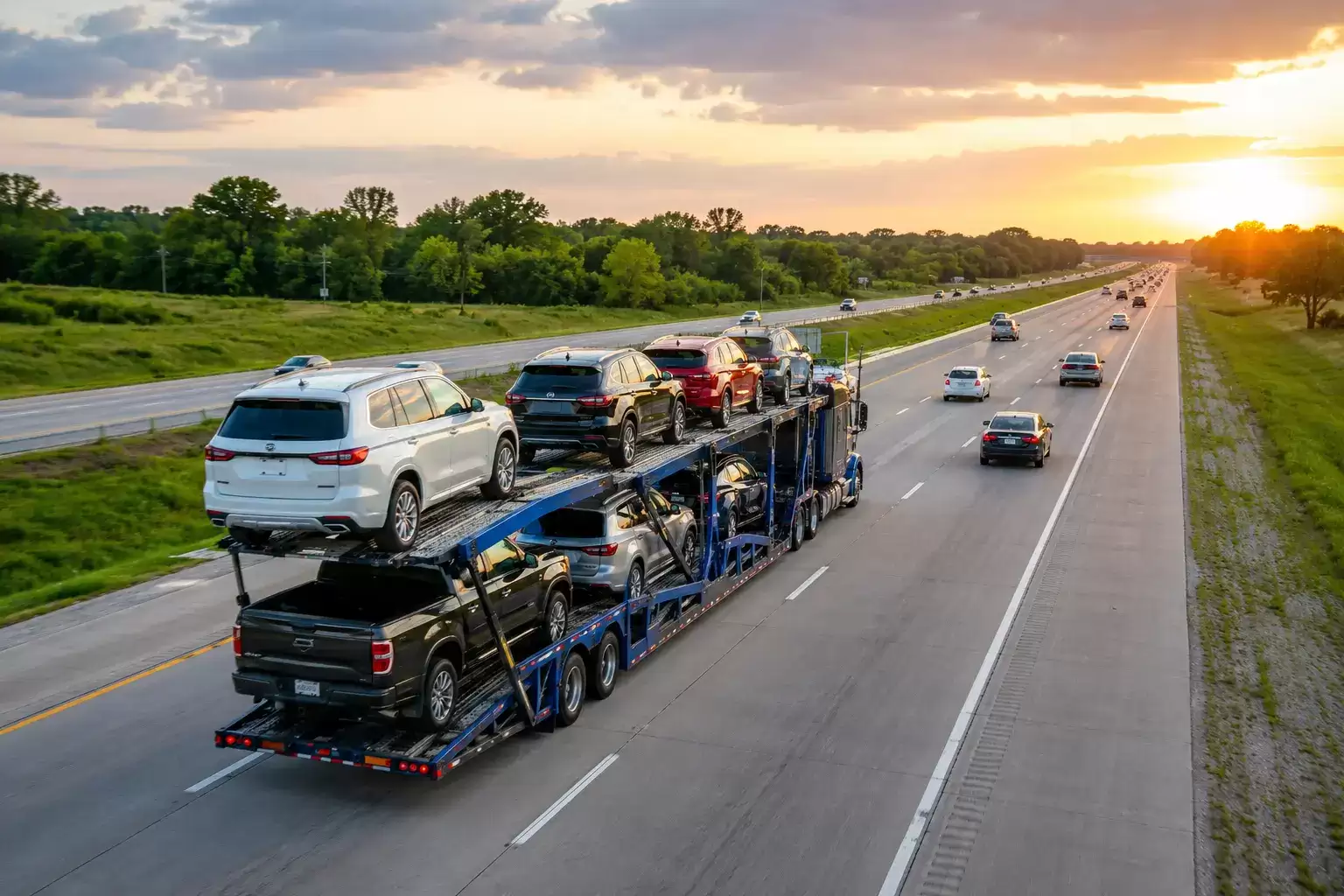
Florida-to-Washington auto transport runs roughly 2,600–3,350 miles depending on the Florida origin and Washington destination. The shortest runs come from North Florida (Jacksonville, Tallahassee) to Eastern Washington, already east of the Cascades. The longest come from South Florida and the Gulf Coast to the Puget Sound coast and the far-northwest corner at Bellingham. Washington delivery zones cluster around the Seattle metro and the Eastside tech corridor, with a smaller share to Eastern Washington, the South Sound, and the North Sound.
Florida Origin Zones
Washington Delivery Zones
Florida to Washington Auto Transport Video Guide
Jump to the chapter most relevant to your Florida to Washington shipment
9 Chapters — Under 6 Minutes
Each chapter covers a specific part of the Florida to Washington shipping process. Click any card to open that chapter directly in YouTube.
We begin with why the Florida to Washington corridor is a busy long-haul auto transport route — driven by tech relocations, returning residents, students, and military moves. Our nationwide carrier network is built to handle coast-to-coast vehicle shipping between Florida and Washington year-round.
Learn how easy it is to schedule your Florida to Washington shipment. Whether you’re shipping from Miami or Jacksonville, we explain how the booking process works and how carriers are assigned along this long transcontinental route.
Florida to Washington pricing varies with direction of travel, time of year, and whether your origin or destination is a major hub or a smaller market. We explain how rates shift through the year and which of our three service tiers — Standard, Expedited, or Rush — matches your timeline and budget.
We move vehicles between every Florida origin and every Washington destination — from the largest metros to smaller cities, college towns, and military communities across both states.
Pickup timing depends on route availability, carrier scheduling, and your chosen tier. We explain how pickup windows work and how carriers coordinate long-distance routes between Florida and Washington.
Get realistic transit-time expectations for the Florida to Washington route, including the seasonal, mountain-pass, and weather factors that can affect timing on a 2,600–3,350 mile haul.
Before pickup, we recommend cleaning your vehicle, removing personal items, and photographing every panel. If you are shipping a vehicle to Washington, document its pre-existing condition carefully ahead of your Washington registration.
We walk through the inspection and Bill of Lading process so you know exactly what happens when the carrier arrives, including how carriers handle tight access in dense urban neighborhoods where staging at a nearby meet point may be required.
The final inspection and delivery process is explained step by step, including how deliveries are handled in gated communities, dense urban cores, and rural addresses across Washington.
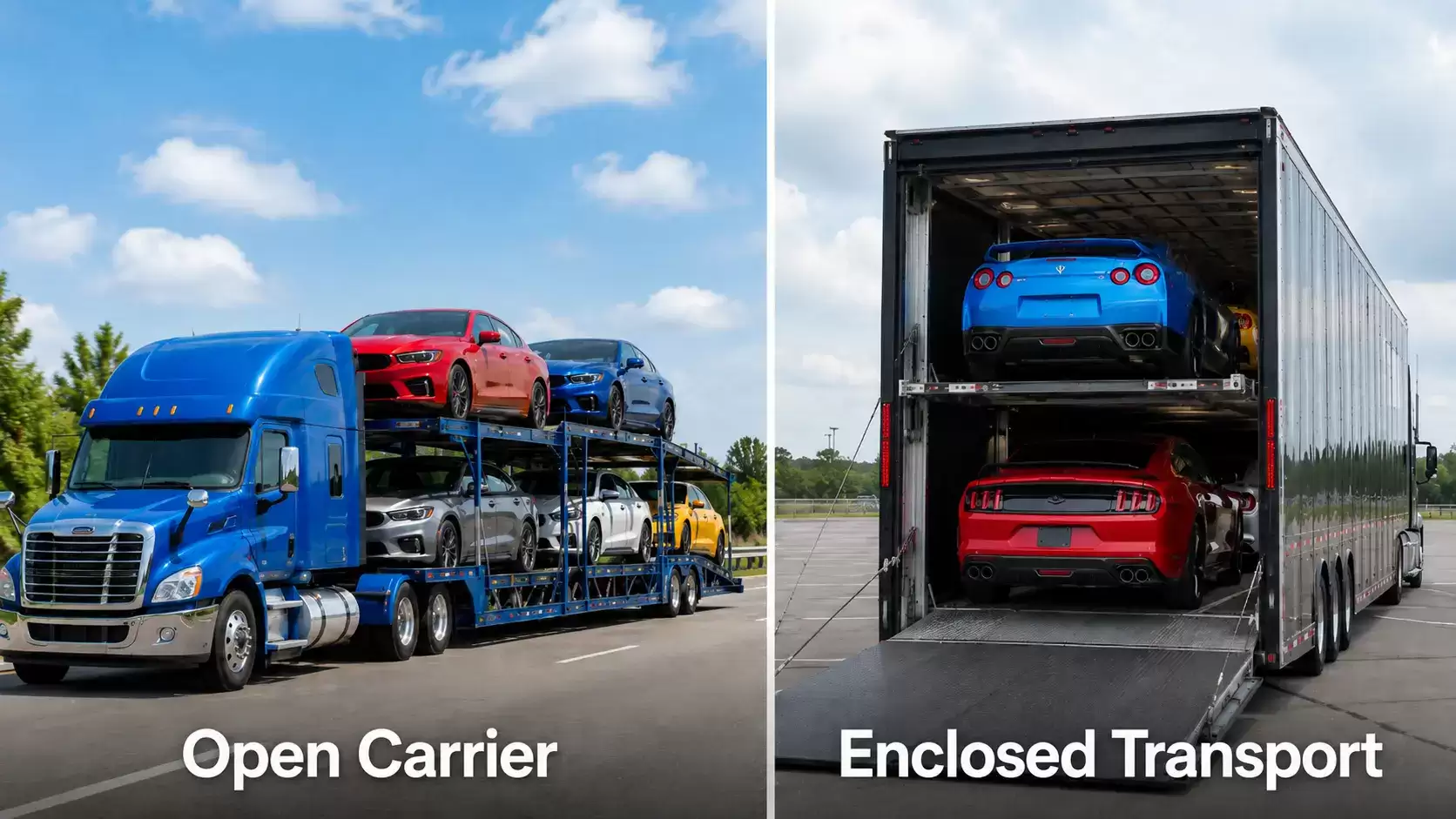
Open vs. Enclosed Car Transport on the Florida–Washington Route
Both methods are available on virtually every Florida to Washington lane. The right choice comes down to your vehicle’s value and the season.
Our honest recommendation: open transport for daily drivers worth under $60,000 — it is the most reliable way to get a carrier committed to this long a haul. The enclosed premium is worth it for a classic, an exotic, or a sentimental vehicle, and doubly so on a coast-to-coast move where your car spends 6–9 days on the road.
Door-to-Door Car Shipping: What to Expect in Florida and Washington
Every Florida to Washington shipment is full door-to-door — we pick up at your Florida address and deliver to your Washington door, with commercial staging only where dense city streets require it.
Pickup in Florida
South Florida: Miami, Fort Lauderdale, and West Palm Beach
Standard door-to-door pickup throughout South Florida. Miami-Dade: standard residential pickup throughout; very dense downtown Miami, Brickell, and Midtown high-rise buildings require carrier staging on a nearby wide commercial street — confirm your pickup address at booking. Fort Lauderdale, Hollywood, Pembroke Pines, Pompano Beach, and Boca Raton: standard residential, no staging concerns. West Palm Beach, Boynton Beach, and Coral Springs: standard residential throughout. South Florida has high outbound carrier volume — excellent pickup availability in all three service tiers. No weather concerns at pickup in any season, though summer heat is extreme.
Gulf Coast and Central Florida: Tampa, St. Petersburg, Sarasota, Fort Myers, and Orlando
Standard door-to-door pickup throughout the Gulf Coast and Central Florida. Tampa, St. Petersburg, and Clearwater: standard residential throughout the Tampa Bay metro; MacDill AFB military moves route from this zone. Sarasota, Bradenton, Fort Myers, Cape Coral, and Naples: standard residential, I-75 Gulf Coast access. Orlando and the I-4 corridor (Kissimmee, Lakeland, Deltona): standard residential pickup throughout; strong carrier availability. No weather concerns at pickup in any season.
Northeast, North Florida, and the Panhandle: Jacksonville, Daytona Beach, and Pensacola
Standard door-to-door pickup throughout Northeast and North Florida and the Panhandle. Jacksonville: standard residential throughout; Florida’s primary I-95/I-10 outbound hub and the closest Florida zone to Washington. Daytona Beach, Palm Coast, and the Space Coast (Melbourne): standard residential, I-95 access. North Florida markets (Gainesville, Ocala): standard residential; allow additional lead time relative to South Florida and the Gulf Coast due to lower outbound carrier density in the northern tier. Florida Panhandle (Tallahassee, Pensacola, Panama City): standard residential; NAS Pensacola and Eglin AFB military moves route from here.
Delivery in Washington
Seattle Metro and the Eastside Tech Corridor
Standard door-to-door delivery throughout the Seattle region. Dense downtown Seattle, Capitol Hill, and Belltown blocks: carrier staging required — multi-car haulers cannot park on narrow city streets for unloading; your carrier will stage at a nearby wide commercial street or accessible lot. Bellevue, Redmond, Kirkland, Sammamish, Bothell, Kent, Renton, Everett, Federal Way, and Auburn: standard residential delivery on wider suburban blocks. The Seattle metro is the highest-volume Washington delivery zone for Florida shipments. Confirm your staging location with your carrier 24–48 hours before delivery; allow a Snoqualmie Pass weather buffer in winter.
Tacoma, the South Sound, and Southwest Washington
Standard door-to-door delivery throughout the South Sound and the southwest. Tacoma, Lakewood, Puyallup, Olympia, and Lacey: standard residential, I-5 access. Joint Base Lewis-McChord: military moves — confirm on-base access at booking. Vancouver, Washington and Longview: standard residential, I-5 and I-84 Columbia River Gorge access. No heat protocol at any Washington destination; allow a pass-weather buffer in winter.
Eastern Washington and the North Sound
Standard door-to-door delivery throughout the rest of the state. Spokane, Spokane Valley, and the Tri-Cities (Kennewick, Pasco, Richland): standard residential; already east of the Cascades, these are the closest and quickest Washington deliveries with the least pass exposure. Yakima and Wenatchee: standard residential, central Washington access. Bellingham, Marysville, Mount Vernon, Edmonds, and Shoreline: standard residential; the North Sound is the farthest reach from Florida. Allow additional transit lead time for the smaller Eastern Washington and North Sound markets relative to the Seattle metro.
Washington Vehicle Registration for Florida Arrivals
Washington requires new residents to register their vehicle within 15 days of establishing residency at a Washington Department of Licensing (DOL) office, presenting your out-of-state title, proof of ownership, and payment of the use tax and registration fees; Washington has no state safety inspection and no emissions test requirement — the statewide emissions program ended in January 2020 — so no inspection is needed to register.
Preparing Your Vehicle
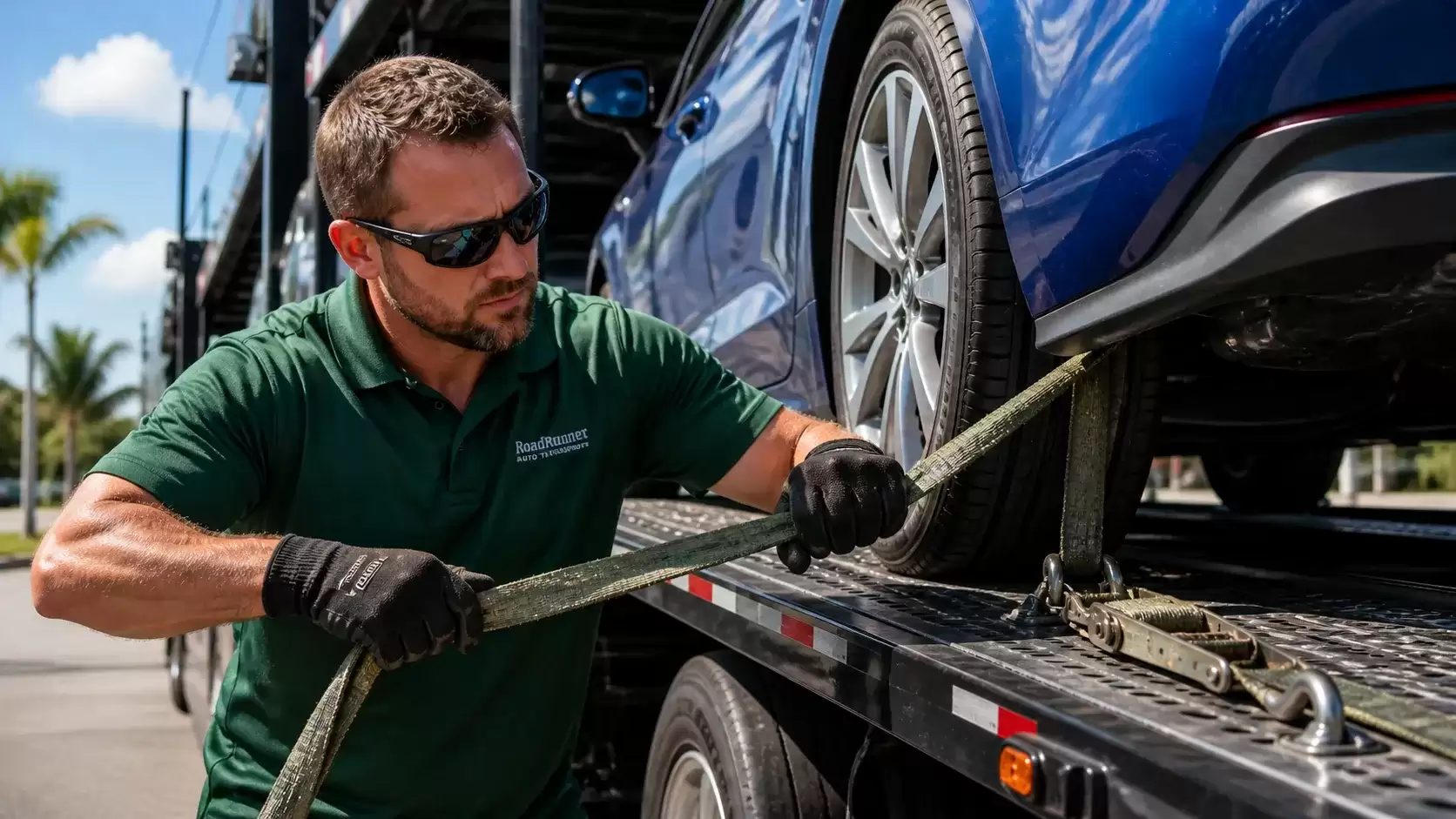
Before pickup in Florida: remove all personal items from the interior, leave no more than a quarter tank of fuel, disable your car alarm, and remove any exterior accessories or bike racks. Photograph your vehicle thoroughly from all angles with date-stamped images before the carrier arrives. Vehicles with roof racks, spoilers, or exterior modifications should note these on the Bill of Lading at pickup. At delivery in Washington, inspect your vehicle carefully in daylight before signing the Bill of Lading — your signature without notation constitutes acceptance of the vehicle’s condition. If delivery occurs after dark, note on the Bill of Lading that inspection is pending daylight review.
Florida & Washington Auto Transport Resources
Florida Helpful Government Links
- Florida Department of Highway Safety and Motor Vehicles (FLHSMV) — Florida’s vehicle title and registration agency. Confirm your Florida title is clear and in your possession before shipping to Washington.
- FLHSMV — Titles & Registration — Procedures for Florida title and registration, including releasing your title for an out-of-state move to Washington.
- FLHSMV — Registration Fees — Florida registration fees by vehicle weight and type; confirm any refund or credit eligibility when relocating out of state.
- FLHSMV — Driver Licenses — Surrender your Florida license and obtain a Washington driver’s license upon establishing Washington residency.
Washington Helpful Government Links
- Washington Department of Licensing (DOL) — Washington’s vehicle title and registration agency. Florida residents establishing Washington residency must register within 15 days.
- DOL — New Washington Residents — Step-by-step guide for registering an out-of-state vehicle in Washington, including title transfer from Florida and use tax.
- DOL — Vehicle Registration Fees — Washington registration fees and requirements. Review current fee schedules before your registration appointment.
- DOL — New Resident Driver License — Obtain a Washington driver’s license upon establishing residency; Washington requires no state safety or emissions inspection.
Federal Auto Transport Resources
- FMCSA — Verify a Carrier’s License (SAFER System) — Verify that any auto transport company you consider is federally licensed and insured before booking.
- FMCSA — Protect Your Move — Federal consumer guidance about hiring vehicle shippers, including red flags for broker scams and your rights as a shipper.

Florida to Washington Car Shipping — FAQ
How much does it cost to ship a car from Florida to Washington?
For a standard sedan on open transport, Florida to Washington generally runs roughly $2,100–$2,625 depending on the exact cities, vehicle, and season — shorter North-Florida-to-Eastern-Washington runs sit at the lower end, longer South Florida and Gulf Coast runs to the Puget Sound coast at the higher end. It is one of the longest domestic lanes, so pricing reflects the distance; it also tracks the live market and shifts week to week, so use the instant calculator for your exact zip codes and dates.
How long does it take to ship a car from Florida to Washington?
Most Florida origins to Washington run 6–9 days in transit — this is a 2,600–3,350 mile coast-to-coast haul. North Florida (Jacksonville, Tallahassee) to Eastern Washington (Spokane, Tri-Cities) is the quickest at 6–8 days. South Florida and Gulf Coast origins to the Puget Sound coast run 8–9 days. Plan additional lead time from booking to pickup on a lane this long, and add a day in winter for Cascade and Rocky Mountain pass weather at the delivery end.
What route do carriers take from Florida to Washington?
Carriers leave Florida on I-95 up the Atlantic coast or I-75 from the Gulf side, cross into the northern tier, and run west across the Midwest and the Rockies before dropping into Washington over Snoqualmie Pass on I-90. Eastern Washington destinations sit east of the Cascades and arrive with less mountain exposure. Panhandle origins (Tallahassee, Pensacola) head out on I-10 to join the westbound run.
When is the best time to ship a car from Florida to Washington?
The spring and fall shoulder windows are the best value: April–May and September–October combine clear mountain passes at the Washington end with eased national relocation demand. Winter (November–February) is also lower-demand and good value, but plan a 1–2 day buffer for Cascade and Rocky Mountain pass snow on Washington deliveries. Summer is peak season for relocations and student moves — book 2–3 weeks ahead.
Why does booking ahead matter so much on the Florida to Washington route?
Demand is strong, but far fewer carriers run the full transcontinental distance than run dense short-haul markets, so trucks assemble a complete load before committing to the lane. Booking ahead — and choosing Expedited when your date is firm — is the most reliable way to secure timely pickup. Last-minute requests on a 2,600–3,350 mile lane can wait longer for a carrier than they would on a short regional route.
Can I ship a car from Miami to Washington?
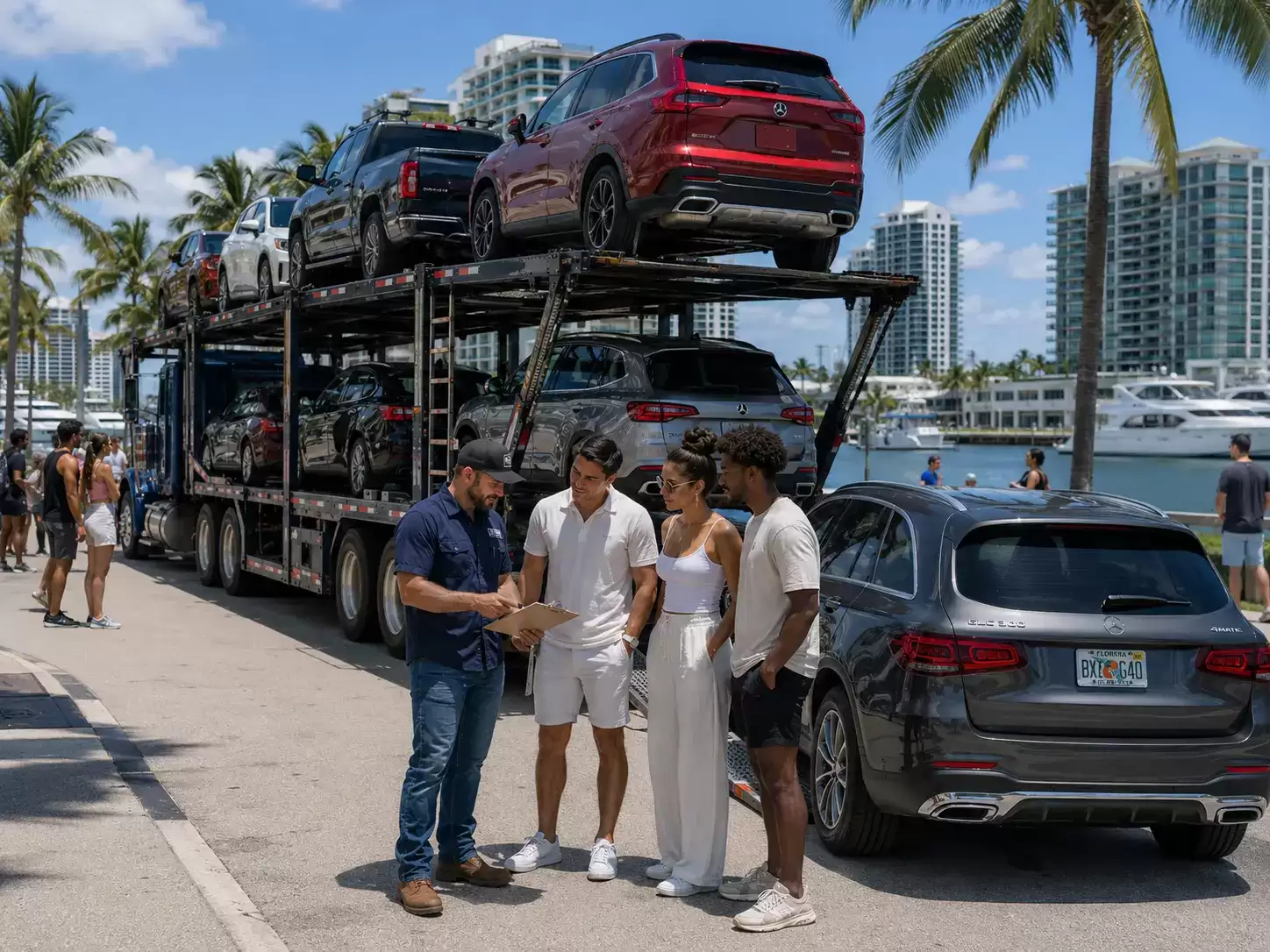
Yes — South Florida is the most carrier-active origin zone on the route, with multiple pickups per day in the Fort Lauderdale–Miami corridor. Dense downtown Miami and Brickell high-rises may require a nearby staging location; the rest of South Florida is standard residential. Confirm a staging location with your carrier 24–48 hours before pickup — multi-car haulers need accessible street-level or parking-lot access.
Do I need to be present at pickup and delivery?
Yes — or a designated adult you trust must be present at both pickup in Florida and delivery in Washington to inspect the vehicle and sign the Bill of Lading. For Miami staging-area pickups, ensure the designated person is at the agreed location at the scheduled time. For Washington delivery, confirm the receiving party’s availability with your carrier 24 hours before delivery.
Shipping from Washington to Florida instead?
We cover both directions on this corridor. See city-by-city rates, transit times, and seasonal pricing for the reverse direction. View Washington to Florida rates →
More Helpful Information
Other popular routes we serve.
How Auto Transport Works
How our car shipping cost calculator works its magic.