Florida to Texas Car Shipping
The original instant car shipping calculator — trusted since 2004. Door-to-door Florida to Texas transport with no surprises, no hidden fees, and three options to ship your vehicle on your schedule.
★ 4.6/5 Google Reviews | BBB Accredited A+ | FMCSA Licensed (MC #479342) | USDOT #1240502 | No upfront payment required | 20+ years shipping vehicles


Florida to Texas Car Shipping Rates by City
Every Florida to Texas vehicle shipment is available at three service levels:
Standard, Expedited, & Rush Options
Choose the one that fits your timeline and budget. All three include full door-to-door service and carrier insurance.
The Company That Invented Instant Auto Transport Pricing
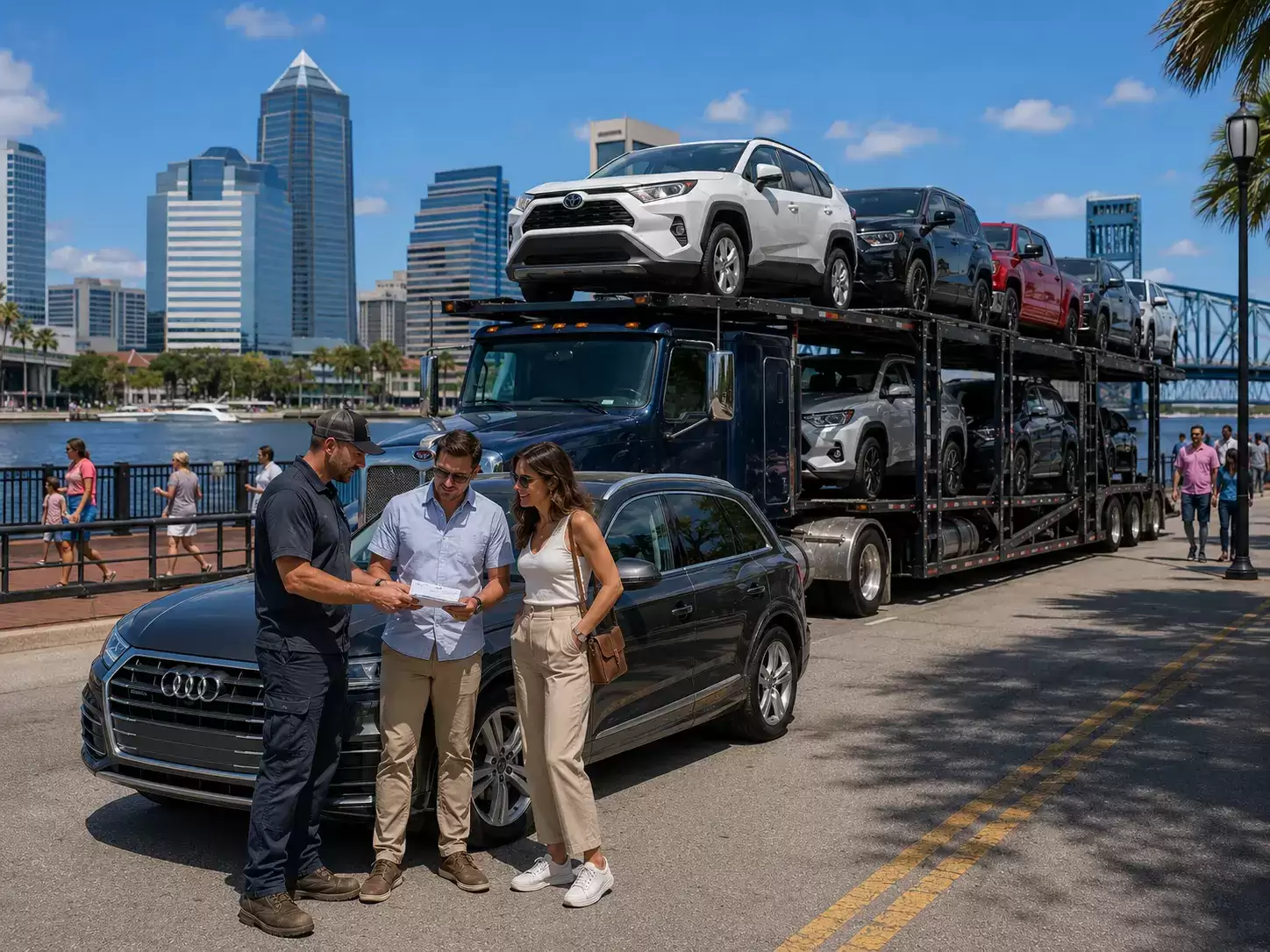
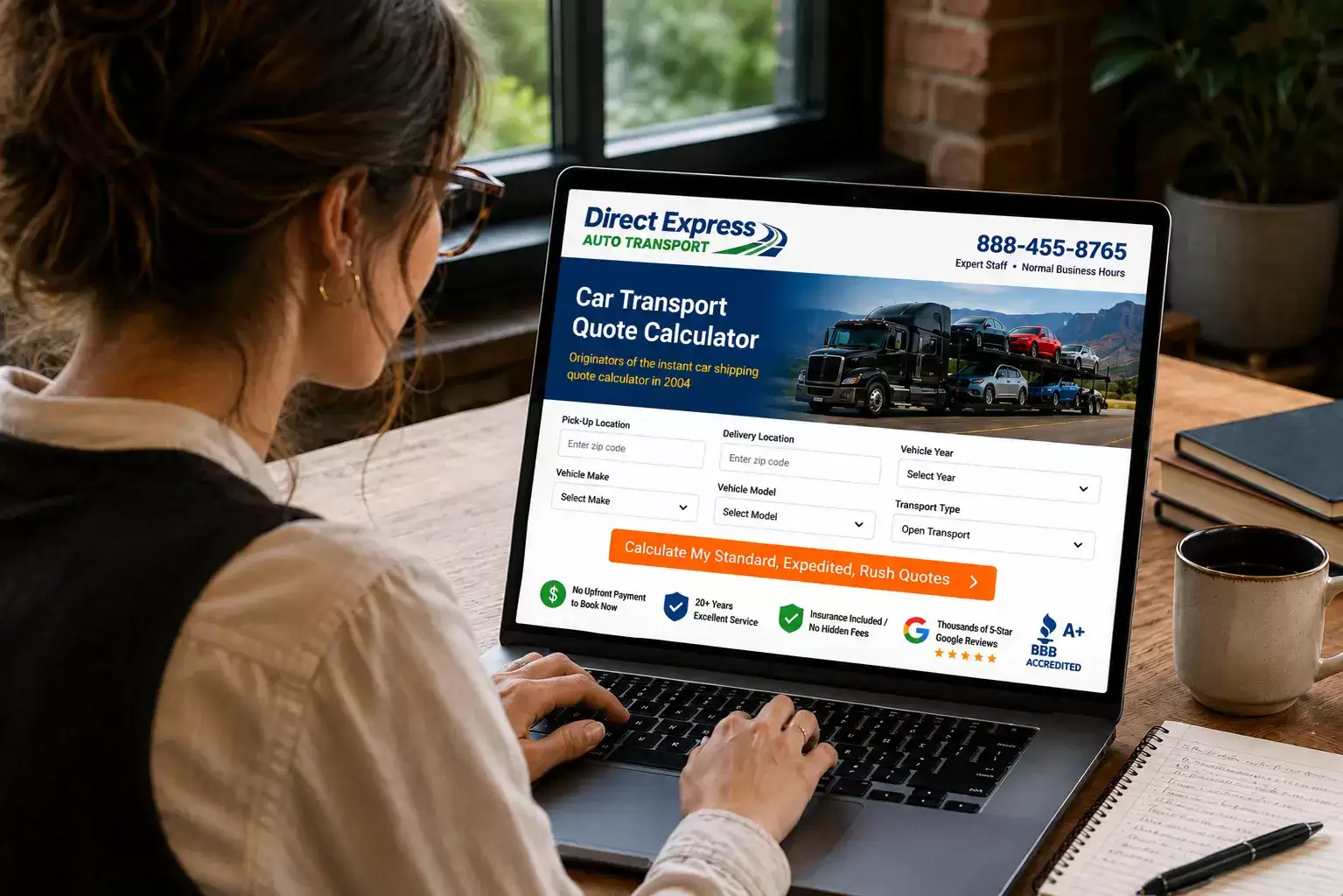
Direct Express Auto Transport pioneered online instant pricing for the auto transport industry in 2004. Before we built the first car shipping cost calculator, getting a quote from a broker meant phone calls, callbacks, and waiting — sometimes days. We changed that. Today you know your exact cost in 30 seconds, before committing to anything. No phone tag, no hassle. Just a real number, instantly.
Three Service Tiers for Every Florida to Texas Shipment
Every shipment on this Florida to Texas route is available at three service tiers so you can match your budget to your timeline. Standard delivers at the best available rate — ideal when your schedule has a few days of flexibility. Expedited moves your vehicle to the front of the dispatch queue for faster pickup. Rush gets your car picked up as fast as humanly possible — for moves where every day counts. All three tiers include full door-to-door service and carrier insurance.
What customers say about shipping a car from Florida to Texas with Direct Express Auto Transport


Seasonal Pricing Guide: Florida to Texas
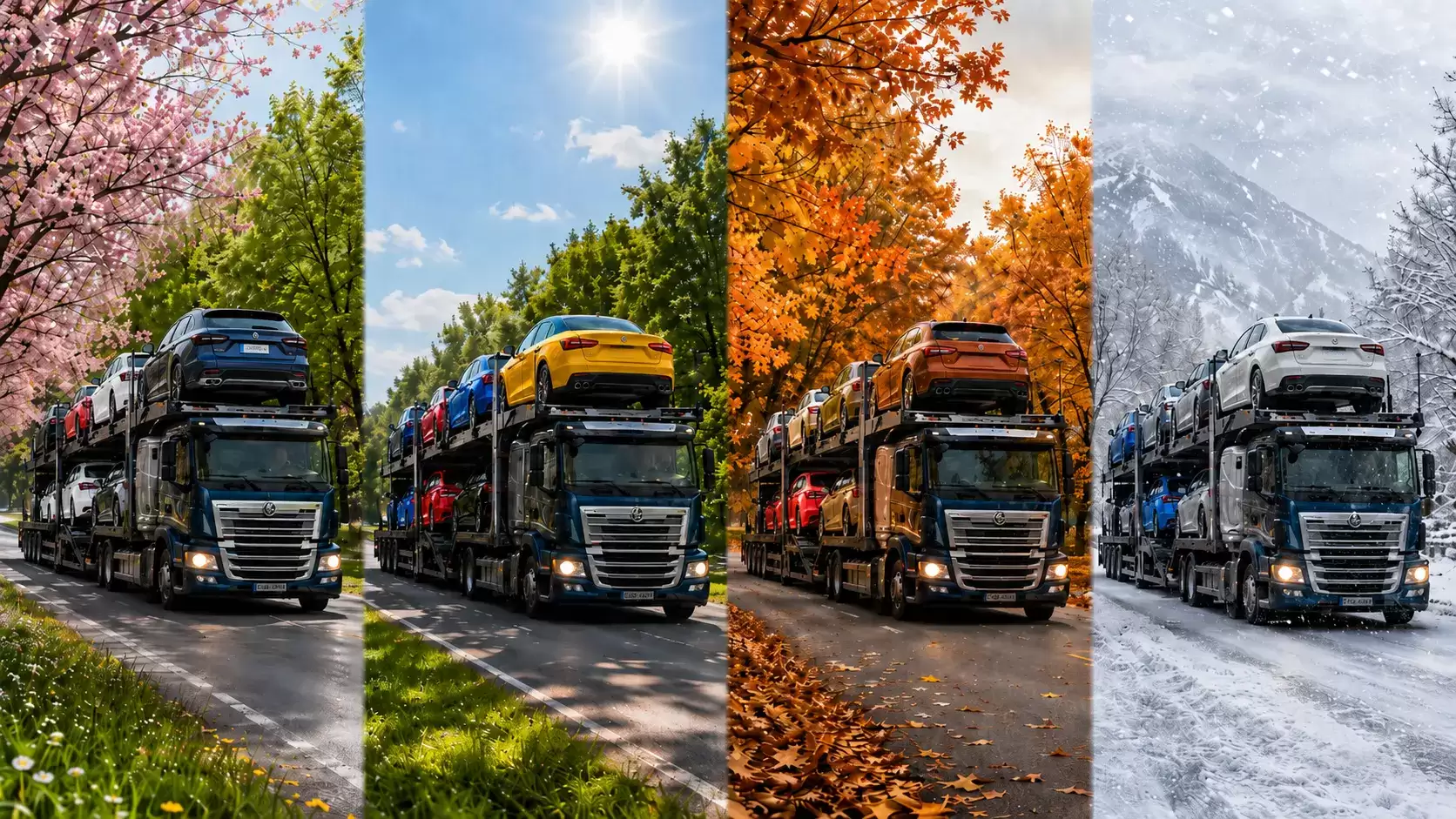
Florida-to-Texas is one of the highest-volume corridors in the southern United States — two of the country’s largest states, both with no state income tax, both with massive military footprints, and both generating enormous lifestyle migration in both directions. The seasonal pricing on this route is shaped by Florida’s snowbird economy, the military PCS cycle, hurricane season, and the continuous population growth of Houston and the Texas Triangle drawing from Florida’s own overcrowded metro areas. Understanding the seasonal calendar before you book can mean the difference between the best rate and the peak rate.
Who Ships a Car from Florida to Texas — and Why
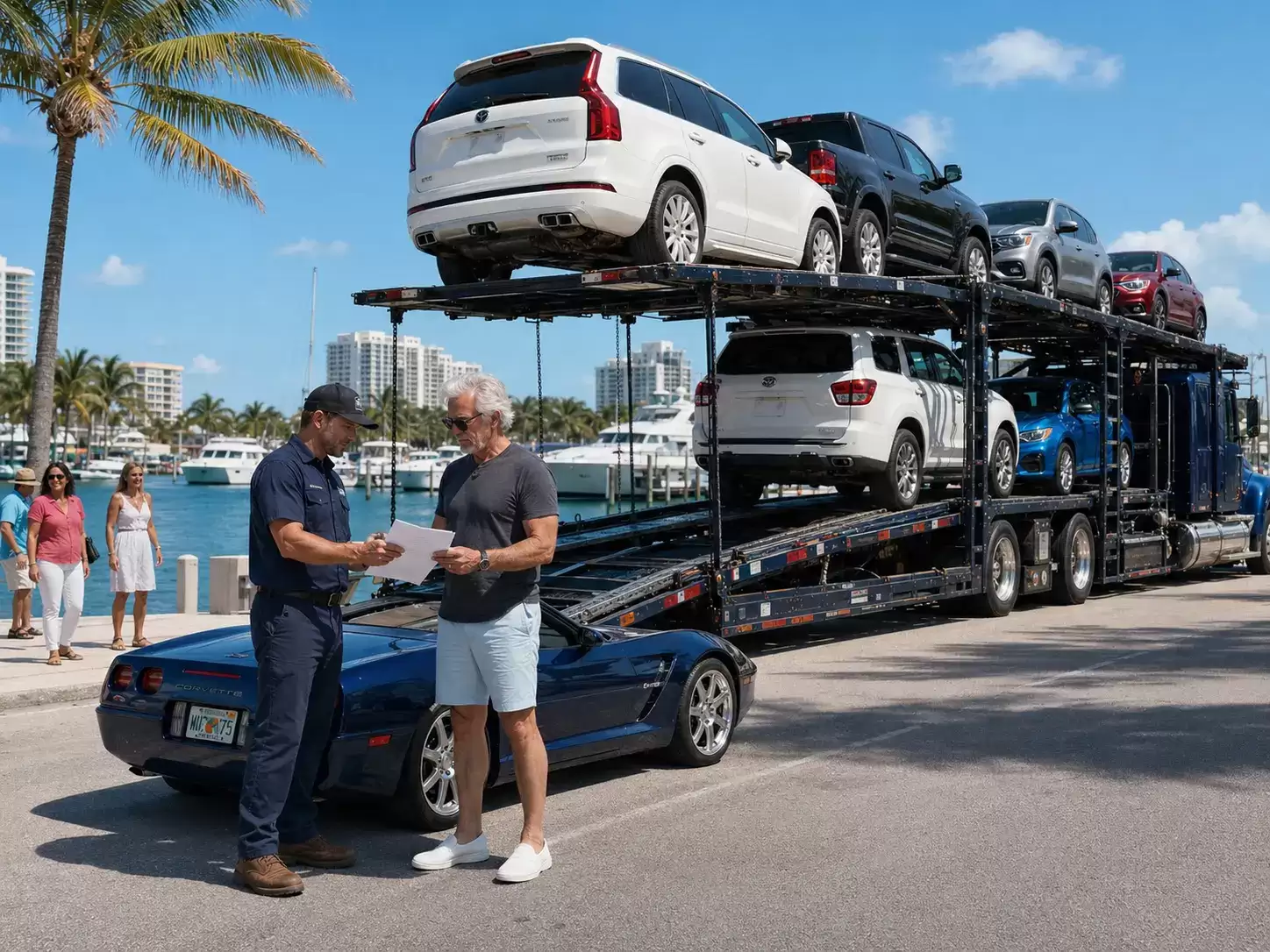
Florida-to-Texas is one of the most structurally driven relocation corridors in the South — not a trend corridor but a permanent, year-round, high-volume route shaped by two of the country’s largest states sharing overlapping economic and lifestyle characteristics. Both have no state income tax. Both have warm climates. Both are growing. The people who ship vehicles from Florida to Texas represent an enormous range of motivations — from permanent lifestyle relocation to military duty reassignment to snowbirds returning home after winter — but they share a common arc: westbound on I-10.
Permanent Lifestyle Relocation: Florida Residents Moving to Texas for Cost and Business
Permanent lifestyle relocation from Florida to Texas has been among the fastest-growing domestic migration patterns of the past decade. Florida’s housing costs — particularly in South Florida (Miami-Dade, Broward, Palm Beach counties), Tampa Bay, and Orlando — have increased sharply, pushing Florida families toward Texas’s major metros where housing costs are significantly lower relative to income. Houston is the primary Texas destination for Florida-to-Texas lifestyle migrants: the city’s diverse economy, energy sector, healthcare industry (the Texas Medical Center in the Houston metro is the largest medical complex in the world), and expanding suburban ring (Sugar Land, Pearland, Pasadena, The Woodlands, Conroe) provide an attractive alternative for Florida households priced out of the coastal metro areas. These are typically households shipping one or two vehicles as part of a complete household relocation.
Texas Snowbirds Returning Their Florida-Wintered Vehicles Home
Texas snowbirds returning from Florida are one of the most concentrated seasonal demand spikes on any corridor in the country. Texas retirees — from Houston, San Antonio, the Dallas–Fort Worth area, and smaller Texas cities — winter in South Florida, Naples, Sarasota, Fort Myers, and the Gulf Coast communities in large numbers from November through March. Their vehicles come to Florida on the TX→FL direction in the fall; they go home to Texas in March and April. The Texas snowbird return flow makes April the single most competitive booking month on the FL→TX direction. These are experienced auto transport customers who book with Direct Express because the instant calculator tells them exactly what they’ll pay before committing to anything.
Military PCS: MacDill AFB / NAS Jacksonville → Fort Cavazos / JBSA / Texas Installations
Military PCS transfers between Florida and Texas installations generate steady, schedule-driven volume year-round. Florida’s major installations — MacDill Air Force Base in Tampa, NAS Jacksonville, NAS Pensacola, Eglin Air Force Base (the largest US Air Force base by area, near Fort Walton Beach), Hurlburt Field, and Patrick Space Force Base in Brevard County — all regularly transfer personnel to Texas’s installations. Texas receives them at Joint Base San Antonio, Fort Cavazos (formerly Fort Hood) near Killeen, NAS Corpus Christi, NAS JRB Fort Worth, and Ellington Field in the Houston area. Military members on PCS orders represent consistent, deadline-driven volume. They book Expedited because they have report dates, and because the government’s travel allowances often cover the cost difference.
Florida and Texas Students Shipping Cars Between Universities
College students and young professionals moving between Florida and Texas schools are a growing year-round segment. Florida’s nationally ranked universities — University of Florida, Florida State, University of Miami, UCF, FIU, USF — enroll significant numbers of Texas-origin students. When semesters end, when first jobs begin, or when graduate school starts in Texas, these students ship their vehicles to Houston, Austin, College Station, or San Antonio rather than making a solo 1,200-mile drive on I-10. Texas A&M in College Station draws strongly from Florida; UT Austin is a common transfer destination; Houston’s university cluster (University of Houston, Rice University, Texas Southern, Houston Baptist) draws Florida graduates entering professional programs.
What Makes the Florida–Texas Auto Shipping Run Different
The Route: I-10 West All the Way
Florida-to-Texas is the cleanest long-haul routing in American auto transport: Interstate 10 from one end to the other. I-10 begins at I-95 in downtown Jacksonville and runs west through the Florida Panhandle, Alabama, Mississippi, New Orleans, Louisiana, and enters Texas at the Sabine River near Orange. From there it continues through Beaumont into Houston. Jacksonville to the Texas border is approximately 550 miles; Jacksonville to Houston approximately 965 miles. Miami to Houston is approximately 1,190 miles, reflecting the 350-mile run up the Florida peninsula before the westbound leg begins.
Gulf Coast Florida Origins: I-75 North to I-10 West at Lake City
Gulf Coast Florida origins — Tampa, St. Petersburg, Clearwater, Sarasota, Fort Myers, Cape Coral, Naples — route north on I-75 to I-10 at Lake City (~200–250 miles north from Tampa), then west. This I-75/I-10 combination is the standard carrier path for all Gulf Coast FL origins bound for Texas.
New Orleans: The Essential Midpoint
New Orleans is the most significant relay and midpoint city on the FL→TX corridor. Sitting approximately 500 miles west of Jacksonville and 340 miles east of Houston, New Orleans functions as the natural load-exchange point for carriers running the southeastern United States. The city sits at the intersection of the Southeast, Gulf Coast, Midwest via I-55, and Texas via I-10 carrier networks — and generates its own significant outbound volume that keeps carrier availability high.
Load Exchange at New Orleans: Where Southeast Meets Gulf Coast Carriers
Carriers from Florida arriving in New Orleans can exchange vehicles or continue directly to Houston. The city sits at the intersection of Southeast, Gulf Coast, Midwest (I-55), and Texas (I-10) carrier routes — and generates its own significant outbound volume. This intersection keeps the I-10 corridor one of the most carrier-active in the country year-round.
Houston: The East Texas Gateway
Every FL→TX carrier path converges on Houston. The fourth-largest city in the United States, Houston is the most active auto transport delivery and pickup market in Texas and the natural hub for all Florida-origin shipments. The Houston metro is vast — Harris County alone covers more than 1,800 square miles — and the carrier pool serving it fans out into an extensive suburban network: Sugar Land to the southwest on US-59, Pearland to the south on I-45, Pasadena to the east on I-10, and The Woodlands and Conroe to the north on I-45.
Dallas, Austin, San Antonio, and Corpus Christi: Houston-Hub Pricing
From Houston, I-45 north runs to Dallas (250 miles), I-35 north reaches Austin (165 miles) and continues to San Antonio (200 miles south of Austin), and I-37 south reaches Corpus Christi (210 miles). This Houston hub function means DFW destinations are essentially Houston plus a 250-mile regional leg — which is why Dallas and Fort Worth prices from Florida are materially higher than Houston prices from the same Florida origin.
East Texas: Beaumont, Tyler, and the Piney Woods Corridor
East Texas — the region between the Louisiana border and the Houston metro — is served directly off I-10 and the US-69/US-96/US-59 north-south corridor. Beaumont and Port Arthur sit directly on I-10 just inside Texas: Pensacola to Beaumont is under 650 miles, representing some of the most cost-effective shipping on the entire corridor. Tyler, the largest city in deep East Texas, is served via I-20 west from Louisiana or north on US-69 from Beaumont. Longview and Texarkana are the northernmost East Texas cities, reachable via I-20 and US-59 north.
Tyler, Longview, and Texarkana: US-69 and I-20 from Beaumont
The deep East Texas timber and petrochemical economies generate consistent vehicle transport volume between Florida and the Piney Woods region year-round. Carrier availability from Florida to Beaumont, Tyler, and Longview is steady outside peak hurricane season windows, and Pensacola to Beaumont at under 650 miles represents some of the most cost-effective FL→TX shipping on the entire corridor.
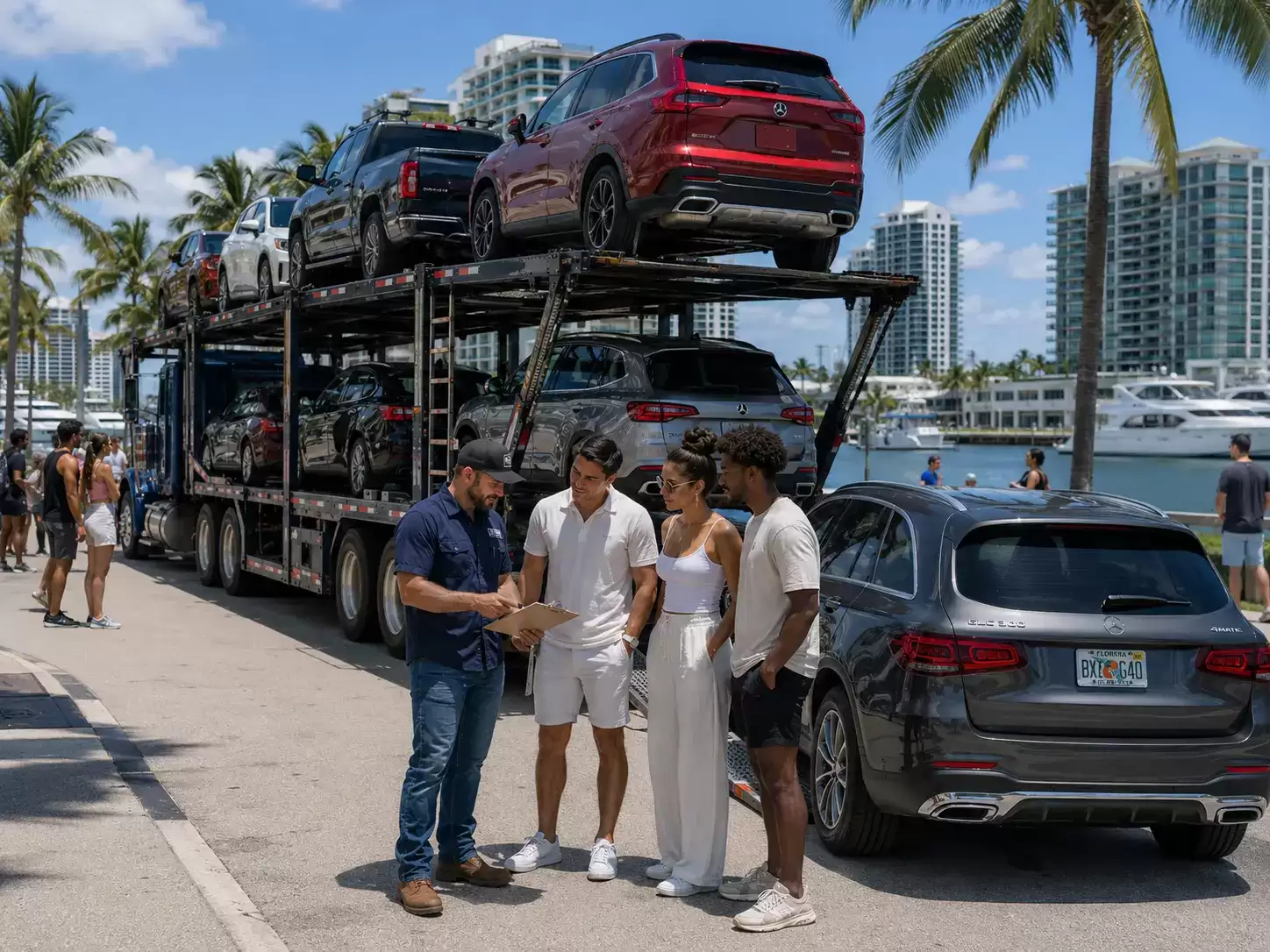
Other Florida to Texas Cities We Serve
Direct Express ships vehicles between hundreds of city pairs on this route. Below is a broader look at additional Florida origins and Texas destinations we regularly serve.
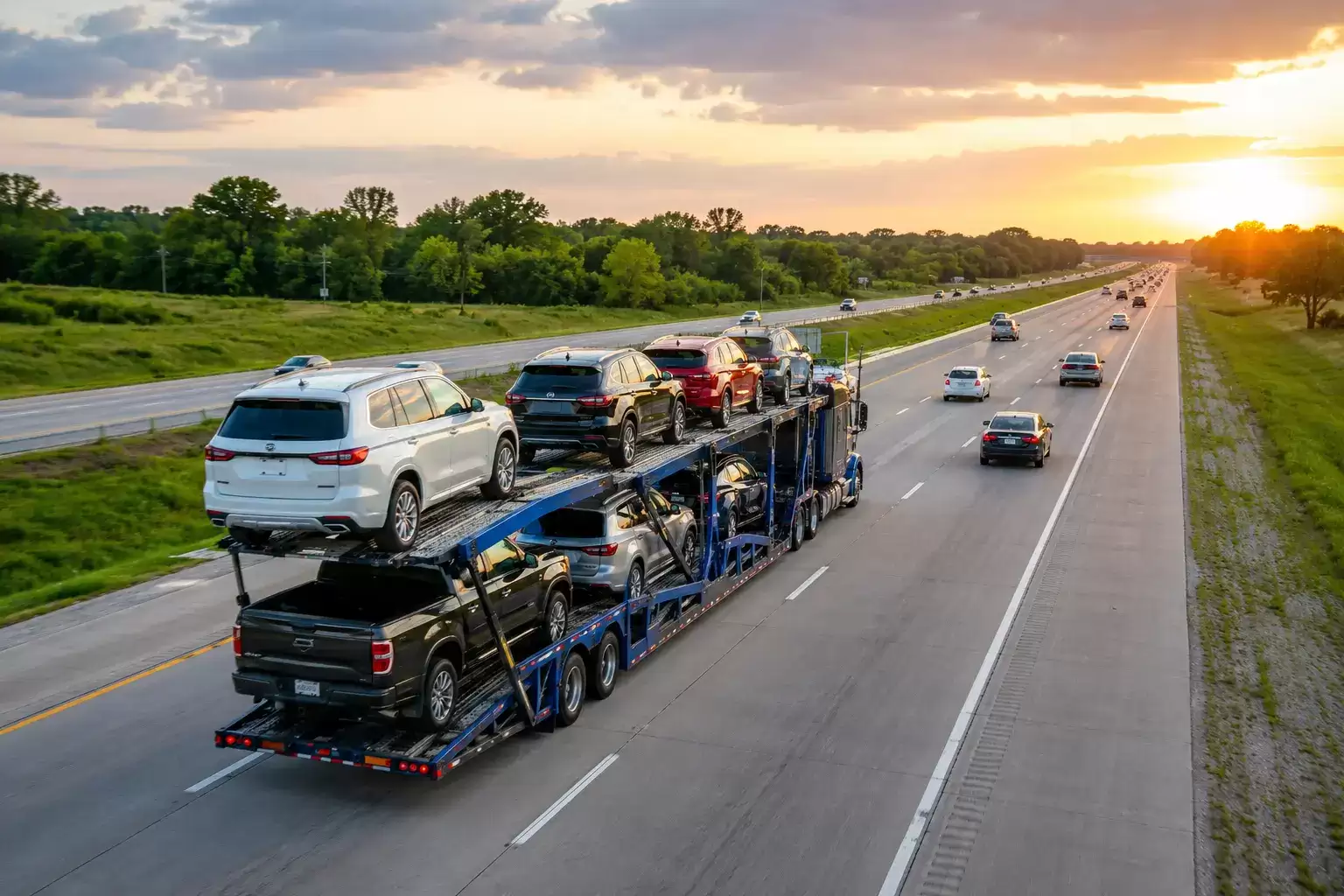
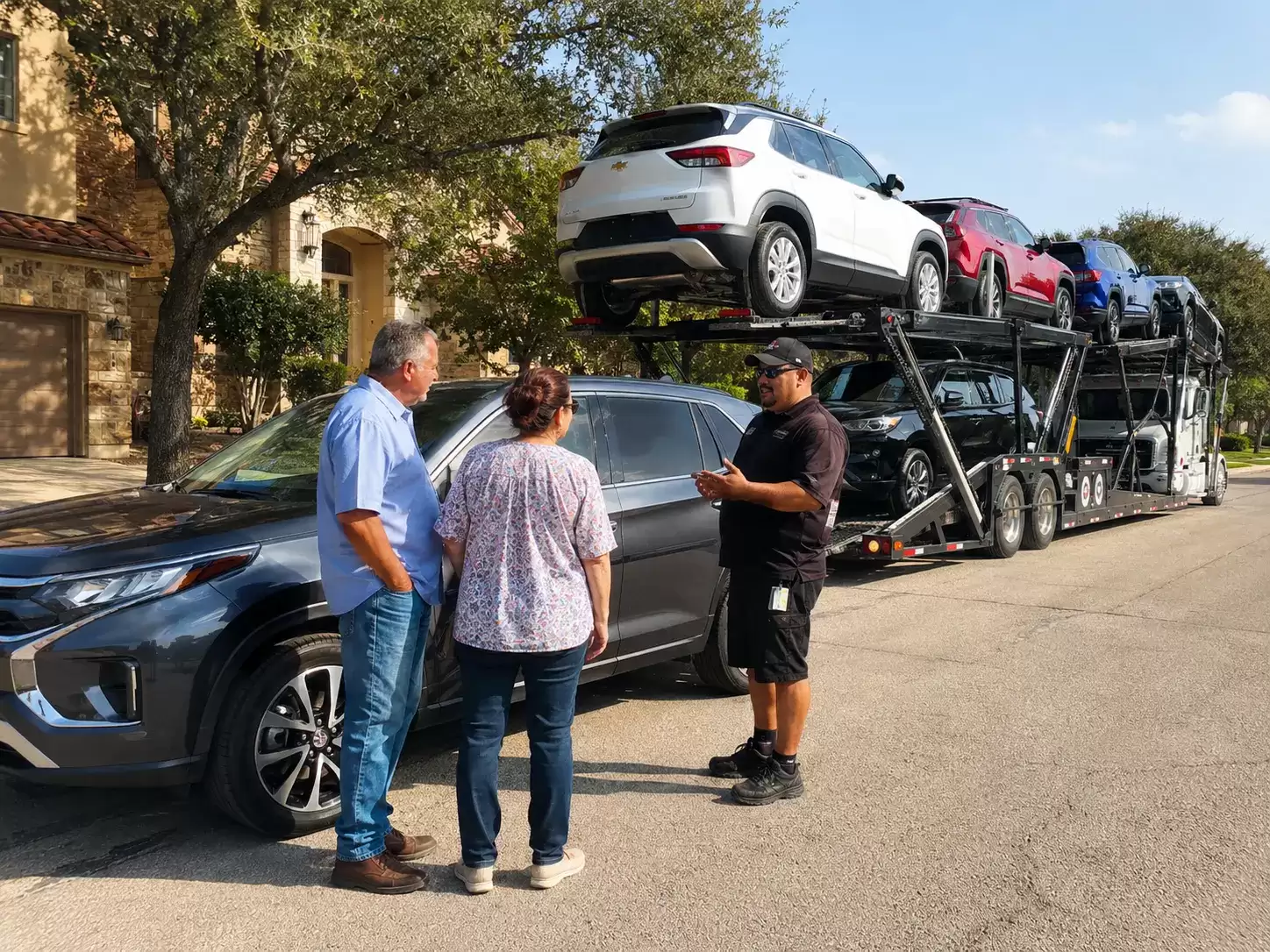
Hub Cities Along the Florida–Texas Car Shipping Corridor
The Florida-to-Texas run follows I-10 west through four states before entering the Texas Triangle. Alabama, Mississippi, and Louisiana sit between Florida and Texas on this corridor, each contributing relay volume that keeps the I-10 carrier network one of the most active in the country.
Major Origin Hubs in Florida
I-10 Corridor Relay Points
Major Texas Delivery Points
The Texas Triangle: Houston, Dallas–Fort Worth, and San Antonio together form the Texas Triangle — three of the ten largest US cities, connected by I-10, I-35, and I-45, and collectively home to more than 16 million people. For auto transport purposes, the Texas Triangle is the delivery zone for the overwhelming majority of FL→TX volume. Houston is the first node; carriers arriving from Florida fan out from Houston to serve Dallas (I-45 north, 250 miles), Austin (I-10 west to I-35, 165 miles from Houston), and San Antonio (I-10 west, 200 miles). East Texas — Beaumont, Port Arthur, Tyler, Longview, Nacogdoches, Texarkana — sits between the Louisiana border and the Houston metro and is served by I-10, I-20, and the US-59/69/96 north-south spine. It’s the most direct Texas delivery zone from Florida, with the shortest distances and transit times of any Texas destination on this corridor.
Open vs. Enclosed Car Transport on the Florida–Texas Route
The Florida-to-Texas run crosses flat, low-elevation Gulf Coast terrain on I-10 — no mountain passes, no significant elevation change, no winter weather risk on the core corridor. This is an open-carrier-friendly route year-round. The choice between open and enclosed here is about vehicle value and owner preference, not route conditions.
Open Transport Recommended for Most
- Open-air trailer carrying 7–10 vehicles — the standard for all everyday vehicles on this corridor year-round
- No mountain passes, no elevation changes, no winter weather concerns on the I-10 Gulf Coast corridor under normal conditions
- The I-10 corridor is one of the most carrier-active routes in the southeastern United States — high carrier density keeps open transport pricing and pickup timing competitive year-round
- Florida’s coastal humidity and summer thunderstorm activity are non-events for open transport vehicles in transit — standard road conditions
- Appropriate for all vehicle types: pickup trucks, SUVs, sedans, daily drivers, and any vehicle under approximately $60,000
Enclosed Transport
- Vehicle travels in a fully enclosed, weatherproof trailer from Florida to Texas
- Typically 40–60% more expensive than open transport
- Recommended for luxury vehicles, exotics, collector cars, show-quality vehicles, and any vehicle over approximately $75,000
- South Florida has among the highest per-capita luxury and exotic vehicle ownership in the country — Miami, Fort Lauderdale, Boca Raton, and Palm Beach owners relocating to Texas frequently choose enclosed for documented condition delivery
- Classic cars and show vehicles stored in Florida and returning to Texas in spring are natural enclosed transport candidates
- Book 2–3 weeks ahead — high demand during snowbird return season (March–April)
Our honest recommendation: Open transport for the everyday vehicle. The I-10 Gulf Coast corridor is flat, heavily traveled, and carrier-friendly year-round. Enclosed for luxury, exotic, and high-value vehicles — South Florida’s ownership demographics make this a regular enclosed transport corridor.
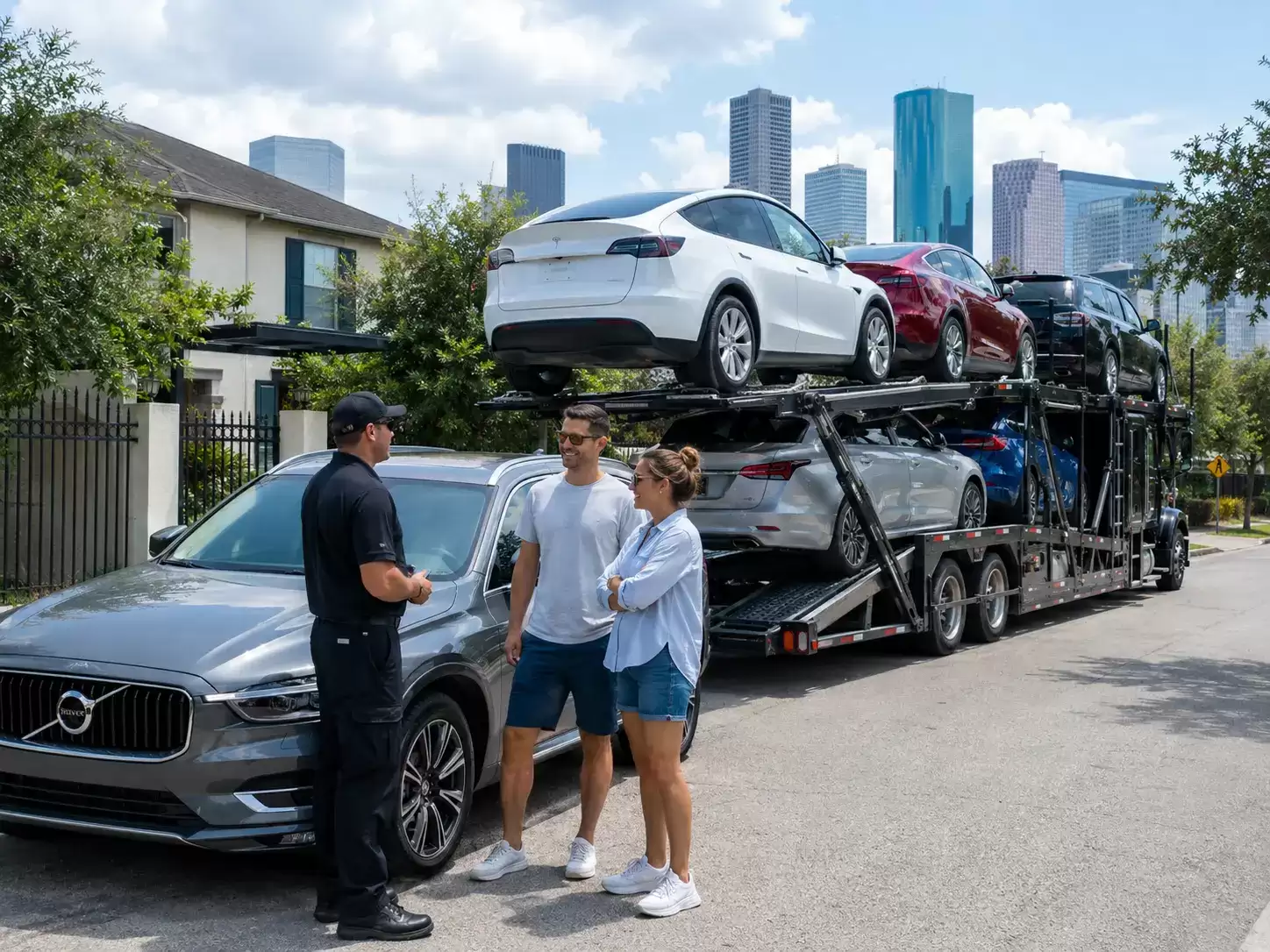
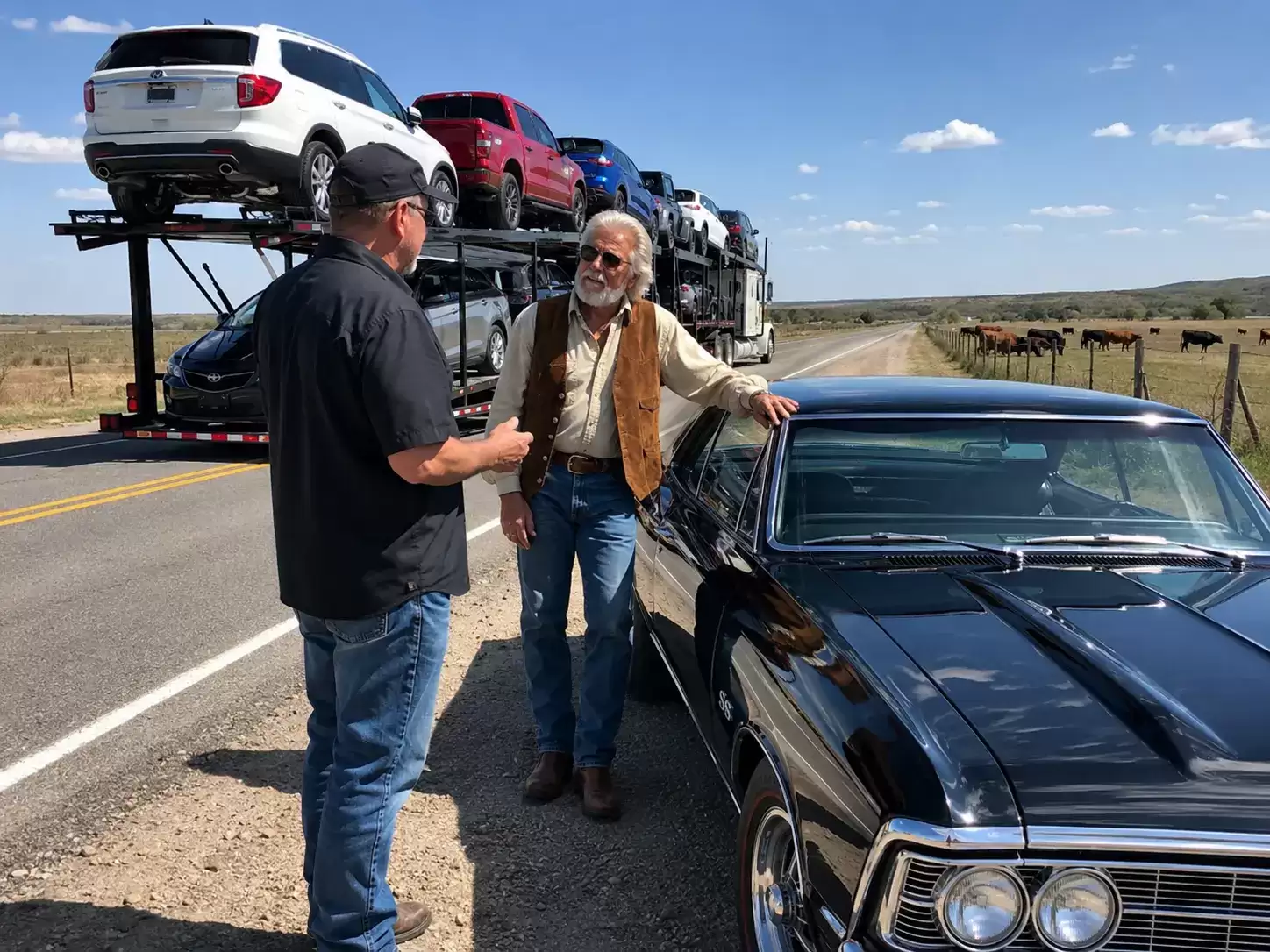
Door-to-Door Car Shipping: What to Expect in Florida and Texas
Pickup in Florida
South Florida: Miami, Fort Lauderdale, and West Palm Beach
Standard door-to-door pickup throughout South Florida. Miami-Dade addresses: standard residential pickup throughout; very dense downtown Miami, Brickell, and Midtown high-rise buildings require carrier staging on a nearby wide commercial street — confirm your specific address at booking. Fort Lauderdale, Hollywood, Pompano Beach, and Boca Raton: standard residential, no staging concerns. West Palm Beach, Boynton Beach, and Delray Beach: standard residential throughout. South Florida is among the most carrier-active pickup zones in the country — strong dispatch availability in all service tiers year-round. No weather protocol at pickup in South Florida in any season.
Tampa Bay and Central Florida: Tampa, St. Petersburg, Clearwater, and Orlando
Standard door-to-door pickup throughout Tampa Bay and Central Florida. Tampa, St. Petersburg, and Clearwater: standard residential throughout the Tampa Bay metro, no staging concerns. Sarasota, Bradenton, and Fort Myers: standard residential, Gulf Coast carrier access. Orlando and the I-4 corridor (Kissimmee, Sanford, Lakeland): standard residential throughout; high carrier volume driven by the Orlando metro’s active relocation market. No weather protocol at pickup in this zone in any season.
Northeast and North Florida: Jacksonville, Daytona Beach, and the Space Coast
Standard door-to-door pickup throughout Northeast and North Florida. Jacksonville: Florida’s largest city by land area and the state’s primary I-95 northbound and I-10 westbound departure hub — standard residential throughout, strong carrier staging. Daytona Beach and the Space Coast (Melbourne, Titusville, Cape Canaveral): standard residential, I-95 access. North Florida markets (Tallahassee, Gainesville, Ocala): standard residential; allow additional dispatch lead time relative to South Florida and Tampa Bay due to lower carrier density in the northern tier. Florida Panhandle (Pensacola, Panama City): standard residential, good westbound carrier access.
Delivery in Texas
DFW Metro and North Texas
Standard door-to-door delivery throughout DFW and North Texas. Dallas: standard residential throughout; very dense downtown Dallas and Uptown addresses require carrier staging on a nearby wide street — confirm your delivery address at booking. Fort Worth, Arlington, Plano, Garland, Irving, Frisco, and McKinney: standard residential, no staging concerns. East Texas (Tyler, Longview, Beaumont): standard residential, I-20 and US-59 access. DFW receives the highest inbound Texas carrier volume — excellent delivery availability in all three service tiers year-round.
Greater Houston and Southeast Texas
Standard door-to-door delivery throughout Greater Houston and Southeast Texas. Houston proper: standard residential throughout; very dense downtown Houston and Midtown addresses require carrier staging on a nearby wide street — confirm delivery address at booking. Houston suburbs (Sugar Land, Pearland, Katy, The Woodlands, League City): standard residential, excellent access. Galveston: confirm causeway access at booking. Southeast Texas (Beaumont, Port Arthur): standard residential. Houston is one of the most active inbound auto transport markets in the state.
Central and South Texas: San Antonio, Austin, and the Military Corridor
Standard door-to-door delivery throughout Central and South Texas. San Antonio: standard residential throughout; JBSA (Lackland, Fort Sam Houston, Randolph) military PCS deliveries — confirm on-base vehicle access and gate authorization at booking. Austin: standard residential; dense downtown Austin and Mueller addresses require staging on a nearby wider street — confirm at booking. Killeen, Temple, and Waco (I-35 corridor / Fort Cavazos): standard residential throughout. Corpus Christi, Laredo, and South Texas: standard residential; allow additional transit lead time for smaller South Texas markets relative to Houston and DFW.
Texas Vehicle Registration for New Florida Arrivals
Texas requires registration within 90 days of establishing residency. Visit your county tax assessor-collector office with your out-of-state title, proof of Texas insurance, and proof of Texas address; a vehicle safety inspection is also required. Cancel your Florida registration once your Texas plates arrive.
Preparing Your Vehicle
Before pickup: remove all personal items from the interior, leave no more than a quarter tank of fuel, disable your car alarm, and remove any exterior accessories. Florida vehicles with beach equipment, fishing rod holders, or kayak racks should have these removed before carrier arrival. Photograph your vehicle thoroughly from all angles with date-stamped images before the carrier arrives. At delivery in Texas, inspect your vehicle carefully in daylight before signing the Bill of Lading — your signature without notation constitutes acceptance of the vehicle’s condition.
Florida & Texas Auto Transport Resources
Florida Helpful Government Links
- Florida Department of Highway Safety and Motor Vehicles (FLHSMV) — Florida’s vehicle title and registration agency. If permanently relocating to Texas, surrender your Florida plates and obtain your title for Texas registration.
- FLHSMV — Out-of-State Title Transfer — Procedures for releasing your Florida title for registration in Texas.
- FLHSMV — Registration Fees — Review any outstanding Florida registration fees before your move.
Texas Helpful Government Links
- Texas Department of Motor Vehicles (TxDMV) — Primary agency for Texas vehicle titles and registration. New Texas residents must register within 90 days of establishing residency.
- TxDMV — Title and Registration — Transfer your Florida title to Texas and obtain Texas plates. A vehicle inspection is required before Texas registration.
- TxDMV — Registration Fees — Texas registration includes a state fee plus local county fees. Emissions testing required in Houston, Dallas–Fort Worth, Austin, and San Antonio metro areas.
- Texas DPS — Driver License — New Texas residents must obtain a Texas driver’s license within 90 days of establishing residency.
Federal Auto Transport Resources
- FMCSA — Verify a Carrier’s License (SAFER System) — Verify that any auto transport company you consider is federally licensed and insured before booking.
- FMCSA — Protect Your Move — Federal consumer guidance about hiring vehicle shippers, including red flags for broker scams and your rights as a shipper.