Florida to California Car Shipping
The original instant car shipping calculator — trusted since 2004. Door-to-door Florida to California transport with no surprises, no hidden fees, and three options to ship your vehicle on your schedule.
★ 4.6/5 Google Reviews | BBB Accredited A+ | FMCSA Licensed (MC #479342) | USDOT #1240502 | No upfront payment required | 20+ years shipping vehicles


Florida to California Car Shipping Rates by City
Every Florida to California vehicle shipment is available at three service levels:
Standard, Expedited, & Rush Options
Choose the one that fits your timeline and budget. All three include full door-to-door service and carrier insurance.
The Company That Invented Instant Auto Transport Pricing
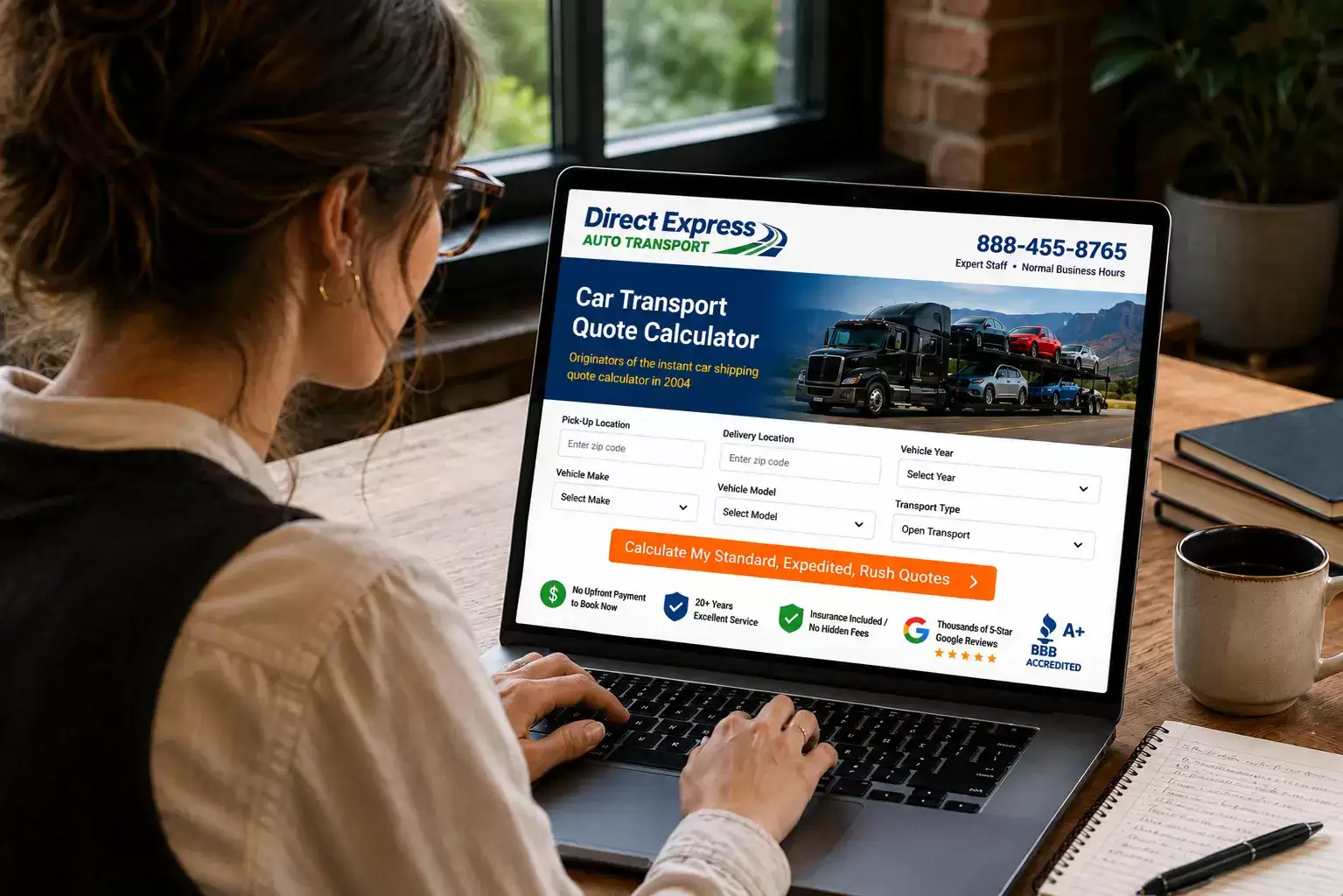
Direct Express Auto Transport pioneered online instant pricing for the auto transport industry in 2004. Before we built the first car shipping cost calculator, getting a quote from a broker meant phone calls, callbacks, and waiting — sometimes days. We changed that. Today you know your exact cost in 30 seconds, before committing to anything. No phone tag, no hassle. Just a real number, instantly.
Three Service Tiers for Every Florida to California Shipment
Every shipment on this Florida to California route is available at three service tiers so you can match your budget to your timeline. Standard delivers at the best available rate — ideal when your schedule has a few days of flexibility. Expedited moves your vehicle to the front of the dispatch queue for faster pickup. Rush gets your car picked up as fast as humanly possible — for moves where every day counts. All three tiers include full door-to-door service and carrier insurance.
What customers say about shipping a car from Florida to California with Direct Express Auto Transport


Seasonal Pricing Guide: Florida to California
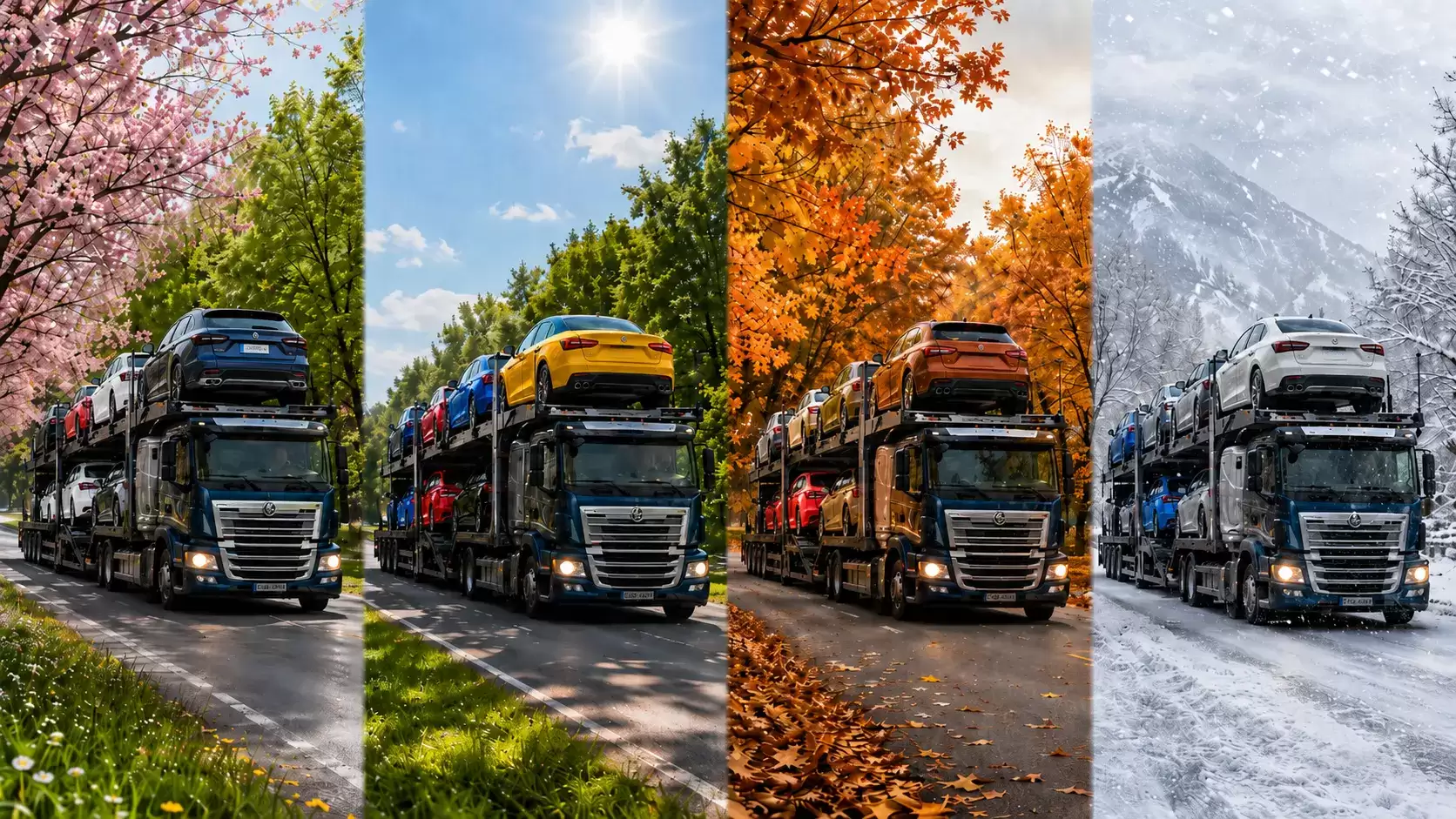
The Florida-to-California direction runs counter to the snowbird migration. The westbound run is quietest when the southbound run is at full steam — and that creates some of the best pricing windows of the year for Florida-to-California shippers who know when to book.
Who Ships a Car from Florida to California — and Why
The Florida-to-California route is driven by a distinct set of circumstances. Most of the year, the dominant traffic on this corridor runs the other direction — California to Florida. But the westbound run has its own steady customer base, and the reasons people ship in this direction tend to be meaningful life changes.
California Residents Returning Winter Vehicles from Florida
The most consistent segment is seasonal residents and snowbirds making the return trip. California residents who spent the winter in Florida ship their cars back west in spring — typically March through May — rather than drive 2,700 miles through the desert. For someone who flew to Florida in November and drove their car down, shipping it back in the spring is the logical solution.
Military PCS: MacDill AFB / NAS Jacksonville → Camp Pendleton and California
Military transfers move in both directions regardless of season. Florida’s major installations — MacDill Air Force Base in Tampa, Patrick Space Force Base on the Space Coast, Naval Air Station Jacksonville, and Eglin Air Force Base in the Panhandle — generate PCS orders pointing west to California year-round. Camp Pendleton, Edwards Air Force Base, Fort Irwin, Naval Base San Diego — the same California bases that send families east also receive families coming back.
Florida Reverse Migration: New Arrivals Returning to California
Florida’s rapid population growth means a portion of recent arrivals decide the move wasn’t right for them and reverse course. People who relocated from California to Florida for tax or cost reasons sometimes reconsider — family ties, career opportunities, or personal preference. The return migration is real, if smaller than the outbound flow.
Online Vehicle Purchases: California Buyers Shipping Florida Cars West
Online vehicle purchases are a growing category. A California buyer finding the right classic car, specialty vehicle, or used truck listed in South Florida doesn’t want to fly, drive it cross-country, and put 2,700 miles on the odometer. Shipping is the obvious answer.
What Makes the Florida–California Auto Shipping Run Different
The I-10 Westbound: Same Highway, Different Load Dynamics
The Florida-to-California route runs I-10 from Jacksonville or Tampa all the way to the Los Angeles basin — the same 2,460-mile interstate that handles the eastbound snowbird traffic, but now running in the opposite direction. The corridor is well-traveled and carriers know it cold. The difference is load dynamics: westbound carriers run lighter for most of the year because the dominant migration on this route flows east (California to Florida in winter). That imbalance is what creates the pricing advantage for Florida-to-California shippers during the slow seasons.
Why the Florida Panhandle Costs Less
Florida isn’t just the tip of the peninsula — it stretches 360 miles west along the Gulf Coast to Pensacola, which sits nearly 900 miles closer to Los Angeles than Miami does. Pensacola, Fort Walton Beach, and Panama City Beach are almost a different shipping market: at roughly 2,100 miles to Southern California, they’re comparable in distance to a Dallas-to-Los Angeles run. If you’re shipping from the Panhandle, expect prices at the lower end of the Florida range and transit times as short as 4–6 days.
Why Northern California Costs More to Deliver To
Just as it costs more to pick up from Northern California on the eastbound run, it costs more to deliver there on the westbound. Carriers coming in on I-10 from the east arrive in the Southern California basin — Los Angeles, San Diego, the Inland Empire, Orange County — and stop there.
Carrier Flow and Dispatch Timing
Because California-to-Florida is the dominant direction on this corridor in winter, westbound carriers heading back are often running partially loaded or repositioning their equipment. This means Standard pickup can take a bit longer in November and December compared to the eastbound run — carriers prioritize filling their trailers heading east. The flip side is that off-peak westbound shippers during summer and fall often see fast dispatch because the carrier is actively looking for westbound loads to fill trailer space.
Other Florida to California Cities We Serve
Direct Express ships vehicles between hundreds of city pairs on this route. Below is a broader look at additional Florida origins and California destinations we regularly serve.
Hub Cities Along the Florida–California Car Shipping Corridor
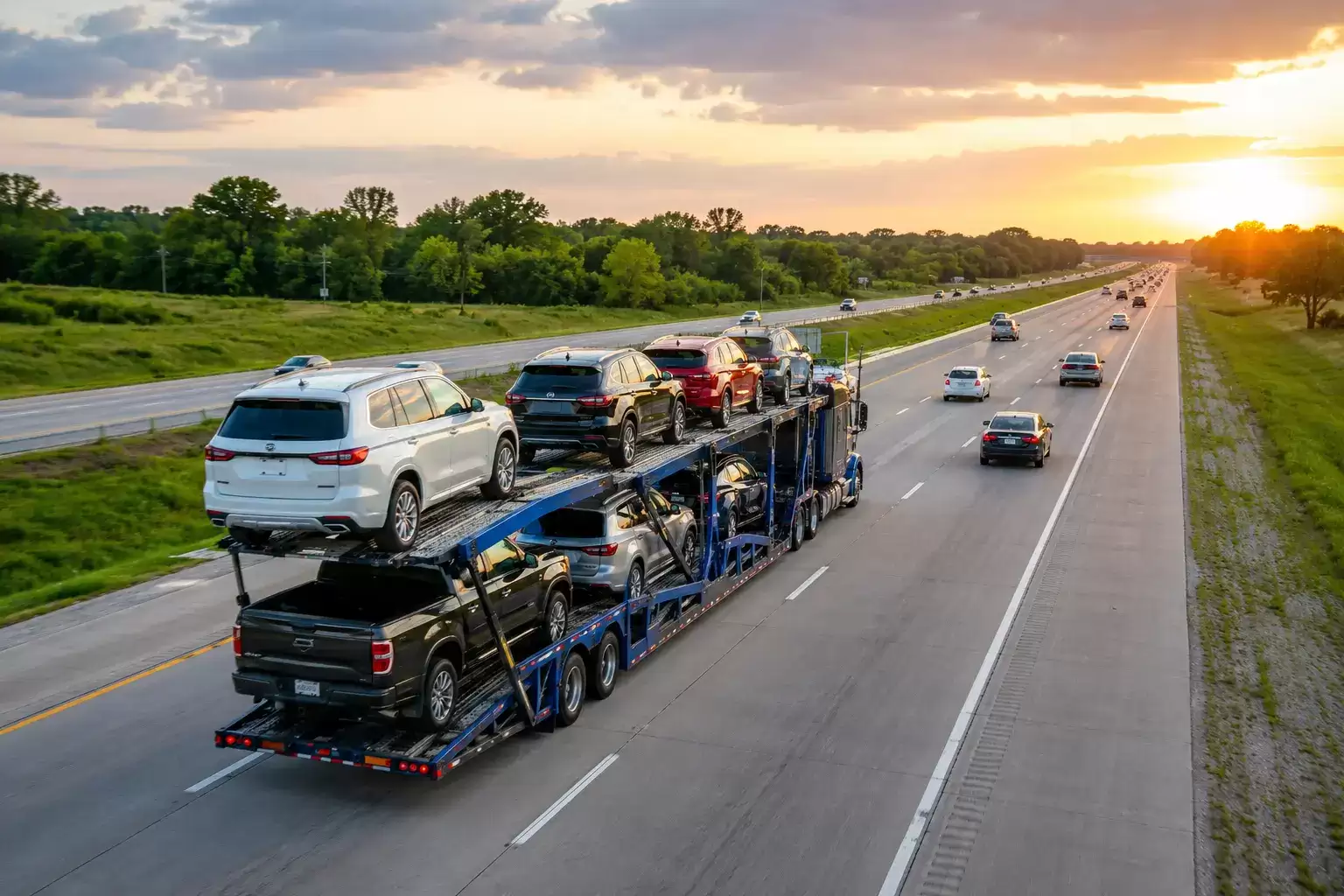
The I-10 westbound run carries your vehicle through some of the most active freight corridors in the South and Southwest. Your car doesn’t travel in a straight line to its final address — it moves through a network of staging hubs where carriers load and hand off freight. Understanding where those hubs are helps explain why transit takes 5–8 days even when you’re in a hurry.
Major Origin Hubs in Florida
Midpoint Corridor Cities
Major California Delivery Points
Routing Insight: Carriers coming in from the east arrive at the LA basin first — Los Angeles, Long Beach, Anaheim, and surrounding SoCal metros dispatch quickly. Delivery to San Francisco, Oakland, San Jose, or Sacramento requires the carrier to continue north on I-5 or I-580, which adds 1–2 days and cost. If you’re delivering to the Bay Area or Sacramento, account for this in your timeline. San Diego is a slightly longer loop south from the LA basin but typically adds minimal time.
Open vs. Enclosed Car Transport on the Florida-California Route
Across 2,500-plus miles of open highway, enclosed transport offers a level of protection worth considering for the right vehicle. Most Florida-to-California shipments travel open without issue — but the route is long, and a few factors are worth knowing before you decide.
Open Transport Recommended for Most
- Carries 7–10 vehicles on an open-air trailer
- Most cost-effective option — the same method used to deliver new vehicles from manufacturers to dealerships
- Well-suited for daily drivers, standard sedans, trucks, SUVs, and minivans
- Excellent carrier availability on the I-10 corridor in both directions
- Your vehicle will be exposed to road dust, bugs, and the elements — normal wear for this transport type and length
Enclosed Transport
- Vehicle travels inside a fully covered trailer — completely protected from road debris, weather, and the elements
- Typically costs 40–60% more than open transport
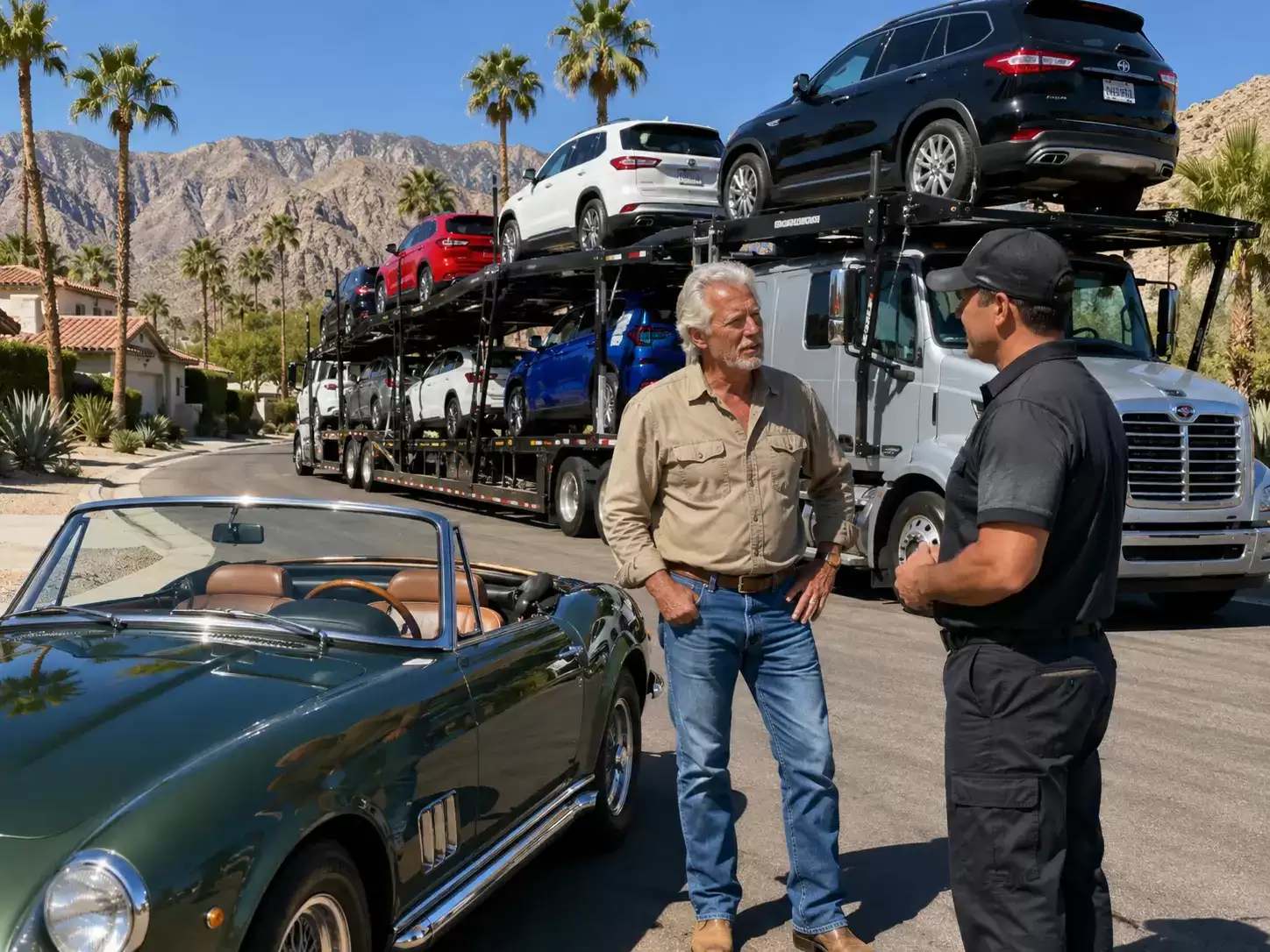
- Ideal for luxury vehicles, classic or collector cars, sports cars with low ground clearance, or vehicles with custom paint or wraps
- Particularly worth considering for high-value vehicles during Florida’s hurricane season (June–October) when road debris and weather conditions are more active
- Fewer enclosed carriers on cross-country routes; book 2–3 weeks ahead to ensure availability
Our honest recommendation: For a standard daily driver or any vehicle under $60,000, open transport is the right choice. The I-10 corridor is among the most-traveled carrier routes in the country. For a classic, a Porsche, a high-end truck with custom paint, or any vehicle with significant sentimental or monetary value — enclosed transport on a 2,700-mile haul is worth every dollar of the premium.
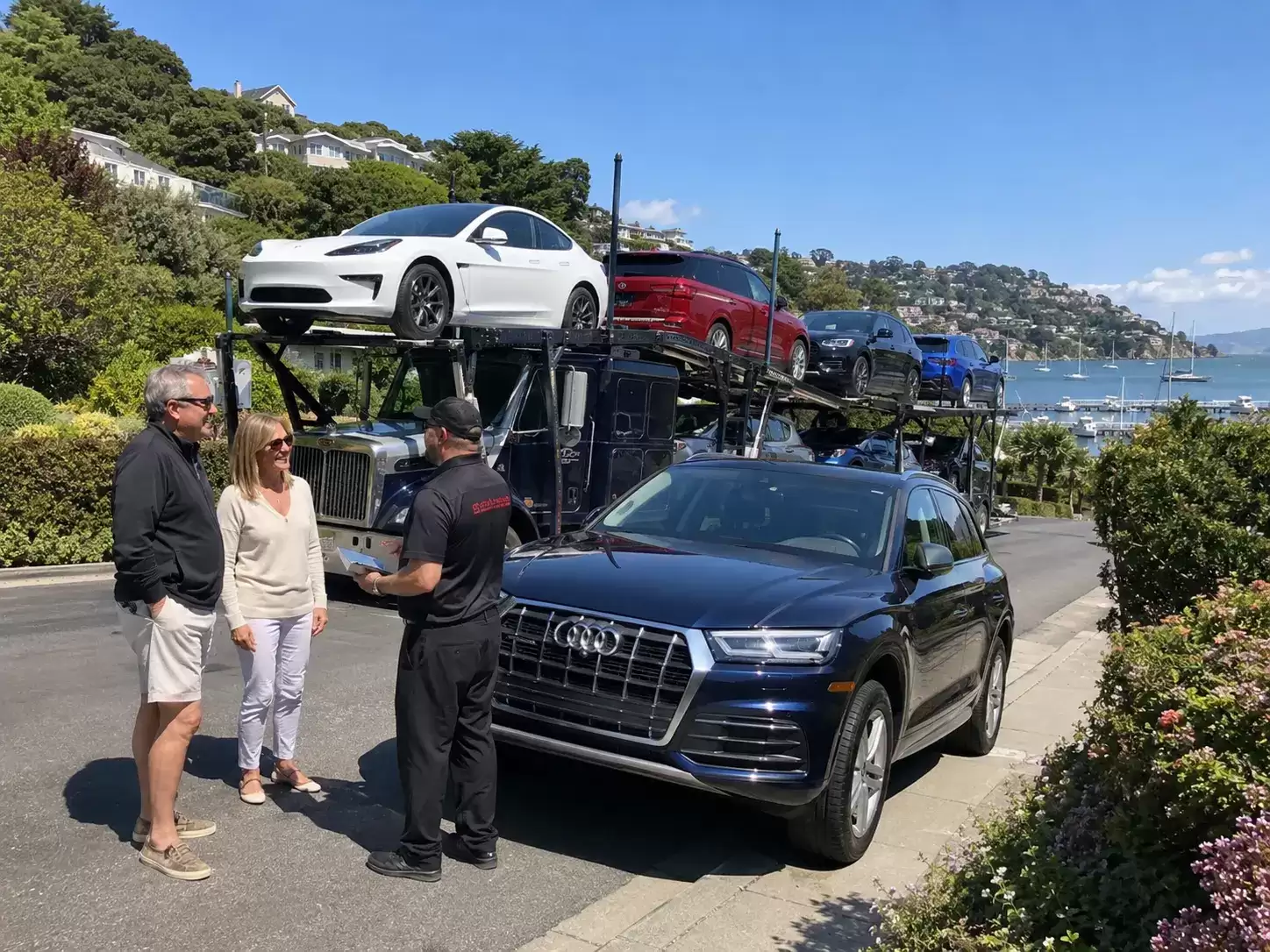
Door-to-Door Car Shipping: What to Expect in Florida and California
Pickup in Florida
South Florida: Miami, Fort Lauderdale, and Palm Beach
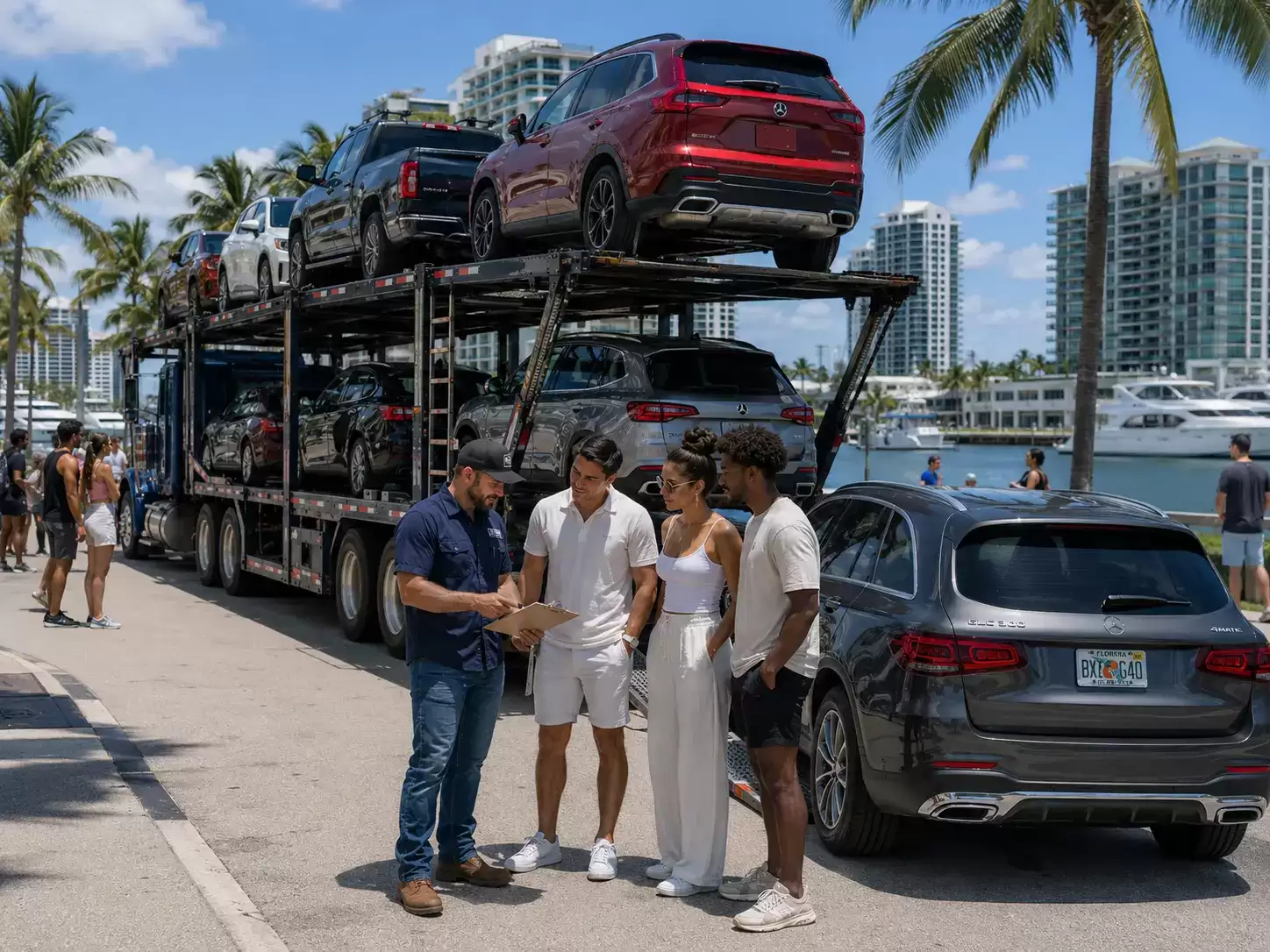
Florida is well-served by carriers on this corridor, particularly Jacksonville, Orlando, Tampa, Miami, and Fort Lauderdale. Door-to-door service is the standard — your carrier comes directly to your address or a nearby street. South Florida’s dense urban layout (Miami, Fort Lauderdale, Boca Raton) can occasionally require meeting a carrier at a nearby parking lot or shopping center if your street doesn’t accommodate large trucks. It’s a minor inconvenience and your coordinator will arrange it.
Tampa Bay and the Gulf Coast
The Panhandle — Pensacola, Panama City Beach, Fort Walton Beach — sees less carrier traffic but the short run to California makes it a viable pickup market. Allow a few extra days for dispatch in smaller Panhandle markets and confirm your specific zip code with your coordinator at booking.
Orlando, Jacksonville, and North Florida
Hurricane season note (June–October): Florida pickups are generally not delayed by tropical weather — the storm has to be directly threatening your area for carriers to pause. When a hurricane does threaten a pickup zone, carriers pause and reschedule once conditions are safe. Build a few days of buffer into your timeline if you’re booking during active tropical weather weeks.
Delivery in California
Southern California and the Inland Empire
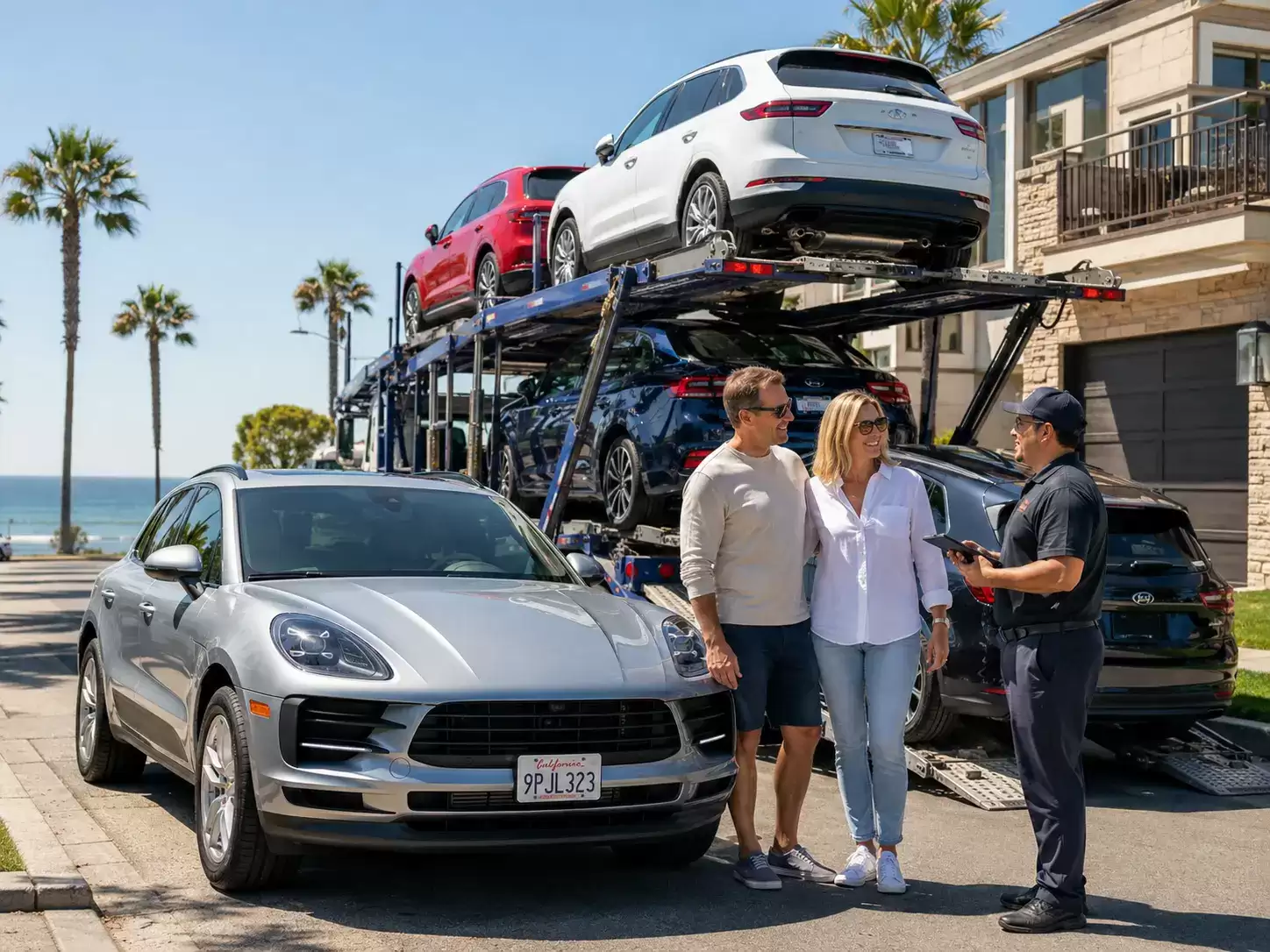
Southern California is the primary I-10 terminus — Los Angeles, the Inland Empire, Orange County, and San Diego all see excellent carrier availability and door-to-door delivery is routine. Urban Los Angeles (downtown, Hollywood, Westside) can require meeting your carrier at a large nearby parking area — streets narrow and overhead clearance can make large car haulers impractical in some neighborhoods. Your carrier will contact you to coordinate the specifics.
Bay Area and Northern California
Northern California delivery (San Francisco, Oakland, San Jose, Sacramento) requires the carrier to extend north from the LA basin — typically via I-5 or I-580. This adds 1–2 days to transit and reflects the NorCal price premium. Bay Area streets and hillside neighborhoods can sometimes limit full door-to-door access; your coordinator will discuss terminal drop options if your address isn’t carrier-accessible.
Preparing Your Vehicle
Before pickup, remove all personal items from the interior (carrier insurance covers the vehicle, not personal property), leave no more than a quarter tank of fuel, disable your alarm, and remove any exterior accessories like bike racks, roof cargo boxes, or antenna attachments. Take dated photos of the vehicle from all angles before the carrier arrives. At delivery, inspect carefully before signing the Bill of Lading — any damage should be noted on the form before you sign.
Florida & California Auto Transport Resources
Florida Helpful Government Links
- Florida Department of Highway Safety and Motor Vehicles (FLHSMV) — The central Florida resource for vehicle registration and titling. If you are releasing a Florida title before your move or need to complete a title transfer, start here.
- FLHSMV — Titles and Title Transfers — Covers the process for transferring a Florida title to an out-of-state buyer or new owner, including required documentation and fees.
- FLHSMV — Vehicle Registration — If your Florida registration expires before or during your move, this page covers renewal options and cancellation if you are relocating permanently.
California Helpful Government Links
- California Department of Motor Vehicles (CA DMV) — The primary state agency for vehicle titling and registration in California. New California residents must register their vehicle within 20 days of establishing residency.
- CA DMV — New Residents: Registering Your Out-of-State Vehicle — Step-by-step guidance for transferring a Florida title and obtaining California plates. Note that California requires a smog inspection before registration for most vehicles.
- CA DMV — Vehicle Registration Fees — California’s registration fees are calculated on vehicle value and can be significantly higher than Florida’s. Use this tool to estimate your registration cost before your vehicle arrives.
Federal Auto Transport Resources
- FMCSA — Verify a Carrier’s License (SAFER System) — The Federal Motor Carrier Safety Administration’s carrier lookup tool. Verify that any auto transport company you consider is federally licensed and insured before booking.
- FMCSA — Protect Your Move — Federal consumer guidance about hiring vehicle shippers, including scam warnings and your rights as a shipper. Useful for anyone shipping a car for the first time on the Florida-to-California route.