California to Virginia Car Shipping
The original instant car shipping calculator — trusted since 2004. Door-to-door California to Virginia transport with no surprises, no hidden fees, and three options to ship your vehicle on your schedule.
★ 4.6/5 Google Reviews | BBB Accredited A+ | FMCSA Licensed (MC #479342) | USDOT #1240502 | No upfront payment required | 20+ years shipping vehicles


California to Virginia Car Shipping Rates by City
Every California to Virginia vehicle shipment is available at three service levels:
Standard, Expedited, & Rush Options
Choose the one that fits your timeline and budget. All three include full door-to-door service and carrier insurance.
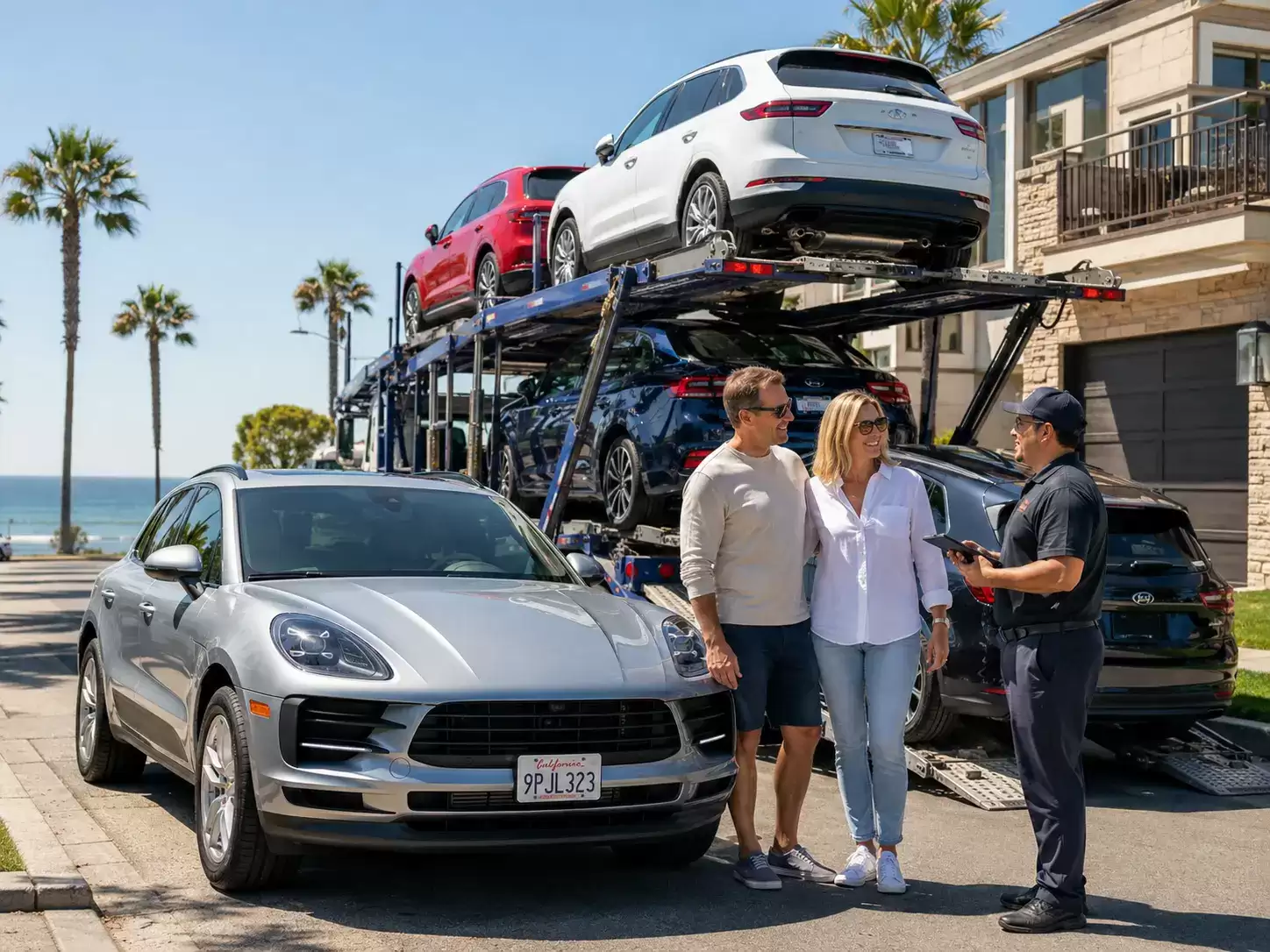
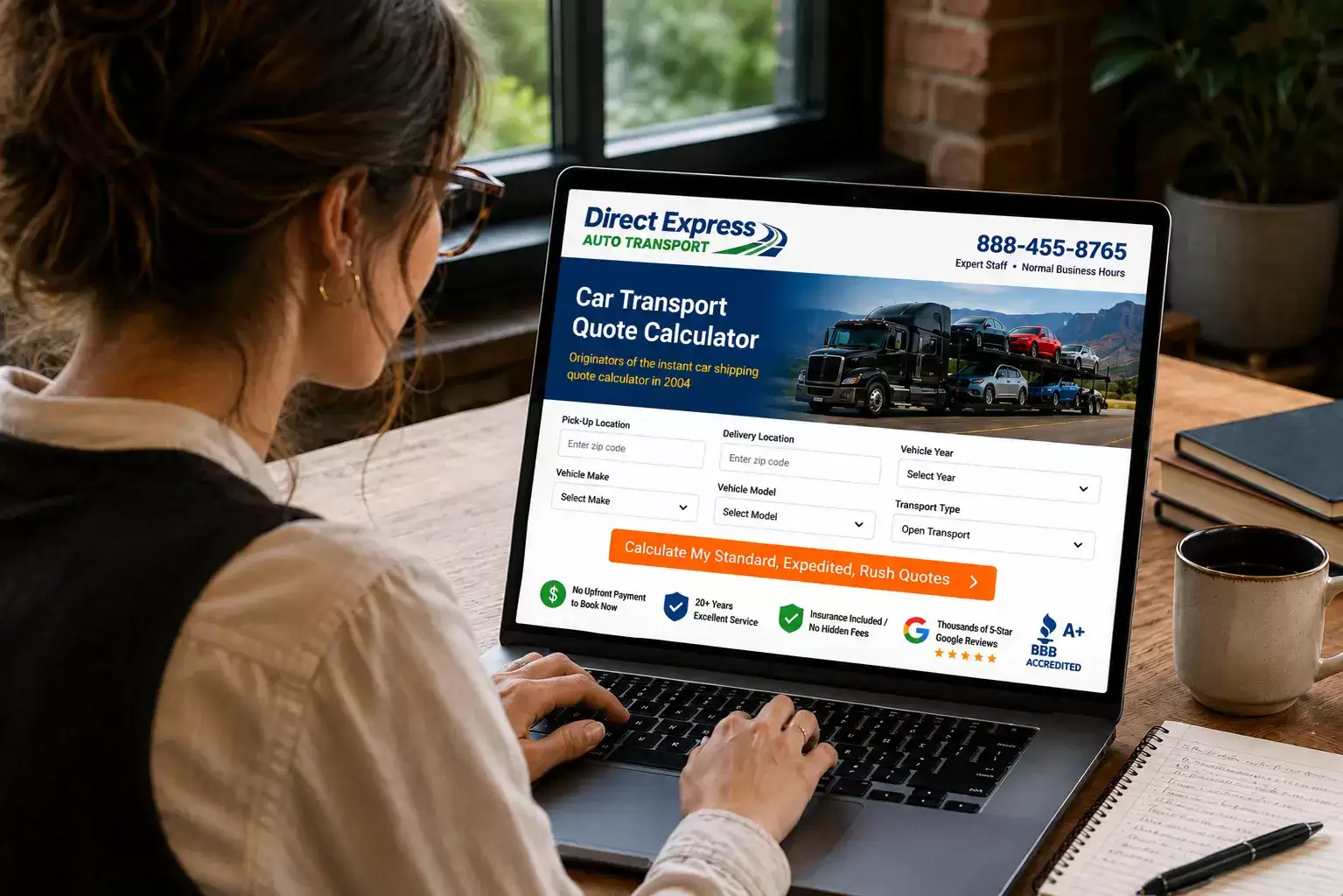
The Company That Invented Instant Auto Transport Pricing
Direct Express Auto Transport pioneered online instant pricing for the auto transport industry in 2004. Before we built the first car shipping cost calculator, getting a quote from a broker meant phone calls, callbacks, and waiting — sometimes days. We changed that. Today you know your exact cost in 30 seconds, before committing to anything. No phone tag, no hassle. Just a real number, instantly.
Three Service Tiers for Every California to Virginia Shipment
Every shipment on this California to Virginia route is available at three service tiers so you can match your budget to your timeline. Standard delivers at the best available rate — ideal when your schedule has a few days of flexibility. Expedited moves your vehicle to the front of the dispatch queue for faster pickup. Rush gets your car picked up as fast as humanly possible — for moves where every day counts. All three tiers include full door-to-door service and carrier insurance.
What customers say about shipping a car from California to Virginia with Direct Express Auto Transport


Seasonal Pricing Guide: California to Virginia
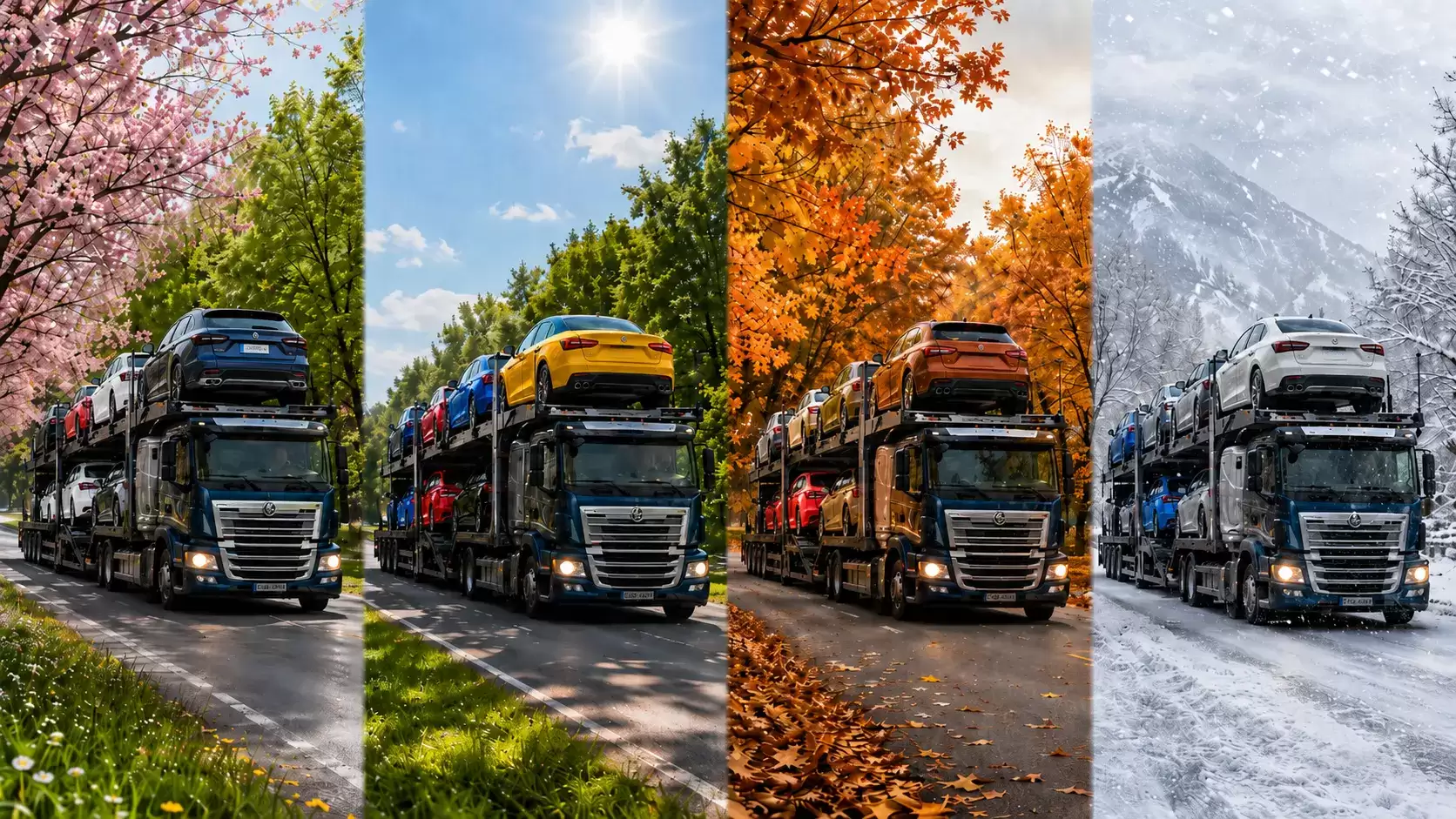
California to Virginia is one of the most institutionally consistent auto transport corridors in the country. Virginia’s enormous military footprint — Naval Station Norfolk, Joint Base Langley-Eustis, Fort Gregg-Adams, Marine Corps Base Quantico, and the Pentagon’s surrounding contractor belt in Northern Virginia — generates a steady, predictable baseline of shipments year-round. Layered onto that military foundation is a growing technology and federal contracting workforce in the DC metro area, university students across the state, and the constant bicoastal churn between California’s entertainment and tech economy and Virginia’s defense and government one. Seasonal pricing on this corridor tracks the summer PCS surge and the fall sweet spot closely.
Who Ships a Car from California to Virginia — and Why
California-to-Virginia is one of the most institutionally driven auto transport corridors in the country. It connects the world’s largest entertainment and technology economy with the world’s single densest concentration of military installations, federal agencies, and defense contractors. The people who travel this corridor are overwhelmingly doing so for institutional reasons — military orders, federal employment, defense contracting careers, or government agency postings — rather than the lifestyle-driven moves that define corridors like California to Florida.
Military PCS: Camp Pendleton / Travis AFB / 29 Palms → Fort Belvoir and Naval Station Norfolk
Military service members are the most consistent and highest-volume category on this route. Naval Station Norfolk — the world’s largest naval base, home port to roughly a quarter of the United States Navy’s Atlantic Fleet — processes more PCS transfers annually than almost any installation in the country. California-stationed sailors receiving orders to Norfolk ship their vehicles east in enormous numbers every summer. Joint Base Langley-Eustis in Hampton generates substantial Air Force and Army PCS transfer volume. Fort Gregg-Adams near Petersburg, Marine Corps Base Quantico, and the various Army and Air Force installations in the DC metro area add to the total. The CA-to-VA military corridor is essentially a government-operated conveyor belt that runs in both directions simultaneously, year-round, and peaks hard every summer.
Northern Virginia Defense Contractors and Federal Agency Professionals
The Northern Virginia defense contractor and federal agency workforce drives a second, overlapping stream. The Pentagon, NSA at Fort Meade (just north in Maryland), CIA at Langley, and the cluster of defense contractors in Tysons Corner, McLean, Reston, and Herndon employ tens of thousands of professionals who relocate from California at all career stages. Amazon’s HQ2 development in Crystal City and the general technology growth in Northern Virginia’s “Tech Corridor” along the Dulles corridor have added private-sector volume to what was historically a government-only flow. California technologists accepting Northern Virginia positions ship their vehicles east steadily from March through November.
Virginia University Students Shipping Cars from California
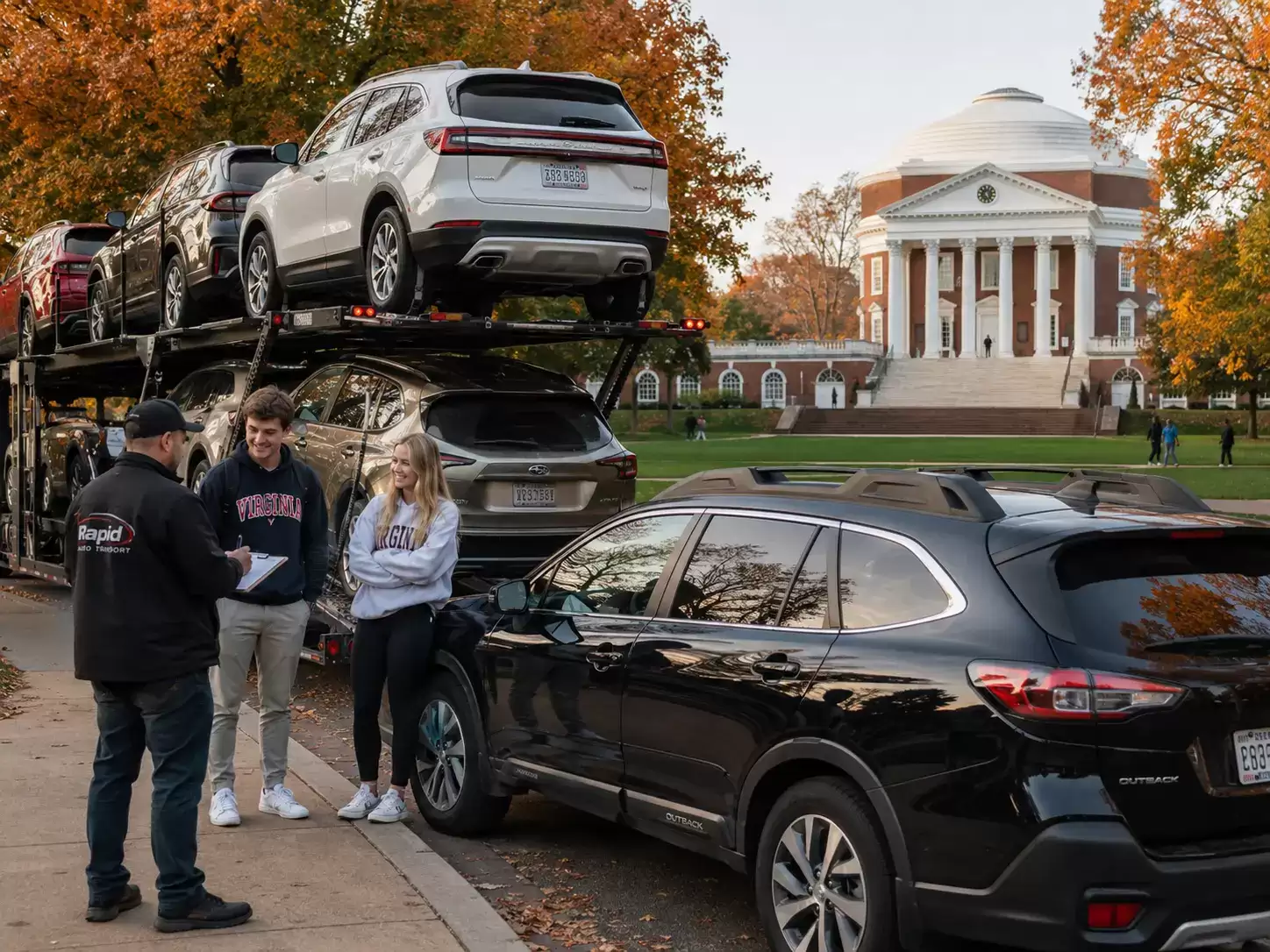
College students represent a third distinct segment. Virginia’s universities — the University of Virginia in Charlottesville, Virginia Tech in Blacksburg, William & Mary in Williamsburg, Old Dominion University in Norfolk, and Virginia Commonwealth University in Richmond — draw students from California who arrive in August and ship their vehicles east. California parents shipping cars to Virginia student children is a reliable August volume driver. The reverse flow in May, as Virginia graduates accept California positions, keeps the corridor balanced.
What Makes the California–Virginia Auto Shipping Run Different
The Route: I-40 to I-81 Through the Appalachians
California-to-Virginia carriers follow I-40 eastbound from the Los Angeles area across the desert through Flagstaff, Albuquerque, Amarillo, Oklahoma City, and Little Rock. At Nashville or Knoxville, the load transitions north onto I-81, one of the most heavily carrier-trafficked interstates in the country. I-81 runs the length of Virginia’s Shenandoah Valley from the Tennessee border north through Roanoke, Harrisonburg, and Staunton before the Northern Virginia loads peel off onto I-66 toward Arlington, Alexandria, and the DC metro. Hampton Roads-bound loads — Virginia Beach, Norfolk, Chesapeake, Newport News, Hampton — continue east on I-64 from the I-81 junction near Staunton, descending through the Blue Ridge and the Richmond basin to the coast.
Two Distinct Virginia Delivery Zones
Virginia’s geography creates two naturally distinct delivery zones that behave differently for auto transport. Hampton Roads — the tidal region encompassing Virginia Beach, Norfolk, Chesapeake, Portsmouth, Newport News, and Hampton — is a flat coastal zone with outstanding carrier access. It is also the most militarily dense auto transport destination in the country, which means carrier familiarity is high and dispatch frequency is strong. Northern Virginia — Arlington, Alexandria, McLean, Herndon, Reston, and the I-66 corridor — sits immediately adjacent to DC and has suburban carrier access throughout, though some denser Alexandria and Arlington neighborhoods near the Potomac require a nearby meet point for large haulers. Carriers serving these zones know them well, and coordination is routine.
NorCal Pickup Premium — Applies to Bay Area and Sacramento Origins
Southern California — Los Angeles, San Diego, and the Inland Empire — is the highest carrier-density pickup zone in the country and the natural I-40 departure point for California-to-Virginia loads. Northern California pickup (San Francisco, Oakland, San Jose, Sacramento) requires carriers to position 400+ miles north of the LA basin before beginning the cross-country run — adding NorCal-specific transit and positioning cost. The $175–$250 NorCal pickup premium from any Bay Area or Sacramento origin to any Virginia destination is reflected in the pricing table above.
I-81 Winter Weather — Shenandoah Valley Delivery
The Shenandoah Valley segment of I-81 in Virginia can see significant ice and snow events in January and February. Harrisonburg, Staunton, and Roanoke-area deliveries during those months build a 1–2 day weather buffer into transit estimates. Carriers stage at Richmond or I-81 Tennessee-side holds during significant weather events rather than risk mountain valley conditions. Hampton Roads and Northern Virginia deliveries are generally unaffected by Shenandoah Valley weather. The window from March through December is operationally smooth across all Virginia delivery zones.
Other California to Virginia Cities We Serve
Direct Express ships vehicles between hundreds of city pairs on this route. Below is a broader look at additional California origins and Virginia destinations we regularly serve.
Hub Cities Along the California–Virginia Car Shipping Corridor
The California-to-Virginia run follows I-40 east through the desert Southwest and mid-South before picking up I-81 northbound through the Appalachian Valley into Virginia. Southern California and the Hampton Roads region anchor the two ends of this corridor.
Major Origin Hubs in California
I-40 / I-81 Corridor Cities
Major Virginia Delivery Points
Bristol: The Appalachian Gateway: Bristol sits on the Tennessee-Virginia state line where I-81 formally enters the Commonwealth. It is the carrier transition city for every I-81 northbound Virginia-bound load — the point where I-40 eastbound traffic has converted to I-81 northbound and carriers begin the Shenandoah Valley run toward Roanoke, Harrisonburg, Staunton, and Northern Virginia. Bristol itself is a minor pickup/delivery market, but as an operational gateway it is one of the most important intermediate cities on this corridor. From Bristol, the Shenandoah Valley is open, flat, and fast all the way to the DC metro.
Open vs. Enclosed Car Transport on the California–Virginia Route
The California-to-Virginia haul covers 2,700–2,900 miles on a well-established carrier corridor. Both the California origin end and the Virginia delivery end are generally excellent for vehicle transport. The only meaningful weather variable is the Shenandoah Valley and western Virginia winter conditions affecting delivery to Harrisonburg, Staunton, Roanoke, and Blacksburg in January and February — which is a timing consideration, not a paint protection issue for most vehicles.
Open Transport Recommended for Most
- Open-air trailer carrying 7–10 vehicles — the industry standard for all everyday vehicle shipments on this lane
- Most cost-effective option; the I-40/I-81 corridor has strong open carrier frequency from California to Virginia year-round
- Well-suited for daily drivers, commuter vehicles, SUVs, trucks, minivans, and any vehicle under approximately $60,000
- California pickup is uncomplicated year-round; Virginia delivery is uncomplicated except for western VA mountain delivery in January–February
- Road film after 2,700+ miles is normal — a standard wash upon Virginia delivery addresses it
Enclosed Transport
- Vehicle travels in a fully enclosed, weatherproof trailer from California to Virginia
- Typically 40–60% more expensive than open transport
- Recommended for luxury vehicles, exotics, collector cars, show-quality finishes, and any vehicle over approximately $75,000
- Relevant for deliveries to Harrisonburg, Staunton, Blacksburg, and western VA mountain-area addresses in January or February
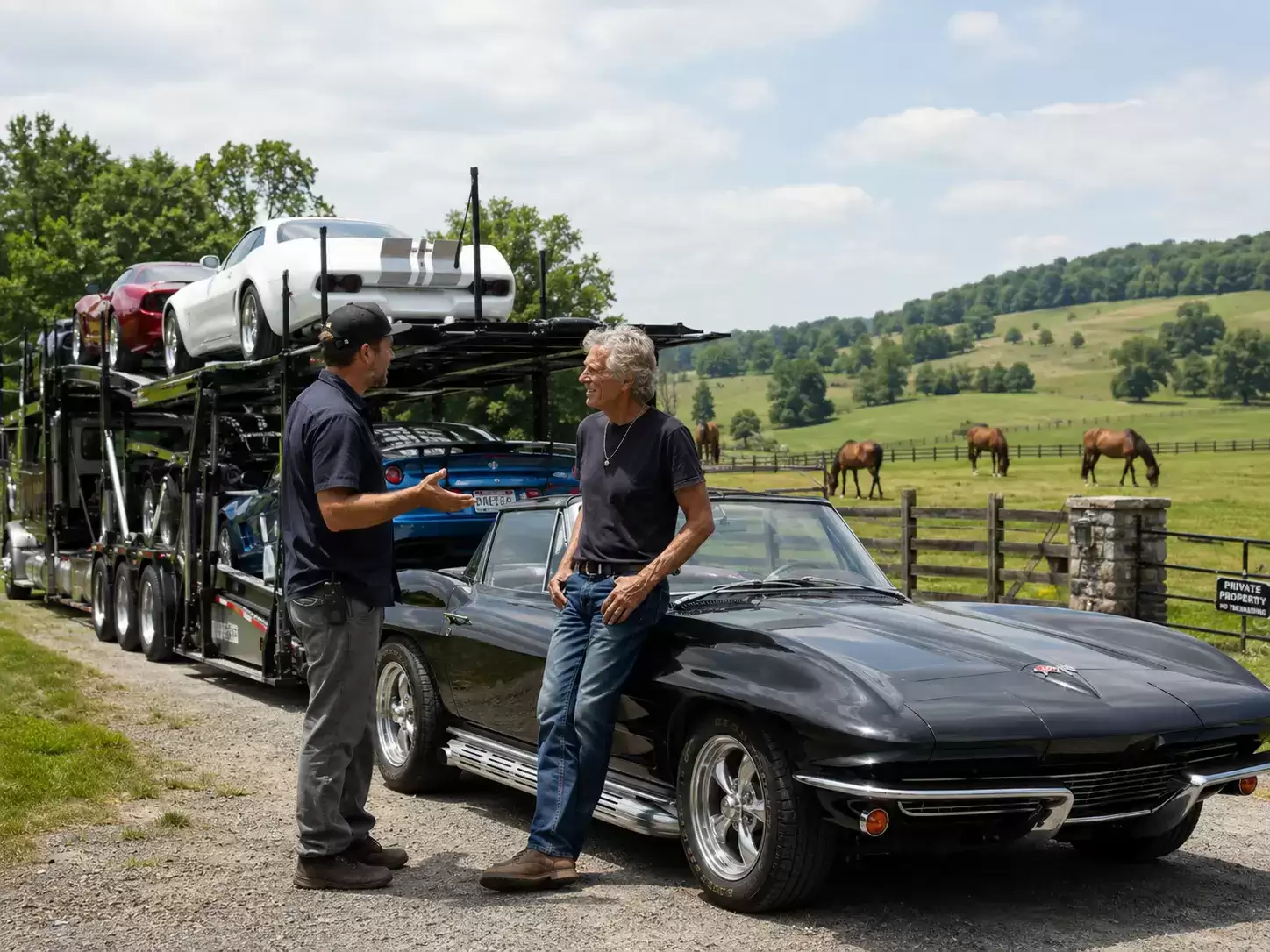
- California collector vehicles heading to Northern Virginia buyers — federal contractor salaries and the DC metro’s high incomes support a strong exotic and collector market — benefit from enclosed delivery with documented condition reports
- Book 2–3 weeks ahead — fewer enclosed carriers on this lane than open
Our honest recommendation: Open transport for the everyday vehicle — this is a strong, well-served corridor and open carrier service runs efficiently from all California pickup zones to all major Virginia delivery zones. Enclosed for luxury vehicles, collector cars, and western Virginia mountain-area winter deliveries.
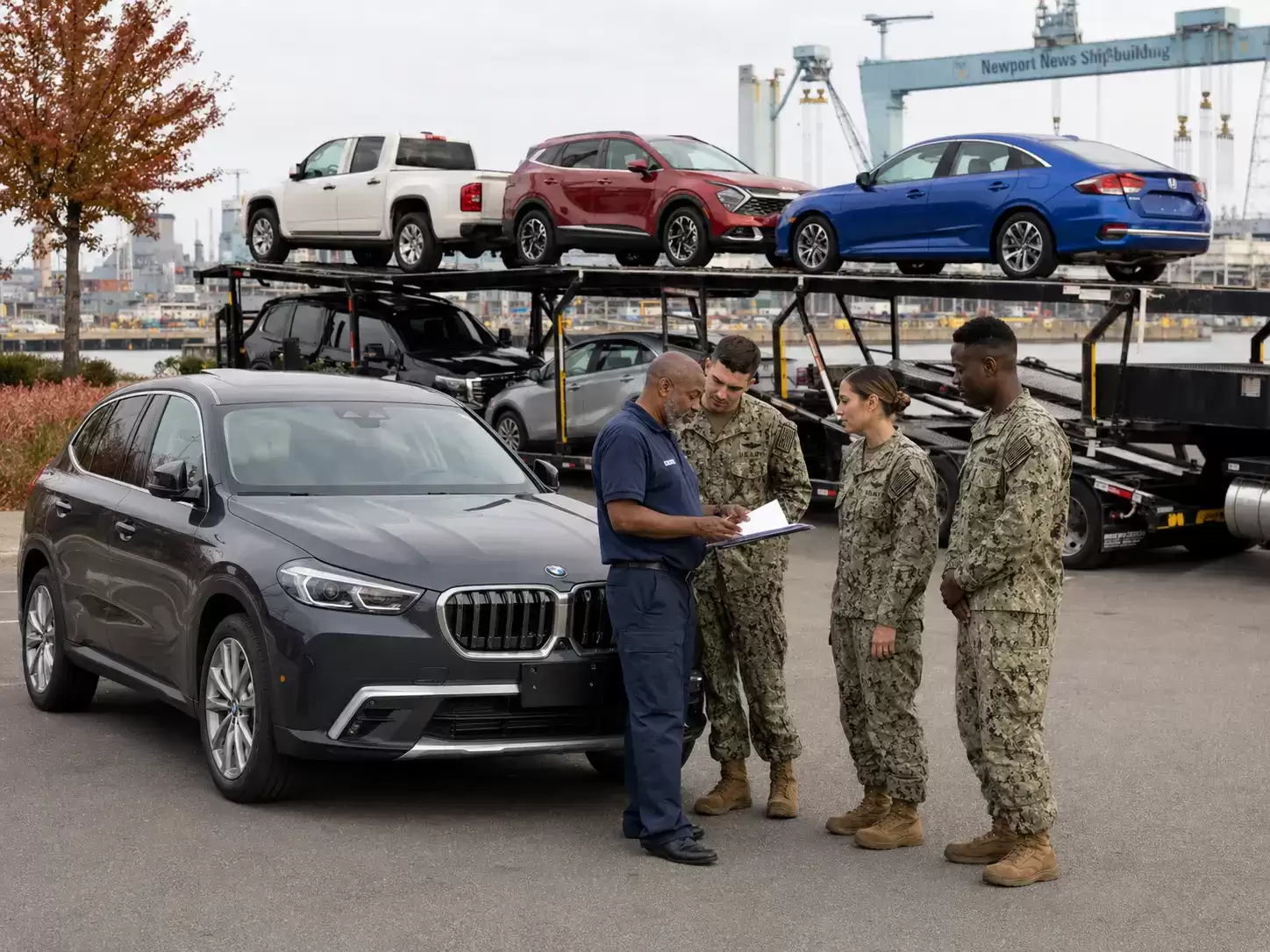
Door-to-Door Car Shipping: What to Expect in California and Virginia
Pickup in California
Southern California: Los Angeles, San Diego, and Orange County
Standard door-to-door pickup throughout Southern California. Los Angeles basin: standard residential throughout; very dense downtown LA, Koreatown, Hollywood, and Westlake high-rise addresses require carrier staging on a nearby wide commercial street — confirm your address at booking. San Diego and Chula Vista: excellent carrier access, standard residential throughout. Orange County (Anaheim, Irvine, Santa Ana, Fullerton): standard residential, no staging concerns. Southern California is the highest carrier-density pickup zone in the country — strong dispatch availability in all service tiers. No heat protocol at coastal SoCal origins in any season.
Inland Empire and Central Valley
Standard door-to-door pickup throughout the Inland Empire and Central Valley. Riverside, San Bernardino, Fontana, and Ontario: excellent suburban carrier access via I-10 and I-15; the Inland Empire is one of the densest carrier staging zones in the country. Summer heat protocol: Inland Empire origins (June–September) reach 105–115°F — enclosed transport recommended for exotic and luxury vehicles staged at IE pickup locations during peak summer. Fresno, Bakersfield, Modesto, and Stockton: standard residential throughout; same summer heat protocol applies for exotics June through September.
Bay Area and Sacramento
Standard door-to-door pickup throughout the Bay Area and Sacramento. San Jose, Oakland, Fremont, Vallejo, and Concord: standard residential access. San Francisco: carrier staging required for steep-grade neighborhood pickups (Pacific Heights, Russian Hill, Nob Hill, Bernal Heights) — confirm your specific address at booking. Sacramento: standard residential throughout. No heat protocol at coastal Bay Area origins in any season. Bay Area origins carry a pricing premium due to departure distance and carrier positioning relative to Southern California staging hubs.
Delivery in Virginia
Northern Virginia: Arlington, Alexandria, Fairfax, Reston, and the DC Suburbs
Standard door-to-door delivery throughout Northern Virginia. Arlington and Alexandria: standard residential throughout; very dense urban cores (Crystal City, Rosslyn, Pentagon City) require carrier staging on a nearby wide commercial street — confirm your delivery address at booking. Fairfax, Reston, Herndon, Chantilly, McLean, Vienna, Falls Church, Manassas, and Woodbridge: standard residential throughout, no staging concerns. Northern Virginia is the most active inbound carrier delivery zone in Virginia — strong availability across all tiers driven by constant DC metro relocation demand.
Richmond, Fredericksburg, and Central Virginia
Standard door-to-door delivery throughout Richmond, Fredericksburg, and Central Virginia. Richmond: standard residential throughout; no staging concerns. Fredericksburg: standard residential, I-95 access. Charlottesville (UVA): standard residential; campus addresses — confirm at booking. Lynchburg and Roanoke: standard residential. Fort Gregg-Adams (Army, Prince George County) and Quantico Marine Corps Base: confirm on-base vehicle access and gate authorization at booking for military PCS deliveries.
Hampton Roads: Virginia Beach, Norfolk, Chesapeake, and Newport News
Standard door-to-door delivery throughout Hampton Roads. Virginia Beach, Norfolk, Chesapeake, Portsmouth, Suffolk, Hampton, and Newport News: standard residential throughout. Joint Base Langley-Eustis (Hampton), Naval Station Norfolk, NAS Oceana (Virginia Beach), and Naval Station Portsmouth: confirm on-base vehicle access and gate authorization at booking for military PCS deliveries. Hampton Roads has one of the highest military PCS inbound vehicle volumes in the eastern United States — carriers regularly stage in this zone for naval and Air Force arrivals. Newport News Shipbuilding area: standard residential, I-64 access.
Preparing Your Vehicle
Before pickup: remove all personal items from the interior, leave no more than a quarter tank of fuel, disable your car alarm, and remove any exterior accessories. Photograph your vehicle thoroughly from all angles with date-stamped images before the carrier arrives. At delivery in Virginia, inspect your vehicle carefully before signing the Bill of Lading — note any concerns before signing. Your signature without notation constitutes acceptance of the vehicle’s condition.
California & Virginia Auto Transport Resources
California Helpful Government Links
- California Department of Motor Vehicles (CA DMV) — Primary agency for California vehicle titles and registration. If you are leaving California permanently, obtain your California title before shipping — Virginia requires it to complete registration.
- CA DMV — Transferring Your California Title Out of State — How to release your California vehicle title for transfer to Virginia registration.
- CA DMV — Vehicle Registration Fees — Registration fee calculator. If you are retaining a California address, use this to keep current on renewal costs before and during your Virginia posting.
Virginia Helpful Government Links
- Virginia Department of Motor Vehicles (VA DMV) — Primary agency for Virginia vehicle titles and registration. New Virginia residents must register their out-of-state vehicle within 30 days of establishing residency.
- VA DMV — Titling an Out-of-State Vehicle — Step-by-step guidance for transferring your California title and obtaining Virginia registration and plates. Virginia requires a safety inspection before registration.
- VA DMV — Motor Vehicle Safety Inspections — Virginia requires annual safety inspections for all registered vehicles. Schedule your inspection within 30 days of registering your California vehicle in Virginia.
Federal Auto Transport Resources
- FMCSA — Verify a Carrier’s License (SAFER System) — Verify that any auto transport company you consider is federally licensed and insured before booking.
- FMCSA — Protect Your Move — Federal consumer guidance about hiring vehicle shippers, including red flags for broker scams and your rights as a shipper.