Texas to North Carolina Car Shipping
The original instant car shipping calculator — trusted since 2004. Door-to-door Texas to North Carolina transport with no surprises, no hidden fees, and three options to ship your vehicle on your schedule.
★ 4.6/5 Google Reviews | BBB Accredited A+ | FMCSA Licensed (MC #479342) | USDOT #1240502 | No upfront payment required | 20+ years shipping vehicles


Texas to North Carolina Car Shipping Rates by City
Every Texas to North Carolina vehicle shipment is available at three service levels:
Standard, Expedited, & Rush Options
Choose the one that fits your timeline and budget. All three include full door-to-door service and carrier insurance.
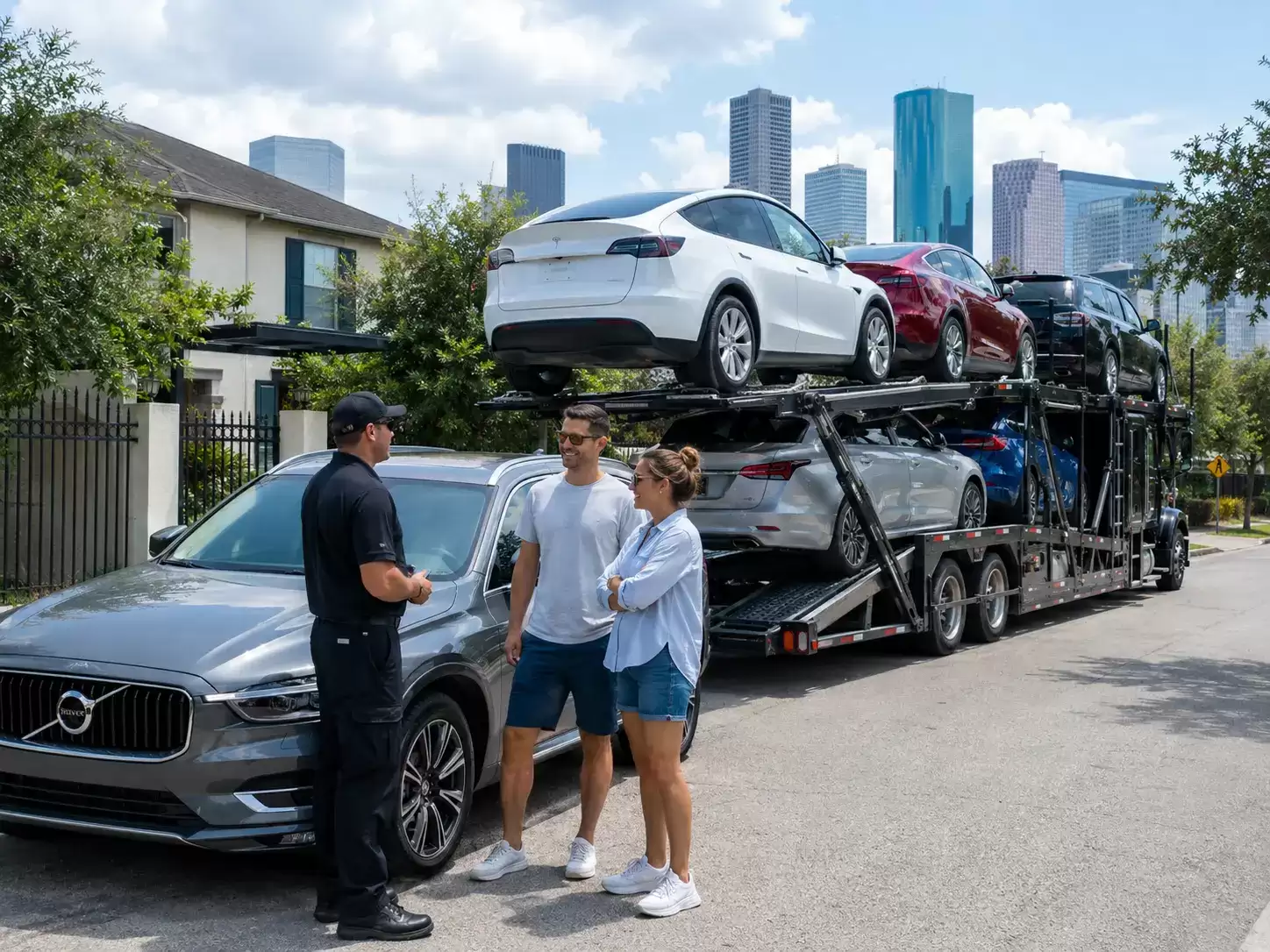

The Company That Invented Instant Auto Transport Pricing
Direct Express Auto Transport pioneered online instant pricing for the auto transport industry in 2004. Before we built the first car shipping cost calculator, getting a quote from a broker meant phone calls, callbacks, and waiting — sometimes days. We changed that. Today you know your exact cost in 30 seconds, before committing to anything.
Three Service Tiers for Every Texas to North Carolina Shipment
Every shipment on this Texas to North Carolina route is available at three service tiers so you can match your budget to your timeline. Standard delivers at the best available rate — ideal when your schedule has a few days of flexibility. Expedited moves your vehicle to the front of the dispatch queue for faster pickup. Rush gets your car picked up as fast as humanly possible — for moves where every day counts.
All three tiers include full door-to-door service and carrier insurance. No phone tag, no hassle. Just a real number, instantly.
What customers say about shipping a car from Texas to North Carolina with Direct Express Auto Transport


Seasonal Pricing Guide: Texas to North Carolina
Military PCS from Fort Cavazos and JBSA to Fort Liberty and Camp Lejeune is the dominant seasonal force, creating a sharp June–August demand peak. January–February is the best value window.

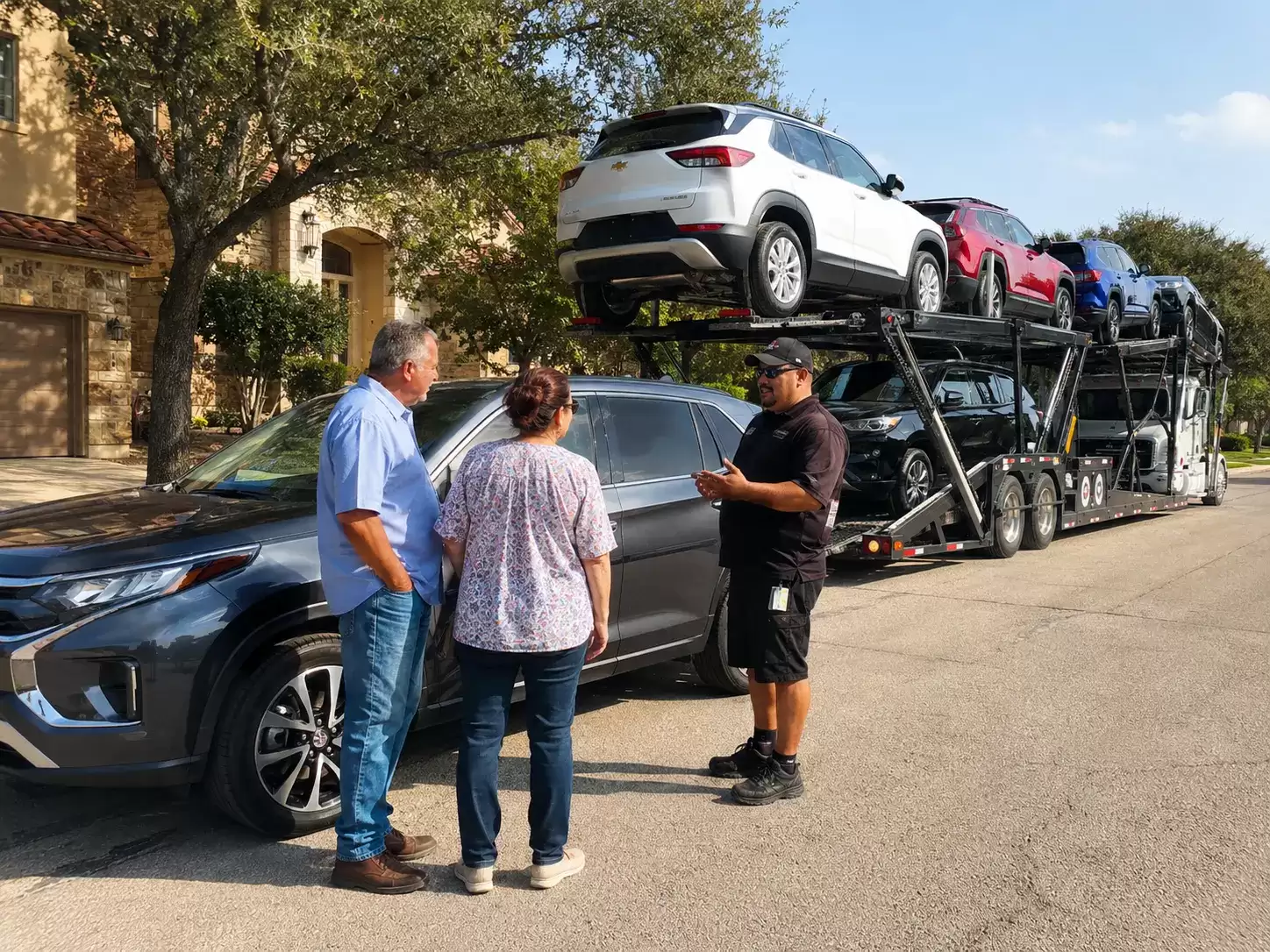
Who Ships a Car from Texas to North Carolina — and Why
Military PCS: Fort Cavazos and JBSA to Fort Liberty and Camp Lejeune
The Texas-to-North Carolina military PCS corridor is driven by the institutional relationship between Fort Cavazos and Fort Liberty, and between JBSA and Seymour Johnson AFB. Fort Cavazos — home of the 1st Cavalry Division — and Fort Liberty — home of the 82nd Airborne Division — are among the Army’s highest-volume PCS pairing across the South.
Joint Base San Antonio: Air Force and Army PCS to Fort Liberty and Seymour Johnson
JBSA — Lackland, Randolph, and Fort Sam Houston — generates Fort Liberty and Camp Lejeune PCS moves, particularly for Army Special Operations and Air Force units with AFSOC relationships at Fort Liberty. The San Antonio → Fayetteville pairing is the highest-volume JBSA–to–NC corridor.
Texas Energy Professionals Relocating to Charlotte’s Banking and Financial Services Corridor
Charlotte’s finance corridor — home to Bank of America’s global headquarters, Wells Fargo’s East Coast operations hub, and Truist Financial — draws Texas energy finance, fintech, and corporate banking professionals. Houston energy companies with treasury and risk management functions regularly transfer staff to Charlotte’s South End and Uptown office districts.
Charlotte Fintech and Banking Corridor: Dallas Finance Professionals Moving to Tryon Street
Raleigh’s growing financial technology corridor, anchored by companies like Red Hat (IBM), Fidelity Investments, and Advance Auto Parts, draws Dallas tech and finance professionals. The Irving → Chapel Hill pairing reflects the DFW corporate hub to Research Triangle academic medical center corridor — Irving generates Research Triangle executive moves, particularly in life sciences and pharmaceutical manufacturing.
Texas to Research Triangle Park: Pharma, Biotech, and Technology Moves
Research Triangle Park — the research and development campus spanning Durham, Orange, and Wake Counties between Raleigh, Durham, and Chapel Hill — is one of the largest research parks in the world. RTP hosts GlaxoSmithKline, Biogen, Cisco, Lenovo, IBM, and dozens of biotech and pharmaceutical companies that recruit Texas professionals.
Texas Tech Professionals at RTP: Dell, Oracle, Apple, and Duke or NC State Graduate Programs
Dell, Oracle, Apple, and Indeed maintain major RTP facilities that create research and engineering professionals who move to Duke, UNC, and NC State for graduate programs or senior industry positions. The Killeen → High Point and Waco → Morrisville pairings in this table reflect the RTP corridor’s geographic reach.
Texas Retirees and Lifestyle Movers to North Carolina’s Mountains and Coast
North Carolina retirement demand is driven by the mountains of Western NC and the Atlantic coast. Texas retirees who spent careers in Dallas, Houston, and San Antonio are increasingly choosing NC over traditional Florida retirement destinations for cooler summers, mountain access, and lower cost of living in Asheville, Hendersonville, and the High Country.
Asheville, Boone, and Western NC Mountains: Texas Retirees Choosing Cooler Climate Living
Wilmington, Wrightsville Beach, Carolina Beach, Topsail Island — draws Texas retirees from the Gulf Coast who want Atlantic coastal living without Florida’s crowd and cost. The Waco → Wilmington pairing captures the Central Texas to NC coast corridor. For retirement relocations, Standard service typically works well — most retirees have the scheduling flexibility that makes Standard the most cost-effective choice.
Texas Corporate and Technology Professionals Moving to Charlotte’s Growing Headquarters Corridor
Honeywell relocated its global headquarters from New Jersey to Charlotte in 2019, LendingTree, Lowe’s, Nucor, Duke Energy, and Sonic Automotive are all Charlotte-headquartered companies, and the metro continues attracting corporate relocations from higher-cost northeast and Midwest cities. Texas corporate professionals receiving Charlotte offers are often moving from companies in the DFW technology and corporate campus corridor — Plano’s Toyota North America, Allen’s Experian, McKinney’s Raytheon, Irving’s ExxonMobil downstream.
Honeywell, Lowe’s, Duke Energy, and Nucor: Houston and DFW Corporate Transfers to Charlotte
The Houston → Charlotte pairing is particularly active in the energy finance crossover — Houston energy companies have treasury, risk management, and financial operations staff who periodically transfer to Charlotte’s banking complex. For corporate relocation packages that cover vehicle shipping, Expedited is almost always the appropriate tier — corporate moves have fixed employment start dates that don’t accommodate the standard service timeline’s flexibility window.
What Makes the Texas–North Carolina Auto Shipping Run Different
The Main Corridor: I-20E Through Shreveport, Birmingham, and Atlanta to Charlotte
Texas to North Carolina runs almost entirely on I-20 east — one of the busiest auto transport corridors in the South. From DFW, I-20E runs 215 miles east to Shreveport, Louisiana, then 160 miles southeast to Jackson, Mississippi, then 160 miles northeast to Meridian, then 140 miles northeast to Birmingham, Alabama. At Birmingham, I-20E continues 150 miles east to Atlanta, Georgia — the corridor’s central relay hub. Carriers then follow I-85NE for the final 245 miles northeast to Charlotte, NC.
Atlanta as Critical Relay: I-20/I-85/I-75 Junction and Why TX-to-NC Transit Is Competitive Despite Distance
Atlanta is the critical relay point on this corridor. It sits at the junction of I-20, I-85, I-75, and I-285 and handles more auto transport relay volume than any other city in the southeastern US. Virtually every Texas-to-NC load passes through or relays in Atlanta, and Atlanta’s relay carrier density is the reason transit times on this corridor are competitive despite the distance.
Tyler → Concord: The Table’s Cheapest Pair at $900 Standard
Tyler to Concord at 1,070 miles and $900 Standard is the table’s cheapest pair — and it achieves that distinction through geography. Tyler, Texas sits on I-20 approximately 95 miles east of Dallas, already positioned on the main TX-to-NC corridor. A carrier loading in Tyler does not need to approach I-20 from a north-south feeder road — Tyler IS on I-20, eliminating the approach mileage that DFW origins require. From Tyler, I-20E runs directly through Shreveport, Birmingham, and Atlanta to Charlotte, with Concord (a suburb northeast of Charlotte on I-85) adding only a short approach at the NC delivery end.
East Texas I-20 Advantage: How a 95-Mile Approach Cut Separates Tyler from Fort Worth Pricing
The result is an effective run that is 95 miles shorter than the comparable DFW-to-Charlotte pairing at the Texas origin end. That 95-mile approach advantage is what separates Tyler → Concord at $900 Standard from Fort Worth → Fayetteville and Garland → Asheville at $1,000.
Laredo → Cary: The Most Expensive Pair at $1,275 Standard
Laredo to Cary at 1,590 miles and $1,275 Standard is the table’s most expensive pair. Laredo is a Texas-Mexico border city 155 miles south of San Antonio on I-35, requiring carriers to travel north to San Antonio before reaching the I-10E/I-20E eastern approach. That 155-mile south-of-San-Antonio approach penalty is the most significant at the Texas origin end. Cary, the Research Triangle city in Wake County, sits east of the I-85 Charlotte approach on I-40, adding delivery approach — carriers reaching Charlotte via I-85 must continue east on I-85 and I-40 approximately 165 miles to reach the Raleigh-Cary zone.
Research Triangle Delivery Approach: I-40 East of Charlotte Adds Mileage to Every Triangle Destination
The combination of maximum Texas approach (Laredo’s south-of-San-Antonio penalty) and maximum NC delivery approach (Triangle zone east of Charlotte) produces the table’s longest effective run and highest Standard price. Corpus Christi → Gastonia at $1,175 is the second-most-expensive — Corpus Christi requires 147 miles north on I-37 to San Antonio before reaching the eastern corridor, and Gastonia is southwest of Charlotte with its own minor approach mileage via I-85.
The I-20 East Texas Advantage: Tyler, Longview, and Texarkana
East Texas cities along I-20 and I-30 have a structural approach advantage on the TX-to-NC corridor that is larger than on almost any other state-to-state route in the Direct Express network. Tyler (I-20, 95 miles east of Dallas) and Longview (I-20, 130 miles east of Dallas) are already on the main corridor — no southbound feeder approach from I-35 or I-45 required. Texarkana (I-30, 180 miles northeast of Dallas) connects to I-20 via I-30 through Little Rock, which is itself a well-served relay corridor to Atlanta via I-40E/I-59S.
East Texas I-20 Advantage: How a 95-Mile Approach Cut Separates Tyler from Fort Worth Pricing
The result is that East Texas is the most efficient origin zone in the entire state for North Carolina shipments. An East Texas resident shipping to Charlotte from Tyler or Longview is in a better pricing position than a DFW resident shipping to the same Charlotte destination — despite Tyler and Longview being geographically farther from Charlotte than Fort Worth. The I-20 corridor alignment is the explanation.
Charlotte vs. Research Triangle vs. Coastal NC: Delivery Approach Differences
North Carolina has three distinct delivery zones with different approach characteristics from the I-85 Atlanta-to-Charlotte corridor. The Charlotte metro (Charlotte, Concord, Gastonia, Kannapolis, Mooresville, Huntersville, Cornelius) is the most efficiently served — I-85NE from Atlanta delivers directly to the Charlotte metro, making this zone the closest NC delivery zone to Texas origins and the zone with the most competitive pricing. Fort Worth → Fayetteville at $1,000 is cheaper than Dallas → Raleigh at $1,100, despite Fayetteville being 120 miles farther east than Charlotte, because Fort Worth’s western DFW position compensates.
Research Triangle and Coastal NC: I-40 East and US-17 Extensions from the Charlotte Hub
The Research Triangle (Raleigh, Durham, Chapel Hill, Cary) sits 165 miles east of Charlotte on I-40 — carriers completing the Atlanta-to-Charlotte run must continue east on I-85 and I-40 to reach the Triangle, adding significant approach mileage. Coastal NC (Wilmington, Jacksonville) adds further delivery — I-40 east from the Triangle to Wilmington is another 125 miles.
Asheville: The Mountain Zone and Its Unique Delivery Characteristics
Asheville is North Carolina’s westernmost major city and sits directly on I-26 between I-85 at Spartanburg, SC and I-40 at the Tennessee border. For auto transport, this is a favorable position — carriers coming from Atlanta on I-85NE reach the I-26 junction at Spartanburg, SC approximately 60 miles before Charlotte, and I-26W runs 68 miles directly to Asheville. The result is that Asheville is actually closer to the Atlanta corridor approach than the Research Triangle, which is why Garland → Asheville prices at $1,000 Standard (comparable to Fort Worth → Fayetteville) despite Asheville being in the western mountains.
Downtown Asheville Staging: Mountain Terrain and Street Density Offset the I-26 Approach Efficiency
Carriers gain approach efficiency at the I-26/I-85 junction at Spartanburg. Downtown Asheville’s street density limits large carrier access in the most central zones — staging points near I-26 exits serve residential deliveries. Book Expedited for Asheville if delivery timing is firm.
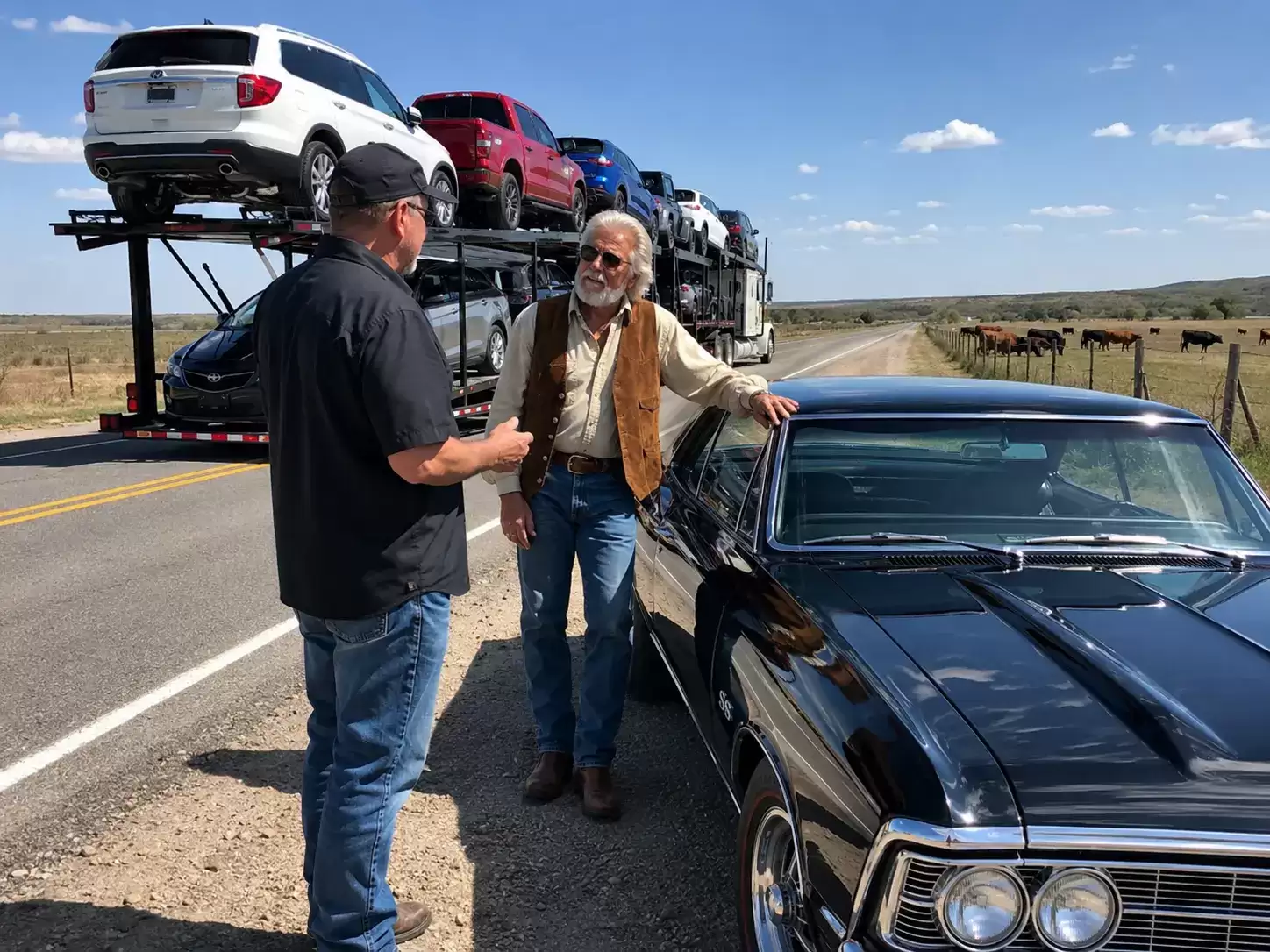
Other Texas to North Carolina Cities We Serve
Direct Express ships vehicles between hundreds of city pairs on this route. Below is a broader look at additional Texas origins and North Carolina destinations we regularly serve.
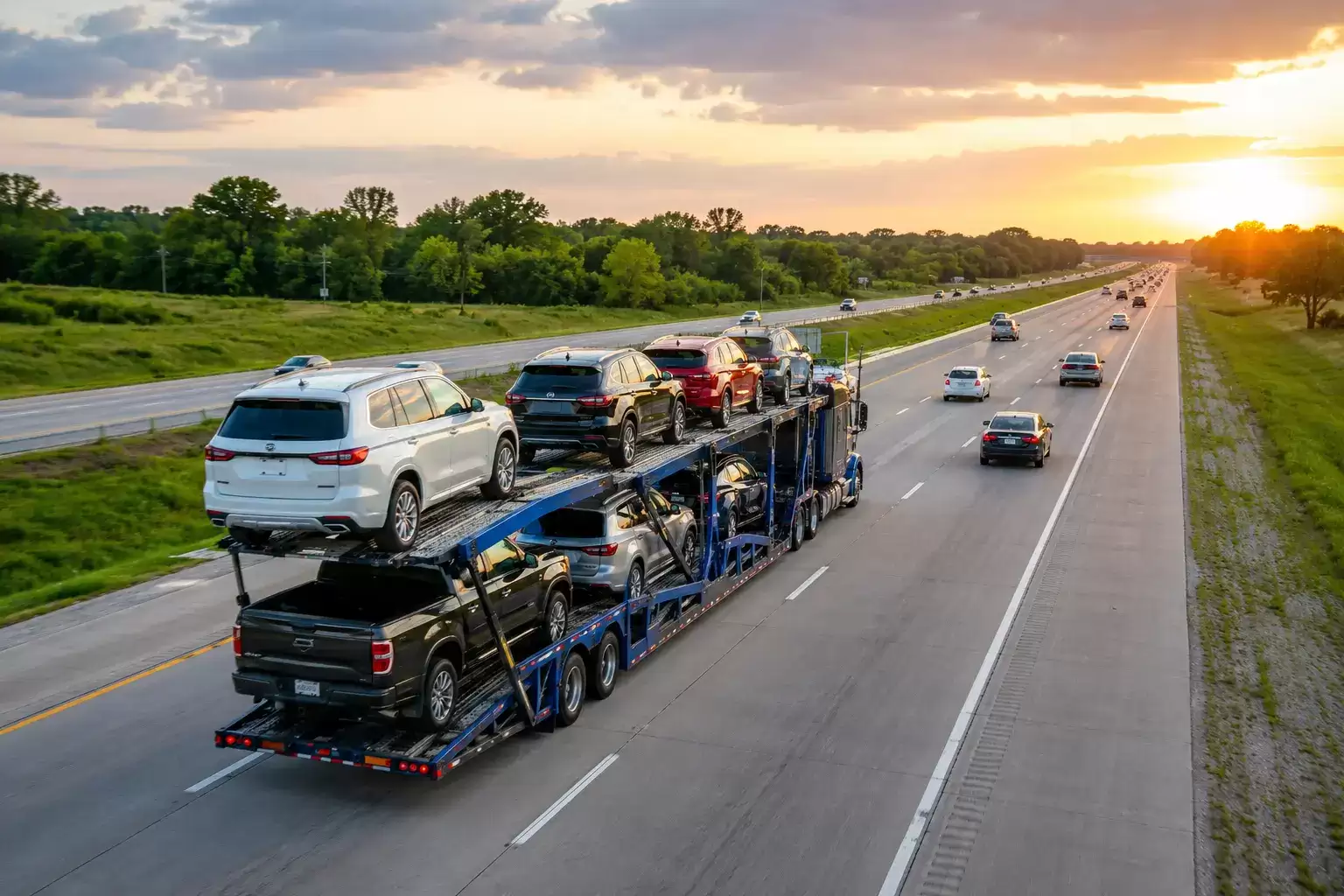
Texas and North Carolina Auto Shipping Zones Along the I-20 / I-85 Corridor
Texas to North Carolina runs 1,070–1,590 miles on the I-20E corridor through Shreveport, Birmingham, and Atlanta — one of the busiest auto transport arteries in the southeastern US. Four states, one major relay hub (Atlanta), and a route that begins in subtropical Texas and ends in a state with three distinct geographic and economic regions: the Piedmont and Charlotte metro, the Research Triangle, and the coast and mountains.
Texas Origin Zones
Mid-Corridor Relay Points
North Carolina Delivery Zones
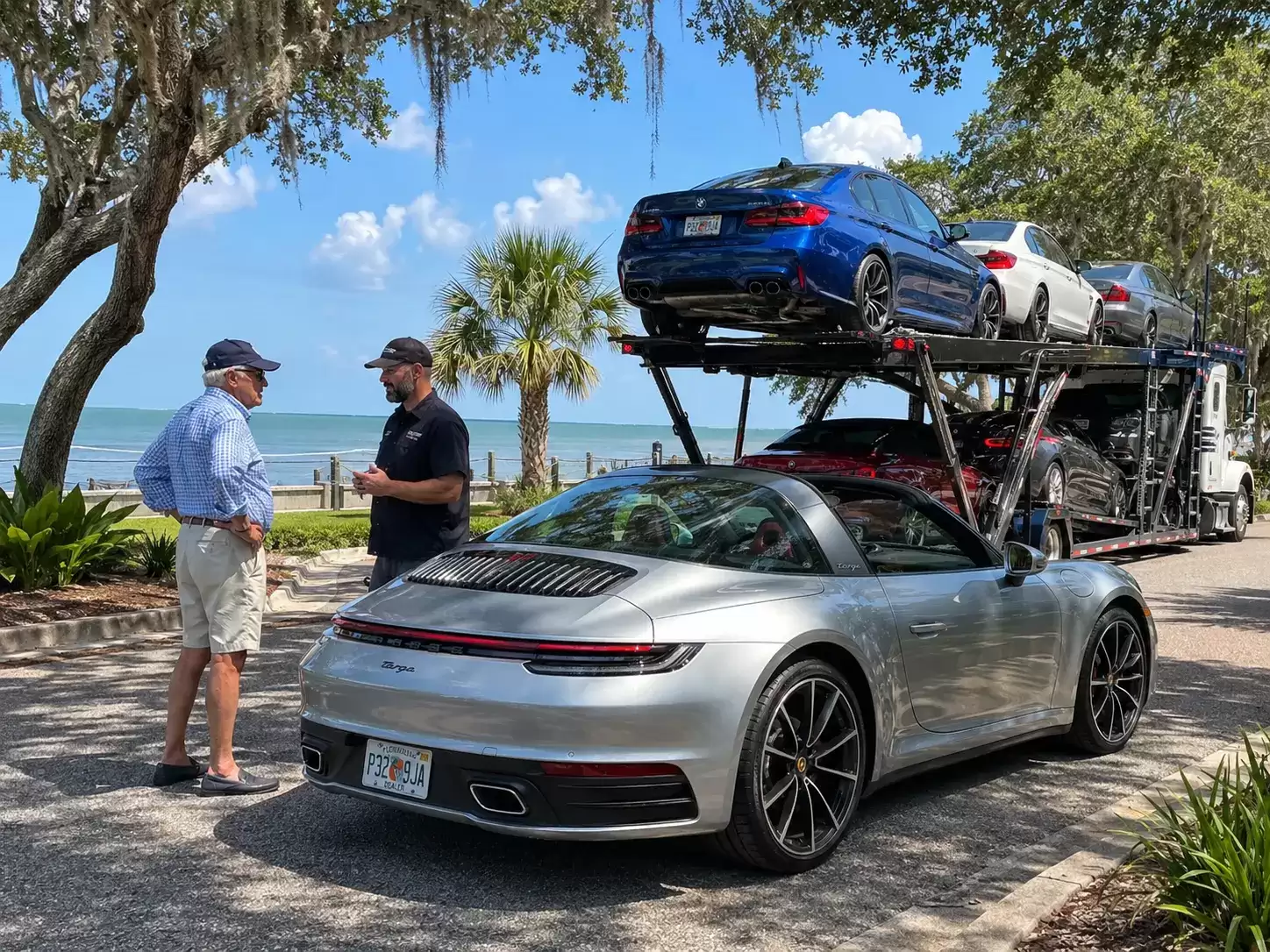
Open vs. Enclosed Car Transport on the Texas–North Carolina Route
Open Transport: The Standard for Military PCS, Relocations, and All Routine Moves
Open transport handles virtually all Texas-to-North Carolina vehicle shipments. Military PCS moves, corporate relocations, professional moves, retirement relocations, and university student moves all ship open. Open is appropriate for every daily driver, pickup truck, SUV, and standard vehicle moving from any Texas origin to any North Carolina destination — regardless of season or destination zone. The I-20E corridor through Birmingham and Atlanta is among the most heavily traveled auto transport lanes in the southern US, with strong carrier availability year-round on open equipment.
Texas Summer Pickup on Open Carriers
Texas summer (June through September) pickup on open carriers requires the standard heat protocol: no more than a quarter tank of fuel, remove all personal items and electronics, and do not leave the vehicle staged in direct sun on pickup day. This applies to all Texas origins between June and September regardless of destination. North Carolina summer delivery on open carriers involves no equivalent heat protocol — NC summer temperatures are warm but not the extreme-heat staging concern that Texas summer creates.
Open Transport Recommended for Most
- All military PCS from Fort Cavazos / JBSA to Fort Liberty or Camp Lejeune — open regardless of season
- Corporate relocations to Charlotte banking and Research Triangle tech corridors
- Retirement moves to NC mountains (Asheville) and coast (Wilmington)
- All daily drivers, pickups, SUVs, and standard vehicles at any Texas origin
- Texas summer pickup (June–September): quarter tank, no personal items, no electronics
Enclosed Transport
- Collector cars, exotics, and low-mileage vehicles shipping to NC collector storage
- High-value vehicles consigned to Charlotte-area auction or dealership
- NASCAR-related vehicle movements between Texas teams and Charlotte-area shops
- Typically 40–60% more expensive than open transport
Our honest recommendation: Open for every military PCS, corporate, retirement, and standard vehicle move. Enclosed only for collector cars, high-value exotics, and NASCAR or motorsport vehicles where carrier deck exposure matters.

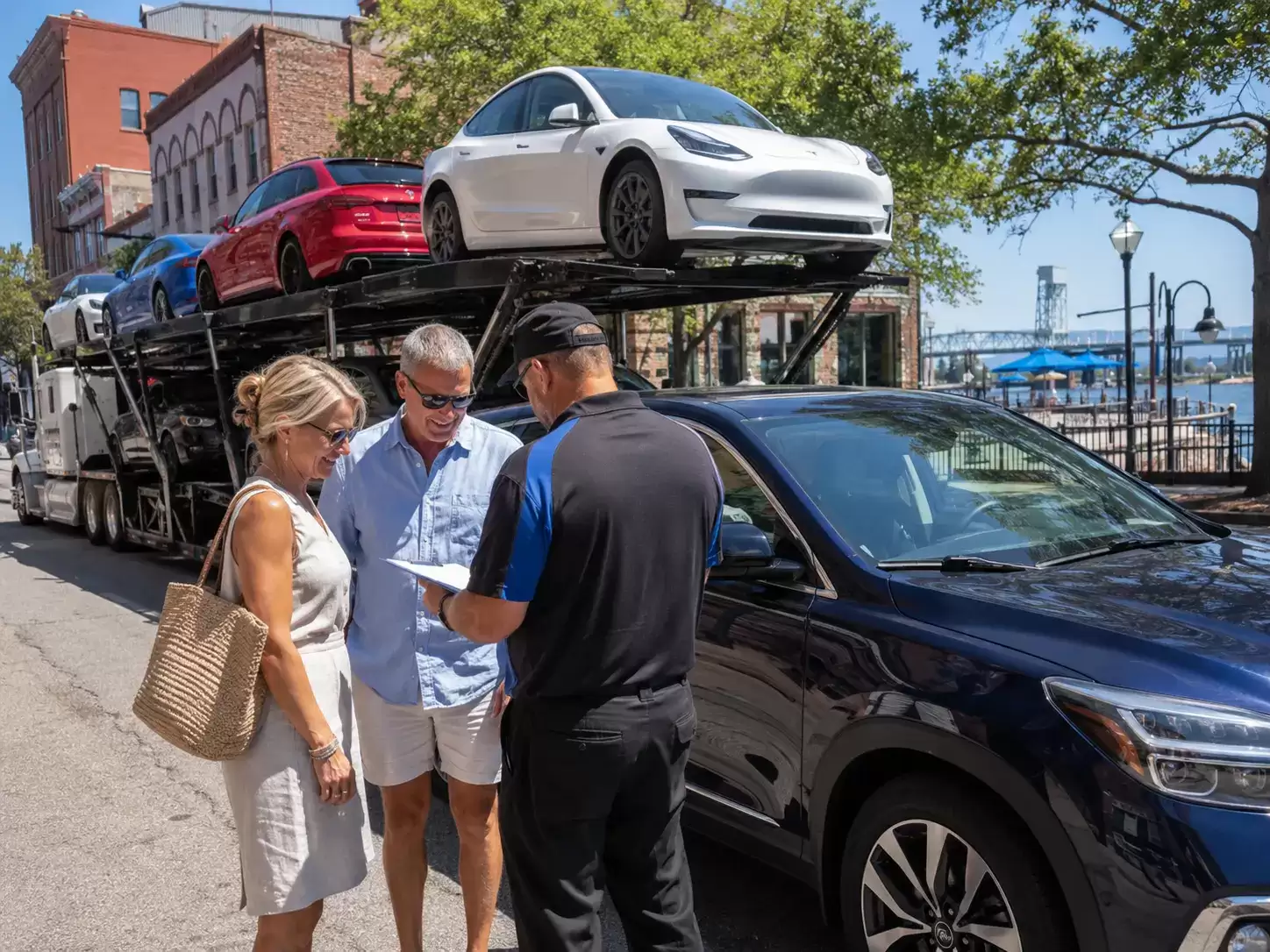
Door-to-Door Car Shipping: What to Expect in Texas and North Carolina
Pickup in Texas
DFW Metro and Central Texas
Standard door-to-door pickup throughout DFW (Dallas, Fort Worth, Arlington, Plano, Irving, Garland, Frisco, Denton) and Central Texas (Austin, Waco, Killeen, Temple, College Station, San Antonio). Killeen and the Fort Cavazos zone: military PCS vehicles may require on-post or adjacent civilian-zone staging — confirm at booking. Texas summer pickup June through September: standard heat protocol applies (quarter tank, no personal items, no electronics, covered or shaded staging preferred). Fort Worth and Irving pickups are positioned close to I-20E access, making them among the most efficiently dispatched DFW origins for the NC run.
East Texas and Houston
Standard door-to-door pickup throughout East Texas (Tyler, Longview, Beaumont, Port Arthur, Texarkana, Nacogdoches, Lufkin) and the Houston metro (Houston, Pasadena, Sugar Land, Conroe, League City). Tyler and Longview pickups are particularly well-served for this corridor — carriers loading on I-20 in East Texas are already on the main Dallas-to-Atlanta artery, making dispatch efficient. Beaumont and Port Arthur pickups use the I-10E approach toward New Orleans and the southeastern alternate corridor. Texarkana pickup: I-30 approach connects to the I-20E main corridor via Little Rock.
South Texas
Standard door-to-door pickup throughout South Texas and the Rio Grande Valley. Corpus Christi (I-37N to San Antonio), Laredo (I-35N to San Antonio), McAllen, Mission, Harlingen, and Brownsville (US-83/US-281 north to San Antonio) all require significant approach mileage to San Antonio before reaching the I-20E eastern corridor. Expedited is recommended for South Texas origins with firm NC delivery dates — the extended approach from the Valley adds scheduling complexity and the priority dispatch cushion is meaningful for time-sensitive moves.
Delivery in North Carolina
Charlotte Metro
Standard door-to-door delivery throughout the Charlotte metro — Charlotte, Concord, Gastonia, Kannapolis, Mooresville, Huntersville, Cornelius, and Matthews. The Charlotte metro is the most carrier-dense delivery zone in NC and receives Texas loads directly via I-85NE from Atlanta. Gated community addresses and high-rise condominium addresses in uptown Charlotte use nearby commercial staging — coordinate delivery arrangements for these addresses at booking. Fort Mill and Rock Hill in South Carolina are accessible via I-77S and are often served by Charlotte-area carriers.
Piedmont Triad and Research Triangle
Standard door-to-door delivery throughout the Piedmont Triad (Greensboro, Winston-Salem, High Point, Burlington) via I-40W from Charlotte, and throughout the Research Triangle (Raleigh, Durham, Chapel Hill, Cary, Apex) via I-85 and I-40E. Research Triangle addresses near Duke Medical Center (Durham), UNC-Chapel Hill, and NC State (Raleigh) may require adjacent commercial staging for large carriers in dense campus-adjacent neighborhoods. RTP office park addresses are accessible with standard carrier equipment throughout the park. Plan 1–2 additional transit days for Triangle delivery compared to Charlotte delivery from the same Texas origin.
Fayetteville, Fort Liberty, and Camp Lejeune
Standard door-to-door delivery to Fayetteville and the Fort Liberty (formerly Fort Bragg) zone via I-95S and US-401 from the I-85 corridor. On-post delivery to Fort Liberty housing areas requires base access coordination — confirm on-post delivery protocol at booking and provide the carrier coordinator with your Fort Liberty housing address and access authorization. Camp Lejeune in Jacksonville requires similar on-post coordination — provide base access information at booking. Off-post civilian addresses in Fayetteville, Spring Lake, and Jacksonville receive standard door-to-door delivery without staging requirements.
Coastal NC, Western Mountains, and Eastern Approaches
Wilmington and coastal NC delivery via I-40E from Raleigh — standard door-to-door throughout Wilmington, Wrightsville Beach, and adjacent coastal communities. New Bern (MCAS Cherry Point area) and Goldsboro (Seymour Johnson AFB) via US-70 east from Raleigh — on-post protocol required for MCAS Cherry Point and Seymour Johnson addresses. Asheville delivery via I-26W from Spartanburg — standard door-to-door in the greater Asheville metro; downtown Asheville’s dense street network requires nearby commercial staging for large haulers. Mountain zone winter delivery November through March: winter weather possible at Asheville and higher-elevation Western NC addresses — cleared staging and weather buffer recommended.
North Carolina Vehicle Registration for Texas Arrivals
North Carolina requires registration within 60 days of establishing residency. Visit a North Carolina DMV office with your out-of-state title, proof of North Carolina insurance, and proof of North Carolina address; no smog check is required for most vehicles. Cancel your Texas registration once your North Carolina plates arrive.
Preparing Your Vehicle
Before Texas pickup: remove all personal items from the passenger compartment, disable car alarms, remove Texas TxTag or TollTag transponders, and leave no more than a quarter tank of fuel. Photograph your vehicle from all angles with date-stamped images before the carrier arrives. Texas summer pickup (June–September): ensure the vehicle is not staged in direct outdoor sun on pickup day and confirm the interior is cleared of all electronics and personal items before the carrier arrives.
North Carolina delivery: inspect your vehicle carefully before signing the Bill of Lading. NC delivery in winter (November–March): the I-20E/I-85 corridor runs through Alabama and Georgia — winter weather on the carrier run itself is possible but not typical. Asheville delivery in winter: mountain conditions on I-26W approach may affect delivery timing — build a 1-day weather buffer for winter deliveries to Western NC mountain addresses.
Texas & North Carolina Auto Transport Resources
Texas Helpful Government Links
- Texas Department of Motor Vehicles (TxDMV) — Texas vehicle title and registration agency. Obtain your Texas title release before establishing North Carolina registration.
- TxDMV — Title and Registration — Texas vehicle title transfer and release procedures for vehicles establishing out-of-state registration in North Carolina.
- TxDMV — Military Provisions — Active duty provisions for military at Fort Cavazos and JBSA receiving PCS orders to Fort Liberty and Camp Lejeune.
- Texas DPS — Driver License — Texas driver’s license surrender procedures when obtaining a North Carolina driver’s license within 60 days of establishing NC residency.
- TCEQ — Texas Emissions Testing Counties — Identify whether your Texas origin county requires vehicle emissions testing before shipping.
North Carolina Helpful Government Links
- NC Division of Motor Vehicles (NCDMV) — North Carolina vehicle title, registration, and driver’s license agency. Register your Texas vehicle within 30 days of establishing NC residency. NC charges a Highway Use Tax of 3% (capped at $2,000) instead of traditional sales tax.
- NCDMV — Register a Vehicle — Out-of-state vehicle registration procedures for Texas vehicles establishing North Carolina registration, including required documents and license plate agency locations.
- NCDMV — Driver’s License — Obtain your North Carolina driver’s license within 60 days of establishing NC residency. Your Texas license is surrendered at the NCDMV office.
- NCDMV — Vehicle Inspections — NC’s annual vehicle inspection requirements, including safety and emissions testing in applicable counties (Mecklenburg, Wake, Durham, Guilford, Forsyth, and others).
- NCDMV — Military Services — Military and veteran provisions for active duty personnel arriving at Fort Liberty (Fayetteville), Camp Lejeune (Jacksonville), Seymour Johnson AFB (Goldsboro), and MCAS Cherry Point on PCS orders.
Federal Auto Transport Resources
- FMCSA — Verify a Carrier’s License (SAFER System) — Verify that any auto transport company is federally licensed and insured before booking.
- FMCSA — Protect Your Move — Federal consumer guidance on hiring vehicle shippers and your rights on a cross-country move.