Texas to Michigan Car Shipping
The original instant car shipping calculator — trusted since 2004. Door-to-door Texas to Michigan transport with no surprises, no hidden fees, and three options to ship your vehicle on your schedule.
★ 4.6/5 Google Reviews | BBB Accredited A+ | FMCSA Licensed (MC #479342) | USDOT #1240502 | No upfront payment required | 20+ years shipping vehicles


Texas to Michigan Car Shipping Rates by City
Every Texas to Michigan vehicle shipment is available at three service levels:
Standard, Expedited, & Rush Options
Choose the one that fits your timeline and budget. All three include full door-to-door service and carrier insurance.

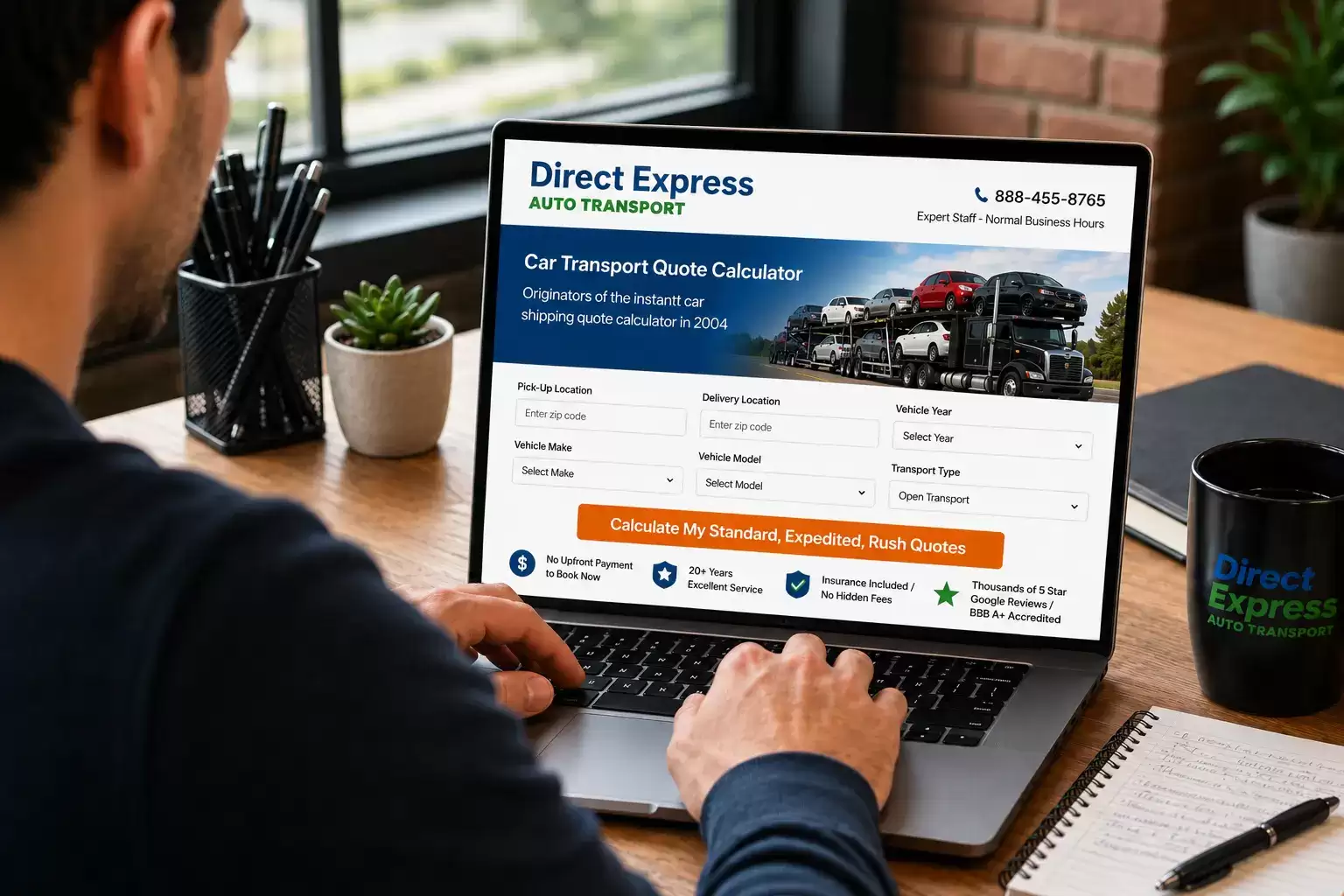
The Company That Invented Instant Auto Transport Pricing
Direct Express Auto Transport pioneered online instant pricing for the auto transport industry in 2004. Before we built the first car shipping cost calculator, getting a quote from a broker meant phone calls, callbacks, and waiting — sometimes days. We changed that. Today you know your exact cost in 30 seconds, before committing to anything.
Three Service Tiers for Every Texas to Michigan Shipment
Every shipment on this Texas to Michigan route is available at three service tiers so you can match your budget to your timeline. Standard delivers at the best available rate — ideal when your schedule has a few days of flexibility. Expedited moves your vehicle to the front of the dispatch queue for faster pickup. Rush gets your car picked up as fast as humanly possible — for moves where every day counts.
All three tiers include full door-to-door service and carrier insurance. No phone tag, no hassle. Just a real number, instantly.
What customers say about shipping a car from Texas to Michigan with Direct Express Auto Transport


Seasonal Pricing Guide: Texas to Michigan
Two forces shape this corridor: Michigan’s automotive industry calendar and the Winter Texan snowbird return surge in March–April. January–February is best value before the spring northbound wave.

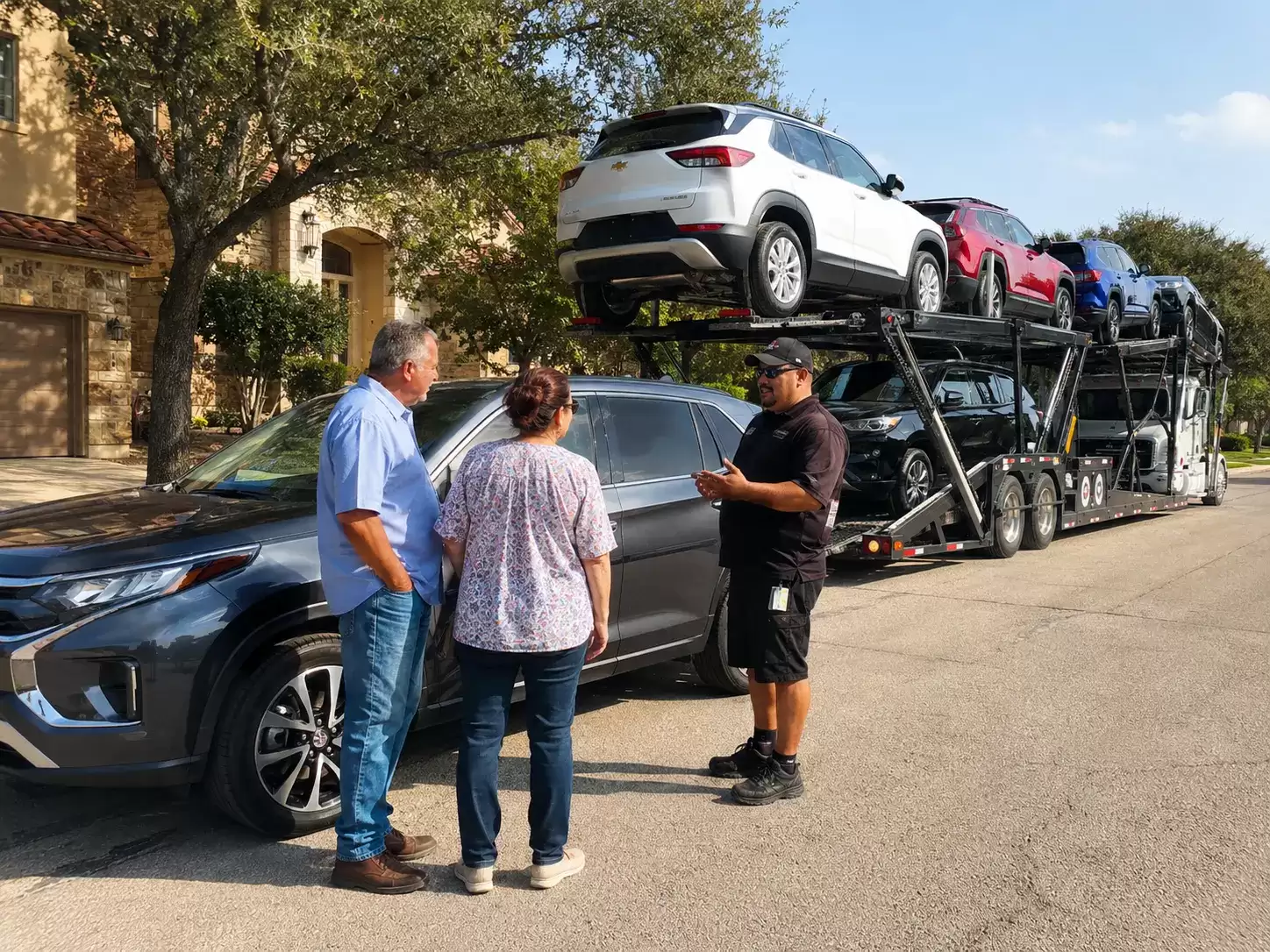
Who Ships a Car from Texas to Michigan — and Why
GM Arlington and Texas Plant Workers Transferring to Michigan Headquarters
General Motors’ Arlington Assembly Plant produces the Tahoe, Suburban, Cadillac Escalade, and GMC Yukon. Production engineers, quality managers, and program executives regularly transfer between Arlington and GM’s Michigan technical and design headquarters in Warren, Detroit, and Milford.
Tier 1 and Tier 2 Suppliers: Texas Operations Engineers Transferring to Michigan Headquarters
Tier 1 and Tier 2 automotive suppliers with Texas facilities — regularly transfers engineers, program managers, and executives between Texas regional operations and Michigan headquarters. These are time-sensitive corporate-sponsored moves where Expedited is standard, and the Fort Worth → Warren and Arlington → Dearborn pairings in this table reflect the exact geographic corridor of this automotive industry flow.
Winter Texans: Michigan Snowbirds Shipping Rio Grande Valley Vehicles North in Spring
South Texas — particularly the Rio Grande Valley (McAllen, Mission, Harlingen, Brownsville) — hosts the largest concentration of Michigan winter residents outside of Florida. Known locally as “Winter Texans,” Michigan retirees and working snowbirds arrive in October and November and return north in March and April. Many maintain vehicles at their South Texas winter homes — a car left at the RV park or winter rental rather than driven 1,500 miles each way.
Rio Grande Valley Return Shipments: Harlingen, McAllen, Brownsville, and Mission Spring Moves
Michigan snowbirds returning north from the Rio Grande Valley ship vehicles particularly when they are older retirees, flew down in the fall, or want to be in Michigan before road conditions stabilize. The Harlingen → Portage, McAllen → Taylor, and Brownsville → Wyandotte pairings in this table reflect the primary spring northbound snowbird corridors.
Texas University Graduates Moving to Michigan Automotive and Engineering Careers
Michigan’s automotive and manufacturing industries recruit aggressively from Texas engineering programs. UT Austin, Texas A&M, Rice, and University of Houston produce electrical, mechanical, and computer engineers who receive offers from Ford, GM, Stellantis, and the broader Michigan automotive supplier ecosystem annually. Michigan State (East Lansing), University of Michigan (Ann Arbor), and Michigan Tech (Houghton) all compete with Texas universities in these talent pipelines — and many students who studied in Texas accept Michigan industry positions.
TARDEC and Defense Contract Engineering: Texas A&M and UT Graduates at Detroit Arsenal
TARDEC — the organization responsible for Army vehicles, ground mobility systems, and armored systems — is headquartered at Detroit Arsenal in Warren, Michigan. Graduate engineers from Texas A&M’s College of Engineering, a major feeder to Department of Defense programs, regularly receive TARDEC and defense contractor offers in the Detroit area.
Military PCS: Fort Cavazos and Texas Installations to Selfridge ANGB and Michigan
Fort Cavazos in Killeen, Joint Base San Antonio, and other major Texas bases. The Tyler → Sterling Heights and Killeen → Saginaw pairings in this table both reflect the Northeast Michigan military corridor.
Fort Custer Training Center and Camp Grayling: Texas National Guard Extended Orders to Michigan
Fort Custer Training Center near Battle Creek and Camp Grayling in northern Michigan receive Texas National Guard personnel on extended orders periodically. The Longview → Battle Creek and Tyler → Grayling pairings in this table reflect these National Guard activation routes.
Auction Purchases: Barrett-Jackson Dallas and Texas Car Auctions Shipping to Michigan Collectors
Michigan collectors — living in the heart of American automotive heritage — routinely purchase vehicles at Texas auction events. A 1969 Camaro from Barrett-Jackson Dallas, a muscle car from a Houston estate sale, or a vintage pickup from a Texas ranch estate arrives in Michigan garage after enclosed or open transport from Texas.
Barrett-Jackson Dallas to Detroit Garages: Muscle Cars and Vintage Trucks Shipped to Collectors
The Detroit area has one of the highest concentrations of automotive enthusiasts, car museums, and restoration shops in the country. Vehicles shipping from Texas auction lots to Michigan garage doors — enclosed transport recommended for concours-level classics — typically transit in 5–8 days on this corridor.
What Makes the Texas–Michigan Auto Shipping Run Different
The Main Corridor: I-35 North to OKC, Then I-44 and I-55 Through St. Louis to Chicago, Then I-94 East to Detroit
Texas-to-Michigan routing follows the same I-35 backbone as Texas-to-Illinois, but with 250–300 additional miles tacked on beyond Chicago. From DFW origins, carriers take I-35 north approximately 207 miles to Oklahoma City — the corridor’s first major relay. From OKC, I-44 northeast runs through Tulsa to Joplin, Missouri, then continues to St. Louis — the corridor’s central relay hub at the junction of I-55, I-44, and I-64. From St. Louis, I-55 north runs 294 miles to Chicago.
I-94 East: The Chicago-to-Detroit Leg and Why Michigan Prices $100–$200 More Than Illinois
The extra 250+ miles from Chicago to Detroit — compared to Chicago as a terminal point on the TX→IL corridor — is why Texas-to-Michigan prices are $100–$200 higher across comparable origin pairings than Texas-to-Illinois prices at similar distances. The I-94 east leg from Chicago to Detroit transitions from the carrier-dense I-55 corridor to a narrower I-94 Michigan-bound flow.
Fort Worth → Warren and Arlington → Dearborn: The Table’s Cheapest Pairs at $950 Standard
Fort Worth to Warren and Arlington to Dearborn, both at 1,085 miles and $950 Standard, are the table’s cheapest pairs for the same geometric reason. Fort Worth and Arlington sit on I-35 west — the DFW approach to the northbound mainline — and Warren and Dearborn are immediate Detroit metro suburbs on the I-94 arrival side. Warren (home of the Detroit Arsenal and GM Technical Center) is just north of Detroit on I-696; Dearborn (Ford World Headquarters) is just west of Detroit on I-94.
Why Fort Worth–Warren Is the Most Efficient Pairing: Straight I-35 to I-94 with Minimal Approach at Both Ends
Both DFW-to-Detroit pairings avoid the extended approach mileage of Houston origins (which add ~150 miles via I-45 north to Dallas before the I-35 mainline) and avoid the deep-approach delivery distances of western Michigan, Kalamazoo, or Saginaw. A carrier loading in Fort Worth and delivering to Warren has the most efficient possible pairing on this corridor — straight I-35 north to the I-94/Detroit junction with minimal approach time at either end.
Laredo → Kalamazoo: The Most Expensive Pair
Laredo to Kalamazoo at 1,555 miles and $1,275 Standard is the table’s most expensive pair — a product of maximum approach distance at both ends. From Laredo, carriers must travel 150 miles north on I-35 just to reach San Antonio before joining the northbound mainline. That’s 150 miles of approach mileage before the carrier is even moving efficiently toward Michigan. Kalamazoo, meanwhile, is in southwestern Michigan on I-94 west — further from the Chicago I-94 entry point than the Detroit metro and requiring additional run time past the primary Michigan delivery zone.
Booking Expedited for Laredo to Western Michigan: Distance, Approach, and Timeline
The Laredo → Kalamazoo pairing is the corridor’s longest effective run, and the $1,275 Standard price reflects the cumulative approach costs at both termini. For Laredo or Rio Grande Valley shipments to western Michigan, book Expedited for any firm delivery date — this run benefits from priority dispatch at this distance.
DFW vs. Houston Origins: Why DFW Ships for Less
Dallas and Fort Worth origins price lower than Houston for the same Michigan destinations because of approach mileage to the I-35 northbound mainline. DFW is on I-35 — carriers loading in Fort Worth, Arlington, Irving, or Garland are on the mainline almost immediately. Houston, by contrast, requires carriers to travel approximately 240 miles north on I-45 from Houston to Dallas before joining I-35 northbound toward Oklahoma City. That 240-mile approach adds cost, time, and carrier staging complexity to every Houston-origin shipment.
Houston’s I-45 North Approach: Why the $75 DFW Advantage Applies to Michigan Too
The price difference: Houston to Detroit is $1,025 Standard, while Fort Worth to Warren and Arlington to Dearborn are $950 Standard — a $75 difference at roughly similar terminal distances. Tyler, Beaumont, and Port Arthur origins approach via East Texas routes, adding 50–100 miles compared to DFW but less than Houston’s full 240-mile I-45 run.
East Texas and the Memphis Alternate to Michigan
East Texas origins — Tyler, Beaumont, Longview, Lufkin, Nacogdoches, Texarkana, Port Arthur — have a natural alternate routing through Memphis rather than through Dallas and OKC. I-20 west from Beaumont and Tyler reaches Dallas in 265 miles, where it joins the I-35/I-44/I-55 main corridor. But carriers can also take I-20 east from Tyler to Shreveport, then I-49 north through Texarkana and I-40 east to Memphis, where I-55 north to Chicago and I-94 east to Detroit complete the run. For Texarkana origins specifically, this alternate can trim overall mileage versus routing through Dallas.
Texarkana Origins: Most Route Flexibility in East Texas via OKC or Memphis Corridor
The Texarkana → Muskegon pairing in the Other Cities table at 1,060 miles is notably shorter than its East Texas peers precisely because Texarkana is at the Texas-Arkansas border — already deep into the corridor’s mid-section. Carriers from Texarkana have the most route flexibility of any East Texas origin, with both the OKC-via-Dallas corridor and the Memphis corridor available depending on where the load boards for that carrier’s optimal back-haul.
Western Michigan Delivery: Grand Rapids, Kalamazoo, and the I-94 West Corridor
Western Michigan destinations — Grand Rapids, Kalamazoo, Holland, Battle Creek, Muskegon — sit west and northwest of Detroit on the I-96 and I-196 corridors. Carriers arriving from Chicago on I-94 east reach the I-196 interchange near Benton Harbor, where Michigan’s west coast routing branches north toward Holland and Grand Rapids. This branch adds time compared to straight Detroit metro delivery — Grand Rapids is approximately 150 miles west of Detroit, adding a meaningful delivery extension for carriers whose primary Michigan route centers on I-94.
Grand Rapids and I-196: Transit Buffer and Expedited Recommendation for Western Michigan
The Dallas → Grand Rapids pairing at 1,190 miles and $1,025 Standard reflects the western Michigan premium over DFW-to-Detroit-metro pairings at $950 Standard. For western Michigan delivery — Kalamazoo, Grand Rapids, Muskegon, Holland — allow 1–2 additional transit days beyond Detroit metro estimates and book Expedited for any firm delivery date.

Other Texas to Michigan Cities We Serve
Direct Express ships vehicles between hundreds of city pairs on this route. Below is a broader look at additional Texas origins and Michigan destinations we regularly serve.
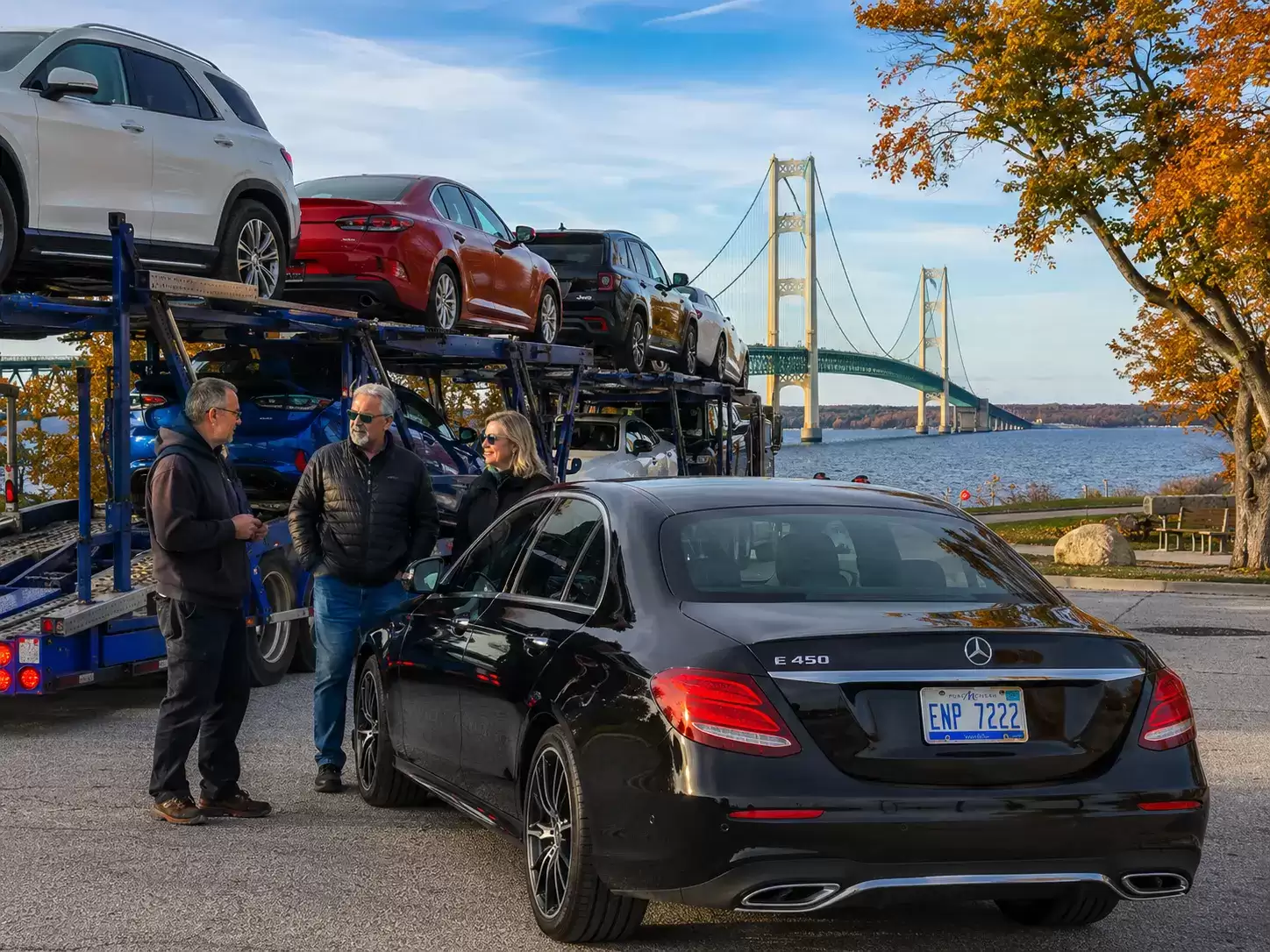
Texas and Michigan Auto Shipping Zones Along the I-35 / I-94 Corridor
Texas to Michigan is one of the most geographically varied corridors in the country — from the sub-tropical Rio Grande Valley to the Great Lakes shoreline. The routing runs 1,085–1,555 miles depending on origin and destination, through five states (Texas, Oklahoma, Missouri, Illinois, Indiana/Michigan) and across three major relay hubs (Oklahoma City, St. Louis, Chicago).
Texas Origin Zones
Mid-Corridor Relay Points
Michigan Delivery Zones
Open vs. Enclosed Car Transport on the Texas–Michigan Route
Open Transport: Standard for Almost All Texas–Michigan Moves
Open transport handles the overwhelming majority of Texas-to-Michigan shipments. Military PCS moves, automotive industry employee relocations, snowbird return shipments, corporate transfers, and university moves all ship open. Open carrier is the right choice for any daily driver, pickup truck, SUV, sedan, or standard vehicle moving from any Texas origin to any Michigan destination. Over 90% of vehicles on this corridor ship open.
When to Consider Enclosed
Enclosed transport is appropriate for collector cars, exotics, pristine low-mileage vehicles, and auction-purchased vehicles shipping from Texas to Michigan. The Detroit area has one of the deepest car collector communities in the country — vintage American muscle, original condition classics, and investment-grade vehicles regularly ship from Texas (Barrett-Jackson Dallas, Mecum Houston, ranch estate sales) to Michigan collectors on enclosed carriers. These shipments require white-glove service and careful condition documentation.
Michigan’s road salt is the other enclosed consideration — but this time on the delivery end. Michigan roads are salted aggressively from late November through April. A vehicle arriving at a Detroit metro address in January, February, or March will be delivered to a road-salt-treated environment. If the vehicle is then driven on those roads, open transport is still the right choice (road salt is present regardless of transport method once the vehicle is in Michigan). If the vehicle is being delivered directly to climate-controlled garage storage and will not be driven in winter, enclosed eliminates the possibility of salt spray during the final leg of delivery.
Open Transport Recommended for Most
- All military PCS moves from Texas installations to Michigan
- Automotive industry employee transfers (GM Arlington to Warren, Texas operations to Michigan HQ)
- Snowbird returns from Rio Grande Valley to Michigan — all open regardless of season
- Corporate relocations, university moves, and daily driver shipments of any kind
- Texas summer departures (June–August): quarter tank of fuel, no personal items, no electronics
Enclosed Transport
- Auction-purchased collector cars from Texas events (Barrett-Jackson Dallas, Mecum Houston) to Michigan collections
- Exotics, pristine classics, and condition-sensitive vehicles shipping to Michigan garages and restoration shops
- Vehicles being delivered to climate-controlled Michigan storage for winter (November–April)
- High-value vehicles from Texas ranch estates shipping to Michigan buyers or dealers
- Typically 40–60% more expensive than open transport
Our honest recommendation: Open for every military, corporate, snowbird return, and standard driver move. Enclosed for auction purchases, condition-critical collector cars, and exotics where the vehicle’s preservation is more important than the cost premium.
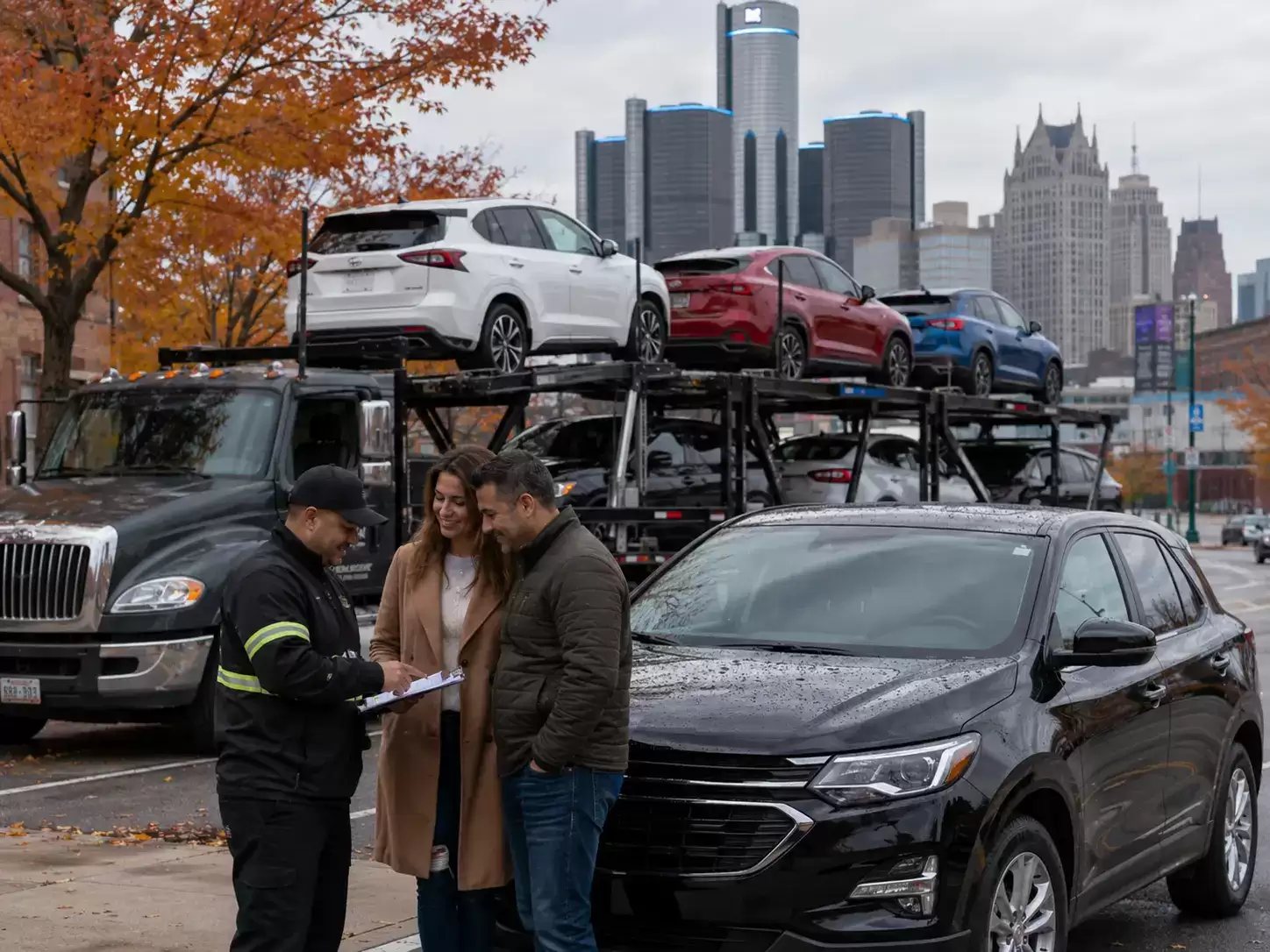
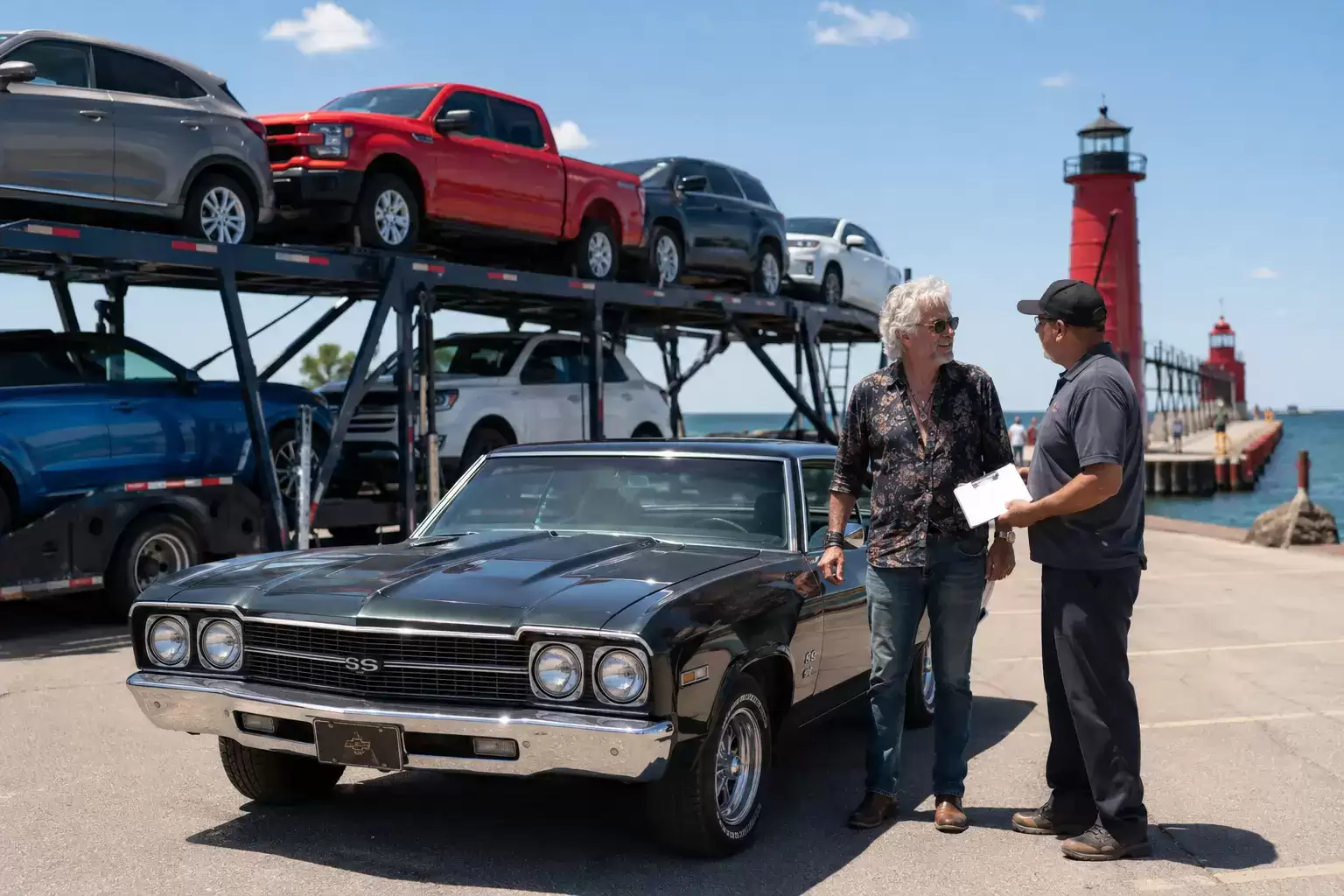
Door-to-Door Car Shipping: What to Expect in Texas and Michigan
Pickup in Texas
Greater Houston Metro and Southeast Texas
Standard door-to-door pickup applies throughout the Houston metro and Southeast Texas. I-10, I-45, I-69, and Beltway 8 provide carrier access throughout Houston, Conroe, Pasadena, Sugar Land, League City, Beaumont, and Port Arthur. Texas summer pickup (June–September): vehicle interiors in direct sun exceed 150°F within minutes. Remove all personal items and electronics, leave no more than a quarter tank of fuel, and disable any car alarms before the carrier arrives. There are no winter weather considerations for Texas pickup at any time of year.
East Texas and Dallas–Fort Worth
DFW metro and East Texas pickup is standard door-to-door throughout. I-35, I-30, I-20, and I-635 provide carrier access across the DFW metroplex and into the eastern suburbs and East Texas markets. Tyler, Longview, Lufkin, Nacogdoches, and Texarkana are all accessible to standard multi-car carriers via their respective highway approaches. DFW is the most carrier-dense origin zone on this table — pickup assignment is typically fastest here, and Standard service works well for flexible timelines.
Central Texas
Austin, Waco, Killeen, Temple, and College Station are all accessible via I-35 and Texas state highways. Austin metro door-to-door pickup is standard throughout — central Austin addresses may require commercial staging given dense urban access challenges, but the metro’s suburban and Ring Road zones are accessible. College Station pickup is via Texas State Highway 6 with straightforward carrier access. Fort Cavazos and Temple military zone: confirm any on-post pickup arrangements at booking for vehicles associated with PCS orders.
South Texas and Border Cities
San Antonio, Corpus Christi, Laredo, McAllen, Mission, Harlingen, and Brownsville all receive standard door-to-door service. San Antonio is the southernmost carrier-dense Texas city on the I-35 corridor — south of San Antonio, carrier availability thins as you approach the border. Rio Grande Valley pickups (McAllen, Harlingen, Mission, Brownsville) are fully served but represent the deepest approach from the mainline corridor. Allow a 1–2 day additional lead time for Valley pickups compared to DFW or Houston. Expedited is strongly recommended for any firm Michigan delivery date from Valley origins.
Delivery in Michigan
Detroit City Proper and Wayne County
Detroit city proper uses commercial staging for large multi-car haulers in dense urban areas, consistent with carrier access in any major city. Your carrier coordinator establishes a staging point at the nearest accessible location — typically near I-75, I-94, or I-96 approach routes. Wayne County suburban addresses (Dearborn, Livonia, Westland, Taylor, Wyandotte, Inkster) receive standard door-to-door pickup and delivery with no staging requirements. Michigan road salt (November–April) is present throughout Wayne County in winter — arrange delivery to a covered location for condition-sensitive vehicles arriving in these months.
Detroit Metro and Southeast Michigan
Standard door-to-door delivery applies throughout the Detroit metro. Warren (GM Technical Center and Detroit Arsenal), Southfield, Sterling Heights, Troy, Pontiac, Rochester Hills, Roseville, St. Clair Shores, and Ferndale all receive standard delivery via I-75, I-696, and I-94 corridor access. Selfridge Air National Guard Base in Harrison Township (Macomb County): confirm on-base delivery arrangements at booking for military recipients. Road salt is in active use throughout Southeast Michigan from late November through April — the most intensive salt application period is January through March.
Western Michigan: Grand Rapids, Kalamazoo, and the I-94 Corridor
Western Michigan delivery serves Grand Rapids, Kalamazoo, Holland, Muskegon, Battle Creek, and Portage via I-94 west and I-196 north from the Detroit corridor. These destinations sit 100–175 miles west of Detroit, adding transit time versus Detroit metro delivery. Grand Rapids is standard door-to-door throughout Kent County; commercial staging applies for dense downtown addresses. Kalamazoo and Battle Creek are standard door-to-door via I-94. Add 1–2 transit days for western Michigan compared to Detroit metro estimates, and book Expedited for any firm western Michigan delivery date.
Central Michigan: Lansing, Flint, Saginaw, and Mid-Michigan
Lansing and East Lansing delivery is standard via I-96 northwest from Detroit. The Lansing metro (Michigan state government capital, Michigan State University) receives strong carrier volume. Flint, Saginaw, and Bay City are standard door-to-door via I-75 north from Detroit — approximately 60–80 miles north of the Detroit metro on I-75. Jackson is standard via I-94 west. These mid-Michigan destinations share the same I-75/I-96 carrier flow as Detroit and are typically served on the same delivery legs.
Michigan Vehicle Registration for Texas Arrivals
Michigan requires registration within 30 days of establishing residency. Visit a Michigan Secretary of State office with your out-of-state title, proof of Michigan insurance, and proof of Michigan address; no smog check is required. Cancel your Texas registration once your Michigan plates arrive.
Preparing Your Vehicle
Before Texas pickup: remove all personal items from the passenger compartment, disable car alarms, remove SunPass, TxTag, or other Texas Toll Road transponders, and leave no more than a quarter tank of fuel. Photograph your vehicle from all angles with date-stamped images before the carrier arrives. Texas summer pickups (June–September): do not leave any electronics, medications, or heat-sensitive items in the vehicle — interior temperatures exceed safe storage conditions within minutes of parking in direct Texas sun.
Michigan delivery: inspect your vehicle carefully before signing the Bill of Lading. Wash on arrival — open transport vehicles accumulate highway road film over the 1,085–1,555 mile run. Winter delivery (November–April): Michigan roads are aggressively salted — if you are delivering the vehicle to an outdoor location, rinse the undercarriage promptly. For auction-purchased or collector vehicles arriving in Michigan, arrange covered delivery or indoor staging before the carrier arrives.
Texas & Michigan Auto Transport Resources
Texas Helpful Government Links
- Texas Department of Motor Vehicles (TxDMV) — Texas vehicle title and registration agency. Release your Texas title for transfer when establishing Michigan residency.
- TxDMV — Title Transfer and Registration — Procedures for releasing a Texas vehicle title to transfer to Michigan.
- TxDMV — Military Provisions — Active duty non-resident exemptions for military on PCS orders from Texas installations to Michigan.
- Texas DPS — Driver License — Texas driver’s license surrender procedures when establishing Michigan residency and obtaining a Michigan license.
- TCEQ — Texas Vehicle Emissions Testing Counties — Confirm your Texas county’s current emissions testing status before release.
Michigan Helpful Government Links
- Michigan Secretary of State (michigan.gov/sos) — Michigan’s vehicle title, registration, and driver’s license agency. Michigan does not have a separate DMV; all vehicle services are through the SOS. New residents must register within 30 days. In-person SOS branch visit required for title transfer.
- Michigan SOS — Vehicles and Titles — Title transfer and registration procedures for out-of-state vehicles arriving from Texas. Bring your Texas title and proof of Michigan insurance to your in-person SOS appointment.
- Michigan SOS — Driver’s License — Obtain your Michigan driver’s license within 30 days of establishing Michigan residency. Your Texas license is surrendered at the time of application.
- Michigan SOS — Branch Office Locator — Locate the nearest Secretary of State branch office for your in-person title transfer appointment. Online appointments are available and strongly recommended.
- Michigan SOS — Military and Veteran Provisions — Registration and licensing provisions for active duty military relocating to Michigan on PCS orders from Texas.
Federal Auto Transport Resources
- FMCSA — Verify a Carrier’s License (SAFER System) — Verify that any auto transport company is federally licensed and insured before booking.
- FMCSA — Protect Your Move — Federal consumer guidance on hiring vehicle shippers and your rights on a cross-country move.