Texas to California Car Shipping
The original instant car shipping calculator — trusted since 2004. Door-to-door Texas to California transport with no surprises, no hidden fees, and three options to ship your vehicle on your schedule.
★ 4.6/5 Google Reviews | BBB Accredited A+ | FMCSA Licensed (MC #479342) | USDOT #1240502 | No upfront payment required | 20+ years shipping vehicles


Texas to California Car Shipping Rates by City
Every Texas to California vehicle shipment is available at three service levels:
Standard, Expedited, & Rush Options
Choose the one that fits your timeline and budget. All three include full door-to-door service and carrier insurance.
The Company That Invented Instant Auto Transport Pricing
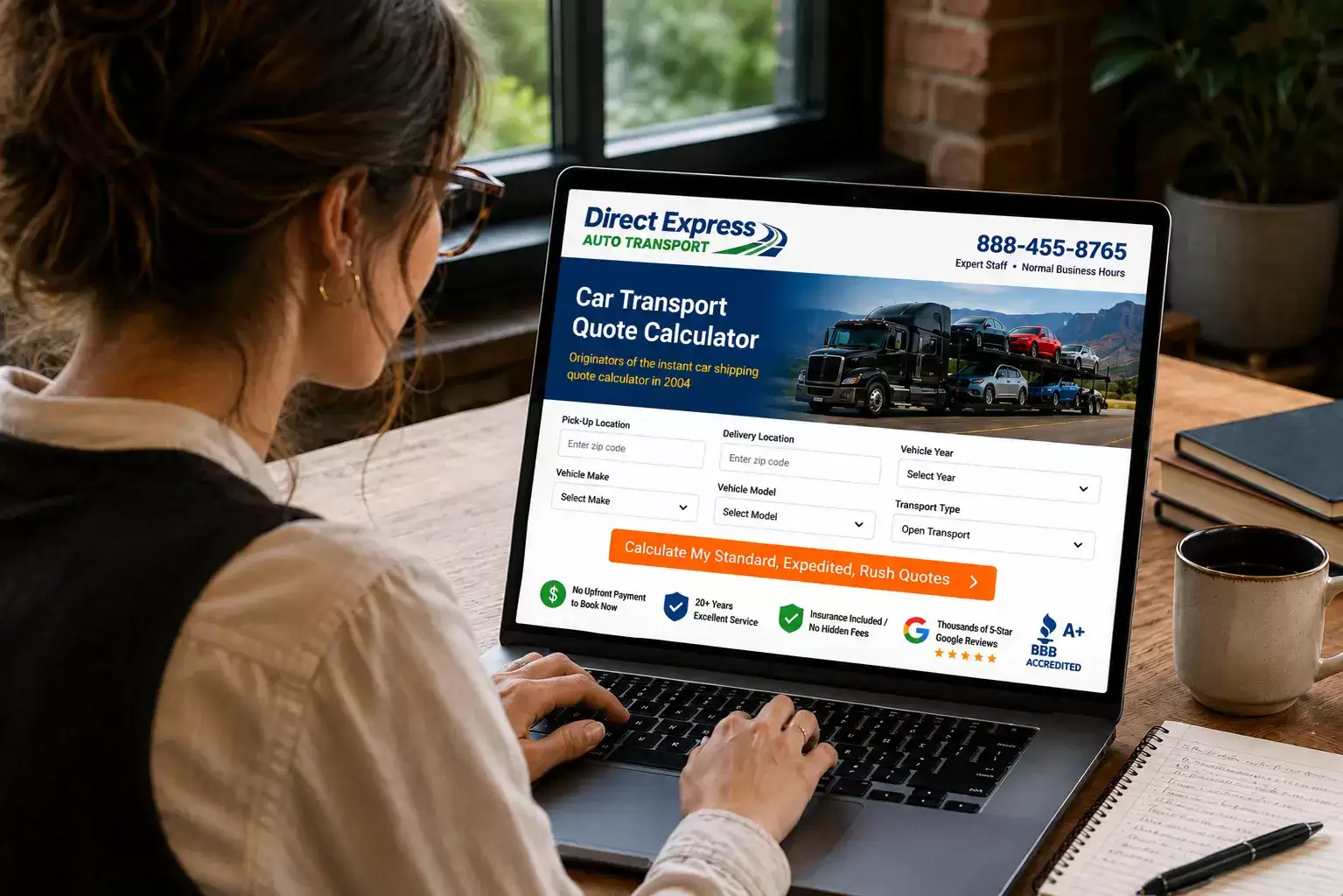
Direct Express Auto Transport pioneered online instant pricing for the auto transport industry in 2004. Before we built the first car shipping cost calculator, getting a quote from a broker meant phone calls, callbacks, and waiting — sometimes days. We changed that. Today you know your exact cost in 30 seconds, before committing to anything. No phone tag, no hassle. Just a real number, instantly.
Three Service Tiers for Every Texas to California Shipment
Every shipment on this Texas to California route is available at three service tiers so you can match your budget to your timeline. Standard delivers at the best available rate — ideal when your schedule has a few days of flexibility. Expedited moves your vehicle to the front of the dispatch queue for faster pickup. Rush gets your car picked up as fast as humanly possible — for moves where every day counts. All three tiers include full door-to-door service and carrier insurance.
What customers say about shipping a car from Texas to California with Direct Express Auto Transport


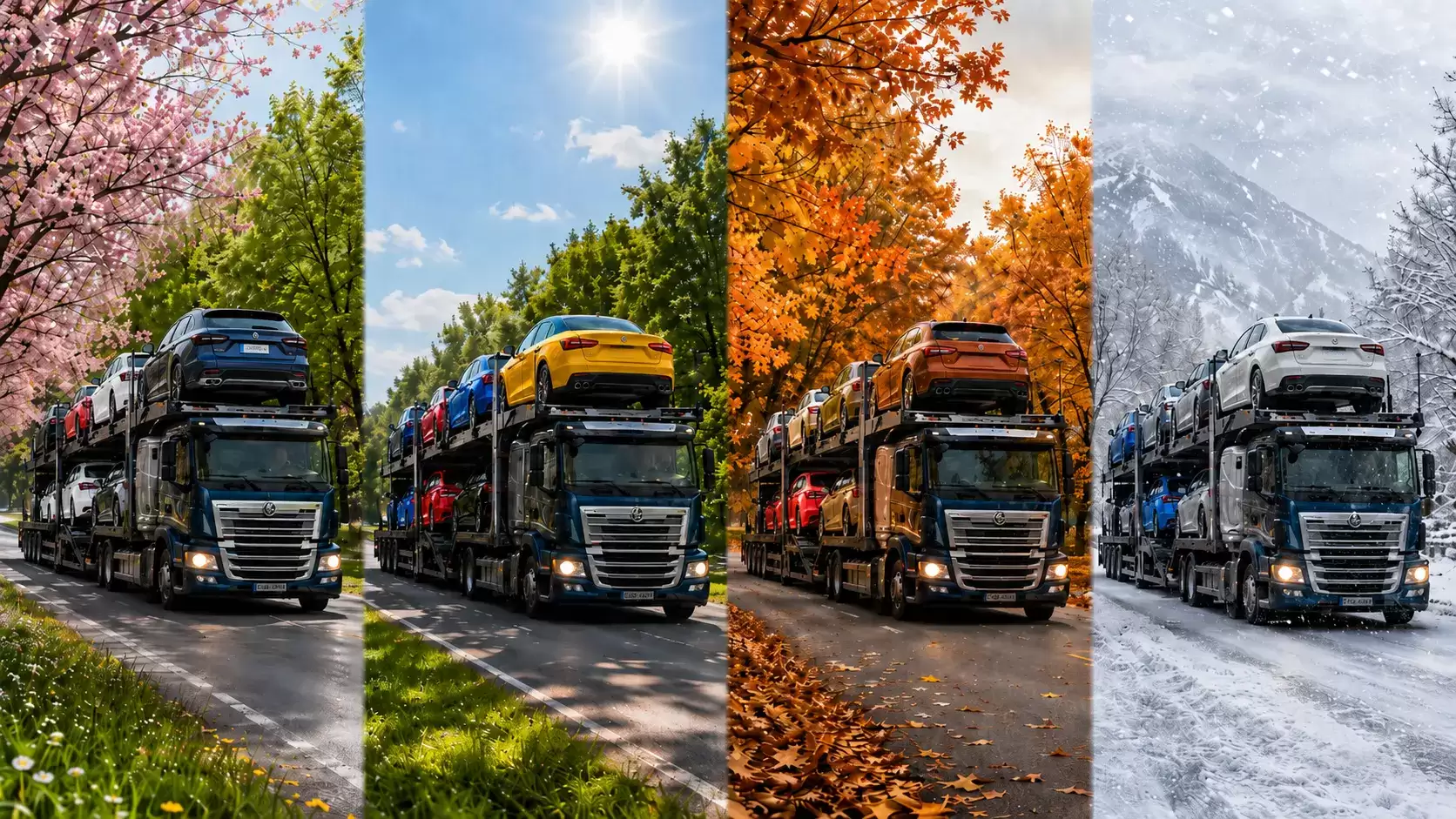
Seasonal Pricing Guide: Texas to California
The Texas-to-California corridor runs counter to the dominant migration flow — more people and carriers head east from California to Texas than the reverse, which shapes how demand and availability behave on the westbound run throughout the year.
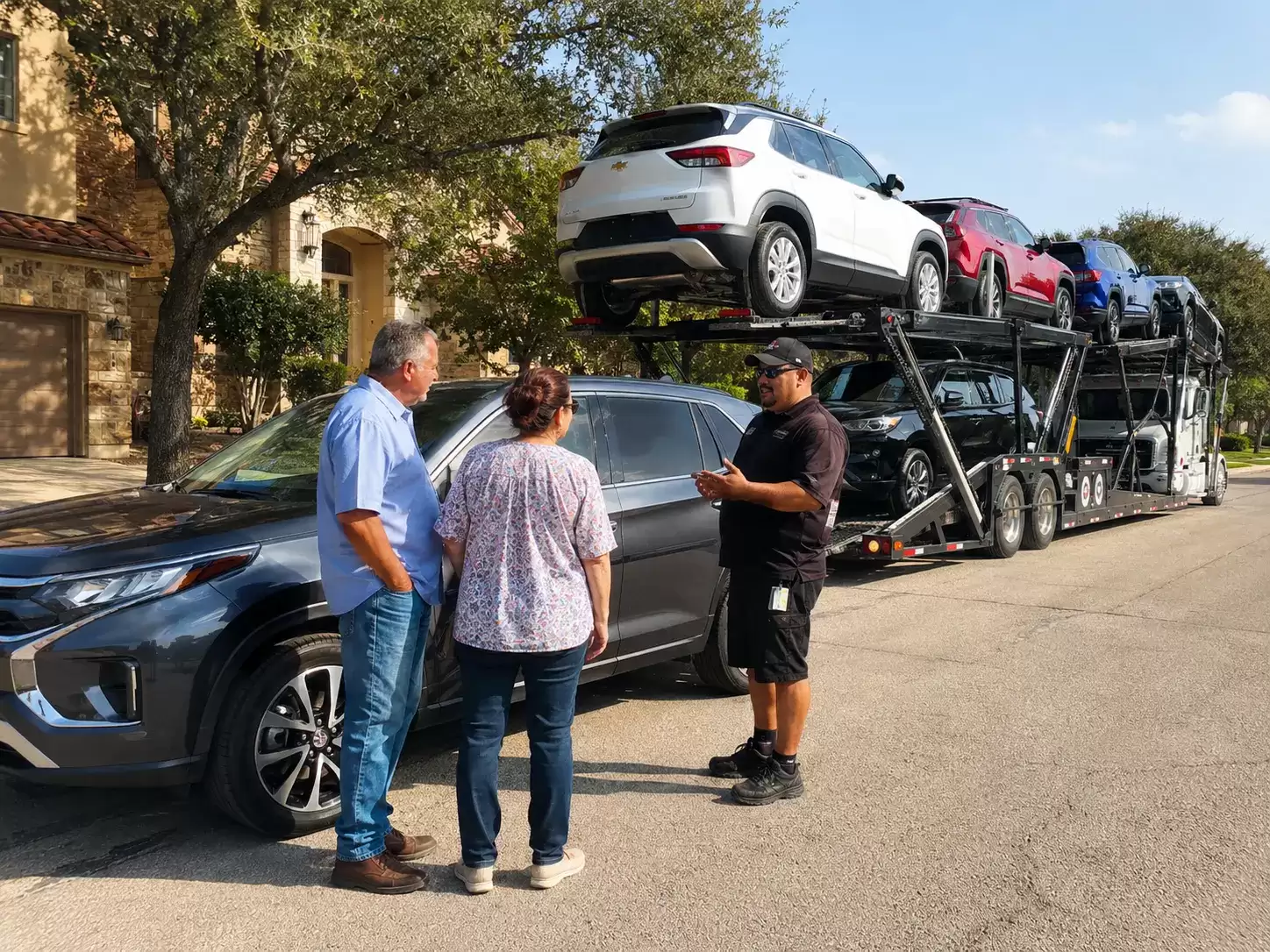
Who Ships a Car from Texas to California — and Why
The Texas-to-California route runs against the dominant migration current — California to Texas is the larger flow — but the westbound run carries a consistent and significant volume of its own throughout the year. The reasons people ship west are distinct from the reasons people ship east.
Military PCS: Fort Cavazos / JBSA / NAS Corpus Christi → Camp Pendleton and California
Military transfers are the anchor segment on this direction. Texas hosts some of the largest installations in the country, and California’s major bases receive inbound PCS orders from them constantly. Fort Hood in Killeen regularly transfers service members to Camp Pendleton, Fort Irwin, and Edwards Air Force Base. Fort Bliss in El Paso feeds multiple California installations, aided by the short distance — El Paso to Los Angeles is one of the quickest military transport runs in the Southwest. Fort Sam Houston in San Antonio and the Naval Air Station in Corpus Christi round out the major Texas sources.
Texas Professionals Moving to California for Entertainment, Technology, and Finance
Career moves to California remain a consistent category. Entertainment, media, technology, and finance all pull talent to California regardless of broader migration trends. Someone who spent years building a career in Texas — in energy, healthcare, or tech — may land a role in Los Angeles or San Francisco that requires a westbound move. The career opportunity is the constant; the auto transport booking follows.
Texas University Graduates Relocating to California for Career Opportunities
Texas also produces a notable segment of California-bound college graduates. University of Texas, Texas A&M, Rice, and Baylor send graduates to California companies every year. Those graduates often have a car to ship while they fly ahead to start work.
Online Vehicle Purchases: California Buyers Shipping Texas Trucks and Classics West
Online vehicle purchases flow both directions. Classic cars, trucks, and specialty vehicles are well-represented in Texas, and California buyers regularly purchase and ship them west. Texas pricing on certain vehicle categories — trucks, in particular — can be meaningfully lower than California equivalents, making the shipping cost worthwhile.
What Makes the Texas–California Auto Shipping Run Different
Westbound on I-10: The Less-Traveled Direction
The Texas-to-California run uses the same Interstate 10 corridor as the eastbound flow — but the load dynamics are different. California to Texas is the dominant direction on this route, meaning more carriers are actively chasing eastbound loads. Westbound carriers exist in solid numbers — the corridor is too heavily traveled for the reverse to be sparse — but the imbalance means westbound Standard dispatch can take slightly longer and prices run $75–$100 higher than the equivalent eastbound rate. Expedited resolves this quickly by moving you to the front of the westbound dispatch queue.
El Paso: Still the Short Haul
Distance doesn’t change direction. El Paso to Los Angeles runs roughly 795 miles westbound — the same short haul as going east. Standard pricing from El Paso to Southern California sits around $770–$795 for a sedan, and transit typically runs 2–4 days. If you’re in El Paso or West Texas, you’re not shipping cross-country — you’re shipping a regional route that most carriers cover in a single driver day.
Why Northern California Costs More to Deliver To
Carriers on the Texas-to-California run terminate in the Southern California basin — the LA area is the natural I-10 endpoint. Delivering to Northern California (San Francisco, Oakland, San Jose, Sacramento) requires the carrier to continue north on I-5 or I-580 from the LA area, adding 400+ miles and typically one to two days. Expect to pay $150–$250 more for delivery to NorCal compared to SoCal on this route. If you’re in Houston or Dallas and delivering to the Bay Area, the total haul is approaching 2,000 miles — factor that distance into your timeline.
Dallas vs. Houston: The Pickup Difference Going West
Houston sits on I-10 and is one of the most carrier-active pickup cities in the country. Westbound dispatch out of Houston is efficient — carriers are constantly working this corridor and Houston loads fill quickly. Dallas requires an additional leg: carriers come south on I-35 to San Antonio before connecting to I-10 westbound, or cut across on I-20 to I-10. Dallas pickup typically runs comparably to Houston but DFW-area shippers should account for the extra routing segment in their transit estimate. Austin, sitting directly on I-35 between Dallas and San Antonio, dispatches quickly as a natural midpoint city.
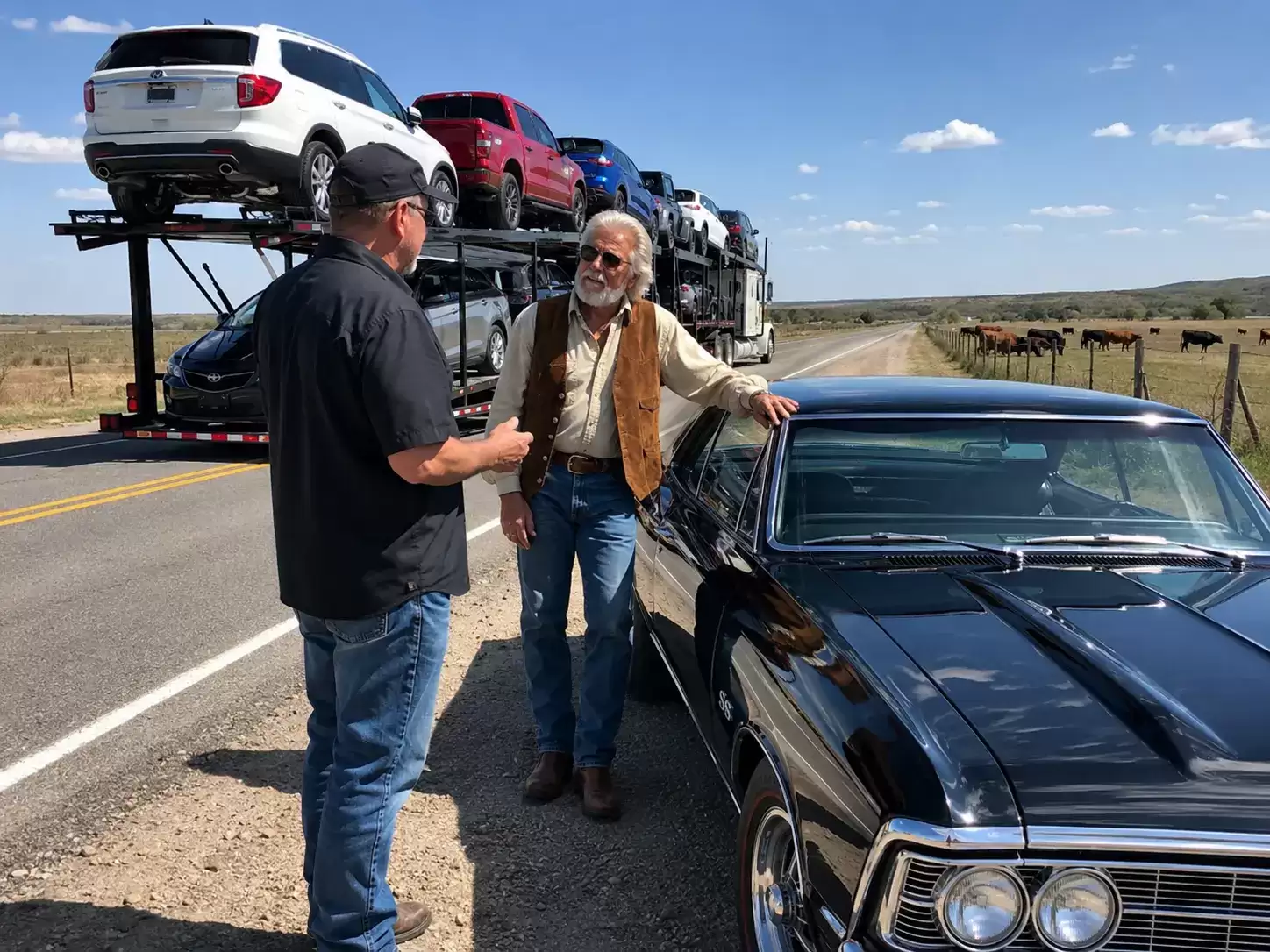
Other Texas to California Cities We Serve
Direct Express ships vehicles between hundreds of city pairs on this route. Below is a broader look at additional Texas origins and California destinations we regularly serve.
Hub Cities Along the Texas–California Car Shipping Corridor
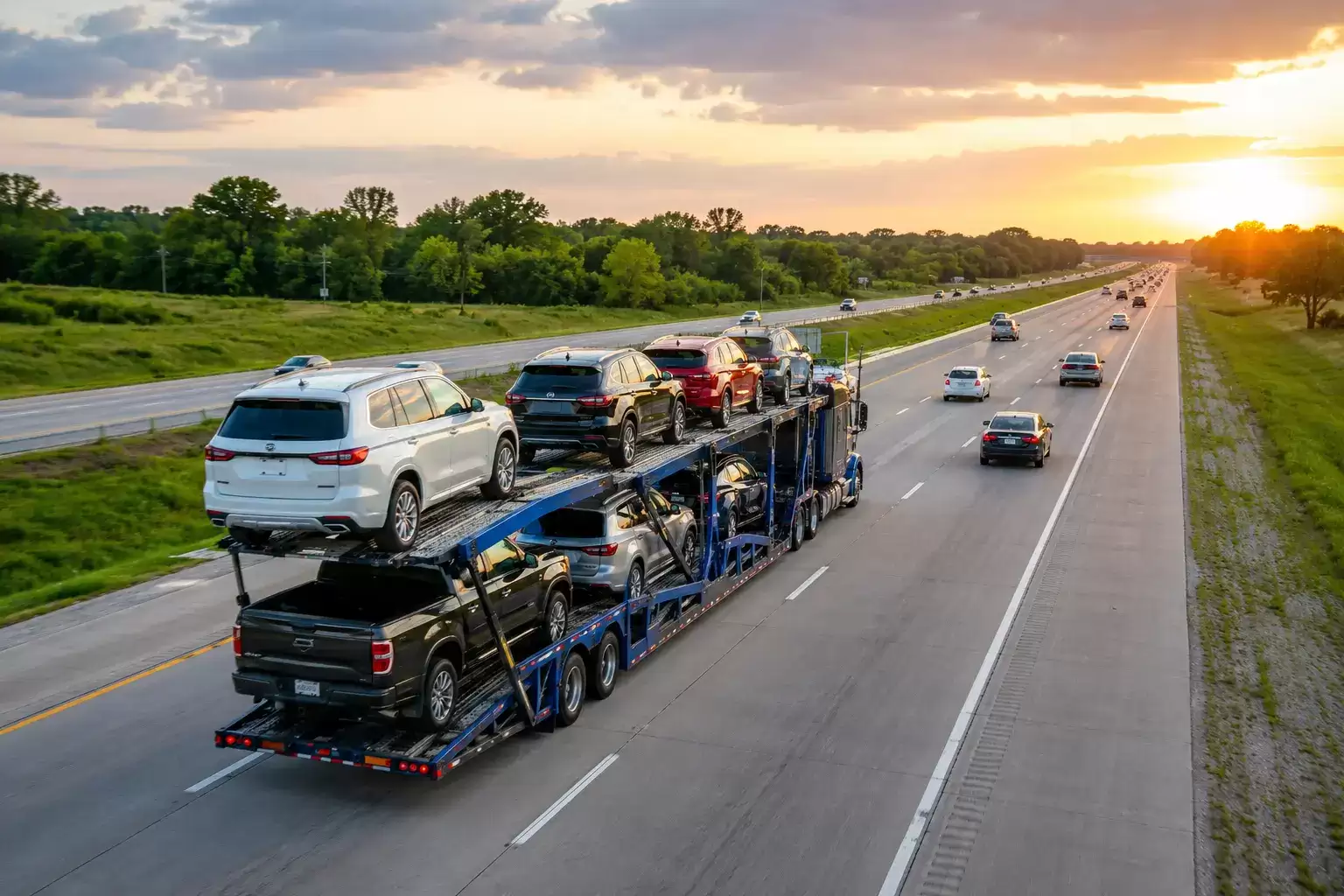
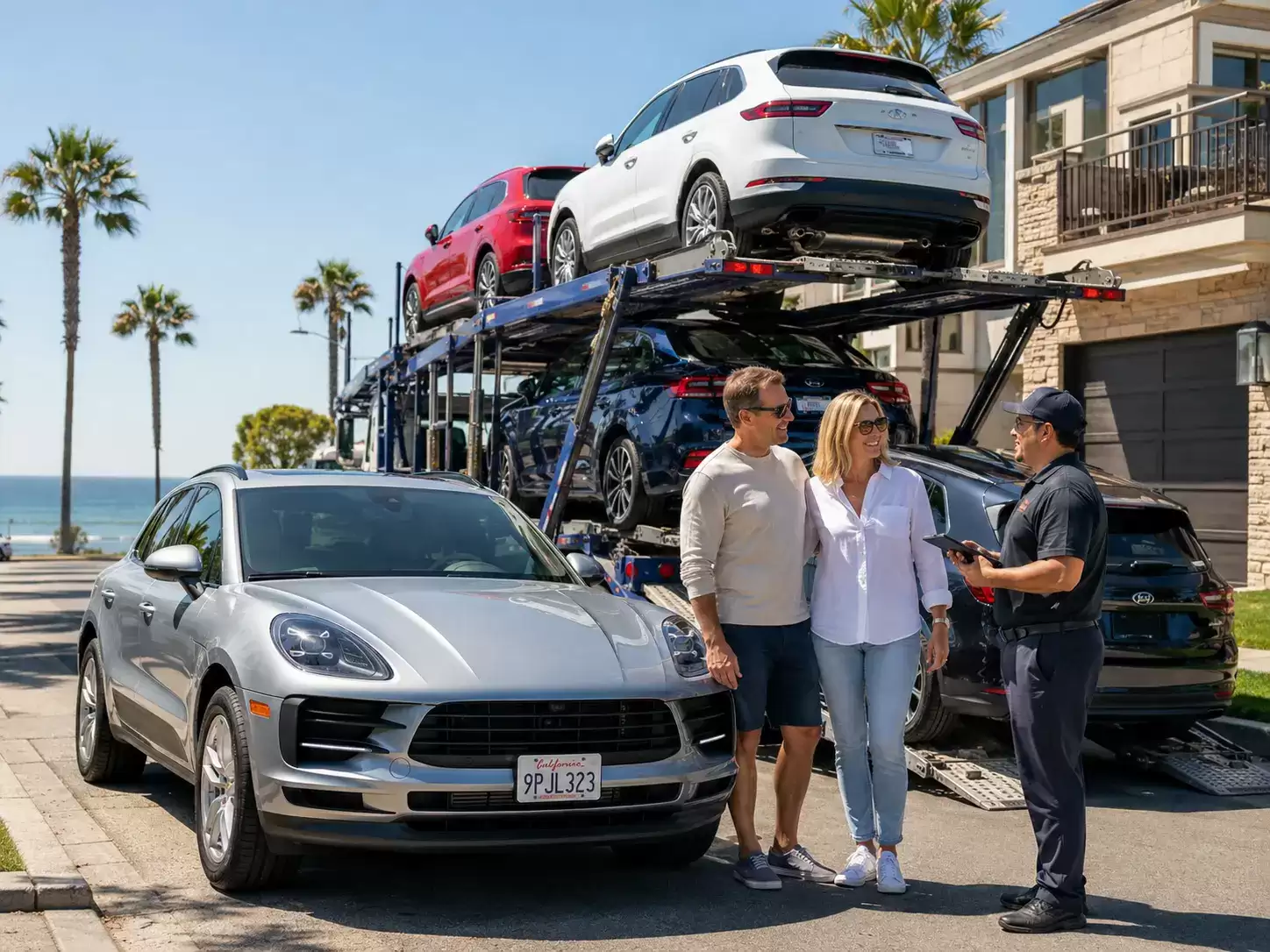
The I-10 westbound run from Texas to California passes through some of the most important logistics hubs in the Southwest. Your vehicle moves through a network of staging and handoff points before arriving at your California destination — understanding the flow helps explain the transit timeline.
Major Origin Hubs in Texas
Midpoint Corridor City
Major California Delivery Points
Routing Insight: El Paso is the critical midpoint — every westbound carrier on I-10 passes through it, making it both a pickup city and a natural load-consolidation hub. From El Paso, carriers push straight through to the LA basin in one long day. Southern California (Los Angeles, San Diego, Inland Empire) is the natural terminus where most loads are delivered. Northern California delivery requires the carrier to extend north on I-5 from LA, adding a day and cost — factor this into your timeline if delivering to the Bay Area or Sacramento.
Open vs. Enclosed Car Transport on the Texas-California Route
The Texas-to-California route crosses some demanding terrain — Texas summer heat, the Chihuahuan Desert near El Paso, and the long desert stretches of New Mexico and Arizona. For most vehicles, open transport handles this route without issue. For others, enclosed is the right call.
Open Transport Recommended for Most
- Carries 7–10 vehicles on an open-air trailer
- Most cost-effective option — the industry standard for the vast majority of vehicle shipments
- Well-suited for daily drivers, trucks, SUVs, minivans, and standard sedans
- The I-10 corridor is one of the most active carrier lanes in the U.S. — carrier availability is excellent year-round
- Your vehicle will be exposed to road dust and the elements; expected and normal for this type of transport
Enclosed Transport
- Vehicle travels inside a fully covered trailer — complete protection from road debris, dust, and weather
- Typically costs 40–60% more than open transport
- Recommended for: luxury vehicles, classic or collector cars, sports cars with very low ground clearance, vehicles with custom paint or wrap
- The Texas-to-California desert stretch is dusty — enclosed is particularly valuable for show-quality finishes or freshly detailed vehicles
- Fewer enclosed carriers on this route; book 2–3 weeks ahead to secure availability
Our honest recommendation: Daily driver or standard vehicle under $60,000 — open is the right call. The I-10 westbound corridor is extremely well-traveled and carriers run it constantly. Show cars, exotics, classic trucks, or any vehicle with a finish you’re particular about — the desert dust alone makes enclosed worth considering on a 1,400–1,900 mile haul.
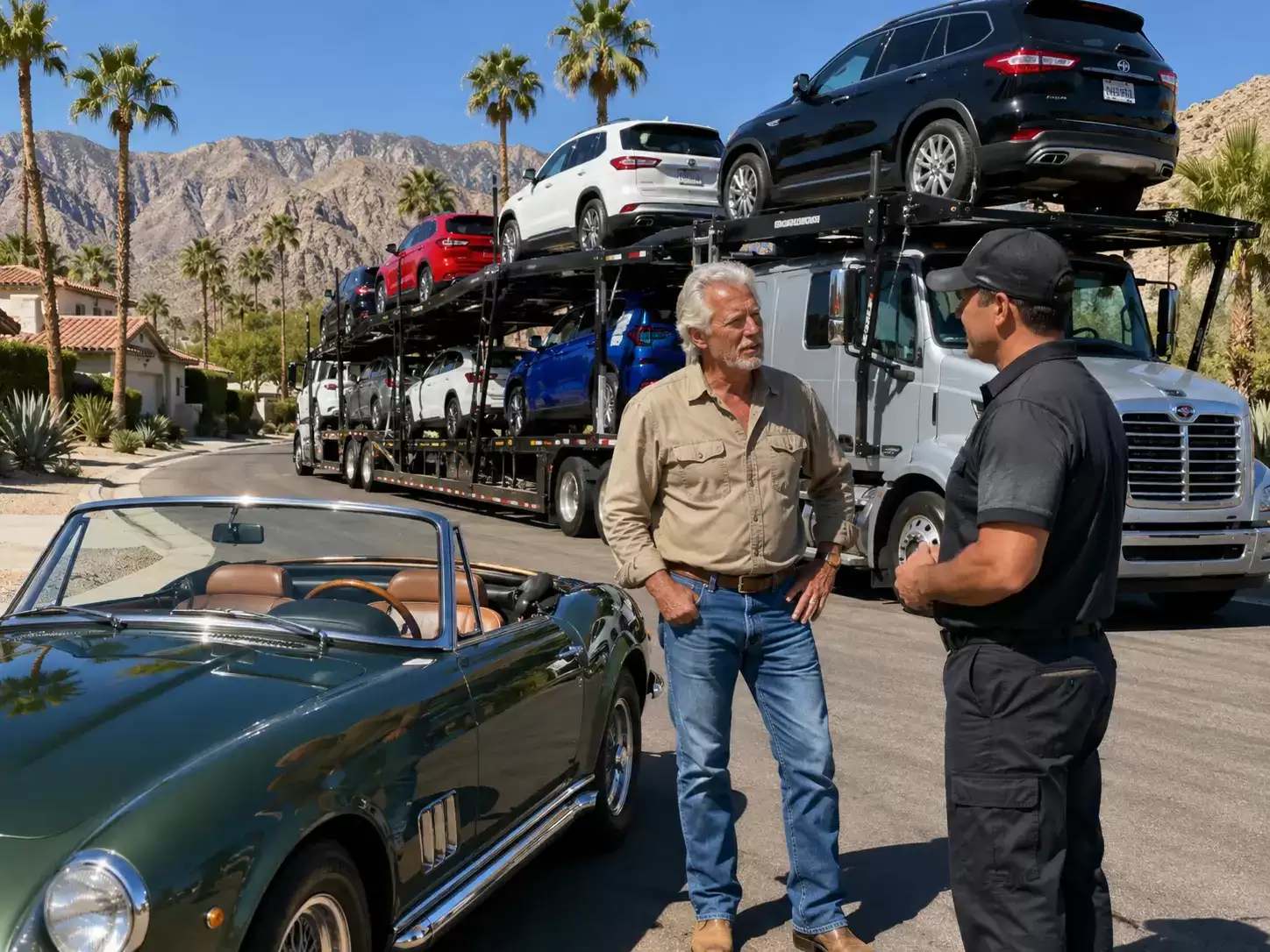
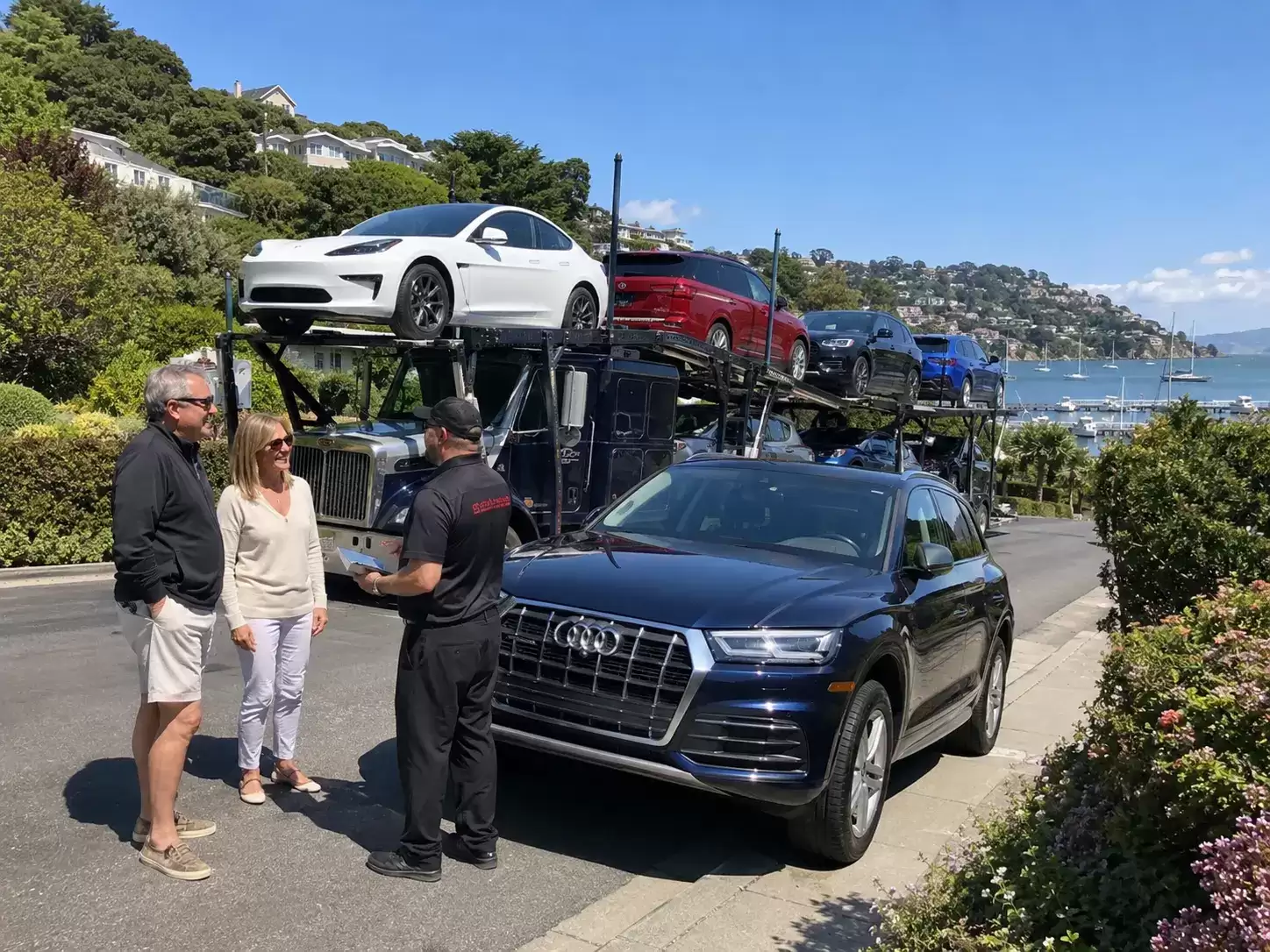
Door-to-Door Car Shipping: What to Expect in Texas and California
Pickup in Texas
Major Texas Metros: Houston, DFW, San Antonio, and Austin
Houston, Dallas, San Antonio, and Austin are all major carrier pickup hubs — door-to-door service is routine and straightforward. For Houston, the highway network fans out easily from most neighborhoods. Dallas and the DFW suburbs (Plano, Frisco, McKinney, Arlington, Carrollton, Irving, Garland) are all well within the active carrier zone and dispatch reliably. Carriers pick up at your address or a nearby accessible street.
West Texas, East Texas, and Smaller Markets
East Texas cities — Beaumont, Tyler, Longview, Texarkana — sit off the main I-10/I-35 corridor. Carriers reach them by looping from Houston or Dallas. Allow an extra day or two for dispatch and confirm availability at booking. El Paso pickup is straightforward given its position directly on I-10 and its consistent westbound carrier traffic.
Delivery in California
Southern California and the Inland Empire
Southern California delivery is the most carrier-active in the state. Los Angeles, the Inland Empire (Riverside, San Bernardino, Fontana), San Diego, Orange County, and the surrounding metro area all dispatch quickly and reliably. Downtown LA and dense beach cities can sometimes require a nearby meeting point for large car haulers — your carrier will coordinate this in advance.
Bay Area and Northern California
Northern California delivery (San Francisco, Oakland, San Jose, Sacramento, Stockton) requires the carrier to extend north from the LA basin after arriving via I-10. Expect 1–2 additional days and a $150–$250 price premium compared to SoCal delivery. Bay Area streets and hillside neighborhoods can occasionally limit full door-to-door access at the delivery address — your coordinator will discuss options if needed.
Preparing Your Vehicle
Before pickup: remove all personal items from the interior, leave no more than a quarter tank of fuel, disable your alarm, and remove any exterior accessories. Document your vehicle with dated photos from all angles. At delivery, inspect the vehicle carefully before signing the Bill of Lading — note any concerns on the form before you sign.
Texas & California Auto Transport Resources
Texas Helpful Government Links
- Texas Department of Motor Vehicles (TxDMV) — Primary agency for vehicle titles and registration in Texas. If you are releasing a Texas title before your California move, start here.
- TxDMV — Buying or Selling a Vehicle — Covers title transfer requirements and documentation needed when relocating a Texas-registered vehicle out of state.
- TxDMV — Vehicle Registration Reference — Useful background on Texas registration requirements if you are transferring a vehicle that was previously registered in Texas.
California Helpful Government Links
- California Department of Motor Vehicles (CA DMV) — The primary California agency for vehicle titling and registration. New residents must register their vehicle within 20 days of establishing California residency.
- CA DMV — New Residents: Registering Your Out-of-State Vehicle — Step-by-step guidance for transferring a Texas title and obtaining California plates. Note that California requires a smog inspection before registration for most vehicles.
- CA DMV — Vehicle Registration Fees — California registration fees are calculated on vehicle value and are typically higher than Texas fees. Use this tool to estimate your cost before your vehicle arrives.
Federal Auto Transport Resources
- FMCSA — Verify a Carrier’s License (SAFER System) — Verify that any auto transport company you consider is federally licensed and insured before booking.
- FMCSA — Protect Your Move — Federal consumer guidance about hiring vehicle shippers, including scam warnings and your rights as a shipper.