
Car Shipping To or From Utah
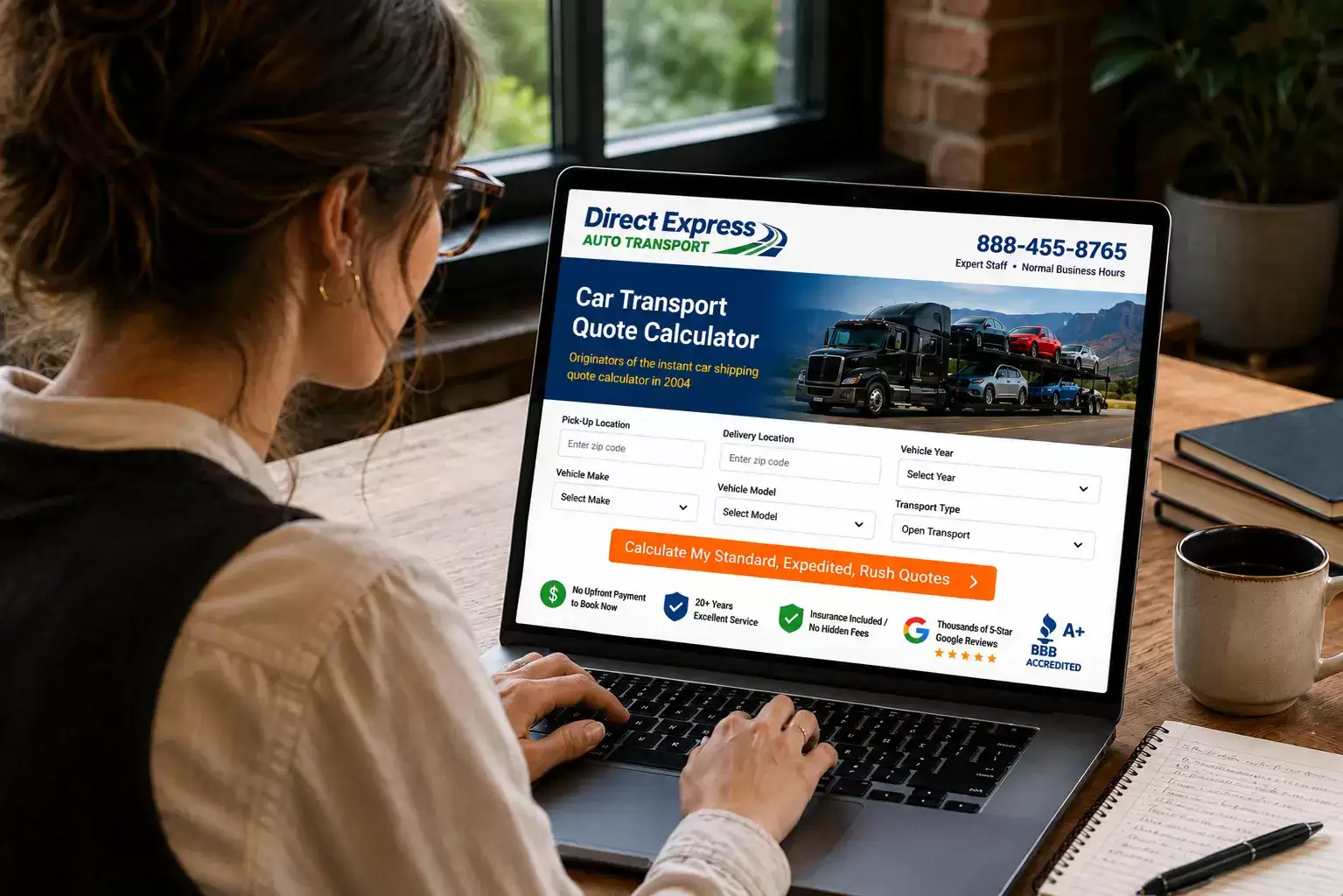
Need to ship a car to or from Utah? Direct Express Auto Transport has been the Beehive State’s most trusted auto transport broker since 2004 — with a 4.6-star average across thousands of verified Google reviews, no upfront payment required, and a real-time quote available in 30 seconds.
★ 4.6/5 Google Reviews | BBB Accredited A+ | FMCSA Licensed (MC #479342) | USDOT #1240502 | No upfront payment required | 20+ years shipping vehicles


Utah car shipping costs vary based on your route, the time of year, vehicle size, and the service tier you choose. Use our instant calculator above for a real-time quote — or see the route-by-route pricing tables below for a fast ballpark. Most standard sedan shipments to or from Utah range from $425 for short-haul routes to Nevada to $1,350 or more on long-haul routes to the Northeast. Salt Lake City’s I-15/I-80 position produces competitive Mountain West rates, and the Wasatch Front corridor is well-served year-round. Our Expedited and Rush pricing tiers hasten the process to create an even more satisfying experience.
What customers say about shipping a car to or from Utah with Direct Express Auto Transport


The interstate corridors that move Utah vehicles
I-15 (Wasatch Front backbone): Utah’s most important carrier artery and the primary north-south carrier corridor in the American West, running from the Arizona state line at St. George north through Cedar City, Beaver, Fillmore, Nephi, Provo, Salt Lake City, Bountiful, Ogden, and Brigham City before crossing into Idaho. I-15 is the carrier highway that defines the Wasatch Front and connects Southern California and Las Vegas to the Salt Lake metro and the Pacific Northwest. Through-carrier traffic between Los Angeles and Portland runs daily on I-15 through Utah, and Wasatch Front shippers access this carrier supply in both directions. The I-15 corridor through Salt Lake City carries more vehicle freight than all other Utah interstates combined.
I-80 (East-West transcontinental): Utah’s primary east-west carrier corridor, entering from Nevada at Wendover and running east through Tooele County, Salt Lake City, and Parley’s Canyon to the Wyoming state line near Evanston. I-80 is the transcontinental route connecting San Francisco and Sacramento to the west with Denver, Chicago, and the East Coast to the east. Salt Lake City sits at the I-15/I-80 junction, and this convergence gives the Salt Lake metro access to carrier traffic in four directions — north and south on I-15, east and west on I-80 — making it the Mountain West’s most versatile carrier hub. Note: I-80 over the Wasatch Mountains through Parley’s Canyon east of Salt Lake City requires chains or traction tires during winter storm events and can close temporarily during severe weather.
I-215 (Salt Lake Valley beltway): The Salt Lake Valley’s primary beltway, connecting I-15 south through West Jordan, West Valley City, and the west side of Salt Lake City to I-80 west and back to I-15 north. I-215 is the primary carrier access route for West Jordan, West Valley City, and the western Salt Lake Valley communities, giving these suburbs efficient carrier access without requiring trucks to navigate the I-15/I-80 core interchange. The I-215 west leg is a major commercial freight corridor with carrier staging areas in the industrial zones near the airport.
I-84 (Northwest, Ogden to Boise): Branches northwest from I-15 near Ogden through the Wasatch Mountains and into Idaho, connecting the Salt Lake metro to Boise and the Pacific Northwest via a more direct route than I-15 north through Idaho. I-84 through Utah runs through the Wasatch Canyon corridor and is subject to mountain weather delays in winter, but carries significant carrier volume between the Ogden/Layton market and Boise.
US-40 / I-80 (Uintah Basin corridor): The primary route to northeastern Utah and the Uintah Basin oil and gas region, branching east from I-80 at Park City through Heber City, Duchesne, and Roosevelt to Vernal and the Colorado border. The Uintah Basin’s energy sector generates vehicle shipping demand, but the distance from I-15 and the mountain terrain mean that communities in this corridor require Expedited tier for competitive pickup windows.

Utah carrier dynamics: the I-15 through-corridor and Silicon Slopes demand
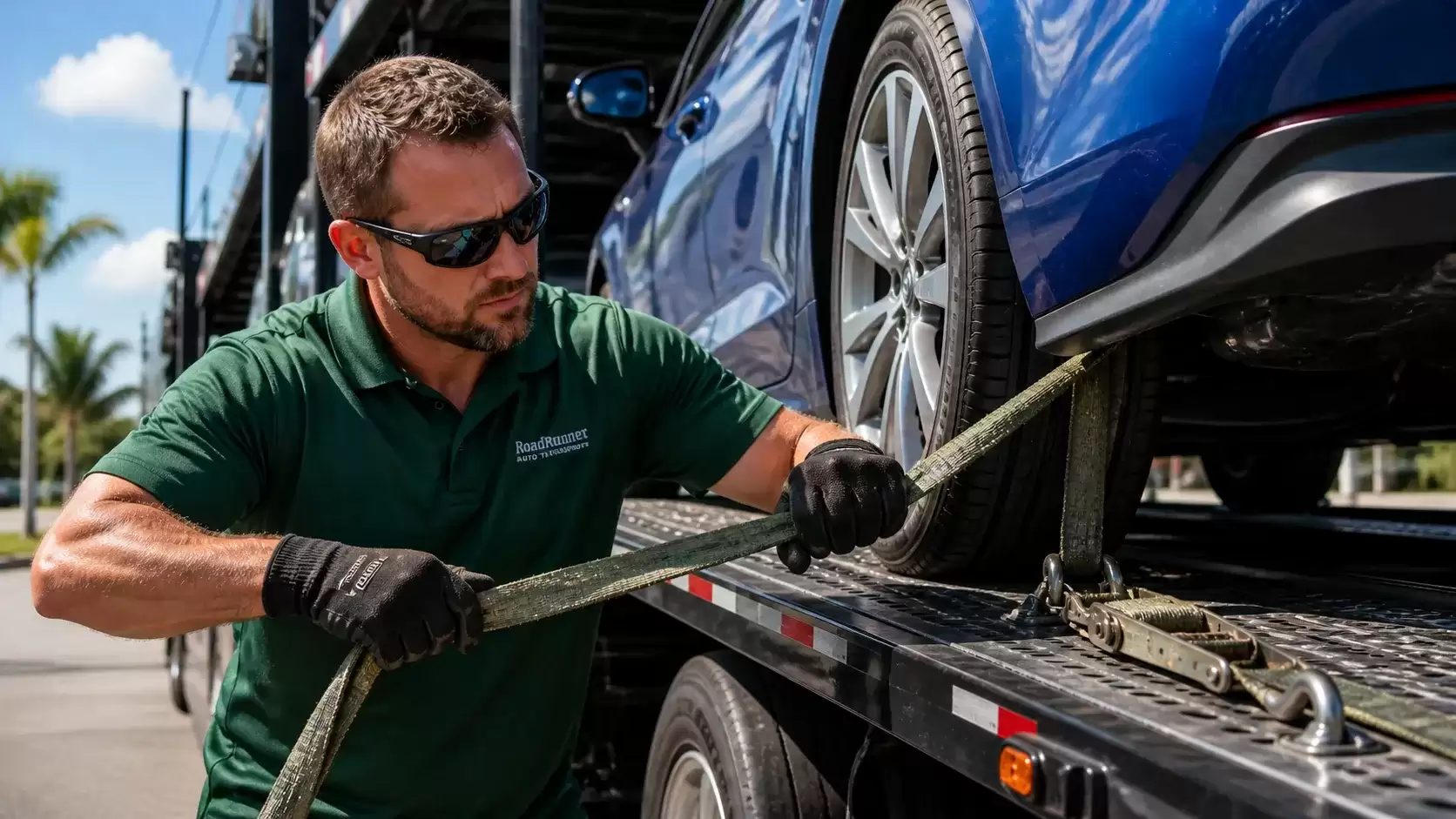
The defining characteristic of Utah’s carrier market is the I-15 through-corridor between Southern California and the Pacific Northwest. Carriers running Los Angeles-to-Seattle loads on I-15 must pass through Utah regardless of whether they have any Utah-specific loads. Salt Lake City is approximately the midpoint of this 1,100-mile run — a natural overnight stop and load adjustment point for long-haul carriers. This overnight staging dynamic means Salt Lake City has a disproportionate number of carrier trucks present at any given time relative to its population, and Wasatch Front shippers can access these carriers as they prepare outbound legs of their I-15 corridor runs.
The practical effect: Salt Lake City Standard tier pickup windows average 1–3 business days year-round, and the carrier supply is consistent enough that even off-peak months (January, February) don’t produce the dramatic pickup delays that similarly sized inland cities sometimes experience. Provo and Ogden share this advantage due to their I-15 positions and are essentially extensions of the Salt Lake metro carrier market. West Jordan and West Valley City on I-215 are similarly well-served, with carriers accessing the entire Salt Lake Valley via the beltway without the I-15 core corridor congestion.
Utah’s second major carrier dynamic is the technology sector inbound load imbalance. Silicon Slopes in Utah County has been generating far more inbound vehicle shipping loads — California-to-Utah, Washington-to-Utah, Texas-to-Utah — than outbound loads for several years. This imbalance creates a structural demand for carriers to deadhead or seek backhaul loads going west and north out of Utah. The result is that outbound Utah rates (Utah-to-California, Utah-to-Washington) are often more competitive than rates in the reverse direction, because carriers competing for outbound Utah loads are filling backhaul capacity they need to reposition anyway.
Utah vehicle shipping hub rankings
Salt Lake City / I-15 / I-80 / I-215 — Tier 1 hub: Utah’s largest city and the Mountain West’s most important carrier hub north of Las Vegas. Salt Lake City sits at the I-15/I-80 convergence, giving it carrier access in four directions simultaneously. Through-carrier traffic between Los Angeles and the Pacific Northwest, and between San Francisco and Denver, both pass through Salt Lake City. Standard tier is appropriate for virtually all Salt Lake City zip codes; pickup windows average 1–3 business days. The I-215 beltway and the industrial zones near Salt Lake City International Airport provide excellent carrier staging areas for the metro.
West Valley City / I-215 / Bangerter Highway — Tier 1 hub: Salt Lake County’s second-largest city and the western Salt Lake Valley’s carrier hub, West Valley City benefits from I-215 beltway access and the Bangerter Highway corridor connecting the western valley communities to I-15. Standard tier works well; pickup windows match the Salt Lake metro at 1–3 business days. The commercial and industrial zones along 3500 South and the I-215 west corridor provide direct carrier access throughout West Valley City.
Provo / I-15 / US-89 — Tier 1 hub: Utah County’s largest city and the Silicon Slopes technology corridor’s anchor, Provo sits on I-15 approximately 45 miles south of Salt Lake City. Brigham Young University’s 33,000-student enrollment and the concentration of technology companies in the Provo-Orem corridor generate year-round vehicle shipping demand. Standard tier works well; pickup windows average 2–3 business days. The Utah County market on I-15 is among the strongest secondary metro markets in the Mountain West for carrier availability.
West Jordan / I-15 / Bangerter Highway — Tier 1 hub: One of Salt Lake County’s largest cities, West Jordan sits in the central Salt Lake Valley with access to I-15 via the Bangerter Highway and I-15 direct exits. Standard tier is appropriate; pickup windows average 1–3 business days, matching the Salt Lake metro. The commercial corridors along Redwood Road and 7800 South provide carrier-accessible locations throughout the city.
Ogden / I-15 / I-84 / US-89 — Tier 1 hub: Weber County’s largest city and northern Utah’s primary carrier market, Ogden sits at the I-15/I-84 junction approximately 35 miles north of Salt Lake City. Hill AFB in the adjacent Layton/Hill Field area generates year-round PCS shipping demand that keeps carrier activity strong north of Salt Lake. Standard tier works well; pickup windows average 2–3 business days. Weber State University adds a student shipping component in August and May.
Layton / Hill AFB / I-15 — Tier 1 hub: Home of Hill Air Force Base, Layton is adjacent to the base and on I-15 between Salt Lake City and Ogden. Hill AFB’s 22,000 military and civilian personnel generate substantial PCS vehicle shipping demand. Standard tier is appropriate for most Hill AFB PCS moves; pickup windows average 1–3 business days. Expedited is recommended for PCS orders with tight report-date timelines.
St. George / I-15 / US-89 — Tier 2 hub: Southwestern Utah’s largest city and one of the fastest-growing metros in the United States, St. George sits on I-15 approximately 300 miles south of Salt Lake City near the Arizona and Nevada borders. I-15 through-carrier traffic between Las Vegas and Salt Lake City passes directly through St. George, giving it stronger carrier access than its population alone would suggest. Standard tier produces pickup windows of 2–4 business days. The retirement and resort market makes this a strong snowbird shipping origin.
Park City / US-40 / SR-224 — Tier 2 hub: Utah’s premier ski resort community, Park City sits in Summit County off I-80 east and US-40, accessible from Salt Lake City via Parley’s Canyon. Carrier access to Park City is limited by the mountain canyon roads that connect it to I-80 — standard multi-car carrier trucks can navigate SR-224 and US-40 but require careful routing. Expedited is recommended for Park City shipments, especially during ski season (December–March) when canyon road closures can occur. Standard tier produces pickup windows of 4–7 business days. The resort market creates seasonal surges in both directions around October (departure) and April (return).
Moab / US-191 — Tier 3 hub: Gateway to Arches and Canyonlands National Parks, Moab is a spectacular but carrier-isolated market in southeastern Utah on US-191, approximately 230 miles from Salt Lake City with no direct interstate access. Expedited tier is strongly recommended for all Moab shipments. Carriers must make a substantial deliberate detour from I-70 or I-15 to reach Moab, and Standard tier pickup windows routinely extend to 10–14 business days. Budget at least 10 days lead time for any Moab shipment.

Utah car shipping rates: popular routes and estimated costs
The tables below reflect current market averages for open-carrier transport of a standard sedan in good weather conditions. Prices vary based on fuel costs, carrier availability, season, and vehicle size. Use the calculator above for a real-time quote specific to your route and vehicle.
Popular routes from Utah
| From | To | Distance (mi) | Estimated Days | Standard | Expedited | Rush |
|---|---|---|---|---|---|---|
| Utah | Nevada | 425 | 2–3 | $425 | $510 | $595 |
| Utah | Idaho | 375 | 2–3 | $450 | $540 | $630 |
| Utah | Arizona | 500 | 2–4 | $550 | $660 | $770 |
| Utah | Colorado | 525 | 2–4 | $550 | $660 | $770 |
| Utah | California | 725 | 3–5 | $825 | $990 | $1,155 |
| Utah | Oregon | 875 | 3–5 | $850 | $1,020 | $1,190 |
| Utah | Texas | 1,200 | 4–6 | $1,000 | $1,200 | $1,400 |
| Utah | Illinois | 1,500 | 5–7 | $1,050 | $1,260 | $1,470 |
| Utah | Florida | 2,200 | 6–9 | $1,250 | $1,500 | $1,750 |
| Utah | New York | 2,200 | 6–9 | $1,350 | $1,620 | $1,890 |
Popular routes to Utah
| From | To | Distance (mi) | Estimated Days | Standard | Expedited | Rush |
|---|---|---|---|---|---|---|
| California | Utah | 725 | 3–5 | $825 | $990 | $1,155 |
| New York | Utah | 2,200 | 6–9 | $1,350 | $1,620 | $1,890 |
| Florida | Utah | 2,200 | 6–9 | $1,250 | $1,500 | $1,750 |
| Illinois | Utah | 1,500 | 5–7 | $1,050 | $1,260 | $1,470 |
| Texas | Utah | 1,200 | 4–6 | $1,000 | $1,200 | $1,400 |
| Oregon | Utah | 875 | 3–5 | $850 | $1,020 | $1,190 |
| Colorado | Utah | 525 | 2–4 | $550 | $660 | $770 |
| Arizona | Utah | 500 | 2–4 | $550 | $660 | $770 |
| Idaho | Utah | 375 | 2–3 | $450 | $540 | $630 |
| Nevada | Utah | 425 | 2–3 | $425 | $510 | $595 |
Why cross-country vehicle transport from Utah moves faster than distance suggests
Utah’s position at the I-15/I-80 crossroads means that Salt Lake City shippers are never waiting for a carrier to make a special trip. Carriers running Los Angeles to Chicago on I-80 are passing through Salt Lake City. Carriers running Las Vegas to Portland on I-15 are passing through Salt Lake City. A Utah origin load is a slot on an already-committed carrier run, not a dedicated trip, and that fundamental difference is why Standard tier pickup windows in Salt Lake City consistently reach 1–3 business days even for transcontinental destinations 2,000 miles away.
The I-80 corridor east is particularly efficient for Utah-to-Midwest and Utah-to-East Coast moves. I-80 runs from Salt Lake City east through Wyoming, Nebraska, Iowa, and into Chicago — a straight, well-maintained transcontinental route with consistent carrier volume in both directions. A Utah-to-New York move on I-80 crosses the country on a single primary interstate with no major routing uncertainty. The Wyoming stretch of I-80 between Salt Lake City and Cheyenne is subject to wind and weather closures, particularly at the Point of the Mountain between Laramie and Cheyenne, and this is the most common weather-related transit delay point for eastbound Utah shipments. Expedited tier provides a meaningful buffer against Wyoming I-80 weather delays for moves with firm delivery dates.

Utah car shipping: month-by-month seasonal guide

Utah auto transport service tiers: which is right for your move?
| Service Tier | Pickup Window | Best For | Price |
|---|---|---|---|
| Standard | 3–7 business days | Wasatch Front I-15 corridor moves with flexible timelines. Best value for Salt Lake City, West Valley City, Provo, West Jordan, Ogden metro areas. | Lowest |
| Expedited (most popular) |
1–3 business days | Hill AFB PCS orders, Park City and resort corridor shipments, winter eastbound moves (Wyoming I-80 weather buffer), Moab and eastern Utah, any move with a firm date. | Moderate |
| Rush | Within 24–48 hours | Same-day or next-day pickup required. Unexpected PCS date changes, emergency relocation, or vehicle needed at destination immediately. | Premium |


How to ship a car to or from Utah in 4 steps
Step 1: Get your instant quote. Use our online calculator above or call our team directly. Salt Lake City and Wasatch Front metro quotes typically return carrier assignments within 1–3 business days on Standard tier. If your address is in Park City, Moab, the Uintah Basin, or rural southern Utah, mention this to our team so we can set accurate expectations and recommend the appropriate tier.
Step 2: Book and schedule pickup. No upfront payment required. We match your vehicle to a licensed, insured carrier on your route. For Hill AFB PCS orders, provide your report date and we’ll coordinate the carrier timeline with the base gate access process. For ski resort community shipments (Park City, Alta, Snowbird area), we coordinate the carrier’s canyon road approach and staging location in advance.
Step 3: Prepare your vehicle. Clean your vehicle inside and out, document all existing condition with time-stamped photographs, remove all personal items, and confirm your fuel level is at or below one-quarter tank. Utah’s high-altitude UV environment can cause paint oxidation on older vehicles — photograph any existing UV weathering, chalking, or clear coat peeling before the carrier arrives. If shipping during winter, note that Wasatch Front road salt is used aggressively on I-15 and I-80 and should be documented in pre-shipment photos.
Step 4: Inspect and sign at delivery. Walk around the vehicle with the carrier before signing the Bill of Lading at delivery. Compare the delivery condition against your pre-shipment photographs. Any new damage must be noted on the Bill of Lading before you sign. Do not sign a clean Bill of Lading if there is new damage — document everything in writing at delivery.
Utah university vehicle transport: campus shipping guide
Utah’s universities generate substantial August move-in and April–May move-out vehicle shipping demand across the Wasatch Front. Brigham Young University in Provo and the University of Utah in Salt Lake City are the two largest contributors, and the concentration of universities in the I-15 corridor means that student vehicle shipping demand overlaps with the Silicon Slopes technology sector hiring cycle to create significant summer and fall peak periods. Book 5–7 days in advance during late August and early September for the best Standard tier rates near major campuses.
| University | Location | Approx. Enrollment |
|---|---|---|
| Utah Valley University | Orem | 41,000 |
| Brigham Young University | Provo | 33,000 |
| University of Utah | Salt Lake City | 35,000 |
| Weber State University | Ogden | 30,000 |
| Utah State University | Logan | 28,000 |
| Utah Tech University | St. George | 12,000 |
| Southern Utah University | Cedar City | 11,000 |
| Westminster University | Salt Lake City | 3,500 |
| Snow College | Ephraim | 6,000 |
| Ensign College | Salt Lake City | 2,000 |

Utah military base auto transport guide
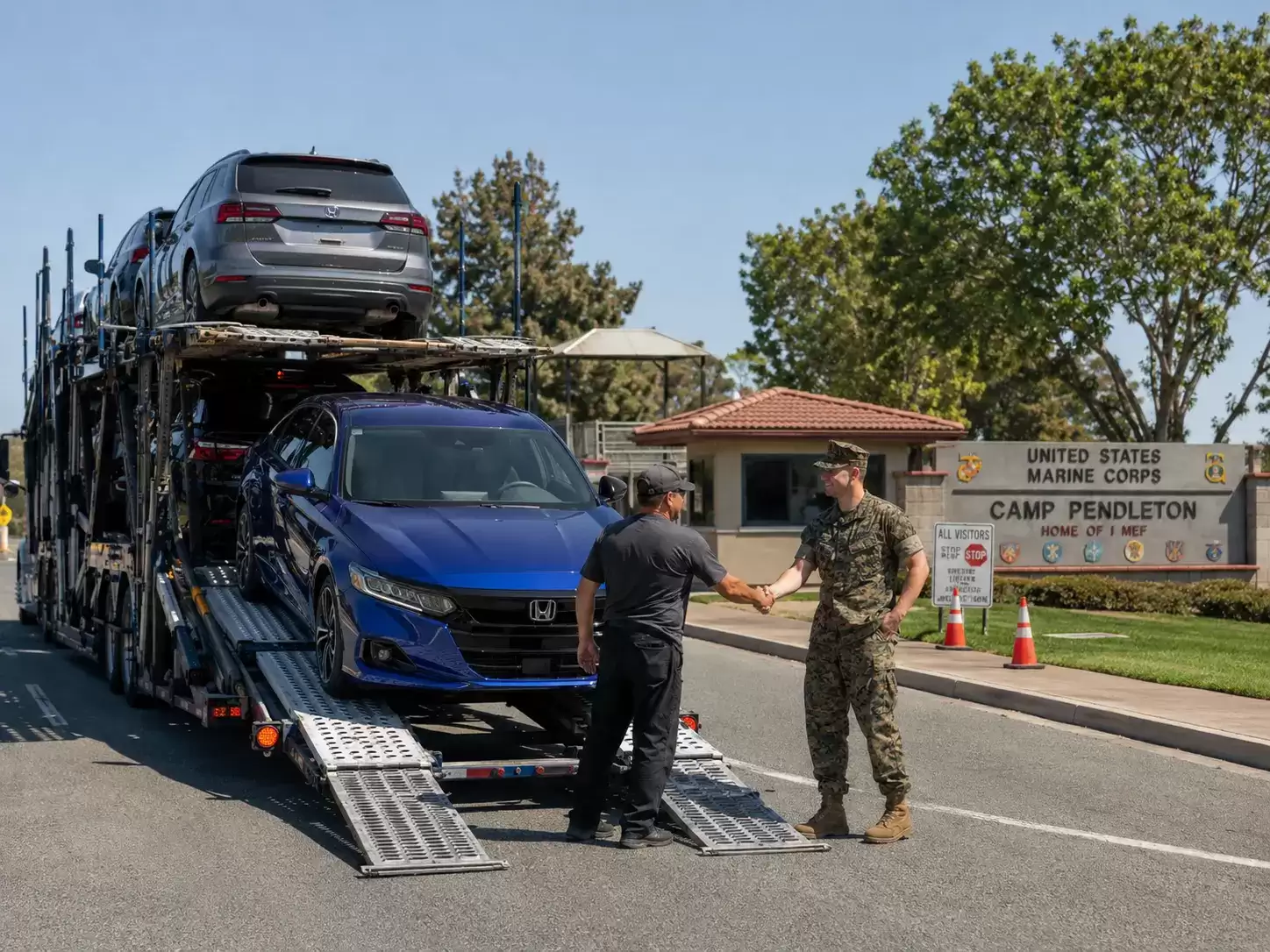
Hill Air Force Base — Layton (I-15 / Layton Parkway): One of the Air Force’s largest installations and Utah’s primary military employer, Hill AFB is located in Layton between Salt Lake City and Ogden with direct access from I-15. The base is home to the 388th and 419th Fighter Wings (F-35A) and the Ogden Air Logistics Complex, with approximately 22,000 military and civilian personnel. Standard tier is appropriate for most Hill AFB PCS moves. I-15 access gives carriers direct routing to the Layton/Hill Field area without significant detour from the primary corridor. Pickup windows average 1–3 business days. Expedited is recommended for PCS orders with report dates within 5 days of booking. Gate access requires carrier pre-registration, which our dispatch team handles directly with the assigned carrier.
Dugway Proving Ground — Tooele County (US-36 / SR-196): A remote Army test and evaluation installation in the Great Salt Lake Desert, Dugway Proving Ground is located approximately 85 miles southwest of Salt Lake City via US-36 and SR-196 through Tooele County’s west desert. The surrounding terrain has virtually no commercial carrier infrastructure. Expedited tier is mandatory for all Dugway Proving Ground shipments. Standard tier pickup windows at Dugway routinely extend beyond 14 business days. Budget at least 10–14 days lead time for Expedited tier assignments to or from Dugway. The most practical alternative: arrange pickup or delivery at a Tooele or Salt Lake City location and transport personally to or from Dugway, accessing the full Salt Lake metro carrier market and reducing pickup windows to 1–3 business days.
Tooele Army Depot — Tooele (I-80 / SR-36): Located in Tooele City approximately 35 miles southwest of Salt Lake City via I-80 west and SR-36 south, the Tooele Army Depot is more accessible than Dugway but still off the primary I-15 carrier corridor. Expedited is recommended for Tooele Army Depot PCS moves. Tooele City itself has reasonable I-80 access and Standard tier produces pickup windows of 3–6 business days. The SR-36 connector from I-80 to Tooele is a serviceable two-lane highway accessible to standard carrier equipment.
Salt Lake Valley and Wasatch Front I-15 Corridor Auto Transport
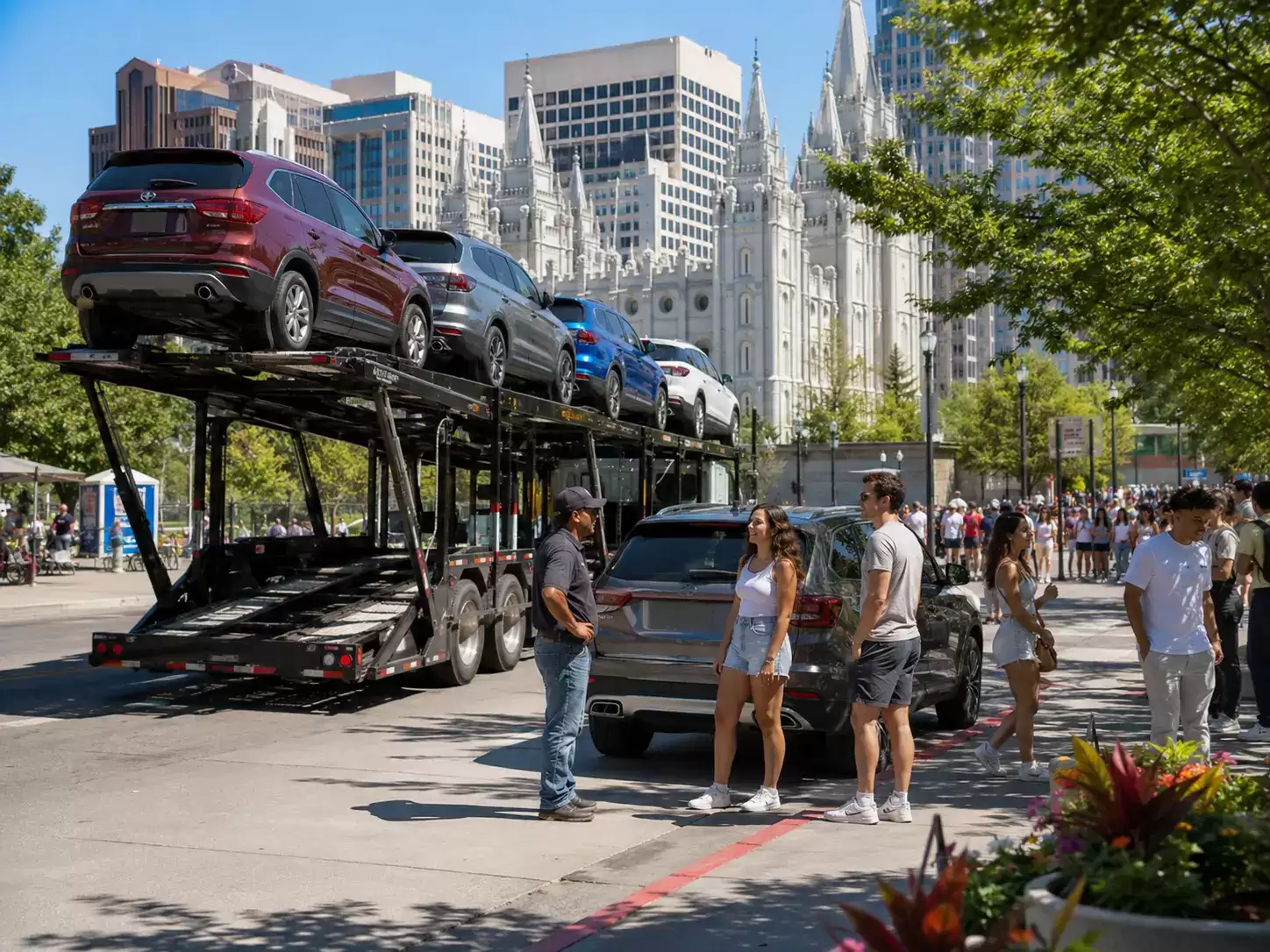
Salt Lake City is Utah’s capital and its dominant carrier hub at the I-15/I-80 convergence. Through-carrier traffic in four directions keeps Standard tier pickup windows at 1–3 business days year-round. The downtown commercial core, the I-215 beltway, and the industrial corridor near the airport provide excellent carrier staging throughout the metro. Salt Lake City’s position gives it arguably the best carrier access of any Mountain West city outside of Denver.
West Valley City is Salt Lake County’s second-largest city on the I-215 west corridor, with direct access to the beltway and the industrial staging zones near Salt Lake City International Airport. Standard tier pickup windows match the SLC metro at 1–3 business days. The Redwood Road and 3500 South commercial corridors are carrier-accessible throughout the city.
West Jordan is in the central Salt Lake Valley with Bangerter Highway access to I-15 and I-215. Standard tier produces pickup windows of 1–3 business days, benefiting from the full Salt Lake metro carrier network via the valley’s efficient highway connections.
Sandy and South Jordan are southeastern Salt Lake Valley suburbs on I-15 and the Bangerter Highway corridor. Both share SLC metro carrier access with Standard pickup windows of 1–3 business days. The Jordan Landing commercial area in West Jordan provides carrier-accessible staging for the southwest valley communities.
Murray and Midvale are centrally located Salt Lake County cities on I-15 between Salt Lake City and Sandy. Both benefit from direct I-15 access with Standard pickup windows of 1–3 business days.
Taylorsville and Kearns are western Salt Lake County communities accessible via I-215 and the Bangerter Highway. Standard tier works well; pickup windows average 1–3 business days via the I-215 beltway carrier network.
Utah County Silicon Slopes and I-15 South Corridor
Provo is the Utah County seat and the Silicon Slopes corridor anchor on I-15. BYU’s 33,000-student enrollment and the concentration of technology companies between Lehi and Provo generate year-round vehicle shipping demand. Standard tier produces pickup windows of 2–3 business days. August and September move-in generates the highest campus-area demand of the year.
Orem is Provo’s northern neighbor on I-15, home of Utah Valley University and several major Silicon Slopes technology employers. Standard tier works well with pickup windows of 2–3 business days. The I-15 corridor through Orem and Provo is one of the most consistently carrier-active segments in the state.
Lehi and American Fork are the northern end of the Silicon Slopes corridor, at the I-15/SR-92 interchange. The concentration of tech campus employment (Adobe, eBay, Microsoft, and others) generates more inbound California and Washington vehicle relocations per capita than almost anywhere else in the Mountain West. Standard tier produces pickup windows of 2–3 business days for both cities.
Springville and Spanish Fork are I-15 communities south of Provo with direct interstate access and Standard pickup windows of 2–4 business days. The US-6 junction at Spanish Fork provides carrier access east toward Price and the coal country communities of Carbon County.
Northern Utah and Weber County Corridor
Ogden is Weber County’s seat and the I-15/I-84 junction city north of Salt Lake. Hill AFB’s proximity keeps carrier activity strong in the Ogden-Layton corridor year-round. Standard tier produces pickup windows of 2–3 business days.
Layton is adjacent to Hill AFB and one of the fastest-growing cities on the Wasatch Front. Direct I-15 access and the Hill AFB PCS market give Layton excellent carrier availability. Standard pickup windows average 1–3 business days.
Bountiful and North Salt Lake are on I-15 between Salt Lake City and Ogden, benefiting from the through-corridor carrier traffic in both directions. Standard tier works well; pickup windows average 1–3 business days.
Logan is Cache County’s seat and home of Utah State University, located on US-89/US-91 north of Ogden via US-89 through Logan Canyon or via I-15 and US-91 west of the mountains. Logan has no direct interstate access. Standard tier produces pickup windows of 4–7 business days; Expedited is recommended for time-sensitive moves. USU’s 28,000-student enrollment creates August and May shipping surges that temporarily increase carrier interest in the Cache Valley.
St. George is southwestern Utah’s largest city and the state’s fastest-growing metro on I-15 near the Arizona border. Strong southbound I-15 carrier traffic gives St. George above-average carrier access for its size. Standard tier produces pickup windows of 2–4 business days. The retirement and second-home market creates seasonal October–November and March–April shipping surges.
Park City is Utah’s premier ski resort community, accessible from Salt Lake City via Parley’s Canyon on I-80 east and SR-224. Limited carrier access due to canyon road geometry; Expedited strongly recommended. Standard pickup windows can reach 7–14 business days. Ski season (December–March) is the most challenging window for Park City shipments due to canyon road conditions.
Moab is the gateway to Arches and Canyonlands and the most carrier-isolated city in Utah on US-191 in the southeastern canyon country. Expedited mandatory; Standard pickup can exceed two weeks. Stage at Grand Junction, Colorado or Price, Utah if timeline is critical.
Utah vehicle shipping: official government resources
- Utah Division of Motor Vehicles — Registration and Titling — Utah vehicle title transfers, registration renewals, and motor vehicle licensing.
- Utah Attorney General — Consumer Protection — File complaints about deceptive auto transport practices or moving fraud in Utah.
- FMCSA SAFER System — Verify any car carrier’s DOT number, insurance, and active operating authority before booking.
- FMCSA — Protect Your Move — Federal guidance on avoiding auto transport fraud and understanding your rights as a shipper.
- UDOT Traffic — Utah 511 — Real-time Utah road conditions, closures, and construction information including I-15, I-80, and canyon road status.

Popular long-distance auto transport routes to and from Utah
Utah to California: The I-15 West Corridor
Utah to California is the single most carrier-active route in the state, driven by the enormous Silicon Slopes technology sector relocation market and the constant I-15 through-carrier traffic between Salt Lake City and Los Angeles. Los Angeles is approximately 725 miles southwest of Salt Lake City on I-15 via Las Vegas — a direct, well-maintained route with carrier traffic in both directions every day. San Francisco and the Bay Area are approximately 800 miles via I-80 west or 900 miles via I-15 south and I-5 north. Standard tier produces pickup windows of 1–3 business days in the Salt Lake metro; rates typically range from $775 to $875 for a standard sedan. The backhaul imbalance (more California-to-Utah loads than Utah-to-California) makes outbound Utah-to-California rates particularly competitive.
Utah to Nevada: The I-15 Las Vegas Corridor
Utah to Las Vegas is a short, high-volume I-15 route of approximately 420 miles — one of the most consistent carrier routes in the Mountain West. I-15 through-carrier traffic between Salt Lake City and Las Vegas is among the heaviest in the region, and Standard tier pickup windows for SLC-to-Las Vegas average 1–2 business days. Reno is accessible via I-80 west, approximately 525 miles from Salt Lake City. Standard sedan rates for Utah to Las Vegas typically range from $400 to $475; Reno rates range from $500 to $575.
Utah to Colorado: The I-70 and US-40 Mountain Corridor
Utah to Denver typically routes via I-70 east from the Utah border near Grand Junction, or via US-40 east through the Uintah Basin to I-70 east. Denver is approximately 525 miles from Salt Lake City. I-70 through the Colorado Rockies is subject to mountain weather closures from November through April, and carriers planning Colorado moves in winter should use Expedited tier to buffer against potential I-70 mountain delays. Standard tier produces pickup windows of 2–4 business days; rates typically range from $525 to $625 for a standard sedan.
Utah to Arizona: The I-15 South and US-89 Corridor
Utah to Arizona routes via I-15 south from Salt Lake City through St. George and into Arizona at the Virgin River Gorge — one of the most spectacular stretches of interstate in the Southwest. Phoenix is approximately 650 miles from Salt Lake City on I-15 south. The Virgin River Gorge section of I-15 in far northwestern Arizona is a dramatic canyon route that can experience occasional closures due to rock falls and high wind, but is generally well-maintained and open year-round. Standard tier produces pickup windows of 2–4 business days; rates range from $525 to $625 for a standard sedan.
Utah to Texas: The Southwest Corridor via I-40
Utah to Texas typically routes via I-15 south to I-40 east at Barstow, California, then I-40 east through Arizona, New Mexico, and into Texas, or via US-491 south to Albuquerque and I-40 east. Dallas is approximately 1,350 miles from Salt Lake City; Houston approximately 1,500 miles. The I-40 routing through the Southwest desert is reliable year-round with minimal weather-related delays. Standard tier produces pickup windows of 2–4 business days; rates range from $950 to $1,050 for a standard sedan to Dallas.
Utah to Oregon: The I-84 Pacific Northwest Corridor
Utah to Oregon routes via I-84 northwest from Ogden through southern Idaho and into Portland, or via I-15 north to I-84 west at Boise. Portland is approximately 825 miles from Salt Lake City via I-84. The I-84 corridor through the Blue Mountains of eastern Oregon can experience winter closures, and Expedited is recommended for Oregon moves from November through March. Standard tier produces pickup windows of 2–4 business days; rates range from $800 to $900 for a standard sedan to Portland.
Utah to Washington State: The Pacific Northwest Long Haul
Utah to Seattle routes via I-15 north to I-84 northwest and I-82 northwest to I-90 west into Seattle, or via I-15 north to I-84 north and I-5 north from Portland. Seattle is approximately 1,000 miles from Salt Lake City. The Pacific Northwest is one of the most popular destination markets for Utah technology sector workers relocating, giving this corridor consistent carrier supply in both directions. Standard tier produces pickup windows of 2–4 business days; rates range from $900 to $1,000 for a standard sedan.
Utah to Illinois: The I-80 Transcontinental Midwest Route
Utah to Chicago routes via I-80 east from Salt Lake City through Wyoming, Nebraska, and Iowa into Chicago — a single-interstate transcontinental route. Chicago is approximately 1,500 miles from Salt Lake City. The I-80 through Wyoming carries significant wind and weather risk from November through March, particularly at Elk Mountain and the Medicine Bow section between Laramie and Rawlins. Budget Expedited tier for Illinois moves planned between November and March. Standard tier produces pickup windows of 2–4 business days in spring and fall; rates range from $1,000 to $1,100 for a standard sedan.
Utah to Florida: The Cross-Country Southeast Haul
Utah to Florida is a long-haul move of approximately 2,200 miles, typically routed via I-15 south to I-40 east through Arizona, New Mexico, Texas, and Alabama into Florida. Jacksonville is the first major Florida destination at approximately 2,200 miles; Miami approximately 2,500 miles. Florida is a popular destination for Utah retirees and St. George seasonal homeowners. Standard tier produces pickup windows of 3–5 business days in the Salt Lake metro; rates range from $1,200 to $1,350 for a standard sedan.
Utah to New York: The I-80 Northeast Corridor
Utah to New York City is approximately 2,200 miles via I-80 east from Salt Lake City across the country. The I-80 route is the most direct option but requires navigating Wyoming’s weather risk in winter months. New York City is one of the highest-demand destination markets from Utah, driven by technology sector and financial services relocations. Standard tier produces pickup windows of 3–5 business days; rates range from $1,300 to $1,450 for a standard sedan. The Northeast corridor is well-supplied with carriers in both directions year-round.
Utah to Idaho: The I-15 North Corridor
Utah to Boise routes via I-15 north from Ogden to I-84 northwest through southern Idaho to Boise — a direct, well-traveled mountain corridor of approximately 340 miles. Boise is Idaho’s largest city and a rapidly growing technology market that shares some of the same Silicon Slopes relocation dynamics as Utah. Standard tier produces pickup windows of 2–3 business days; rates range from $425 to $500 for a standard sedan. Idaho Falls and Pocatello are also accessible on I-15 north at approximately 200–250 miles.
Utah to Georgia: The Southeast Transcontinental Route
Utah to Atlanta typically routes via I-15 south to I-40 east through Arizona, New Mexico, Texas, and Alabama into Georgia, or via I-80 east to I-64 or I-75 south. Atlanta is approximately 2,100 miles from Salt Lake City. Georgia is a growing destination market from Utah, driven by technology and logistics industry relocations. Standard tier produces pickup windows of 3–5 business days; rates range from $1,150 to $1,275 for a standard sedan.

Nearby states for Utah auto transport
Nevada
Utah’s western neighbor and the state through which most California-bound and Las Vegas-bound I-15 carrier traffic passes. Las Vegas is 420 miles south of Salt Lake City on I-15, and the I-15 through-carrier corridor between the two metros is among the most active in the Mountain West. Nevada’s enormous Las Vegas and Reno carrier markets generate backhaul loads toward Utah that keep the Nevada-to-Utah direction well-supplied. Utah-to-Nevada is one of the most consistently priced and fastest-pickup routes in the state, with Standard sedan rates to Las Vegas typically ranging from $400 to $475 and pickup windows of 1–2 business days.
Colorado
Utah’s eastern neighbor, accessible via I-70 east from the Utah border at Westwater, or via US-40 east through the Uintah Basin. Denver is approximately 525 miles from Salt Lake City and is one of the Mountain West’s two major carrier hubs alongside Salt Lake City. The Utah-to-Colorado corridor is well-traveled by carriers moving between the two metros, and Denver-to-Salt Lake loads are common backhaul assignments. I-70 through the Colorado Rockies requires chains and is subject to closures in winter, which adds Expedited-tier consideration for November through April moves.
Idaho
Utah’s northern neighbor on I-15, Idaho is connected to Utah via one of the most consistent and low-drama carrier corridors in the Mountain West. Boise is 340 miles north via I-15 and I-84 and shares a similar technology sector growth trajectory with Utah. Carrier traffic between the two states is steady year-round, and the flat I-84 corridor through southern Idaho presents minimal seasonal disruption. Standard sedan rates for Utah to Boise typically range from $425 to $500, and pickup windows of 2–3 business days are reliable year-round.
Arizona
Utah’s southern neighbor on I-15, Arizona is home to two of the Mountain West’s most active carrier markets in Phoenix and Tucson. The I-15 south from Salt Lake City through St. George and the Virgin River Gorge to the Arizona border is a direct, dramatic, and well-traveled carrier route. Phoenix is 650 miles south of Salt Lake City and generates strong northbound and southbound loads year-round, including a significant snowbird return load in March and April. Utah-to-Arizona Standard sedan rates typically range from $525 to $625, and pickup windows of 2–3 business days are reliable on the I-15 corridor.
Wyoming
Utah’s northeastern neighbor, accessible via I-80 east from Salt Lake City. Wyoming is primarily a transit state for Utah shippers — I-80 crosses Wyoming between Salt Lake City and Cheyenne, and Wyoming’s I-80 section is the most weather-risky segment of any Utah cross-country move. Cheyenne and Casper are Wyoming’s largest cities and are accessible on Standard tier from Salt Lake City with pickup windows of 2–4 business days. Wyoming’s oil and gas industry generates some inbound vehicle shipping demand that supports carrier presence on the I-80 and US-287 corridors.
New Mexico
Utah’s southeastern neighbor, accessible via US-491 south from the Four Corners area or via I-15 south to I-40 east to Albuquerque. Albuquerque is approximately 650 miles from Salt Lake City and is a major carrier hub on I-40 east-west. New Mexico is an intermediate state for most Utah-to-Texas and Utah-to-Southeast routes, and Albuquerque’s carrier staging infrastructure supports consistent carrier activity on the I-40 corridor. Standard sedan rates for Utah to Albuquerque typically range from $575 to $650.


Ready to ship your car to or from Utah?
Join hundreds of thousands of customers — Snowbirds, military families, tech relocators, students, and families moving across the country — who have trusted Direct Express Auto Transport with their Utah vehicle shipments since 2004. Get your instant, no-obligation quote now. It takes 30 seconds, requires no personal information, and there is no upfront payment required to hold your spot.
Instant quote — real-time pricing in under 5 seconds
No upfront payment — your card is charged only when a carrier is assigned
No risk to get a quote and book your order
BBB Accredited A+ since 2004
FMCSA licensed and fully bonded
4.6 stars across thousands of verified Google reviews