
Car Shipping To or From Nevada
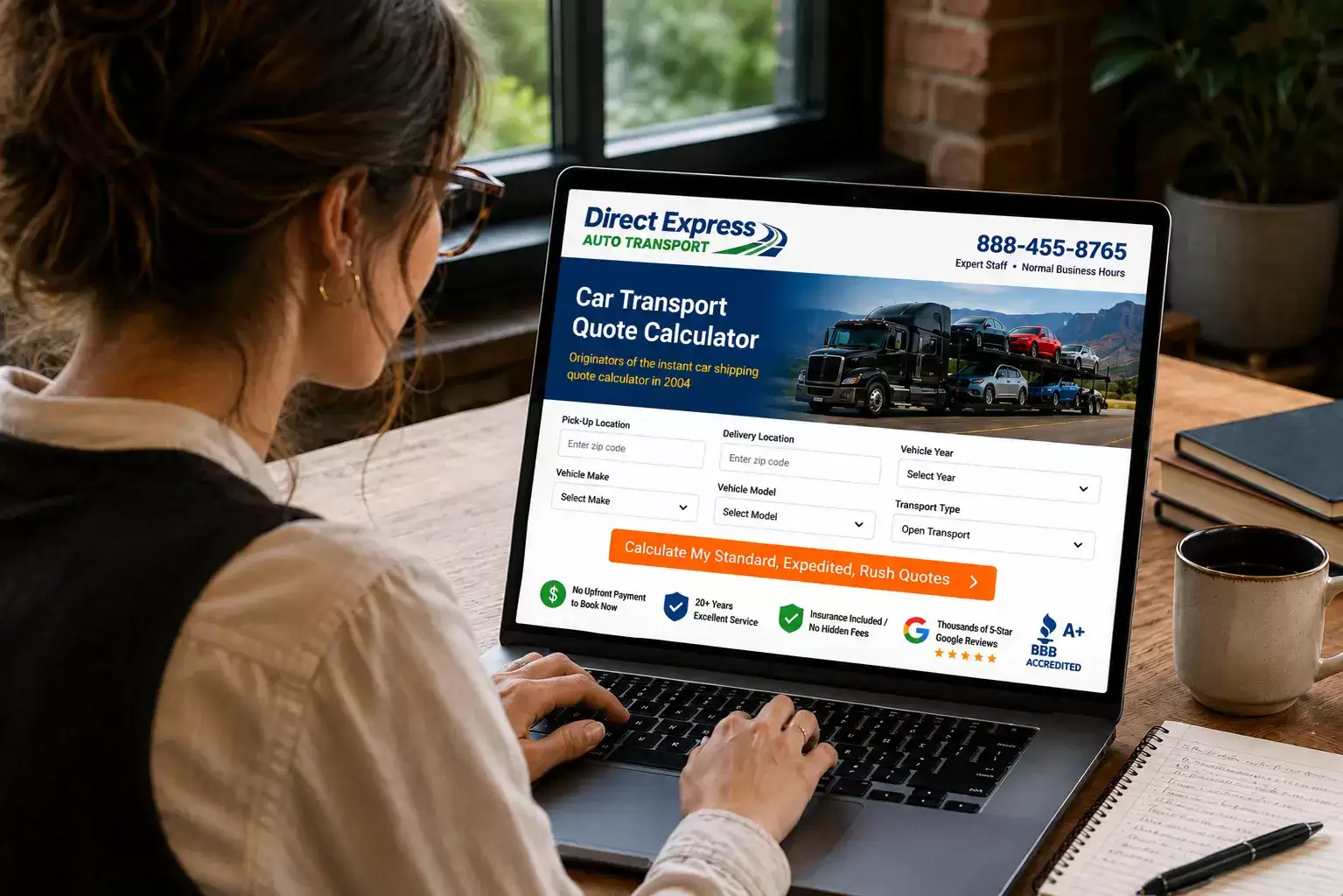
Need to ship a car to or from Nevada? Direct Express Auto Transport has been the Silver State’s most trusted auto transport broker since 2004 — with a 4.6-star average across thousands of verified Google reviews, no upfront payment required, and a real-time quote available in 30 seconds.
★ 4.6/5 Google Reviews | BBB Accredited A+ | FMCSA Licensed (MC #479342) | USDOT #1240502 | No upfront payment required | 20+ years shipping vehicles


Nevada car shipping costs vary based on your route, the time of year, vehicle size, and the service tier you choose. Use our instant calculator above for a real-time quote — or see the route-by-route pricing tables below for a fast ballpark. Most standard sedan shipments to or from Nevada range from $325 for the Los Angeles-to-Las Vegas short haul to $1,400+ on transcontinental routes to Florida or New York. Our Expedited and Rush pricing tiers hasten the process to create an even more satisfying experience.
What customers say about shipping a car to or from Nevada with Direct Express Auto Transport


The interstate corridors that move Nevada vehicles
Nevada’s carrier network is organized around two entirely separate interstate systems serving two separate geographic markets:
I-15 (Southern Nevada backbone): The primary carrier artery for Las Vegas and Henderson, running southwest toward Los Angeles (270 miles) and northeast toward Salt Lake City (420 miles). I-15 is one of the most carrier-dense short-haul routes in the western United States on the Los Angeles-to-Las Vegas segment, with carriers running this corridor nearly continuously in both directions. Northbound on I-15 past Las Vegas, the route continues through Mesquite and into Utah toward Salt Lake City, connecting Nevada to I-70 east toward Colorado and Denver. I-15 is the reason Las Vegas has carrier access that rivals cities ten times its size — the sheer volume of freight on the LA-to-LV segment ensures constant carrier availability.
I-80 (Northern Nevada backbone): The transcontinental corridor serving Reno, Sparks, and northern Nevada, running west toward Sacramento and San Francisco (220 miles) and east through Winnemucca, Elko, and into Utah toward Salt Lake City. I-80 is one of the most carrier-dense transcontinental highways in the United States, and the Reno metro benefits from constant through-carrier traffic between the Bay Area and Chicago that passes regardless of specific Reno origin loads. For Reno-area shippers, this through-carrier volume produces pickup windows that are unusually fast for a secondary Western market.
I-215 (Las Vegas Beltway): The inner loop highway encircling the Las Vegas metro, connecting Henderson, North Las Vegas, Summerlin, and all major Las Vegas suburban communities. I-215 is essential for carrier truck access to Las Vegas-area zip codes without navigating the Strip or downtown Las Vegas traffic. Most carrier pickups and deliveries in the Las Vegas metro use the I-215 beltway as the primary access route.
I-11 (Las Vegas to Phoenix corridor): A relatively new interstate running from Las Vegas south through Boulder City toward the Arizona border and connecting toward Phoenix. I-11 provides a more direct Las Vegas-to-Phoenix carrier route than the previous US-93 alignment, and is increasingly used by carriers running the growing Las Vegas-to-Phoenix freight corridor.
US-95 (Reno to Las Vegas): The Nevada high desert corridor connecting northern and southern Nevada, passing through Hawthorne, Tonopah, and Beatty. US-95 is not a primary carrier artery — it carries far less truck traffic than I-15 or I-80 — and the communities along this corridor require carriers to make deliberate detours from the primary interstate networks. Expedited tier is mandatory for US-95 corridor communities.
Vehicles shipping to or from Las Vegas or Henderson benefit from some of the best carrier access of any market in the western United States. The Reno-Sparks metro has strong access on I-80. Rural Nevada communities on US-95 or I-80 east of Reno will experience longer pickup windows and should use Expedited tier without exception.

Nevada’s two-market carrier system: what the I-15 and I-80 split means for your shipment
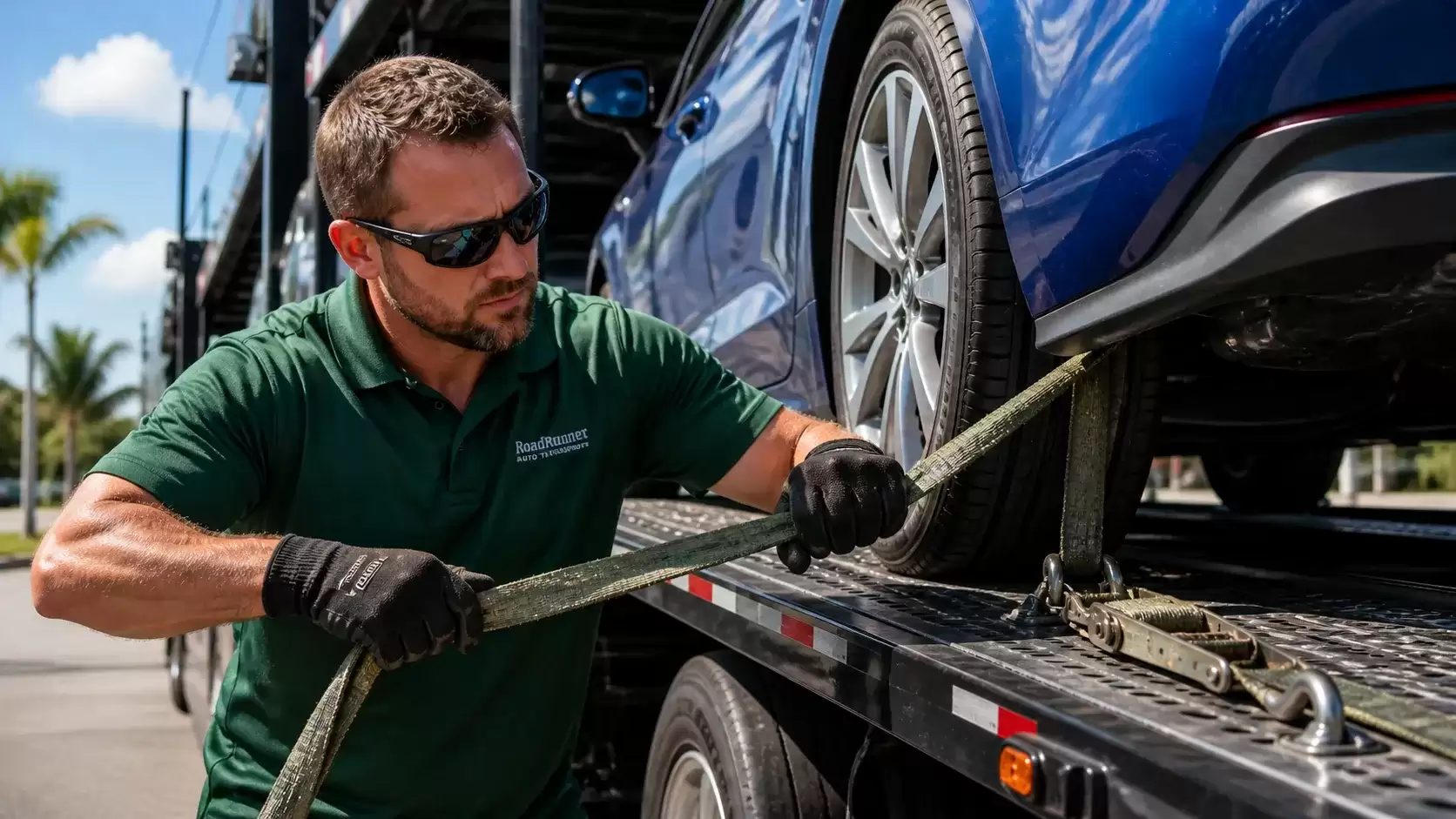
Nevada is unusual among western states in having two carrier hub markets that are functionally independent of each other. Understanding this split helps shippers in both markets set accurate expectations:
The Las Vegas I-15 advantage — best short-haul carrier access in the West: The 270-mile I-15 corridor between Los Angeles and Las Vegas is arguably the most carrier-dense short-haul interstate route in the western United States. Carriers running Burbank, Ontario, or Los Angeles make the Las Vegas run as a regular freight leg, delivering and picking up loads continuously. The result is that Las Vegas has Standard tier pickup windows that rival or exceed those of much larger markets. For Los Angeles-to-Las Vegas or Las Vegas-to-Los Angeles moves, Standard tier is reliable year-round and pickups in 2–4 business days are common even during peak months.
The California migration amplification effect: Nevada’s no-income-tax advantage has made it one of the top three destinations for California out-migration every year since 2018. The sustained volume of California residents shipping vehicles to Las Vegas, Henderson, Summerlin, and North Las Vegas means that California-to-Nevada carrier loads are available on virtually every carrier truck running the I-15 corridor. This also means that southbound Nevada-to-California loads are in constant demand as return freight, keeping bidirectional rates on the I-15 competitive.
The Reno I-80 transcontinental throughput advantage: Reno benefits from I-80’s role as one of the most heavily traveled transcontinental carrier arteries in the country. A carrier running Chicago to San Francisco on I-80 passes through Reno regardless of whether they have a specific Reno load. This creates an ambient carrier availability in Reno that is disproportionate to the city’s size — similar to how Florence, South Carolina benefits from I-95 through traffic. Standard tier in Reno frequently outperforms expectations as a result of this I-80 ambient carrier flow.
The rural Nevada high desert gap: Between I-15 in the south and I-80 in the north, Nevada is largely high desert without major interstates. Elko, Winnemucca, Battle Mountain, and Tonopah are all significantly off both primary carrier networks. US-95 carries some carrier traffic but not at primary interstate levels. Any shipper in rural central or western Nevada should use Expedited tier as the absolute default and plan for pickup windows that are longer than comparably-sized urban markets.
Nevada’s major auto carrier hubs and what they mean for you
Not all Nevada cities are equal from a logistics standpoint. Here is how the major hubs rank in terms of carrier availability:
Las Vegas / I-15 / I-215 Beltway: The highest carrier density in Nevada, driven by the I-15 Los Angeles corridor, the California migration inflow, auto auction commercial activity, and Nellis AFB PCS demand. The I-215 beltway gives carrier trucks excellent access to all Las Vegas metro zip codes. Standard tier performs reliably year-round in the Las Vegas metro, and pickup windows are frequently among the fastest in the western United States given the constant I-15 carrier flow.
Henderson / I-215 Southeast Beltway: Nevada’s second-largest city and Las Vegas’s premier southeastern suburb, sitting on the I-215 southeast beltway at the US-95 junction. Henderson is effectively the same carrier market as Las Vegas — the I-215 loop connects Henderson directly to the I-15 corridor without requiring passage through central Las Vegas. Henderson’s master-planned communities (Green Valley, MacDonald Highlands, Anthem) and proximity to the I-215/I-11 interchange make it one of the best-served suburban auto transport markets in the West. Standard tier is reliable year-round; pickup windows mirror Las Vegas metro.
North Las Vegas / I-15 North Corridor: Nellis AFB’s host community on I-15 north of the Strip; military PCS demand adds consistent shipping volume beyond the civilian residential market. I-15 north access toward Utah. Carrier access equivalent to the broader Las Vegas metro.
Reno / I-80 / US-395 Northern Hub: Northern Nevada’s primary carrier hub and the second-most competitive auto transport market in the state. I-80 transcontinental through-carrier traffic gives Reno pickup windows that exceed expectations for a secondary market. Tesla Gigafactory, Apple, and Google technology campuses drive sustained inbound relocation demand from the Bay Area. Standard tier is reliable year-round on I-80 corridor routes. Expedited recommended for hard-deadline Reno moves during peak summer months.
Sparks / I-80 East of Reno: Reno’s eastern neighbor on I-80, effectively part of the Reno-Sparks carrier market. Industrial parks and distribution centers generate commercial vehicle traffic that supplements residential carrier demand. Carrier access and pickup windows are essentially equivalent to Reno.
Carson City / US-395 Capital Corridor: Nevada’s state capital approximately 30 miles south of Reno on US-395. Carson City is served from the Reno hub for most long-distance routes. US-395 connects Carson City to Reno north and south into Minden and Gardnerville. Expedited recommended for hard-deadline Carson City shipments given its secondary location relative to I-80.
Elko / I-80 Eastern Nevada: Eastern Nevada’s primary hub on I-80 approximately 290 miles east of Reno. Elko benefits from I-80 through-carrier traffic on the Reno-to-Salt-Lake-City corridor, but as a deliberate stop rather than a high-frequency hub. Great Basin College campus provides a local demand base. Expedited recommended for all Elko shipments.

Nevada auto transport cost estimates: major routes
The tables below show estimated pricing for the most commonly requested Nevada auto transport routes, based on real-time market data for a standard operable sedan via open carrier. All prices reflect current market conditions for Standard, Expedited, and Rush tiers. Your actual quote may vary based on vehicle size, exact pickup/delivery zip codes, and seasonal demand. Use our instant calculator for a real-time rate.
Popular Routes To Nevada
Swipe to view full table →
| From | To | Distance (mi) | Estimated Days | Standard | Expedited | Rush |
|---|---|---|---|---|---|---|
| California | Nevada | 270 | 1–2 days | $325 | $390 | $455 |
| Arizona | Nevada | 300 | 1–2 days | $350 | $420 | $490 |
| Utah | Nevada | 430 | 2–3 days | $450 | $540 | $630 |
| Colorado | Nevada | 750 | 2–4 days | $675 | $810 | $945 |
| Texas | Nevada | 1,500 | 4–7 days | $1,050 | $1,260 | $1,470 |
| Washington | Nevada | 1,300 | 4–6 days | $975 | $1,170 | $1,365 |
| Oregon | Nevada | 700 | 2–4 days | $625 | $750 | $875 |
| Florida | Nevada | 2,700 | 7–10 days | $1,400 | $1,680 | $1,960 |
| New York | Nevada | 2,700 | 7–10 days | $1,400 | $1,680 | $1,960 |
| Illinois | Nevada | 2,000 | 5–8 days | $1,175 | $1,410 | $1,645 |
Popular Routes From Nevada
Swipe to view full table →
| From | To | Distance (mi) | Estimated Days | Standard | Expedited | Rush |
|---|---|---|---|---|---|---|
| Nevada | California | 270 | 1–2 days | $325 | $390 | $455 |
| Nevada | Arizona | 300 | 1–2 days | $350 | $420 | $490 |
| Nevada | Utah | 430 | 2–3 days | $450 | $540 | $630 |
| Nevada | Colorado | 750 | 2–4 days | $675 | $810 | $945 |
| Nevada | Texas | 1,500 | 5–7 days | $1,050 | $1,260 | $1,470 |
| Nevada | Washington | 1,300 | 4–6 days | $975 | $1,170 | $1,365 |
| Nevada | Oregon | 700 | 2–4 days | $625 | $750 | $875 |
| Nevada | Florida | 2,700 | 7–10 days | $1,400 | $1,680 | $1,960 |
| Nevada | New York | 2,700 | 7–10 days | $1,400 | $1,680 | $1,960 |
| Nevada | Illinois | 2,000 | 6–9 days | $1,175 | $1,410 | $1,645 |
Why long-distance vehicle shipping from Nevada often costs less per mile than mid-range hauls
Nevada shippers are often surprised to find that shipping a car to Florida costs only moderately more than shipping to Texas, even though Florida is nearly twice the distance. The explanation is carrier economics. A carrier running Las Vegas to Miami on I-10 east is making a full transcontinental run, spreading fixed costs — driver time, fuel, insurance, overhead — across 2,700 miles. The per-mile cost drops substantially at that distance. On a shorter haul to Texas (1,500 miles), the carrier makes a deliberate mid-range run with the same fixed cost structure compressed into fewer miles, producing a higher per-mile rate even though the absolute dollar amount is lower. This also explains why the California-to-Las Vegas short haul ($325) looks disproportionately cheap per dollar but expensive per mile — the short distance means every fixed carrier cost is concentrated into 270 miles. True cross-country moves from Nevada frequently deliver the best per-mile value.

Best time to ship a car to or from Nevada — the complete seasonal guide
Nevada car shipping service tiers
| Tier | How It Works | Pickup Window | Best For | Price vs. Standard |
|---|---|---|---|---|
| Standard | Listed at market rate; carrier assigned when available | 3–7 business days | Flexible schedules; off-peak season; Las Vegas and Henderson I-15 corridor; Reno I-80 corridor; December-January best-rate window | Base rate |
| Expedited (most popular) |
Listed above market rate; attracts carriers faster through the load board | 1–3 business days | Most Nevada shippers; Nellis and Creech AFB PCS; rural Nevada year-round; peak summer California migration; holiday window moves | +20% |
| Rush | Top of market; maximum carrier priority; first available driver assigned | Same or next business day | Hard Nellis AFB report-by orders; last-minute peak summer moves; firm job-start relocation deadlines | +40% |
The Nevada-specific tier recommendation
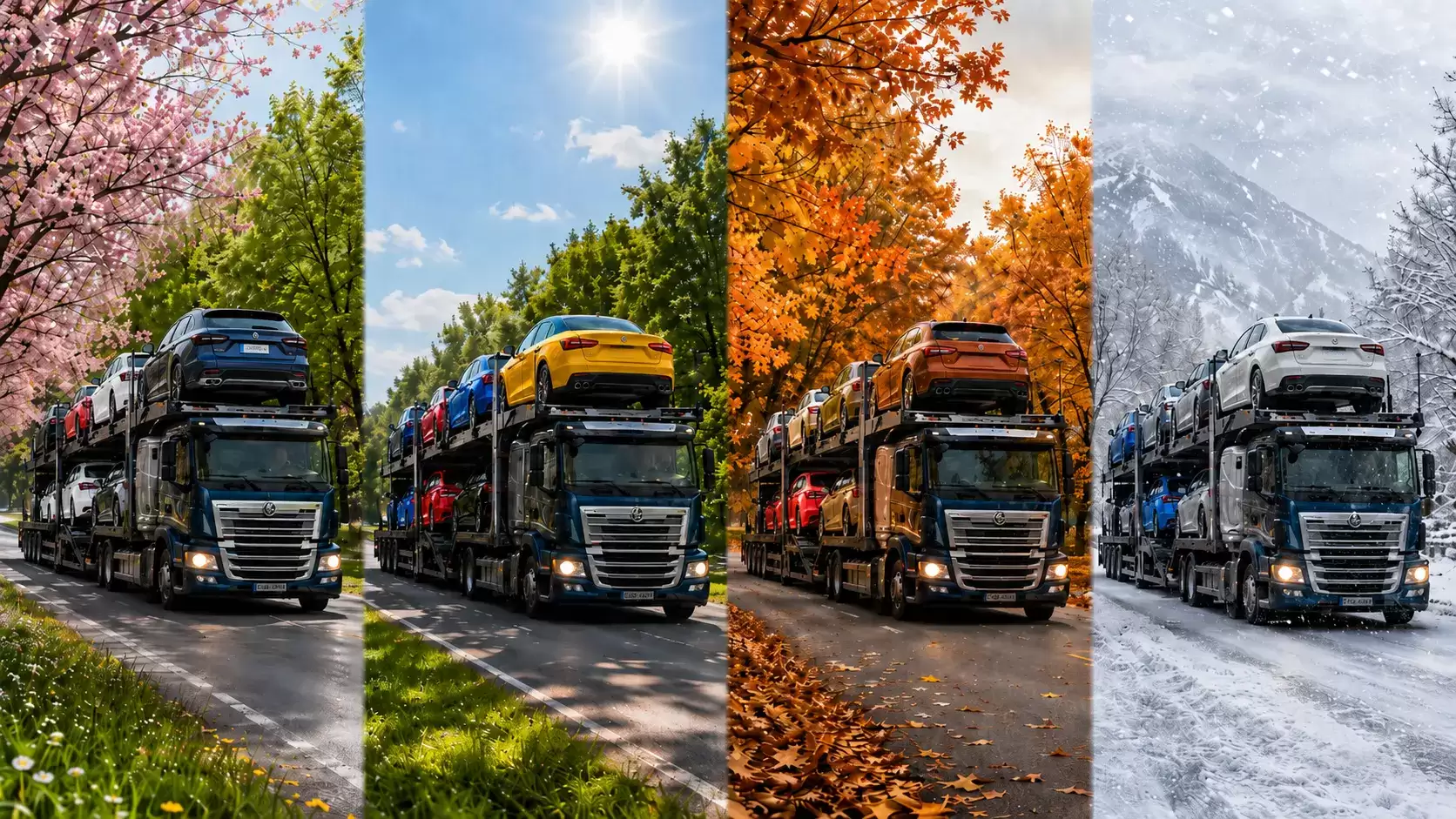
For Las Vegas and Henderson shippers on the I-15 corridor, Standard tier is one of the most reliable in the western United States during the off-peak period of December through March. The combination of year-round mild weather, constant bidirectional I-15 carrier traffic, and the commercial vehicle pipeline from ADESA and Manheim means Standard listings in the Las Vegas metro are assigned faster than in most comparable western cities.
From April through November, particularly during the June-through-September summer peak, Expedited tier is the correct default for any Las Vegas or Henderson shipper with a meaningful delivery deadline, as California migration volume and Nellis PCS demand compete simultaneously with peak summer carrier loads. Reno-Sparks shippers should follow a similar pattern with the added caveat that I-80 Sierra Nevada pass conditions from November through March can add transit buffer on California-bound routes — flexible shippers who can wait for April pickup are often rewarded with both fast Standard tier pickup windows and good pricing as the spring return freight pipeline opens northward.
Rural Nevada communities on US-95, I-80 east of Elko, and off-highway locations should use Expedited as their absolute baseline year-round, with Rush tier reserved for Nellis and Creech AFB hard report-by dates during peak PCS season.


How to ship a car to or from Nevada: 4 steps
Step 1: Get your instant quote. Use our Nevada car shipping calculator above. Enter your pickup zip code, delivery zip code, vehicle year, make, and model. Your real-time quote appears in 30 seconds, with Standard, Expedited, and Rush pricing shown side by side. No phone call required.
Step 2: Book your order — no upfront payment. Select your tier and confirm your pickup window. We do not charge your card until a carrier is assigned and confirmed. Your card is only authorized when your driver is locked in and ready to pick up your vehicle.
Step 3: Carrier pickup and inspection. Your assigned carrier contacts you directly to confirm pickup timing. At pickup, the driver completes a Bill of Lading inspection report documenting your vehicle’s pre-transport condition on all panels. Review it carefully before signing — this document is your protection record at delivery.
Step 4: Delivery and final inspection. Your driver will contact you before arrival to coordinate delivery. At delivery, inspect your vehicle against the Bill of Lading before signing off. Payment to the carrier (cash or certified funds) is due at delivery. If you note any new damage, document it on the Bill of Lading before the driver departs — this is the required first step for any carrier insurance claim.
University and college vehicle transport in Nevada
The University of Nevada Las Vegas and the University of Nevada Reno are Nevada’s two flagship universities, and together with Nevada State College and the College of Southern Nevada they enroll well over 80,000 students statewide. The August move-in and May move-out periods create the state’s largest annual vehicle shipping demand spikes, concentrated in Las Vegas and Reno. Book three to four weeks ahead and select Expedited tier if your shipment falls within two weeks of a university move period.
| University | Location | Approx. Enrollment |
|---|---|---|
| University of Nevada Las Vegas (UNLV) | Las Vegas | ~31,000 |
| College of Southern Nevada | Las Vegas / Henderson / North Las Vegas | ~30,000 |
| University of Nevada Reno (UNR) | Reno | ~21,000 |
| Nevada State College | Henderson | ~7,000 |
| Truckee Meadows Community College | Reno / Sparks | ~12,000 |
| Western Nevada College | Carson City | ~4,000 |
| Great Basin College | Elko | ~4,000 |

Military base vehicle shipping in Nevada
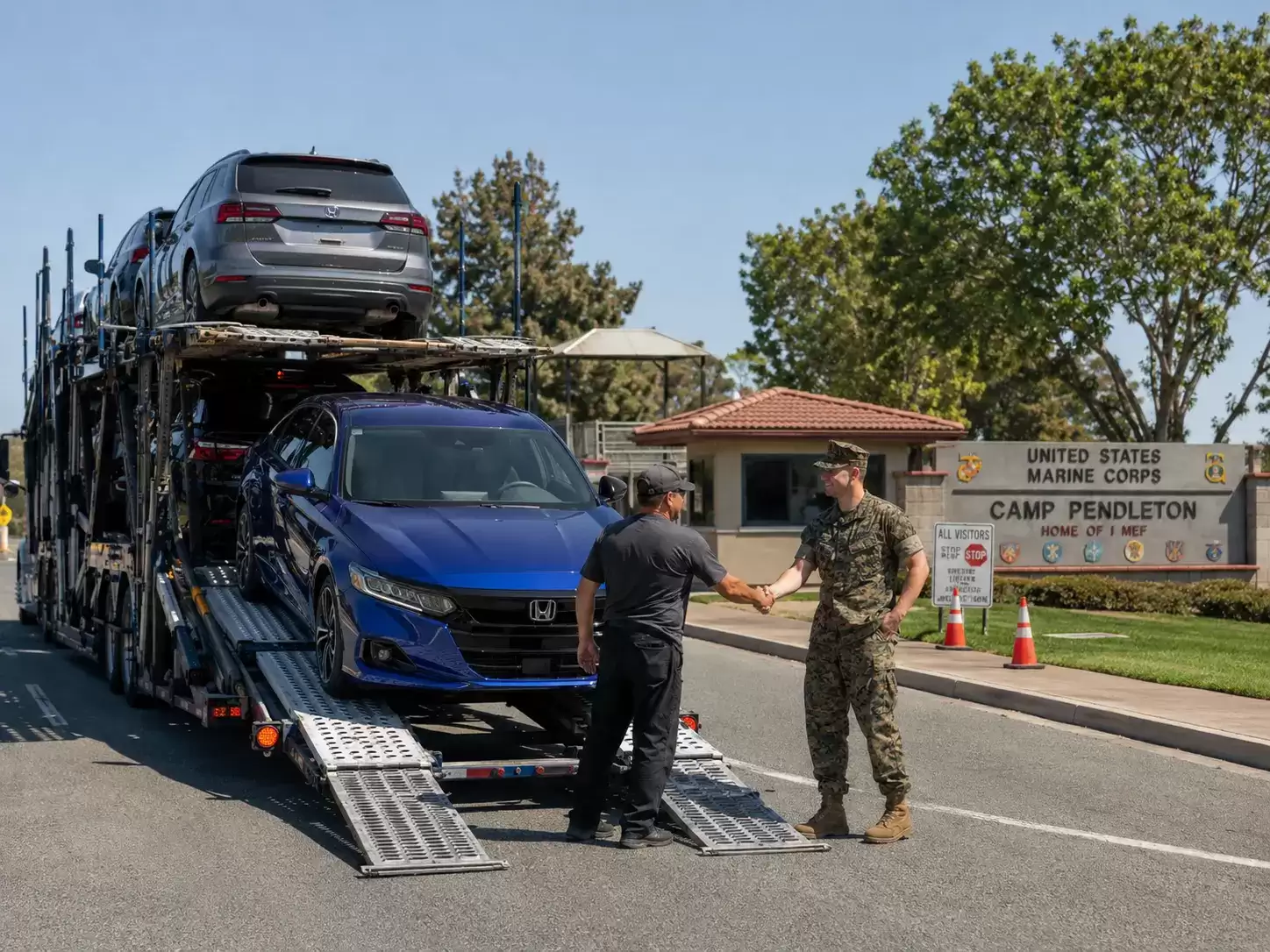
Nevada is home to two of the United States Air Force’s most strategically significant installations — Nellis Air Force Base and Creech Air Force Base — generating significant PCS vehicle shipping demand from the Las Vegas metro and the Nevada high desert throughout the year.
Nellis Air Force Base — North Las Vegas
Nellis AFB is one of the Air Force’s premier fighter wing installations, home of the F-35 Formal Training Unit, the Thunderbirds aerial demonstration team, and the host of the annual Red Flag combat training exercises that bring military aircraft and personnel from allied nations worldwide. Nellis is located in North Las Vegas with direct I-15 and I-215 access to the full Las Vegas carrier network. PCS moves to and from Nellis benefit from Las Vegas metro hub-level carrier access — among the best for any military installation in the western United States. Expedited tier recommended for hard report-by date moves during peak PCS season (April through August).
Creech Air Force Base — Indian Springs
Creech AFB is the Air Force’s primary center for remotely piloted aircraft operations, located in the Nevada high desert approximately 45 miles northwest of Las Vegas on US-95 near Indian Springs. Creech personnel are physically located off the primary carrier corridor, requiring carriers to detour from I-15 or I-215 to reach the installation. Expedited tier is strongly recommended for all Creech AFB PCS vehicle shipments. Personnel at Creech who plan ahead and can stage their vehicle at a Las Vegas-area address for carrier pickup can access the full Las Vegas carrier market and avoid the detour penalty.
Naval Air Station Fallon — Fallon
NAS Fallon is the Navy’s premier tactical air warfare training center, located in Churchill County approximately 60 miles east of Reno on US-50. NAS Fallon generates significant PCS vehicle shipping demand from Navy and Marine Corps fighter squadrons that rotate through for training. Carriers serving NAS Fallon typically route from the Reno market. Expedited tier is required given the off-interstate location on US-50; Rush tier should be considered for firm report-by orders during peak PCS months.
Nevada National Guard installations statewide
Nevada maintains armories and readiness centers in Las Vegas, Henderson, Reno, Carson City, Elko, and Ely. Guard personnel at Las Vegas and Reno installations benefit from their respective metropolitan carrier markets. Personnel at rural Nevada Guard facilities should use Expedited tier as the default.
Cities we serve in Nevada
We provide auto transport pickup and delivery throughout Nevada. Cities on or near the I-15 Las Vegas corridor and the I-80 Reno corridor have the shortest pickup windows and most competitive rates. Rural Nevada communities on US-95 and secondary highways require Expedited tier for time-sensitive shipments.
Las Vegas Metro / I-15 / I-215 Beltway
Las Vegas — Nevada’s largest city and the state’s premier carrier hub on I-15; commercial auto auction activity (ADESA, Manheim, Barrett-Jackson) supplements residential carrier density; Nellis AFB PCS demand; daily carrier departures to California, Arizona, Utah, and cross-country destinations. Henderson — Nevada’s second-largest city on the I-215 southeast beltway; master-planned communities with consistent relocation demand; Nevada State College; direct I-215 connection to I-15 without Strip or downtown navigation. North Las Vegas — Nellis AFB host community north of the Strip on I-15; military housing and relocation demand supplement civilian residential market; I-15 north direct access toward Utah. Summerlin — Western Las Vegas suburb in unincorporated Clark County; US-95 and I-215 access; upscale master-planned community with strong California migration demand. Spring Valley and Enterprise — Southwestern Clark County communities; I-215 south access; fast-growing suburban relocation markets. Boulder City — Historic community southeast of Henderson on US-93/US-95; I-11 access toward Arizona; smaller market with Henderson hub carrier service. Mesquite — I-15 community at the Nevada-Utah border; retirement resort community; I-15 direct access northbound toward Utah and southbound toward Las Vegas; reasonable carrier availability given I-15 through traffic.
Henderson / I-215 / US-95 Southeast Corridor
Henderson — Already noted above as Nevada’s second-largest city; I-215 connects Henderson directly to every Las Vegas metro carrier route without Strip navigation; Nevada State College generates annual student vehicle demand; strong retirement and California relocation market. Green Valley and Anthem — Henderson master-planned neighborhoods; served from the Henderson/I-215 hub with excellent carrier access. MacDonald Highlands — Upscale Henderson hillside community; gated community coordination required for carrier trucks; Expedited recommended to ensure availability for access window coordination. Boulder Highway corridor — US-93 southeast of Henderson toward Boulder City; served from the Henderson hub.
Reno Metro / I-80 / US-395 Northern Nevada
Reno — Northern Nevada’s primary hub on I-80; strong bidirectional carrier traffic from Bay Area and Salt Lake City; Tesla Gigafactory, Apple, and Google technology relocations; University of Nevada Reno creates annual student vehicle demand. Sparks — Reno’s eastern neighbor on I-80; industrial and distribution park employment; effectively part of the Reno carrier market. Sun Valley and Stead — Northern Reno communities; served from the Reno hub. Fernley — I-80 community east of Reno; distribution center employment; I-80 through-carrier access. Fallon — NAS Fallon host community on US-50 east of Reno; military PCS demand; Expedited required given US-50 off-interstate location.
Carson City / Minden-Gardnerville / US-395 Capital Corridor
Carson City — Nevada’s state capital approximately 30 miles south of Reno on US-395; Western Nevada College campus; served from the Reno hub for most long-distance routes. Minden and Gardnerville — Douglas County communities south of Carson City in the Carson Valley; retirement and second-home relocation market; Expedited recommended. Stateline / South Lake Tahoe area — Nevada side of Lake Tahoe; seasonal resort and gaming community; Expedited required given US-50 mountain location.
I-80 Eastern Nevada / Elko / Winnemucca
Elko — Eastern Nevada’s primary hub on I-80 approximately 290 miles east of Reno; Great Basin College campus; gold mining industry employment; I-80 through-carrier access on the Reno-to-Salt-Lake-City corridor. Expedited recommended. Winnemucca — Humboldt County seat on I-80 between Reno and Elko; mining industry hub; I-80 through-carrier access. Expedited recommended. Battle Mountain and Lovelock — Smaller I-80 communities; Expedited strongly recommended. Ely — White Pine County seat well off I-80 on US-93; among the most remote auto transport markets in Nevada; Expedited strongly required; expect longer pickup windows than any other Nevada market.
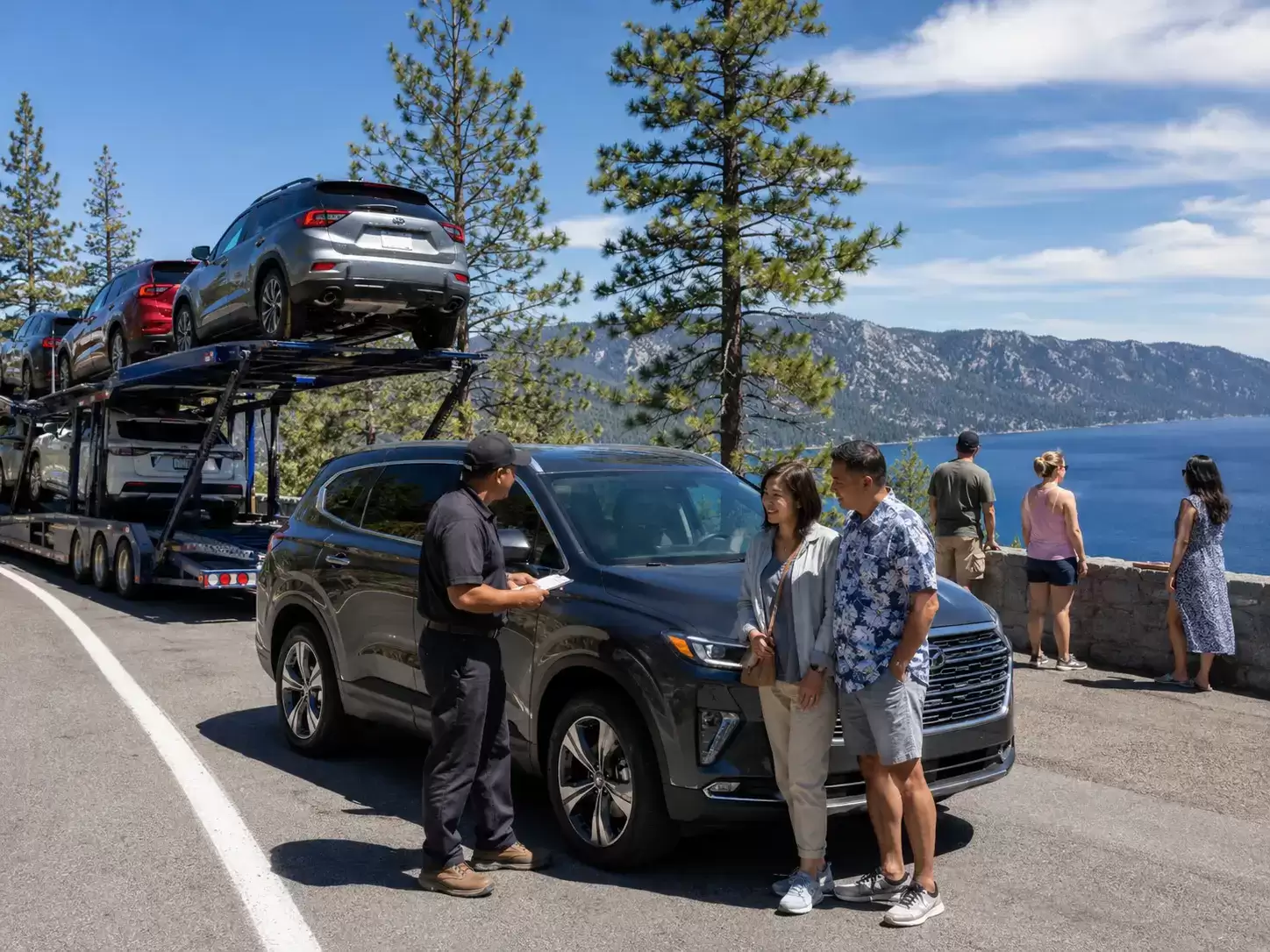
Nevada government resources for vehicle shipping
- Nevada Department of Motor Vehicles (Nevada DMV) — Official source for Nevada vehicle registration, title transfer, and out-of-state vehicle titling requirements when your shipped vehicle arrives in Nevada.
- Nevada Attorney General — Consumer Protection — File a complaint or research a mover’s complaint history with Nevada’s consumer protection office.
- FMCSA SAFER System — Look up any auto transport carrier’s federal operating authority, insurance status, and safety record before booking.
- FMCSA Protect Your Move — Federal consumer guidance on avoiding auto transport fraud and understanding your rights as a shipper.
- NV Roads — Nevada Road Conditions — Current road conditions, construction updates, and weather advisories on Nevada interstates including I-15, I-80, and US-95 that may affect carrier transit times.

Popular long-distance Nevada car transport routes
Nevada to California: Car Shipping
Nevada-to-California is the state’s highest-volume long-distance corridor by a wide margin, driven by the constant bidirectional migration between Las Vegas and the Los Angeles metro on I-15, and between Reno and the San Francisco Bay Area on I-80. The 270-mile I-15 Los Angeles-to-Las Vegas segment is one of the most carrier-dense short-haul routes in the western United States. Standard tier is reliable year-round on this corridor. Transit to Los Angeles is typically 1–2 days; San Francisco via I-80 is typically 2–3 days.
Nevada to Arizona: Auto Transport
Nevada-to-Arizona routes run south on I-15 through Boulder City and via I-11 toward Phoenix and Tucson, or via US-93 south and I-40 east. Phoenix and Scottsdale are the primary Arizona destinations for Nevada shippers. I-11 provides a more direct Las Vegas-to-Phoenix route than earlier US-93 alignments. Transit is typically 1–2 days to Phoenix. Arizona-bound loads from Nevada are among the most reliably served routes in the Southwest.
Nevada to Utah: Vehicle Shipping
I-15 northeast from Las Vegas runs directly to Salt Lake City in approximately 420 miles through the Virgin River Gorge in Arizona and into Utah. The Las Vegas-to-Salt-Lake-City I-15 corridor is one of the most active carrier lanes in the Mountain West. Salt Lake City is Nevada’s primary Utah gateway and connects to I-70 east toward Denver and I-15 north toward Idaho and Montana. Transit is typically 2–3 days.
Nevada to Colorado: Vehicle Transport
Nevada-to-Colorado routes run northeast via I-15 to Salt Lake City and east via I-70 toward Denver and the Front Range, or east via I-80 through Elko and into Utah toward Denver. Denver’s enormous relocation demand generates strong eastbound carrier loads from Nevada. Transit is typically 2–4 days to Denver. Mountain pass conditions on I-70 in Colorado can add buffer from October through May.
Nevada to Texas: Car Transport
Nevada-to-Texas routes run east via I-15 to Salt Lake City and south via I-70 and I-40 through Albuquerque toward Dallas, or south via I-15 to Phoenix and east via I-10 toward El Paso and San Antonio and Houston. Both Texas metros are well-served from Nevada. Transit is typically 5–7 days to Dallas and Houston.
Nevada to Oregon: Auto Shipping
Nevada-to-Oregon routes run north via US-395 from Reno toward the Oregon border and on to I-5 at Medford, or west via I-80 from Reno to Sacramento and north on I-5. The Reno-to-Portland route on I-5 is approximately 700 miles from the Nevada-California border to Portland. Transit is typically 2–4 days from Reno and 4–6 days from Las Vegas to Portland.
Nevada to Washington: Vehicle Relocation
Nevada-to-Washington routes run north on I-5 from Northern California and Oregon into Seattle and the Puget Sound. Las Vegas to Seattle via I-15/I-5 is approximately 1,300 miles. The I-5 West Coast corridor is the primary carrier route for all Nevada-to-Washington moves. Transit is typically 4–6 days from Las Vegas and 3–5 days from Reno.
Nevada to Idaho: Car Hauling
Nevada-to-Idaho routes run north via I-15 through Utah to the I-15/I-84 junction near Pocatello, then west toward Boise or north toward Idaho Falls and Twin Falls. Boise is well-served from Nevada via the I-15/I-84 corridor. Transit is typically 3–5 days from Las Vegas to Boise.
Nevada to Illinois: Vehicle Hauling
Nevada-to-Illinois routes run east via I-80 from Reno through Utah and Wyoming toward Chicago, or east via I-15/I-70 through Denver and Kansas City. Chicago is the Midwest’s primary carrier hub and generates strong eastbound demand from the West. Transit from Las Vegas to Chicago is typically 5–8 days.
Nevada to Florida: Auto Carrier
Nevada-to-Florida routes run east via I-10 from Los Angeles (after routing south on I-15) through Phoenix, El Paso, San Antonio, Houston, and into Florida. Alternatively, carriers route east via I-80 through Utah and across the Midwest. The most efficient Nevada-to-Florida route is typically via I-15 south to I-10 east. Transit is typically 7–10 days from Las Vegas to South Florida.
Nevada to New York: Car Carrier
Nevada-to-New York is a full coast-to-coast run, routing east via I-80 from Reno through Utah, Wyoming, Nebraska, and across the Midwest to I-80 east into New York, or via I-15 and I-70 through Denver and Kansas City to I-70 east. I-80 is the primary transcontinental route. Transit is typically 7–10 days from Las Vegas or Reno.
Nevada to Georgia: Vehicle Shipping
Nevada-to-Georgia routes run east via I-10 through Phoenix and on to San Antonio, then east via I-10 and I-75 toward Atlanta. Atlanta’s relocation market creates consistent eastbound carrier demand from the Mountain West and Pacific Coast. Transit from Las Vegas to Atlanta is typically 6–9 days.
Nevada to New Mexico: Auto Transport
Nevada-to-New Mexico routes run south via I-15 to Phoenix and east via I-40 toward Albuquerque and Santa Fe, or south and east via US-93 through Arizona. Albuquerque is approximately 900 miles from Las Vegas via this routing. Transit is typically 3–5 days. Expedited recommended for Albuquerque and Santa Fe moves given New Mexico’s secondary carrier market status on I-40.

Nearby states for Nevada auto transport
California: Car Shipping
California borders Nevada to the west and is Nevada’s highest-volume carrier corridor partner by a wide margin. The 270-mile I-15 Los Angeles-to-Las Vegas corridor is one of the most carrier-dense short-haul routes in the western United States. The I-80 Reno-to-San-Francisco corridor provides northern Nevada its equivalent link to the Bay Area. California-to-Nevada and Nevada-to-California are effectively a single carrier market on both corridors, with near-daily carrier departures in both directions year-round.
Arizona: Auto Transport
Arizona borders Nevada to the southeast, with Phoenix approximately 300 miles from Las Vegas via I-11 and US-93. Phoenix and the Valley of the Sun are the primary Arizona destinations for Nevada shippers, with strong bidirectional carrier traffic on the Las Vegas-to-Phoenix corridor year-round. Arizona is Nevada’s second-most-active neighboring carrier market after California.
Utah: Vehicle Shipping
Utah borders Nevada to the east. I-15 northeast from Las Vegas runs directly to Salt Lake City in approximately 420 miles through the Virgin River Gorge. The Las Vegas-to-Salt Lake City I-15 corridor is one of the most heavily traveled carrier lanes in the Mountain West, connecting Nevada to the Intermountain West hub that bridges the gap between the West Coast and the Midwest.
Oregon: Vehicle Transport
Oregon borders Nevada to the north. Reno-to-Portland via I-80/I-5 is approximately 700 miles, running through Sacramento and the I-5 Pacific Coast corridor. Las Vegas-to-Portland is longer but well-served via the I-15/I-5 alignment through California. Both Nevada carrier markets have reasonable Oregon access via California-hub routing.
Idaho: Auto Shipping
Idaho borders Nevada to the north. Boise is accessible from Las Vegas via I-15 north to Salt Lake City and west via I-84 to Boise, in approximately 700 miles. The I-15/I-84 corridor is well-traveled by carriers running the Mountain West. Reno-to-Boise is a more direct routing via US-95 north, though I-80/I-84 is typically preferred for carrier trucks.
Colorado: Car Hauling
Colorado is accessible from Nevada via I-15 northeast to Salt Lake City and east via I-70 toward Denver, or via I-80 east from Reno. Denver and the Front Range are the primary Colorado destinations for Nevada shippers. Colorado’s strong relocation market creates consistent eastbound carrier demand from Nevada. Transit from Las Vegas to Denver is typically 2–4 days via the I-15/I-70 corridor.

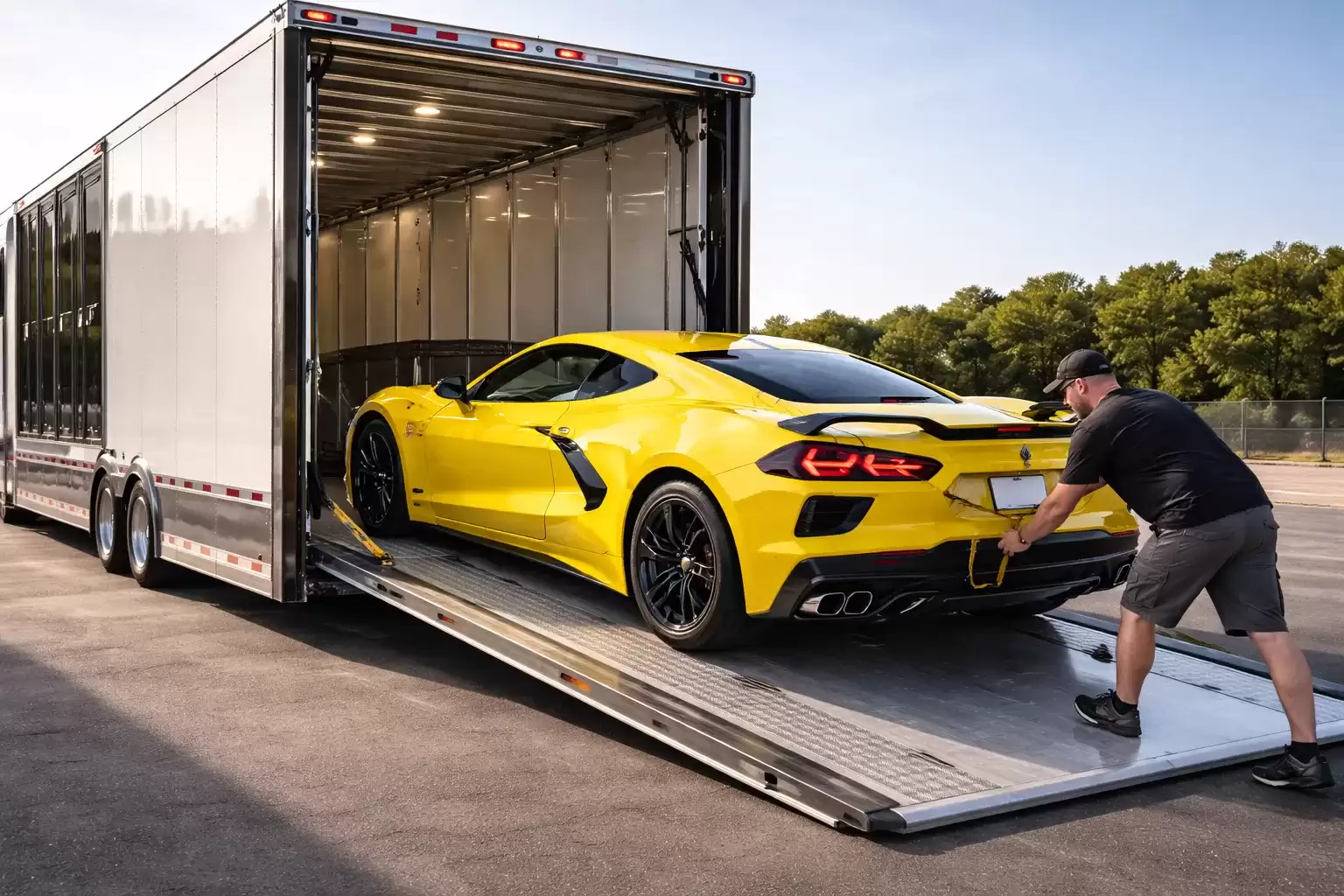
Ready to ship your car to or from Nevada?
Join hundreds of thousands of customers — Snowbirds, military families, tech relocators, students, and families moving across the country — who have trusted Direct Express Auto Transport with their Nevada vehicle shipments since 2004. Get your instant, no-obligation quote now. It takes 30 seconds, requires no personal information, and there is no upfront payment required to hold your spot.
Instant quote — real-time pricing in under 5 seconds
No upfront payment — your card is charged only when a carrier is assigned
No risk to get a quote and book your order
BBB Accredited A+ since 2004
FMCSA licensed and fully bonded
4.6 stars across thousands of verified Google reviews