
Maryland Car Shipping Services
Need to ship a car to or from Maryland? Direct Express Auto Transport has been the Old Line State’s most trusted auto transport broker since 2004 — with a 4.6-star average across thousands of verified Google reviews, no upfront payment required, and a real-time quote available in 30 seconds.
★ 4.6/5 Google Reviews | BBB Accredited A+ | FMCSA Licensed (MC #479342) | USDOT #1240502 | No upfront payment required | 20+ years shipping vehicles


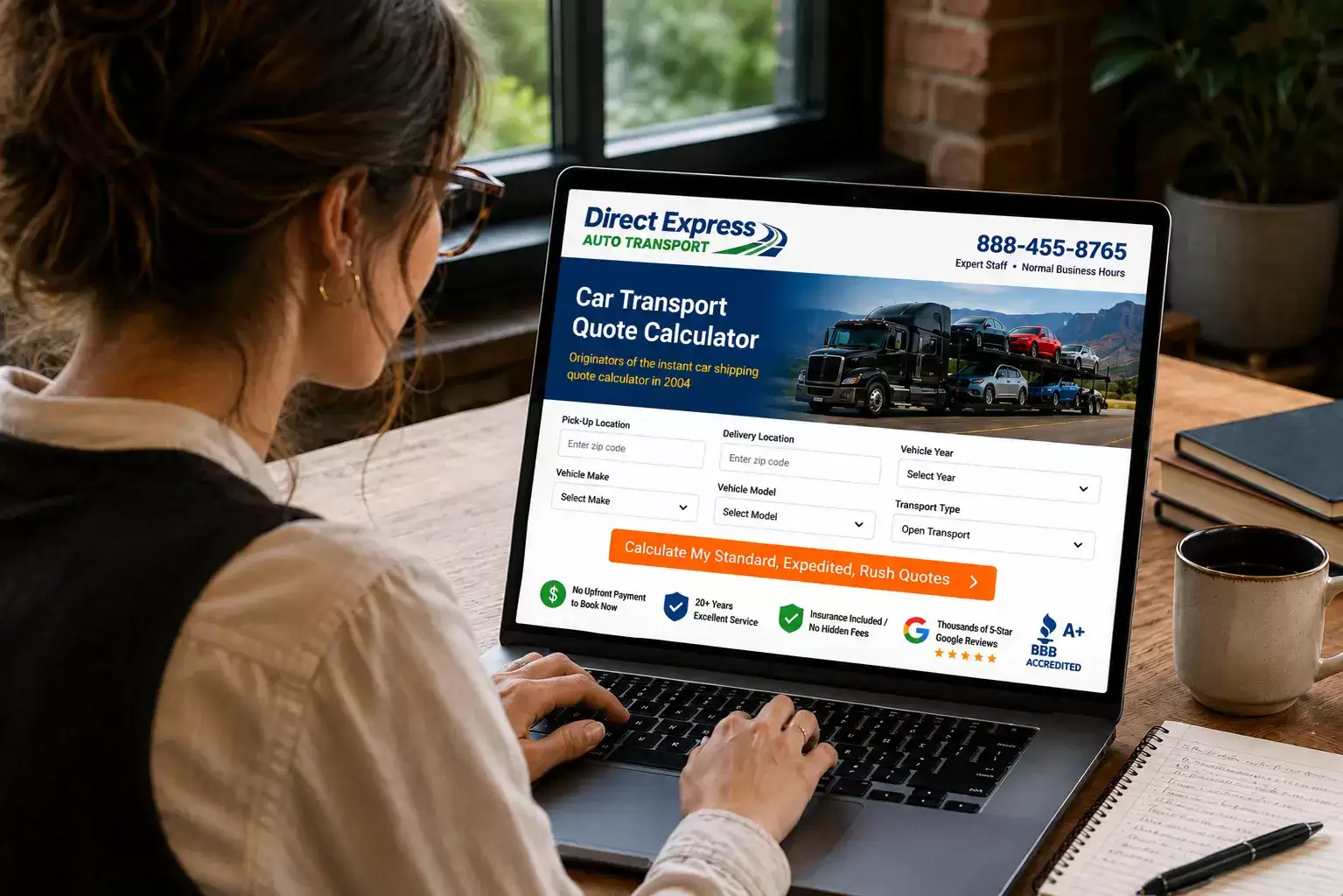
Maryland car shipping costs vary based on your route, the time of year, vehicle size, and the service tier you choose. Use our instant calculator above for a real-time quote — or see the route-by-route pricing tables below for a fast ballpark. Most standard sedan shipments to or from Maryland range from $450 on short Northeast Corridor hauls to New York or Philadelphia to $1,500+ on cross-country routes to California or Washington State. Our Expedited and Rush pricing tiers hasten the process to create an even more satisfying experience.
What customers say about shipping a car to or from Maryland with Direct Express Auto Transport


The interstate corridors that move Maryland vehicles
Four primary highway arteries define Maryland’s auto transport network:
I-95 (Northeast Corridor backbone): The dominant corridor, running northeast through Baltimore toward Delaware, Philadelphia, New York, and New England, and southwest through the DC suburbs toward Virginia, the Carolinas, and Florida. It is the single highest-volume carrier corridor on the East Coast and passes directly through the heart of the Baltimore metro. Carrier frequency on I-95 in Maryland is among the highest in the country, with multiple daily departures in both directions throughout the year.
I-70 (West corridor): Runs west from Baltimore through Frederick, Hagerstown, and into West Virginia, Pennsylvania, and ultimately across the Midwest to Kansas City. It is the primary artery for Maryland vehicles moving west, connecting Baltimore to Pittsburgh, Columbus, Indianapolis, St. Louis, and Denver. The I-70/I-270 junction north of Washington, D.C. also gives the DC suburbs strong westbound carrier access without routing through Baltimore.
I-83 (North corridor): Runs north from Baltimore through York, Pennsylvania, connecting to I-81 and I-76 (Pennsylvania Turnpike) for access to the broader Northeast and Midwest. It is the primary route for carriers serving the Baltimore-to-Harrisburg and Baltimore-to-Pittsburgh corridors and supplements I-95 for northbound freight avoiding the congested I-95 Philadelphia bypass.
US-50 / Bay Bridge (Eastern Shore corridor): The primary route connecting the Baltimore/DC metro to Maryland’s Eastern Shore and continuing across Delaware toward Ocean City and the Delmarva Peninsula. Carriers serving the Eastern Shore use US-50 as their primary access route, and crossing the Chesapeake Bay Bridge adds both geographic interest and slight logistical complexity compared to mainland Maryland pickups and deliveries.
Vehicles shipping to or from the Baltimore metro or DC suburbs on I-95 benefit from the highest carrier frequency in the state. If you are shipping to or from the Eastern Shore, western Maryland, or a rural community off the primary corridors, expect slightly longer pickup windows due to the required detour from the I-95 trunk route.
Maryland on the Northeast Corridor: what I-95 carrier density means for your shipment
Maryland sits at the geographic center of the I-95 Northeast Corridor — the single busiest auto transport lane in the eastern United States. Every carrier running between Florida and New England, or between the Southeast and New York, passes through Maryland. This creates a carrier dynamic that works strongly in favor of Maryland shippers:
Constant bidirectional freight: Because I-95 runs in both directions and never stops carrying freight, Maryland benefits from carrier availability that is relatively immune to the seasonal one-way imbalances that affect inland states. When carriers head south on snowbird season, they pass through Maryland. When those same carriers return north in spring, they pass through Maryland again. This structural symmetry means Maryland pickup windows are shorter and more predictable than in most comparable-population states.
The Baltimore hub position: Baltimore sits at the I-95/I-695/I-70/I-83 interchange, making it one of the more important carrier staging and routing points on the East Coast. Carriers from New England heading to Virginia or the Carolinas, carriers from New York heading to the Midwest on I-70, and carriers from the South heading to Philadelphia or Boston all converge near Baltimore. This carrier convergence gives the Baltimore metro some of the most competitive pickup windows on the entire East Coast.
The Washington, D.C. proximity effect: Maryland’s southern suburbs function as part of the DC carrier market. Carriers based in or routing through the DC area regularly serve Maryland pickups and deliveries in Prince George’s County, Montgomery County, and the I-270 corridor. This effectively gives southern Maryland access to the full carrier capacity of both the Baltimore and DC markets simultaneously.
The Eastern Shore exception: The Chesapeake Bay Bridge creates a geographic bottleneck for carrier trucks serving the Eastern Shore. While US-50 provides the route, the bridge crossing adds coordination time and limits the variety of carriers who routinely serve the Eastern Shore. Shippers in Ocean City, Salisbury, Easton, and Cambridge should expect slightly longer pickup windows than mainland Maryland markets, and Expedited tier is recommended for time-sensitive shipments from the Eastern Shore.
Maryland’s major auto carrier hubs and what they mean for you
Not all Maryland cities are equal from a logistics standpoint. Here is how the major hubs rank in terms of carrier availability:
Baltimore / I-695 Beltway: The highest carrier density in the state by a significant margin. The I-95/I-695/I-70/I-83 convergence in the Baltimore area makes it one of the premier carrier interchange points on the East Coast. Daily departures run to virtually every major U.S. city. The I-695 beltway gives carrier trucks excellent access to all Baltimore suburbs without downtown congestion. Pickup windows here are among the shortest on the East Coast and rival those of New York and Philadelphia on most routes.
DC Suburbs (Silver Spring, Bethesda, Gaithersburg, Rockville): Maryland’s southern suburbs effectively function as part of the Washington, D.C. carrier market — one of the highest-volume auto transport markets in the country. The I-495/Capital Beltway and I-270 corridor give these communities strong carrier access. Montgomery County in particular benefits from the intersection of DC carrier demand and I-270 westbound carrier traffic toward Frederick and beyond.
Frederick / I-70/I-270 Junction: Frederick sits at the confluence of I-70 (transcontinental east-west) and I-270 (connecting the DC metro to I-70). Carriers running between the DC metro and the Midwest pass through Frederick constantly. It is the best-served market in western Maryland and benefits from disproportionate carrier availability for a city its size.
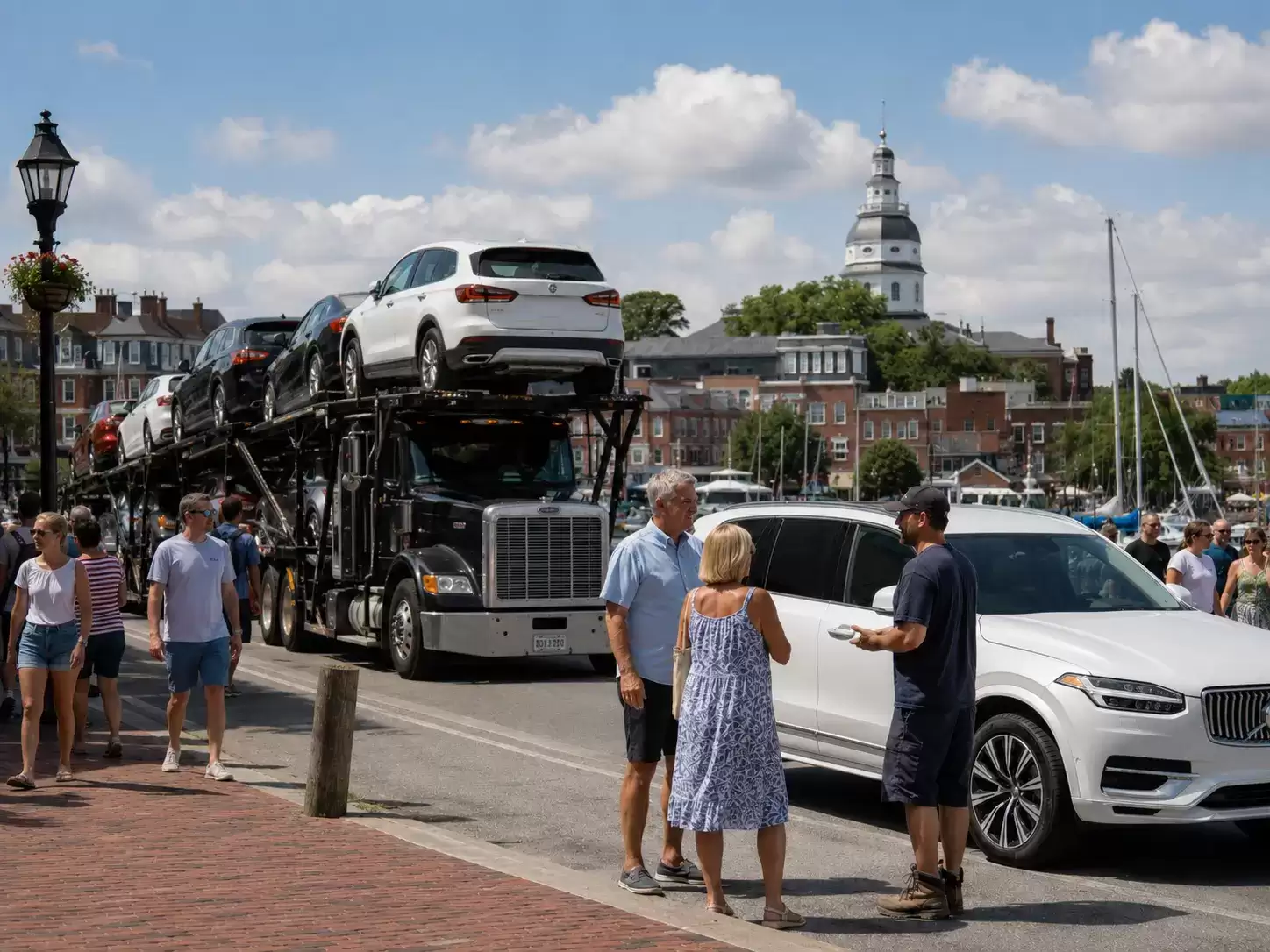
Annapolis / US-50 Corridor: Maryland’s capital sits at the head of the Bay Bridge corridor on US-50. Carriers serving both the Baltimore metro and the Eastern Shore converge here. The Naval Academy’s proximity generates consistent military PCS demand. Annapolis has reasonable carrier availability for a secondary market due to its position between the I-95/I-695 hub and the Eastern Shore corridor.
Hagerstown / I-70/I-81 Junction: Hagerstown sits at the convergence of I-70 (east-west) and I-81 (north-south through the Shenandoah Valley to Tennessee). Carriers heading from the Midwest toward Virginia, Tennessee, or the Carolinas via I-81 pass through Hagerstown, giving it a secondary hub function in western Maryland. Pickup windows are competitive for a city its size.
Salisbury / Eastern Shore: The largest city on Maryland’s Eastern Shore and home of Salisbury University. It is the best-served Eastern Shore market, with US-50 access from the Bay Bridge and US-13 north-south connecting to Delaware and Virginia. Despite the bay crossing, Expedited tier is recommended for time-sensitive Salisbury shipments to ensure prompt pickup.
Cumberland / I-68 Western Gateway: Maryland’s westernmost major city, sitting at the I-68/I-70 junction in the Allegheny highlands. It is the gateway for carriers moving between Maryland and West Virginia or southwestern Pennsylvania. Distance from the primary I-95/I-695 hub and mountainous terrain mean pickup windows are the longest in the state. Expedited tier strongly recommended.

Maryland vehicle transport cost estimates: major routes
The tables below show estimated pricing for the most commonly requested Maryland auto transport routes, based on real-time market data for a standard operable sedan via open carrier. All prices reflect current market conditions for Standard, Expedited, and Rush tiers. Your actual quote may vary based on vehicle size, exact pickup/delivery zip codes, and seasonal demand. Use our instant calculator for a real-time rate.
Popular Routes To Maryland
Swipe to view full table →
| From | To | Distance (mi) | Estimated Days | Standard | Expedited | Rush |
|---|---|---|---|---|---|---|
| Florida | Maryland | 1,100 | 4–6 days | $950 | $1,140 | $1,330 |
| California | Maryland | 2,800 | 7–10 days | $1,450 | $1,740 | $2,030 |
| Texas | Maryland | 1,500 | 5–7 days | $1,050 | $1,260 | $1,470 |
| Georgia | Maryland | 850 | 3–5 days | $800 | $960 | $1,120 |
| Washington State | Maryland | 2,900 | 8–11 days | $1,500 | $1,800 | $2,100 |
| Colorado | Maryland | 1,700 | 5–8 days | $1,100 | $1,320 | $1,540 |
| Ohio | Maryland | 500 | 2–4 days | $650 | $780 | $910 |
| Michigan | Maryland | 600 | 3–5 days | $700 | $840 | $980 |
| North Carolina | Maryland | 450 | 2–4 days | $650 | $780 | $910 |
| Illinois | Maryland | 700 | 3–5 days | $750 | $900 | $1,050 |
Popular Routes From Maryland
Swipe to view full table →
| From | To | Distance (mi) | Estimated Days | Standard | Expedited | Rush |
|---|---|---|---|---|---|---|
| Maryland | Florida | 1,100 | 4–7 days | $950 | $1,140 | $1,330 |
| Maryland | California | 2,800 | 8–11 days | $1,450 | $1,740 | $2,030 |
| Maryland | Texas | 1,500 | 5–8 days | $1,050 | $1,260 | $1,470 |
| Maryland | Georgia | 850 | 3–5 days | $800 | $960 | $1,120 |
| Maryland | Washington State | 2,900 | 9–12 days | $1,500 | $1,800 | $2,100 |
| Maryland | Colorado | 1,700 | 6–9 days | $1,100 | $1,320 | $1,540 |
| Maryland | Ohio | 500 | 2–4 days | $650 | $780 | $910 |
| Maryland | Michigan | 600 | 3–5 days | $700 | $840 | $980 |
| Maryland | North Carolina | 450 | 2–4 days | $650 | $780 | $910 |
| Maryland | New York | 200 | 1–3 days | $500 | $600 | $700 |
Why cross-country vehicle shipping from Maryland often costs less per mile than short hauls
Maryland shippers frequently notice that shipping a car to California costs only modestly more per mile than shipping to a nearby state like Ohio or North Carolina. The reason is carrier economics. A carrier running a Baltimore-to-Los Angeles transcontinental route is already committed to crossing Maryland; the Baltimore pickup is a natural start to a full cross-country load. The carrier can spread its fixed costs — driver time, fuel, insurance, overhead — across 2,800 miles rather than 500. On a shorter Ohio run, the same fixed cost structure is compressed into 500 miles, which means the per-mile rate is actually higher even though the total dollar amount is lower. This counterintuitive dynamic explains why Maryland-to-California and Maryland-to-Washington State shipments often feel like surprisingly competitive value when compared to mid-range regional routes. The longer the route, the lower the cost per mile.

Best time to ship a car to or from Maryland — the complete seasonal guide

Standard, Expedited, or Rush — which tier is right for your Maryland shipment?
Direct Express Auto Transport pioneered the three-tiered pricing model that is still for the most part unique to us. Each tier represents a different level of carrier incentive — the higher the tier, the more attractive your shipment is to carriers on the dispatch board, and the faster your vehicle gets assigned. Here is how each tier performs specifically on Maryland routes:
| Tier | How It Works | Pickup Window | Best For | Price vs. Standard |
|---|---|---|---|---|
| Standard | Listed at market rate; carrier assigned when available | 3–7 business days | Flexible schedules; off-peak season; I-95 and I-70 corridor pickups | Base rate |
| Expedited (most popular) |
Listed above market rate; attracts carriers faster through the load board | 1–3 business days | Most Maryland shippers; Eastern Shore; military PCS; university move seasons; summer peak | +20% |
| Rush | Top of market; maximum carrier priority; first available driver assigned | Same or next business day | Hard military report-by dates; last-minute government contractor relocations; summer peak emergencies | +40% |
The Maryland-specific tier recommendation
For most Maryland shippers using the Baltimore metro or DC suburbs as their origin or destination, Standard tier performs well during the off-peak period of October through April. The I-95 corridor carrier density is high enough that Standard listings in the primary hubs are assigned within a reasonable window even in winter. If your move falls between May and September — or if you are shipping to or from a secondary market such as the Eastern Shore, western Maryland, or Annapolis with a hard timeline — Expedited tier is the correct choice. Military shippers at Fort Meade, Aberdeen Proving Ground, or Patuxent River should use Expedited as their default during the May through August PCS season: the combination of military demand and general peak season competition makes Standard tier a less reliable choice for time-sensitive orders. Rush tier is appropriate only when the delivery date is truly immovable — a military report-by date that cannot flex or a home closing with no wiggle room.


How to ship a car to or from Maryland: 4 steps
Step 1: Get your instant quote. Use our Maryland car shipping calculator above. Enter your pickup zip code, delivery zip code, vehicle year, make, and model. Your real-time quote appears in 30 seconds, with Standard, Expedited, and Rush pricing shown side by side. No phone call required.
Step 2: Book your order — no upfront payment. Select your tier and confirm your pickup window. We do not charge your card until a carrier is assigned and confirmed. Your card is only authorized when your driver is locked in and ready to pick up your vehicle.
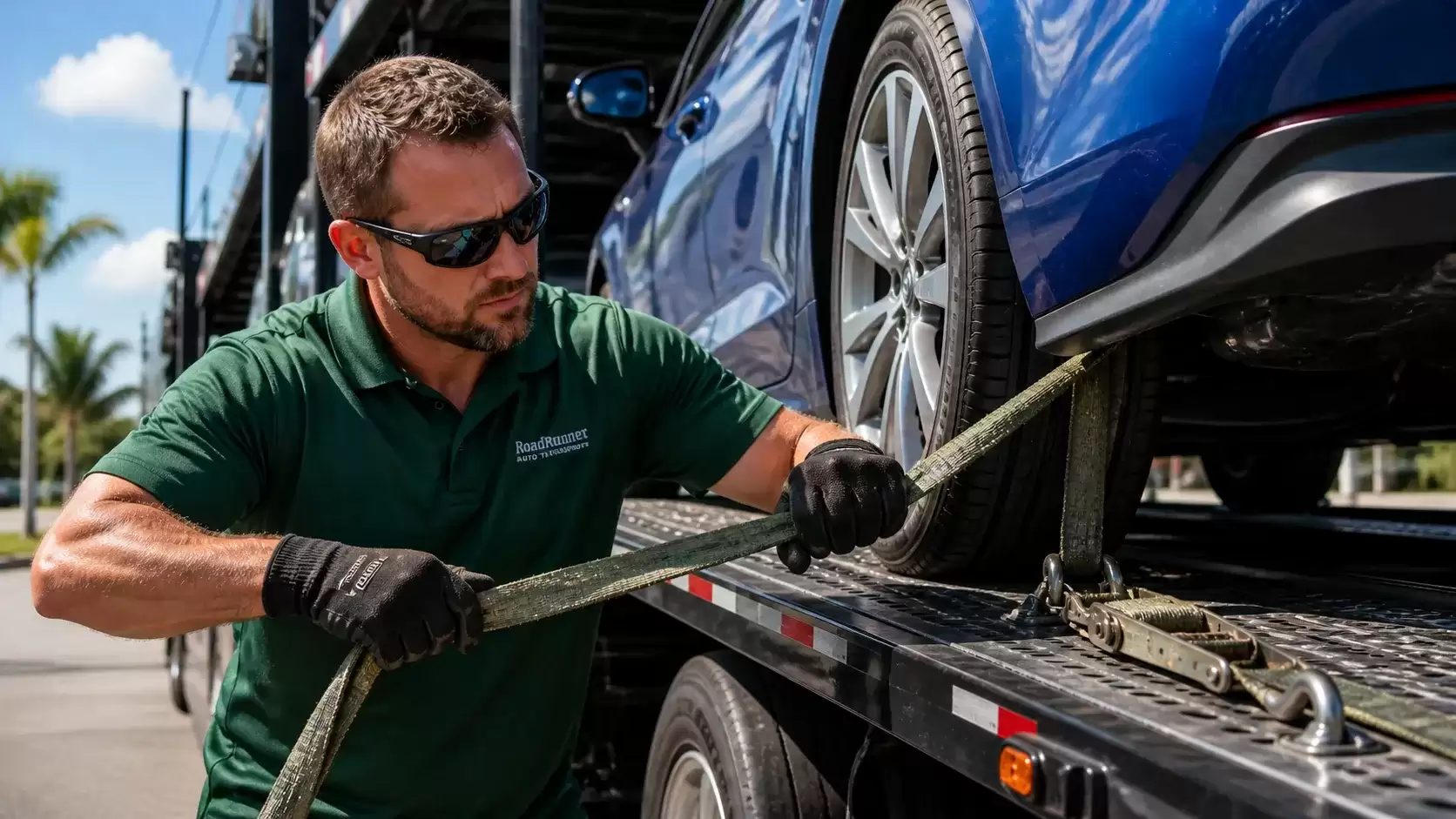
Step 3: Carrier pickup and inspection. Your assigned carrier contacts you directly to confirm pickup timing. At pickup, the driver completes a Bill of Lading inspection report documenting your vehicle’s pre-transport condition on all panels. Review it carefully before signing — this document is your protection record at delivery.
Step 4: Delivery and final inspection. Your driver will contact you before arrival to coordinate delivery. At delivery, inspect your vehicle against the Bill of Lading before signing off. Payment to the carrier (cash or certified funds) is due at delivery. If you note any new damage, document it on the Bill of Lading before the driver departs — this is the required first step for any carrier insurance claim.
University and college auto transport in Maryland
Maryland’s concentration of major universities in and around the Baltimore/DC metro creates two significant annual vehicle shipping waves: fall move-in (August) and spring move-out (May). If your shipment window overlaps with a university move period — particularly around College Park or Baltimore — book three to four weeks ahead and select Expedited tier.
| University | Location | Approx. Enrollment |
|---|---|---|
| University of Maryland, College Park | College Park | ~40,000 |
| Johns Hopkins University | Baltimore | ~24,000 |
| Towson University | Towson | ~19,000 |
| University of Maryland Baltimore County (UMBC) | Catonsville | ~14,000 |
| Salisbury University | Salisbury | ~8,500 |
| Morgan State University | Baltimore | ~8,000 |
| Loyola University Maryland | Baltimore | ~6,000 |
| University of Maryland Eastern Shore | Princess Anne | ~4,000 |
| Frostburg State University | Frostburg | ~4,000 |
| United States Naval Academy | Annapolis | ~4,500 |

Military base vehicle relocation in Maryland
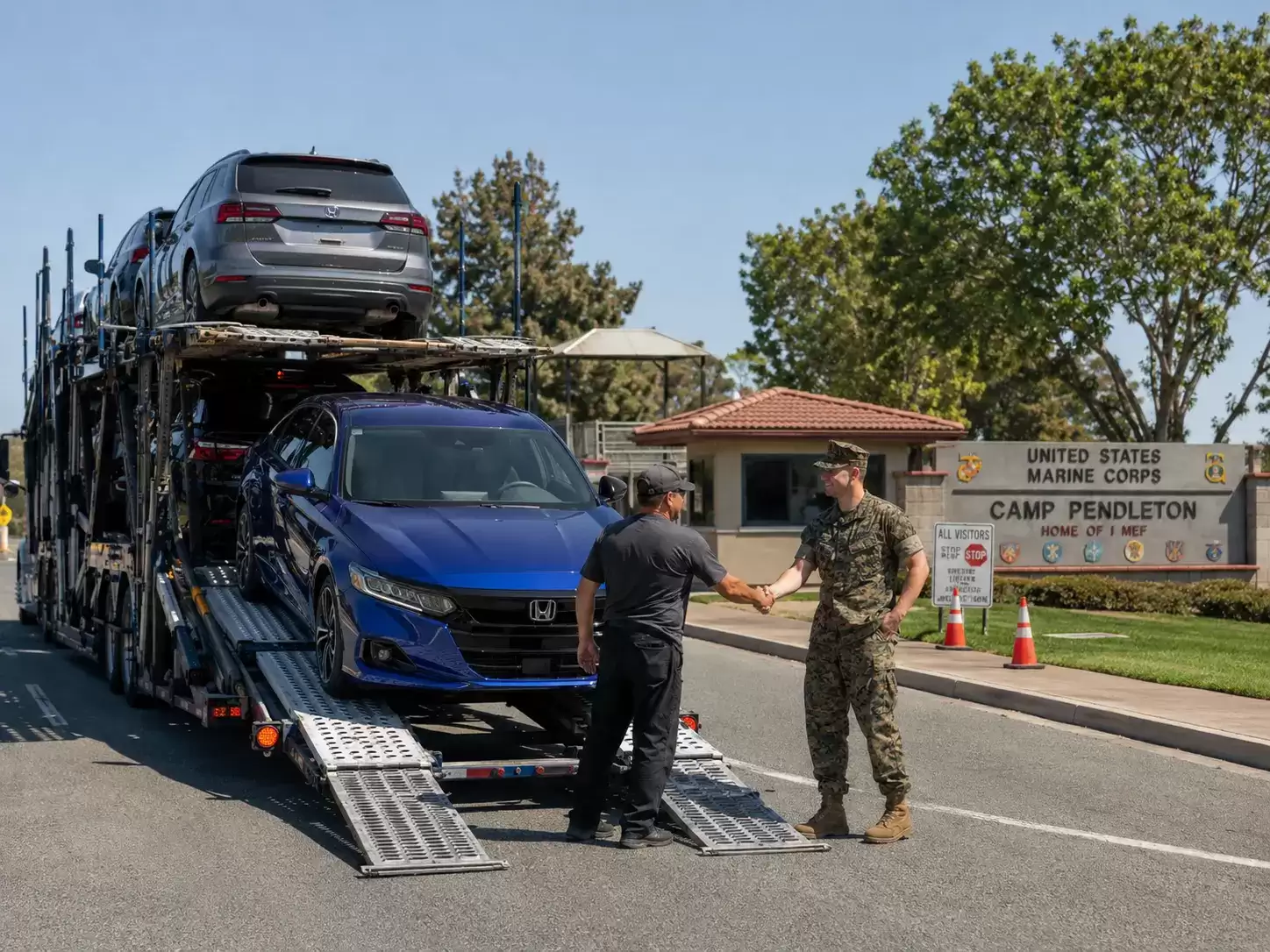
Maryland hosts some of the most significant military and intelligence installations in the country. PCS shipping demand from Maryland installations is among the highest per-capita of any state, and the concentration of defense contractors in the DC/Baltimore corridor generates additional relocation demand that supplements formal military PCS orders. Military shippers receive the same transparent, no-upfront-payment process as all Direct Express customers, and our team is experienced in coordinating with military report-by dates.
Fort Meade — Anne Arundel County
Home of the National Security Agency (NSA) and U.S. Cyber Command, Fort Meade is one of the most important intelligence and cyber installations in the country. It sits between Baltimore and Washington on the I-95/BW Parkway corridor, giving it excellent carrier access from the Baltimore hub. Personnel relocating to or from Fort Meade benefit from very competitive pickup windows. Expedited tier recommended during the May through August PCS peak.
Aberdeen Proving Ground — Harford County
The Army’s primary testing and evaluation facility sits on the Chesapeake Bay north of Baltimore on I-95. APG hosts significant chemical, biological, radiological, and nuclear defense research activities and generates consistent year-round PCS shipping demand. I-95 north access gives APG personnel direct carrier route access toward Philadelphia, New York, and New England, and south toward the DC corridor and beyond.
Naval Air Station Patuxent River — St. Mary’s County
NAS Patuxent River is the Navy’s primary naval air systems testing facility, located in southern Maryland’s St. Mary’s County on the Patuxent River. Its relatively remote location in southern Maryland’s peninsula means it sits off the primary I-95 carrier corridor. Expedited tier is strongly recommended for NAS Pax River personnel to ensure timely pickup, particularly during the summer PCS peak.
Joint Base Andrews — Prince George’s County
Home of Air Force One and the presidential airlift mission, JBA sits in suburban Maryland just east of Washington, D.C. on the I-495/Capital Beltway. Its proximity to the DC carrier market gives JBA personnel access to strong carrier availability for both southbound and northbound routes. Standard tier works well here during off-peak periods.
United States Naval Academy — Annapolis
The Naval Academy’s graduation and commissioning season in May creates a significant annual PCS shipping wave as newly commissioned officers receive orders to installations across the country. Annapolis-area carriers are well-accustomed to this annual surge. Book three to four weeks ahead for any May Annapolis shipment.
Cities we serve in Maryland
We provide auto transport pickup and delivery throughout Maryland. Cities on or near major carrier corridors have the shortest pickup windows and most competitive rates. Secondary markets further from the interstate grid may require Expedited tier for time-sensitive shipments.
Baltimore Metro / I-695 Beltway
Baltimore — Maryland’s largest city and the I-95/I-695/I-70/I-83 convergence hub; highest carrier density in the state with daily departures in all directions. Towson — Baltimore County seat and home of Towson University; excellent I-695 beltway access. Catonsville — Southwest Baltimore suburb; UMBC campus; I-70 access west toward Frederick and the Midwest. Essex — Eastern Baltimore County; I-695 and US-40 access connecting to the broader Baltimore carrier network. Dundalk — Southeast Baltimore County near the port; I-695 access; strong carrier presence from port-adjacent freight activity. Parkville and Rosedale — Northeast Baltimore County; I-695 north access toward I-83 and the Pennsylvania corridor.
DC Metro Suburbs / I-95/I-495
Silver Spring — Montgomery County gateway to DC; I-495/Capital Beltway access; effectively served from the combined Baltimore and DC carrier markets. Bethesda and Chevy Chase — Affluent Montgomery County suburbs; National Institutes of Health campus; I-495 and I-270 access. Gaithersburg and Rockville — Montgomery County tech corridor on I-270; served daily by carriers running the DC-to-Frederick and DC-to-Midwest routes. College Park — Home of the University of Maryland flagship campus; I-95 access both north and south; among the strongest university-driven carrier demand in the mid-Atlantic. Greenbelt — NASA Goddard Space Flight Center home; I-495 and I-95 access; government and contractor relocation demand year-round.
I-70/I-270 Western Corridor
Frederick — Western Maryland’s primary hub at the I-70/I-270 junction; carriers heading between DC and the Midwest pass through Frederick constantly, giving it excellent bidirectional availability. Hagerstown — I-70/I-81 junction at the Pennsylvania border; carriers on the Shenandoah Valley corridor pass through regularly. Martinsburg area (served from Hagerstown) — Western gateway communities reach through the Hagerstown hub for eastbound and southbound carrier routes.
I-83 Northern Corridor
Towson and Cockeysville — Primary I-83 corridor communities north of Baltimore; served from the Baltimore hub with fast access to the York, Pennsylvania carrier network. Bel Air — Harford County seat; US-1 and MD-24 access connecting to I-95 and Aberdeen Proving Ground; benefits from APG carrier demand.
US-50 Eastern Shore
Annapolis — State capital and Naval Academy home; US-50/Bay Bridge corridor access; benefits from military PCS demand and proximity to the Baltimore hub. Easton — Talbot County seat on the Eastern Shore; US-50 access across the Bay Bridge; Expedited recommended for time-sensitive moves. Salisbury — Eastern Shore’s largest city and home of Salisbury University; the best-served Eastern Shore market, though Expedited is still recommended for hard deadlines. Ocean City — Maryland’s beach resort; seasonal demand peaks in summer; carriers serve this market as a deliberate detour from US-50. Expedited strongly recommended outside of the summer peak period when fewer carriers route specifically for Ocean City.
I-68 Western Maryland
Cumberland — Western Maryland’s gateway city at the I-68/I-70 junction in the Alleghenies; the most remote major Maryland market from the primary I-95 hub. Expedited tier strongly recommended for all Cumberland area shipments. Frostburg — Home of Frostburg State University; served from the Cumberland hub with mountain terrain access considerations.

Maryland government resources for vehicle shipping
- Maryland Motor Vehicle Administration (MVA) — Official source for Maryland vehicle registration, title transfer, and out-of-state vehicle titling requirements when your shipped vehicle arrives in Maryland.
- Maryland Attorney General — Consumer Protection Division — File a complaint or research a mover’s complaint history with Maryland’s consumer protection office.
- FMCSA SAFER System — Look up any auto transport carrier’s federal operating authority, insurance status, and safety record before booking.
- FMCSA Protect Your Move — Federal consumer guidance on avoiding auto transport fraud and understanding your rights as a shipper.
- Maryland SHA — 511 Maryland Road Conditions — Current road conditions, construction updates, and travel advisories on Maryland interstates that may affect carrier transit times.

Popular long-distance Maryland car transport routes
Maryland to Florida: Car Shipping
Maryland-to-Florida is one of the I-95 corridor’s most heavily traveled routes, driven by consistent snowbird demand, military PCS orders between Fort Meade and Florida’s installations, and general East Coast relocation traffic. The direct I-95 south route from Baltimore through Richmond, the Carolinas, and Georgia into Florida is among the most carrier-dense lanes on the East Coast. Transit is typically 4–7 days. Expedited tier recommended for October and November snowbird departure windows.
Maryland to Georgia: Auto Transport
Maryland-to-Georgia shipments run I-95 south through the Carolinas and into the Atlanta metro, or via I-81 south through the Shenandoah Valley toward Chattanooga and Atlanta. The Atlanta metro’s enormous relocation demand keeps this corridor well-supplied with bidirectional carriers. Transit is typically 3–5 days.
Maryland to North Carolina: Vehicle Shipping
Maryland-to-North Carolina is one of the most frequently requested I-95 corridor routes, given the strong Research Triangle and Charlotte metro relocation demand. I-95 south or I-85 through the Piedmont region gives carriers multiple routing options for this relatively short corridor. Transit is typically 2–4 days, and Standard tier works reliably outside of summer peak season.
Maryland to Ohio: Vehicle Transport
Maryland-to-Ohio routes run I-70 west from Baltimore through Frederick, Cumberland, and into Pittsburgh and the broader Ohio market at Columbus, Cleveland, and Cincinnati. The I-70 corridor is one of the most carrier-dense east-west routes in the country. Transit is typically 2–4 days, with Standard tier performing well year-round.
Maryland to Michigan: Auto Shipping
Maryland-to-Michigan routes continue west on I-70 through Pittsburgh and then north via I-79 and I-96 to Detroit, Ann Arbor, and the broader Michigan market. Automotive industry freight between the mid-Atlantic and Michigan keeps this corridor well-served throughout the year. Transit is typically 3–5 days.
Maryland to Illinois: Car Hauling
I-70 west from Baltimore runs directly to Columbus, Indianapolis, and St. Louis, with Chicago reachable via I-57 north or I-65 from Indianapolis. The Maryland-to-Chicago corridor benefits from constant transcontinental freight flow on I-70. Transit is typically 4–6 days.
Maryland to Texas: Vehicle Relocation
Maryland-to-Texas shipments route south via I-95 to Richmond, then west on I-85 or I-40 to Tennessee and into the Lone Star State via I-30 or I-35. Dallas/Fort Worth, Houston, and San Antonio are all well-served. Transit is typically 5–8 days. Expedited tier recommended for June through August Texas deliveries when relocation demand peaks.
Maryland to Colorado: Vehicle Hauling
I-70 west from Baltimore is the primary Maryland-to-Colorado artery, running through Pittsburgh, Columbus, Indianapolis, St. Louis, Kansas City, and Topeka before climbing into Denver. Transit is typically 5–8 days. Mountain pass weather on I-70 west of Denver can affect November through March shipments; build in an extra day of buffer for winter transit.
Maryland to California: Car Transport
Maryland-to-California is one of the East Coast’s most requested transcontinental routes. I-70 west provides the primary routing through the Midwest to Denver, then southwest to California. Alternatively, I-40 offers the southern route from Knoxville or Memphis. Los Angeles, San Diego, and the Bay Area are all well-served from the Baltimore origin. Transit is typically 7–11 days.
Maryland to Washington State: Auto Shipping
Maryland-to-Seattle and Washington State shipments run I-70 or I-90 west through the Midwest, then north via I-15 and I-90 through Idaho into the Pacific Northwest. Transit is typically 9–12 days. Expedited tier is recommended due to the distance and the relatively lower carrier frequency on the final Pacific Northwest leg compared to California-bound routes.
Maryland to Tennessee: Auto Transport
Maryland-to-Tennessee shipments run south via I-81 through the Shenandoah Valley into Bristol, then west to Knoxville and Nashville, or via I-95 to Richmond and I-85 southwest to Charlotte and on to Tennessee. The Nashville market in particular has grown enormously as a relocation destination, keeping carrier lanes to Tennessee well-stocked year-round. Transit is typically 3–5 days.
Maryland to Indiana: Vehicle Shipping
I-70 west from Baltimore runs directly to Indianapolis in approximately 600 miles, making this a straightforward mid-range corridor served by the constant I-70 transcontinental carrier flow. Transit is typically 3–5 days, and Standard tier performs well year-round given the corridor’s high carrier frequency.

Nearby states for Maryland auto transport
Pennsylvania: Car Shipping
Pennsylvania borders Maryland to the north along its entire width. I-95 connects Baltimore directly to Philadelphia; I-83 runs north to York and Harrisburg; I-70 connects to Pittsburgh. Pennsylvania is one of Maryland’s most frequently requested neighboring markets, with multiple daily carrier departures in both directions on all three primary corridors.
Virginia: Auto Transport
Virginia borders Maryland to the south, with the DC metro straddling the state line. I-95 south from Baltimore runs directly into Northern Virginia and onward to Richmond, Norfolk, and the broader Virginia market. Virginia is Maryland’s most frequently requested intrastate-adjacent market, given the DC metro overlap and the constant military PCS movement between the two states.
Delaware: Vehicle Shipping
Delaware borders Maryland’s northeastern corner. The I-95 corridor from Baltimore to Wilmington and Dover is a short, high-frequency carrier route. Delaware is effectively served as part of the Baltimore/Philadelphia I-95 carrier market, with multiple daily departures and excellent Standard tier pickup windows.
West Virginia: Vehicle Transport
West Virginia borders Maryland to the west via the Appalachian highlands. I-68 west from Cumberland connects to I-79 south toward Charleston and I-64 toward Huntington. West Virginia-bound shipments from Maryland are accessible but require carriers to navigate mountainous terrain. Expedited tier recommended for any West Virginia delivery with a firm timeline.
New Jersey: Auto Shipping
New Jersey is directly north of Maryland via I-95 through Delaware and Philadelphia. The I-95 Northeast Corridor makes New Jersey one of the most carrier-dense short-haul routes from Maryland. Multiple daily carrier departures serve the Maryland-to-New Jersey corridor in both directions, and Standard tier is reliable year-round on this route.
New York: Car Hauling
New York is reachable from Maryland via I-95 north through Delaware, New Jersey, and into the New York metro. The I-95 Northeast Corridor is the single busiest auto transport lane on the East Coast, and Maryland-to-New York shipments benefit from extremely high carrier frequency. Transit is typically 1–3 days from Baltimore, with Standard tier performing reliably outside of peak summer season.

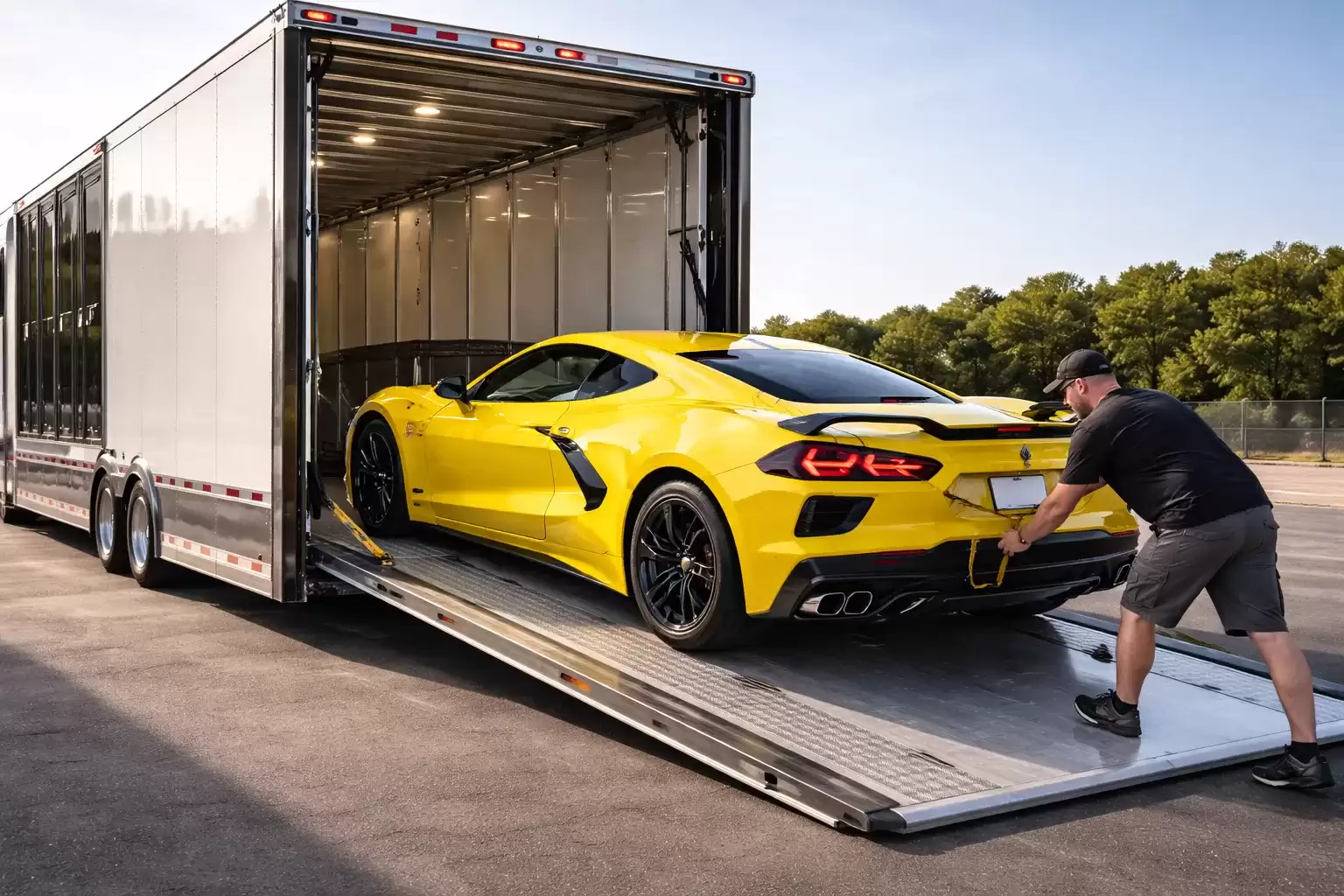
Ready to ship your car to or from Maryland?
Join hundreds of thousands of customers — Snowbirds, military families, tech relocators, students, and families moving across the country — who have trusted Direct Express Auto Transport with their Maryland vehicle shipments since 2004. Get your instant, no-obligation quote now. It takes 30 seconds, requires no personal information, and there is no upfront payment required to hold your spot.
Instant quote — real-time pricing in under 5 seconds
No upfront payment — your card is charged only when a carrier is assigned
No risk to get a quote and book your order
BBB Accredited A+ since 2004
FMCSA licensed and fully bonded
4.6 stars across thousands of verified Google reviews